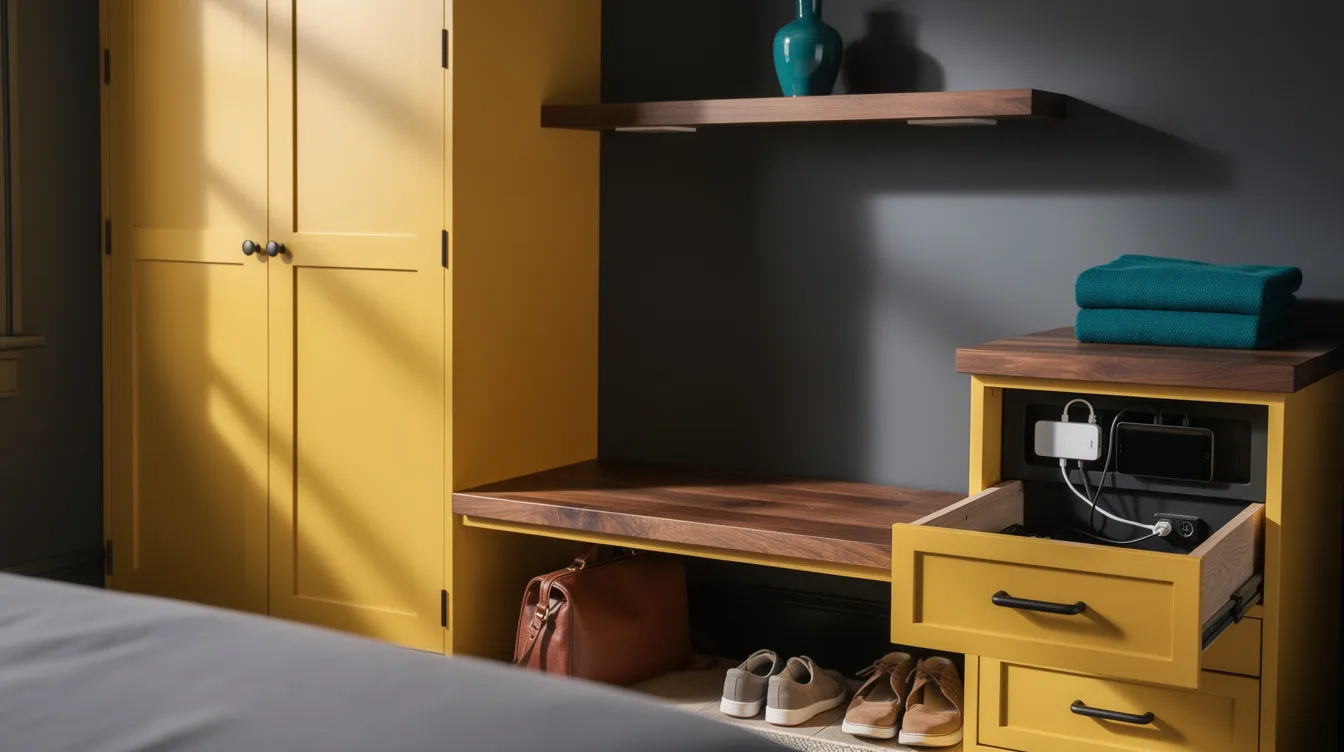
The bedroom door is usually the last place I expect to find a mudroom, yet it can be the smartest location for a commuter landing zone.
A compact station roughly 48 to 60 inches wide can hold a bench, closed bag storage, and a counter-height charging drawer without taking over the hall.
For 2026 planning, allow about $4,000 to $7,000 for a compact custom painted installation, with premium enclosed cabinetry moving higher.
Set the Station Outside the Bedroom Door
The best commuter station shortens the morning route from bedroom to front door, so place it just outside the bedroom rather than near the garage by default.
For one person, a compact alcove can be roughly 48 to 60 inches wide and 18 to 24 inches deep, with a bench beside a counter-height charging cabinet.
A painted installation in that size carries a planning allowance of about $4,000 to $7,000 when the room already exists and the electrical work is straightforward.
I would keep the finish quiet and furniture-like, because a bedroom-side mudroom should feel calm at night instead of announcing itself as utility storage.
Separate the Landing Zones
A two-person commuter wall needs individual drop zones, even when both people share the same closed locker doors.
Plan roughly 72 to 84 inches of width, with two coat-and-bag bays around 18 inches wide each and a shared cabinet for daily charging.
That arrangement can carry an allowance of about $6,000 to $10,000 in painted cabinetry, with more room in the quote for extra doors, lighting, or premium finishes.
Give each person a dedicated hook and bag shelf, then let the center drawer handle phones, headphones, watches, and other small devices.
Build the Drawer at Counter Height
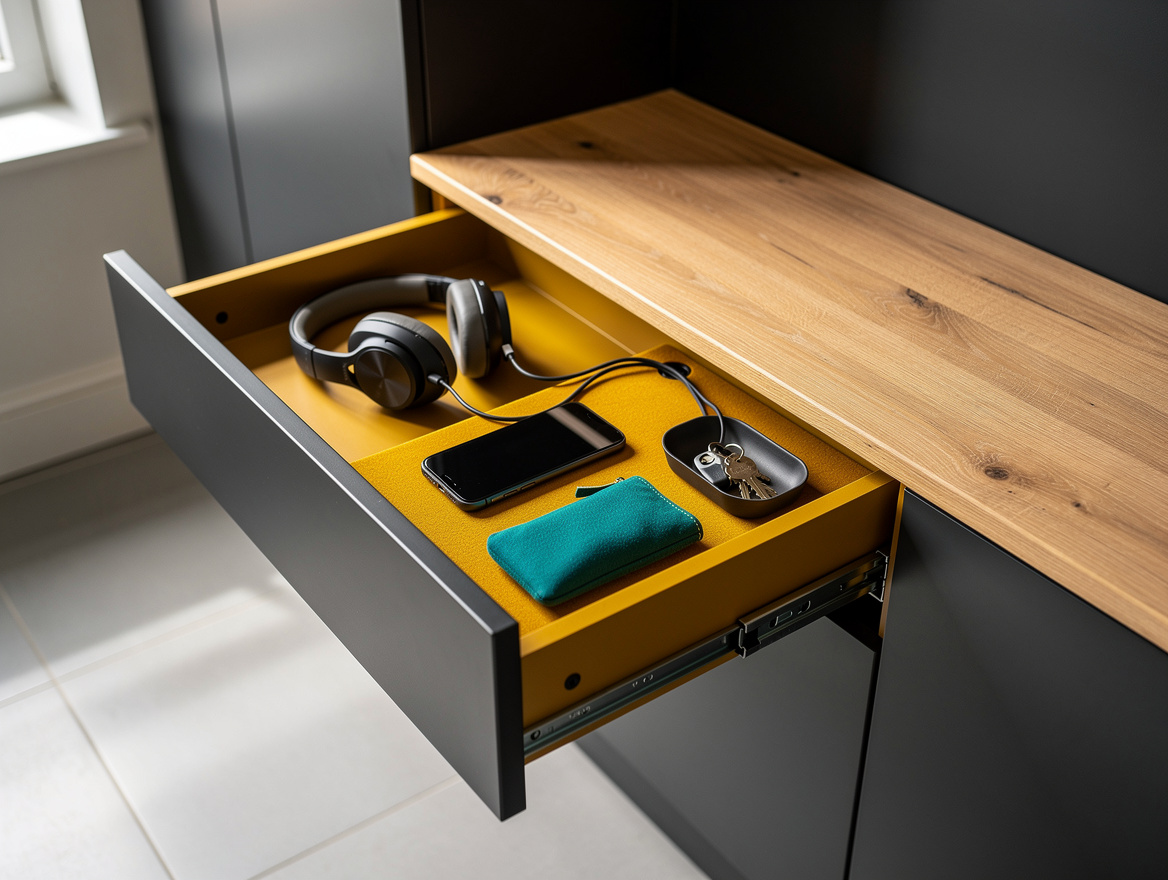
The charging drawer belongs under the drop-zone counter, beside the bench, rather than beneath the seat where shoes and bags can block access.
A shallow drawer under a counter roughly 30 to 36 inches high keeps the daily sequence natural: sit, remove shoes, hang the coat, dock the phone, and leave.
Purpose-built charging hardware currently lists around $249 to $435, depending on configuration, so include that cost before comparing cabinet quotes.
Choose a removable tray or divider system so cables can be replaced without dismantling the millwork, and reserve one section for larger commuter gear.
Vent Heat Before It Builds
Every device drawer needs a clean cable path and enough ventilation, especially when several chargers remain connected overnight.
A discreet cord grommet through the cabinet back keeps wires from crossing the counter, while the installer should follow the charging hardware instructions for outlet placement and airflow.
Keep the drawer away from damp shoes, wet coats, and fabric baskets, because a charging zone should stay dry and easy to inspect.
I would spend on proper electrical work before decorative upgrades; the smoothest-looking cabinet is still a poor commuter station if its cords are pinched or inaccessible.
Buffer the Bedroom With Full-Height Storage
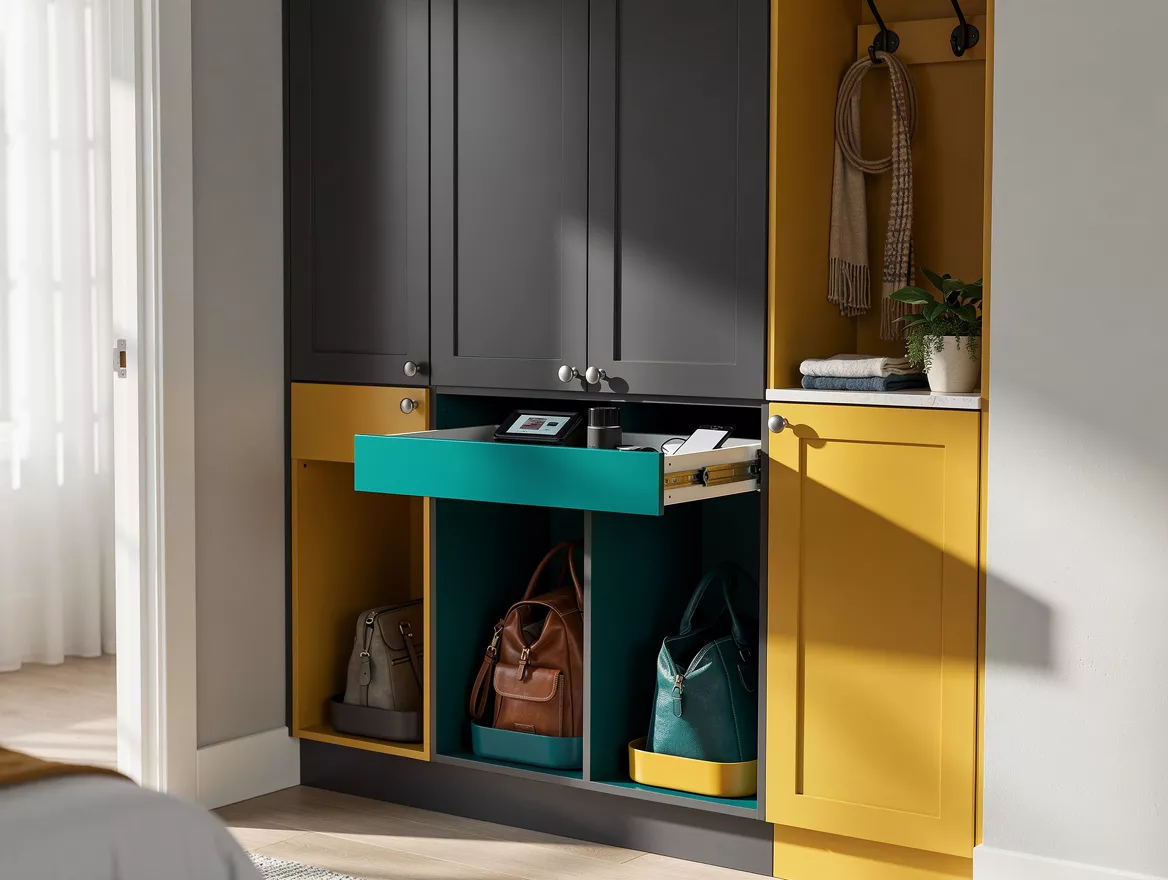
When the mudroom sits directly beside the bedroom, full-height walnut veneer can make the transition feel like a wardrobe wall rather than an entry locker bank.
A bedroom-side buffer can be roughly 72 to 96 inches wide and about 24 inches deep, with enclosed storage, a concealed counter, and a separate bench if the room allows it.
Painted cabinetry may land around $8,000 to $12,000, while premium oak or walnut veneer can move toward roughly $11,000 to $17,000 for this larger arrangement.
Use doors on the upper storage and keep the hardware restrained, because visual quiet matters more here than showing every useful compartment.
Light the Counter for the Morning Rush
The counter deserves task lighting, not a harsh ceiling fixture that throws shadows across keys and charging ports.
An under-cabinet LED strip can illuminate the drawer face and the bench without dominating the bedroom view, provided the wiring is planned before installation.
Published regional millwork rates put open painted locker work around $900 to $1,400 per linear foot, while painted units with doors and drawers can run about $1,300 to $2,000.
Those figures are regional planning references, not national averages, so ask for a line-item quote covering cabinetry, hardware, lighting, and electrical work separately.
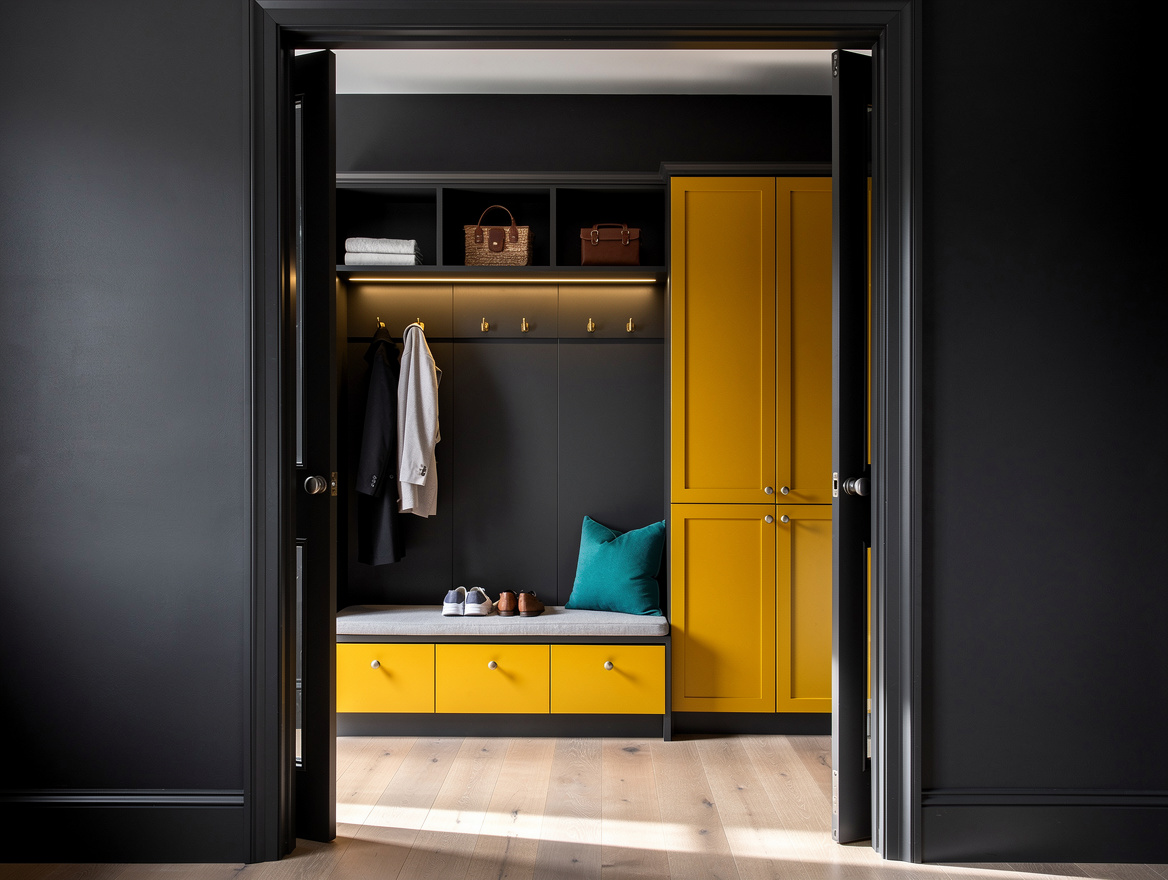
Start by taping a roughly 48-inch-wide rectangle beside the bedroom door and test the walk path for a week before ordering cabinets.
Then get one quote that separates the drawer hardware, electrical work, and millwork, because that breakdown will tell you where the station deserves its budget.
Mia Carter writes about small-space living and budget home makeovers. She has restyled three rentals and tests most ideas in her own 45 sqm flat.