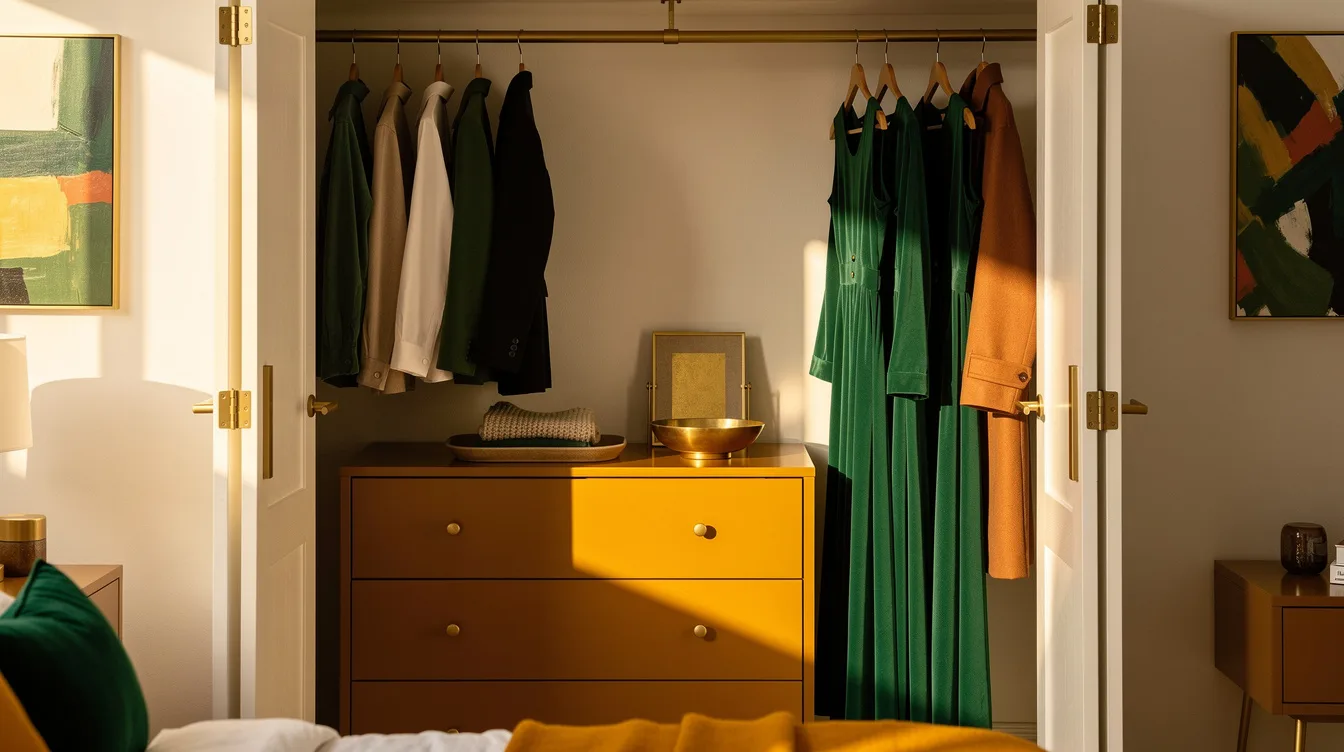
A dresser can disappear into a closet and still make a small bedroom harder to use. The winning layout starts with the opening, not the cabinet: a 60-inch closet may hold two shallow chests, yet only if every drawer clears the doors.
Low storage beneath short-hanging clothes is the most straightforward arrangement, while a side placement protects room for dresses and coats.
These five rules use documented small-bedroom solutions, real product dimensions, and clear tradeoffs so the closet gains storage without turning into a cramped cabinet wall.
Measure the Opening Before the Cabinet
The closet opening controls the layout more than the interior width, because a drawer that fits inside can still become useless when the door blocks its pull.
For a hypothetical 60-inch-wide by 24-inch-deep closet, mark the doorway swing, trim, and reachable floor area before bringing in the IKEA RAST.
That small chest measures 24⅜ inches wide, 13¾ inches deep, and 26¾ inches high, so its shallow footprint gives you more breathing room than a standard bedroom dresser.
Designers generally favor this approach because it removes a bulky cabinet from the sleeping area without requiring new shelving, electrical work, or a full closet rebuild.
Build Under the Short-Hanging Rail
The simplest arrangement places a low dresser beneath the existing rail, with shirts and other shorter garments hanging above its top.
Solid pine gives the RAST a practical starting point, and its listed U.S. Price is $69.99, making one unit an inexpensive test before you commit to a larger storage plan.
Two RAST chests measure 48¾ inches across and cost approximately $140 together, leaving roughly 11 inches inside a 60-inch closet for side clearance and door access.
Measure one shirt on its hanger from the rail to the hem, then compare that measurement with the dresser height; a supposed bargain becomes a daily nuisance when sleeves drag across drawers.
Keep Long Clothes on the Clear Side
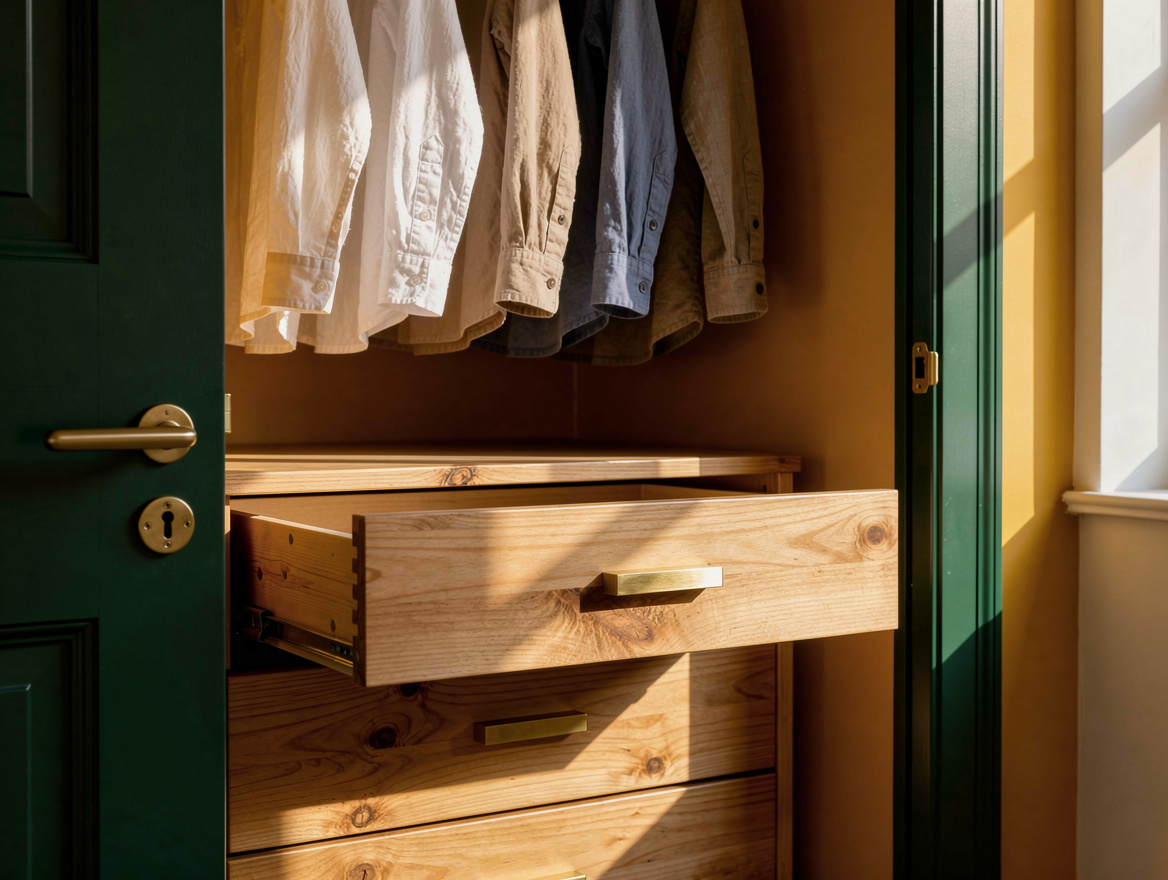
If your wardrobe includes dresses, coats, or full-length trousers, place the chest against one side and préservé uninterrupted hanging space beside it.
In a hypothetical 72-inch-wide by 24-inch-deep closet, long garments can occupy the open half while folded clothing stays in a low chest on the other side.
This layout has a stronger claim than a picture-perfect render because it protects the storage category that usually causes the most frustration in a small bedroom.
A taller cabinet can hold more folded clothing, but the tradeoff is direct: every inch gained in drawers may remove useful hanging room above or beside it.
Choose Height Without Losing Reach
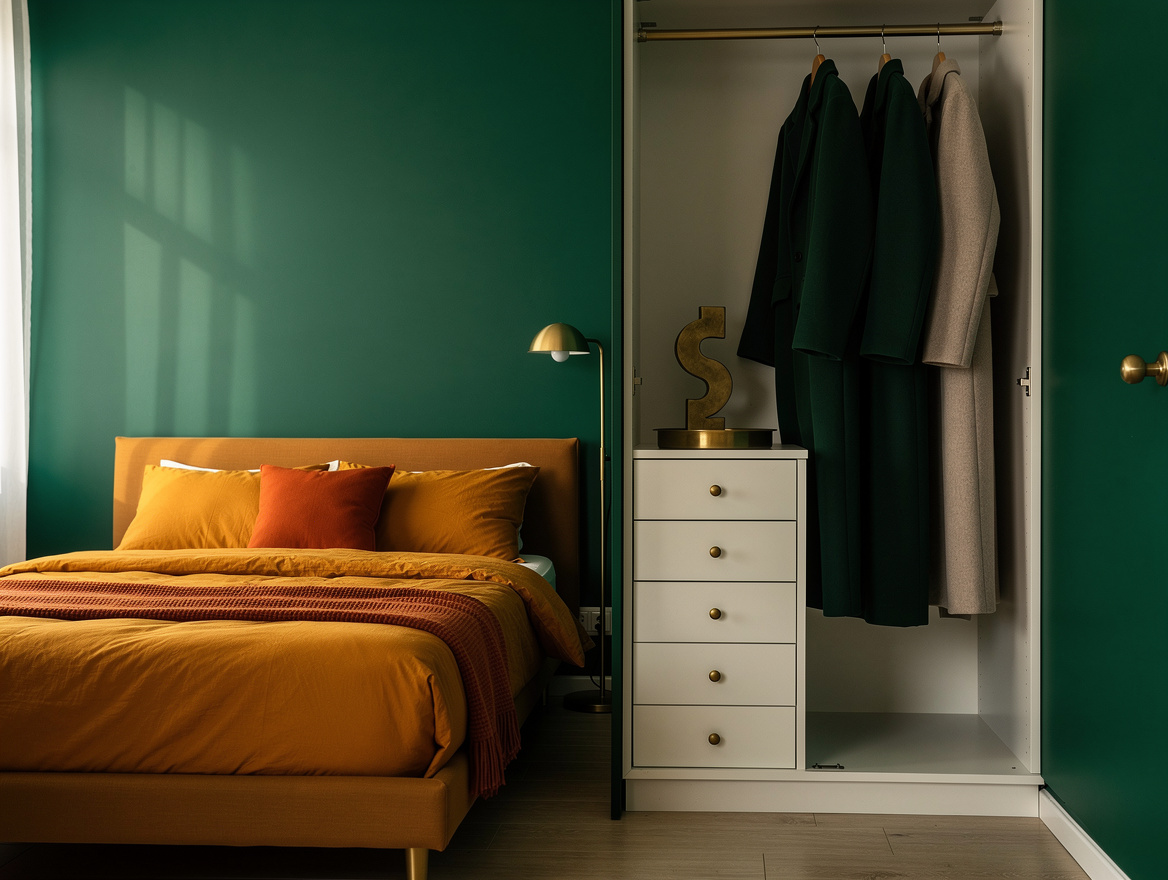
Use a low chest when the closet has a rail you want to keep, and choose a taller chest only when folded storage matters more than short-hanging capacity.
IKEA KULLEN measures approximately 27½ inches wide, 15¾ inches deep, and 44 inches high, with five drawers and listed storage capacity of 102 liters.
Its listed Netherlands price is €79.99, so treat it as a reference for the taller format rather than as a U.S. Shopping recommendation.
The KULLEN also has an approximately 8¾-inch drawer pull-out, which reinforces the central point: depth and extension matter as much as the cabinet’s outside measurements.
Test Every Drawer Swing
Before deciding that a dresser belongs inside the closet, use painter’s tape to mark its front edge and walk through the opening with the door fully open.
Check whether drawer fronts clear the jamb, whether two drawers can open at once, and whether you can stand squarely in front of them without pressing against the bed.
The practical constraint is usually access, not whether the cabinet technically fits, so a narrower chest on one side can outperform a wider unit centered beneath the rail.
Once the test works, leave the bedroom wall formerly occupied by the dresser open or use it for a compact desk, keeping the room visually lighter and easier to move through.
Start with painter’s tape, mark the drawer pull-out, and test the opening before you shop. That ten-minute floor plan will tell you whether a low chest, a side cabinet, or an empty wall is the smarter use of the room.
Keep the longest clothes accessible, and the closet dresser will feel like part of the architecture instead of one more obstacle.
Mia Carter writes about small-space living and budget home makeovers. She has restyled three rentals and tests most ideas in her own 45 sqm flat.