Comfortable seating layouts for party conversations work best when every seat faces another seat, with 35–40 inches of sofa depth and a table within easy reach. The right arrangement helps guests settle in, turn naturally, and stay longer. You don’t need matching furniture or a huge room. You need clear sightlines, flexible surfaces, and enough breathing room.
- Float two sofas into a face-to-face conversation layout
- Why angle armchairs around a low communal coffee table?
- Curve a sectional around the room’s social center
- Pair mismatched lounge chairs beside the fireplace
- Build party seating with poufs beneath a console
- Layer a bench behind the main sofa
- Cluster floor cushions around a cocktail table
- How can a narrow open bookcase separate seating zones?
- Rotate swivel chairs toward guests and garden views
- Anchor a window nook with a tailored loveseat
- Mix dining chairs into a relaxed seating circle
- Place ottomans between seats for flexible footrests
- Frame the television with symmetrical lounge chairs
1Float two sofas into a face-to-face conversation layout
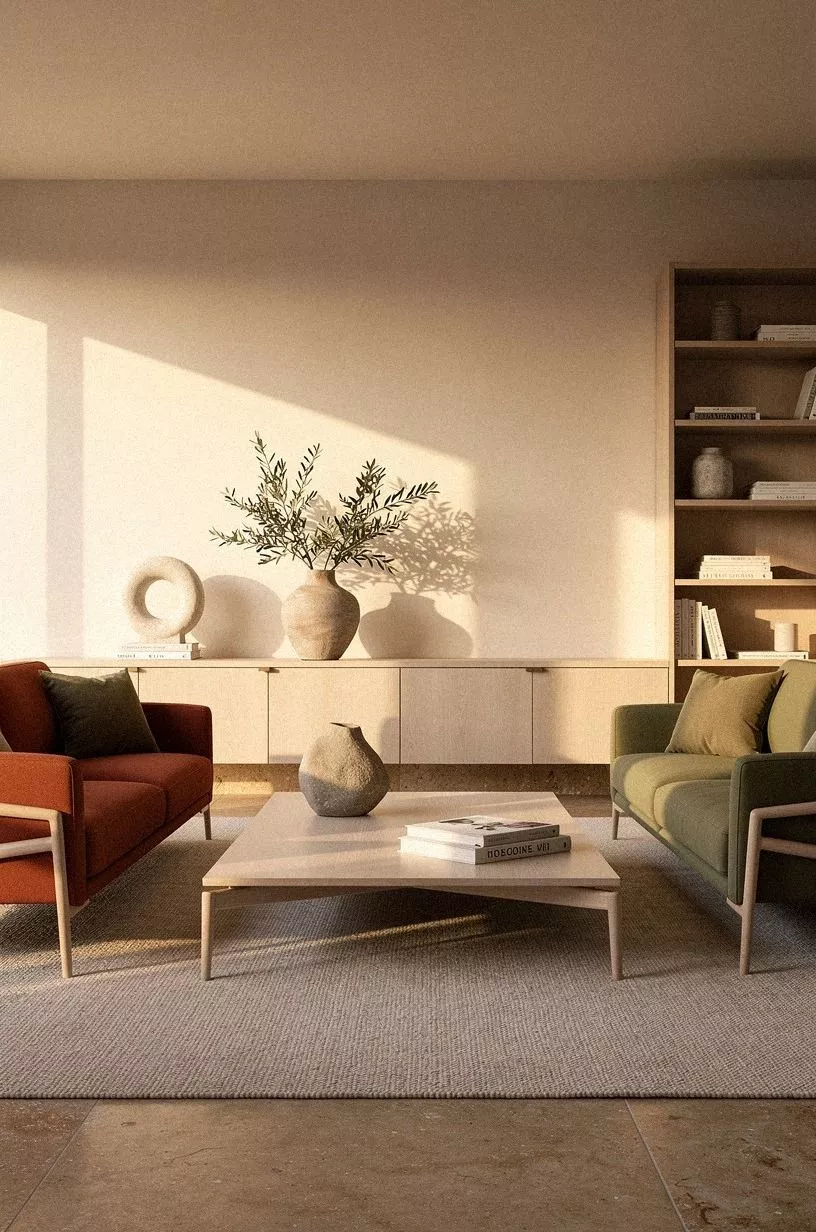
Two sofas facing each other create one of the most reliable party seating ideas because every guest has a direct conversational view. Float the sofas away from the walls, leaving a visible walkway behind at least one side when the room allows. A cerused white oak coffee table between them keeps a terracotta, stone, and olive palette grounded without making the arrangement feel heavy.
Choose sofas with 35–40 inches of depth so guests can sit upright without losing comfort. Performance linen upholstery handles drinks and busy evenings better than delicate fabric. If the room feels narrow, keep the sofas parallel and use a 16–18-inch-tall table.
You’ll gain a warm, inviting conversation area without blocking the main path.
This layout works best when you don’t push every piece against a wall. The floating arrangement gives guests room to move, and it makes the living room feel more intentional from every angle. A 9-by-12-foot rug can connect both sofas, while a slim console table can finish the exposed back of one sofa.
Keep at least 30 inches of walking space around the outside edge. Guests shouldn’t have to squeeze between upholstery and a wall to reach the kitchen. That small detail can change the whole evening!
2Why angle armchairs around a low communal coffee table?
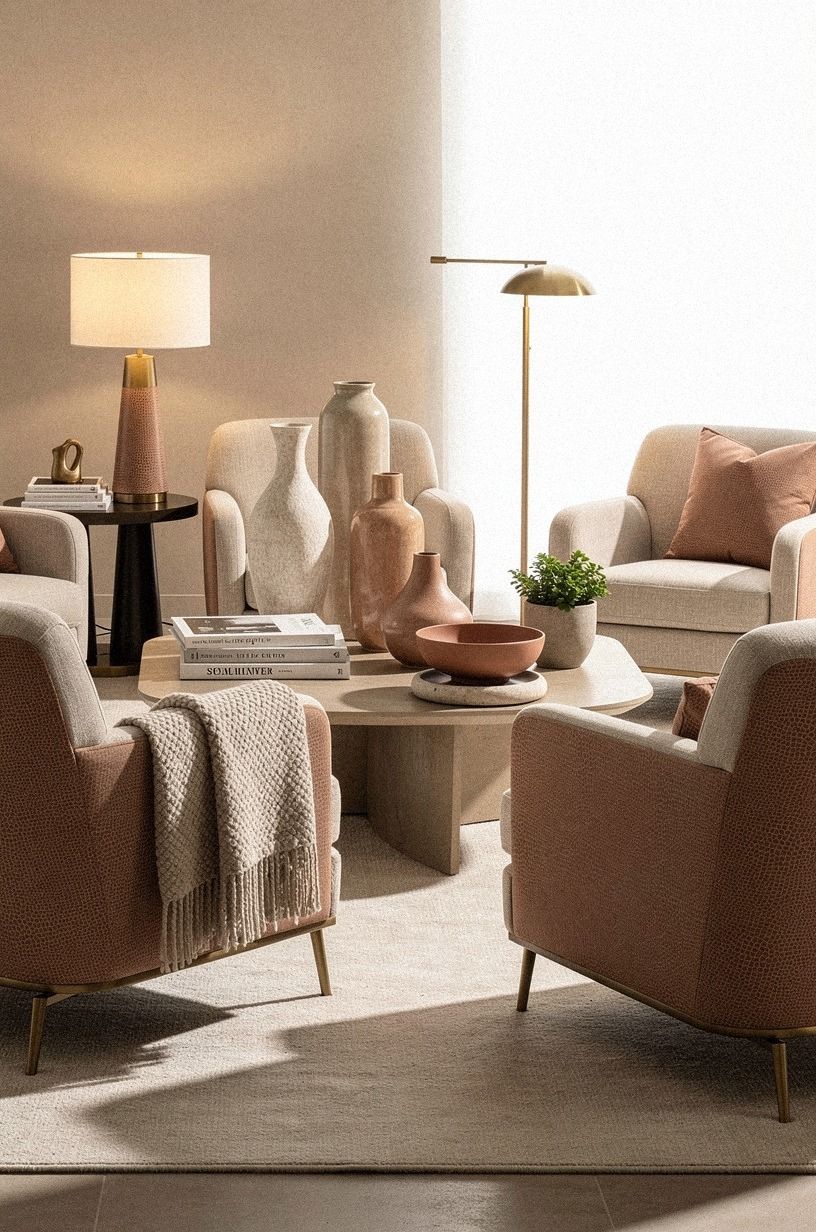
Angled armchairs soften a formal room because the seats point toward the center instead of straight across it.
3Curve a sectional around the room’s social center
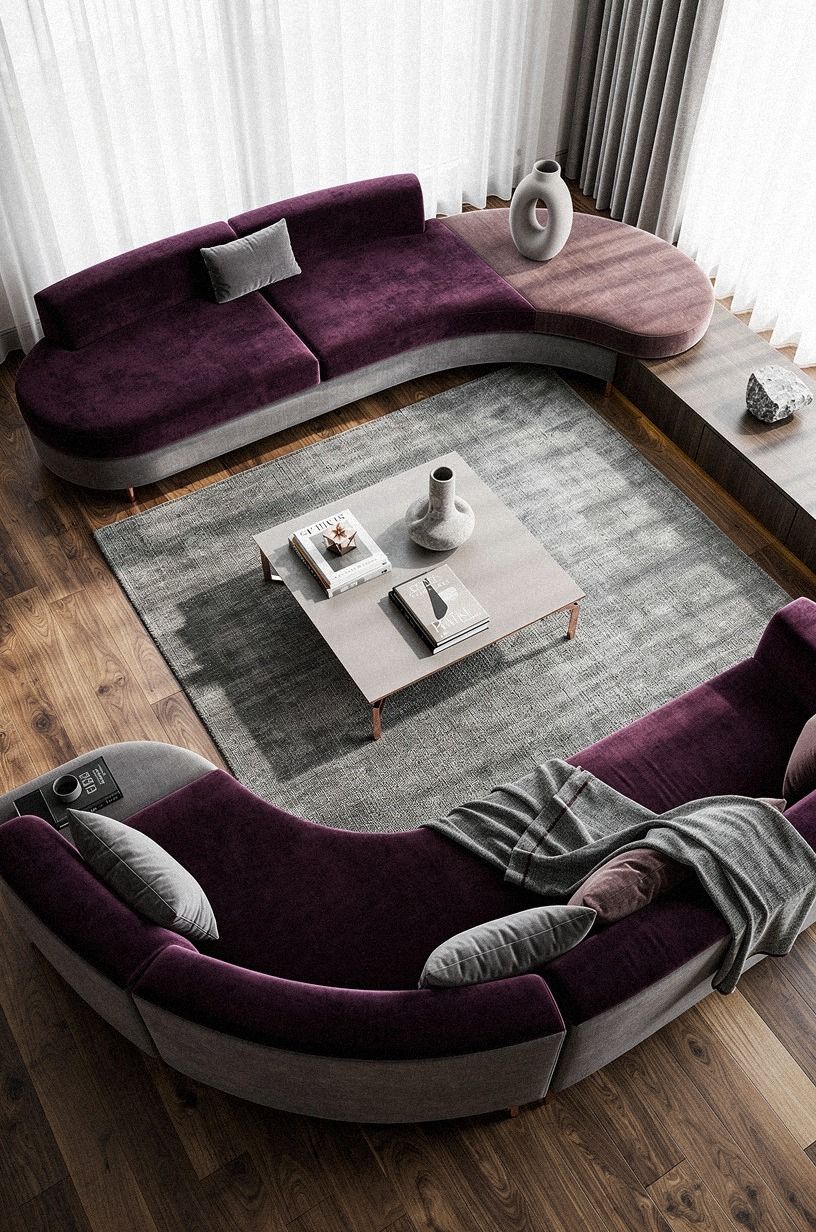
A curved sectional naturally gathers guests toward one shared center, making it a strong choice for entertaining at home. The plum, grey, and rose-gold palette feels sophisticated against book-matched walnut, especially when the wood grain runs across a low oval table. Curved seating also removes the hard corner that can make a rectangular room feel divided.
Choose a sectional with a seat depth that lets guests sit upright, not only lounge sideways. A mohair-blend cushion adds soft texture, while a round coffee table prevents sharp corners from interrupting movement. You’ll need a clear route around the outside edge, so keep floor lamps and side tables close to the upholstery rather than spreading accessories across the walkway.
A straight sectional can feel more efficient, but the curved option wins for conversation because nobody has to twist toward the center. It’s a confident choice when the room has enough width to let the silhouette breathe.
Avoid placing a curved sectional directly against every wall. A few inches of separation can emphasize the shape and create a more generous feel.
If the room is large, pair the sectional with two low sling chairs rather than another bulky sofa. The contrast keeps the center lively without overcrowding it.
4Pair mismatched lounge chairs beside the fireplace
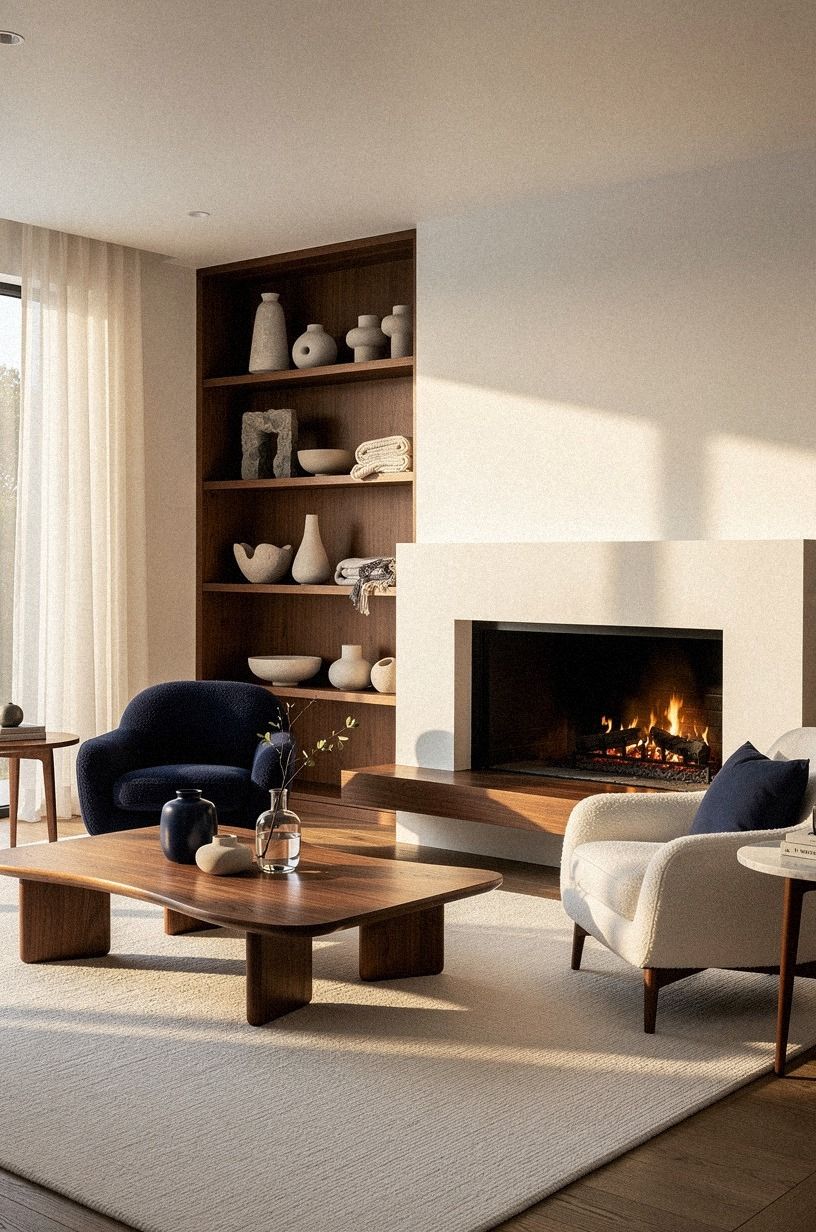
Mismatched chairs beside a fireplace make the seating feel collected rather than showroom-matched. Place both chairs at a slight angle toward the sofa, leaving the fireplace visible between or behind them. The setup gives the room a strong focal point while adding separate seats for guests who prefer a quieter position.
Try a navy lounge chair beside a white organic bouclé chair, with walnut legs or a walnut side table tying the pair together. Repeating one wood tone keeps the composition connected without making the chairs identical.
A fireplace needs breathing room. Don’t press chair arms against the hearth, and keep combustible upholstery safely away from active flames according to local safety guidance. A woven wool rug can define the seating group, but the rug shouldn’t cover required hearth clearance.
The result feels relaxed because the chairs look chosen, not purchased as a set. Guests can turn toward the fire, the sofa, or a nearby table without fighting the room’s geometry.
5Build party seating with poufs beneath a console
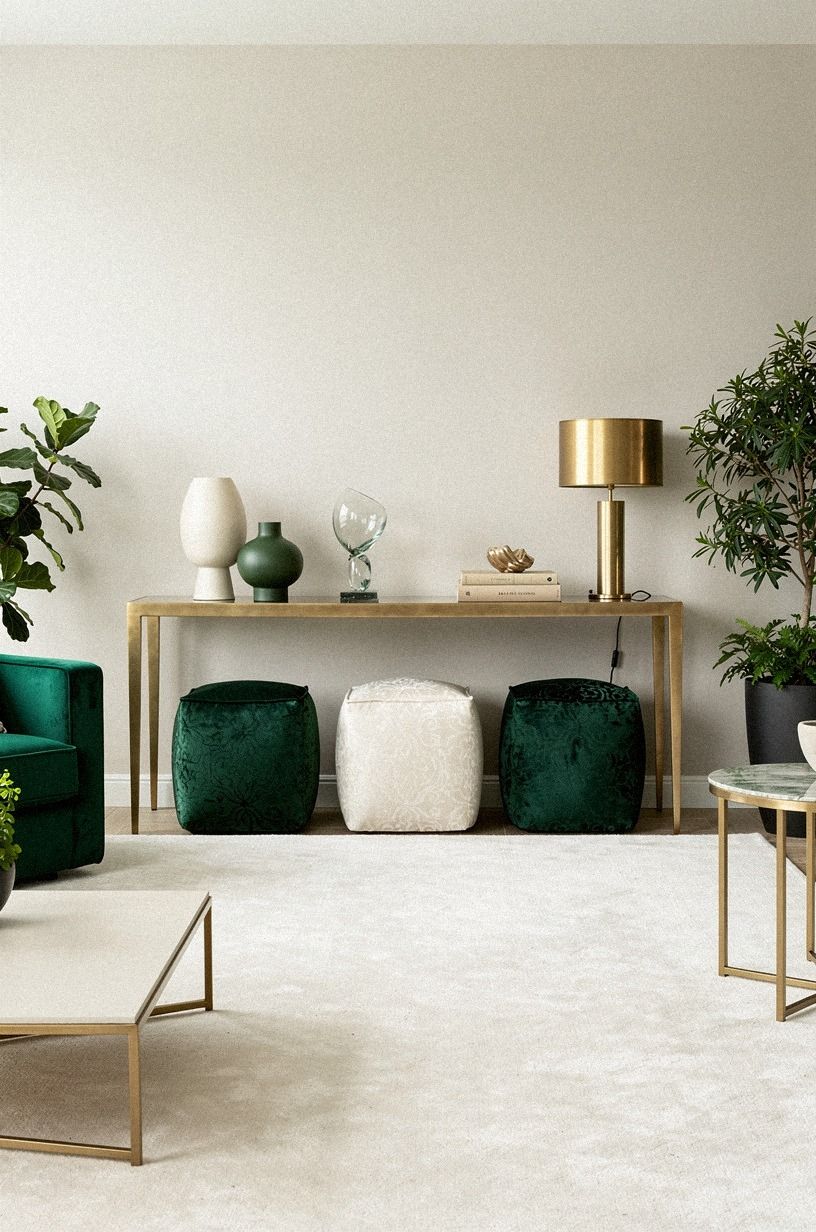
Poufs tucked beneath a console give the living room hidden seating that appears only when guests need it. Use two or three low pieces in an emerald, gold, and cream palette, with unlacquered brass developing soft patina on the console hardware. The arrangement keeps the main floor open while adding a welcoming layer near the room’s edge.
Choose poufs with firm interiors and durable fabric rather than soft shapes that collapse after one use. A performance velvet pouf can handle frequent movement, and a 30–36-inch console gives the wall a useful visual line. You’ll want at least one open side so each pouf can slide out without forcing guests to lift it over a rug.
This is one of the smartest small-space living room seating ideas because the furniture serves two purposes. The console stays useful every day, while the poufs create extra seats during a gathering. Don’t fill the lower shelf with baskets if the poufs need to move quickly.
For a more polished look, choose poufs with contrasting shapes: one round leather pouf, one square woven pouf, and one rectangular fabric pouf. They’ll feel intentional when the colors share a common undertone. A tray on the console can hold bottles, napkins, or small dishes while the poufs remain clear.
6Layer a bench behind the main sofa
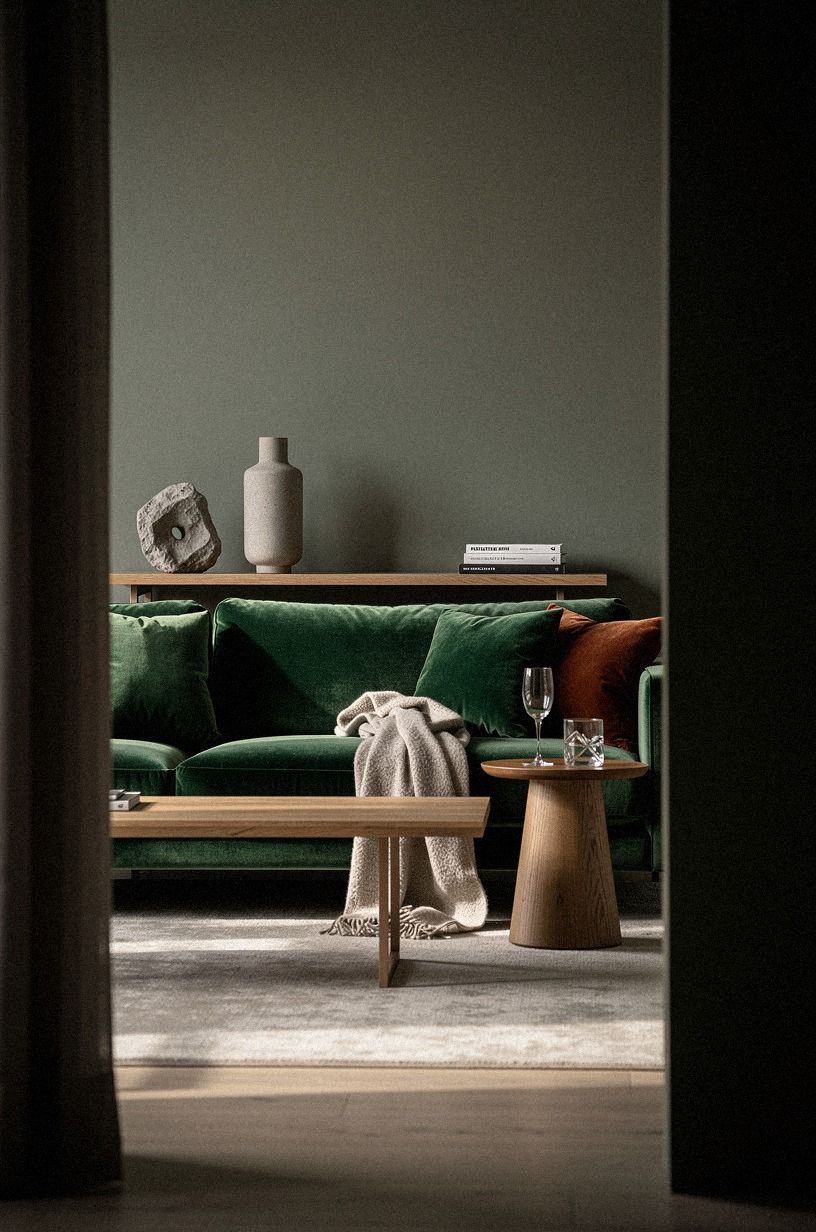
A bench behind the main sofa adds a second conversation position without demanding another full-size chair. The placement works best when the sofa floats in the room and the bench faces a window, fireplace, or secondary seating area.
Choose a slim upholstered bench with a firm seat, rather than a deep daybed that competes with the sofa. A forest-green or rust deep-pile mohair velvet bench can warm up a neutral room, while a natural oak frame creates a grounded contrast. Keep the bench lower than the sofa back if the room needs an open sightline.
This arrangement is useful during larger gatherings because the bench can serve as a perch, a landing spot for a tray, or a place to set folded throws. It shouldn’t become a storage shelf filled with objects. Leave enough open space for guests to sit comfortably.
A bench behind the sofa also gives the room a finished back view. Add one small ceramic lamp or a narrow vase at the end, but keep the center mostly clear. The furniture will look lighter, and guests can enter from either side without navigating a decorative obstacle course.
7Cluster floor cushions around a cocktail table
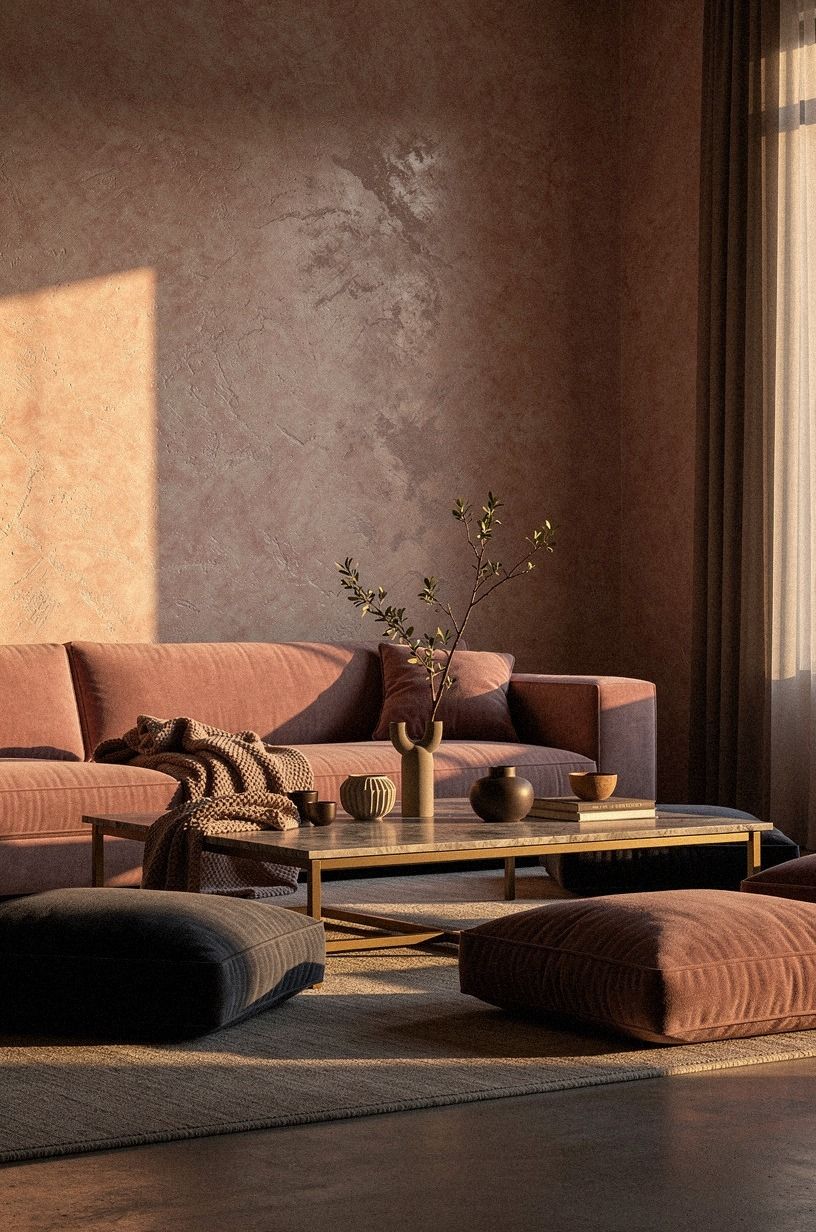
Floor cushions create an intimate, relaxed arrangement for casual gatherings, especially when the room has a low cocktail table. Cluster dusty rose cushions around charcoal upholstery and aged brass details, then bring in hand-applied Venetian plaster on a nearby wall or fireplace surround. The varied textures make the low arrangement feel deliberate instead of unfinished.
Use cushions with firm inserts and removable covers so guests can sit comfortably for more than a few minutes. A cotton-linen floor cushion gives enough structure for conversation, while a low table keeps drinks close without forcing anyone to stretch. You’ll want one or two nearby chairs for guests who prefer a raised seat.
Floor seating isn’t right for every household, but it’s excellent for informal evenings. Children, teens, and relaxed adult groups can shift around easily. Keep the palette controlled, and the arrangement will feel warm and earthy rather than cluttered.
A flat woven rug works better than a thick shag under floor cushions because it keeps the surface stable. Add a few cushions in different sizes, but avoid turning the center into a pile. Guests need clear places to sit, stand, and reach the table.
8How can a narrow open bookcase separate seating zones?
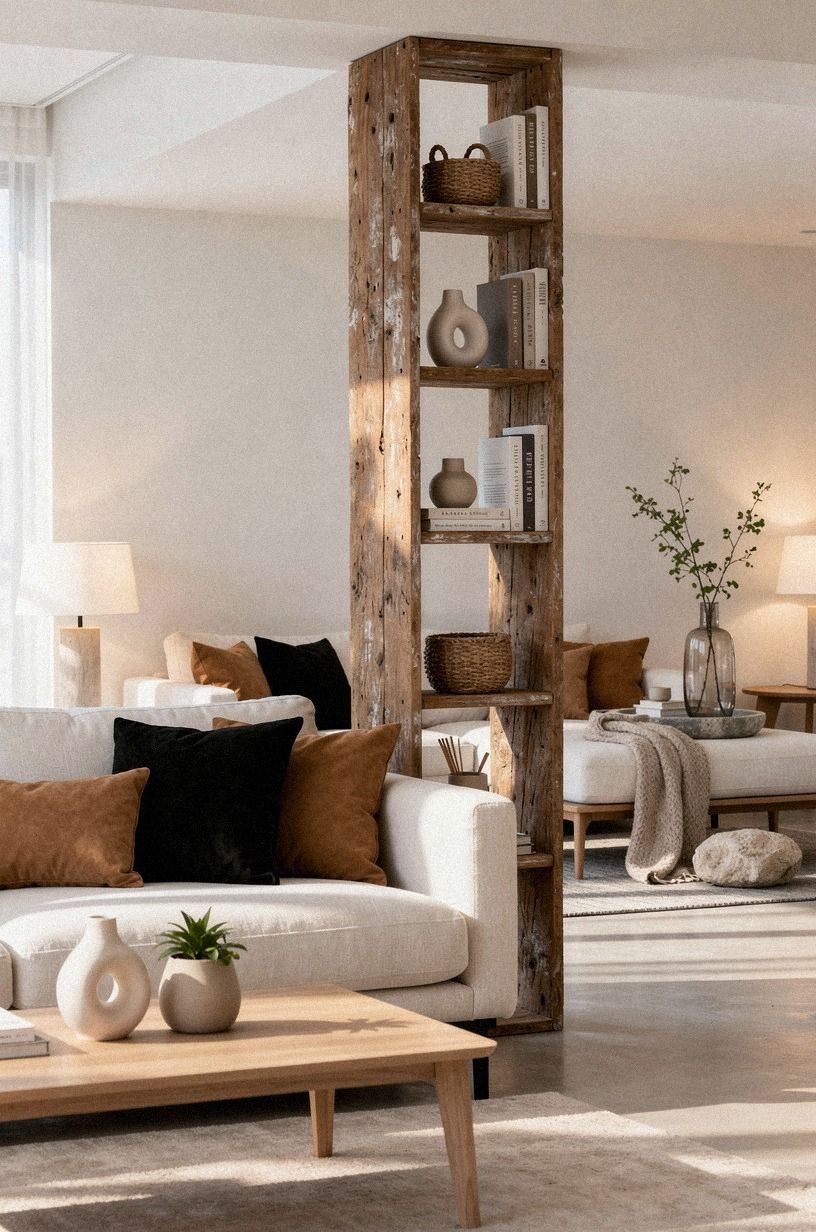
A narrow open bookcase can separate two seating zones without cutting the living room in half. Place it perpendicular to a wall or behind one chair group, then use the open shelves to maintain light and visual connection. The result creates definition without the heaviness of a full partition.
Choose a 12–16-inch-deep bookcase so circulation remains comfortable. A reclaimed weathered teak finish suits a room with warm-white walls, camel upholstery, and black accents. Keep the styling practical: a few books, ceramic vessels, framed artwork, and one small plant will give the shelves rhythm without making them feel crowded.
The bookcase can divide a main conversation area from a reading chair, a game table, or a dining transition. It’s especially useful in an open-plan room where the sofa otherwise floats without a clear boundary.
Leave a visible gap above the furniture whenever possible. That open space prevents the divider from feeling like a wall. You’ll also gain a useful surface for lamps or serving pieces without sacrificing the room’s sense of flow.
9Rotate swivel chairs toward guests and garden views
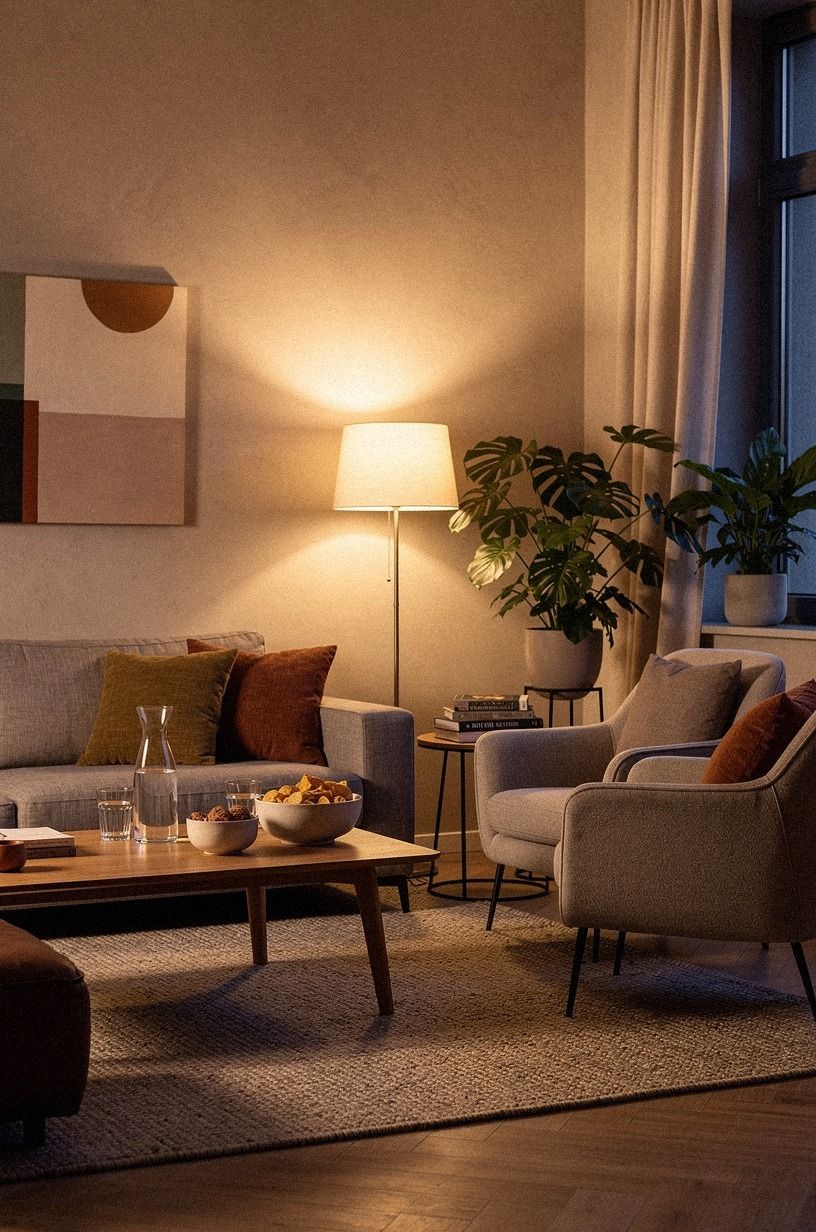
Swivel chairs solve a common living room problem: one direction works for conversation, while another works for a garden view or television.
10Anchor a window nook with a tailored loveseat
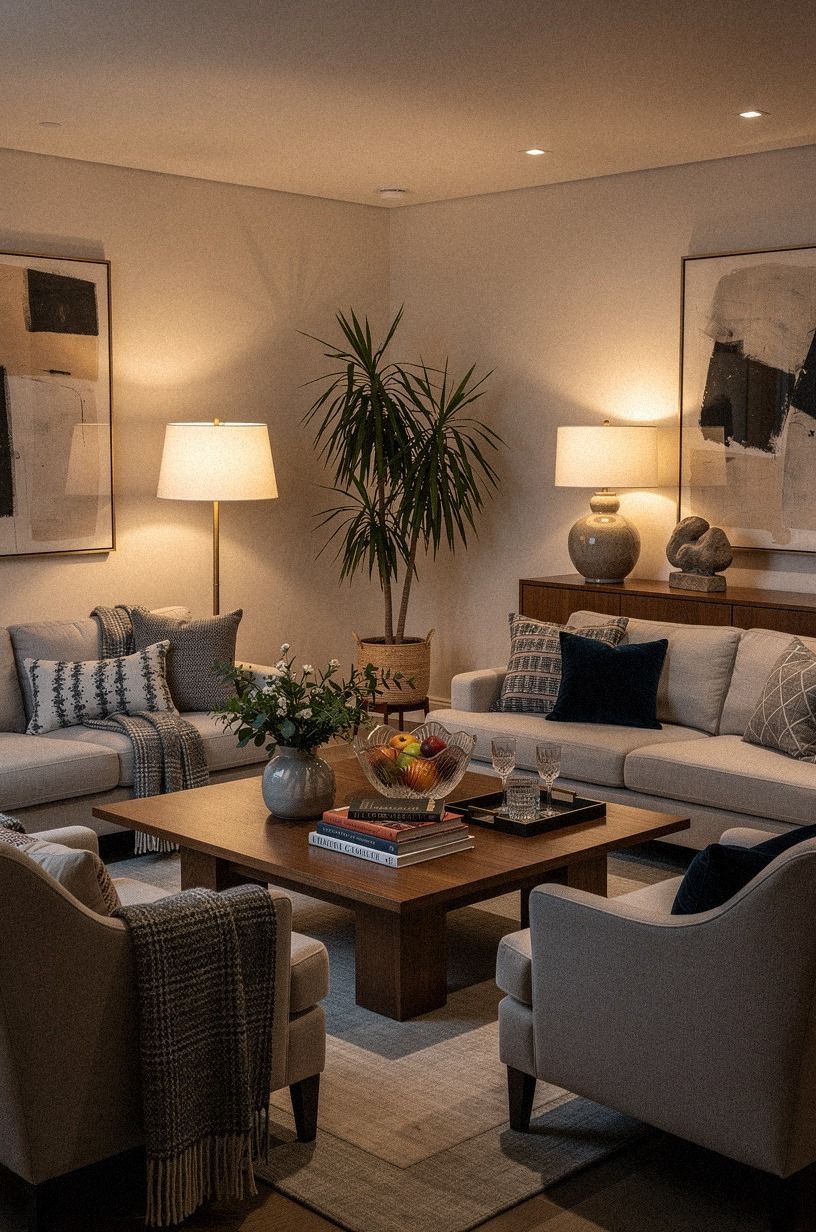
A tailored loveseat can turn a window edge into a genuine social seat instead of leaving the daylight underused. Choose sage green, warm cream, and natural wood, then add cerused white oak on the legs or a nearby side table. The palette feels calming in daylight and remains warm after sunset when paired with a shaded lamp.
Keep the loveseat proportional to the window width. A performance cotton velvet loveseat offers a soft surface with more structure than an oversized lounge sofa. You’ll want the seat to face into the room rather than directly toward the glass, so guests can join the conversation without turning their backs on everyone else.
This arrangement works when the main sofa already handles the central seating. The nook becomes a quieter branch of the gathering, useful for one or two guests who want a little distance while staying connected. Don’t overload it with pillows, or the tailored shape will disappear.
Window nooks benefit from a clear side table. Choose a round travertine table or a slender oak pedestal that can hold a drink without crowding the seat. Add layered curtains if the glass feels exposed, but keep the center view open so the nook remains connected to the larger room.
11Mix dining chairs into a relaxed seating circle
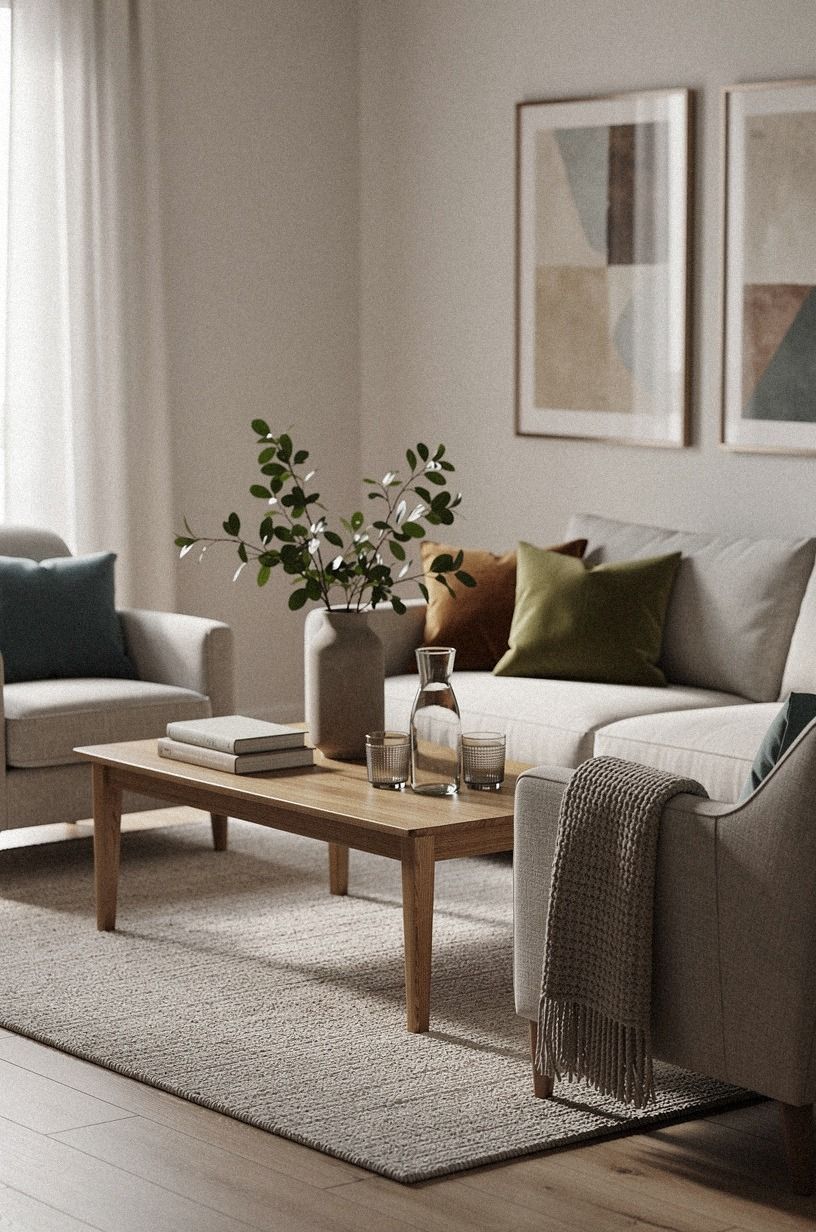
Dining chairs can join a living room seating circle when they have enough comfort and visual weight. Select chairs with upholstered backs, generous seats, or arms that encourage longer sitting. Lightweight side chairs often work better than formal dining thrones because guests can move them as the group changes.
A pair of terracotta-upholstered chairs can bring warmth beside a sofa, while stone-colored shagreen accents add tactile interest. An olive chair frame or olive cushion can connect the seating group to the surrounding palette. The key is proportion: chairs should feel substantial enough to belong in the living room without competing with the main sofa.
Place one chair near a side table and another at the edge of the rug. Avoid lining every seat in a perfect circle. Slight variations make the room feel more natural and leave practical paths through the arrangement.
Dining chairs are also useful when a gathering grows unexpectedly. They can move toward a coffee table, dining table, or kitchen island in seconds. A comfortable seat with a defined purpose will earn more use than an oversized accent chair that blocks circulation.
12Place ottomans between seats for flexible footrests
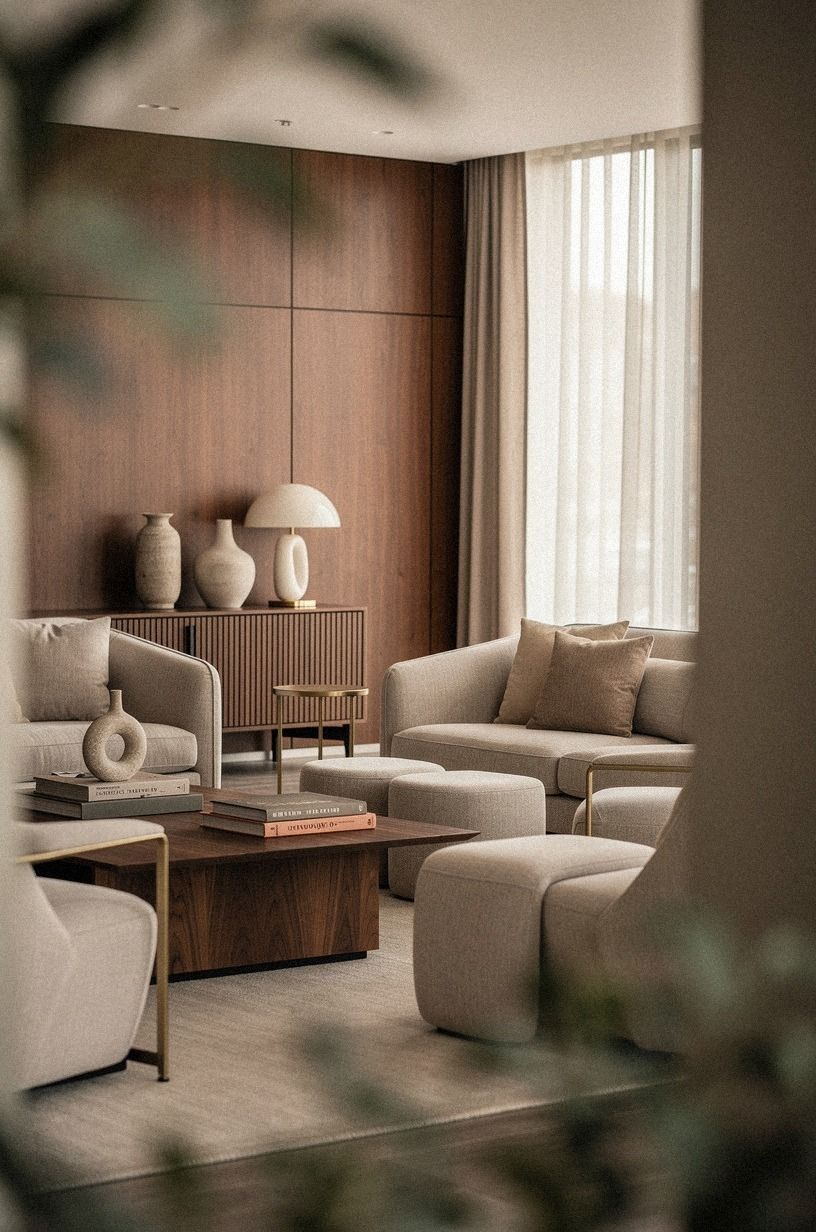
Ottomans placed between seats create flexible footrests, spare perches, and temporary tables in one move.
13Frame the television with symmetrical lounge chairs
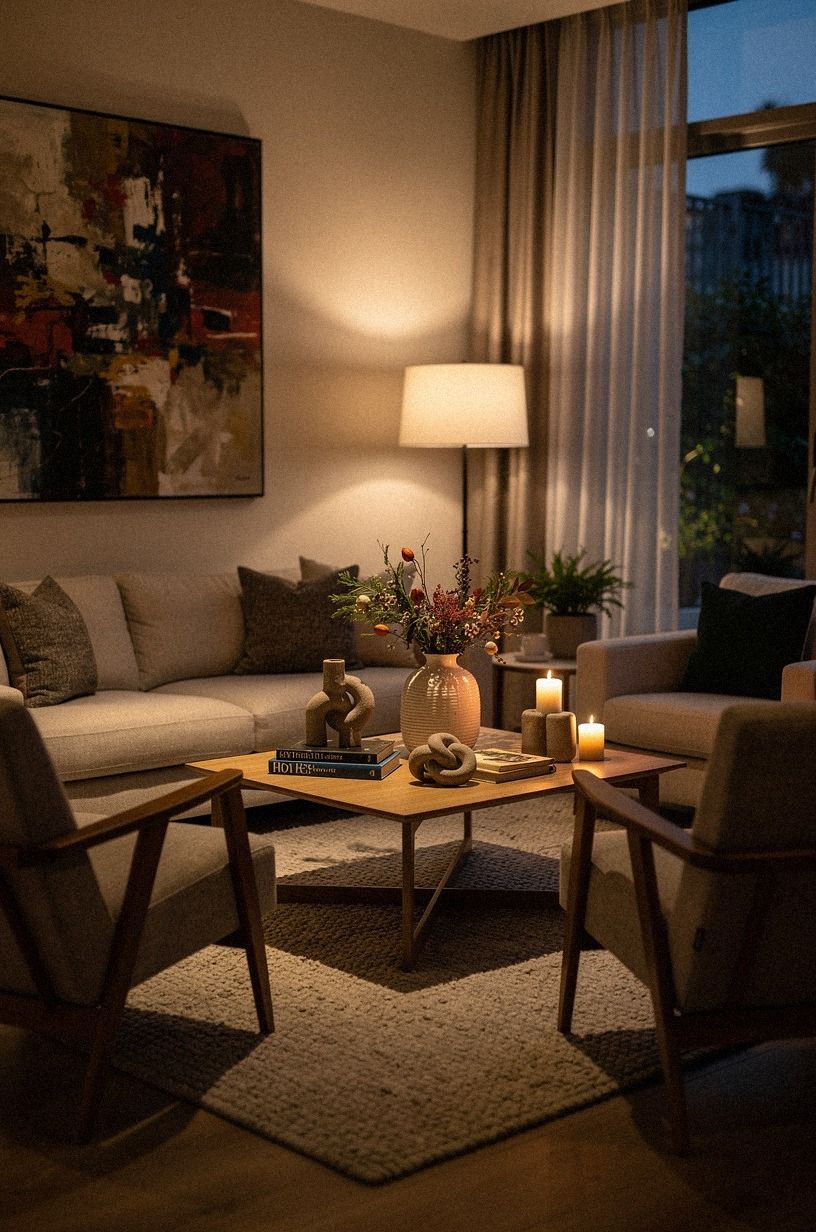
Symmetrical lounge chairs can frame a television while keeping the room useful for conversation. Place plum or grey chairs on either side, introduce rose gold through a lamp or tray, and repeat organic bouclé for a soft contrast against the screen. The balanced arrangement keeps the television visible without allowing it to dominate every seat.
Position the chairs so they can face the sofa as easily as the screen. A bouclé lounge chair with a rounded back adds softness and prevents the arrangement from feeling like a media room. You’ll want the viewing distance to sit around 1.5–2.5 times the screen diagonal, while the chairs remain angled enough for direct conversation.
Symmetry helps a television wall look finished, but perfect matching can feel stiff. Add different cushions or one varied side table so the composition stays welcoming. The result is a practical party seating layout that supports both movie nights and long conversations.
Hide cords where possible, and keep the screen wall visually quiet. A low media console, one piece of artwork, and controlled lighting usually create a calmer background than multiple shelves filled with objects. Guests should notice the people and conversation before noticing the electronics.
The Conversation-First Rule That Makes Every Layout Work
The strongest living room seating ideas begin with human movement, not furniture count. Guests need to see at least one other face without twisting, shouting, or leaning around a lamp.
That simple test is more useful than chasing a specific style label. If a sofa looks impressive but points everyone toward a blank wall, it’s working against the room.
Start with the main social center, then draw a clear route around it. A coffee table around two-thirds of the sofa length usually feels balanced, while a 16–18-inch height keeps drinks accessible. You’ll want the rug to catch the front legs of the seating, with 8-by-10 or 9-by-12 dimensions often giving a room enough visual connection.
A smaller rug can make every piece look stranded.
Material choices matter because parties create friction. Performance fabric, washable cotton, and sealed wood handle real use better than fragile finishes.
That doesn’t mean the room should look commercial. Pair durable upholstery with tactile details such as aged brass, bouclé, wool, or cerused oak, and the setting will still feel warm and sophisticated.
The best layouts also allow a second arrangement. A swivel chair can face the garden, an ottoman can move aside, and a bench can serve as extra seating without changing the room’s identity. You’re building a room that responds to people.
That’s the point. Not every seat needs to match, but every seat needs a reason to exist.
Test the arrangement before shopping. Sit in each position, reach for the table, turn toward another seat, and walk through the room while carrying a drink.
If a route feels awkward when the room is empty, it’ll feel worse when guests arrive. A clear path matters!
What These Seating Choices Typically Cost
The cost depends on whether the room needs styling layers, a major sofa, or custom construction. Free changes include rotating chairs, removing obstacles, and shifting tables.
Paint, pillows, and throws can change the atmosphere without replacing the main seating. You’ll want to decide whether the room needs better circulation before spending on new furniture.
For a smaller adjustment, a performance-fabric sofa typically costs $1,200–$4,000, while a wool 9-by-12 rug often falls between $600–$2,500. An oak coffee table may range from $300–$1,200, and linen drapes for a pair commonly land around $120–$400. These are useful planning ranges, not promises.
A room can feel substantially better without a major purchase. Moving a sofa away from the wall, changing the lamp height, and adding one movable seat may solve the main problem. If the upholstery is worn, prioritize the piece that receives the most use rather than replacing every item at once.
What People Always Want to Know
What is the best seating layout for a small living room?
A face-to-face sofa and two swivel chairs usually work best because the seats support direct conversation without requiring a second sofa. A compact apartment sofa can keep the footprint manageable, while an Article Sven chair adds a more tailored shape. You’ll want a 16–18-inch table and clear walking space around the group.
Where can you buy living room seating pieces on a budget?
Large retailers, Wayfair, and Target offer accessible sofas, poufs, chairs, and tables across many sizes. Facebook Marketplace and thrift stores can also provide solid wood pieces at lower prices. Better results come from searching for exact dimensions, checking frame condition, and choosing upholstery that doesn’t show every mark.
How much does a living room seating makeover cost?
A focused makeover often costs about $300–$1,200 for pillows, throws, a rug, art, and paint. Rearranging furniture, removing extra tables, and editing accessories can cost nothing. A new sofa and quality rug push the project into the typical $2,500–$8,000 mid-range tier.
Can comfortable party seating work on a budget?
Yes, and the easiest moves are free or inexpensive. Rotate existing chairs toward the sofa, place a tray on an ottoman, and use floor cushions for flexible seats. A secondhand wood table, washable covers, and one carefully chosen lamp can make the arrangement feel warm without replacing every piece.
Is comfortable seating worth it in a small space?
Yes, because a small room benefits from clear purpose and fewer oversized pieces. Choose swivel chairs, nesting tables, or poufs that can move when needed. You’ll gain more usable space by keeping every seat connected to the conversation center rather than filling corners with furniture that rarely gets used.
Is this seating approach a good idea for a rental?
Yes. Rearrangeable furniture, removable rugs, tension-rod drapes, and peel-and-stick wall accents can create a complete seating zone without permanent changes.
You’ll want freestanding lamps instead of hardwired fixtures, and a narrow bookcase can divide functions without touching the walls. Prioritize pieces that can move to a future home.
Where to Start First
If one change deserves priority, start with two chairs angled toward the main sofa. That move fixes dead sightlines faster than buying a larger table or adding more pillows.
Keep the chairs light enough to move, choose durable upholstery, and let the room adapt when guests arrive. Test the arrangement for one evening before shopping.
One movable seat can do more than a room full of decorative extras!