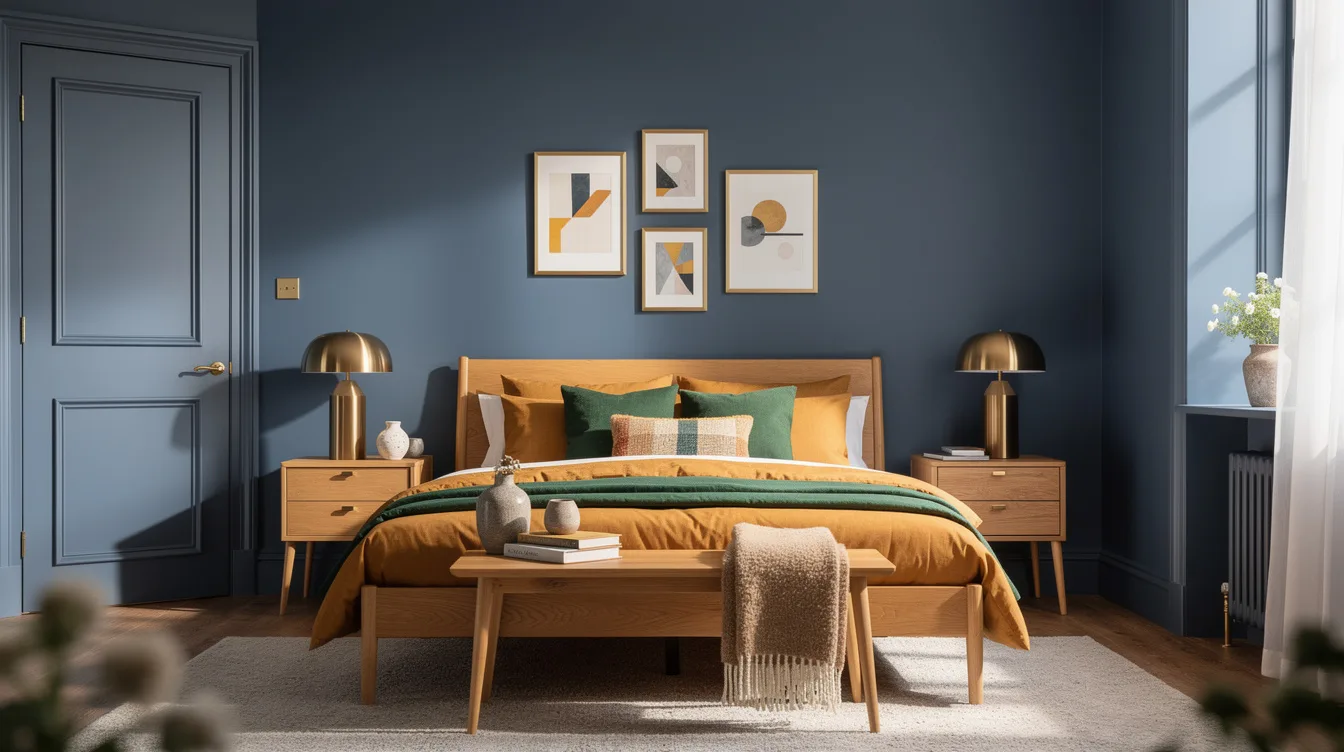
A bedroom door can ruin an otherwise convincing color scheme in one move: leave it bright white while the walls carry a deep, moody shade. In one real 2026 project, four architectural elements were treated together with Benjamin Moore Boothbay Gray, while eggshell walls and ceiling contrasted with satin woodwork.
The technique is simple, but the finish and doorway decisions determine whether the room feels enveloping or merely overpainted. These designer-approved rules show where to carry the color and where to stop.
Paint Every Bedroom-Facing Surface
Start with the architecture that belongs visually to the bedroom: walls, doors, frames, baseboards, and window trim. Boothbay Gray works especially well for this approach because its blue-gray depth gives each surface a quiet connection.
A real 2026 bedroom project used Benjamin Moore Aura across those elements instead of replacing doors or adding new molding. The paint did the heavy lifting, making ordinary trim feel intentional.
Include closet doors whenever possible. A large white rectangle can break the cocooning effect faster than almost anything else in the room.
Extend the Color Across the Ceiling
For the most enveloping result, continue the bedroom color overhead. Ceiling paint removes the bright border above the walls and makes the room feel calmer at night.
Use the same color family on the ceiling, but adjust the finish for the light it receives. A softer surface keeps the overhead plane from looking glossy or visually heavy.
This move is especially effective in bedrooms with standard-height ceilings, where a continuous color field can make the architecture feel more considered.
Separate Sheen From Color
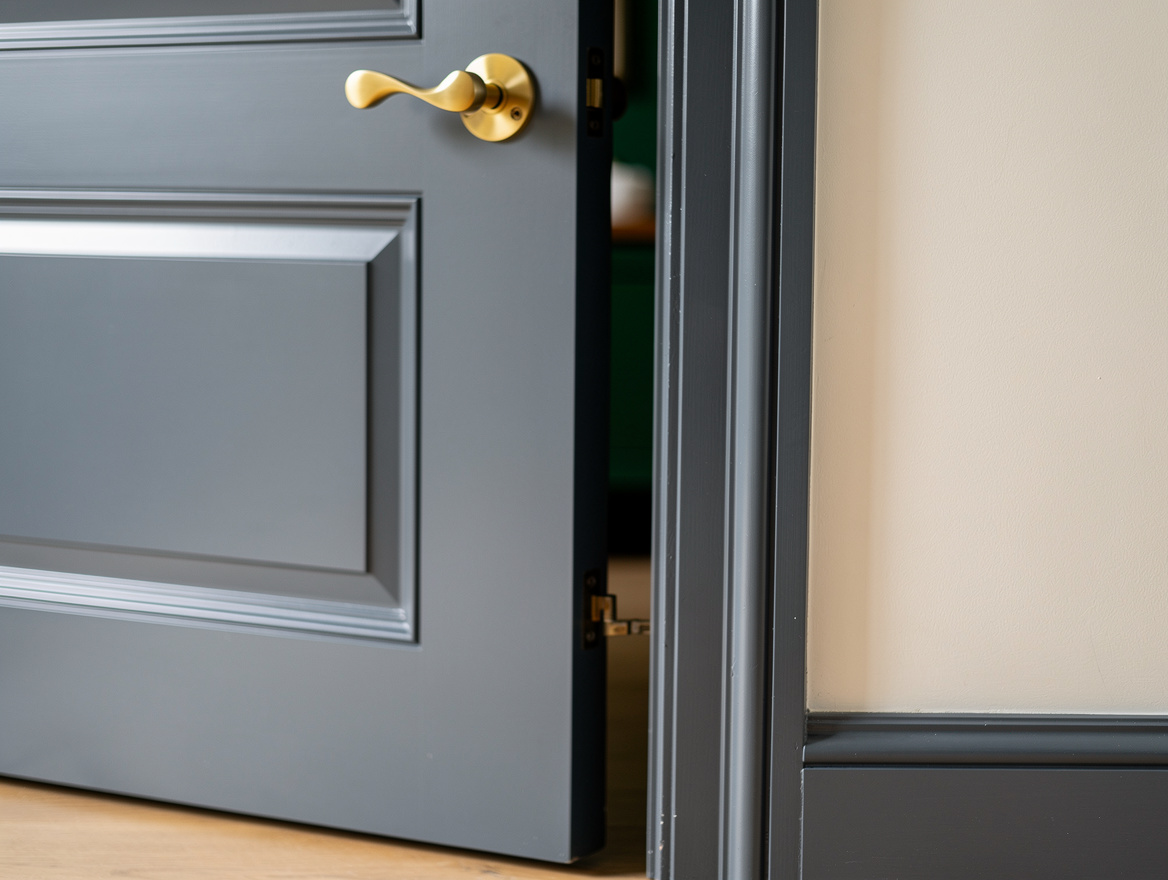
Keep the color consistent while changing the sheen by surface. The documented Boothbay Gray bedroom used eggshell finish on the walls and ceiling, then a tougher satin finish on the woodwork.
That distinction gives doors and trim enough protection for hands, shoes, and everyday cleaning. Satin paint also catches light along casing and baseboards, so the architectural details remain visible without introducing another color.
Skip high gloss unless the room has a specific vintage or lacquered look. In most bedrooms, too much reflection makes the door feel disconnected from the softer wall planes.
Set the Doorway Boundary Precisely
You can drench the bedroom without repainting the hallway. Paint the bedroom-facing door, casing, and trim in the bedroom color, while the hallway-facing surfaces stay with the hallway scheme.
On an inward-opening door, the bedroom-side edge should read as part of the room when the door is open. The hinge-side edge can remain tied to the hall, depending on what is visible from each direction.
Before painting, study the door swing from both rooms. Painter’s tape belongs on hinges and hardware you are keeping, and handles should come off so the finish can wrap cleanly around the door.
Remove White Interruptions Around the Room
Color-drenching works through continuity, so look for every bright interruption before opening the paint can. Closet doors, window surrounds, skirting, and narrow casing should be treated as part of the bedroom composition.
BEHR’s Rumors example carries a deep ruby red over walls, ceiling, and door frames. In a bedroom, that same idea creates a more dramatic envelope when the baseboards and room-facing door follow along.
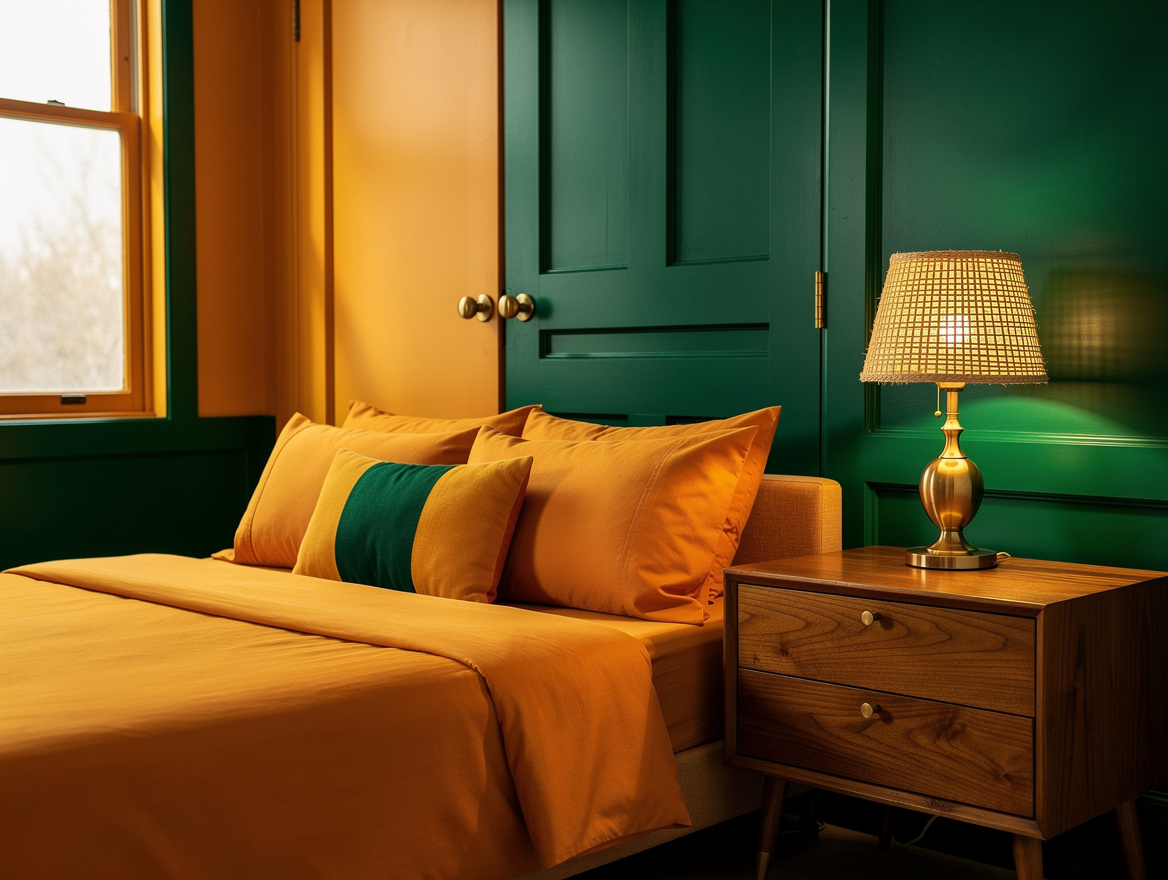
Smoky jade offers a quieter version of the effect. Use the architectural color on fixed elements, then let bedding, lamps, and furniture bring in contrast.
Build Contrast Through Furnishings
Once the walls and woodwork share a color, furniture becomes the place to create definition. A natural wood nightstand, woven shade, or aged metal lamp can separate the planes without weakening the paint scheme.
Keep the hardware deliberate. Brushed brass pulls warm a blue-gray room, while black hardware gives ruby or smoky jade a sharper edge.
Layer in one strong textile before adding more decoration. A patterned duvet or substantial quilt supplies the visual break that white trim used to provide, but with much more control.
Color drenching succeeds when the room feels continuous and the finishes still explain how everything is used. Let the paint unify the architecture, then let touchable materials carry the personality.

Begin with the bedroom-facing door, casing, and baseboards, then test your chosen color in both eggshell and satin before committing. That small sample board will reveal whether the room needs more softness, more durability, or both.
Mia Carter writes about small-space living and budget home makeovers. She has restyled three rentals and tests most ideas in her own 45 sqm flat.