Kids’ music room ideas to spark creativity worked for us because the room finally feels like a place to play, rather than a corner for forgotten instruments. I made the change in one weekend with a narrow layout, secondhand storage, and Benjamin Moore Wickham Gray on the walls. My child started practicing without being asked. That was the result I wanted.
Editor’s note: Start with access. An inviting instrument, beautiful light, and reachable storage can make practice feel wonderfully effortless.
Here’s what it looked like before
Before the makeover, the room had good bones, but it had no invitation to stay. Instruments leaned wherever they fit, music books slid into crooked piles, and the only light came from one tired ceiling fixture.
I didn’t want a themed playroom that would feel young in six months. I wanted an airy, calming room that could grow with your child, hold real instruments, and survive a rushed morning.
If you’re planning a similar makeover, start by noticing what your child reaches for first. That answer should control the layout.
- Map the musical room around one clear practice zone
- Paint soft gray before adding louder color
- Anchor the keyboard with the Two-Wood Rule
- Build a low book ledge instead of a tall cabinet
- Layer a Three-Height Light Stack
- Hang instruments where your child can see them
- Swap toy bins for labeled instrument stations
- Frame a music wall with one bold print
- Mix a 5×7 play rug with a firm music seat
- Can a musical room include a quiet reading corner?
- Frame the window with soft, washable fabric
- Choose instrument storage over toy storage
- Paint a creative panel in Sherwin-Williams Open Air
- Mix old instruments with modern music rooms home details
- Practice with a Three-Minute Reset
1Map the musical room around one clear practice zone
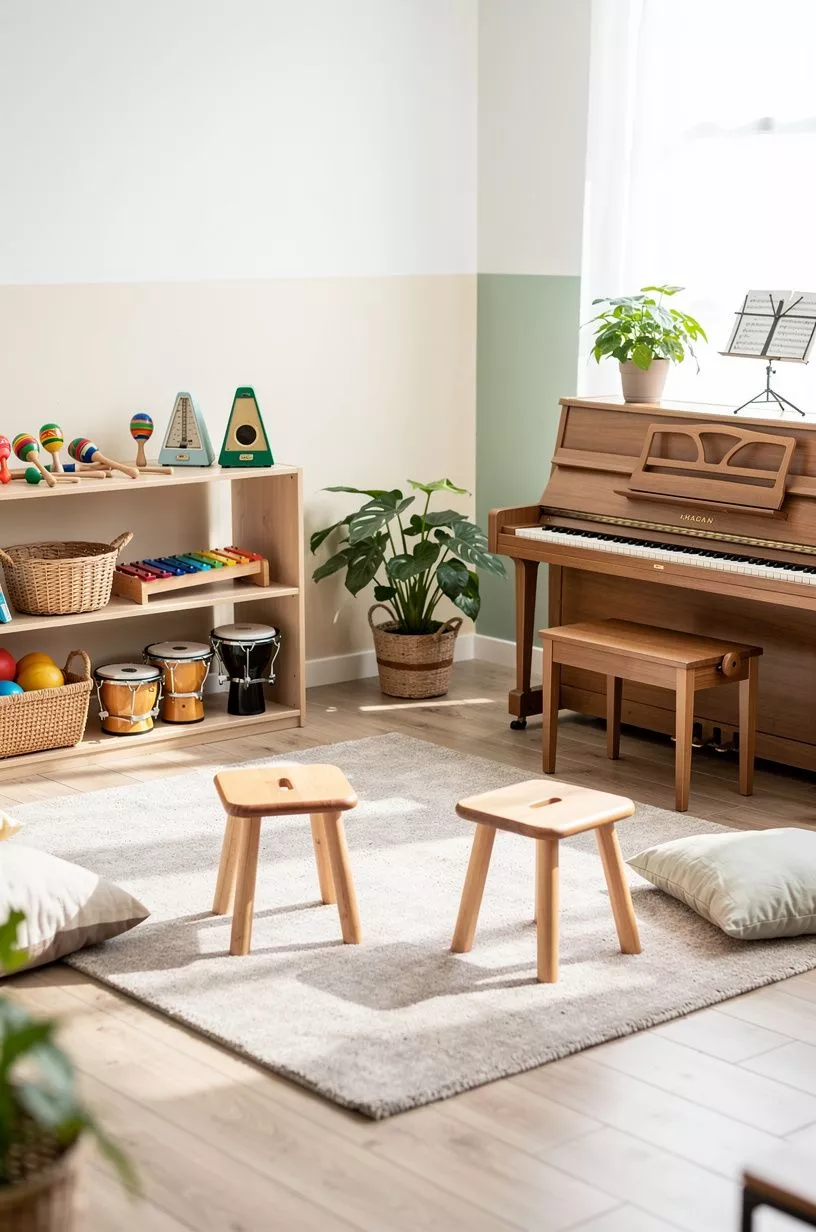
I started by moving every instrument into the center of the room. That sounds backwards, but it showed me where the traffic naturally flowed and where a child could sit without bumping a stand. You’ll want at least one open patch of floor, even if your room is small.
The keyboard went against the longest wall, with a cerused white oak open unit nearby for books and headphones. I kept the playing area close to the door because my child practices more often when the instrument is visible. A hidden setup might look tidier, but it loses the daily invitation.
If you’re working with a narrow room, these small music room ideas for big sound helped me think vertically. The practical rule was simple: your child should be able to reach the instrument, the music, and the seat without crossing the whole room. That one decision made the space feel peaceful and surprisingly inviting.
2Paint soft gray before adding louder color
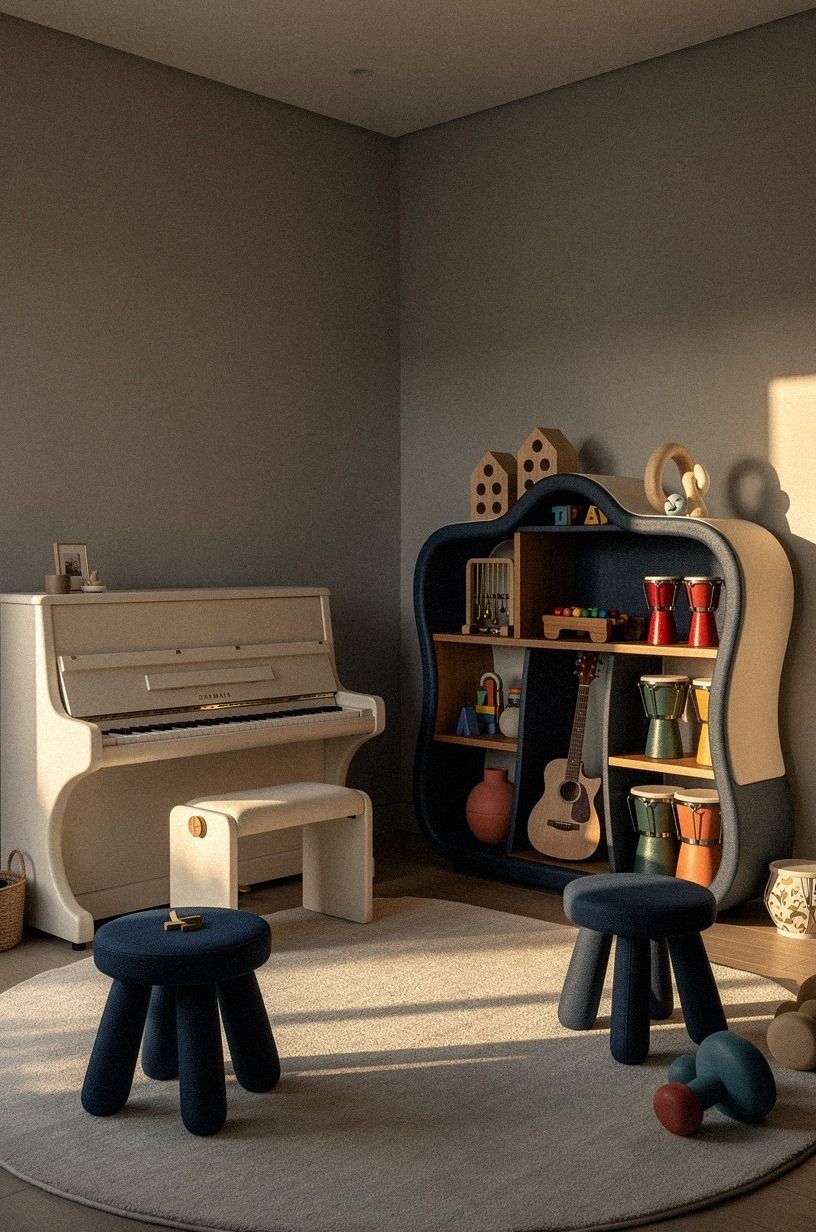
The walls were the first real design decision. A deep midnight blue gave the room a rich foundation that felt dramatic in daylight and gentle under a lamp.
I tested three samples before choosing it. You’ll want to watch the paint from morning through evening because midnight blue can feel heavy beside dark flooring or beautifully crisp with ivory. In this room, the shade made the ivory music pages look crisp and allowed the shagreen accents, copper details, and artwork to carry the personality.
I added a small accent panel later, but the quiet background came first. If you’re comparing palettes, these music room ideas for turning any space into a creative haven show how a restrained wall color can make a busy room feel polished. I also found the same creative music room ideas useful when choosing artwork and storage colors.
Good light changes everything!
3Anchor the keyboard with the Two-Wood Rule
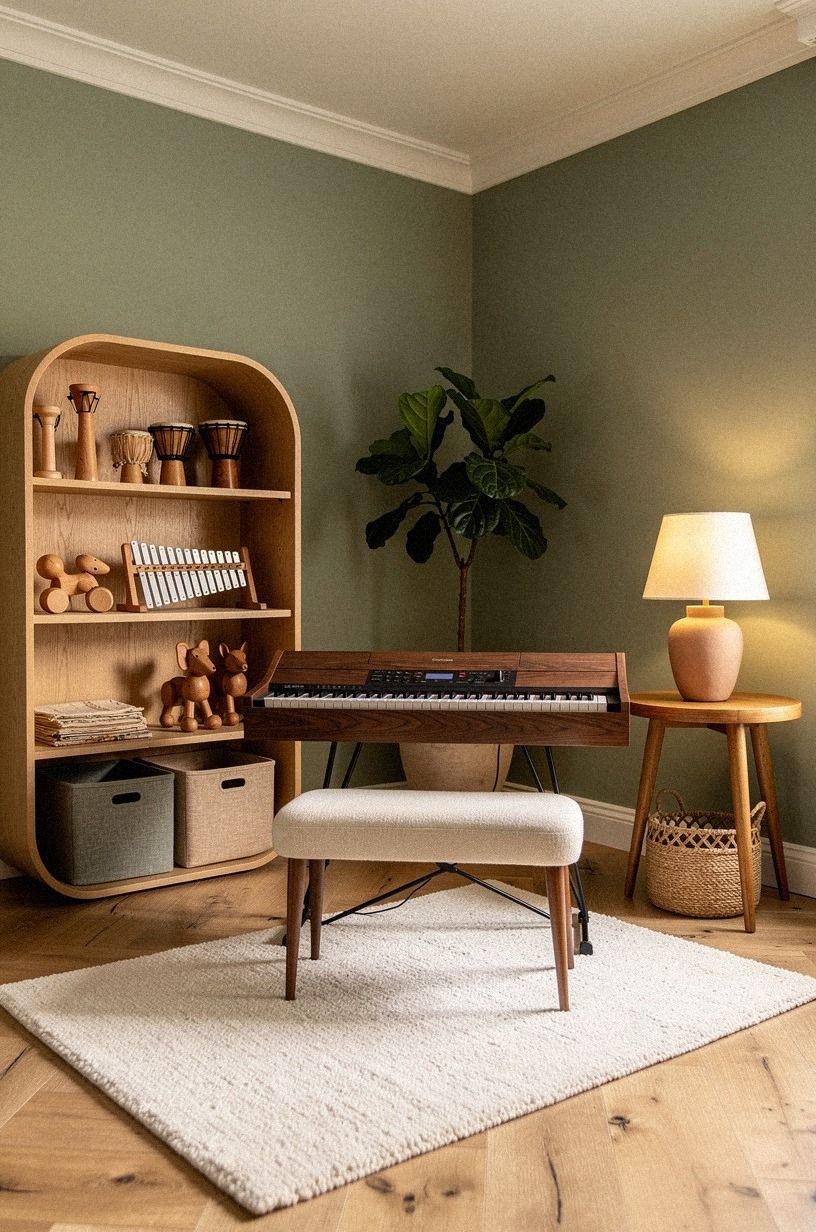
The keyboard looked temporary until I gave it a stronger frame.
4Build a low book ledge instead of a tall cabinet
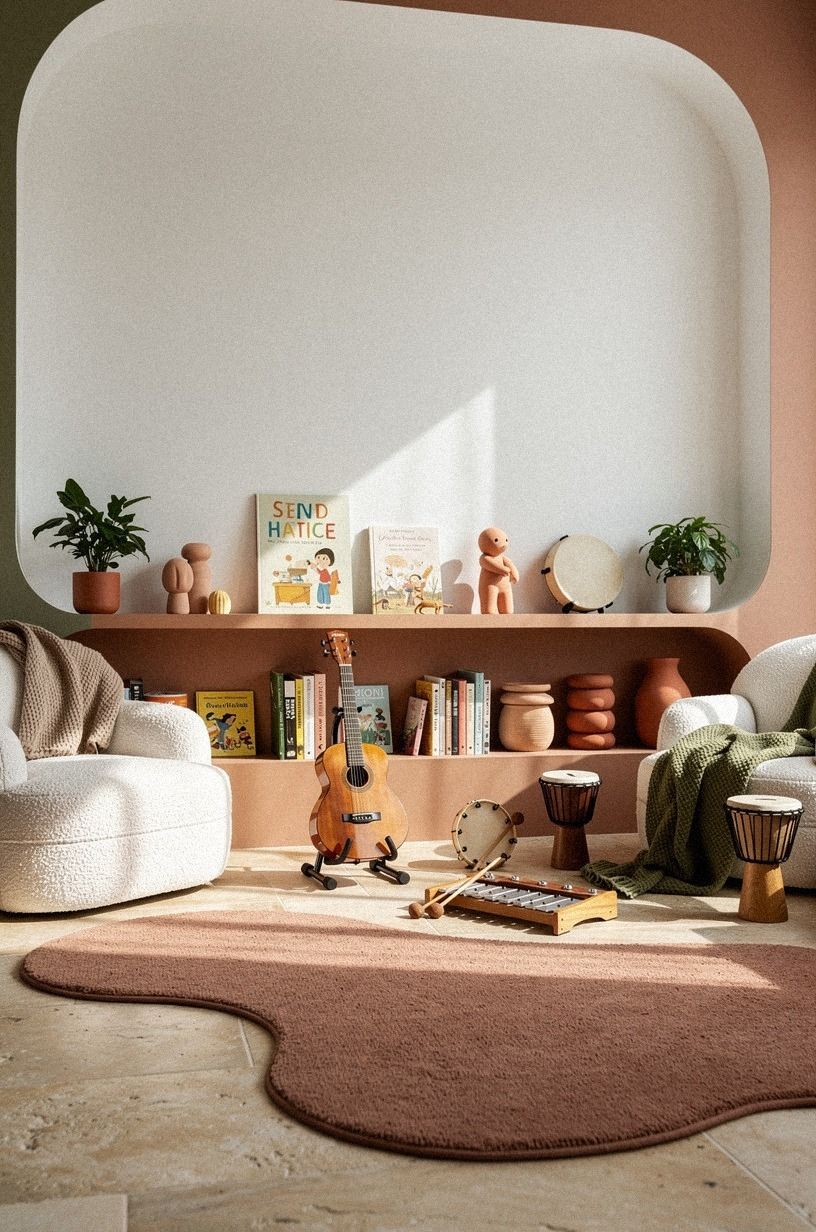
Music books need to be visible, or they disappear. I built a low ledge with an organic bouclé panel, a narrow wood rail, and two wall brackets. It holds the current books face-out, so your child can see the cover and choose one without pulling everything down.
The ledge sits below the main shelf and leaves the floor open underneath. You’ll want the lowest edge within easy reach, especially if your child is still learning to care for books independently. I kept only the current stack there.
The rest went into a labeled Target Threshold bin.
And yes, the room looked less controlled for the first week. That was useful information. A music space should show signs of use, and a few open pages are better than a flawless shelf nobody touches!
If you’re combining work and practice, these office music room combo ideas show how a ledge can divide functions without adding a wall. The result feels practical, relaxed, and wonderfully lived-in.
5Layer a Three-Height Light Stack
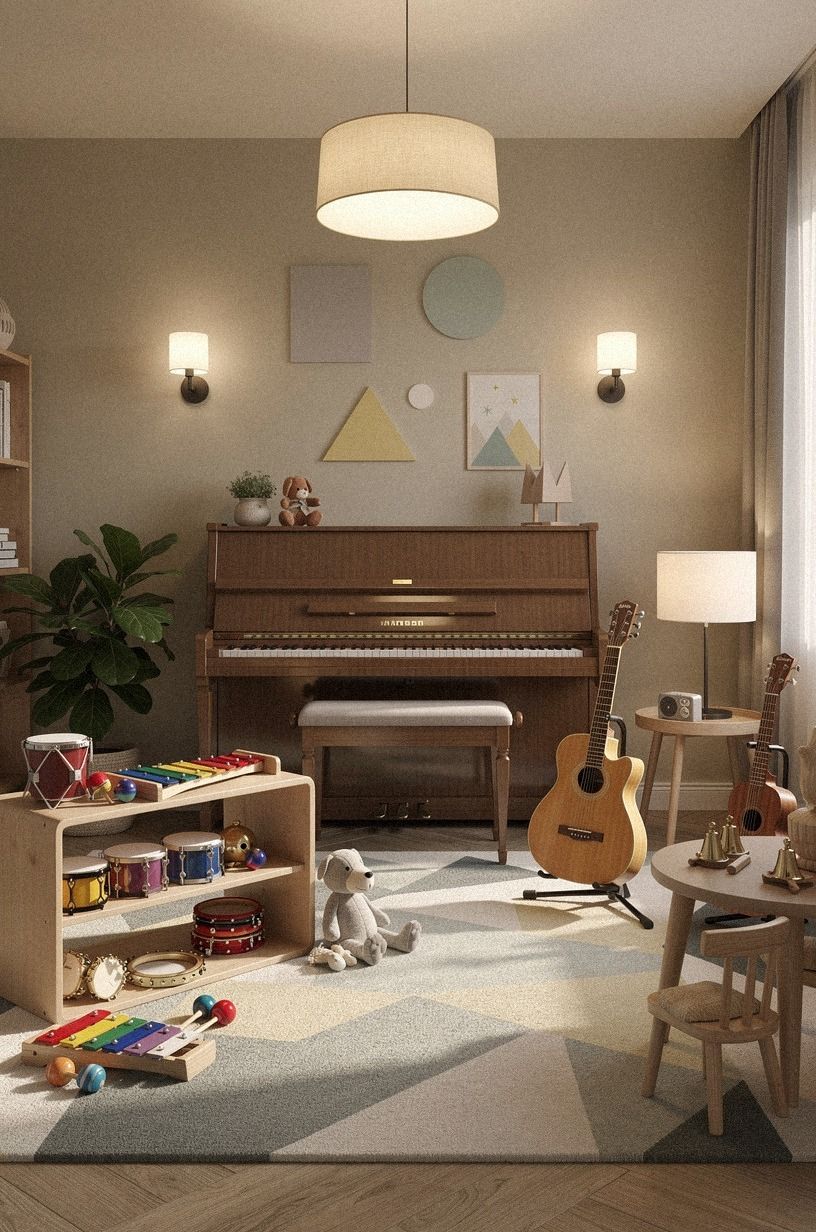
The room needed better light before it needed more decor.
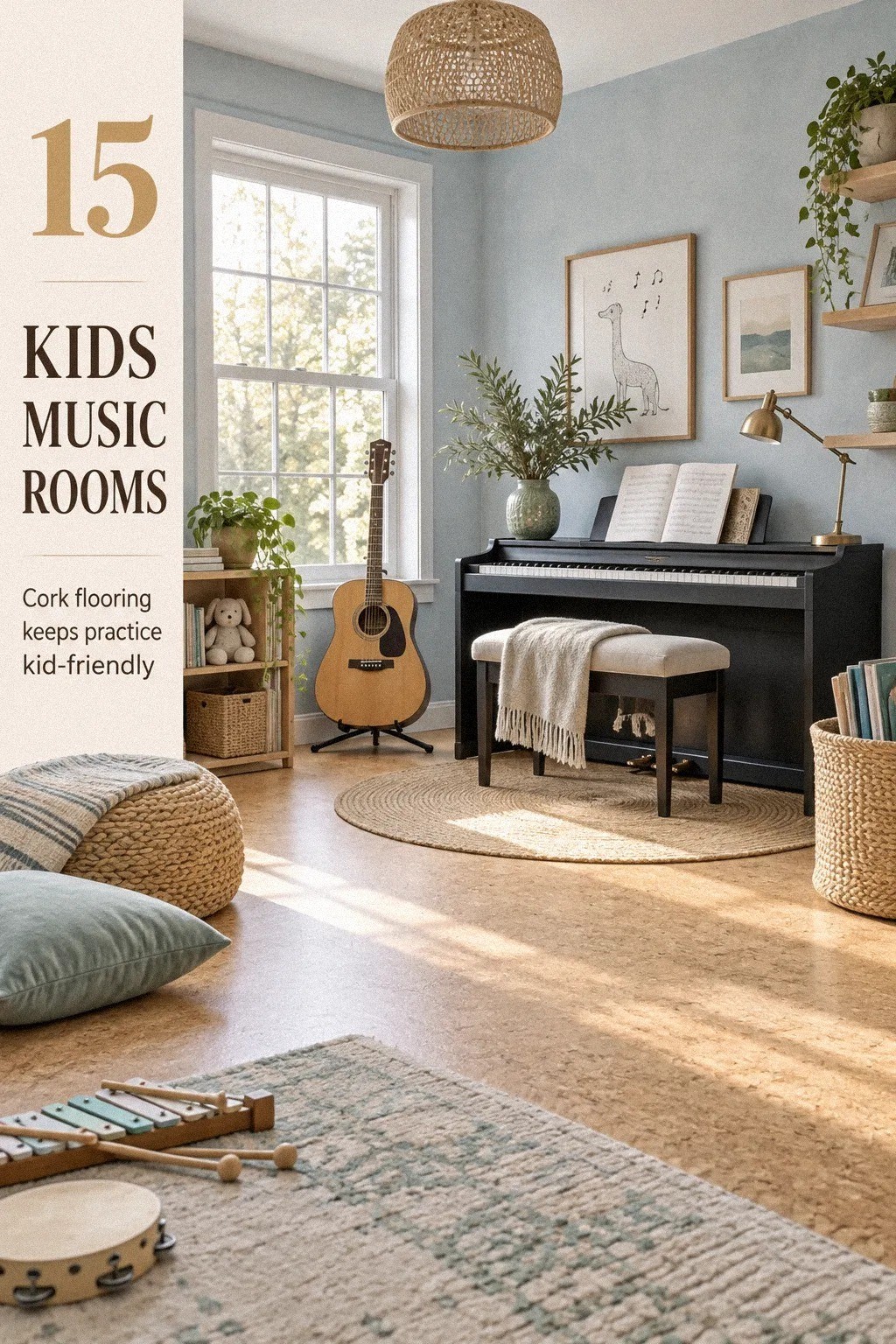
6Hang instruments where your child can see them
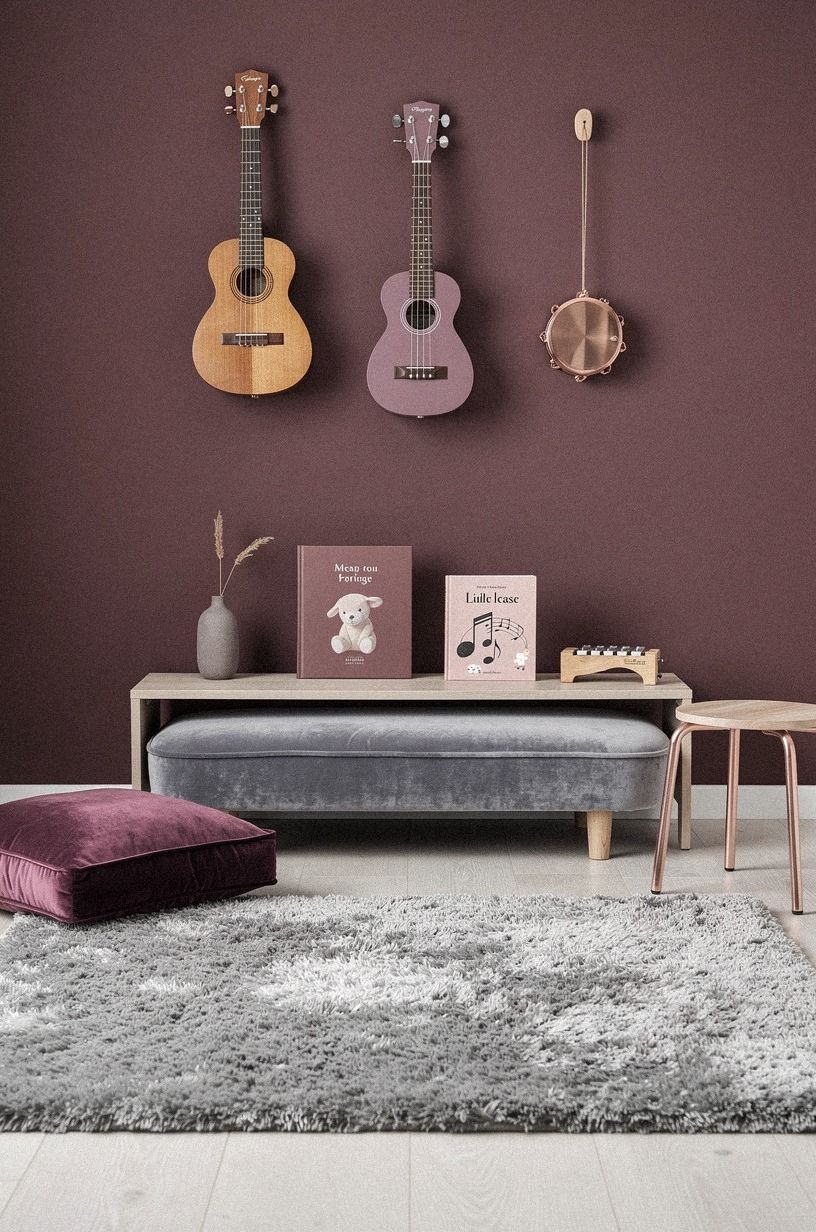
The instruments became wall art once I stopped hiding them in cases. I used rose-gold wall hooks for the ukulele and tambourine, then left the heavier pieces on the floor. Your child can see what’s available, and you can spot a missing item before bedtime.
Safety mattered more than symmetry. I mounted every hook into a stud or proper anchor, kept the heavier instruments low, and left a clear path around the keyboard. You’ll want to check the hardware weight rating before hanging anything valuable.
A tidy wall isn’t worth a fallen instrument.
And honestly, I almost arranged everything in a perfect row. That would’ve looked stiff. A slightly uneven grouping feels more like a working studio, especially beside the plum deep-pile mohair velvet chair.
For a smaller room, I’d start with the storage advice in this music room storage and instrument organization guide. The wall now feels creative, accessible, and full of possibility.
7Swap toy bins for labeled instrument stations
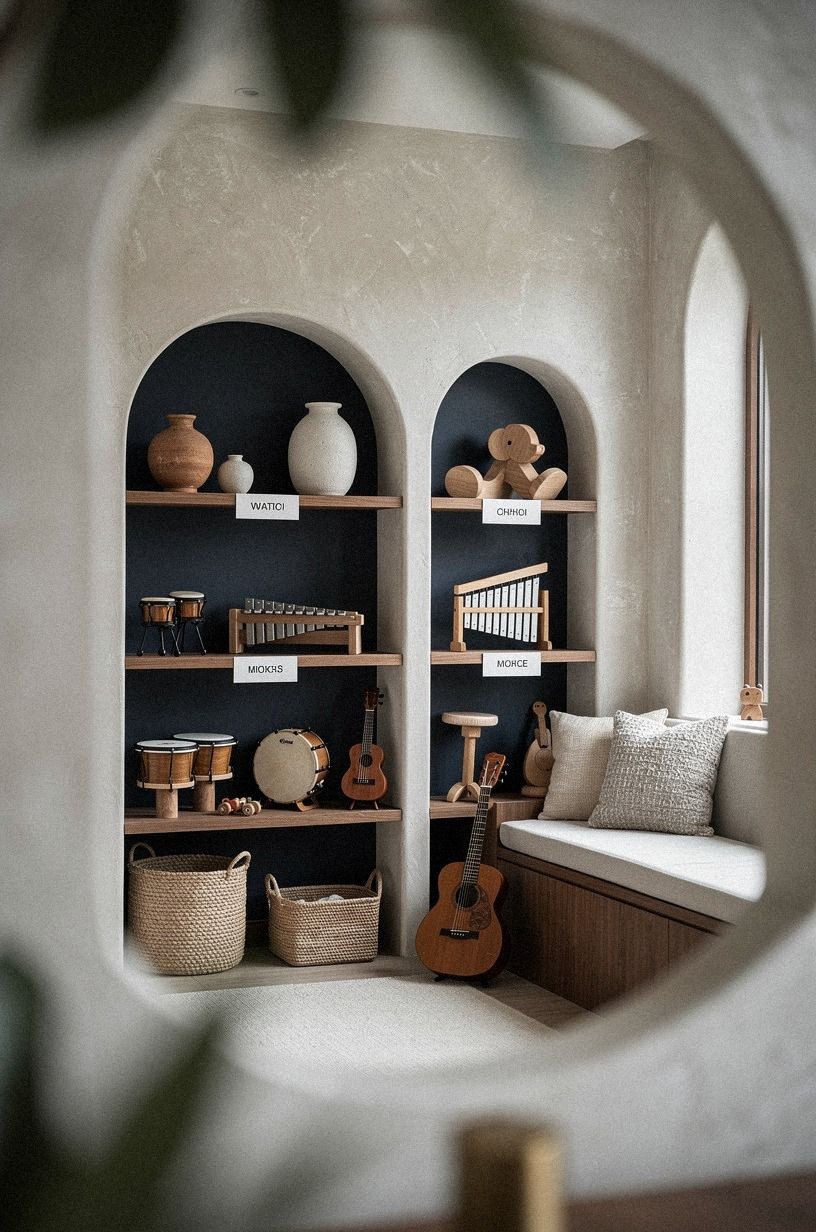
I replaced one large toy basket with three smaller stations: rhythm, strings, and listening. Each station has a shallow container, a clear label, and enough room for one kind of activity.
The rhythm station holds egg shakers, drumsticks, and a small practice drum. The strings station keeps picks, spare strings, and a tuner together. The listening station has headphones and a small notebook for favorite songs.
You’ll want to avoid filling every basket. A child can choose more confidently when each station feels edited. I’d leave a little breathing room inside the containers so cleanup stays quick and the whole setup feels manageable.
That small change created a cheerful sense of order. My child now knows where things belong, and I’m no longer finding picks under the rug. This music room storage and instrument organization guide has useful ideas if your collection keeps expanding.
8Frame a music wall with one bold print
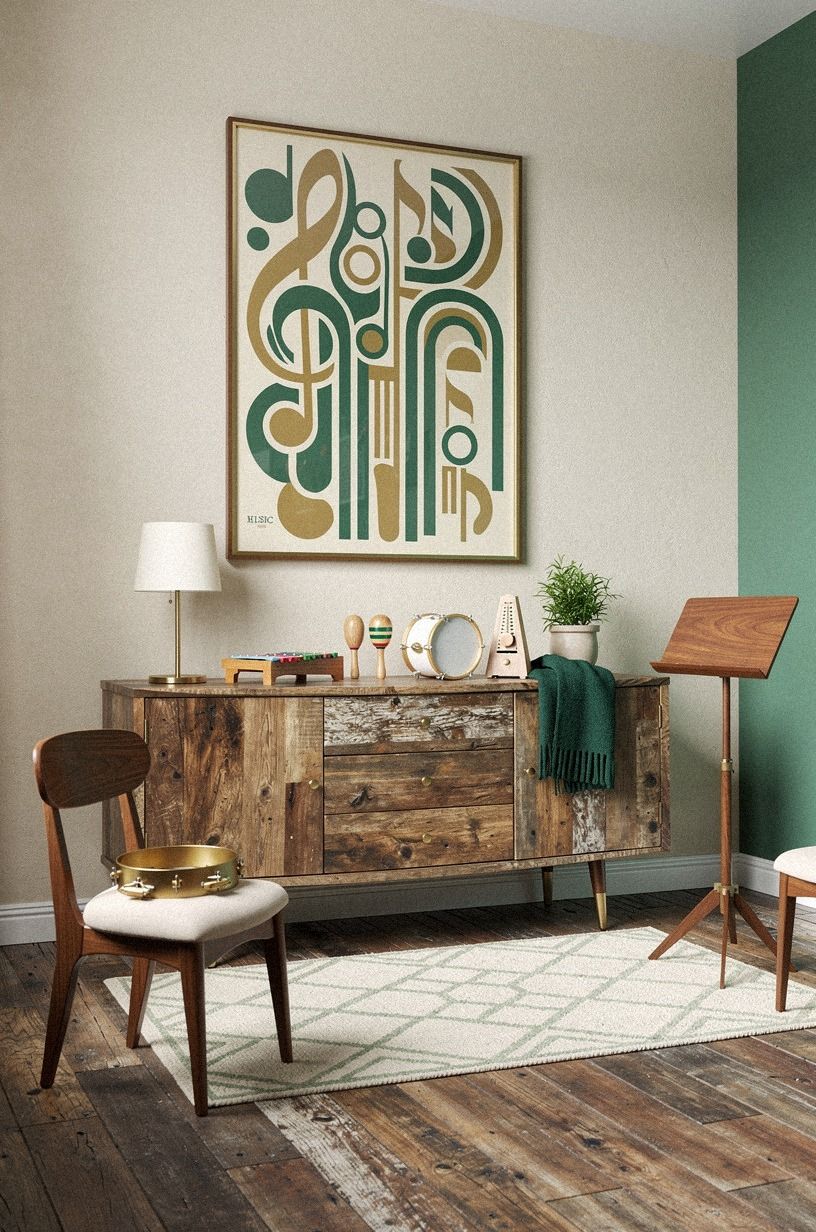
The wall behind the chair needed a focal point, but I didn’t want cartoon notes everywhere. I framed one oversized print with a reclaimed weathered teak frame, then added two smaller drawings underneath. Your child’s own marks matter more than a polished poster, so I left room for rotating artwork.
I used a simple emerald, gold, and cream piano diagram because it feels calm beside the emerald accent panel. You’ll want the center of the artwork near adult eye level, but the lower edge should still be visible from the child’s seat. That keeps the wall connected to the person using it.
A gallery wall can become clutter quickly. I’d skip six tiny frames unless you have a very quiet background.
One strong piece gives the room a confident, sophisticated pause. The art also makes the practice corner feel personal rather than instructional.
For a more collected look, these library music room ideas show how books and music can share one expressive wall.
9Mix a 5×7 play rug with a firm music seat
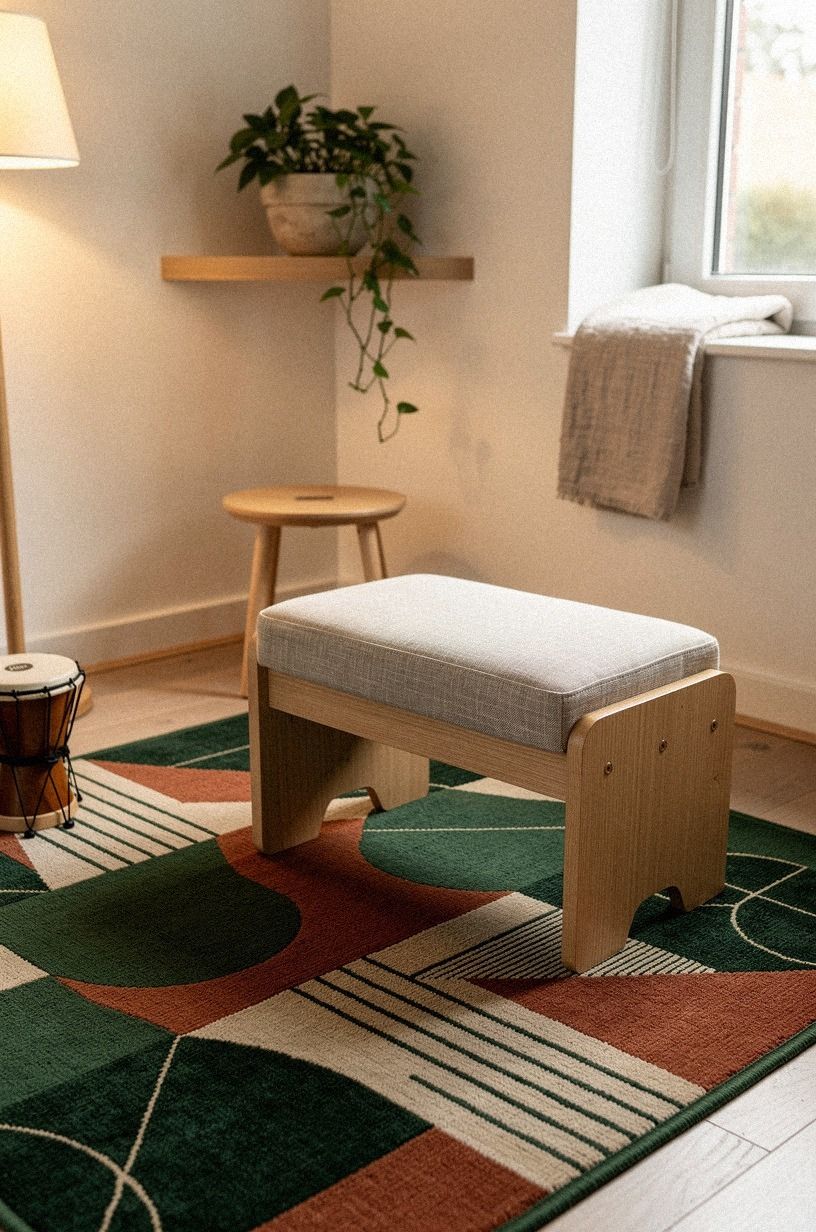
The rug solved two problems at once: it softened the floor and created a boundary for the activity zone. I used a 5×7 ft washed Belgian linen rug, large enough for a child to sit with an instrument but small enough to leave a clean walkway around it.
You’ll want a firm seat, rather than a deep lounge chair that swallows your child’s posture. I chose a compact West Elm Mid-Century stool with a washable cushion.
It feels grown-up, but the seat is still easy to move. A plush chair looked more comfortable in the showroom and worked worse for practice.
The rug’s earthy pattern hides crumbs and pencil marks, which matters in a real family room. If you’re arranging a corner rather than a full room, these music corner living room ideas helped me keep the rug from taking over.
The whole zone now feels soft, grounded, and ready for an impromptu concert.
10Can a musical room include a quiet reading corner?
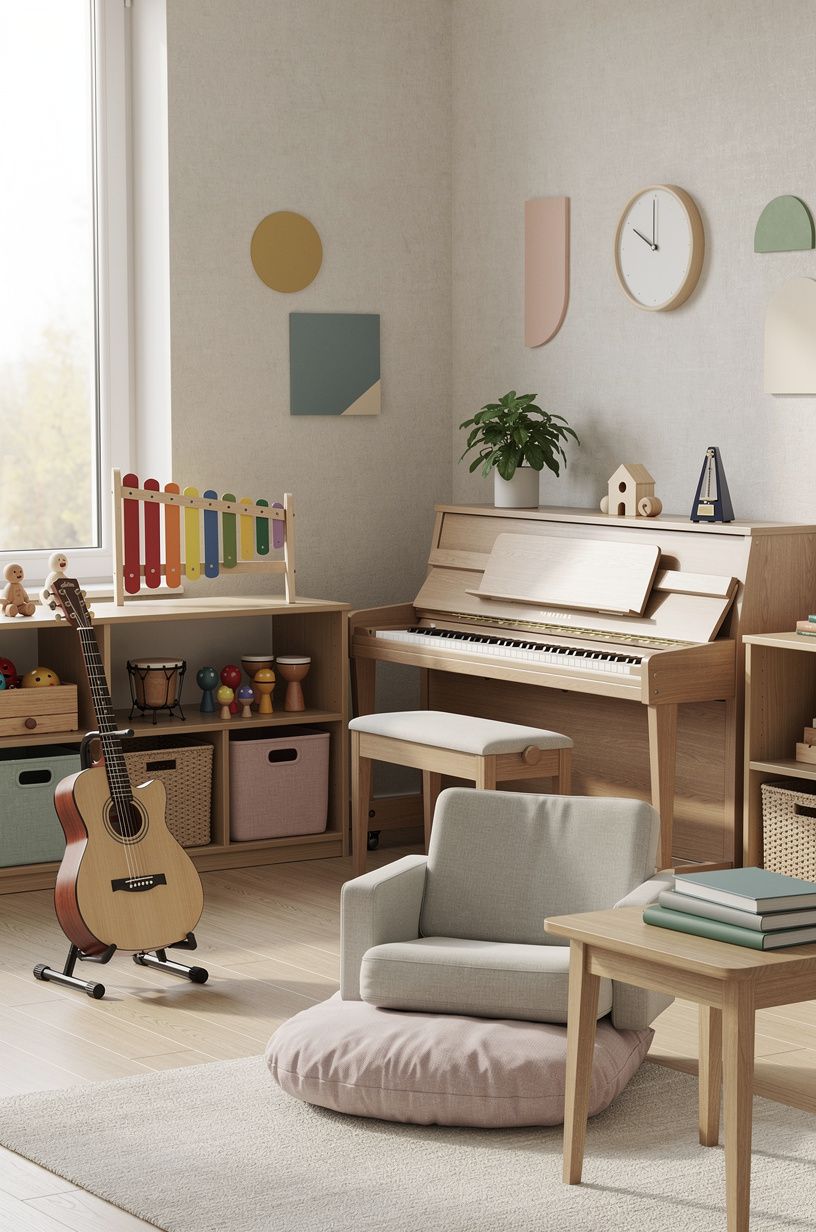
Yes, if you protect the quiet corner from the loudest equipment.
11Frame the window with soft, washable fabric
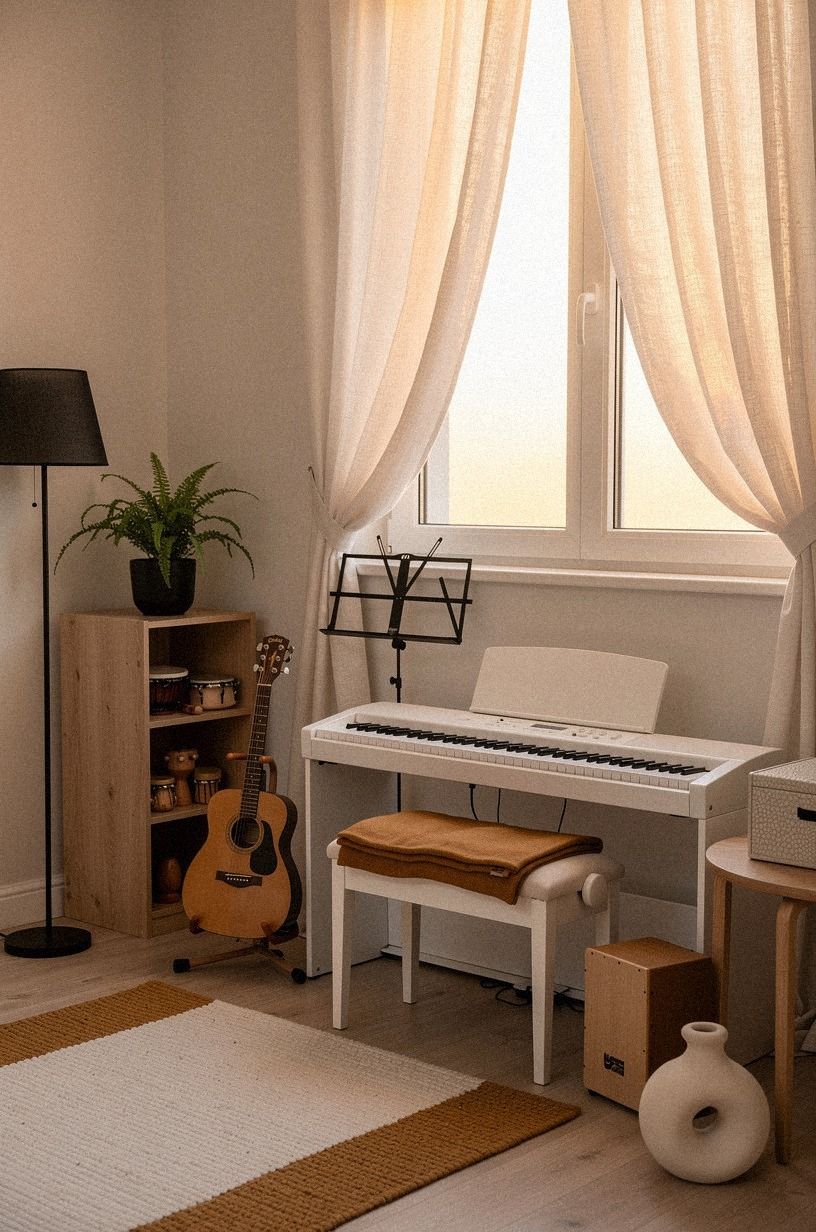
The window felt unfinished, so I added washable curtains in muted warm white with subtle shagreen accents. They filter glare without blocking the daylight that makes the gray paint feel calm. You’ll want fabric that can handle fingerprints, dust, and the occasional spilled drink.
I hung the rod slightly above the frame to make the window feel taller, then kept the panels clear of the keyboard. A blackout lining would be useful for a bedroom, but this room needs daylight for daytime practice.
I’d skip heavy velvet here. It would make the small space feel dramatic in a way that fights the light.
The curtains also improved the sound. They softened the hard window surface, while the rug and upholstered chair reduced the sharp echo.
It isn’t a recording studio, and it doesn’t need to be. Your child just needs a room where the notes don’t bounce harshly back at them.
12Choose instrument storage over toy storage
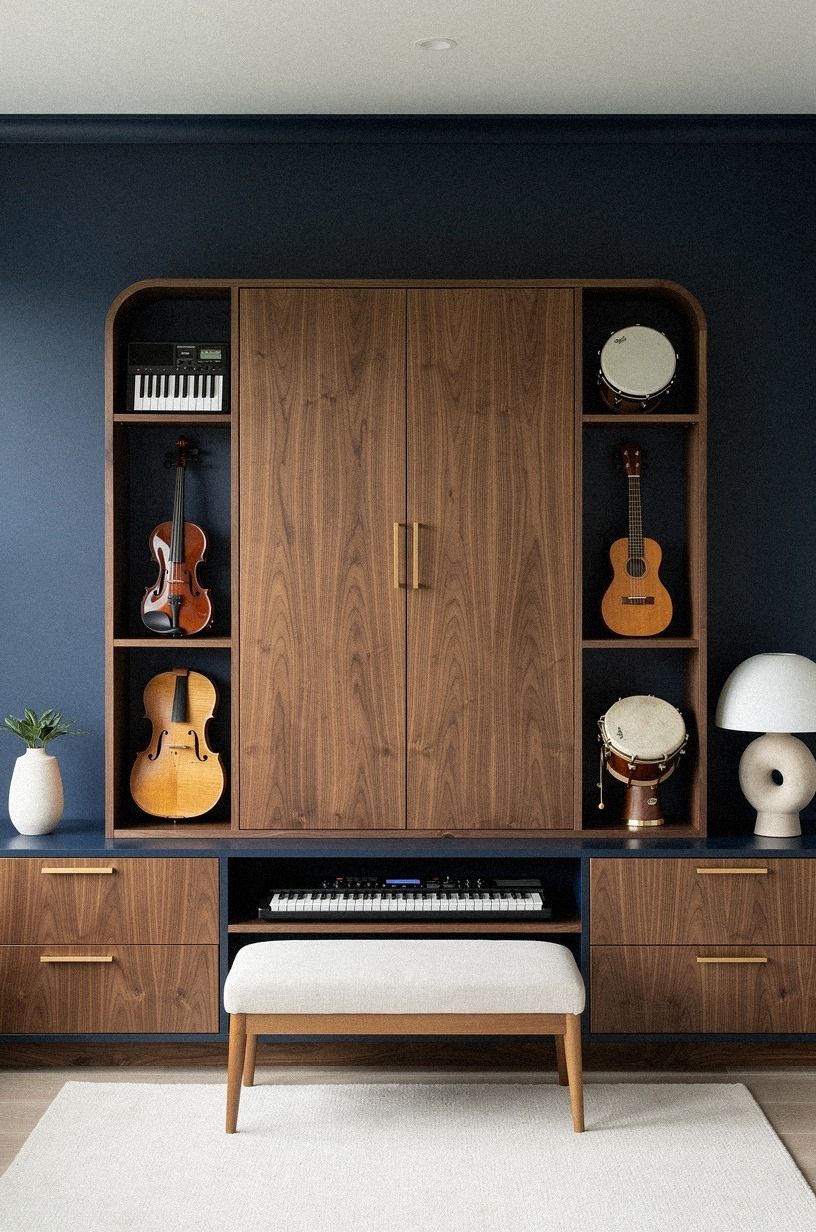
The biggest improvement came from giving instruments their own homes.
13Paint a creative panel in Sherwin-Williams Open Air
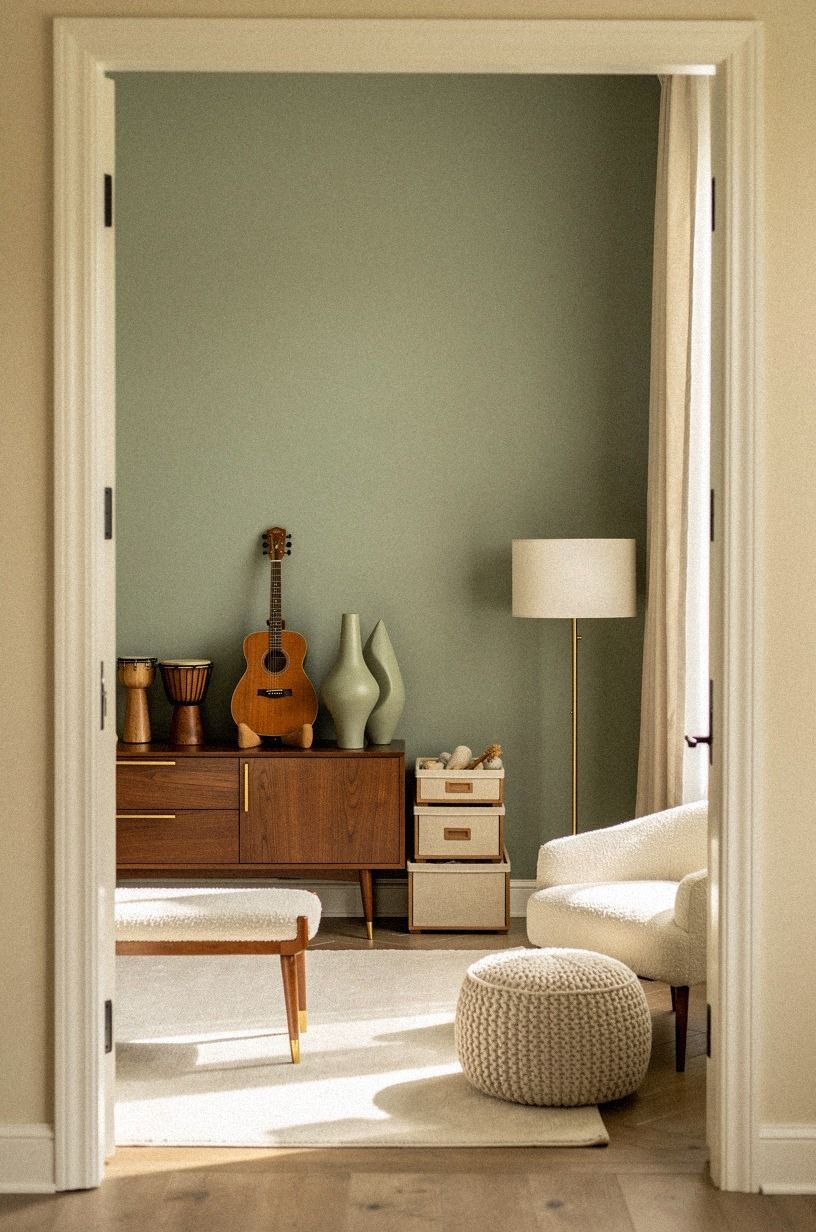
I wanted one playful moment, so I painted a small rectangle behind the listening basket with a muted sage green. It’s a soft, natural green that makes the warm cream music pages look crisp without turning the room into a themed set.
You’ll want to keep an accent panel smaller than your first impulse. Mine stops below the shelf and leaves the warm cream visible around it. That boundary makes the color feel intentional and keeps the room airy.
I tested it on a sample board for a full day before touching the wall.
The sage panel became the place for rotating drawings, concert tickets, and handwritten song titles. I’d skip a full mural unless your child has a strong, lasting idea for one. A small painted field gives you the same creative energy and can be changed in an afternoon.
The contrast is playful but polished, which is exactly what the room needed.
14Mix old instruments with modern music rooms home details
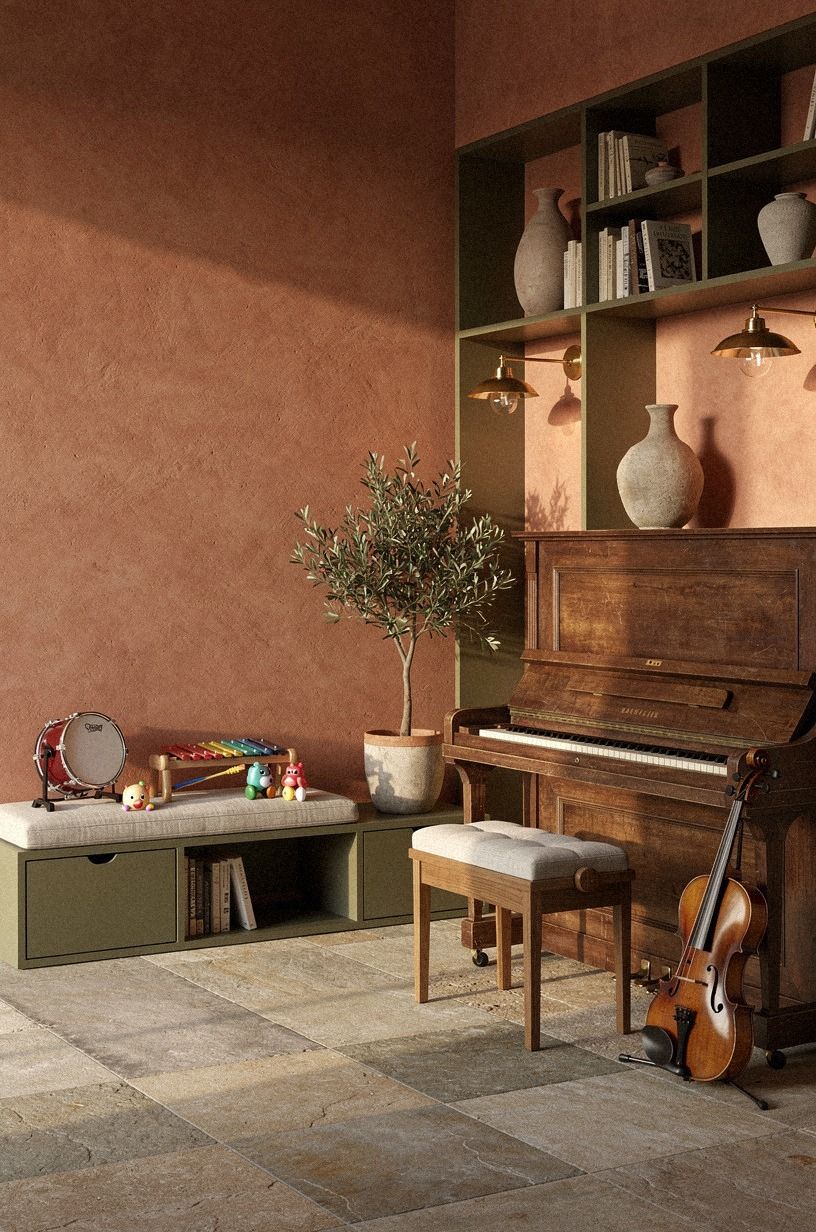
The room felt more personal once I added one inherited instrument and one newer piece.
15Practice with a Three-Minute Reset
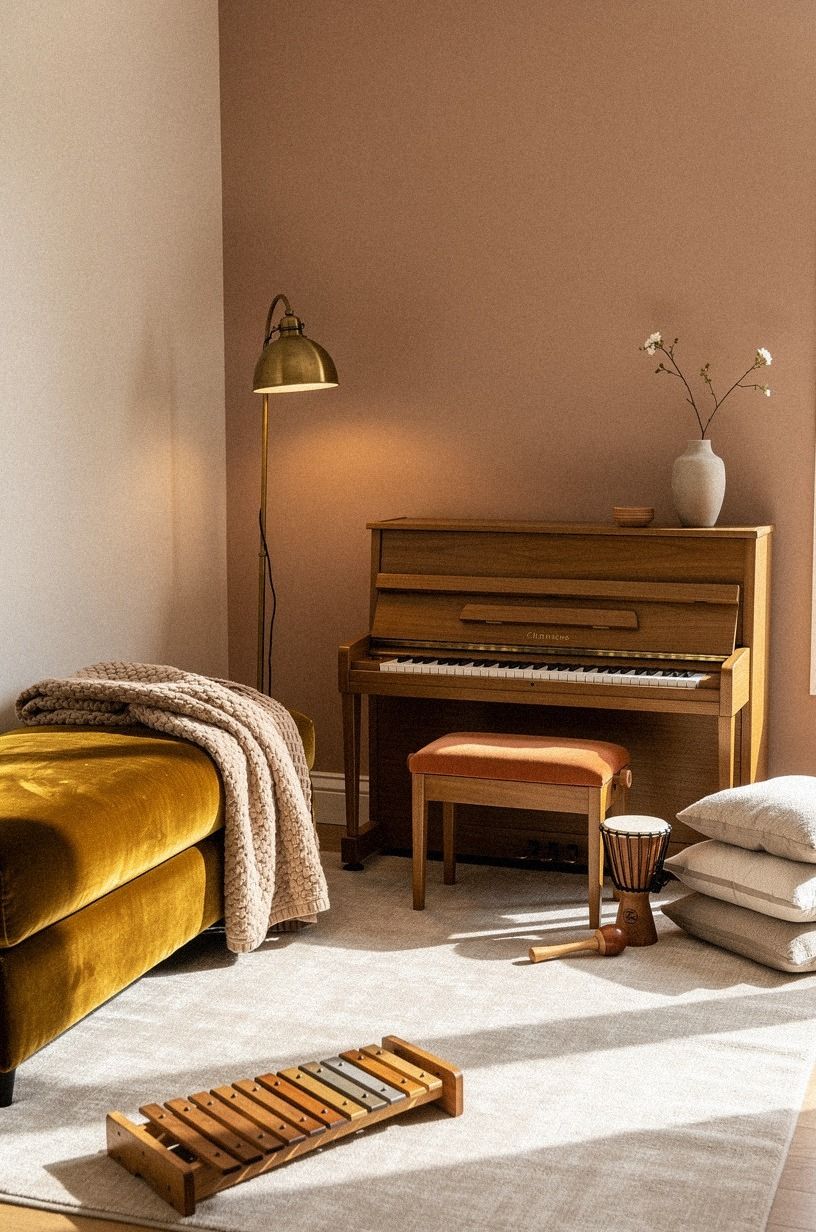
The final idea wasn’t a product. It was a routine.
After practice, your child has three minutes to return the instrument, close the music book, and place the headphones in their basket. You’ll want the reset to be short enough that nobody starts bargaining.
I made a small reset card with three simple drawings: instrument, book, basket. It sits on the shelf beside the aged brass lamp.
I don’t correct every detail, because the goal is independence rather than adult perfection. If something lands slightly crooked, it can wait.
The room now changes throughout the day. In the morning, it’s a practice space.
After school, it becomes a reading corner. At night, the warm lamp catches the rug’s texture and the room feels peaceful.
The reset is what keeps that flexibility from becoming clutter.
For another practical approach to arranging a compact space, these office music room combo ideas are worth saving. The routine is simple, memorable, and genuinely effective.
How much it cost
I kept this makeover in the budget range and used what we already owned wherever possible. The main costs were paint, storage, a rug, lighting, and a few safety supplies. Your total will depend on what you already have, but these are the typical US ranges from the project plan.
For a music room, the budget tier can cover a meaningful refresh if your keyboard or main instrument is already in the house. A twin bed frame typically runs $120-$500, a bookcase $80-$400, a play rug $80-$300, and blackout curtains $40-$150. You’ll want to spend first on safe storage and useful light.
I’d avoid putting every dollar into decorative pieces. A reliable hook, a reachable shelf, and a washable rug will change the room more than a collection of small signs. If you’re comparing layouts before shopping, save these music rooms home ideas and measure first.
The most valuable upgrades were accessible, durable, and easy to live with.
Why I’d make this room again
I went back and forth on whether a child needed a dedicated music room at all. Kids grow quickly, interests shift, and family rooms already have to work hard. But I learned that the value wasn’t the themed decor or the finished reveal.
It was the way the room removed small points of resistance.
Before the makeover, practice required a search. The keyboard had to be cleared, the book had to be found, and the stool was usually somewhere else.
Each step gave my child a reason to wander away. Once the instrument, light, book, and seat lived together, practice became a shorter path.
I’m especially glad I resisted a full wall mural. It would have looked dramatic for a month, but the Farrow & Ball Pink Ground panel gives us room to change our minds. That matters in a child’s space.
You’re designing for curiosity, rather than a frozen snapshot of one age.
The room also taught me to accept a little disorder. A music space with no evidence of use has missed the point. I’d rather see a pencil beside the metronome and a half-open book on the ledge than spend every evening restoring the room to a picture.
If you’re planning your own version, start with the habit you want to support, then choose the furniture around it. These small music room ideas for big sound helped me see how much a narrow room can accomplish. That’s where the room becomes useful.
The Questions Worth Answering First
What is the best Kids’ Music Room Ideas to Spark Creativity for a small kids music room spark?
For a small room, choose a wall-mounted keyboard shelf, an IKEA KALLAX, and one 5×7 ft rug. The open floor area matters most because your child needs room to sit, move, and switch instruments without bumping storage. These small music room ideas can help you plan the circulation before buying anything.
Where can I buy Kids’ Music Room Ideas to Spark Creativity pieces on a budget?
Look at IKEA, Wayfair, and Target for bins, shelves, lighting, and washable rugs. You can also find solid wood stools and instrument stands through Facebook Marketplace or a local thrift shop. You’ll often save more on storage than on paint.
How much does a Kids’ Music Room Ideas to Spark Creativity makeover cost?
A budget refresh typically falls between $150 and $600 in the US, depending on what you own. Paint, bins, and wall decals can be enough for a first phase, while a mid-range room with storage and lighting may reach $1,000 to $3,500.
Can I create a Kids’ Music Room Ideas to Spark Creativity on a budget?
Yes, and you can start without buying furniture. Move the instrument into view, reuse baskets as labeled stations, and paint one small accent panel. You’ll get the biggest change by improving access, light, and cleanup rather than adding more decor.
Is a Kids’ Music Room Ideas to Spark Creativity worth it in a small space?
Yes, because a small room can make the routine easier to see and repeat. Keep the instrument on one wall, use open shelves between 36 and 48 inches high, and leave a clear path. Your child won’t need to cross the room to begin.
Is Kids’ Music Room Ideas to Spark Creativity a good idea for a rental?
Yes. Use removable decals, tension rods, freestanding shelves, and lightweight art with removable strips.
You can create a warm practice corner without painting every wall or drilling into every surface. If you’re renting, keep heavier instruments on stable floor stands.
Where I’d Start First
If I had to pick one, I’d start with the visible practice zone. When the instrument, light, book, and seat stay together, your child loses the small excuses that interrupt practice. Pin that layout for later, then clear one wall tonight.
These library music room ideas are useful if you want to add a reading corner, while these music corner living room ideas can help when you’re working with a shared space. The room can grow from there.