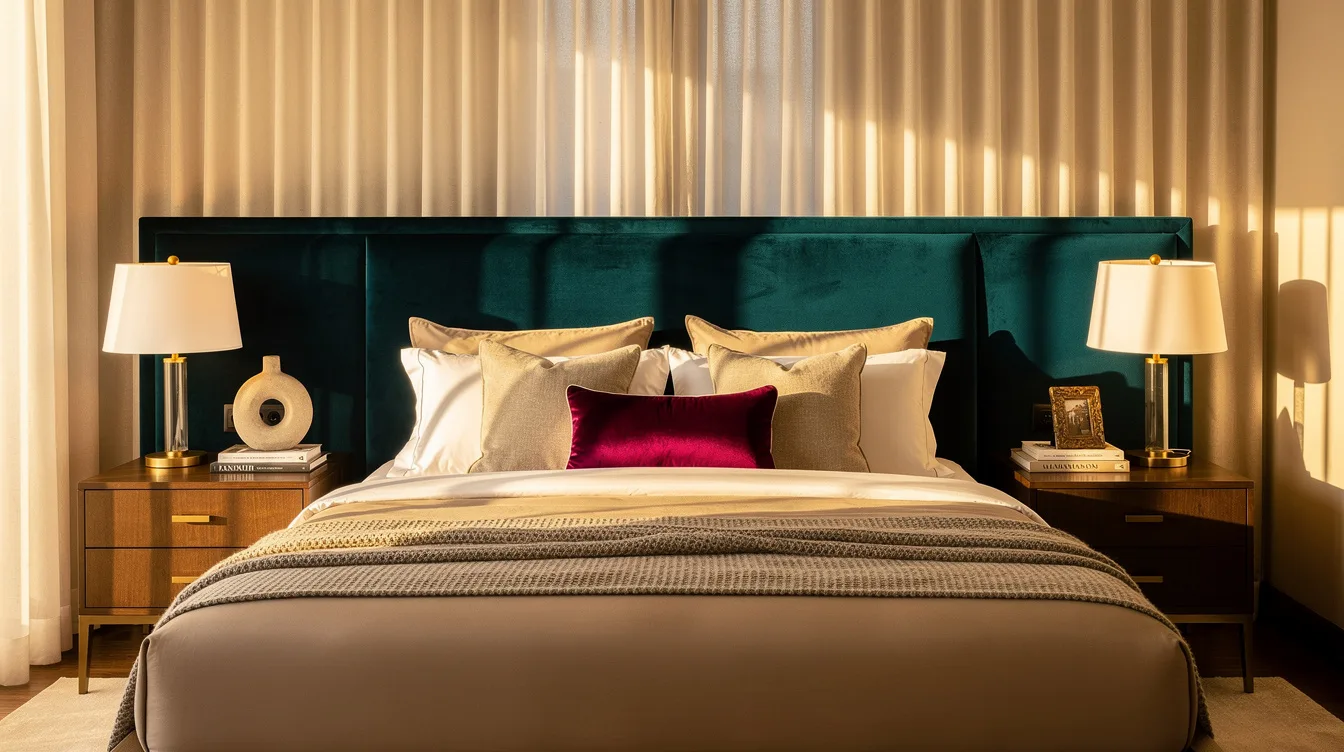
One bedroom detail can make a standard bed feel like part of a hotel suite: an extra-wide upholstered headboard that runs behind the mattress and both nightstands. For a bed about 160 cm wide, a band roughly 280 to 320 cm across creates the right sense of scale without climbing toward the ceiling.
The proportion is the important part. A broad, lower feature can leave more wall visible above it, while coordinated lighting and full-length curtains add the vertical movement that makes the room feel grander.
Think of the result as a styling effect, not a promise that every ceiling will look taller. The room’s width, window placement, furniture height, and lighting still control the final impression.
Frame the Entire Sleeping Zone
The room reads taller when the bed, nightstands, and lighting share one visual frame. An extra-wide upholstered headboard creates that hotel-suite effect by making the sleeping area feel built in instead of outlined as a single freestanding bed.
For a practical layout, use a band roughly 280 to 320 cm wide behind a bed about 160 cm wide. That leaves enough room for both nightstands while keeping the composition substantial without turning the wall into a padded tower.
The Block makeover that popularized this approach treated the headboard as part of a larger arrangement, not as an isolated purchase. That distinction matters because the ceiling-height effect is a styling impression, not a guaranteed optical result in every bedroom.
Keep the Upper Wall Quiet
A wide, relatively low headboard leaves a generous field of visible wall above it. That open space gives the eye somewhere to travel, which is why a restrained linen upholstery finish can feel airier than a tall padded panel covering most of the wall.
Choose a shape with a clean top edge and limited tufting. A softly rounded profile can work, but heavy buttons, deep channels, and a crowded gallery wall compete with the vertical breathing room you are trying to préservé.
A low-profile IKEA bed frame can support the look when its base stays visually quiet. The headboard should carry the architecture while the bed frame recedes into the background.
Carry the Band Past the Bed
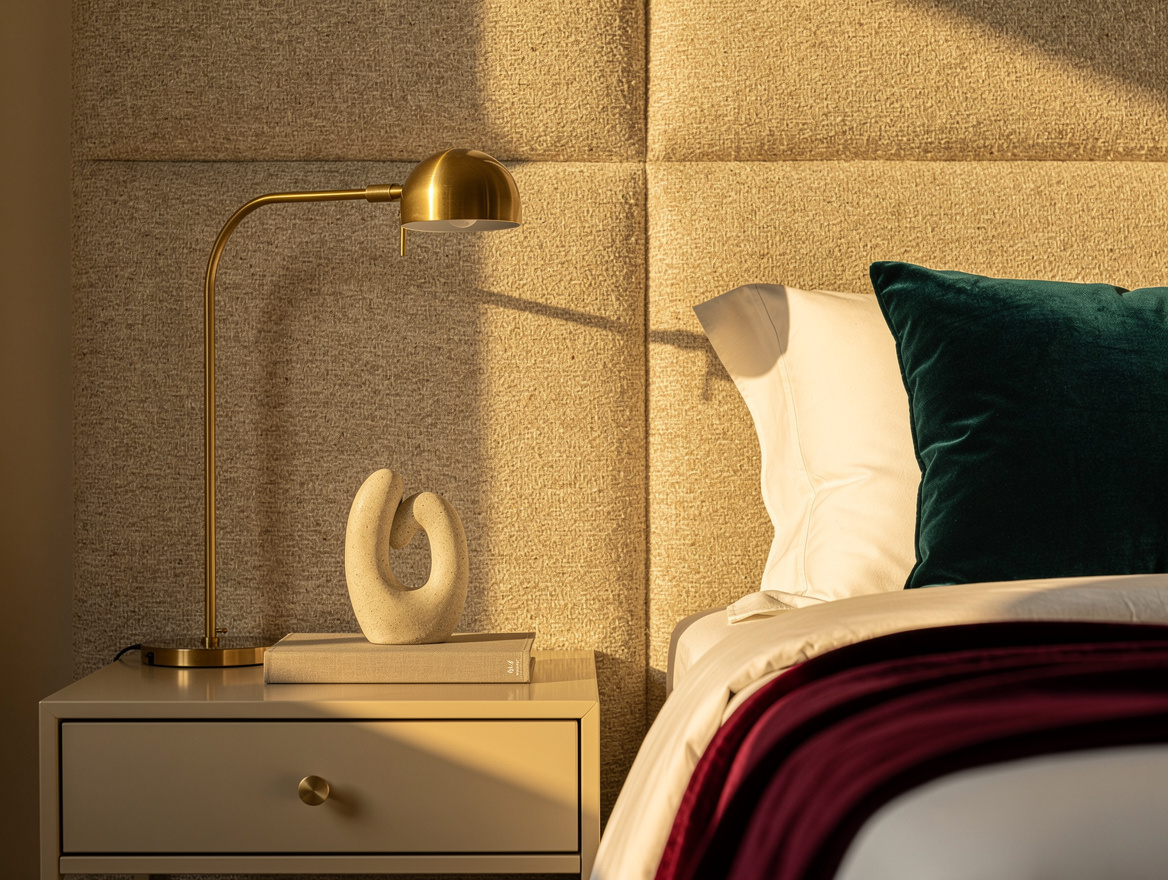
The extra width is the feature, so let the upholstery continue behind both nightstands rather than stopping at the mattress edges. That uninterrupted run makes a typical bedroom feel more deliberate and gives the wall a longer horizontal line.
Keep the side tables close in height to the lower edge of the headboard. A compact low-profile nightstand preserves the broad upholstered field, while a tall chest breaks the composition into separate furniture blocks.
Mount reading lights or place lamps directly on the tables, depending on the room. A pair of slim brass sconces can add warmth without creating bulky vertical shapes at the headboard’s outer edges.
Add a Vertical Curtain Line
Floor-to-ceiling curtains are the more direct way to pull the eye upward, so they complement the wide headboard rather than replacing it. Mount the rod close to the ceiling and extend it beyond the window frame to create a taller-looking opening.
Use full-length linen-look curtains in a quiet shade that sits near the wall color. Strong contrast can make the window feel like a separate rectangle, while a close tonal match lets the fabric read as one continuous vertical plane.
Target is a useful source for affordable curtain panels, but check the finished length before ordering. Panels that stop above the floor weaken the hotel effect and make the room feel visually shorter.
Build the Upholstery for the Wall
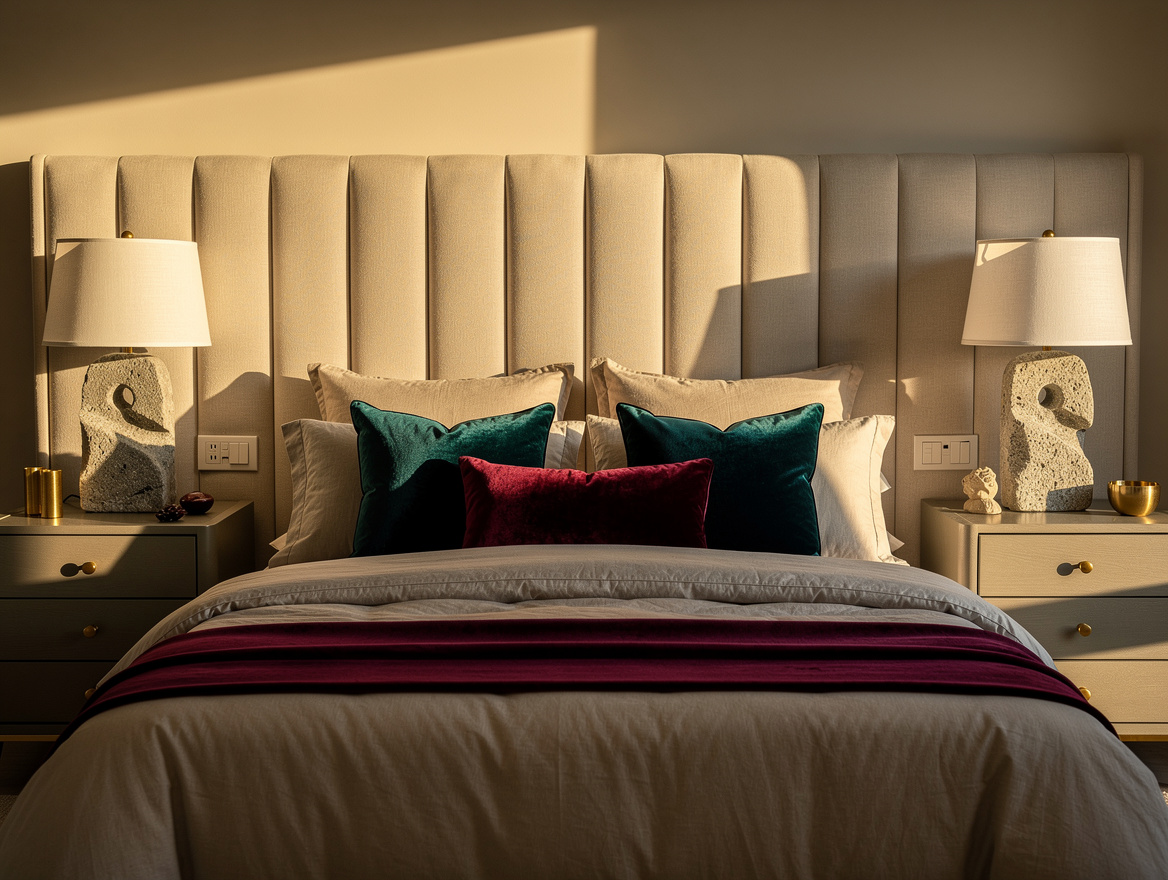
Wall-wide upholstery needs more planning than a standard headboard because the substrate, mounting points, and seams remain visible across a larger span. Start with a firm high-density foam core and a durable fabric that can handle contact from pillows, lamps, and bedside use.
For a rental-friendly version, separate upholstered panels can create the same broad band with less commitment. Home Depot can supply basic plywood and mounting hardware for a framed backing, though the final structure should be secured to the wall studs when possible.
Ask for a fabric sample before choosing a color. A warm oatmeal, muted taupe, or soft gray usually supports the suite-like mood better than a loud pattern that turns the headboard into an oversized accent wall.
Edit the Room Around the Feature
Once the headboard is wide, the rest of the bedroom should become quieter. Keep bedding smooth, limit decorative pillows, and choose one substantial travertine lamp or another stone-finished light on each side instead of scattering small accessories across the nightstands.
A restrained rug can anchor the bed without competing with the upholstery. Wayfair carries many broad bedroom rugs, but prioritize a pattern with open spacing and a scale that extends beyond the nightstands.
Leave a little wall visible at the sides if the room cannot support a true wall-to-wall installation. The goal is a continuous sleeping zone, not a forced fit that crowds the door, window trim, or circulation path.
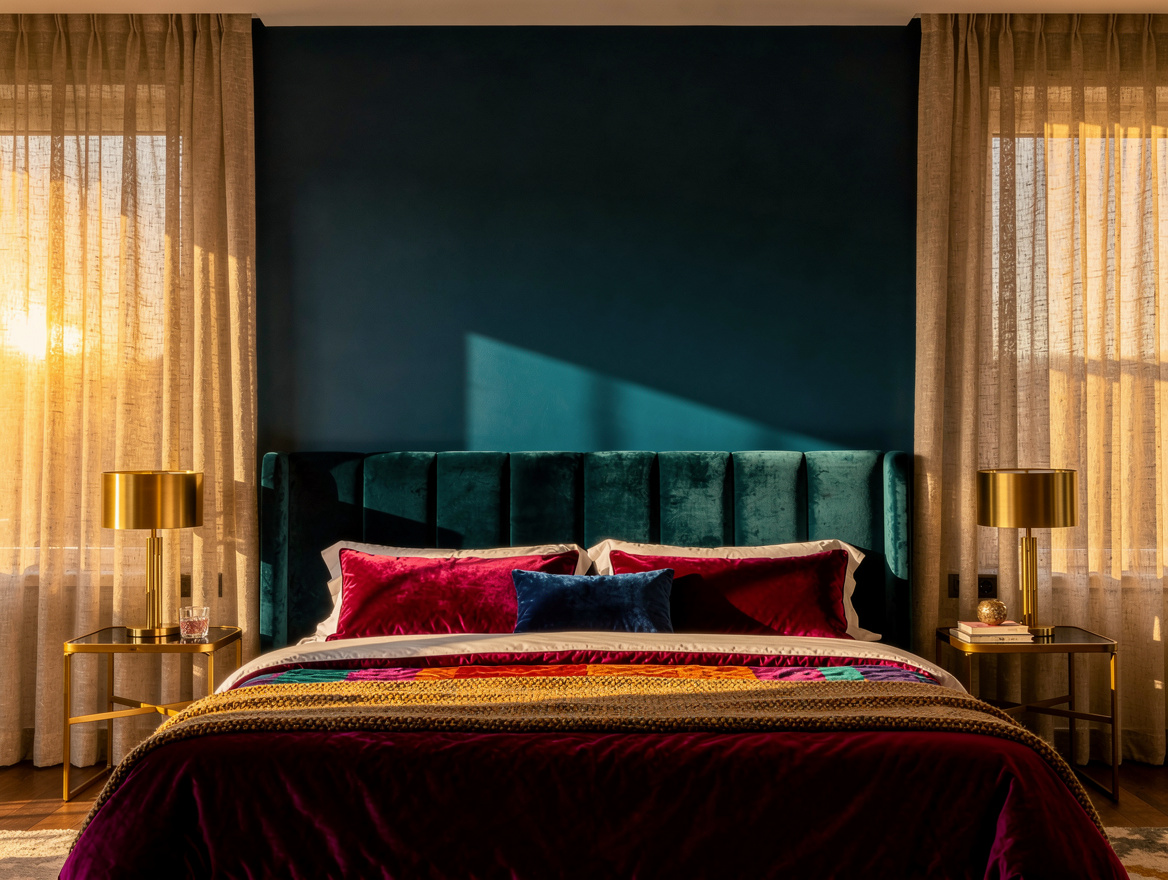
Measure the wall first, then tape out a 280 to 320 cm band before buying fabric or panels. If the outline feels generous but leaves a calm stretch of wall above it, you have found the proportion that makes this hotel-style detail work.
Mia Carter writes about small-space living and budget home makeovers. She has restyled three rentals and tests most ideas in her own 45 sqm flat.