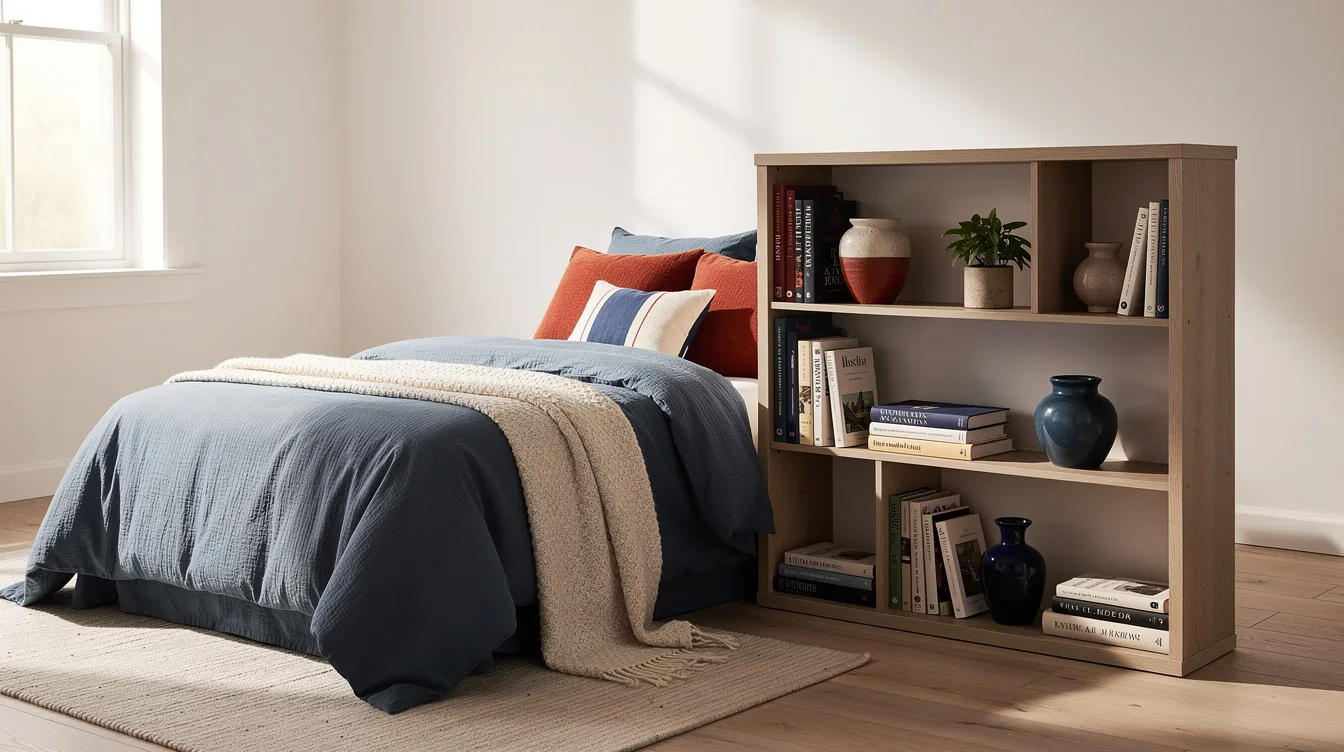
My favorite small-bedroom layout starts with a narrow strip of storage beside the bed, not a full wall. When floor space is tight, aim for about 20 to 28 cm of depth and use a shallow bookcase to hide the pillow area without turning the doorway into a tunnel.
After comparing real studio arrangements, I keep returning to partial dividers because they separate functions while preserving borrowed light. The winning layout is simple: a short wing, a low foot unit, or a shelf between the bed and a desk.
Screen the Pillow Side First
Start with the pillow side, where sightlines matter more than storage volume. A matte-white IKEA BILLY positioned perpendicular to the bed can screen the head of the mattress from the doorway while leaving the foot open.
Keep the unit short enough to act as a wing, roughly 100 to 125 cm wide and 125 to 160 cm high if your room can absorb it. Those are planning ranges, not measurements from documented apartments, so tape the footprint on the floor first.
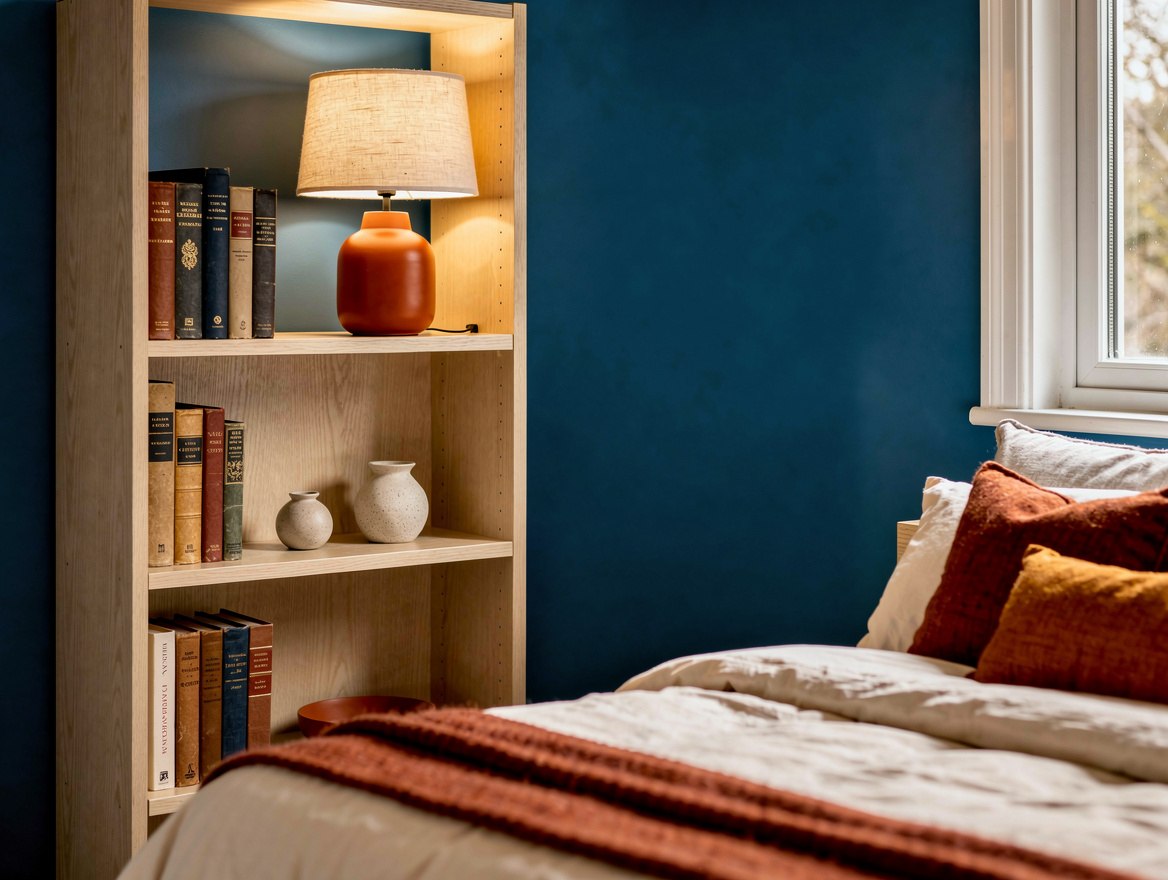
Place the shelves toward the bed if you want a bedside landing zone, and toward the entry if you want the room to read cleaner from outside. I prefer the first option because an oak shelf can hold a book, lamp, and charging cable without crowding the mattress.
Keep the outer end visually simple with one ceramic bedside tray and a small lamp. The divider should interrupt the view, not demand attention from every corner of the room.
Keep the Foot Zone Low
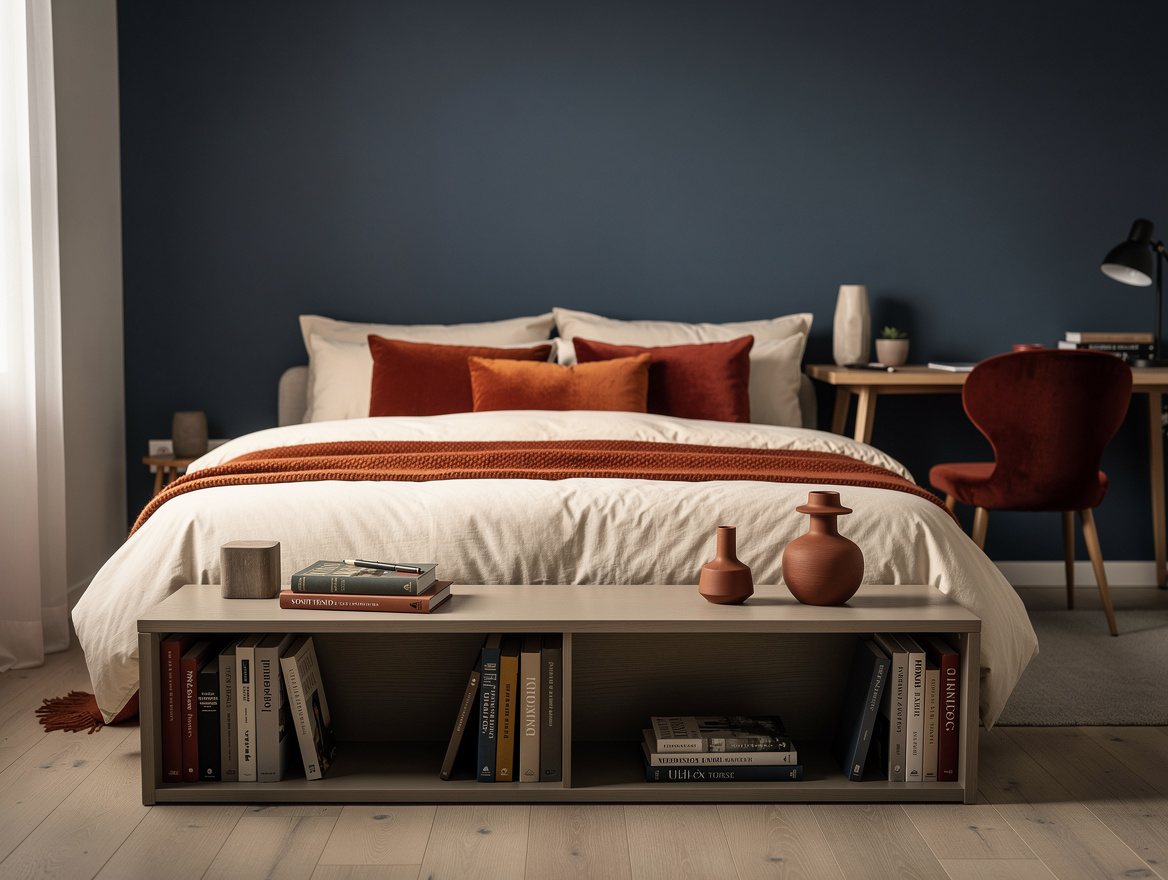
A foot-of-bed divider works best when it reads as furniture rather than a wall. A light-oak low bookcase about 90 to 130 cm high can mark the sleeping zone while keeping the ceiling line and window light visible.
Match its width roughly to the bed, then préservé a route around at least one end. A miniature storage divider in a studio layout proves the point: the zones feel distinct because the furniture is low, not because it blocks every sightline.
Use the top for one lamp or folded blanket, then leave some shelf space empty. A woven storage box can hide spare linens without making the divider look overpacked.
Keep the foot area ready for movement, especially when the bed sits near a dresser or closet. One brass reading lamp is enough to give the unit purpose without creating another visual pileup.
Separate the Bed From a Desk
When the desk shares the room, place the bookcase between the desk chair and the bed rather than behind the pillow. An IKEA KALLAX unit offers generous storage, but its roughly 39 cm depth can consume valuable circulation in a tight bedroom.
For this layout, a shallower model around 20 to 24 cm deep gives the desk a defined back without stealing the chair’s pullout zone. Leave about 80 to 90 cm for the main passage as a design target, then test the chair, drawers, and bedding in real use.
Keep the work side visually calm with a black metal task lamp and a closed box or two. The sleeping side can hold books and a small plant, but the divider should support the room’s rhythm rather than become a second desk.
A cork desk mat can visually anchor the work zone while adding almost no depth. This arrangement is especially useful when the bed and desk need to share one window without competing for the same light.
Measure Depth Before You Shop
Measure depth before you fall for a pretty product photo. Actual shallow divider models sit around 20 to 24 cm deep, and I would aim for 20 to 28 cm when every inch beside the bed matters.
Look for a finished back or a reversible design, especially if both sides face visible parts of the room. A melamine-board divider around £180 is a reasonable reference for a larger unit, while decorative shallow options can start at about £100 in October 2026 listing snapshots.
Check the shelf opening as carefully as the outer measurement. White melamine keeps a narrow piece visually quiet, while a darker finish can make the divider feel heavier than its footprint.
Use a steel tape measure to check the doorway, baseboard, and bed clearance before ordering. The bookcase has to fit the delivery path as well as the final layout.
Anchor Every Tall Divider
Tall shelving needs a safety plan before it becomes a room divider. A wall-anchored IKEA BILLY can work well, but its lower entry price does not remove the need to secure it properly.
Follow the manufacturer’s anchoring instructions and check the wall type, baseboard, and floor level before loading the shelves. If you rent, choose a short unit or ask for written approval before making holes rather than treating a freestanding bookcase as stable.
A steel anti-tip strap is a small hardware detail with a major job. Install the approved hardware before adding books, baskets, or anything that could shift the center of gravity.
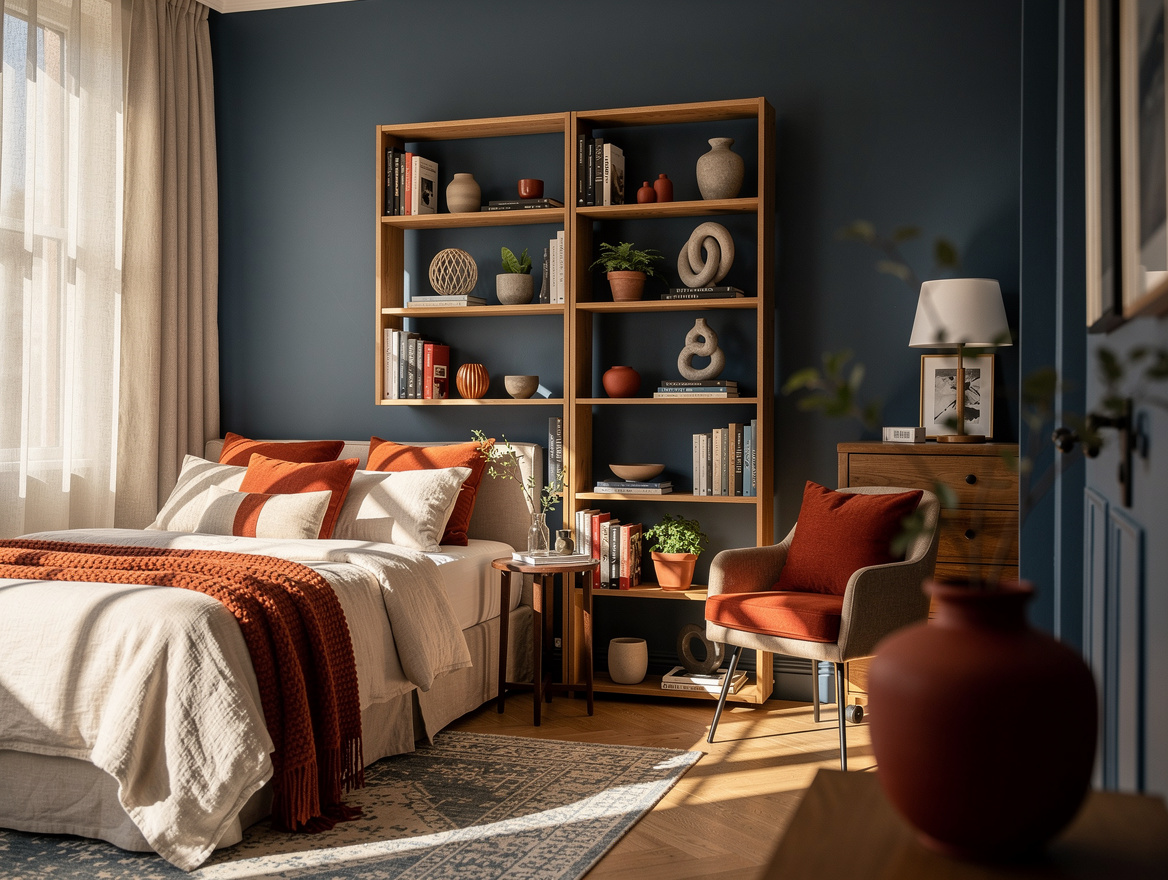
Two BILLY units have been used to divide a studio’s sleeping and living areas, but a small bedroom usually needs fewer pieces. One section of open-backed shelving often gives enough separation while leaving more room for an actual bed-to-door path.
Style Both Sides as One Room
Give the divider two jobs, but let one side stay visually open. A cane-front basket can hide spare bedding on the room side, while the desk side holds a tray for paper, headphones, or a laptop charger.
Repeat one finish from the room, such as a warm-white wall color with pale wood shelves or a black frame with black hardware. This small echo makes the partition feel intentional without requiring matching bedroom furniture.
Keep the top line below the window sill when possible, and avoid stacking objects above it. A single linen-shaded lamp or a trailing plant is enough to soften the edge while borrowed light still moves through.
For a stronger visual boundary, use a small patch of sage-green paint behind the sleeping zone. Keep the bookcase neutral so the color defines the area without making the room feel chopped into separate boxes.
Put painter’s tape on the floor to test the divider’s depth, then walk the route from the door to the bed with the lights off and on. If the path stays comfortable, choose the finish; the layout has already done the hard work.
Mia Carter writes about small-space living and budget home makeovers. She has restyled three rentals and tests most ideas in her own 45 sqm flat.