The best office and music room combo ideas give your desk a quiet work zone and your instrument room to breathe. I once crammed both functions against one wall, and the room felt cramped by Tuesday. You’ll get better results by separating focus, sound, and storage. These multi-use rooms can feel warm, intentional, and beautifully lived-in.
- Float the desk with the Two-Zone Rule
- Frame the piano as the room’s anchor
- Layer the Three-Height Light Stack
- Hang instruments in a working gallery
- Swap a bulky cabinet for the Open-Back Storage Move
- Paint one wall with Green Smoke
- Anchor the desk with the Quiet Rug Boundary
- Build a recording nook under a window
- Mix warm wood over white laminate
- Float a bookcase behind the keyboard
- Pair the reading chair with the music stand
- Hide cables with the Clean Line Method
- Paint the desk wall with Cheating Heart
- Turn the closet into a practice station
- Frame the desk with vertical storage
- Budget the room before you buy the mood
- Why office music room ideas feel warmer now
- Could a small room work with two focal points?
- Choose sound-softening textiles over more furniture
1Float the desk with the Two-Zone Rule
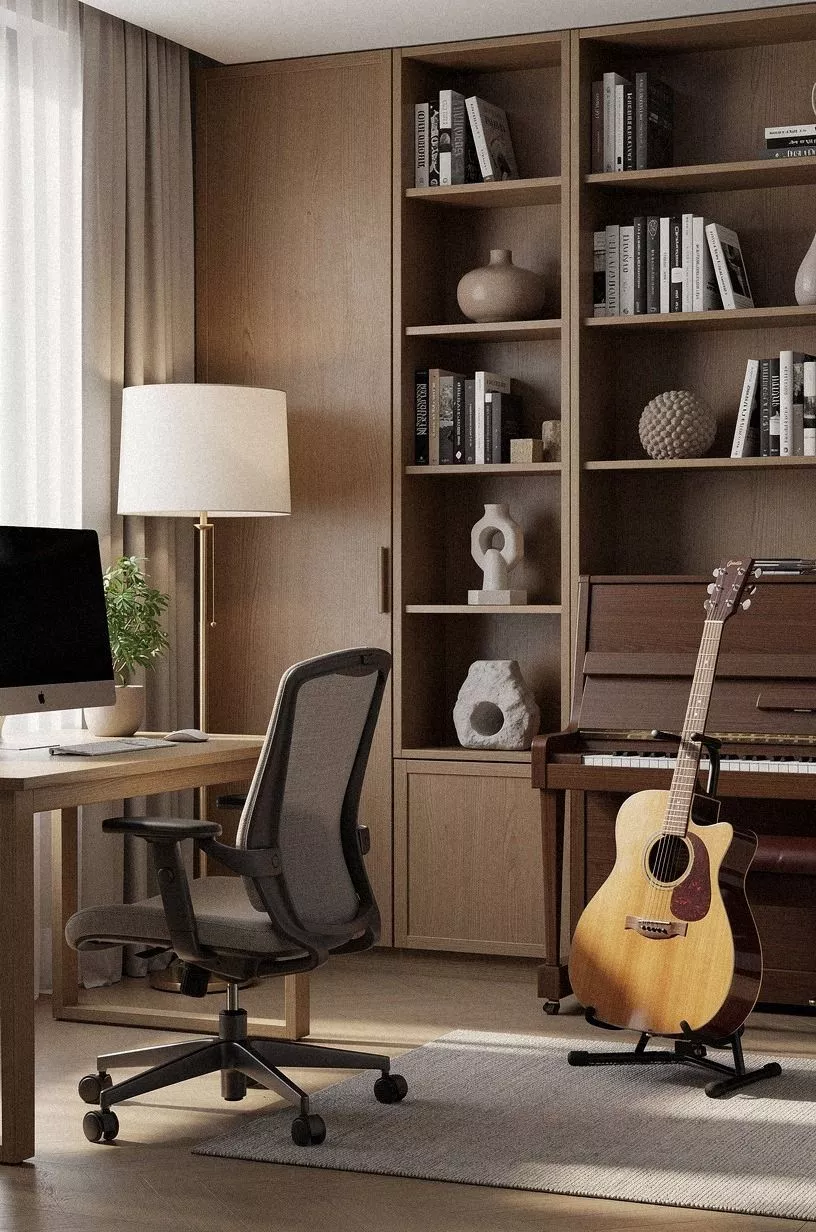
A floating desk can divide your office music room without blocking light or making the room feel boxed in. Place the desk perpendicular to the longest wall, then keep your keyboard, guitar stand, or record player on the opposite side. You’ll still see the music zone from your chair, but your work screen won’t compete with it.
Use a 3/4-inch solid cerused white oak desk at 29 to 30 inches high, with at least 24 inches of depth for a laptop and notebook. I’d skip a glass desk here because fingerprints and reflected glare make the room feel more like a showroom than a creative space. If you’re working with a narrow footprint, these small music room ideas for big sound can help you keep the instrument side open.
2Frame the piano as the room’s anchor
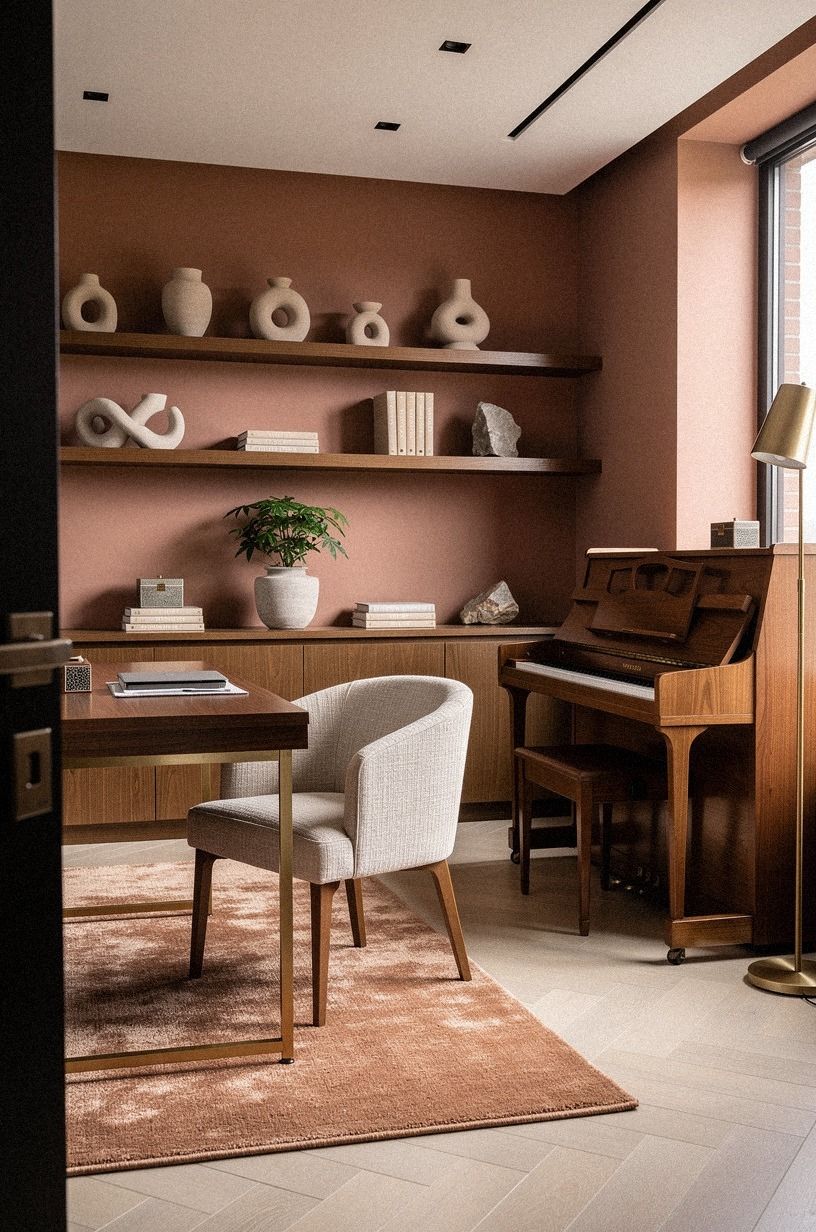
A piano can become the visual anchor of your office music room, but only if you give it breathing room. Center an upright piano on the strongest wall and let the desk sit nearby at a right angle. You’ll create a clear visual hierarchy, so your eye knows where to land when you enter.
I’d choose a soft clay-finished upright piano over a glossy white model because the warmer finish works with linen, aged brass, and the room’s quieter palette. Leave enough space for the bench to pull out comfortably, and keep your office chair from colliding with it.
The piano should feel inviting, rather than like an obstacle you’re always walking around. For more ambitious layouts, these music room ideas that turn any space into a creative haven offer clever ways to make one instrument feel architectural.
3Layer the Three-Height Light Stack
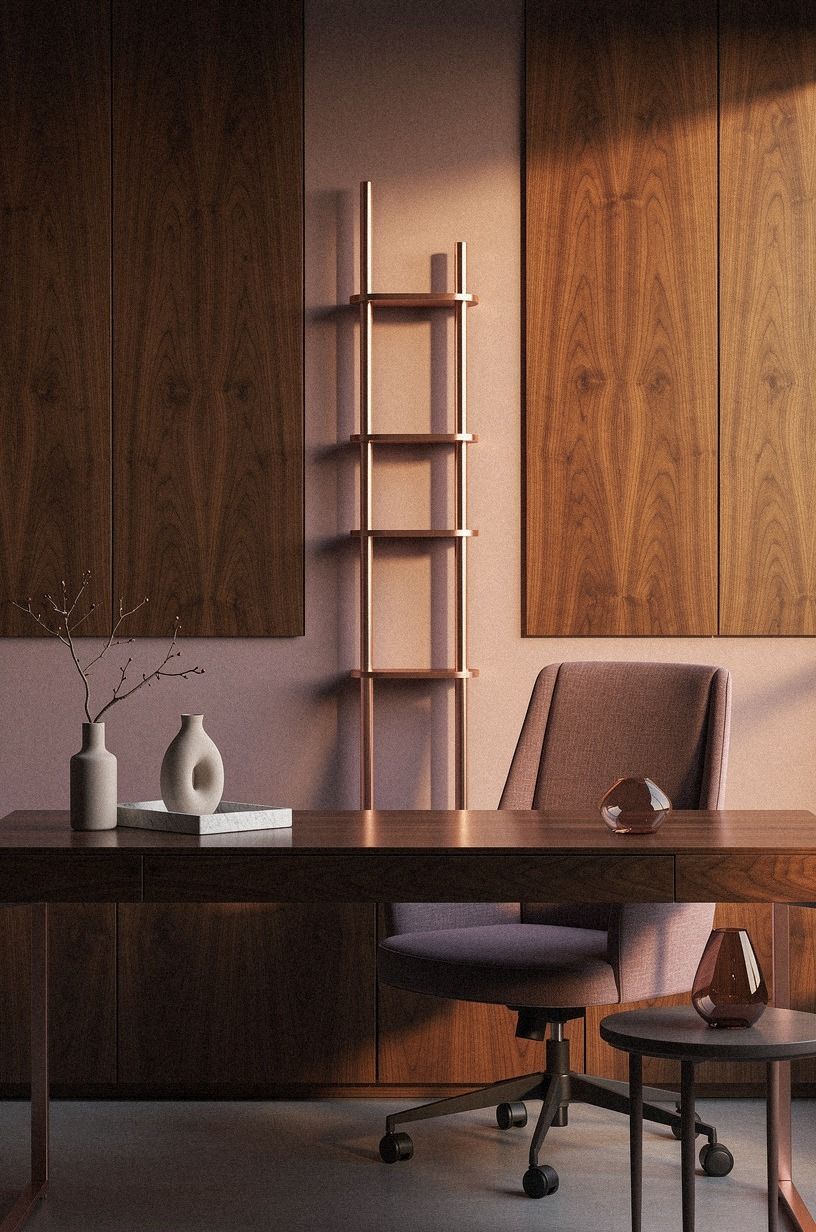
Your office music room needs three kinds of light: a ceiling source, a desk task lamp, and a lower glow near the instrument zone.
4Hang instruments in a working gallery
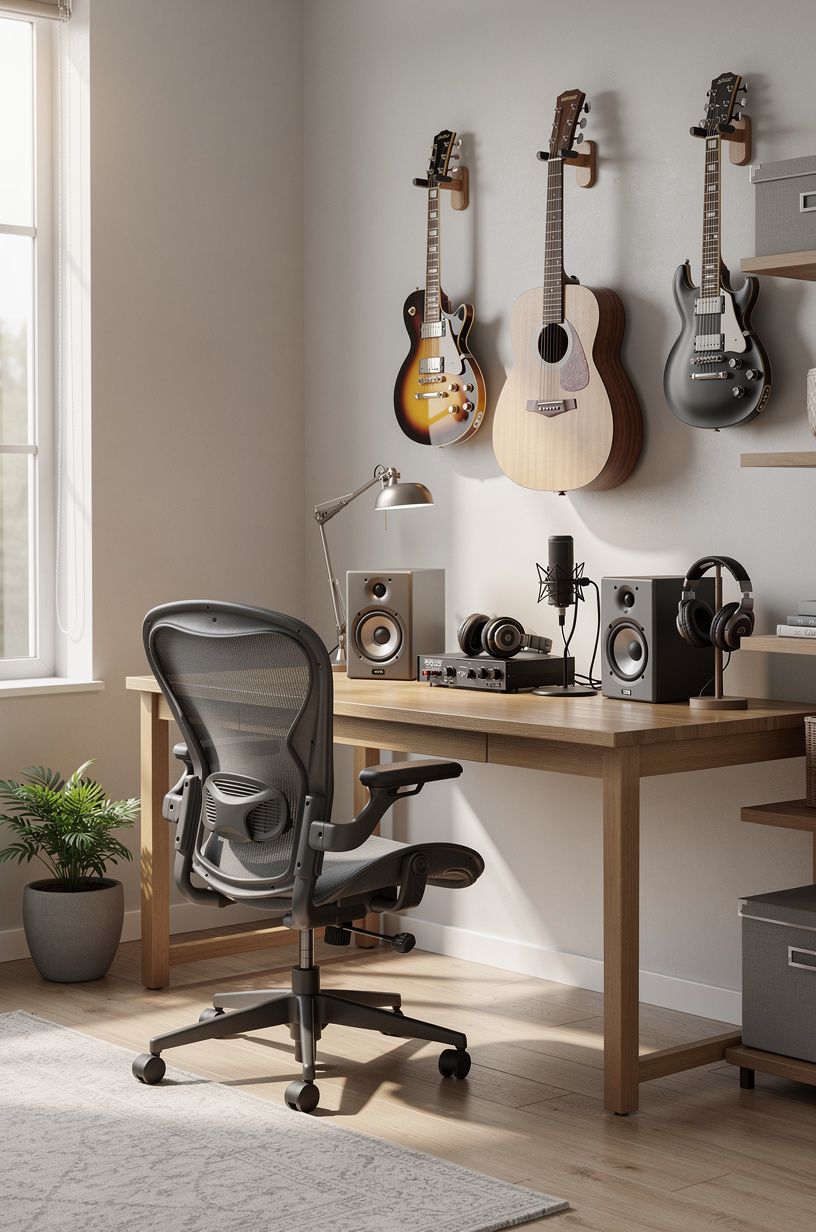
Wall-mounted instruments can make your music den ideas feel personal without using valuable floor space. Hang guitars, violins, or framed sheet music in a loose vertical grouping behind the desk or along the music wall. You’ll get a gallery effect, but your tools will still be easy to reach when inspiration arrives.
Use padded instrument hooks with protected contact points so the finish won’t rub against the necks. Add an organic bouclé stool or cushion below the display if you need a soft place to sit while tuning.
Keep the lowest guitar high enough that your chair won’t bump it when you roll backward. I’d avoid arranging every instrument in a perfectly even grid because the room can start to feel stiff.
Vary the heights slightly, and your display will look collected instead of purchased all at once. A few ideas from these creative music room layouts can help you make the grouping feel more relaxed.
5Swap a bulky cabinet for the Open-Back Storage Move
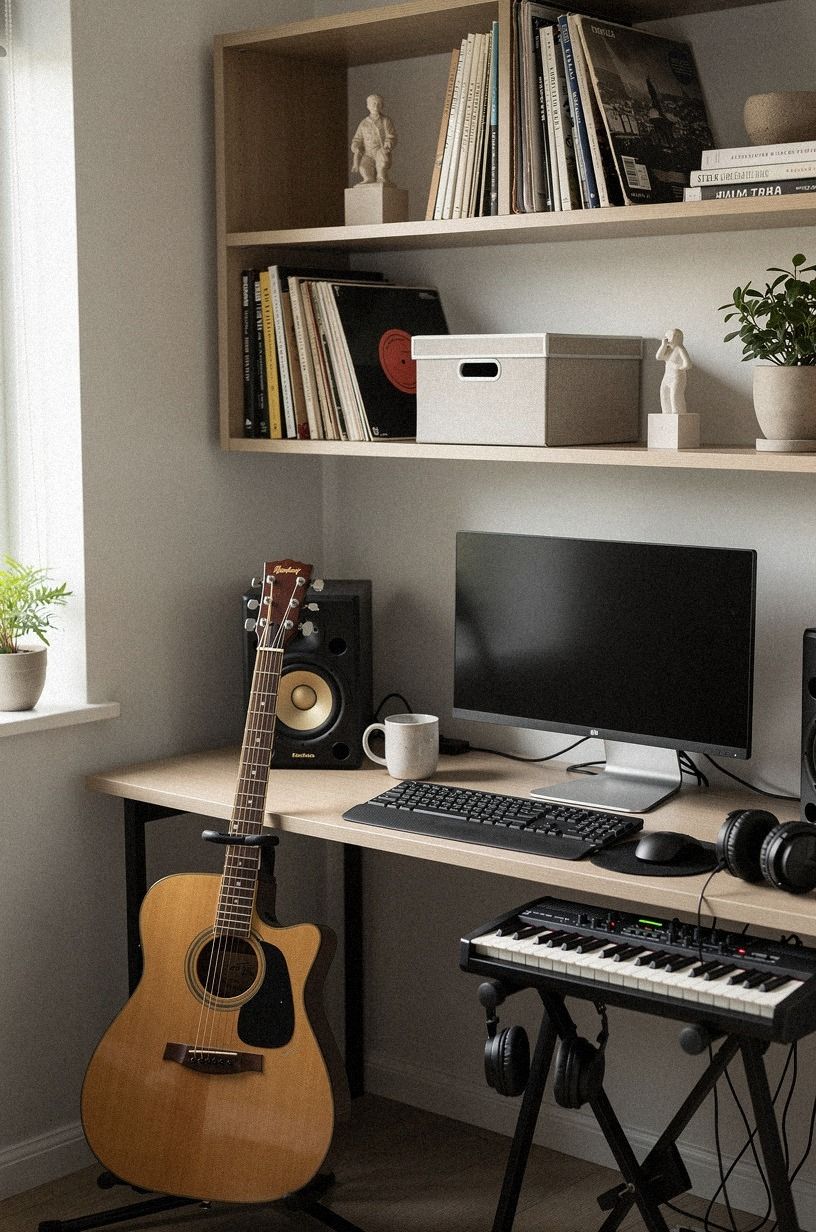
Open shelving lets you store music books, headphones, notebooks, and office supplies in one flexible system. Choose a narrow bookcase behind the desk, then reserve the lower shelves for baskets and the upper shelves for instruments or framed art. You’ll see what you need without opening six doors.
An emerald bookcase with unlacquered brass hardware brings color and warmth beside black electronics, while fabric bins keep cables from becoming visual noise. I’d skip deep cabinets in a small room because they steal walking space and make your workspace feel heavy. If you’re styling a tight corner, this guide to music room ideas that turn any space into a creative haven has useful storage pairings.
6Paint one wall with Green Smoke
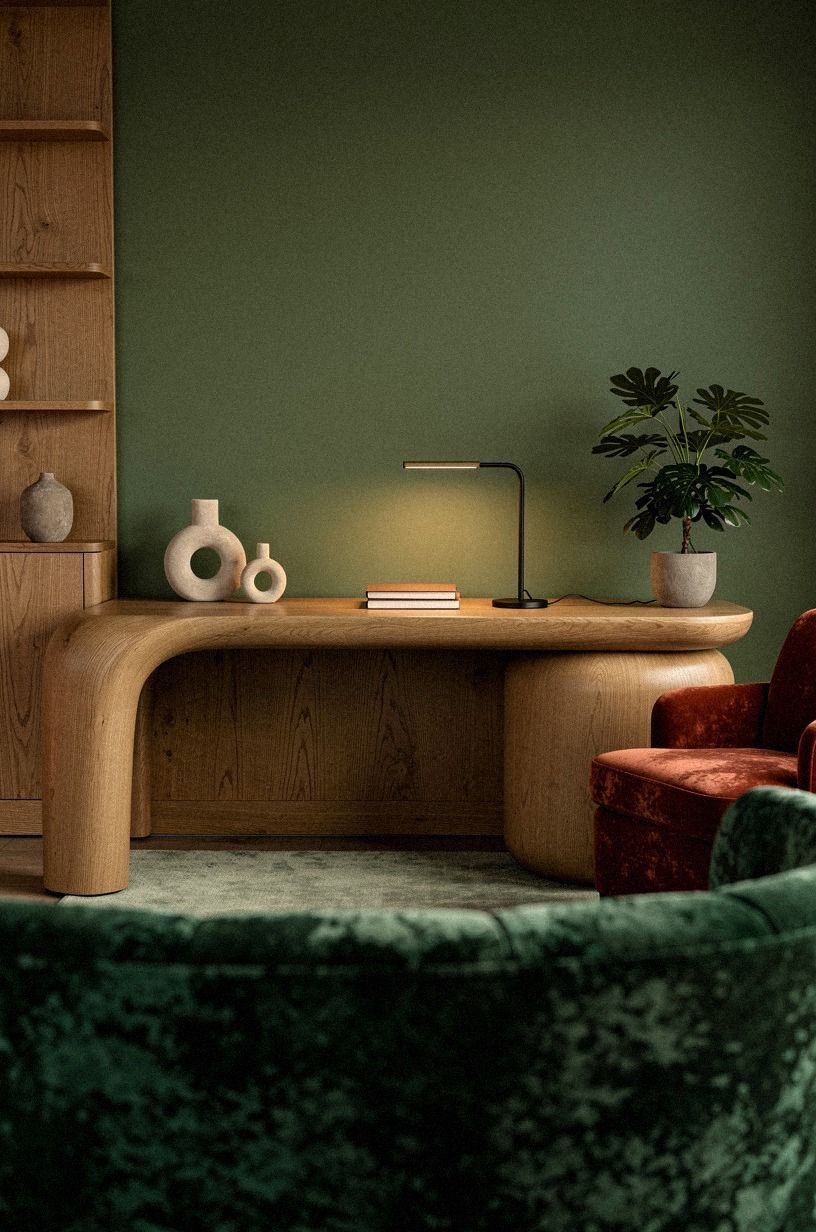
One painted wall can separate work from play more clearly than a large piece of furniture. Use Farrow & Ball Green Smoke No.47 behind the music area, then keep the desk wall a warm off-white. You’ll create a moody, earthy backdrop for instruments without making your office feel dark all day.
The color looks especially good beside deep-pile mohair velvet and natural oak. I’d paint the music wall rather than the wall behind your monitor because a deep tone can make video calls feel dim.
And if you’re unsure about committing, test a large sample at morning, noon, and evening before you buy a full gallon. This one-wall paint approach works well for renters and homeowners alike.
7Anchor the desk with the Quiet Rug Boundary
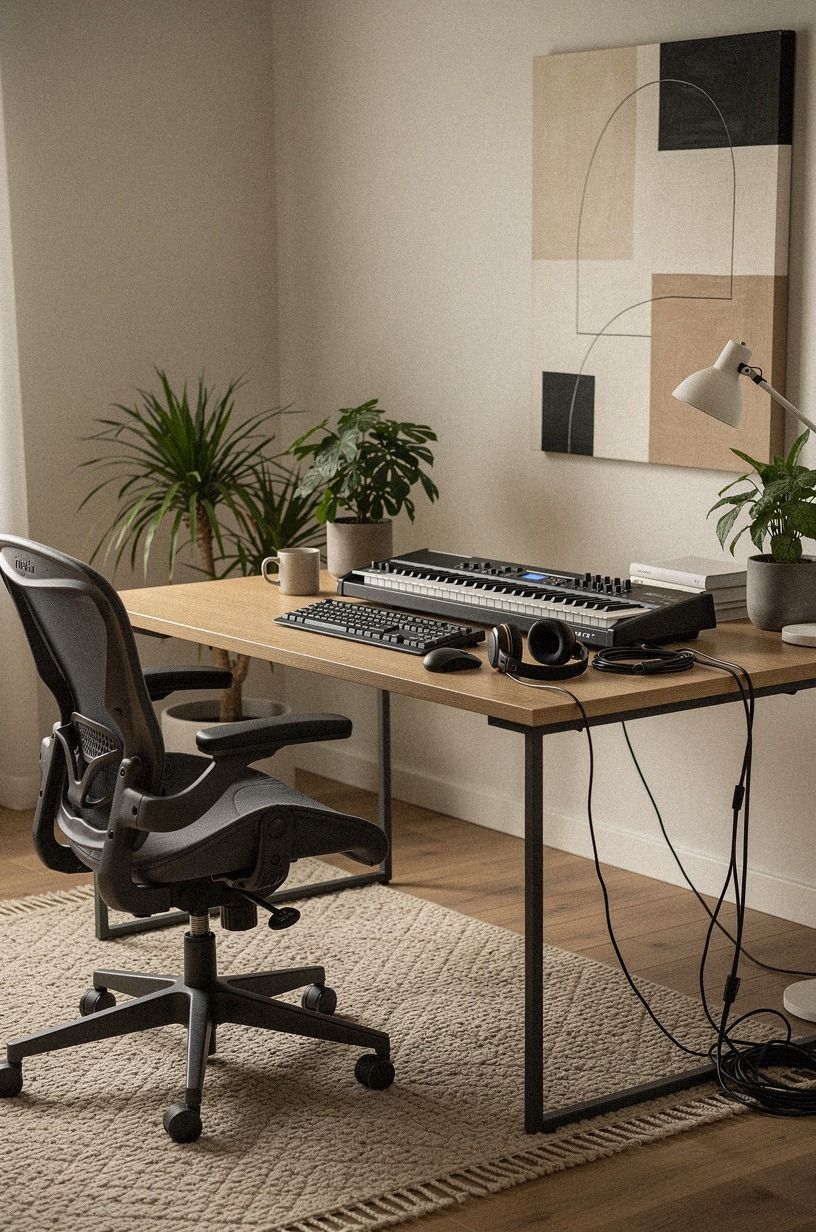
A rug can quietly mark the office zone while improving the room’s sound. Place a flatwoven rug beneath the desk and chair, with enough width for the chair to stay on the rug when you roll back. You’ll feel the difference underfoot, and the room won’t echo quite as sharply during calls or practice.
The payoff is immediate!
Choose a low-pile dusty rose rug against charcoal accents so the chair can move easily while the office zone feels distinct. A thick shag sounds soft, but it catches casters and collects dust beneath music stands. If you’re arranging a small room, a 5-by-7-foot rug can define the work zone without swallowing the instrument area.
Your music corner will still feel separate, but you won’t lose the shared-room connection. For a bolder mood, these small speakeasy room ideas show how darker textiles can feel intimate rather than cramped.
8Build a recording nook under a window
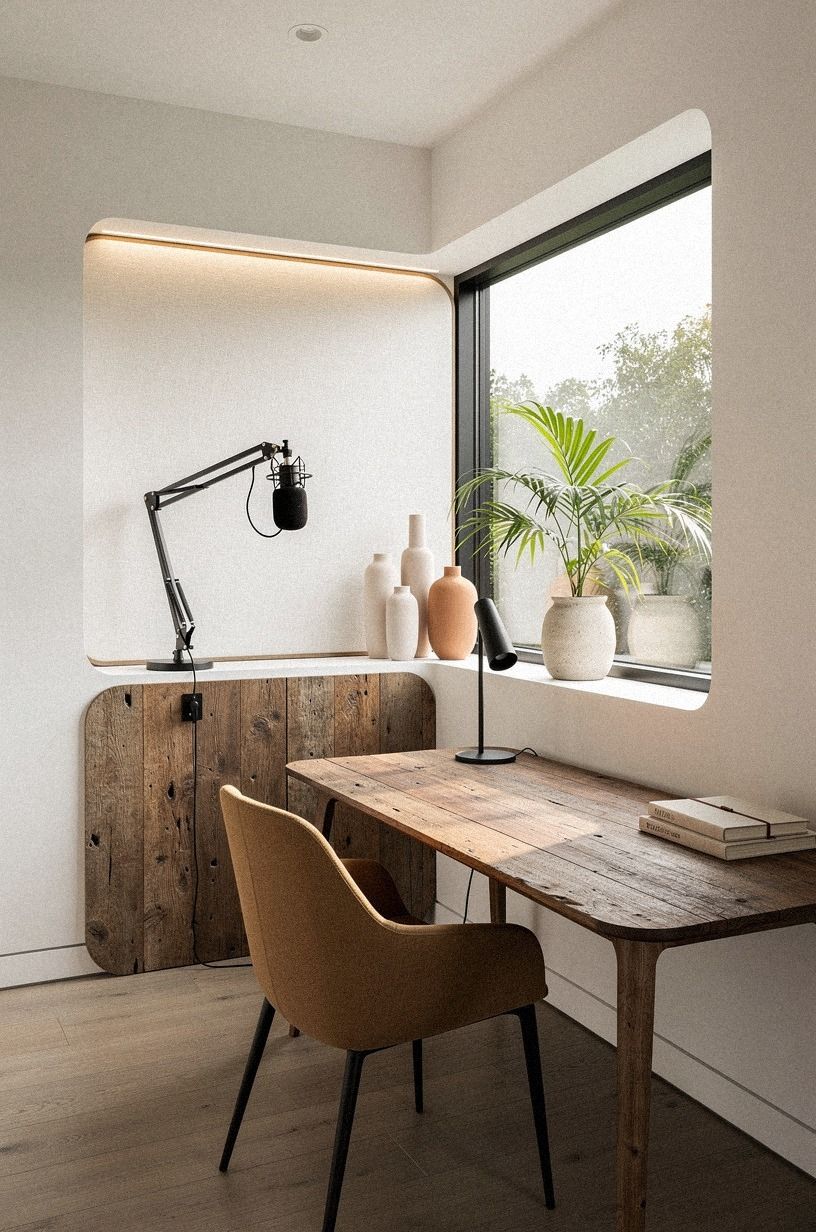
A window-side recording nook can give your aesthetic home music studio a natural focal point while keeping your desk away from glare.
9Mix warm wood over white laminate
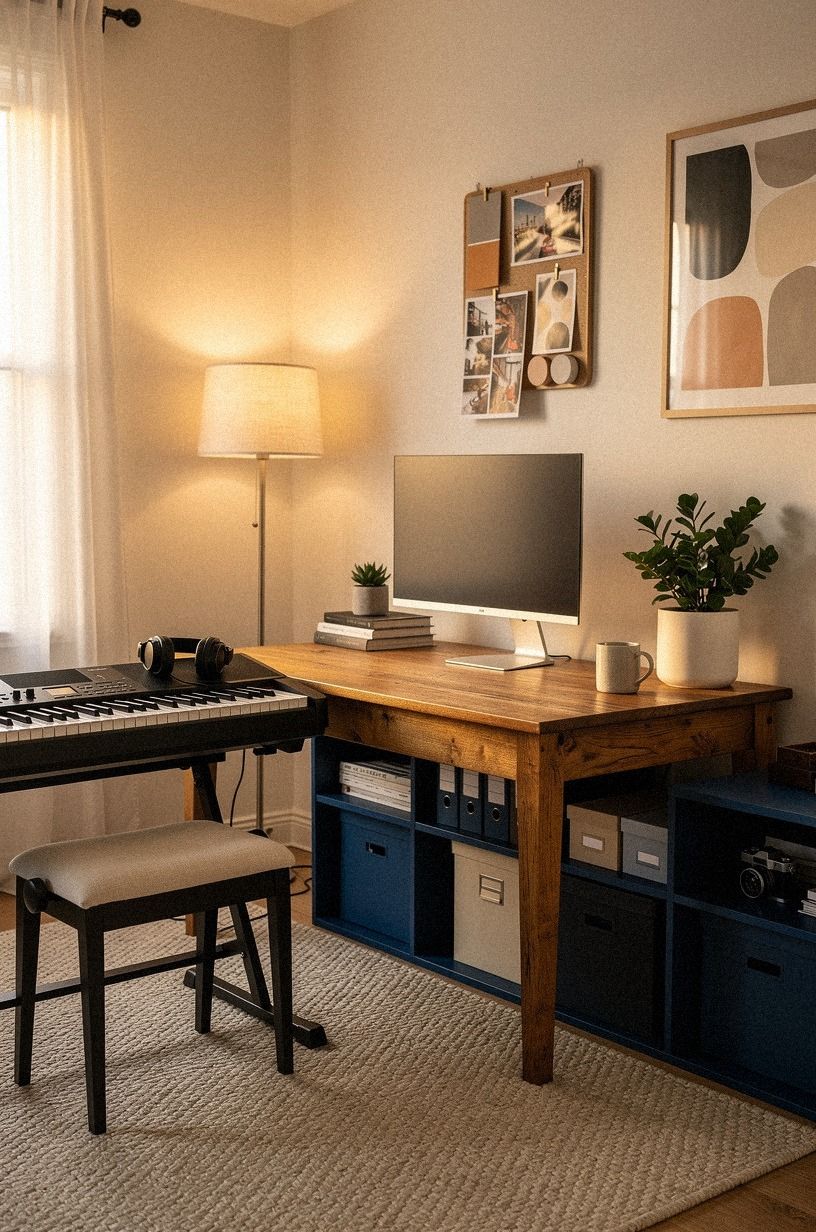
Warm wood can keep a practical office from feeling sterile, especially when the music equipment includes black cables and metal stands. Pair an ivory laminate desk with washed Belgian linen curtains, then repeat one warm wood tone in a picture frame or instrument stand. You’ll get contrast without introducing five unrelated finishes.
The Two-Wood Rule works best when one wood is light and the other is noticeably deeper. I’d skip matching every surface because a full suite can feel flat and overly planned. Try a midnight-blue record shelf beside an ivory desk, and let copper accents warm the arrangement.
Your room should look gathered over time, even if you’re furnishing it this month. These creative music room ideas can help you balance practical storage with more soulful materials.
10Float a bookcase behind the keyboard
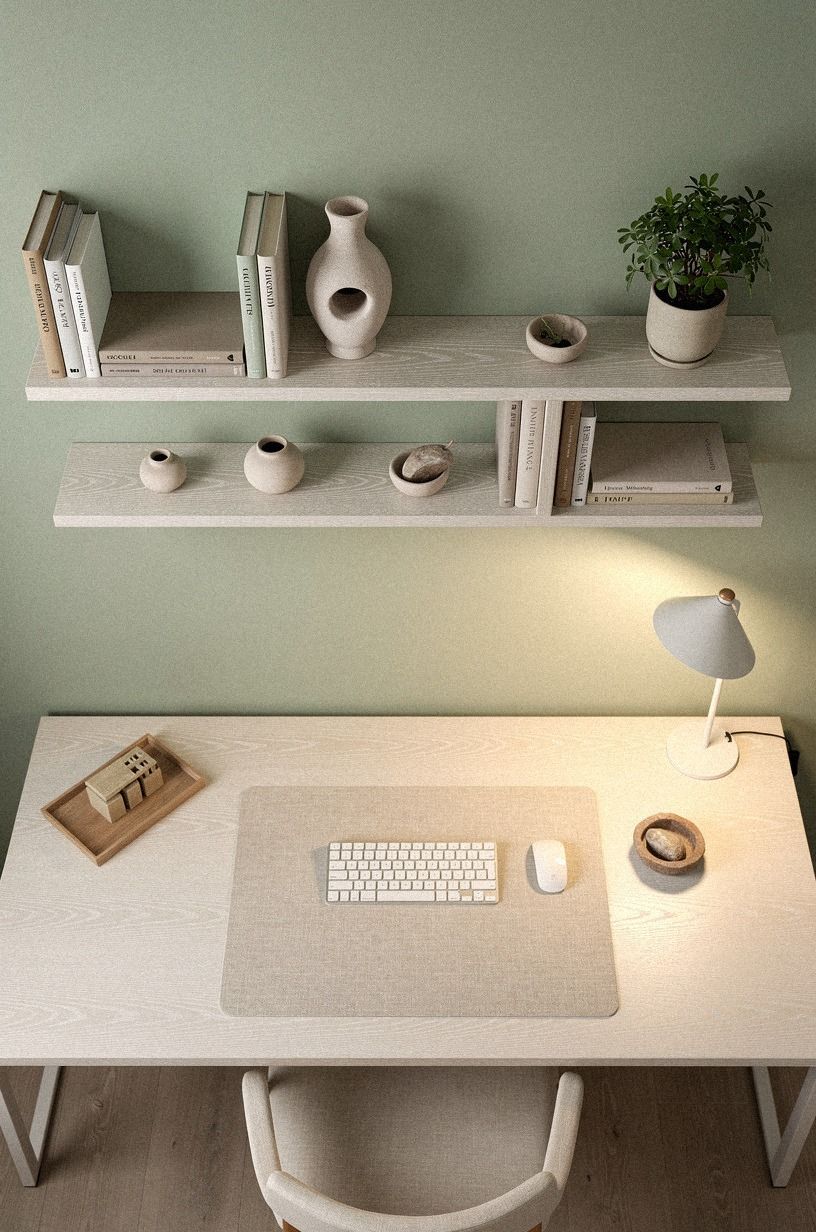
A floating bookcase can separate your keyboard from the office without closing off the room.
11Pair the reading chair with the music stand
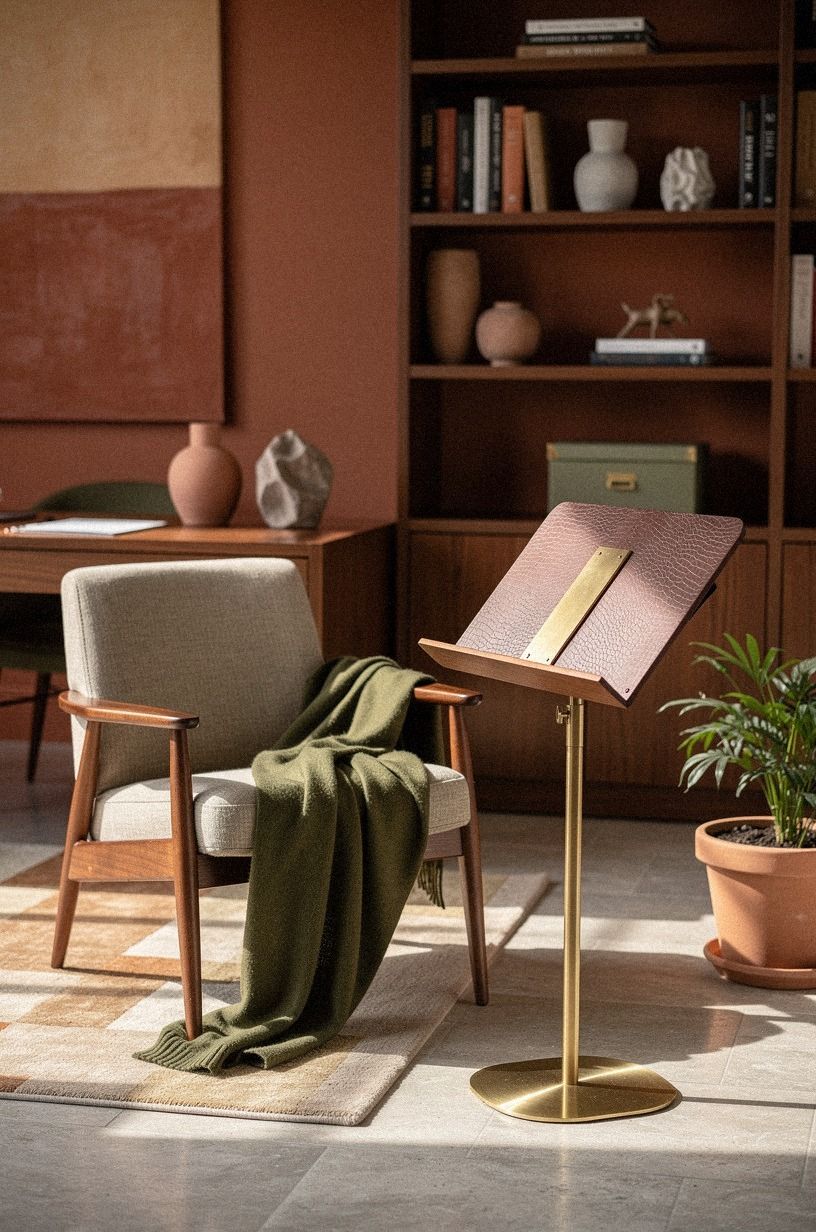
A reading chair gives your office music room a place for listening, practicing, or taking a screen break. Put it near the instrument zone, not beside the desk, so your brain can read the chair as a change of activity. You’ll have a comfortable landing spot without adding another full seating area.
Look for a terracotta chair with shagreen accents and arms that don’t crowd the stand. I’d avoid a deep lounge chair if your room is narrow because it needs more clearance than you think.
Add a small round side table for a metronome, tea, or headphones. Your music space will feel more welcoming, and you won’t be tempted to work from the chair all afternoon.
A compact, atmospheric room can borrow ideas from these small speakeasy room layouts without becoming theatrical.
12Hide cables with the Clean Line Method
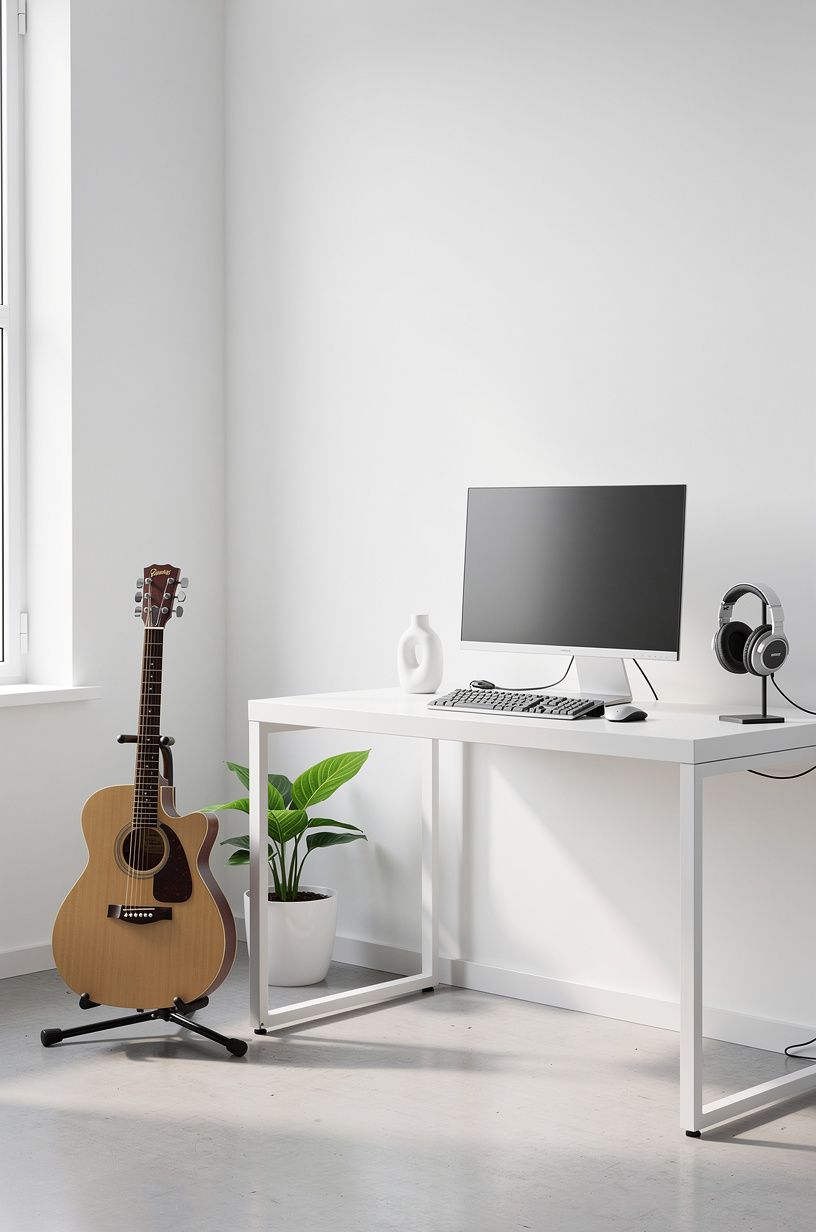
Cables can make a shared office and music room look unfinished within minutes. Run desk cords through an under-desk tray, bundle instrument cables by type, and use one labeled box near the outlet. You’ll protect the calm feeling of the room while keeping everything ready for use.
Choose a book-matched walnut cable box instead of shiny plastic tubing because it sits naturally beside the desk and conceals adapters without adding visual noise. I made the mistake of hiding every cord in one giant basket, and finding the right adapter became its own project.
Give your most-used equipment a clear route. And if you’re working beneath stairs or in an awkward nook, these under-stairs room ideas show how to use tight storage zones without making them feel cramped.
13Paint the desk wall with Cheating Heart
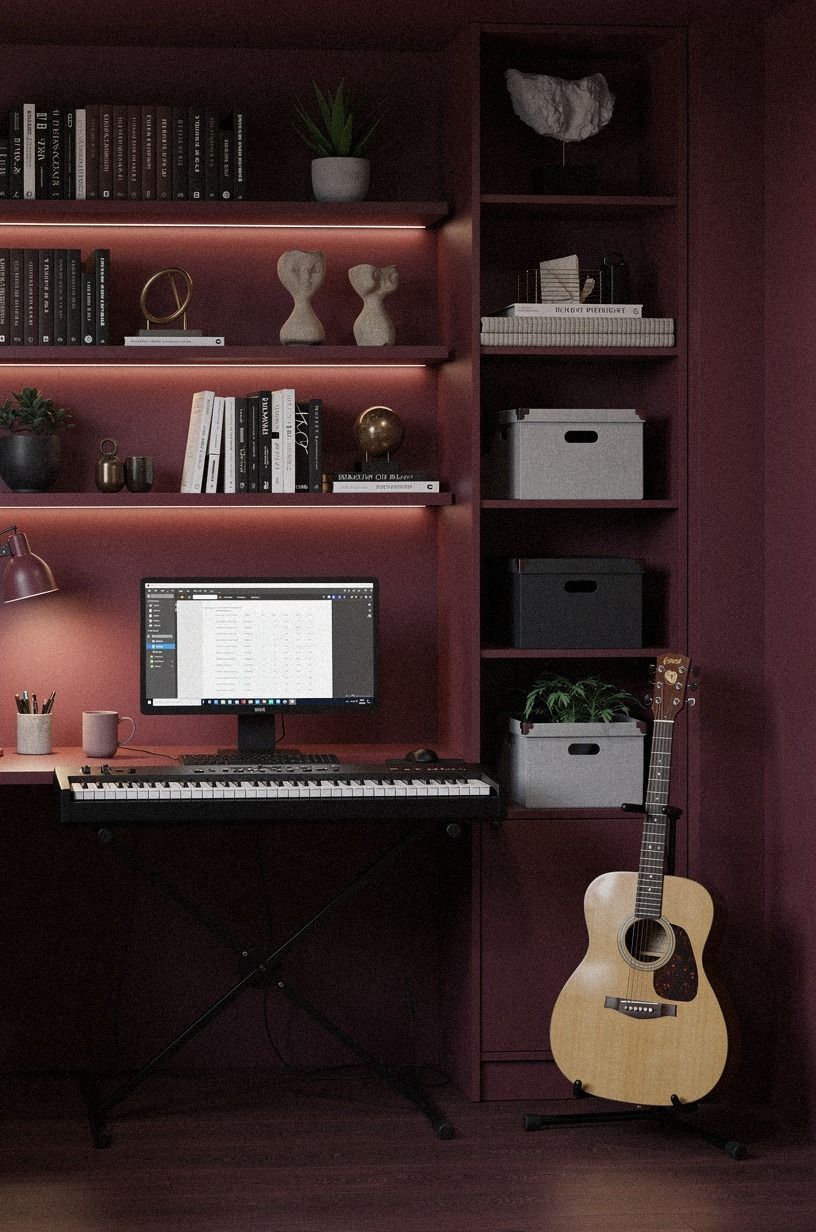
Benjamin Moore Cheating Heart 1617 can give the office side enough depth to feel grounded while still pairing well with warm wood. Paint the desk wall, then keep the music wall lighter if you want the room to feel open. You’ll create a soft contrast rather than two competing focal points.
The plum-gray palette looks sharp with organic bouclé, rose-gold details, and restrained ivory accents. I’d skip a blue-black finish in a room with only one small window because it can swallow your daylight.
Use a warm lamp and pale desk accessories to keep the mood inviting. If you’re choosing between this and a lighter neutral, Cheating Heart wins when your goal is focus with a little drama.
A little drama helps!
14Turn the closet into a practice station
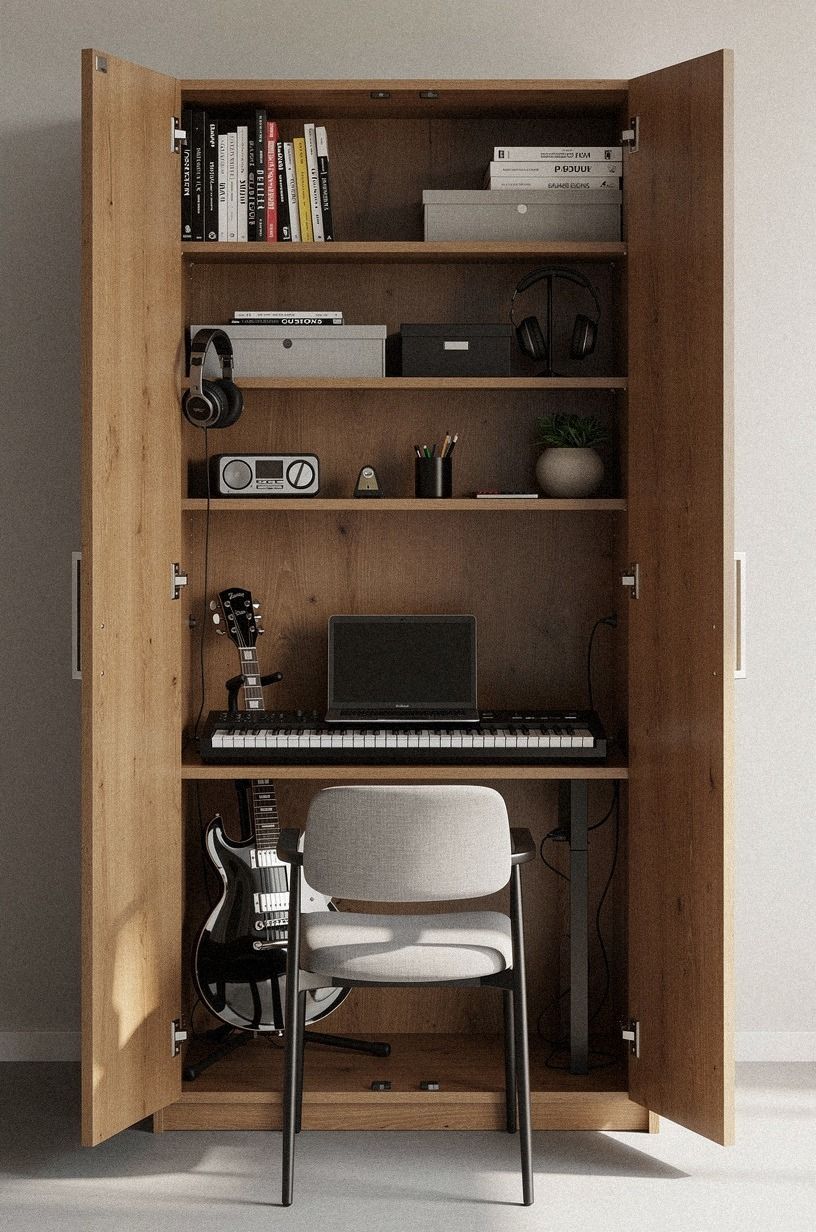
A closet can become a compact practice station if you remove one door and install shallow storage. Add a wall-mounted guitar hanger, a narrow shelf for sheet music, and a small stool that tucks below. You’ll gain a dedicated music zone without giving up the room’s main floor area.
Use navy linen curtains if you need to hide the setup during video calls. Add an unlacquered brass hook for headphones or a cable pouch, and the finish will develop a richer patina over time. I’d avoid placing a full desk inside because the depth will feel uncomfortable fast.
Keep your keyboard or amp portable, and your office will shift back to work mode in less than a minute. For another compact storage approach, browse these creative music room ideas.
15Frame the desk with vertical storage
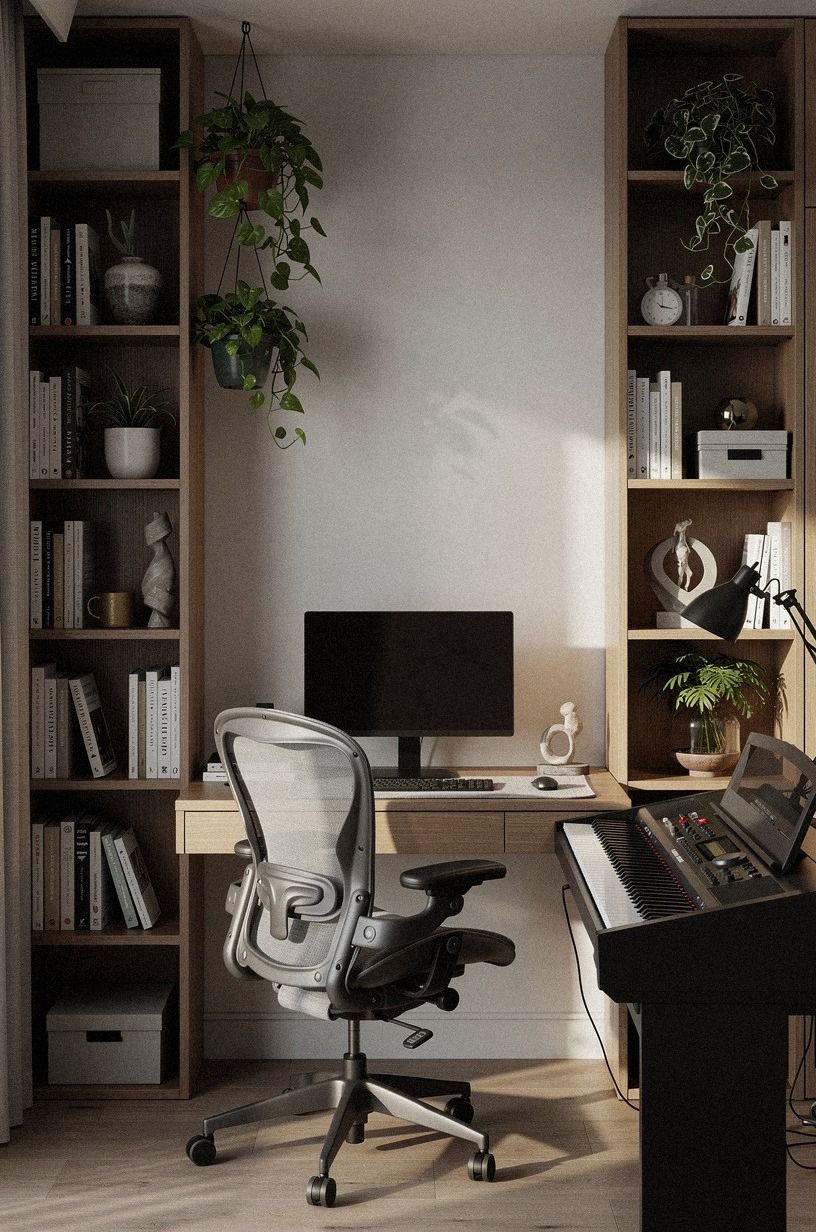
Tall storage uses the wall above your desk while leaving the floor open for a guitar stand or small amp. Install two narrow towers on either side of the desk, then connect them with one shelf if you need a stronger architectural line. You’ll get useful storage without losing the airy feeling that makes a combo room work.
Try emerald shelving with unlacquered brass details, then soften the arrangement with a deep-pile mohair velvet stool or chair nearby. Keep the desk depth between 24 and 30 inches so the storage doesn’t make your work surface feel cramped. Your chair also needs about 42 inches of clearance behind it.
I’d measure that path with painter’s tape first because furniture always looks smaller online than it does in your room. If you like rooms with a little collected character, these whiskey office library ideas offer strong examples of vertical storage.
16Budget the room before you buy the mood
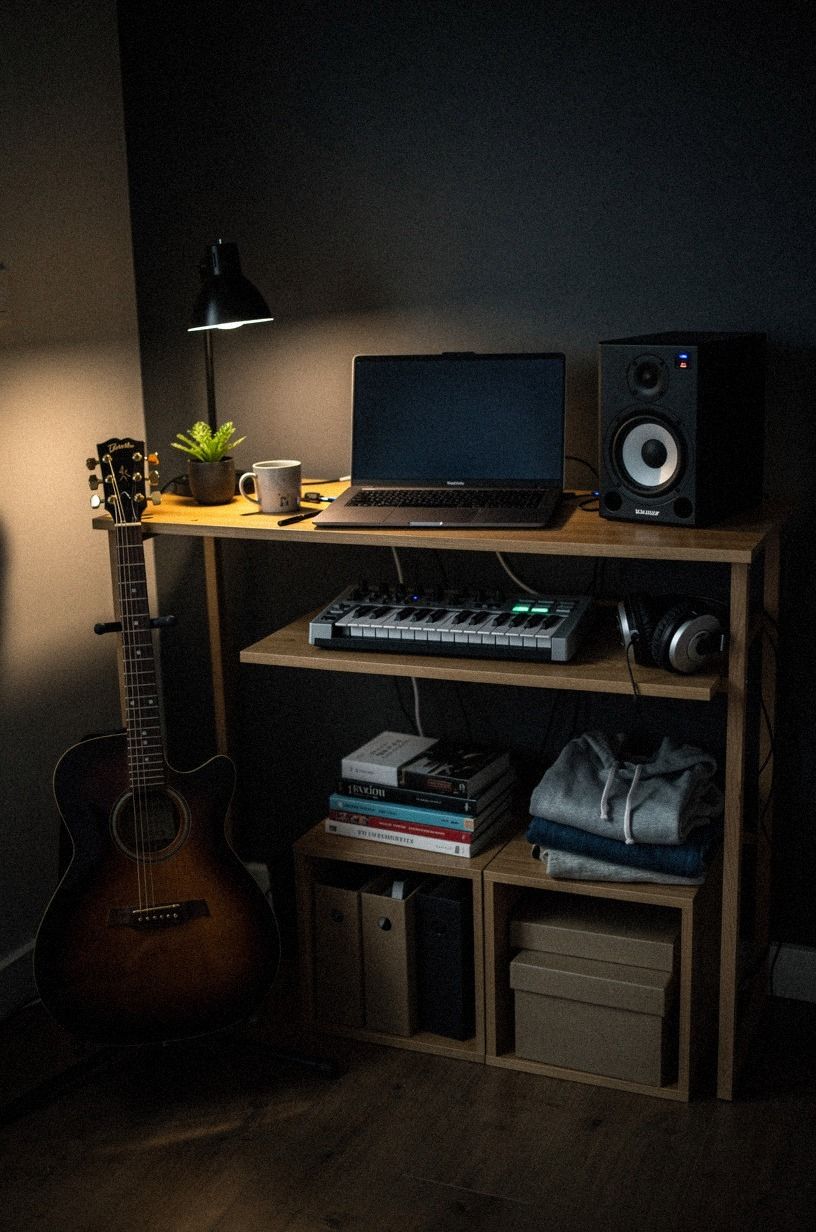
A practical budget keeps your office music room from turning into a pile of attractive pieces that don’t work together. Start with lighting, storage, and a chair, then decide whether the desk or instrument display needs an investment. You’ll get more comfort from a good layout than from expensive accessories.
For a smaller refresh, a natural oak desk typically runs $300 to $1,200, while an ergonomic chair can cost $250 to $1,500. I’d spend first on the chair and lighting because you’ll use them every workday. If you’re saving, keep your current desk and improve the wall, floor, and cable plan instead.
This basement music room guide also has practical ideas for getting atmosphere from affordable finishes.
17Why office music room ideas feel warmer now
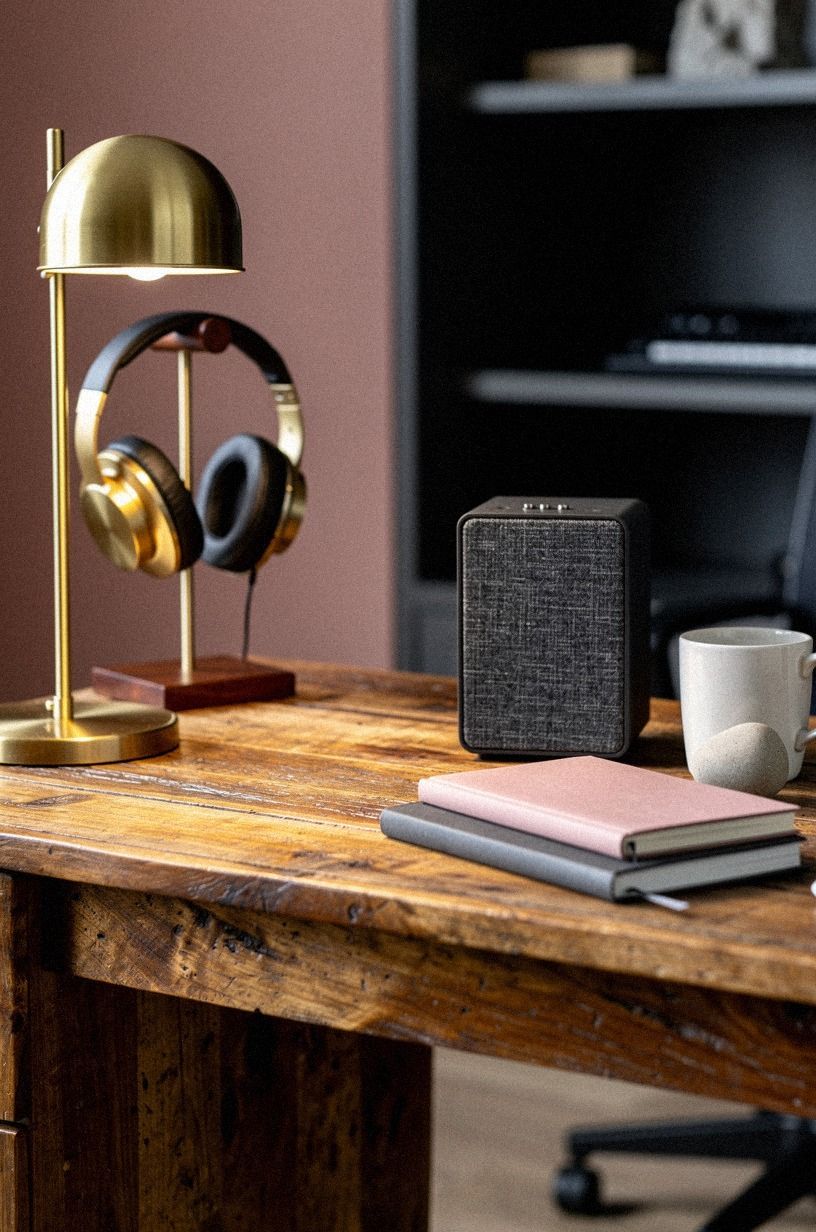
Office music room ideas are having a moment because people want rooms that support more than one version of themselves.
18Could a small room work with two focal points?
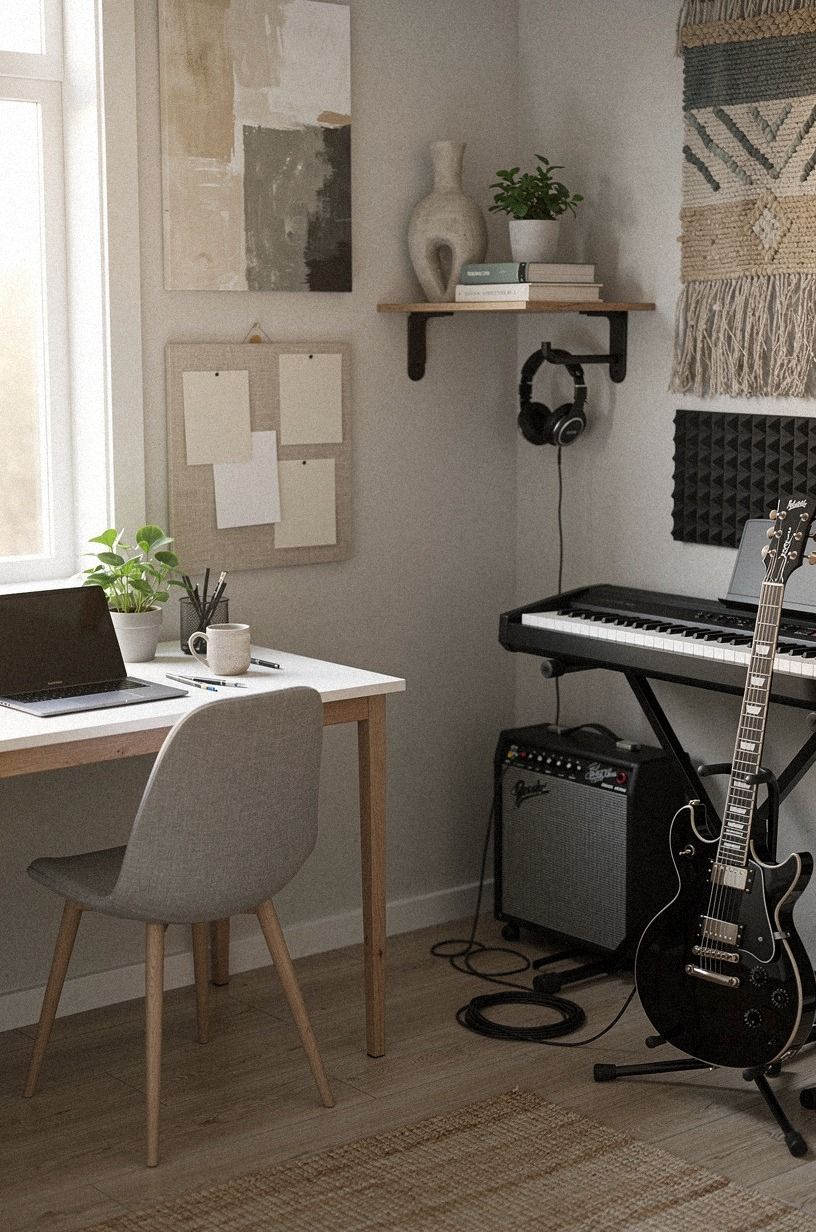
Yes, your small room can handle two focal points if one stays visually quiet. Let the desk wall carry the stronger color or shelf arrangement, while the music side gets one memorable object, such as a piano, record console, or framed instrument. You’ll avoid the visual argument that makes compact rooms feel restless.
Use slim black music stands when floor space is limited, and bring in warm white, camel, or linen accents around them. Your desk should face a wall or window, not the center of the room, so the walking path stays open.
And if you’re comparing layouts, these small speakeasy room ideas can help you test the instrument side before you move heavy furniture. It can feel wonderfully liberating!
19Choose sound-softening textiles over more furniture
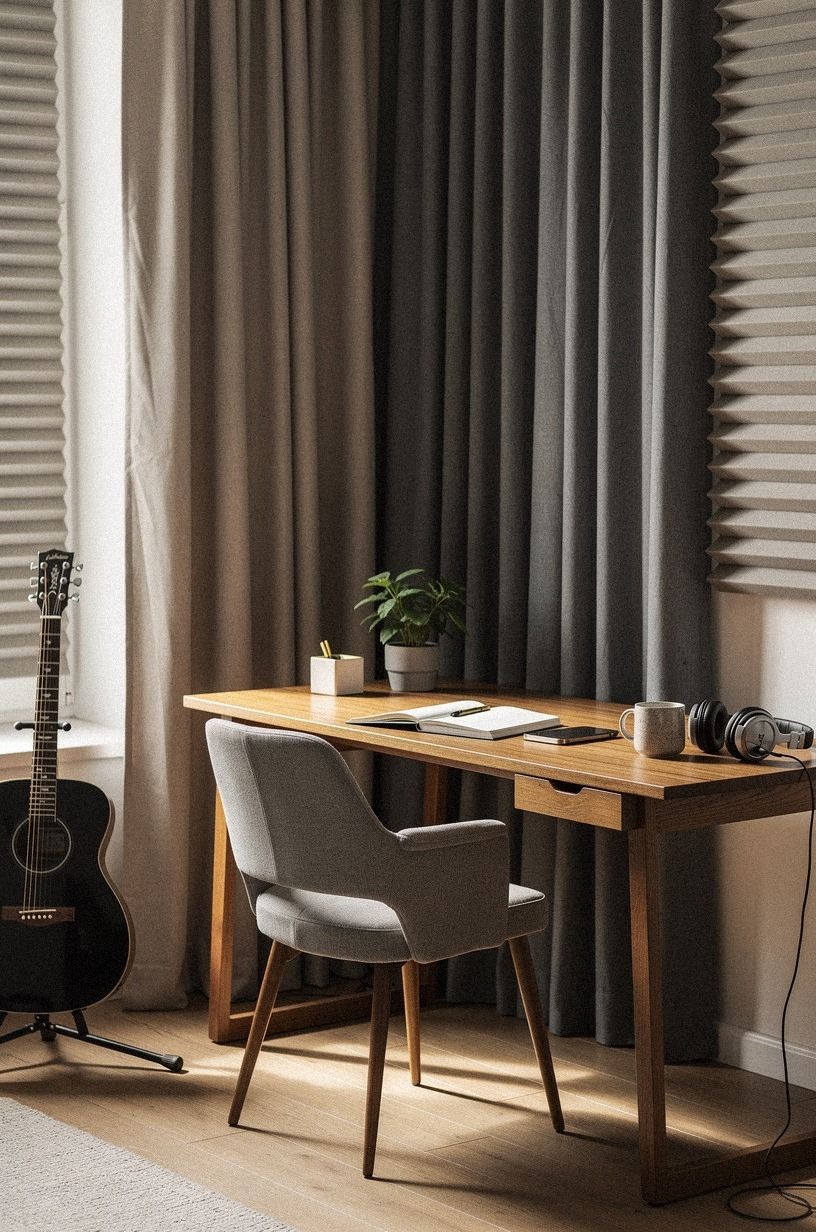
Textiles can improve the feel of a shared room without taking away your working space. Add curtains, a rug, one upholstered chair, and fabric-covered storage before buying another cabinet. You’ll soften echoes and make the office music room feel more intimate without crowding the floor.
A washed Belgian linen curtain beside a keyboard absorbs more visual and acoustic sharpness than another hard surface would, while a cerused white oak shelf adds warmth without bulk. I’d skip extra side tables unless you can name exactly what each one will hold.
Your room already has enough activity between work and music. Keep the final layer simple, then use this guide to turn any space into a creative music haven for ideas that keep the room personal.
What I’ve Learned From Combining Work and Music
I’ve learned that the best combo rooms aren’t perfectly balanced. One side usually needs more practical support, while the other carries more feeling. In my own rooms, I’ve spent too much time making the desk look polished and not enough time asking whether I wanted to sit there after work.
Your layout should answer that question before you buy a single decorative piece.
I’d start with the activity that needs the most concentration. If you take calls all day, give the desk the quieter wall and place the instrument display where movement won’t interrupt you. If music is your real reason for the room, reverse it.
The room shouldn’t pretend both uses have equal weight if your habits don’t.
The mistake I’d avoid is buying matching furniture for every function. A desk, a bookcase, and a music console from one collection can make the room feel flat. Mix one practical piece from IKEA, one warmer vintage or secondhand find, and one material with texture, such as cane, linen, or mohair.
Your eye needs a little friction.
I also wouldn’t chase perfect soundproofing unless you’re building a dedicated studio. A rug, curtains, books, and upholstered seating will make the room more comfortable for everyday listening and calls.
They won’t stop every note from traveling, but they’ll make the space feel less sharp. That’s enough for most homes, and it leaves you more money for the instrument you’ll use.
The Questions I Get Asked Most
What are the best office and music room combo ideas for a small office?
The best setup is a compact desk on one wall with a keyboard, guitar, or reading chair on the opposite side. IKEA KALLAX shelving helps divide the zones without blocking light. Keep your desk 24 to 30 inches deep, and leave a clear walking path behind your chair.
Start with the perpendicular desk layout if the room feels crowded. It creates separation quickly, and you can adjust the instrument side without moving every piece of furniture.
Where can I buy office and music room combo pieces on a budget?
IKEA, Wayfair, and Target are useful starting points, while Facebook Marketplace and thrift stores can supply better wood pieces for less. You don’t need every item new. For more display inspiration, browse these music room ideas for creative spaces.
Look for secondhand bookcases first because they’re often sturdier than inexpensive flat-pack options. You can refresh the finish, add baskets, and make the piece feel tailored without a dramatic spend.
How much does an office and music room combo makeover cost?
A small refresh can cost about $200 to $800 for paint, shelves, task lighting, and organization. Free improvements include moving furniture, grouping instruments, and bundling cables. A mid-range office setup usually reaches $1,500 to $5,000 when you add a desk, chair, and bookcase.
The most worthwhile upgrade is usually an ergonomic chair, especially if you work from home. Better lighting and a rug can follow later, once you understand how the room is actually used.
Can I create an office and music room combo setup on a budget?
Yes, and you can start with three low-cost changes: move the desk perpendicular to the wall, use a secondhand shelf for music storage, and add one warm lamp. Your existing rug, books, and framed art can soften the room before you spend on new furniture.
A warm table lamp can change the mood immediately. If you need more inspiration, compare your room with these small music room ideas before buying anything large.
Is an office and music room combo setup worth it in a small space?
Yes, because a small room forces you to define each zone clearly. A perpendicular desk layout often creates enough separation without a divider. Keep your keyboard or instrument shallow, and choose storage that uses wall height instead of valuable floor space.
The key is protecting the clear walking path. If you can move comfortably between the desk and instrument, the room will feel far more generous than its measurements suggest.
Is an office and music room combo setup good for a rental?
Yes. Use removable hooks, tension rods, peel-and-stick paint alternatives, and freestanding shelving.
You’ll get the same visual separation without permanent work. A tension-rod curtain can hide music equipment during calls, and you can take it with you when your lease ends.
A freestanding shelf can define the music area while keeping your security deposit safe. For more ideas in unusual footprints, see these under-stairs room ideas.
Where I’d Start First
If I had to pick one, I’d start with the floating desk. It creates two usable zones without buying a divider, and the open floor keeps instruments accessible instead of decorative. Pin the layout for later and compare it with these whiskey office library ideas before you move anything heavy.