The short answer: Tadelakt & limestone open shower ideas make a bathroom feel warmer because light moves across one calm surface instead of stopping at grout lines. I once chose the wrong sealer and watched water darken a sample overnight. You’ll avoid that mistake here. These rooms can feel earthy, modern, and wonderfully quiet.
Editor’s note
Start with the wet area, then let every choice support it. Your best room will combine one mineral finish, one warm wood tone, and one practical contrast. Keep the plan simple.
Let the materials do the emotional work.
- Layer the Wet-Edge Rule into a tadelakt and tiles bathroom
- What Makes the Two-Plane Limestone Frame Work?
- Float a clay shower wall beside warm oak
- The Three-Plane Color Stack
- Swap a glass door for an open shower threshold
- Build the Three-Height Light Stack over limestone
- One Deep Color Against Pale Limestone
- Why Choose Tadelakt Over Small Mosaic?
- The Soft-Corner Method
- Mix Limestone with the Two-Wood Rule
- Frame the Open Shower with a Plaster Arch
- Hang Linen Against a Minimal Grout Bathroom
- Float a Vanity Beneath the Limewash Lift
- Contrast Warm Limestone Over Cold White Tile
- Budget the Earth-and-Water Palette Before You Start
- Add the Spa-Window Pause with Natural Light
1Layer the Wet-Edge Rule into a tadelakt and tiles bathroom
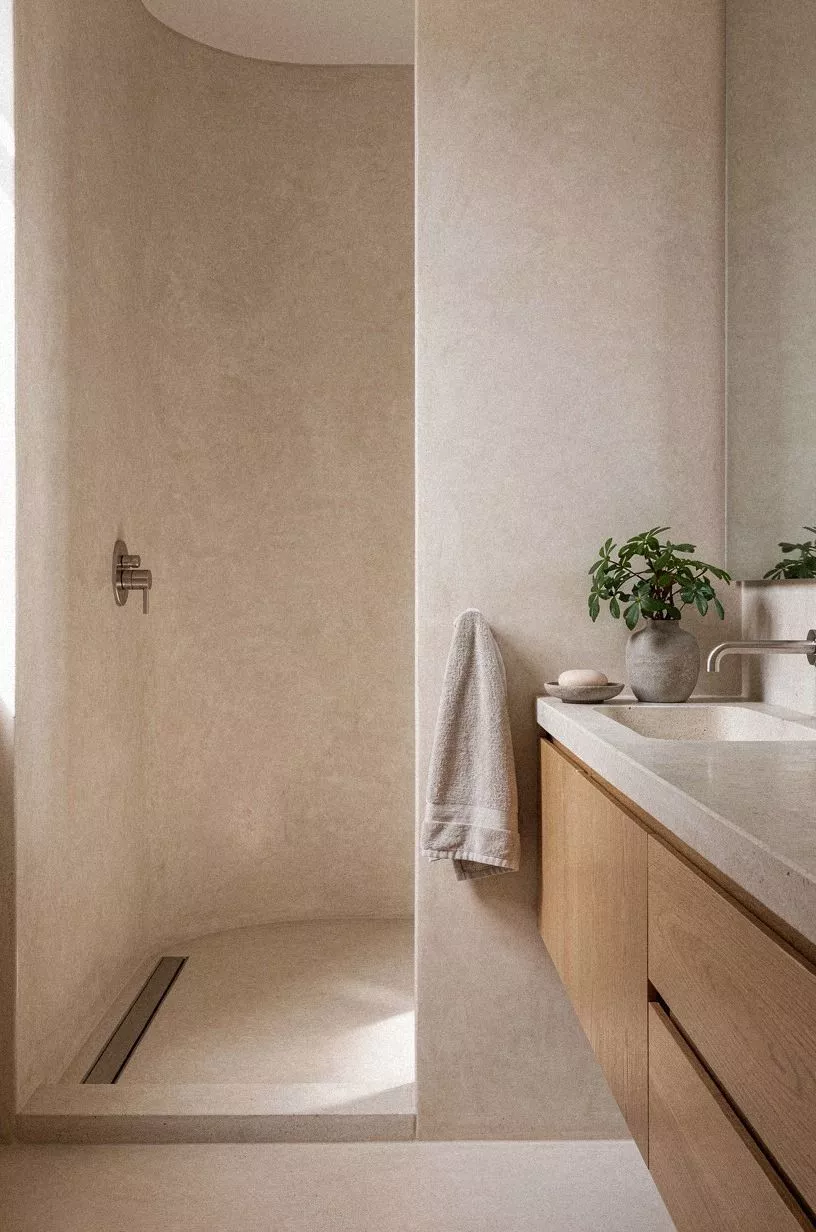
Start with one continuous tadelakt surface around a backlit translucent onyx panel. The onyx gives the wet area a gentle glow without adding a busy pattern. Bring in forest green, rust, and natural oak so the room feels grounded rather than overly polished.
Keep your color family close. A deep green wall, rust-toned accessory, and natural oak vanity create a gentle shift.
Your bathroom will feel larger when your eye can travel without interruption. If your open shower shares a wall with the toilet, carry the finish around the corner. The room will read as one serene envelope.
The practical detail matters. Use a proper waterproofing system behind the finish.
Keep your shower opening wide enough for comfortable movement. You’ll find useful layout inspiration in these wet room ideas for open shower layouts, especially if your room needs a generous walk-through plan.
2What Makes the Two-Plane Limestone Frame Work?
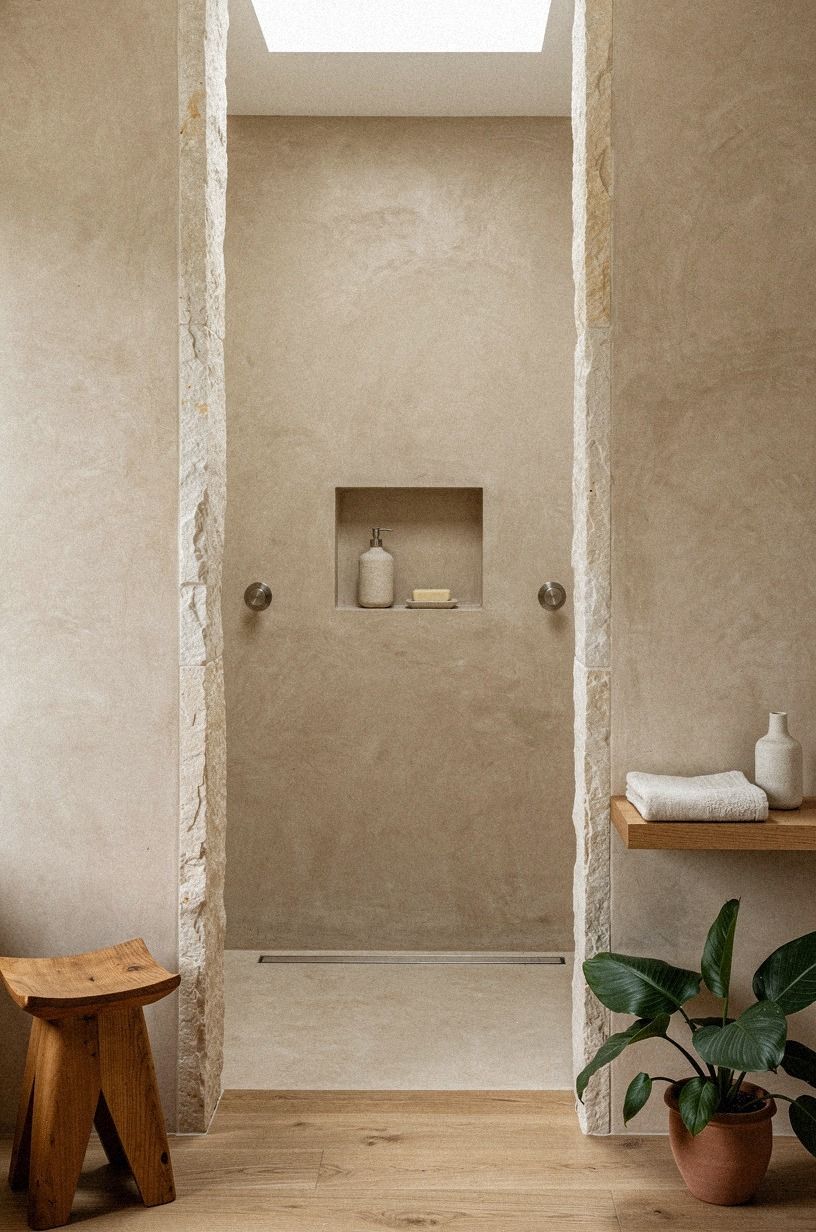
A dusty rose wall feels more deliberate when charcoal accents and brass hardware define the two planes. Add book-matched walnut at the vanity or storage wall. Its natural movement gives the limestone idea a warmer, more tailored direction.
3Float a clay shower wall beside warm oak
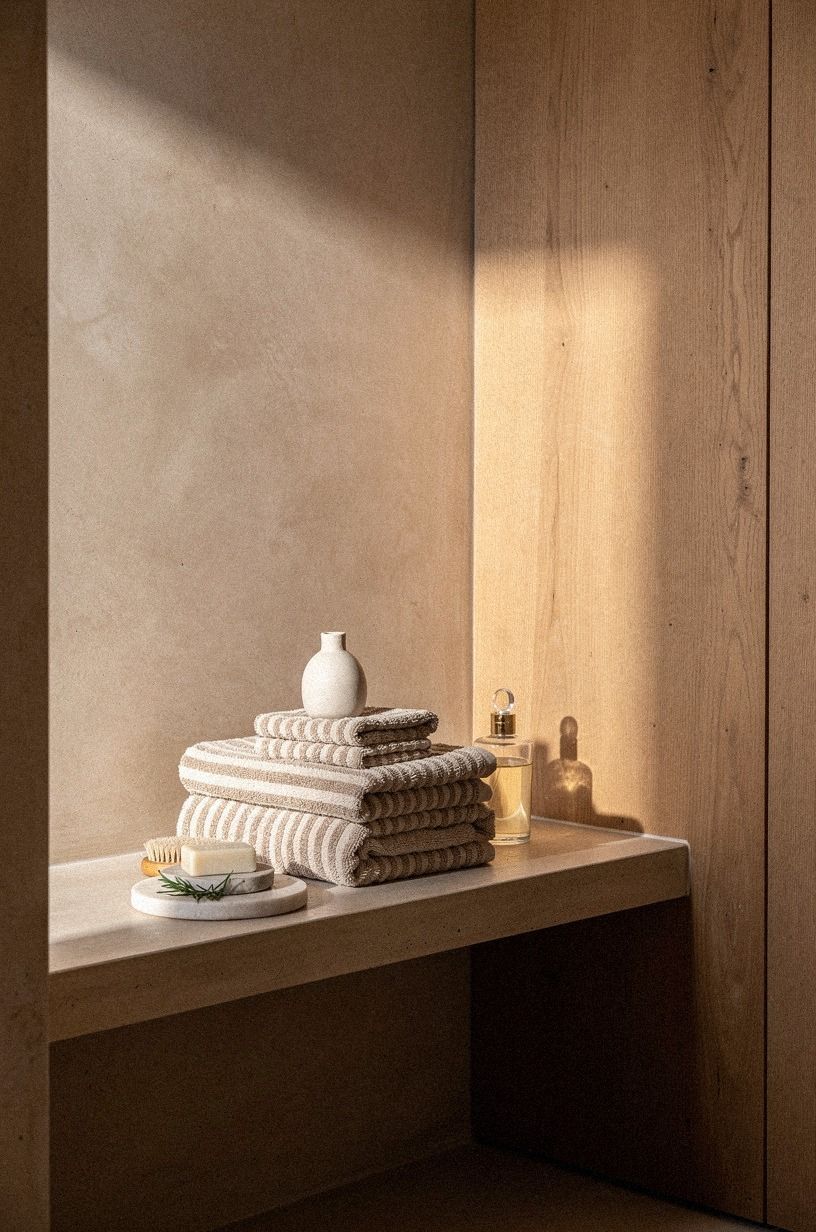
A warm travertine shower wall works beautifully beside a floating vanity in a camel finish. Warm white keeps the mineral surface from feeling heavy, while black accents give the room enough definition. I’d avoid glossy walnut because the shine fights the matte, hand-worked surface.
Mount your vanity at a comfortable 32 to 36 inches. Leave a little breathing room below it. You’ll see the floor continue underneath, and that sightline makes your bathroom feel airier.
A floating oak vanity can give you the same visual lift if you need drawers instead of open shelving.
Don’t make every accessory rustic. Your best contrast is one clean, modern piece, such as a slim matte-black faucet, against the warm travertine.
Add a linen towel, not a pile of decorative objects. Your room should feel useful first.
If you’re planning storage near the shower, these walk-in shower shelf ideas show how to keep your wall calm. You’ll want every shelf to earn its place.
4The Three-Plane Color Stack
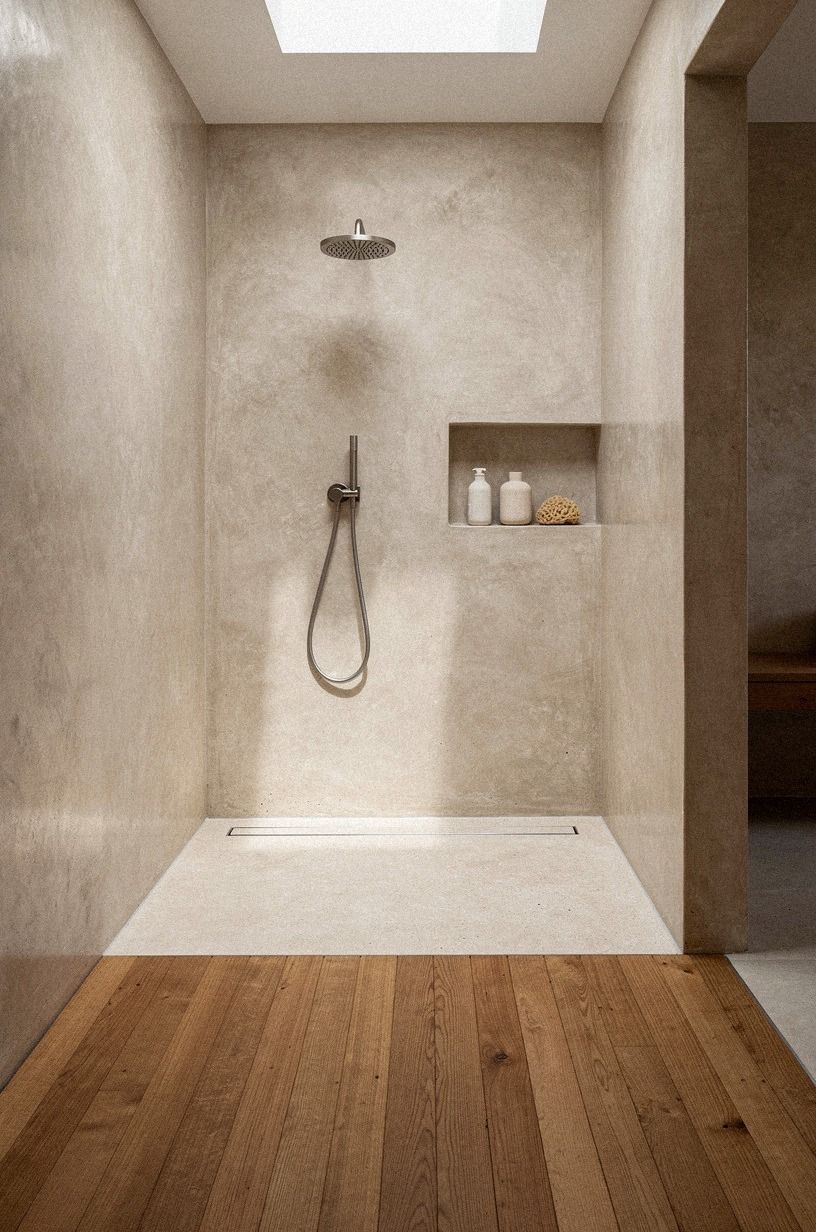
Use midnight blue on one plane, ivory on another, and copper as the warmer transition between them. Finish the details with unlacquered brass so the metal can develop a natural patina. The room will feel layered without needing extra pattern.
5Swap a glass door for an open shower threshold
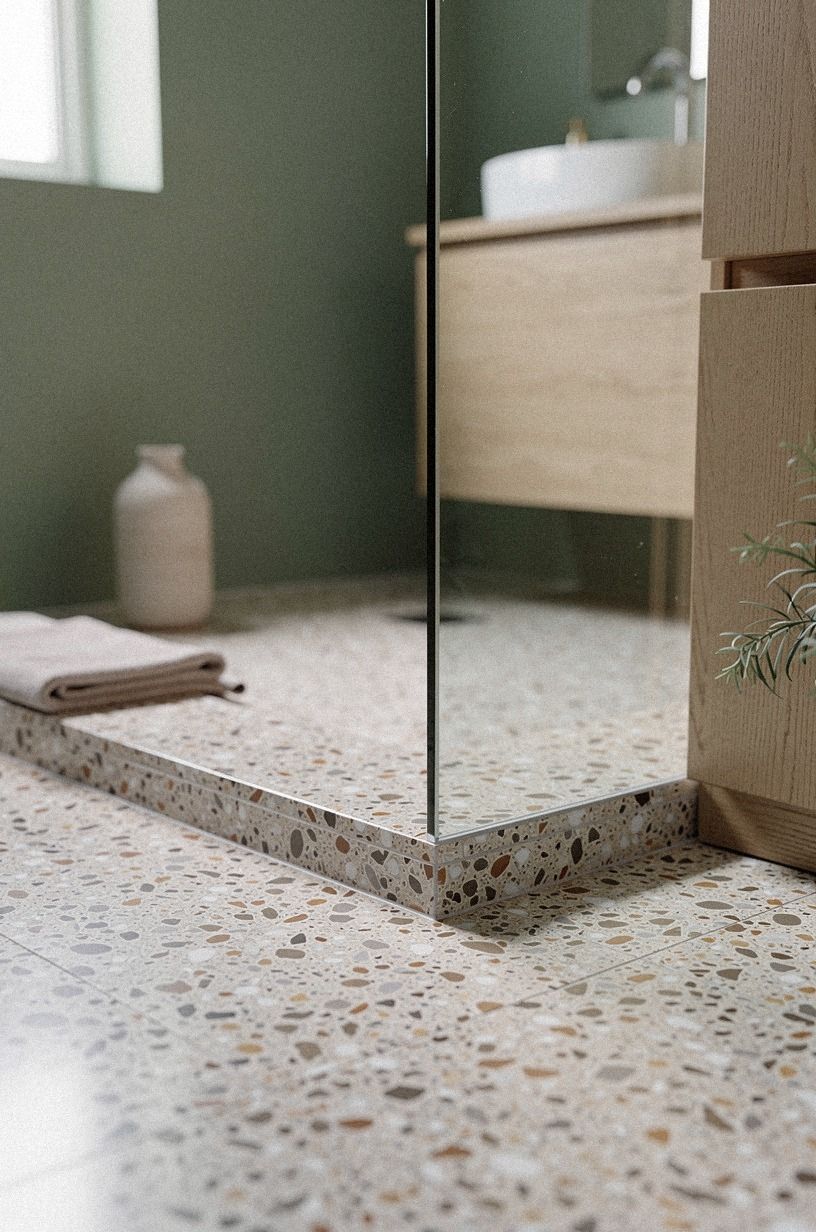
An open shower doesn’t need to look unfinished. A low, carefully waterproofed threshold, a single glass panel, and a broad wall in oversized-chip terrazzo can make your room feel generous. Sage green, warm cream, and natural wood keep the terrazzo from feeling too busy.
I’d choose a fixed glass panel over a hinged door when you have enough splash control. You won’t swing hardware into the vanity zone, and your shower will keep its open view. If your room is narrow, think about spray direction before choosing the panel width.
A comfortable shower is 36 by 36 inches minimum. Protect that clear area before you add a bench or niche. Your towel should stay outside the splash path.
For another way to conceal bulky transitions, look through these wood hidden door ideas for warm seamless walls.
6Build the Three-Height Light Stack over limestone
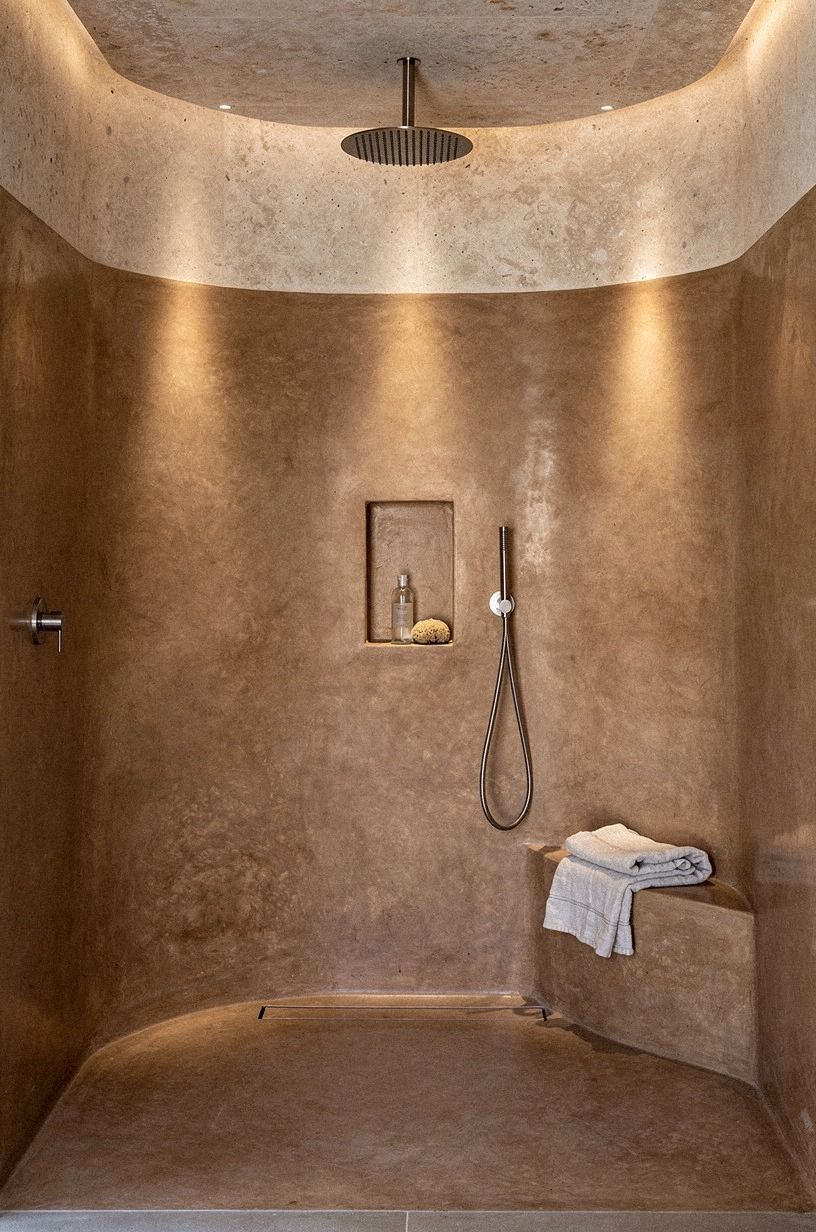
Use three light levels over hand-applied Venetian plaster: a ceiling fixture, a mirror light, and a low glow near the floor or vanity. Terracotta, stone, and olive tones will catch each source differently.
You’ll see the plaster shift from soft to earthy as the day changes. Aged bronze sconces are my pick because they feel gentler than polished chrome.
Keep your mirror light close to face height. Add a dimmer to the ceiling fixture.
Your shower shouldn’t be the brightest part of your room at night. I made that mistake once. The glare flattened every material and made the mirror feel like a dressing room.
If you’re using IKEA HEMNES storage nearby, replace the standard hardware with a darker finish. Your cabinet can then sit quietly beside the plaster. You’ll get useful storage without adding another competing color.
This limestone-walled village at sunset is a lovely reference for how amber light changes pale mineral surfaces. Let that warm glow guide your evening plan.
7One Deep Color Against Pale Limestone
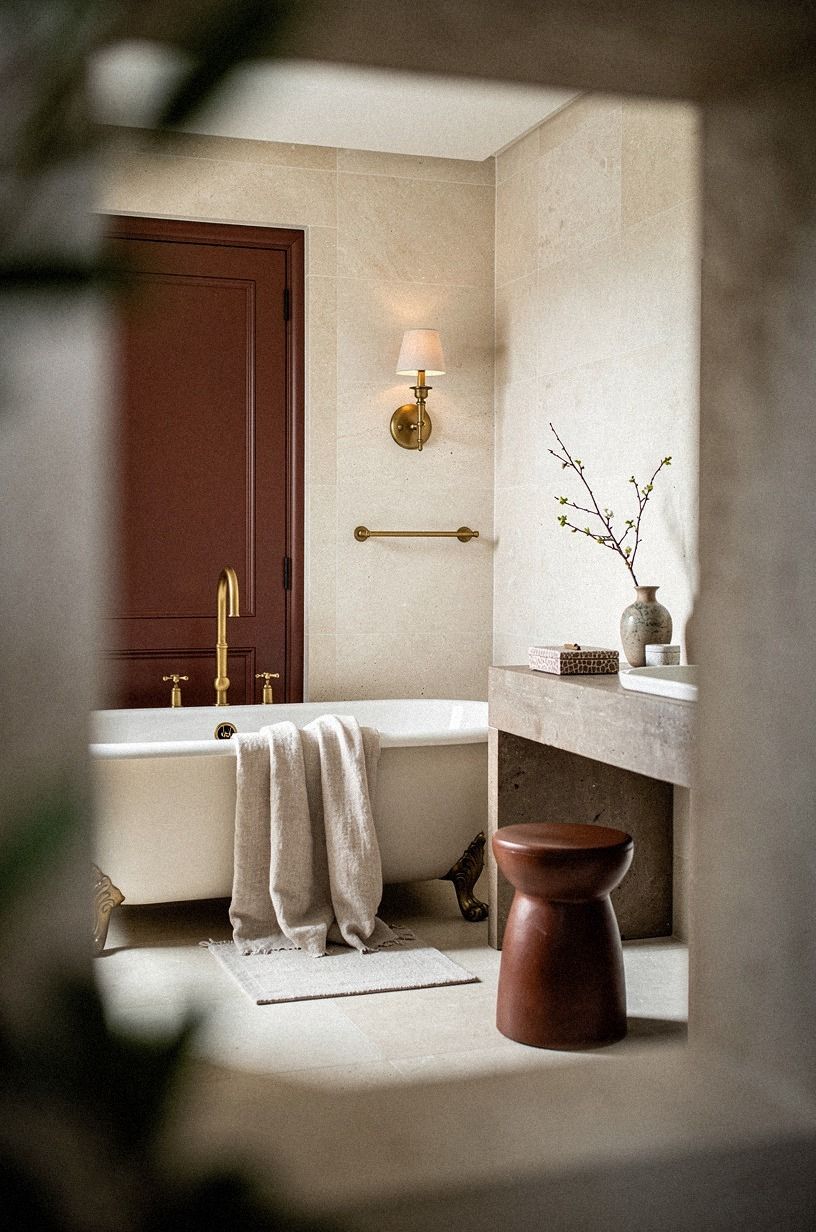
Use clay as the deep note against linen-colored surfaces, then add aged brass for a little warmth. Small shagreen accents can bring texture without covering the pale mineral finish. The room will feel composed rather than dark.
8Why Choose Tadelakt Over Small Mosaic?
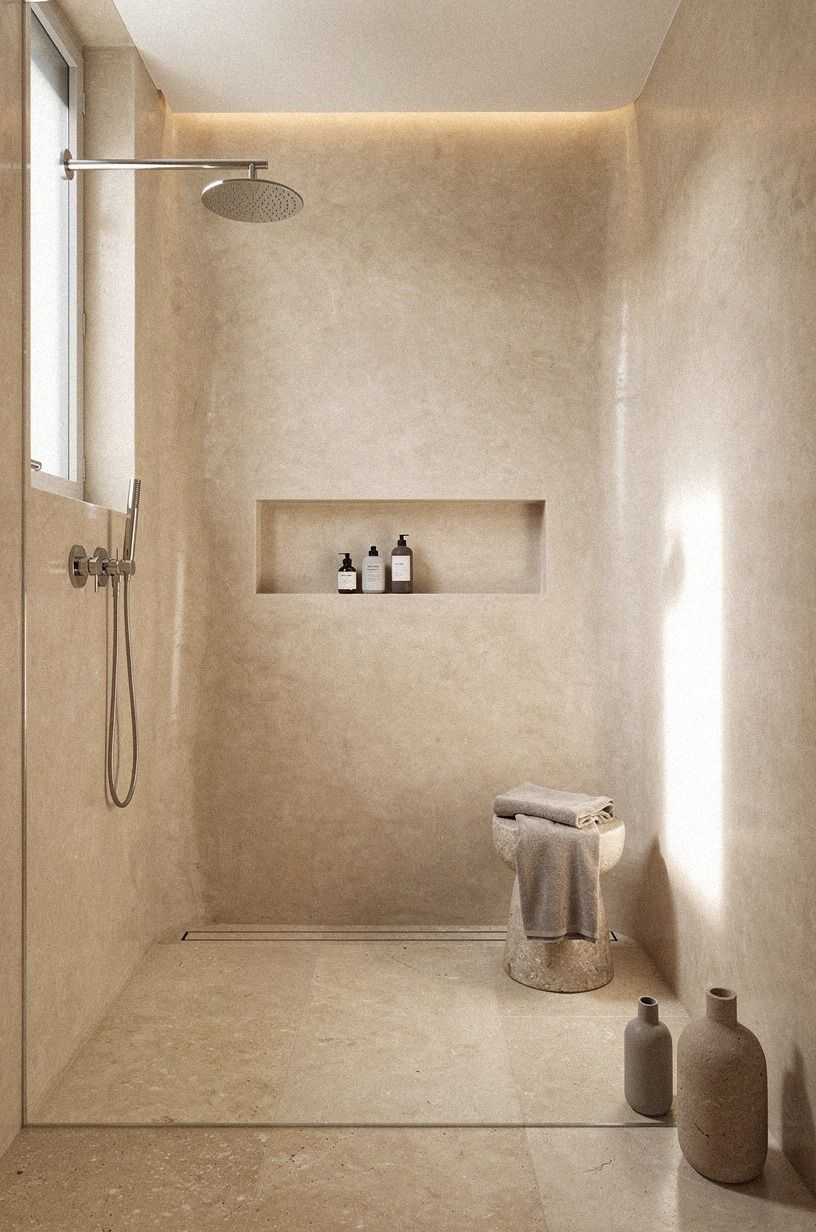
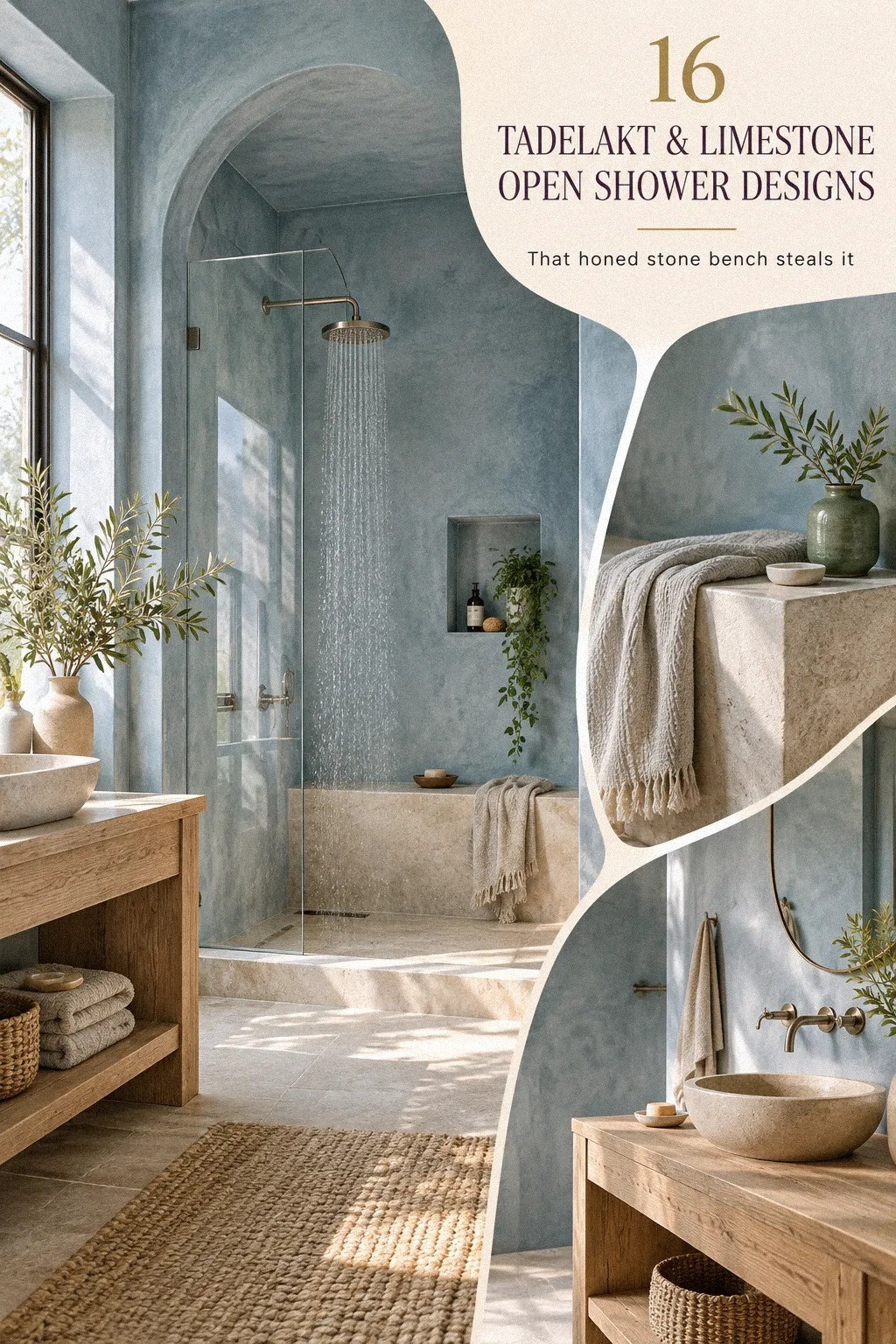
Choose tadelakt over a small mosaic when your goal is a quiet, spa-like wall with very little visual interruption. Keep the surrounding palette close to plum, grey, and rose gold. Washed Belgian linen adds softness without introducing another hard pattern.
You’ll want a skilled installer and a clear maintenance plan. I’d avoid treating tadelakt like ordinary painted drywall. Water exposure, corners, and repairs require more care.
Ask about the complete waterproofing assembly, not only the color sample. Your finish is only as reliable as the layers beneath it.
Use one small contrast to keep your room from feeling too soft. A rose-gold stool outside the wet zone adds a tactile note.
Keep fabric away from direct spray. Your wall should remain the star.
If you’re comparing surface options, these open shower ideas that feel five-star can help you decide how much pattern your room can carry. You’ll know the balance is right when the space feels calm, not empty.
9The Soft-Corner Method
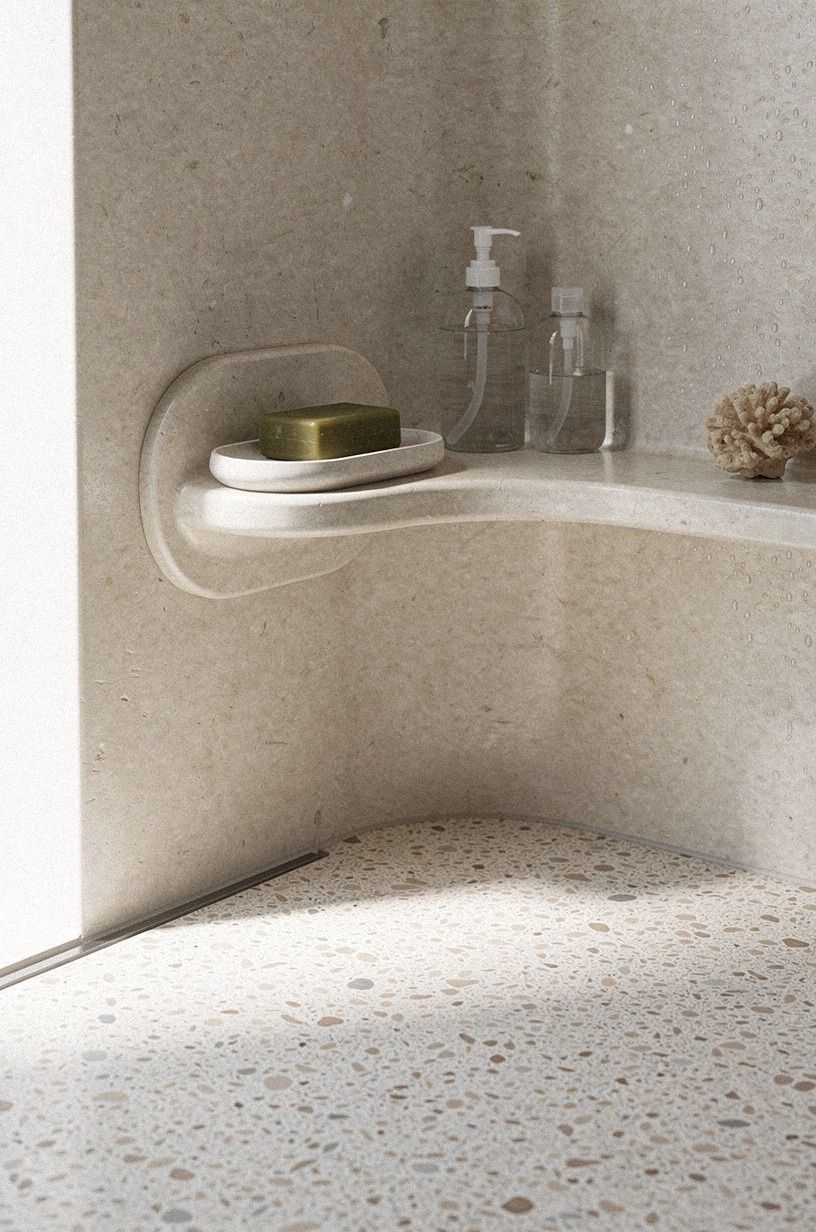
A recessed niche can look built into your wall when its interior uses the same finish as your shower. Pair navy and white with walnut details, then add one organic bouclé accent outside the wet zone. The contrast makes the rounded transition feel intentional.
10Mix Limestone with the Two-Wood Rule
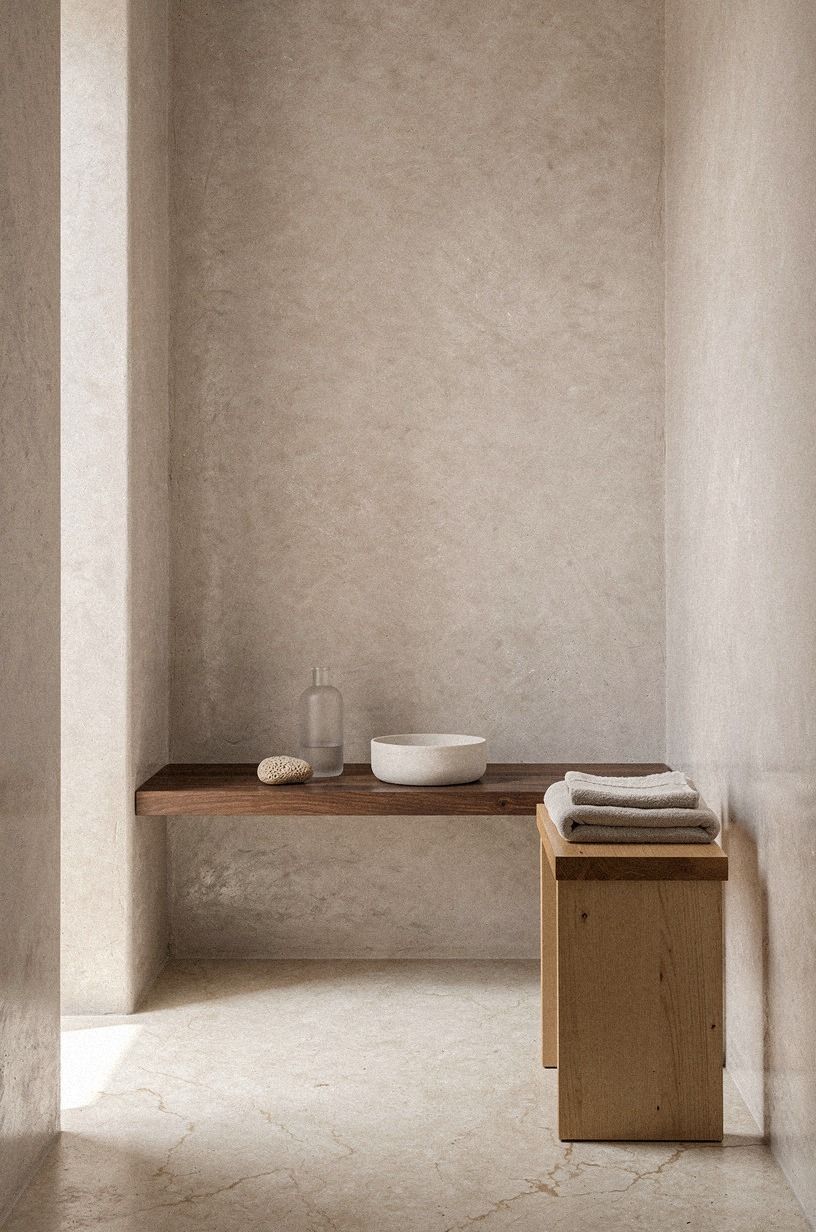
Mix limestone with only two wood tones: one dominant finish and one small accent. Nero Marquina black marble with white veins can ground the vanity while emerald, gold, and cream keep the room from feeling severe. A darker wood stool brings contrast without turning your bathroom into a timber display.
Your dominant wood should appear in the largest piece, usually the vanity or cabinetry. The accent can stay small, such as a tray or mirror detail.
I’d avoid three or four wood colors because the stone already supplies movement. More variation won’t make your room feel richer. It will make the room harder to read.
Don’t place untreated timber inside the direct splash zone. Choose sealed oak, teak, or a properly finished alternative for pieces near your shower. A wood mirror can echo your vanity without matching it exactly.
If your room connects to a bedroom or dressing area, these warm seamless wall ideas show how to carry your wood tone beyond the bathroom. Continuity will make the whole space feel more refined.
11Frame the Open Shower with a Plaster Arch
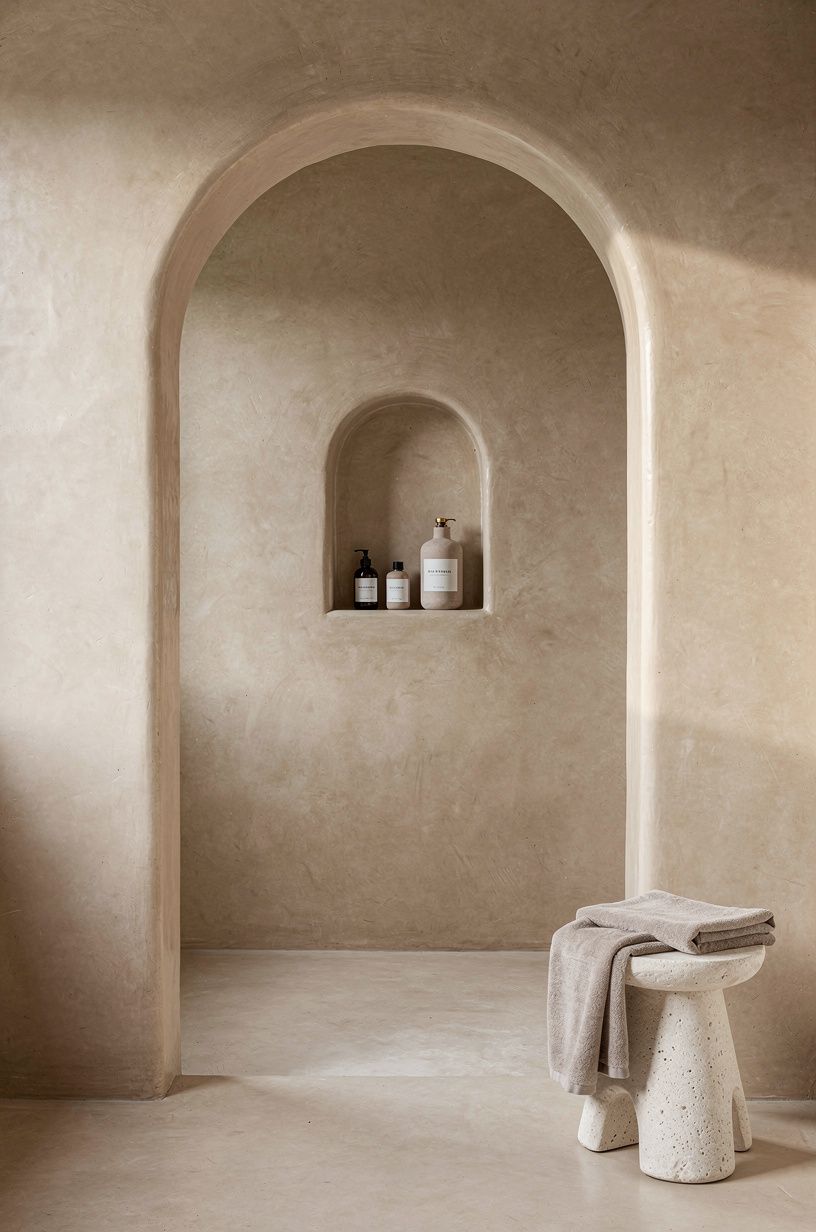
An arched opening makes your open shower feel architectural without adding another material. Use forest green, rust, and natural oak around the plaster, then bring in deep-pile mohair velvet through a small stool or bench outside the wet zone.
12Hang Linen Against a Minimal Grout Bathroom
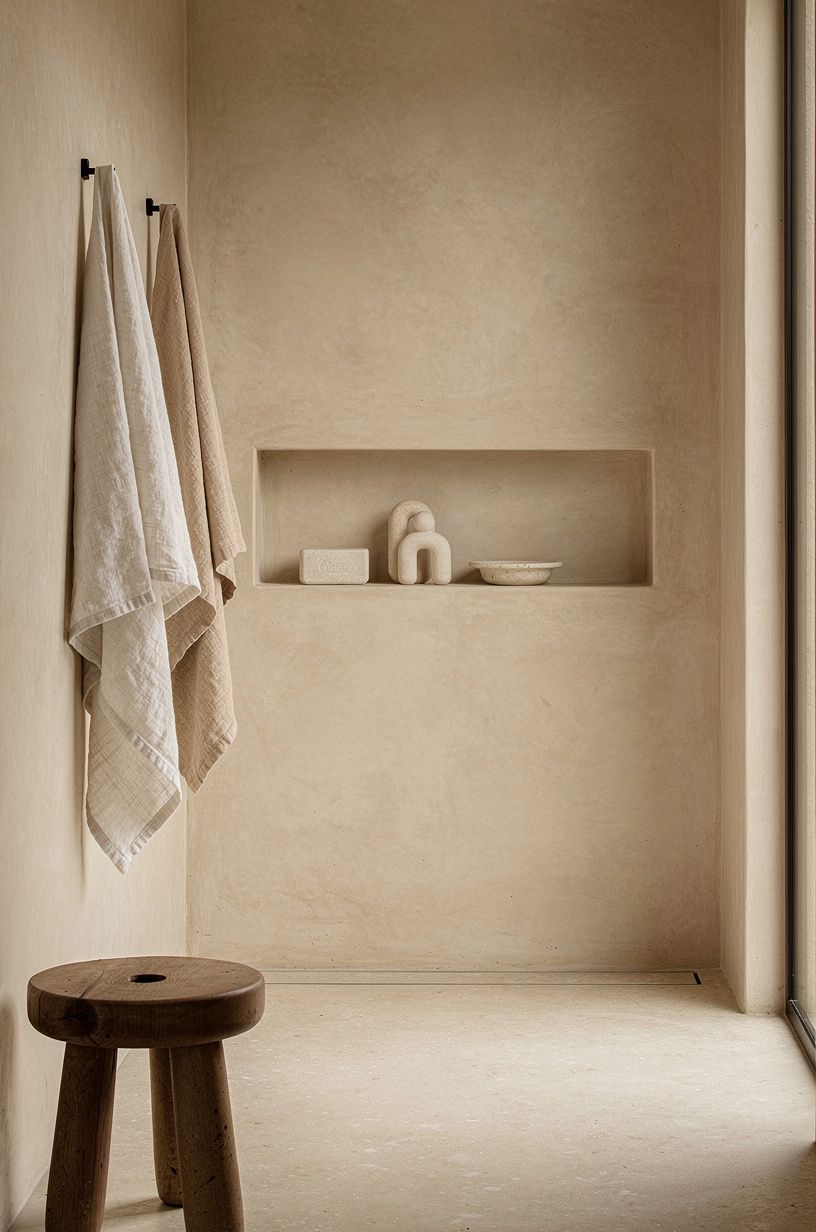
A minimal grout bathroom still needs softness. Use Carrara marble with subtle grey veining at the vanity or shower surround, then bring in dusty rose, charcoal, and brass through the surrounding details.
Keep your textile palette narrow. Charcoal linen and muted rose towels will sit comfortably beside the marble.
Bright white can make the stone look colder. I’d skip thick shag rugs because they hold moisture and make the room feel crowded.
Your feet need a dry landing, not a decorative pile. Use a woven cotton bath mat with enough texture to feel pleasant. Keep it close to the exit, where you’ll actually use it.
Choose a slim rail rather than several hooks if your wall is short. 600gsm Turkish cotton can feel wonderfully substantial, but it needs room to dry. If your vanity has a drawer, hide spare towels there instead of stacking everything in view.
This open shower layout guide has smart ideas for keeping your circulation path clear. You’ll appreciate that space every morning.
13Float a Vanity Beneath the Limewash Lift
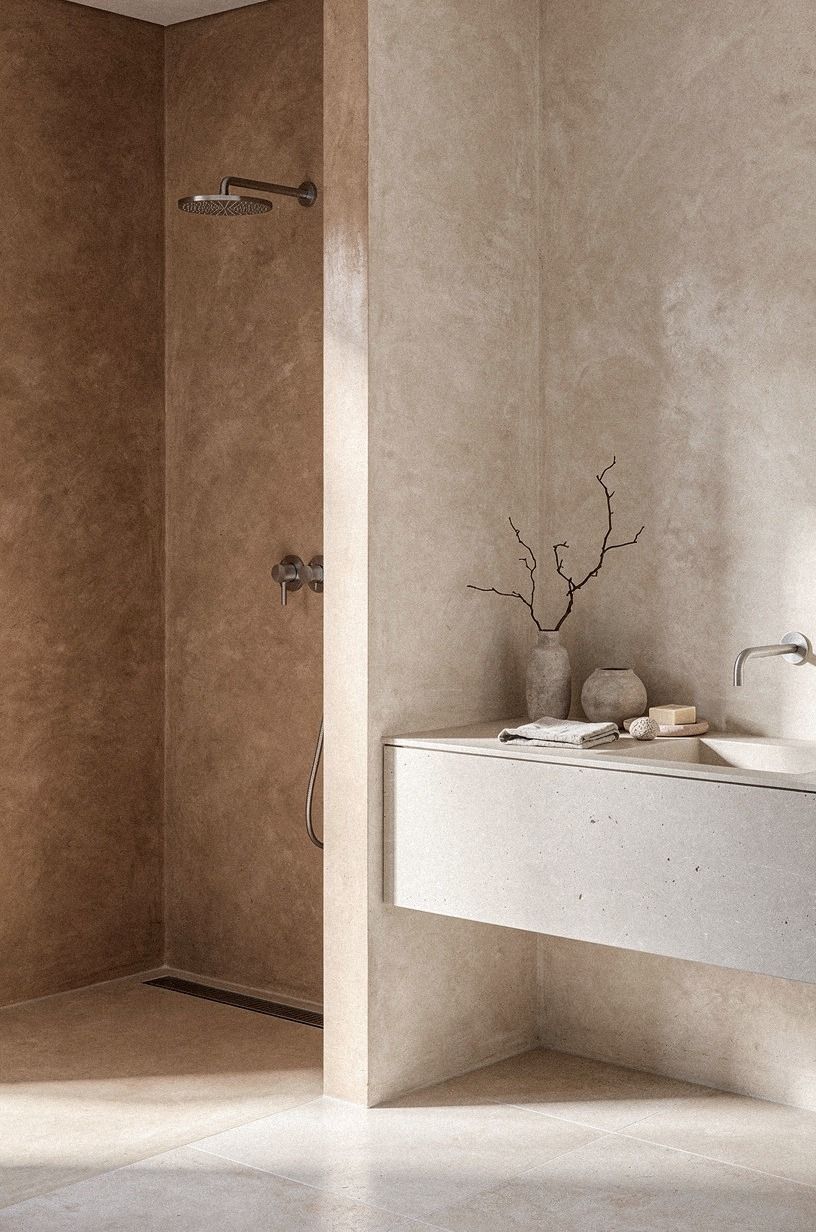
A floating vanity creates a shadow line under the cabinetry. That line makes a heavy wall feel lighter. Use a warm-white wall behind it and choose reclaimed weathered teak for the vanity.
Camel accessories and black hardware will give the room enough contrast.
Your bathroom will feel soft without becoming bland. The vanity height should stay between 32 and 36 inches, depending on your sink and household.
I’d skip a vessel sink that pushes the finished height too high. You’ll notice awkward shoulder angles every day.
A tan leather stool belongs outside the splash zone. Its camel tone can still guide your accessory choices.
Keep your countertop quiet. A pale surface with subtle warmth is enough.
A glossy finish can make the room feel more formal than earthy.
If you’re hiding a laundry door or storage passage nearby, repeat your wall color. Your bathroom will read as one connected composition. That continuity feels polished and peaceful.
14Contrast Warm Limestone Over Cold White Tile
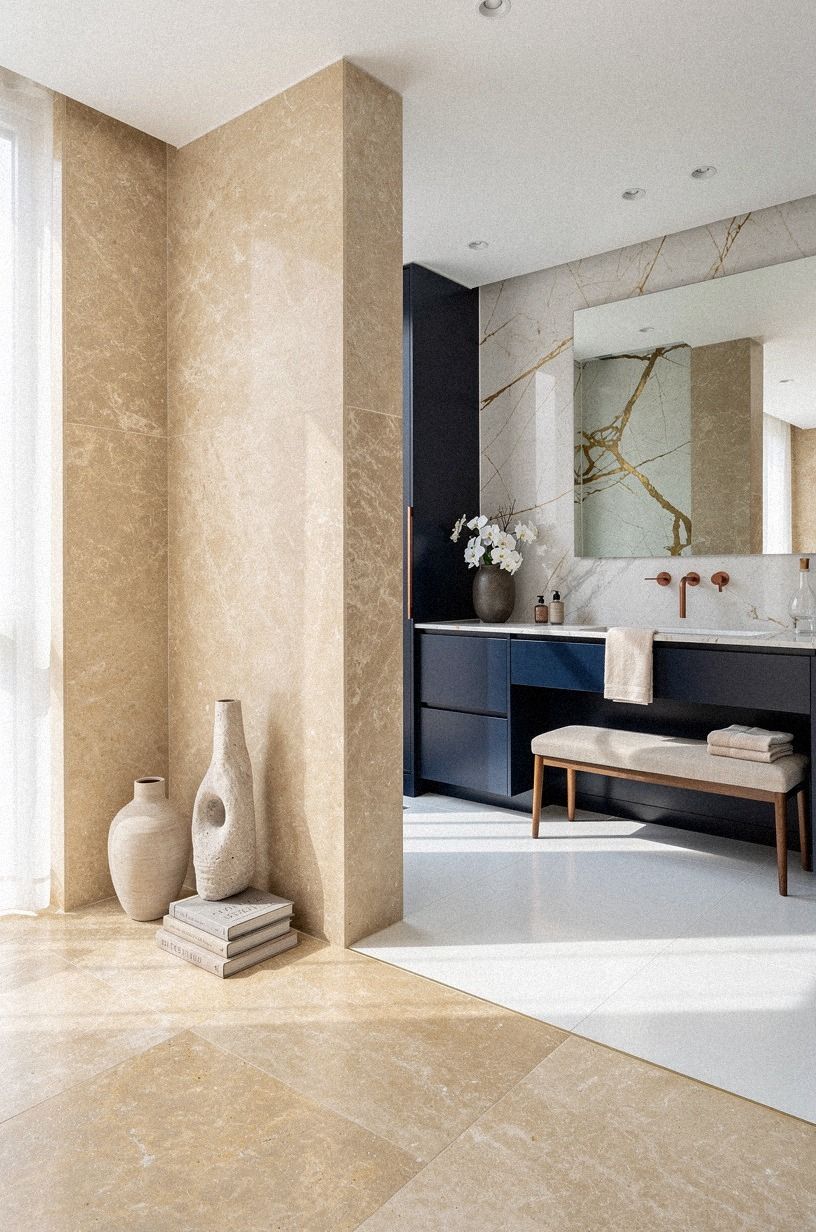
Choose Calacatta marble with gold veining when you want your bathroom to feel settled rather than purely functional. Midnight blue, copper, and ivory give the pale stone stronger definition. Your open shower keeps the plan visually simple.
You’ll need enough light to balance that warmth. Use a pale ceiling, a broad mirror, and one bright task fixture near the sink. I’d avoid adding beige everywhere because your room can lose definition.
Your contrast might be a copper fitting, a deep blue wall, or an ivory cotton towel. Pick one. The strongest rooms use restraint.
Your shower floor should remain practical and slip-conscious. A small-format stone floor can provide needed grip without turning your walls into patchwork. If you’re considering a more dramatic stone direction, these limestone villages shaped by water show why restraint lets texture speak.
15Budget the Earth-and-Water Palette Before You Start
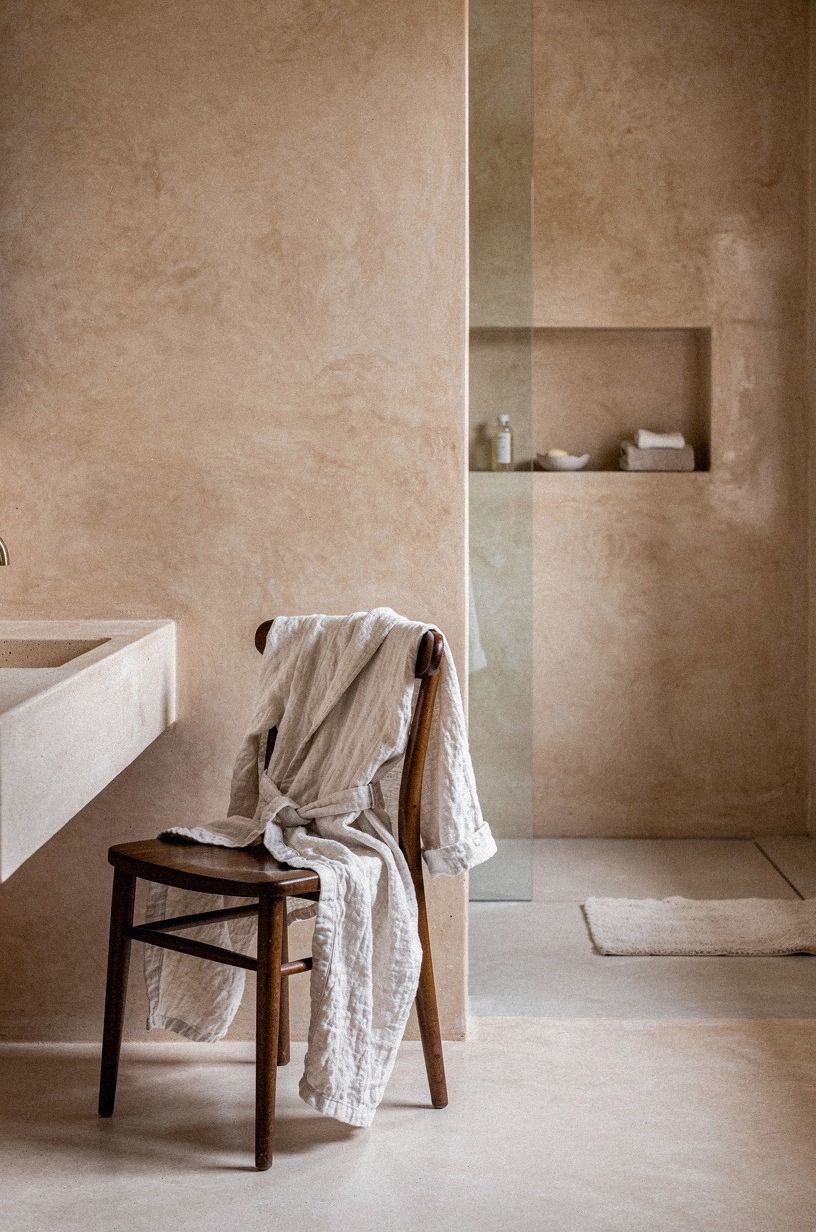
Before you order samples, separate the visual changes from plumbing and waterproofing work. A new mirror, paint, faucet, and textiles can shift your room for a modest budget. A fully retiled shower belongs in a different financial conversation.
Cerused white oak may look simple, but custom cabinetry and installation costs can rise quickly. You’ll make calmer decisions when you know which changes are cosmetic and which ones affect the wet area.
Use this table as a typical US planning guide. Then get local quotes for your actual room. Your open shower may need structural or waterproofing work that a cosmetic refresh doesn’t include.
Keep your price ranges visible while you choose materials. Cerused white oak cabinetry can vary widely by supplier and finish.
Basic tile remains easier to control than custom stonework. Brushed brass faucets cost $120-$450.
You’ll make better choices when your finish and budget sit beside each other. A beautiful sample is exciting. A beautiful sample you can afford is much better!
16Add the Spa-Window Pause with Natural Light
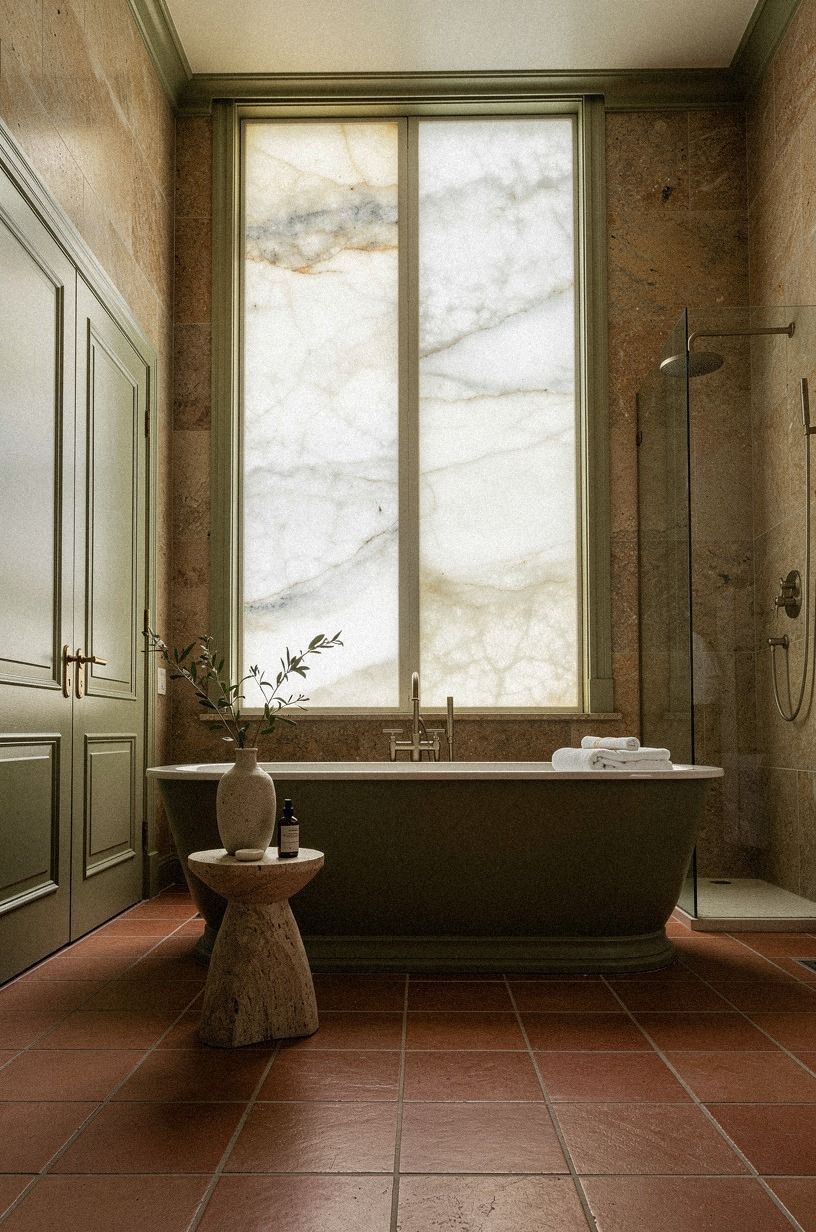
If your shower has a window, let natural light move across the backlit translucent onyx and keep the surrounding palette grounded in terracotta, stone, and olive. The effect feels calm without relying on extra decoration.
Why I’d Choose Mineral Walls Over More Pattern
I’ve gone back and forth on this style because mineral walls ask you to accept variation. Your surface won’t look identical from corner to corner, and that’s the point.
Tadelakt catches changing light differently after a shower. Limestone reveals tiny pits and fossil marks that printed tile can only imitate.
Your choice also depends on how you live. If you want a bathroom that hides every splash and needs no maintenance thought, smooth manufactured tile may suit you better.
I’d choose tadelakt for someone who likes material with a pulse and can follow care instructions. I’d choose limestone for someone who wants weight, texture, and a stronger architectural presence.
The mistake is expecting one finish to do everything. Your wall can be quiet while your floor provides grip.
Your vanity can be practical while your shower feels handcrafted. Your lighting can be modern while your stone remains old-world.
That tension keeps the room from becoming a theme.
I’d rather spend on the waterproofing assembly and the installer than on a long list of accessories. A $200 mirror won’t rescue a poorly planned wet area. A carefully executed wall can make a simple faucet, plain towel, and small stool feel intentional.
If you’re still sketching your layout, these warm hidden-door ideas are useful for thinking about continuity beyond the shower.
A Few Things Worth Answering
What is the best Tadelakt & Limestone Open Shower Ideas for Seamless, Earthy Walls choice for a small bathroom?
A pale tadelakt back wall with a short limestone return is the strongest choice because it keeps your room visually open. Pair it with a floating IKEA HEMNES vanity, a clear glass panel, and one recessed niche. Your eye will see fewer breaks, so your small bathroom feels calmer.
Where can I buy Tadelakt & Limestone Open Shower Ideas for Seamless, Earthy Walls pieces on a budget?
Look at IKEA, Wayfair, and Target for vanities, mirrors, stools, and lighting. Then check Facebook Marketplace or local thrift shops for solid wood pieces.
You’ll save more by buying second-hand storage than by compromising on waterproofing. Browse these open shower storage ideas before shopping.
How much does a Tadelakt & Limestone Open Shower Ideas for Seamless, Earthy Walls makeover cost?
A cosmetic update can fit within the $200-$1,200 budget tier for paint, a mirror, a faucet, and textiles. A mid-range project runs $3,000-$9,000. A high-end retiled shower with plumbing can reach $12,000-$30,000 or more.
Can I create a Tadelakt & Limestone Open Shower Ideas for Seamless, Earthy Walls look on a budget?
Yes, and you can begin with paint, a second-hand wood mirror, and new textiles. Keep your existing shower surface if it’s sound. Add a limestone-look accessory, warm lighting, and one plant.
Your free move is editing what stays visible on the vanity.
Is a Tadelakt & Limestone Open Shower Ideas for Seamless, Earthy Walls style worth it in a small space?
Yes, because fewer grout lines make your small room easier to read. Use a 36 by 36 inch shower footprint when possible, a fixed glass panel, and a floating vanity. Pale limestone will reflect light, while one darker wall can give your eye depth.
Is a Tadelakt & Limestone Open Shower Ideas for Seamless, Earthy Walls style a good idea for a rental?
Yes, if you keep your changes removable. Try peel-and-stick wall color outside the wet zone, a tension rod for linen, a removable mirror, and freestanding storage. You shouldn’t apply a wet-area finish without permission.
These seamless wood wall ideas can inspire temporary visual continuity.
Where I’d Start First
If I had to pick one, I’d start with the tadelakt back wall. Its soft variation hides the visual noise that makes small showers feel chopped up. Limestone, lighting, and linen can follow later.
Pin this idea for your renovation board. Save these open shower layouts for the planning stage. Your best bathroom will feel calm, useful, and quietly unforgettable.