The best plants for a small front porch are compact evergreens, trailing foliage, and tough seasonal color that won’t crowd your walkway. I once filled mine with six needy pots and regretted it by July. Now I choose plants for texture, light, and watering tolerance first. Your porch can feel full without feeling packed.
- Layer the Three-Height Plant Stack for plants on porch ideas
- Anchor the Door with a Dwarf Olive Tree
- Swap Fussy Annuals for Coral Bells
- Build the Two-Wood Rule with Ferns
- Why Do Trailing Vines Make a Porch Feel Wider?
- Frame the Threshold with Upright Grasses
- Choose Front Patio Plant Ideas Over Oversized Pots
- Paint the Planters, Then Repeat the Leaf Color
- Layer the Three-Height Plant Stack for plants on porch ideas
- Anchor the Door with a Dwarf Olive Tree
- Swap Fussy Annuals for Coral Bells
- Build the Two-Wood Rule with Ferns
- Why Do Trailing Vines Make a Porch Feel Wider?
- Frame the Threshold with Upright Grasses
- Choose Front Patio Plant Ideas Over Oversized Pots
- Paint the Planters, Then Repeat the Leaf Color
- Hang Shade-Loving Begonias Above the Mat
- Mix Herbs with a Narrow Evergreen
- Use the Three-Season Evergreen Pattern
- Instead of More Pots, Add One Citrus Standard
- Make the Low-Water Welcome Work with Sedum
1Layer the Three-Height Plant Stack for plants on porch ideas
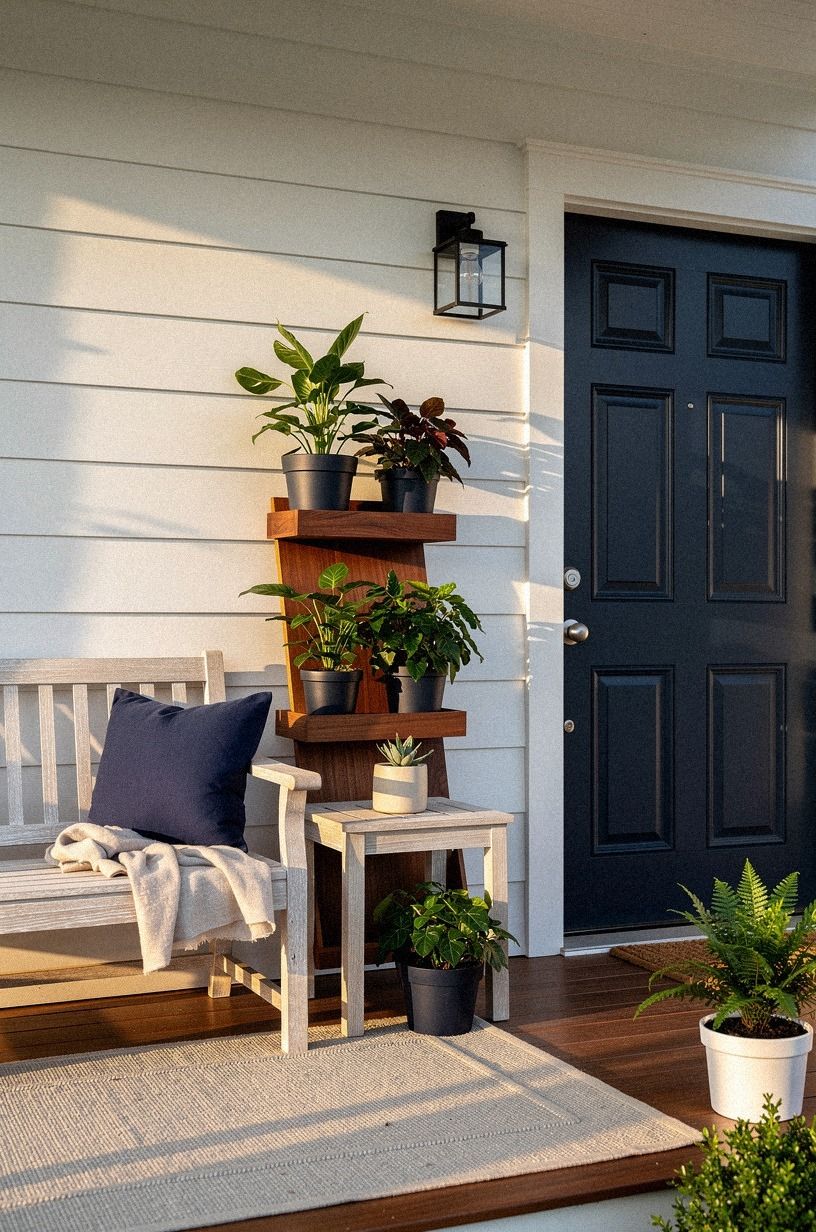
The three-height plant stack is my favorite starting point for a small porch. Use one low plant, one middle plant, and one upright accent so your eye moves upward instead of outward. A dwarf fern at floor level, a cerused white oak planter of heuchera on a stand, and a narrow evergreen beside the door create an airy arrangement without stealing walking space.
Your tallest pot should sit close to the wall, while the lowest plant can edge the step. Keep at least 36 in of walkway clearance so deliveries, guests, and muddy boots can pass without brushing the leaves. If you’re styling around a narrow entry, my guide to small front porch decor ideas on a budget gives you more layout options.
I like IKEA plant stands here because their simple shapes let the foliage carry the look. You don’t need matching containers, but you do need a repeated finish. A pair of navy stands will make mixed pots feel deliberate.
Start with the tallest plant, then work down. If the stack feels crowded from the street, remove the middle pot first. That small edit usually makes the whole porch feel more peaceful, modern, and welcoming.
Typical cost by tier (US averages):
2Anchor the Door with a Dwarf Olive Tree
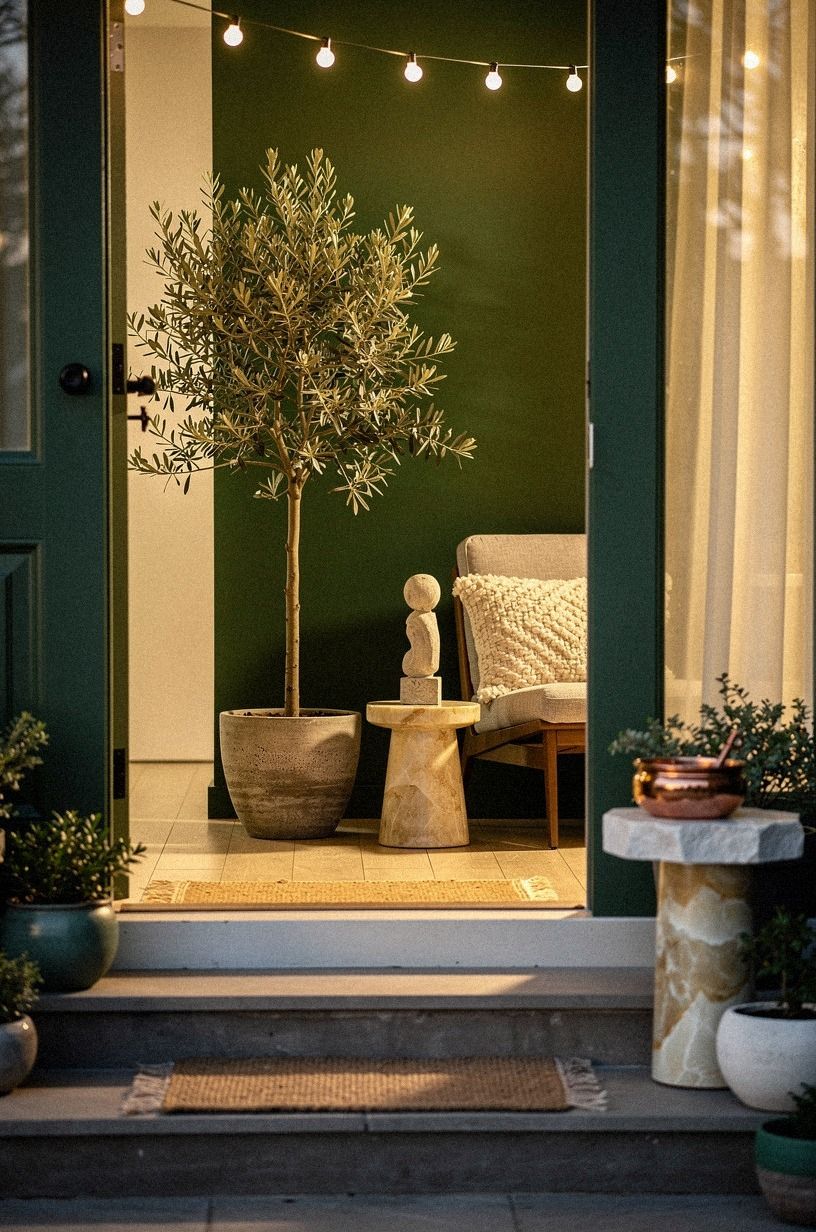
A dwarf olive tree gives you the shape of a small front-door tree without the bulk of a full-size specimen. Its narrow trunk and rich green leaves look elegant beside brick, siding, or cream trim. I’d choose one over a round shrub when your porch needs height but can’t spare much floor width.
Place the tree in a tall, weighted pot near the hinge side of the door. Your door should open fully without catching a branch, and the container shouldn’t wobble when winter wind comes through. A slim planter with a backlit translucent onyx detail adds a warm layer without making the entry look fussy.
The leaves are especially useful if your porch gets bright afternoon sun. They reflect light softly, so the arrangement stays airy instead of looking like a dark green wall. You won’t need flowers to make this corner feel finished.
If you’re comparing front door potted trees, skip oversized ficus varieties for a tight porch. They grow broad, drop leaves, and quickly turn a small entry into a maintenance project. The olive’s restrained shape is the better call for you if structure matters more than fast volume.
3Swap Fussy Annuals for Coral Bells
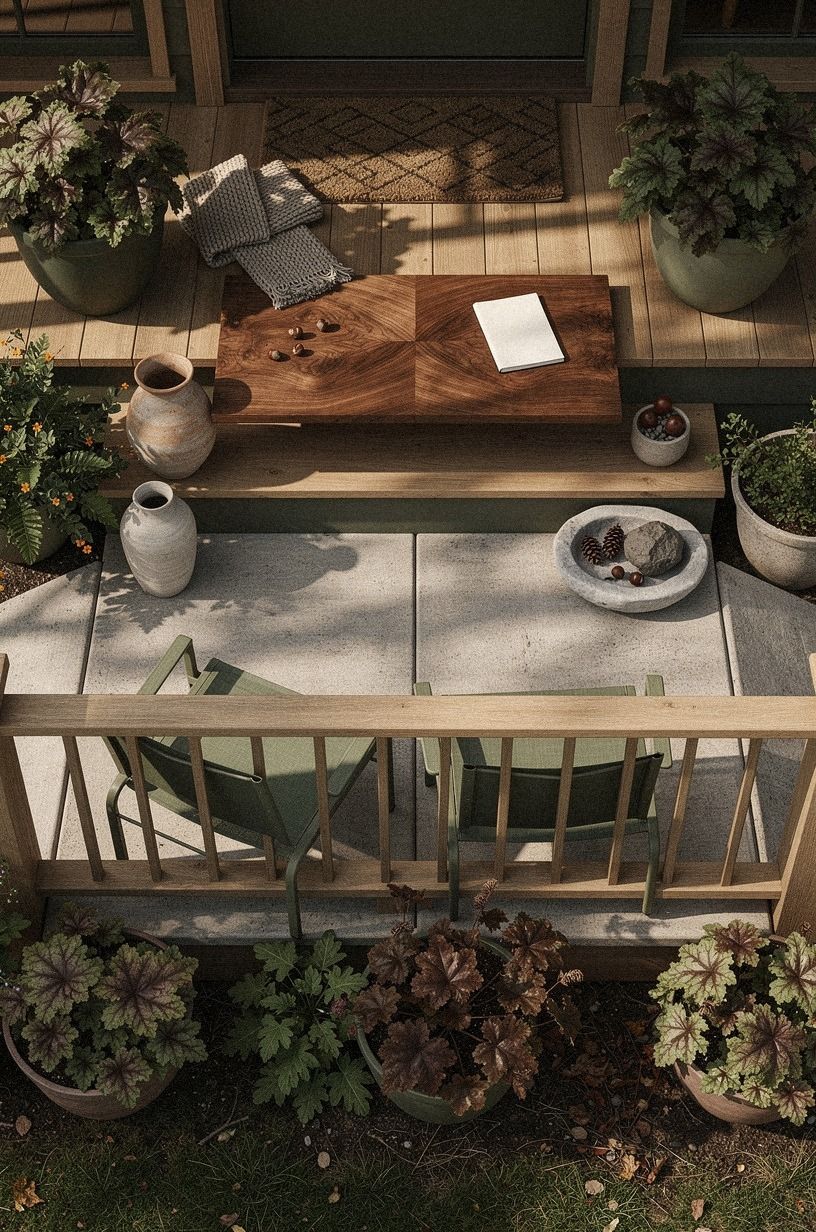
Coral bells, or heuchera, are a strong replacement for annual flowers when you want color without constant deadheading. Heuchera ‘Caramel’ brings rust-colored leaves that look warm beside book-matched walnut, while darker cultivars create a moody contrast against pale walls. Your porch will still have color when the blooms have finished.
Set one plant in a low bowl near the front step, or group two in different pot heights. The leaves catch morning light with a slightly glossy surface, and the color holds attention from the sidewalk. I prefer this to a row of petunias because you won’t be pinching spent flowers every weekend.
Choose a pot with drainage and a soil mix that doesn’t stay wet after rain. A 600gsm Turkish cotton cushion on your nearby chair can echo the soft rust tone without matching it exactly. Texture is doing more work than a dozen small flowers here.
If your porch is shaded, look for a shade-tolerant heuchera and place it where you can see the foliage from inside. My small front porch planter ideas for instant greenery includes more container pairings for low-light entries.
4Build the Two-Wood Rule with Ferns
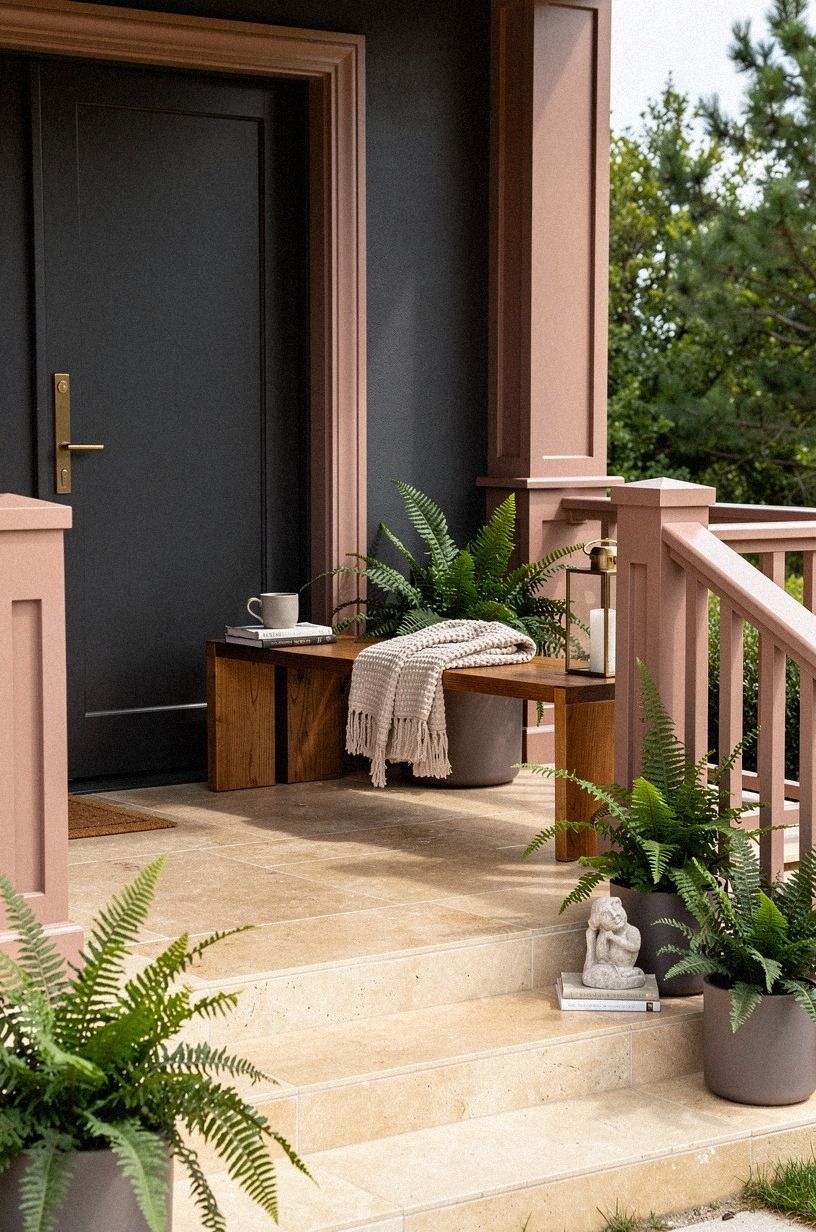
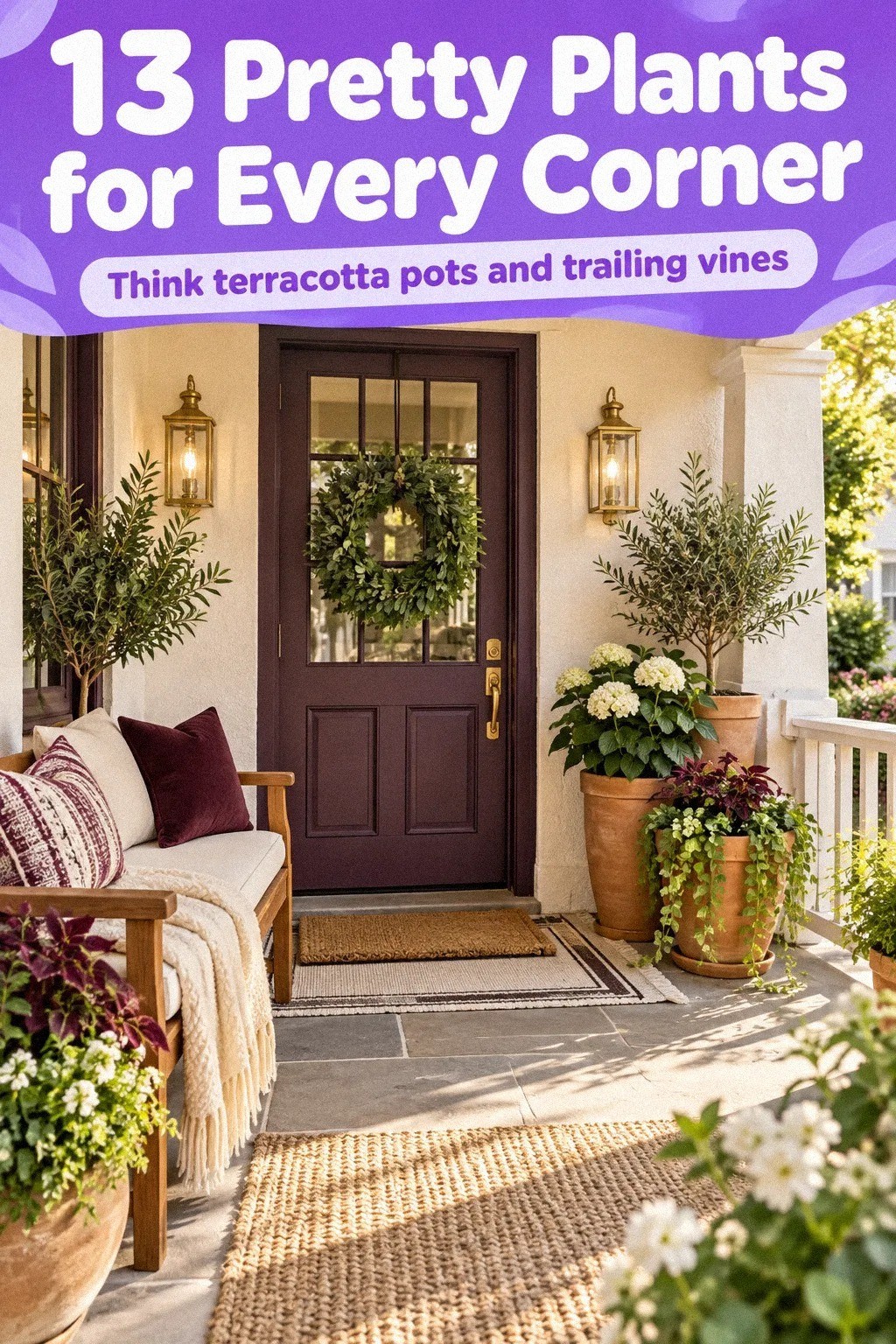
The Two-Wood Rule keeps a leafy porch from feeling random.
5Why Do Trailing Vines Make a Porch Feel Wider?
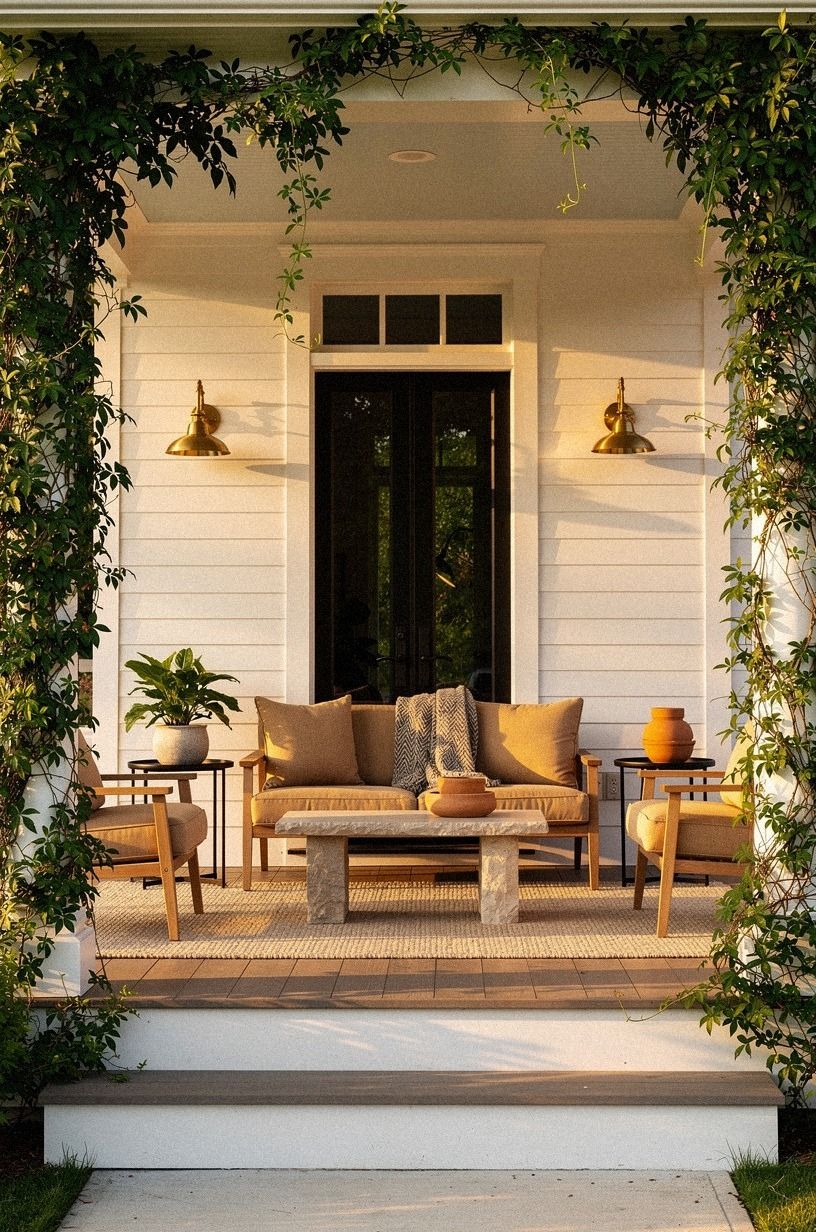
Trailing plants create a visual line that leads the eye beyond the pot, which can make a narrow porch feel longer. String of pearls works in bright, protected spots, while pothos handles lower light better. Choose one based on your conditions, because a beautiful trailing plant won’t help if it spends the season declining.
Place the container on a wall shelf, narrow ledge, or upper step where the stems can fall freely. Your walkway stays open, and the soft cascade breaks up hard railings. I like a single long trail more than several short ones because it looks calmer and less cluttered.
A secure unlacquered brass bracket adds a warm, lived-in detail around the nursery pot. You can also use a weathered metal bracket if your porch leans industrial. The important part is keeping the container secure, especially if children or pets pass through the entry.
Don’t let the vines cover your house number or doorbell. The porch still needs to work as a landing zone. For more space-saving arrangements, see these small front porch swing ideas for a charming perch.
6Frame the Threshold with Upright Grasses
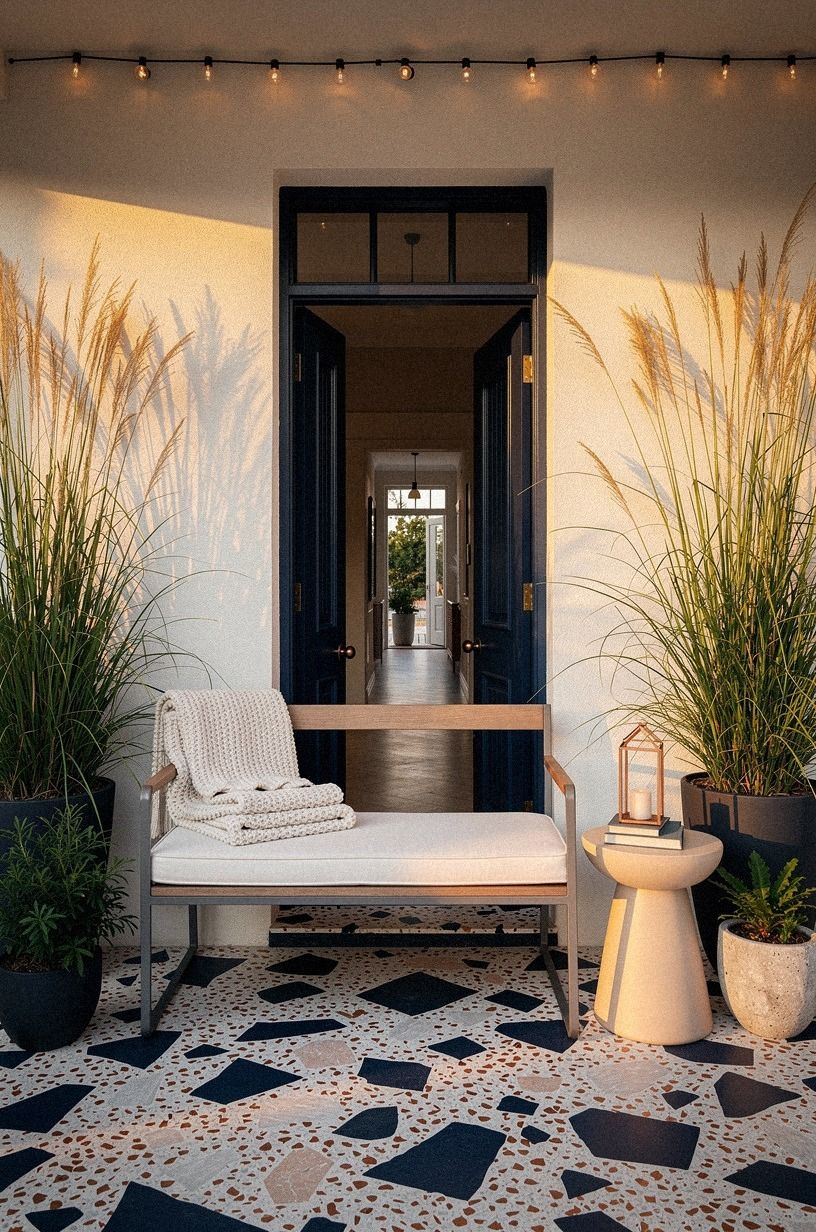
Upright ornamental grasses are useful when your porch needs volume but not width.
7Choose Front Patio Plant Ideas Over Oversized Pots
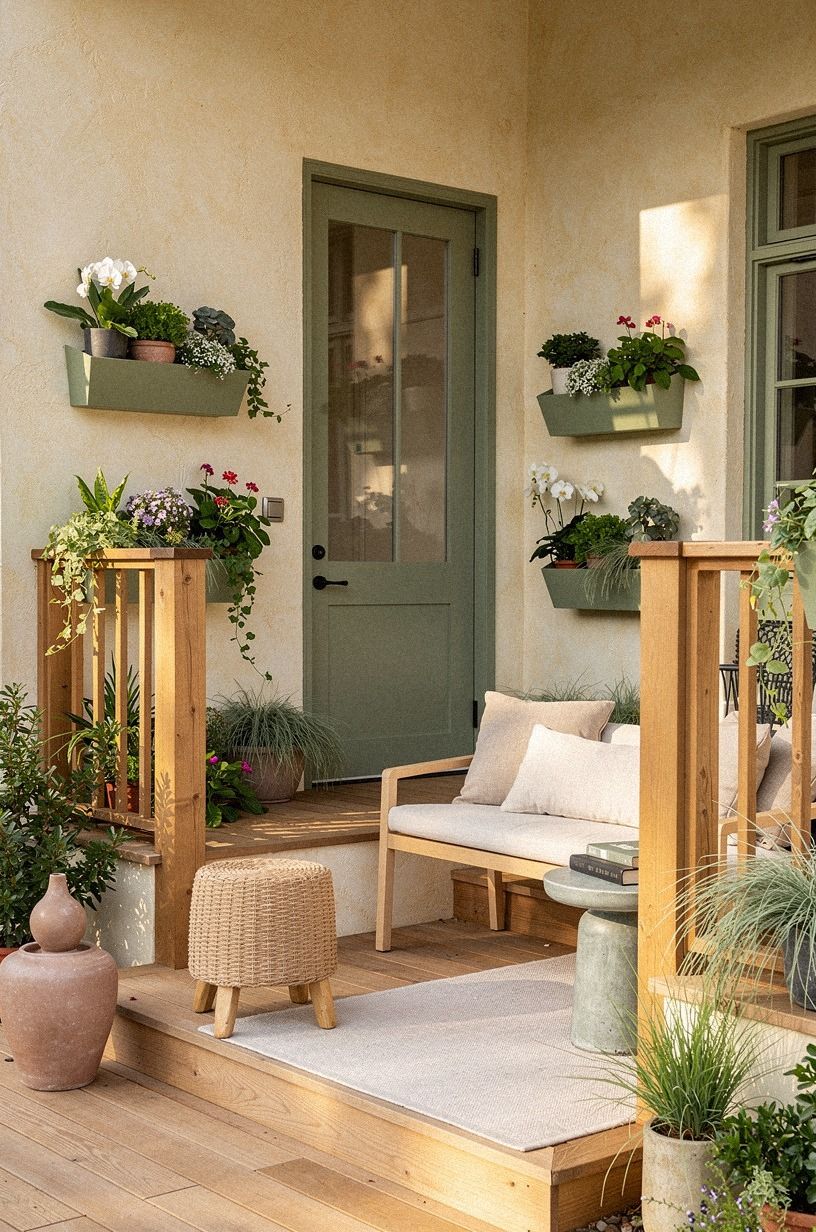
For front patio plant ideas, choose one generous container instead of five small ones when your porch is narrow. A large planter set against hand-applied Venetian plaster gives a fuller visual anchor, while smaller pots often create a scattered, temporary look. Your space can feel more luxurious with fewer pieces.
Select a rounded planter for a rectangular porch or a tall tapered vessel for a shallow landing. The shape should contrast with your architecture, but the color should relate to it. A sage green and warm cream palette works well with natural wood and soft plaster.
I prefer a single dwarf hydrangea or compact evergreen in this setup. Both give you a reliable mass of foliage, and you won’t spend every week rearranging small containers. A West Elm outdoor pot can be an investment, but one good vessel often outlasts a collection of mismatched plastic ones.
Leave breathing room around the container. If it touches the railing, door trim, and doormat at once, it will make your porch feel smaller. Your best arrangement has one clear edge, one soft edge, and enough floor showing to keep the entry inviting.
8Paint the Planters, Then Repeat the Leaf Color
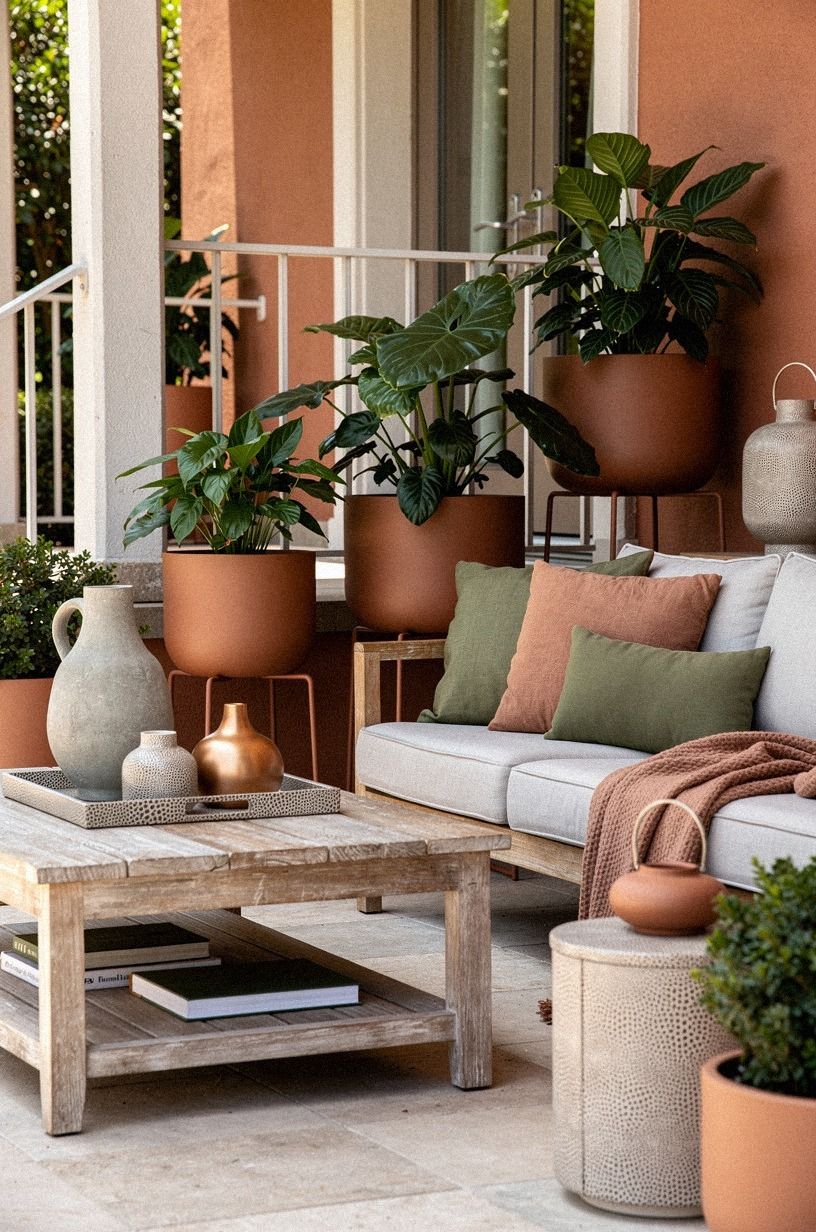
Repeating a leaf color is one of the easiest ways to make different plants look related.
9Hang Shade-Loving Begonias Above the Mat
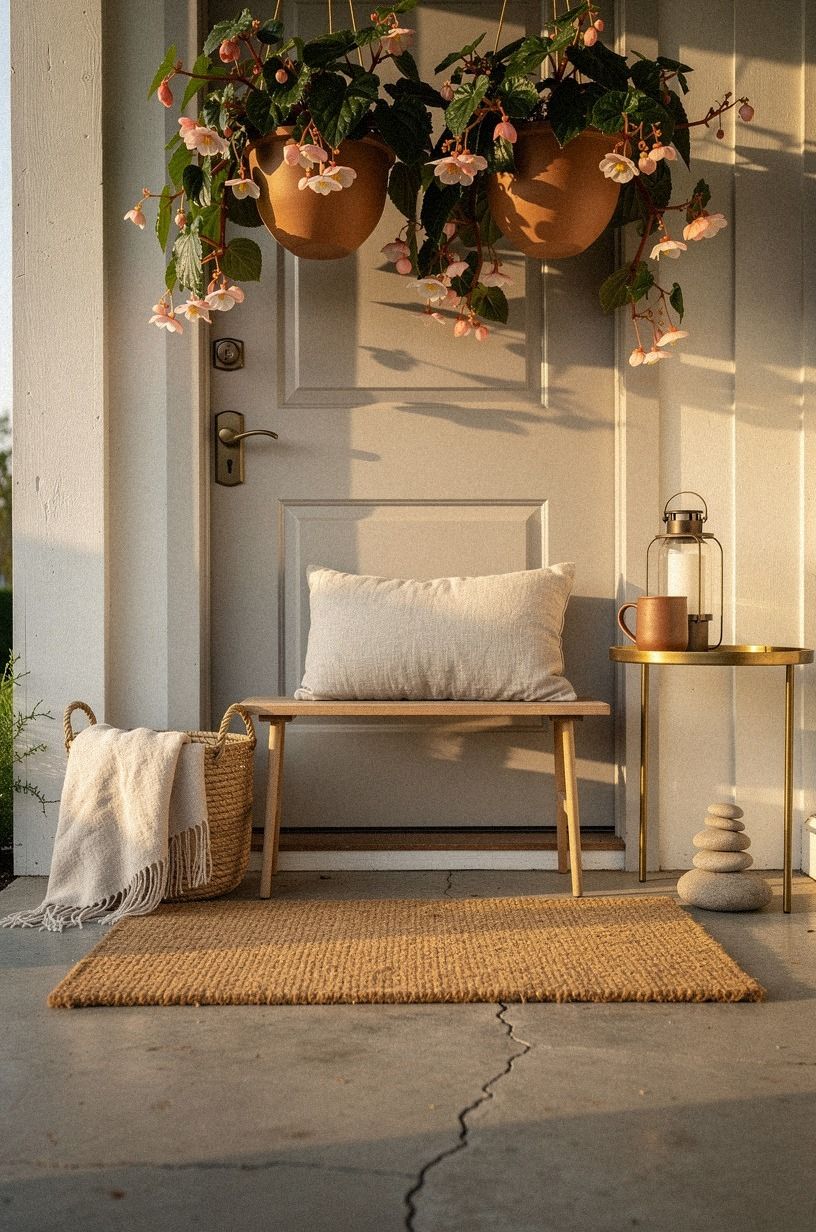
A hanging begonia gives you flowers without consuming valuable floor space. Begonia maculata has spotted leaves and a graceful shape, while wax begonias offer dependable color in a sheltered, bright-shade location. Hang the basket where your shoulder won’t hit it as you enter.
Use a ceiling hook only if the structure can support the weight of a watered container. Your hanger should sit high enough for the lowest leaves to stay clear of faces and packages. If you’re renting, a sturdy removable system may be safer than drilling into the porch ceiling.
The spotted leaves can feel almost graphic against aged brass hardware. Keep the rest of the entry simple so the plant has room to show its pattern. I wouldn’t pair it with a busy rug or a crowded sign because the whole arrangement would start competing for attention.
Water hanging baskets before they become lightweight and dry. They can lose moisture faster than floor pots, especially in wind. If your schedule is unpredictable, choose a tougher trailing plant and check it whenever you unlock the door.
10Mix Herbs with a Narrow Evergreen
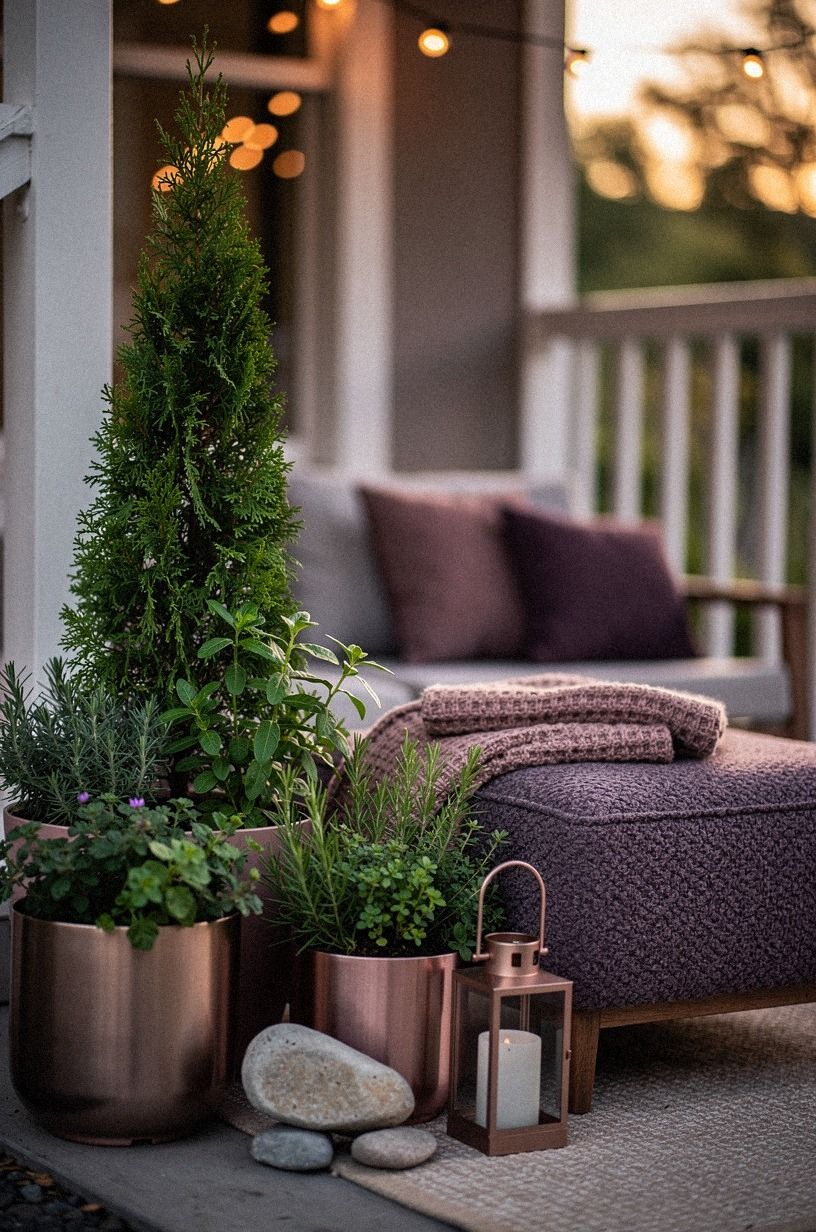
A small herb grouping can make your porch feel useful as well as inviting. Rosemary, thyme, and sage offer earthy fragrance near the door, while a narrow evergreen keeps the arrangement structured after the herbs slow down. Rosmarinus officinalis is especially good for a sunny entry with quick drainage.
Use three containers in different heights, but keep the footprint tight. A slim rose-gold stand can lift one pot without adding visual weight. Your hands can reach the herbs easily, and the arrangement won’t block the path when you carry groceries.
The scent is strongest when you brush past the rosemary, which gives the porch a small sensory moment every time you leave. That matters more to me than a display that only looks good from the street. You won’t need many plants when one of them contributes fragrance.
Avoid placing culinary herbs beside a downspout or a constantly wet step. They prefer a drier rhythm than many leafy porch plants. If you want a softer seasonal look, add one pot of white alyssum, then remove it when the arrangement starts to feel crowded.
11Use the Three-Season Evergreen Pattern
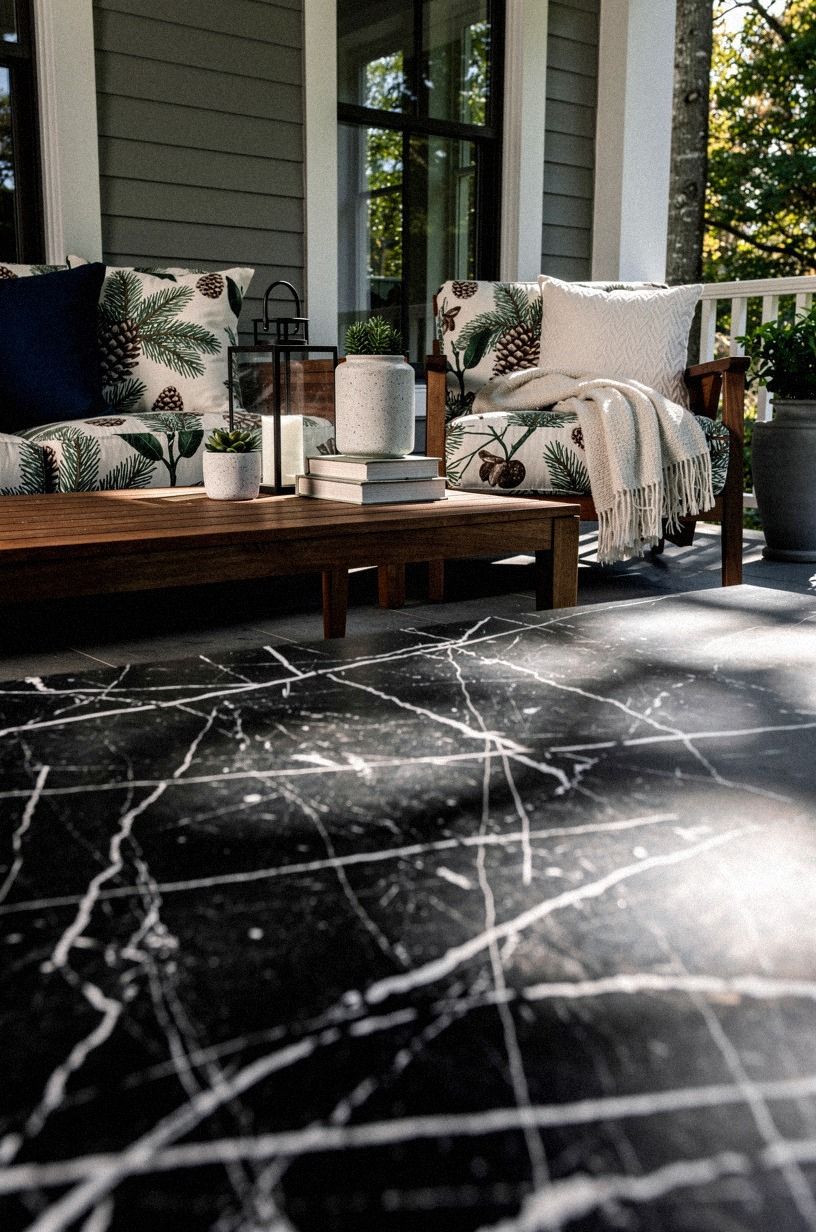
The Three-Season Evergreen Pattern gives you a stable base for rotating accents.
12Instead of More Pots, Add One Citrus Standard
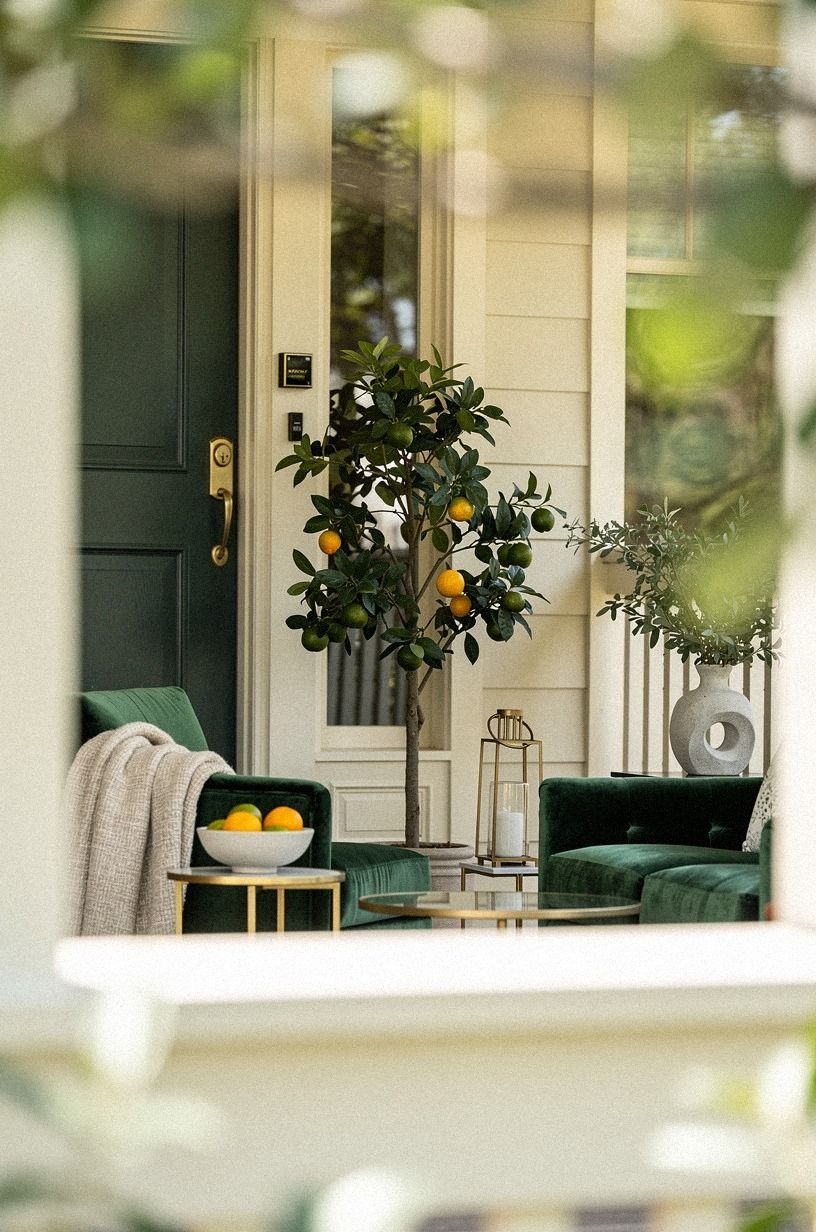
A citrus standard can give your porch a bright, sculptural focal point without needing several decorative objects. Meyer lemon has glossy leaves, fragrant flowers, and a useful shape for a sunny entrance. It feels more special than another generic green shrub.
Choose this option only if you can provide enough light and protect it during cold weather. Your plant may need to move seasonally, so think about the container’s weight before you commit. A lightweight resin pot inside a heavier sleeve can make that job easier.
I like citrus beside warm cream and gold accents because the glossy leaves sharpen the palette. Pair it with a sheltered seat covered in deep-pile mohair velvet, and let the fruit provide the small flash of color. You don’t need a wreath, sign, and lantern competing with it.
If your porch is shaded, skip citrus and choose a compact evergreen instead. The idea is the shape, not the specific plant. Your best front entry choice is the one that can stay healthy where you actually live.
13Make the Low-Water Welcome Work with Sedum
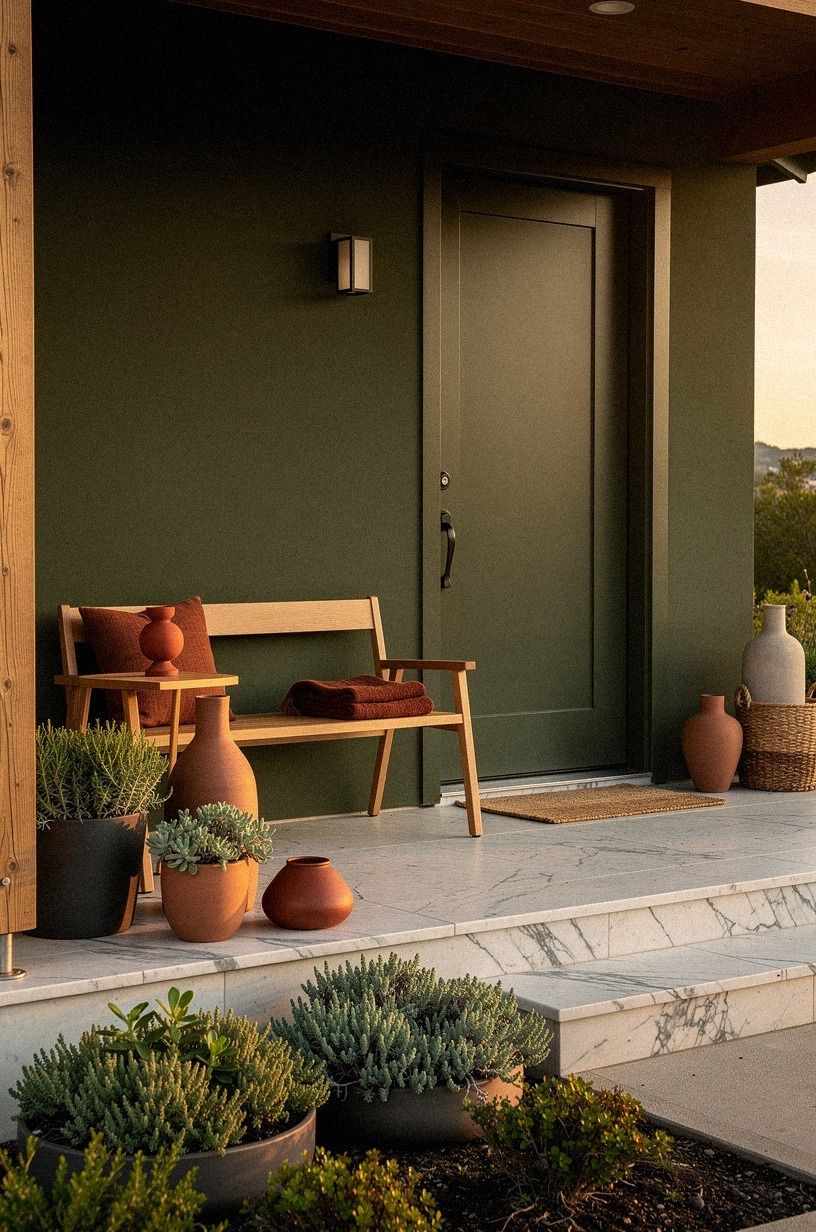
Sedum is one of the most forgiving choices for a sunny, exposed porch. A forest-green sedum variety spreads through a low bowl, while taller sedums offer rust-colored flowers later in the season. Use one wide bowl rather than a collection of tiny pots so the foliage reads as a full cushion.
A gritty soil mix and a container with a drainage hole matter more than frequent watering. Let the soil dry between waterings, especially after rainy weather. Your plant will handle a missed weekend better than a soggy root system.
Place the bowl where the morning light can catch the leaves. That low glow makes the plant look soft and earthy, while a Carrara marble house-number plaque with subtle gray veining adds a refined detail above it. The contrast feels refined without becoming formal.
I wouldn’t use sedum in a dark, damp entry just because it looks good online. It needs the right exposure to stay compact and colorful. For more ways to arrange greenery near the door, browse these small front porch summer decor ideas.
Why Low-Maintenance Plants Are Having a Moment
People are tired of porches that look like temporary displays. The shift toward low-maintenance plants isn’t only about saving time. It reflects a broader preference for homes that feel lived-in, useful, and calm.
One sturdy evergreen, one fragrant herb, and one seasonal accent can say more than a dozen identical flower pots.
I used to think a full porch needed constant color. Then I noticed that foliage gives you a longer visual season, especially when the leaves have different shapes and finishes. The soft gray of an olive tree, the sharp blades of grass, and the broad leaves of a begonia create rhythm without demanding a new arrangement every month.
Your porch also has to survive real life. Packages arrive, children run through, rain blows sideways, and nobody wants to water six pots before work. That’s why I’d spend on the container you touch and see most often, then choose resilient plants for the rest.
A welcoming entry should invite you in, not assign you another chore.
The Questions Worth Answering First
What are the best plants for a small front porch?
Compact evergreens, coral bells, trailing pothos, and dwarf olive trees are strong choices because they provide lasting structure without spreading across the walkway. You can combine one upright plant with one low planter and keep the arrangement full.
A narrow IKEA stand can lift a smaller pot while preserving floor space. If your porch is shaded, choose foliage first; if it gets bright sun, rosemary, sedum, and olive trees will give you a more durable display.
Where can I buy low-maintenance porch plants on a budget?
You can find low-maintenance porch plants at Target, Wayfair, local garden centers, and seasonal hardware-store nurseries. Facebook Marketplace and thrift shops are useful for containers, especially when you’re willing to repaint a dated pot.
Look for sturdy nursery plants with healthy leaves rather than fully styled arrangements. A simple terracotta pot and a free plant division can create more character than a costly matching set.
How much does a small porch plant makeover cost?
A small porch plant makeover usually costs about $100 to $300, depending on how many containers and mature plants you choose. You can spend nothing on styling if you reuse pots, divide perennials, or move plants from another part of your yard.
Your biggest cost is often the container, not the plant. Reusing a weathered wood crate or a sound ceramic pot can leave more of your budget for one healthy focal plant.
Can I create this porch look on a budget?
Yes, and you can begin with three free or inexpensive moves: regroup the plants you own, raise one pot on a stool, and repeat one leaf color near the door. You don’t need a complete shopping list to make the porch feel intentional.
Choose one painted planter as your visual anchor, then use cut branches, herbs, or divided perennials for supporting texture. If you have $100, spend it on the plant and container you’ll notice first.
Is a low-maintenance plant arrangement worth it in a small space?
Yes, because a small porch benefits from fewer, stronger shapes. One tall plant and one low bowl can make the entrance feel layered without reducing the usable floor area. You’ll also have fewer containers to move and water.
Keep your main path clear and let the foliage lean toward the wall. An outdoor polypropylene rug can define the seating zone while leaving the door swing and walkway open.
Is this a good idea for a rental?
Yes, especially when you use freestanding containers, removable hooks, and lightweight plant stands. You can create height without drilling into walls, and you can take every plant with you when your lease ends.
Try a cane basket around a nursery pot, a tension-mounted hanging system, or a freestanding trellis for vines. Your rental porch can still feel warm and personal without permanent changes.
Where I’d Start First
If I had to pick one, I’d start with a dwarf olive tree. Its narrow shape adds height, silver foliage hides missed watering, and it won’t swallow your walkway. Pin the olive-tree idea for later and browse more small front porch furniture ideas that fit before you place the pot.