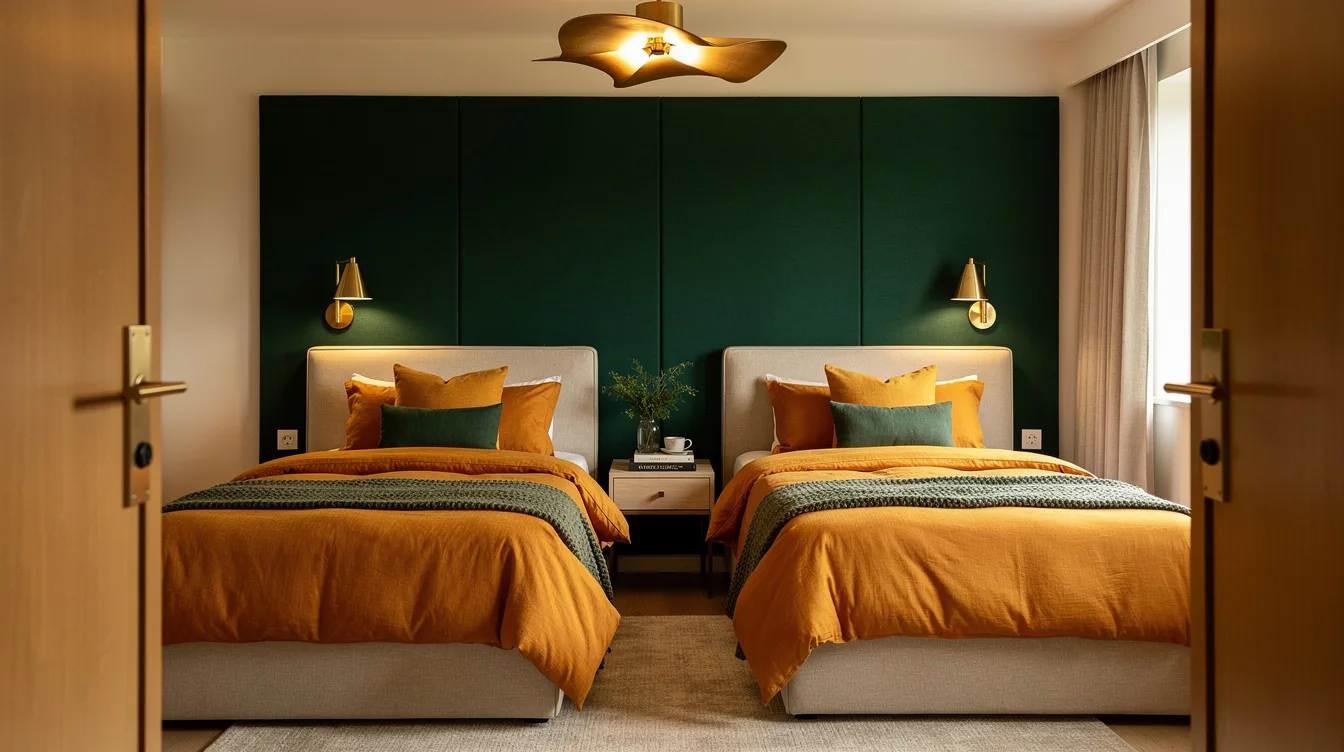
A shared guest room can turn one harmless ceiling light into a nightly negotiation. In a typical 10 to 15-square-meter bedroom, one guest wants to read while the other wants darkness.
The fix is a layered plan: soft general light, one reading beam per sleeper, and a low-glare night light. Warm 2700K bulbs keep the room relaxed, while each control stays within reach.
Whether the room has twin beds or a queen bed, the goal is hotel-like comfort without making anyone sleep under another guest’s light.
Center a Dimmable Ceiling Layer
Start with one dimmable flush-mount ceiling fixture centered between twin beds or over the middle of a queen bed. For a typical 10 to 15-square-meter room, choose about 1,500 to 2,500 lumens, a 35 to 55 cm diameter, and a warm 2700K color temperature.
A basic IKEA ceiling light can fit the plan at a typical 2026 price of about €50 to 250, depending on the finish and dimming hardware. Keep the beam soft enough for luggage and fresh linens, but never use it as the only light source.
Give Each Sleeper a Reading Beam
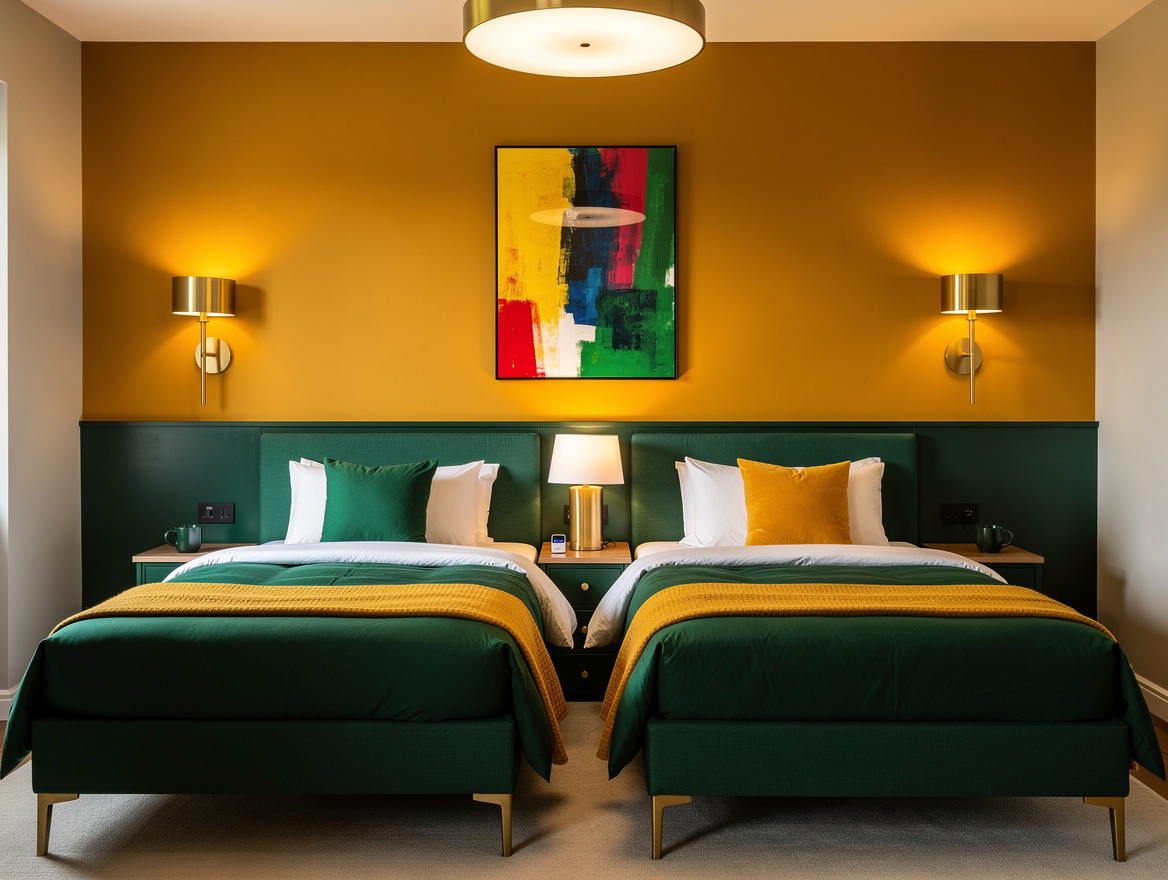
Install one adjustable black metal wall sconce per sleeper, each with its own switch and a focused 5 to 10W LED beam. A plug-in Amazon swing-arm sconce works well when you cannot open the wall, with individual fixtures typically priced around €35 to 180 each.
For twin beds, place the sconce centers about 183 to 213 cm apart and roughly 10 to 20 cm outside each headboard edge. Set the fixture center around 122 to 152 cm from the finished floor, then adjust for mattress height so the light lands on a book instead of the other guest’s face.
Keep Bedside Glow Within Reach
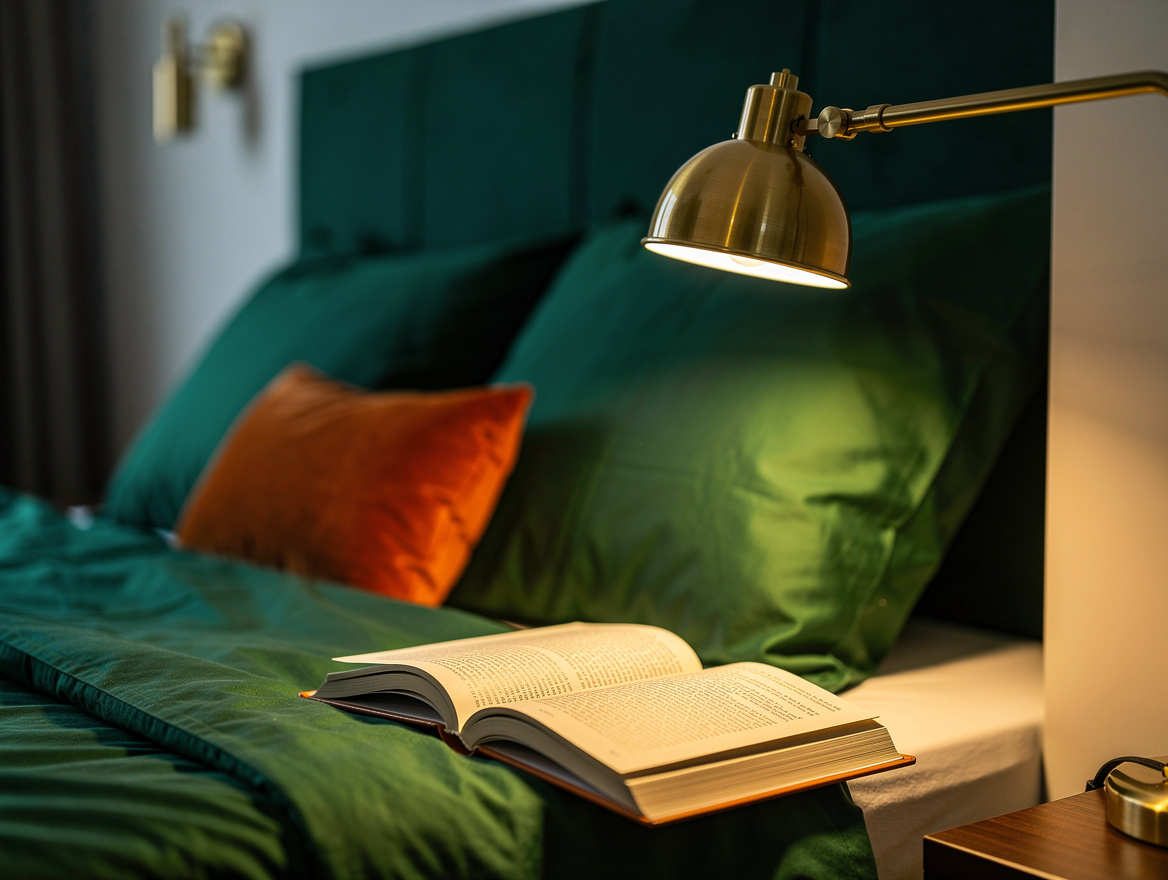
Pair each reading light with a smaller linen-shade table lamp or plug-in wall lamp for softer evening light. Keep these lamps around 25 to 45 cm high, and choose separate switches so one guest can read while the other sleeps.
A Target bedside lamp can cover this ambience layer at a typical price of about €25 to 150 each. The shade should diffuse the bulb, while the reading beam handles actual page light.
Hide the Night Light Below Eye Level
Place a warm motion-sensor LED night light near the door, below a bedside table, or along the path to the bathroom. Use 0.5 to 2W output and a 2200 to 2700K color temperature, because a bright blue-white glow can wake the person who is still asleep.
A Walmart motion light or similar low-profile unit usually fits the supplied typical range of about €10 to 40 each. In a twin room, two small lights can give both sleepers a clear route without turning on the ceiling fixture.
Light the Wardrobe Without Flooding the Room
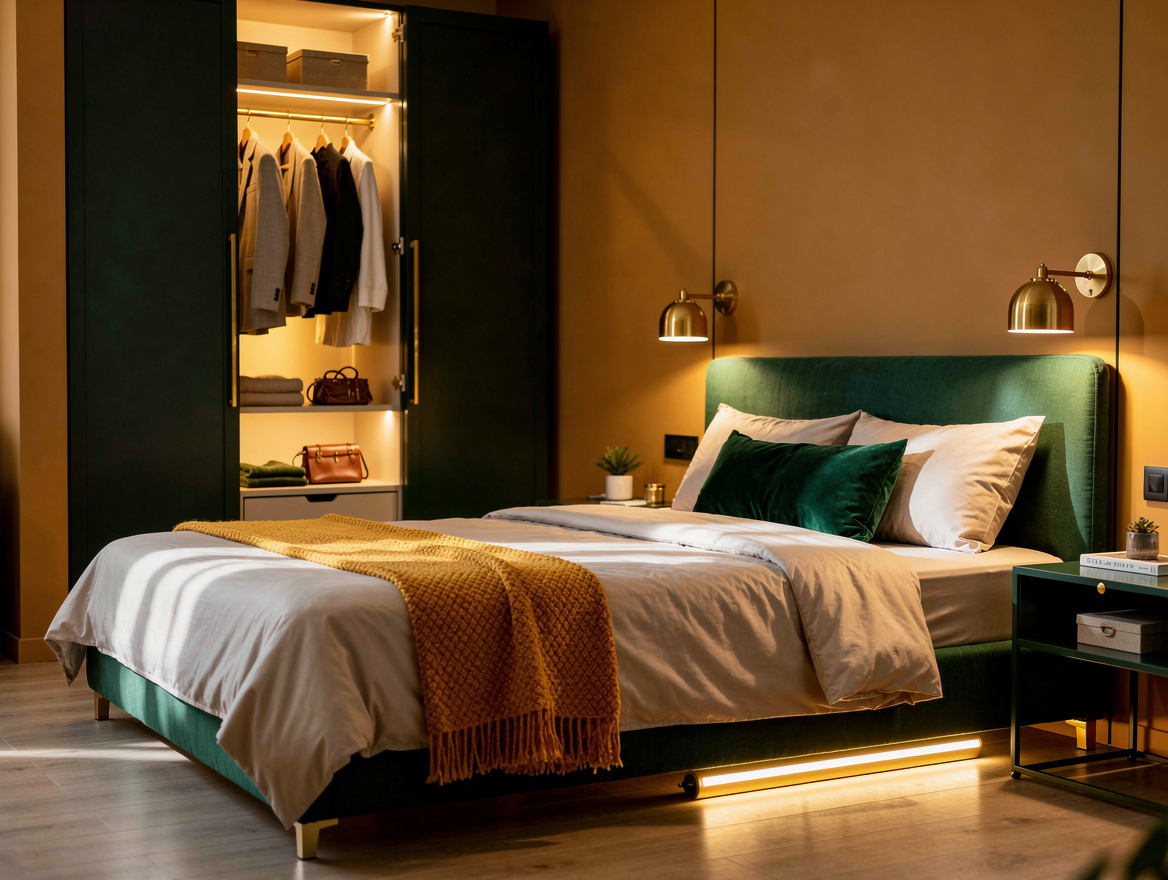
Add one sensor bar or LED strip inside the luggage and wardrobe zone, ideally about 60 to 120 cm long. A Wayfair LED strip can use 3500 to 4000K light here, which makes clothing colors easier to judge while keeping the bedroom’s main lighting warm.
Expect a typical category price of about €20 to 80 for this task layer. Keep the wardrobe light on its own sensor or switch, since guests should not need the central fixture just to find a sweater.
Test the Layout Before You Drill
Mock up each fixture with painter’s tape and a temporary cardboard sconce template before making holes. Check pillow clearance, arm movement, switch reach, and whether a shallow fixture under 15 cm deep keeps the walkway open beside closely spaced beds.
For a shared queen room, use two directional sconces, two USB-C charging points, and one separately controlled Lowe’s dimmer switch. For a twin layout, a simple Home Depot plug-in sconce on each side gives independent control without forcing either guest to get up.
Begin with the two independent reading lights, then add the dimmable ceiling fixture and the low night path. That order solves the most common shared-room frustration before you spend money on decorative extras.
Mia Carter writes about small-space living and budget home makeovers. She has restyled three rentals and tests most ideas in her own 45 sqm flat.