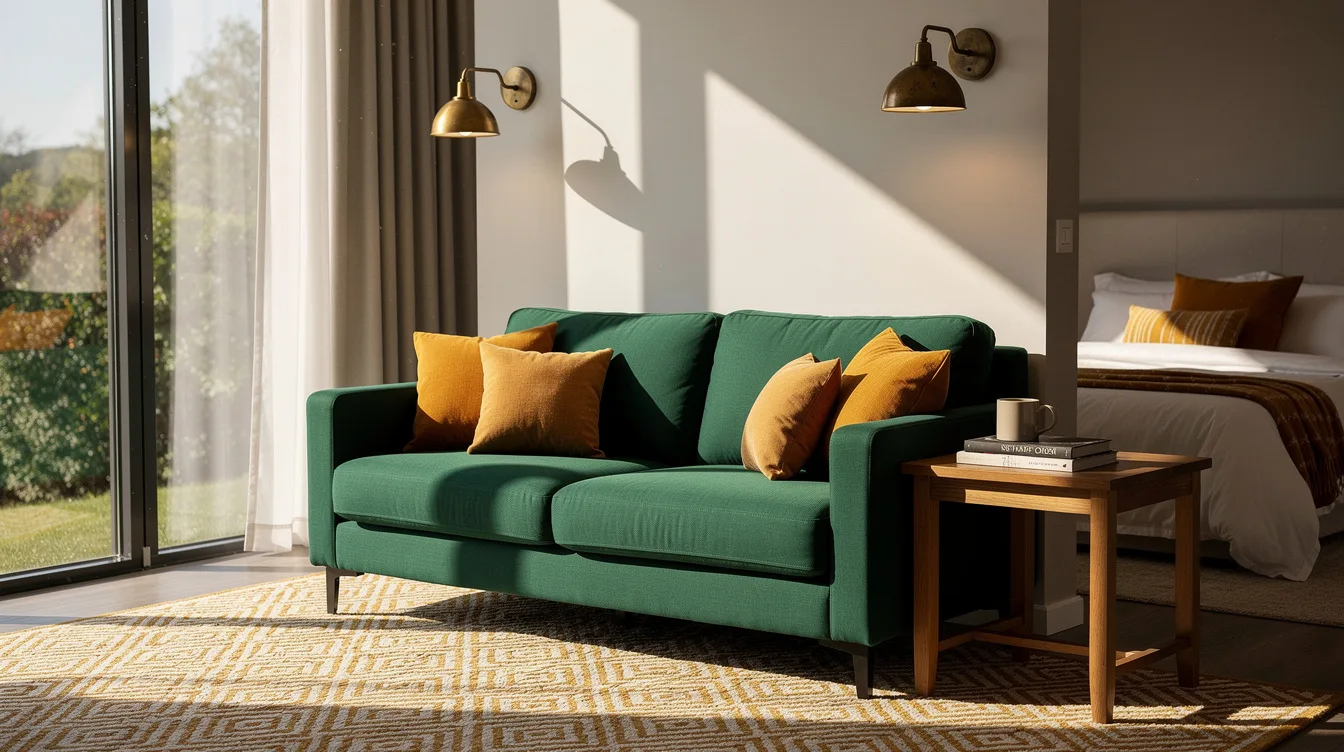
Our primary bedroom had a bright window wall, but placing two oversized chairs there made the 54-inch path to the closet feel absurdly tight. I learned that a shared reading nook needs about 36 to 60 square feet to feel restful for two people, not like leftover furniture parked beside the bed.
The answer was giving each person a real seat, a controllable light, and one small zone they could both use. A two-person retreat has to protect bedtime as much as it supports reading.
Start With the Route Through the Room
I measured the walk from bed to closet and bathroom before shopping, then protected roughly 30 to 36 inches of clear circulation. Low-pile wool rugs help define the nook without adding a thick edge that catches bare feet at night.
A single corner chair can fit in roughly 9 to 12 square feet, but that figure falls apart when two adults need to pass each other. For a shared nook, I treat an 8-by-7-foot area as a typical minimum for two chairs and a table.
Skip the impulse to fill every empty wall. Bedroom square footage feels more luxurious when the route around the bed stays calm and obvious.
Give Both Readers a Proper Seat
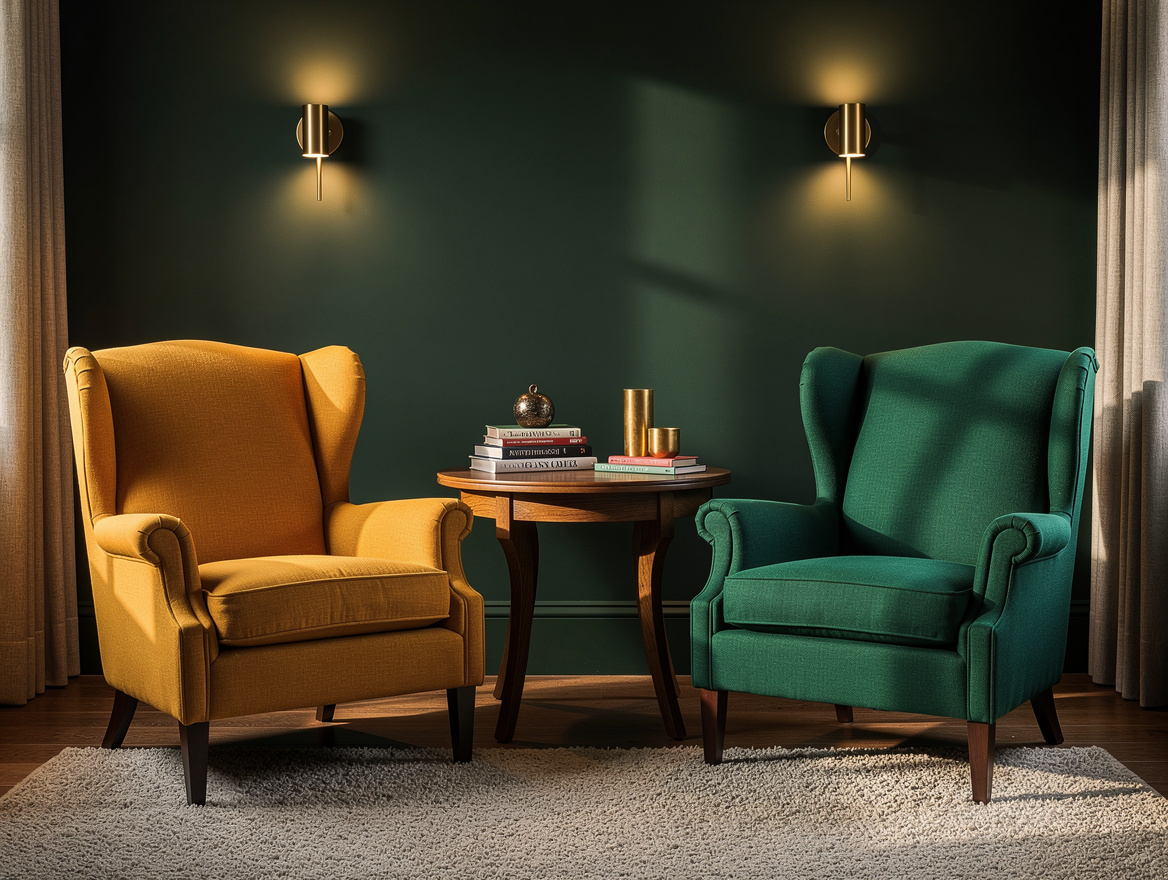
Two chairs work when both people want equal reading territory. Look for chairs around 28 to 32 inches wide and 30 to 36 inches deep, then leave about 12 to 18 inches between them for a small table.
The IKEA STRANDMON armchair and ottoman set is a useful benchmark at about $549, especially when one person likes upright reading and the other uses the ottoman. Its traditional shape has more presence than a delicate accent chair, so measure before committing.
For a softer, less formal arrangement, a compact loveseat or daybed can fit in roughly a 6-to-7-foot-wide by 5-to-6-foot-deep footprint. I prefer this option only when both readers are comfortable sharing a cushion and one person may want to lounge.
Build the Window Bench Around Real Comfort
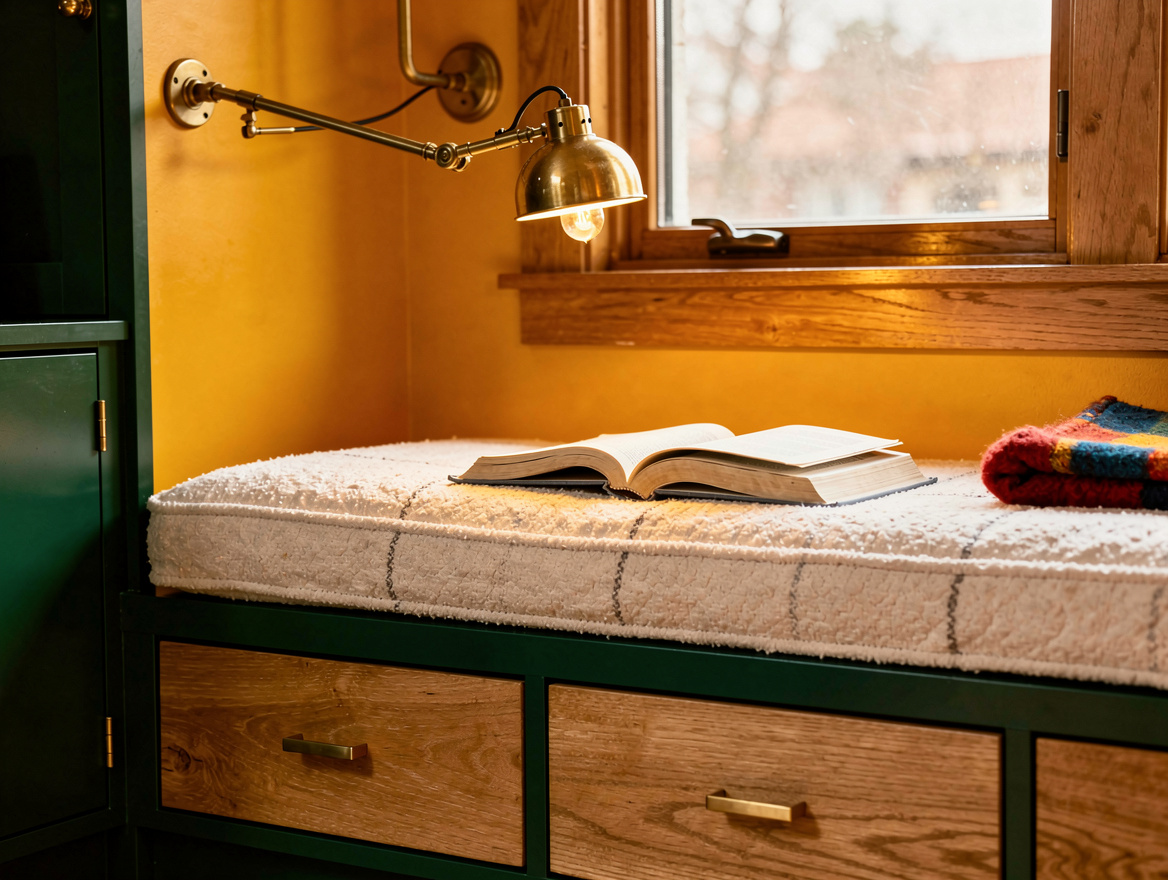
A window bench is the most efficient shared setup when the room has a usable window wall or bay. A 72-inch bench is a functional minimum, while roughly 84 to 96 inches wide gives two people enough shoulder room.
Keep a reading bench about 22 to 24 inches deep for upright posture, with a finished seat height around 17 to 18 inches. A high-resilience foam cushion roughly 3 to 5 inches thick feels comfortable without making the seat awkwardly tall.
For cabinetry near an exterior window, I would choose plywood with hardwood edge banding over MDF because condensation happens. Typical window-seat installations run about $500 to $2,500 before premium upholstery or extensive custom millwork, and that is where budgets can climb fast.
Make the Table Earn Its Small Footprint
A shared surface only needs to hold two drinks and the book currently in rotation. A table around 16 to 20 inches wide or in diameter is usually enough, provided its top lands roughly at chair-arm height.
I like a simple solid oak pedestal table because there are no sharp corners to navigate in a dim bedroom. It also looks warmer than a glass top, which can feel oddly formal beside bedding and drapery.
Give the table one job beyond cups: a lidded box for chargers, bookmarks, and reading glasses. Tiny clutter multiplies quickly in a bedroom, particularly when both people assume the other person will put it away.
Separate the Light Before Bedtime
One lamp between two readers is a compromise that usually annoys both people. Use two independently switched, dimmable lights so each person can aim light at a page without washing the bed in brightness.
Choose warm-white, dimmable LEDs around 2700K and avoid exposed cool-white bulbs. An aged brass swing-arm sconce feels appropriately quiet in a bedroom and frees the small shared table for actual reading materials.
Matte black works when the room already has black hardware, but I would not introduce it solely for the nook. The finish should repeat something nearby, such as curtain rods, drawer pulls, or a bed frame, or it will look accidental.
Start by taping out the circulation path and the seats on the floor before buying anything. When two people can move past the nook without turning sideways, the cozy part takes care of itself.
Mia Carter writes about small-space living and budget home makeovers. She has restyled three rentals and tests most ideas in her own 45 sqm flat.