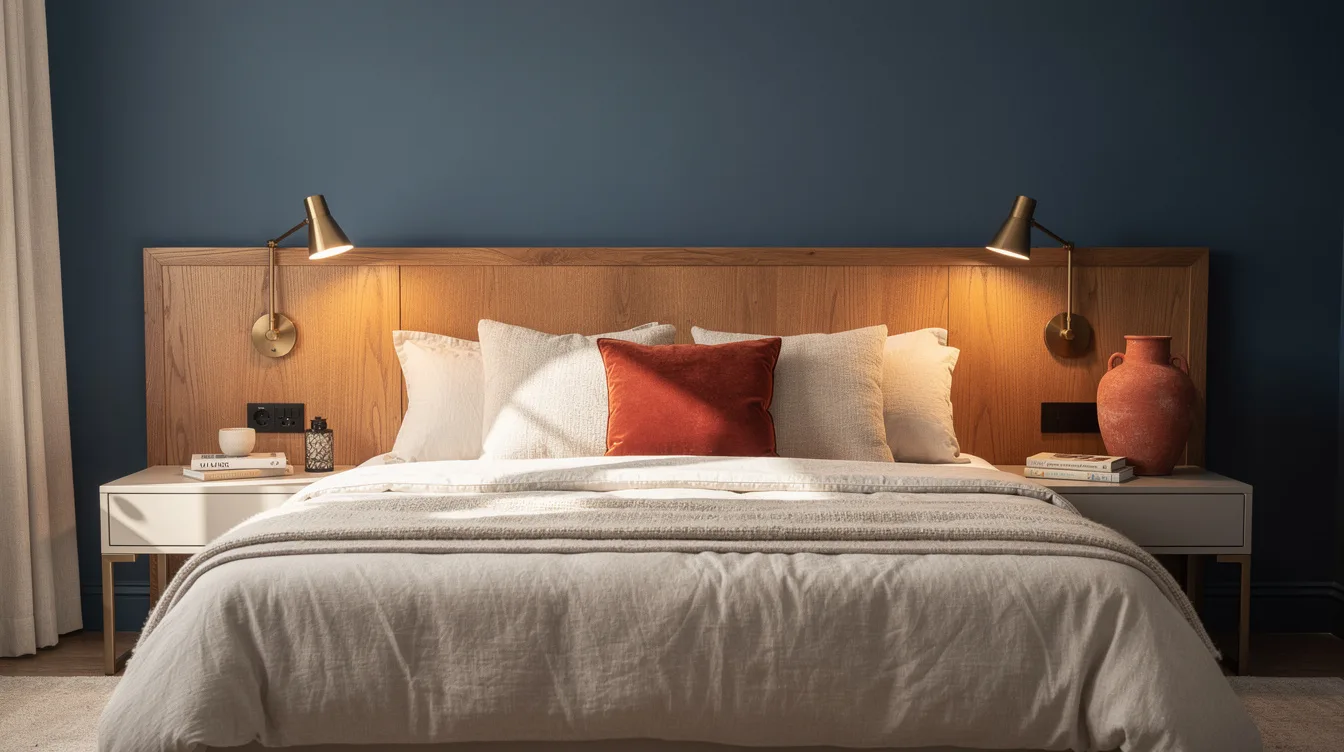
A shared bed turns tense fast when one person is reading at 11 p.m. Under a lamp that lights the whole mattress. Two independently switched sconces, mounted just outside the headboard edges, give each sleeper a private pool of light while keeping the nightstands usable.
The common mistake is buying matching fixtures and stopping there. Placement, beam direction, and the switch location decide whether the pair actually works.
Mount Each Light Outside the Headboard
Push each reading sconce beyond the outer edge of the headboard, not over the pillows. That position sends light down toward a book instead of straight across your partner’s face.
For a typical queen bed with a 60-inch-wide headboard, leave enough visual breathing room for the fixtures without crowding curtains. A pair should frame the bed, not pinch it.
Give Every Sleeper a Separate Switch
One wall switch for both sides is the fastest route to bedtime resentment. Choose independently switched sconces, whether the control sits on the backplate, arm, cord, or wall.
Amazon and Wayfair sell plug-in styles with inline switches that make sense for renters. Cover and secure the cord, because a dangling wire beside a bed looks unfinished and catches on bedding.
Aim the Beam Down and Inward
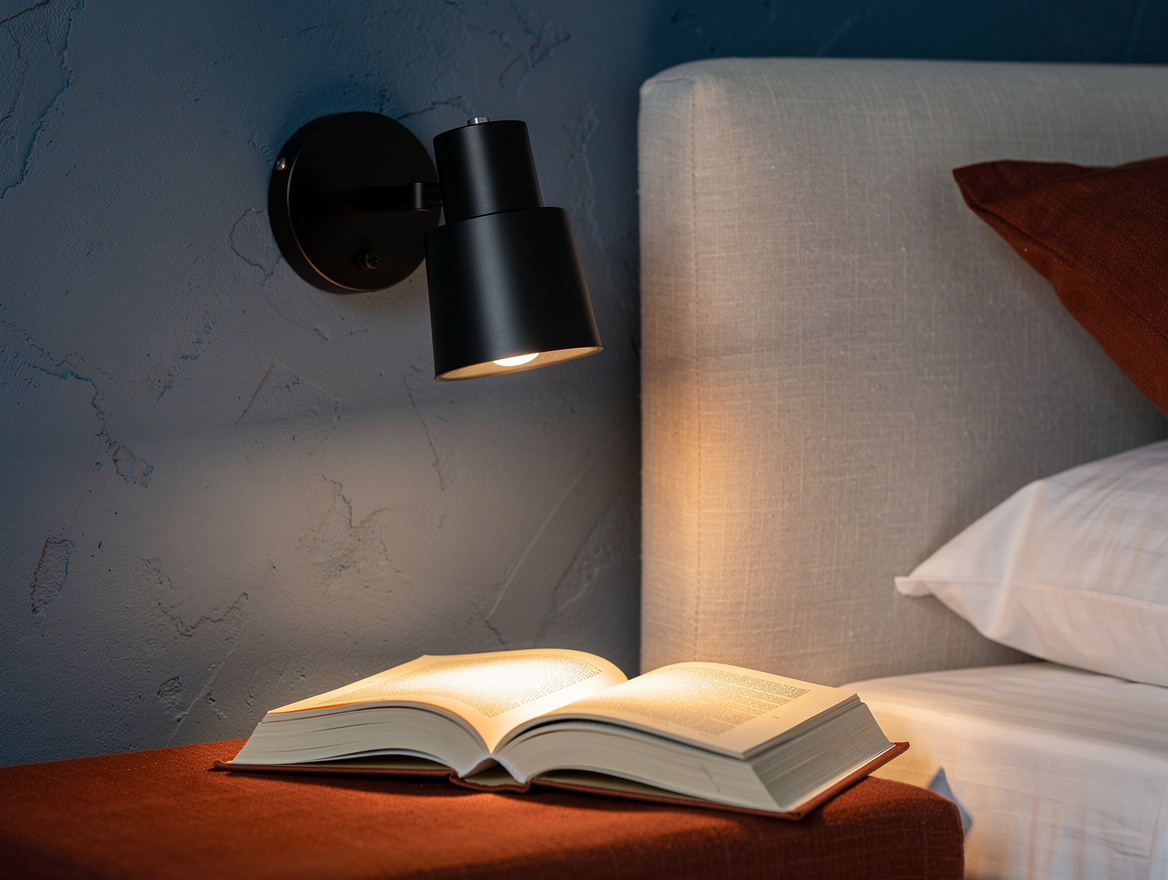
An exposed bulb is ambient lighting, not a reading light. Use an adjustable GU10 bulb or a focused LED head with a roughly 24- to 40-degree beam, then aim it diagonally down at chest level.
Warm 2700K LED light is the right call for a bedroom. Cool white light feels clinical after dark, especially against white sheets and a pale upholstered headboard.
Choose an Arm That Clears the Bed
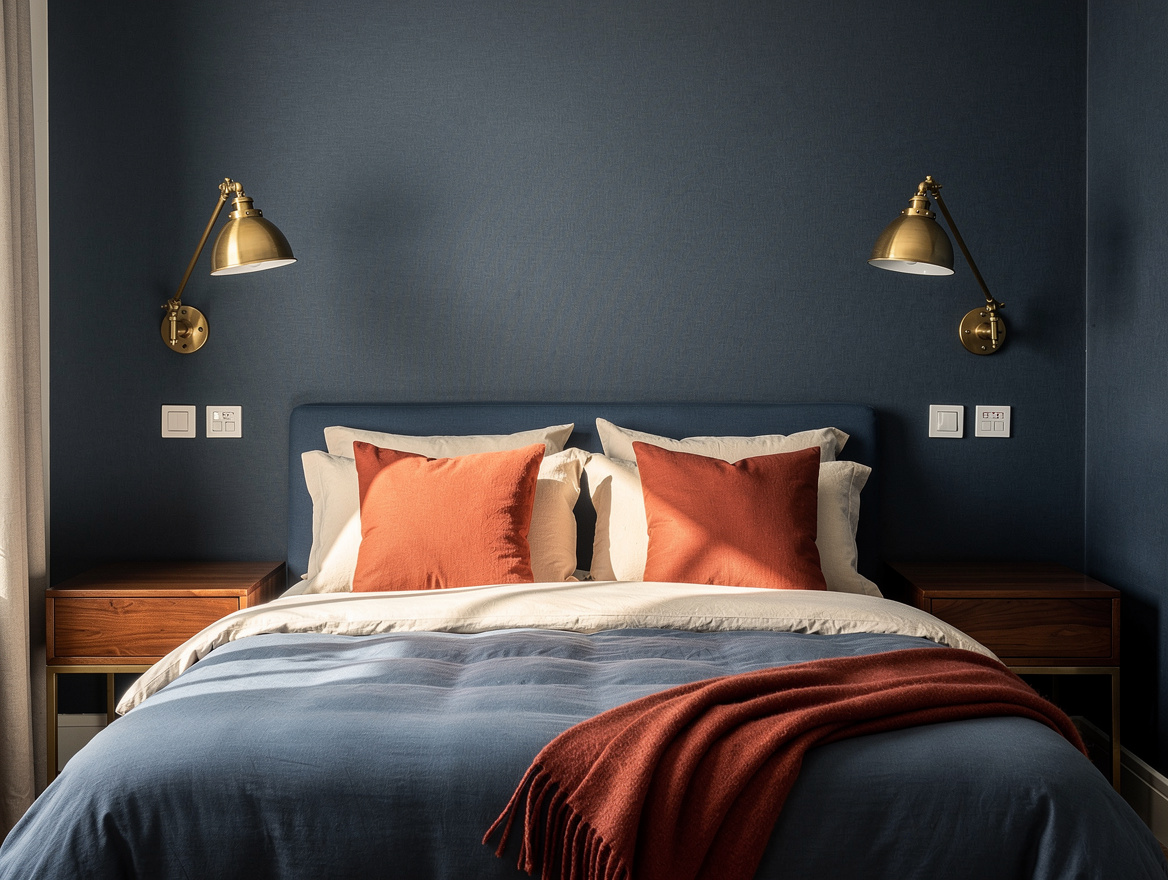
Serious readers need a sconce that reaches the book without forcing them upright. A swing arm that extends roughly 12 to 18 inches from the wall is often practical, but measure for pillows, drapery, and a tall headboard first.
The adjustable IKEA TERTIAL wall lamp is a useful budget-minded template, with a steel arm and directional shade. Its cord is about 59 inches long, so plan the outlet position before committing to the layout.
Skip Shades That Spill Light Everywhere
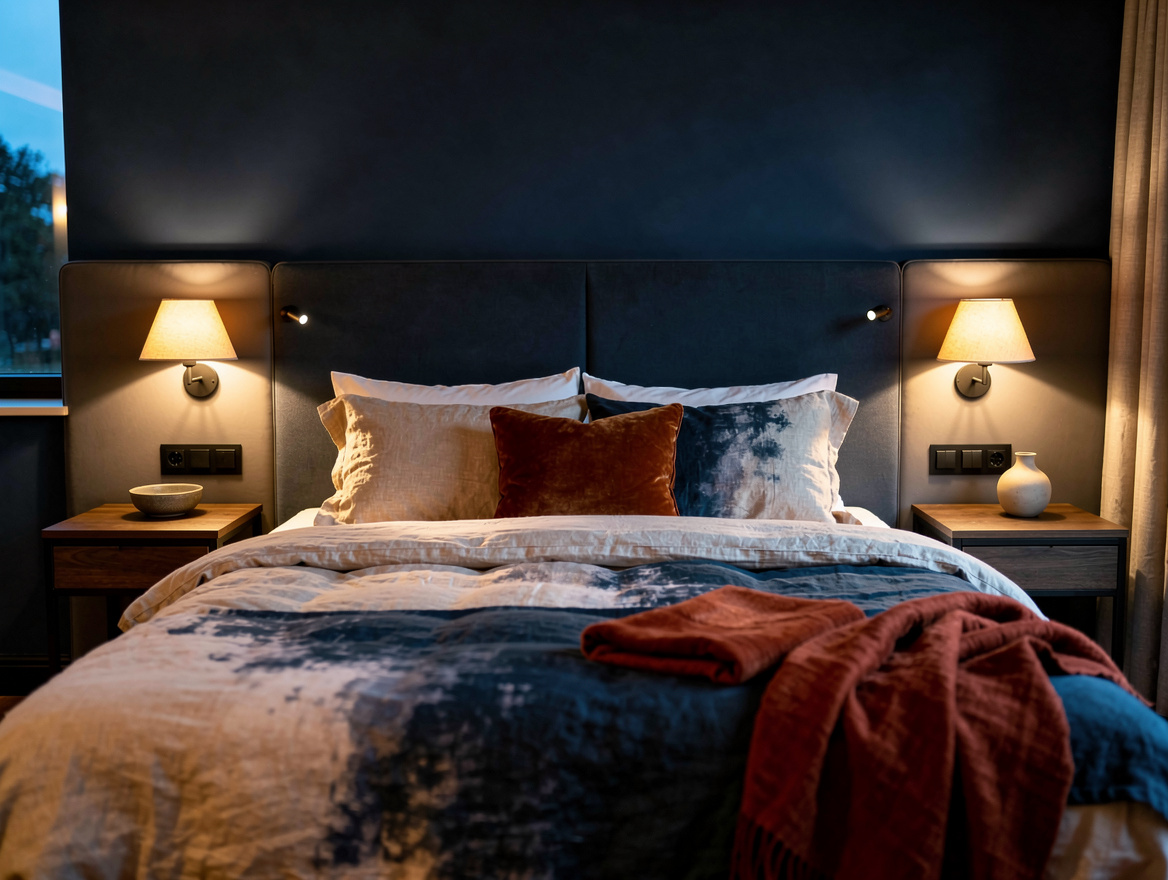
A wide fabric shade can look polished, but it floods both sides of a shared bed. Save that look for a dual-function hotel fixture, where the fabric shade handles soft room light and a separate reading arm does the focused work.
For the simpler pair, a narrow powder-coated steel shade is more effective. Matte black works in crisp modern rooms, while aged brass adds warmth beside walnut or oak furniture.
Plan the Finish With the Whole Room
Matching sconces do not need to match every metal in the room. Repeat one nearby note, such as the brushed nickel drawer pulls or the black frame on the art, and let the lights hold their own.
Avoid shiny chrome unless it already appears elsewhere. In a shared bedroom, calmer finishes like aged brass, soft white, or matte black keep two fixtures from becoming the loudest thing on the wall.
Start by marking each sleeper’s reading position with painter’s tape before you buy anything. Test the sightline from both pillows, then choose the sconce that puts light on the page and nowhere else.
Mia Carter writes about small-space living and budget home makeovers. She has restyled three rentals and tests most ideas in her own 45 sqm flat.