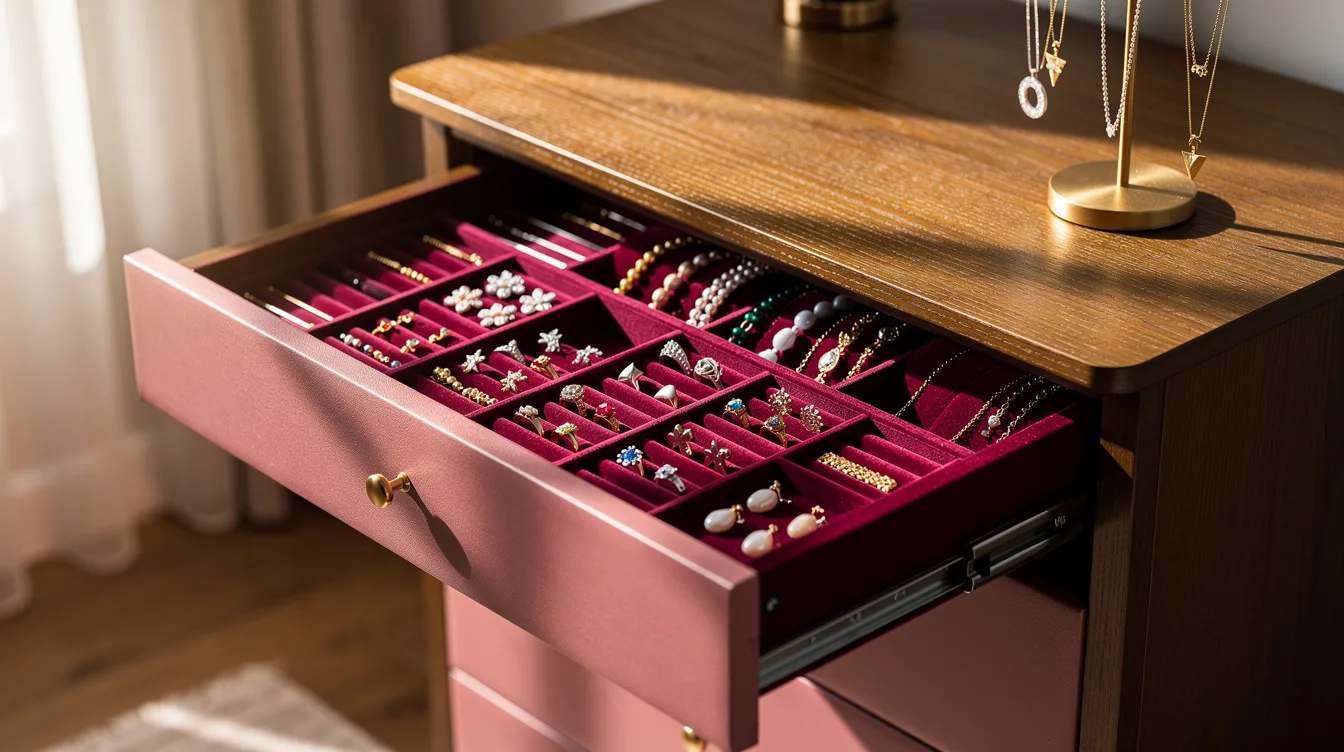
A small bedroom drawer can hold a surprising amount of jewelry, but only when every inch has a job. Leave about 1 to 2 cm around each insert, or the setup will feel tidy until you try to remove a tray.
The most practical arrangement is a modular velvet tray with rings and studs at the front, larger bracelet sections behind them, and necklaces stored separately when they tend to tangle.
Measure first, sort by type, and let your daily routine decide the layout.
Measure the Drawer Before Buying Inserts
Start with the drawer’s internal width, depth, and usable height, then leave about 1 to 2 cm of clearance around every insert so the trays can lift out without catching.
A low-profile velvet-lined tray usually works best because it protects finishes while keeping the drawer easy to open.
Typical drawer inserts cost around $20 to $80 per set, while a basic option from Amazon often falls near $20 to $50.
Sort Five Jewelry Groups First
Empty the drawer and make five groups: rings, earrings, necklaces, bracelets and watches, plus occasional or sentimental pieces.
This quick sort tells you how many ring rolls, earring slots, and open compartments you actually need.
Buying a generic box before sorting usually wastes space, especially when a large section sits empty beside small pieces.
Place Daily Pieces at the Front
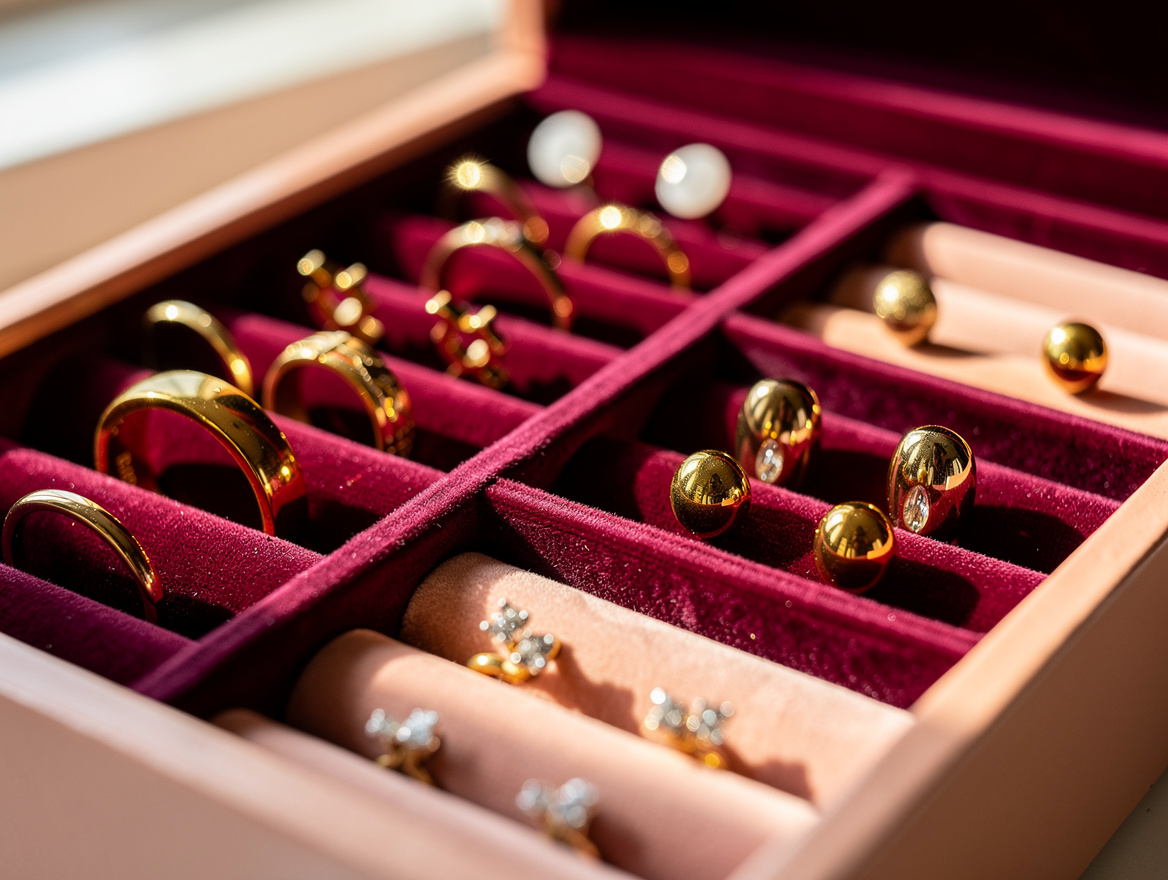
Use the front third of the drawer for the jewelry you wear most often, including a ring roll, earring slots, and one shallow catch-all section.
Keep studs in a small grid and pairs together so you can see them immediately instead of digging through a pile.
A slim adjustable tray from Target or a similar US retailer can cost about $20 to $40, depending on the material and number of sections.
Give Long Necklaces Their Own Route
Short chains can rest in a shallow necklace compartment, but long or delicate pieces should stay fastened to prevent knots.
For a small bedroom, move longer necklaces to hooks or a vertical rail beside the dresser, where each chain hangs separately.
An inside-door necklace rail or compact wall rack typically costs around $25 to $75, and it can free the drawer’s bulkiest category.
Stack Trays Only With Enough Height
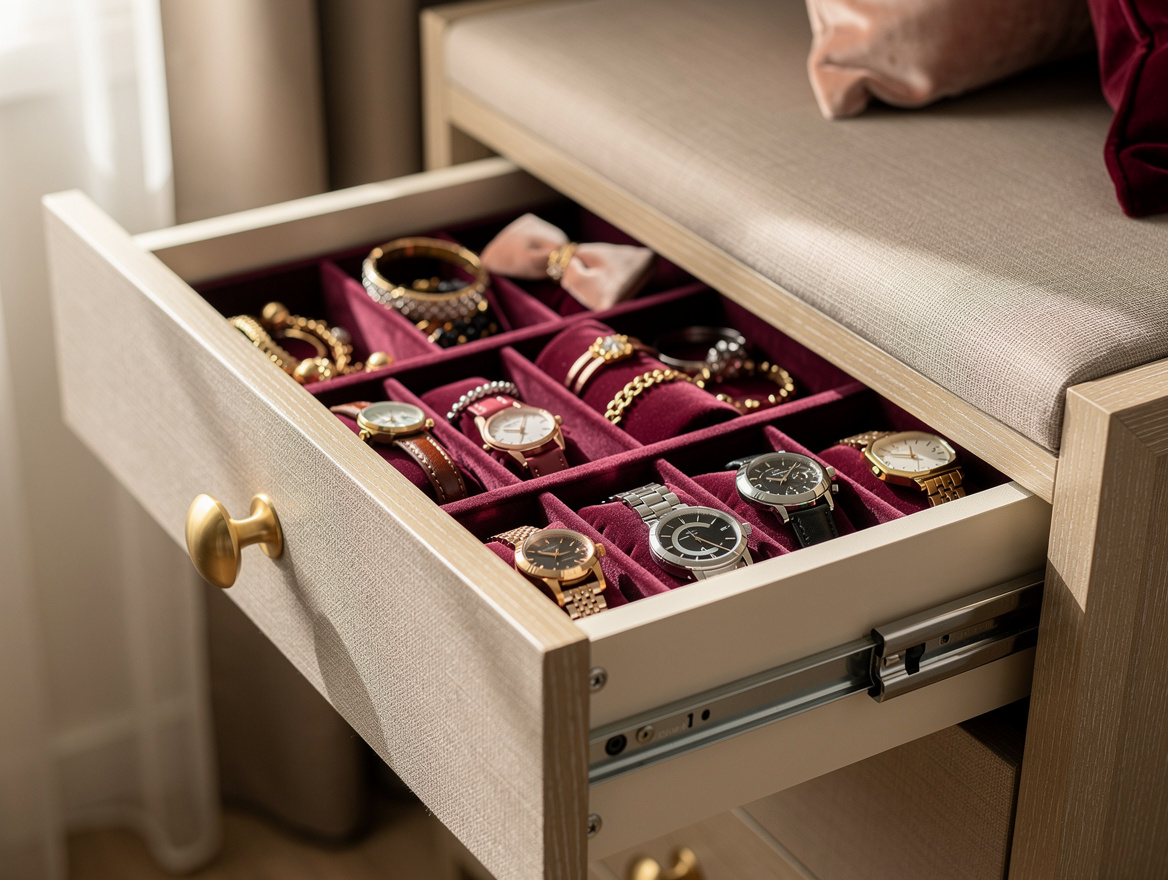
Two thin stackable trays can work when the drawer has about 6 to 8 cm of usable internal height, with daily jewelry above and occasion pieces below.
Use one layer when the drawer is only about 3 to 5 cm deep, choosing a single-layer velvet tray over a cramped stack.
Place travel jewelry, backup pieces, and sentimental items in the lower tray, while a removable divider system keeps each category easy to lift out.
Protect Fine Pieces With Soft Separators
Scratch-prone jewelry belongs in micro-suede-lined compartments or soft felt pouches, with enough room that pieces do not rub against one another.
Use small acrylic boxes only for sturdy items, since hard edges can mark delicate metal or stones when the drawer opens and closes.
Premium modular trays, lidded boxes, and custom drawer liners typically begin around $50 and can rise above $200, so reserve them for pieces that need extra protection.
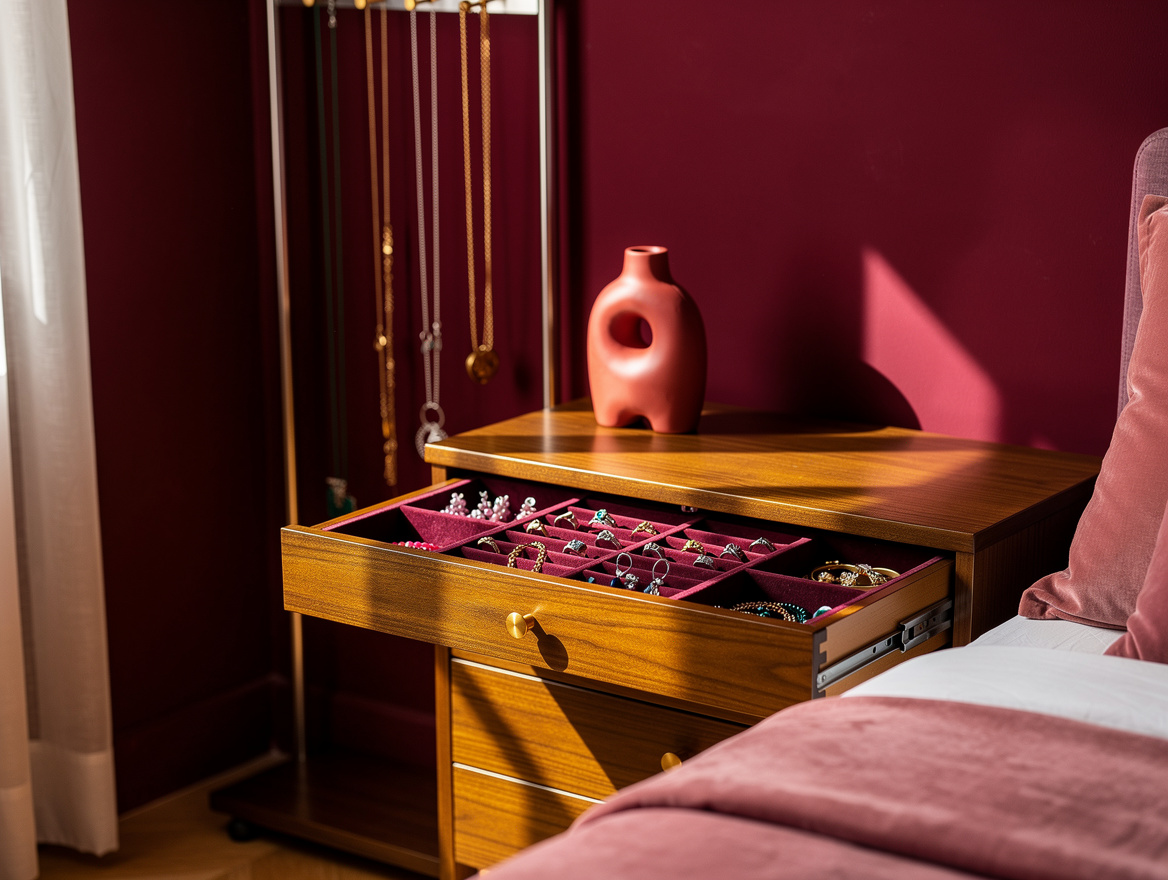
Begin with the front third of the drawer and give your everyday pieces the easiest reach. Then move long necklaces out before adding more compartments.
That order keeps the drawer useful, protects the jewelry you wear most, and prevents a neat-looking setup from becoming another crowded storage problem.
Mia Carter writes about small-space living and budget home makeovers. She has restyled three rentals and tests most ideas in her own 45 sqm flat.