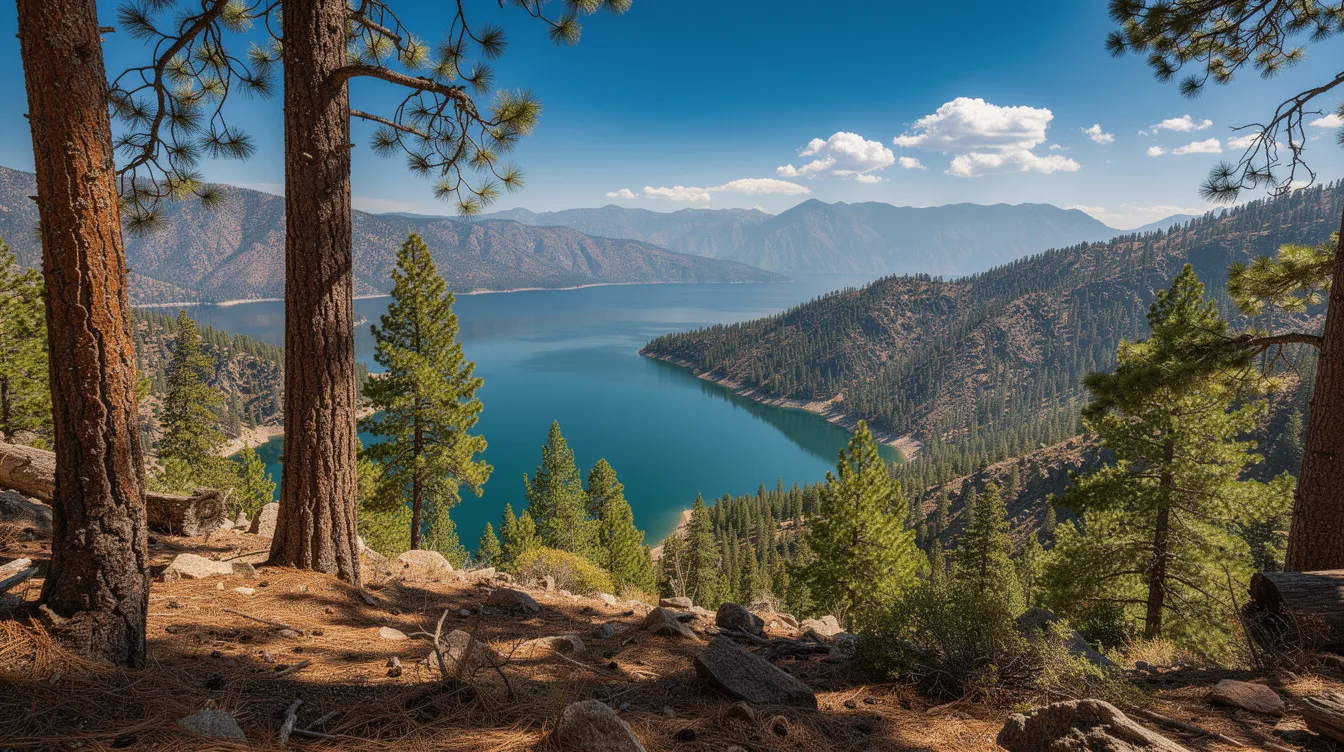
In 1884, a dam in California’s San Bernardino Mountains formed Big Bear Lake. A California historical landmark marker then presented it as the world’s largest man-made lake, a claim that still gives this mountain reservoir more character than its boating scene alone.
The modern visit is easier to understand once you know the history. Big Bear Lake is a high-elevation reservoir, not a natural alpine lake, and the old dam is usually underwater beneath about 20 feet of water.
The 1884 dam made a very large claim
The first dam held back water for irrigation in the Redlands area. Because that single-arch granite dam created such a large artificial lake for its time, the local marker called it the world’s largest man-made lake.
And the story didn’t end there. Redlands citrus growers needed more water, so a higher dam was built in 1912, increasing the lake’s capacity and leaving the earlier structure mostly submerged.
You can still feel that engineering history around the reservoir, especially when the water lies quiet against the pine-covered slopes. My opinion is that the old claim makes Big Bear more interesting than a simple weekend recreation stop.
That claim belongs to the historical marker, not a current global ranking. Still, it gives the place a useful tension: a recreational lake today, and a major piece of California water history beneath it.
At 6,750 feet, the water changes the entire trip
Big Bear Lake sits at roughly 6,750 feet. The drive usually takes around two hours, although traffic, snow, and mountain roads can stretch that estimate.
The reservoir reaches 72 feet at its deepest point. That scale feels substantial from the shoreline, but the setting stays intimate enough for a slow drive along the water.
And the altitude explains the sharp change from Southern California’s lowlands. Pines replace palms, evenings turn cool, and winter can bring snow close to the shoreline.
If you want a mountain break without committing to a long expedition, this is the appeal. It’s remote enough to feel different, but reachable enough for a carefully planned weekend.
Can you swim in Big Bear Lake?
Swimming is discouraged because the water is very cold and underwater obstacles sit near parts of the shoreline. You can still rent boats, kayaks, or paddleboards during the warmer season, but the lake is better suited to being explored than casually entered.
And fishing gives the reservoir a slower rhythm. Trout and black bass are present, though California publishes consumption advice because some fish contain mercury and PCBs.
Summer brings the water, winter brings the snow
June through September is the practical window for boating, fishing, paddling, hiking, and mountain biking. The days can feel warm at this elevation, but the evenings cool quickly once the sun drops behind the trees.
My favorite kind of visit would be a summer stay built around the lake, with enough time left for the forest roads and shoreline. You’ll enjoy it more with two nights, because a single night can turn into a rushed drive in either direction.
And December through March changes the mood completely. Snow, skiing, and snowboarding take over, mainly around Snow Summit and Bear Mountain, while mountain conditions become part of the itinerary.
That season is lively, but not effortless. Check road conditions before leaving, carry suitable winter equipment, and expect weekends or holidays to fill accommodations quickly.
Getting there requires respect for the mountain roads
From Los Angeles, the route climbs into the San Bernardino Mountains rather than following a straightforward highway corridor. Weather can slow the final approach, so your two-hour estimate should remain flexible.
You can approach through San Bernardino on Highway 330 and Highway 18, or come through Redlands on Highway 38. If you’re driving in winter, check official conditions before departure and be prepared for chain requirements.
And you can use Big Bear’s official destination site to check current activities, events, and seasonal conditions.
That small piece of planning matters here because the same road can feel simple in summer and demanding after snowfall.
The best base keeps the lake within reach
The Village puts restaurants, cafes, and shops close together, while Boulder Bay keeps you nearer the shoreline. Moonridge is more convenient for the ski areas, so choose your base according to the season you’re visiting.
You can also visit the Big Bear Alpine Zoo or stop at the Big Bear Discovery Center. But the reservoir remains the main event, especially when the afternoon light turns the water silver and the pine air starts to cool.
Big Bear Lake is touristy during busy periods, and almost peaceful when the crowds thin. By evening, the boats settle against the docks, the mountain air moves through the trees, and the old 1884 story feels close beneath the water.