
Music Corner Living Room Ideas can turn one overlooked corner into a usable studio without adding a room. You’ll need a listening plan, a compact console, soft materials, and honest cable control. I’ve made the mistake of buying gear before measuring the sofa. Start with the room. Then make the music feel intentional.
- Start with the Listening Triangle in a Living Room Music Studio
- Measure Your Sofa Before Your Music Studio Living Room
- What Should You Hear First? Build the Three-Height Light Stack
- Float a Compact Console Instead of Adding a Desk
- Choose the Two-Wood Rule for Lounge Room Corner Ideas
- Build a Vertical Record Wall for a Music Lounge Room
- Hang Sound Softness at Ear Level
- Mix the Music Lounge Room Ideas Around One Seat
- Paint the Backdrop with Farrow & Ball Hague Blue
- Frame the Before-and-After Cable Route
- Hide the Equipment in Closed Storage
- Layer the Rug Under the Listening Zone
- How Far Should Your TV Sit? Set the Screen Aside
- Style the Surface with the Five-Object Limit
- Test the Room at Night Before You Finish
1Start with the Listening Triangle in a Living Room Music Studio
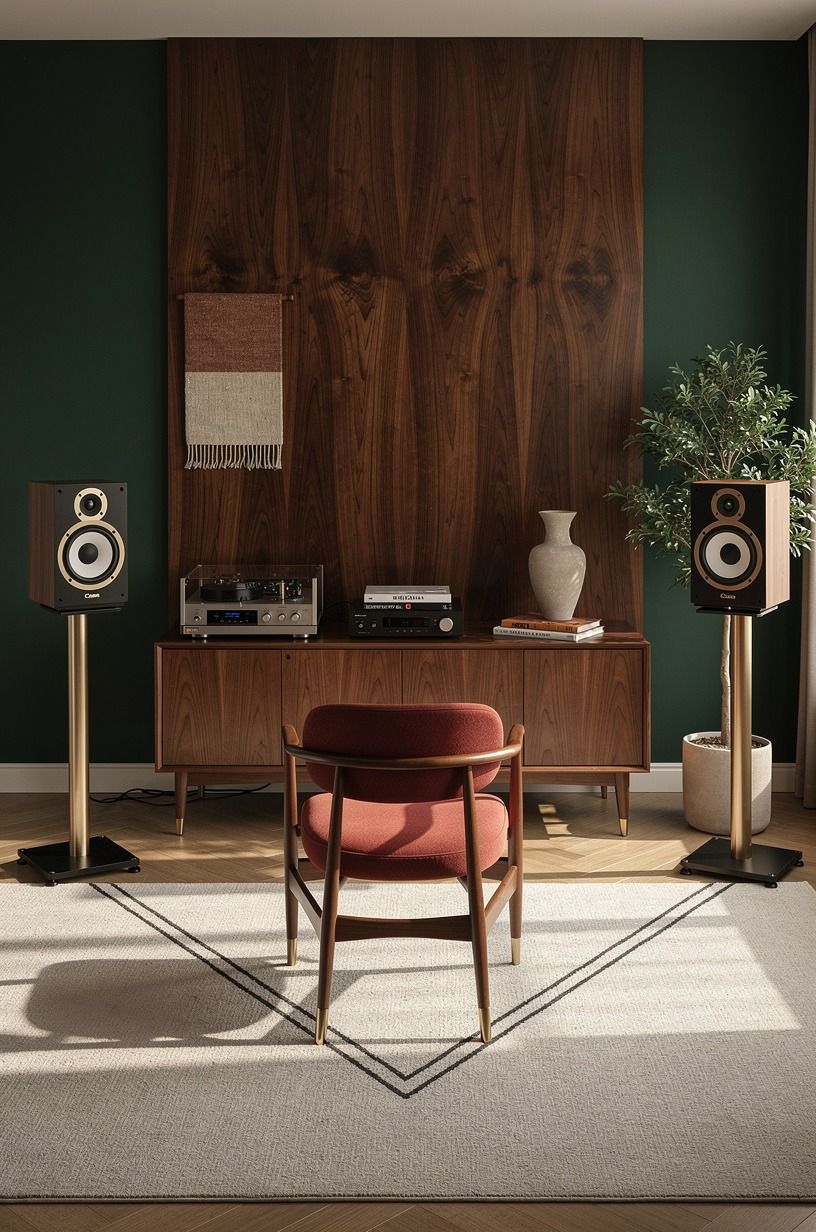
Begin by choosing the seat where you’ll listen most often. Your bookshelf speakers should face that seat instead of pointing vaguely into the room, with enough space around them for clear sound.
You don’t need a dedicated studio desk. A narrow cabinet or sturdy console can hold the turntable, receiver, and records while keeping the corner calm and inviting.
Use your sofa, chair, and speaker positions to form a loose triangle. You’ll want the speakers at roughly ear level when you’re seated, not tucked behind a plant or pushed into a wall.
I’d skip placing them on the floor. The bass gets muddy, and your warm living room suddenly sounds like a garage!
For a more serious setup, browse these music studio room design layout ideas before you buy furniture. You can also compare the approach with these home music studio room ideas. Your first decision should be listening position, not styling.
2Measure Your Sofa Before Your Music Studio Living Room
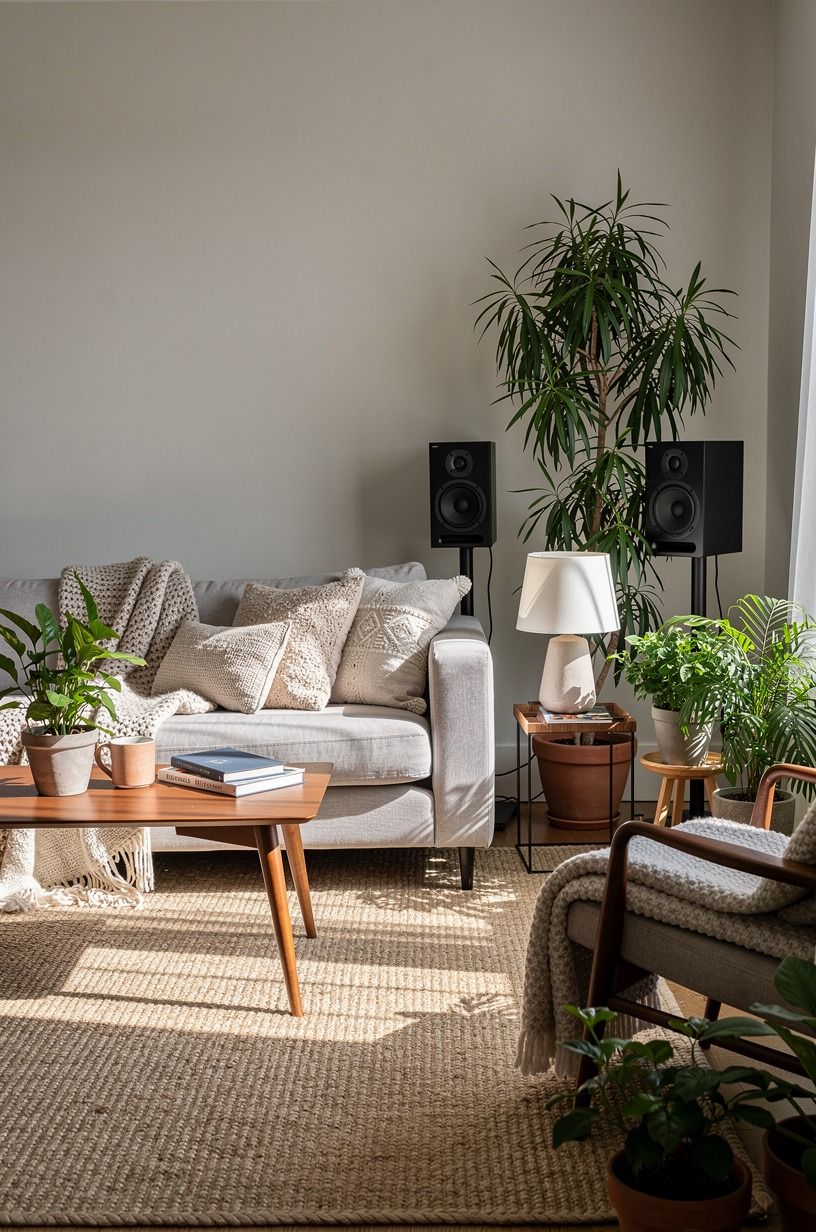
Measure the sofa depth before choosing a console, rug, or chair. A typical sofa runs 35-40 inches deep, and that footprint determines whether your music corner feels airy or cramped. You’ll want a clear path beside it, especially if your living room doubles as a walkway.
A slim console paired with an organic bouclé stool can work beautifully behind a sofa, but only if its depth leaves room for your knees and cables. I once chose a cabinet that looked delicate online and swallowed the entire corner in person. Don’t trust the listing alone.
Mark the dimensions on the floor with painter’s tape, then live with the outline for a day.
If your sofa already dominates the room, read this guide about why an oversized sofa can make a living room feel like a blocked hallway. You may need less furniture, not more. These small-space layout ideas for a studio apartment are useful when every inch matters.
3What Should You Hear First? Build the Three-Height Light Stack
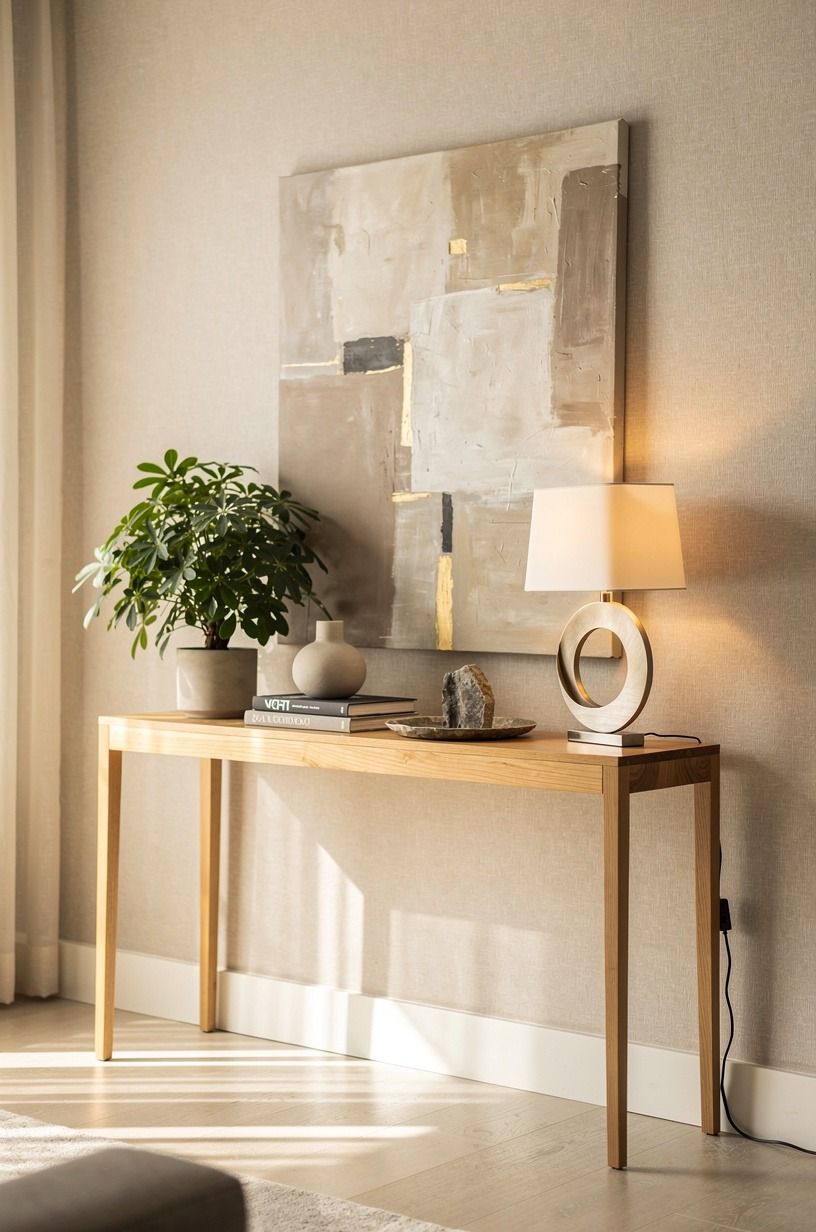
A music corner needs more than sound. It needs a gentle evening rhythm, and the Three-Height Light Stack gives you one.
Keep the lowest glow near the floor, the middle glow at table height, and the highest glow on the wall or shelf. Your eye will move through the corner instead of stopping at one bright lamp.
Try a low unlacquered brass table lamp, a shaded floor lamp, and a small picture light above the records. Warm bulbs make the wood grain and album covers feel earthy rather than showroom-bright. You don’t need three expensive fixtures.
A thrifted lamp, a plug-in sconce, and one dimmable bulb can do the work.
And don’t aim every light at the equipment. You’re creating a welcoming listening zone, not a display case.
This living room lighting and space guide can help you soften a room that feels visually tight. For a more relaxed palette, borrow ideas from these boho living room ideas.
4Float a Compact Console Instead of Adding a Desk
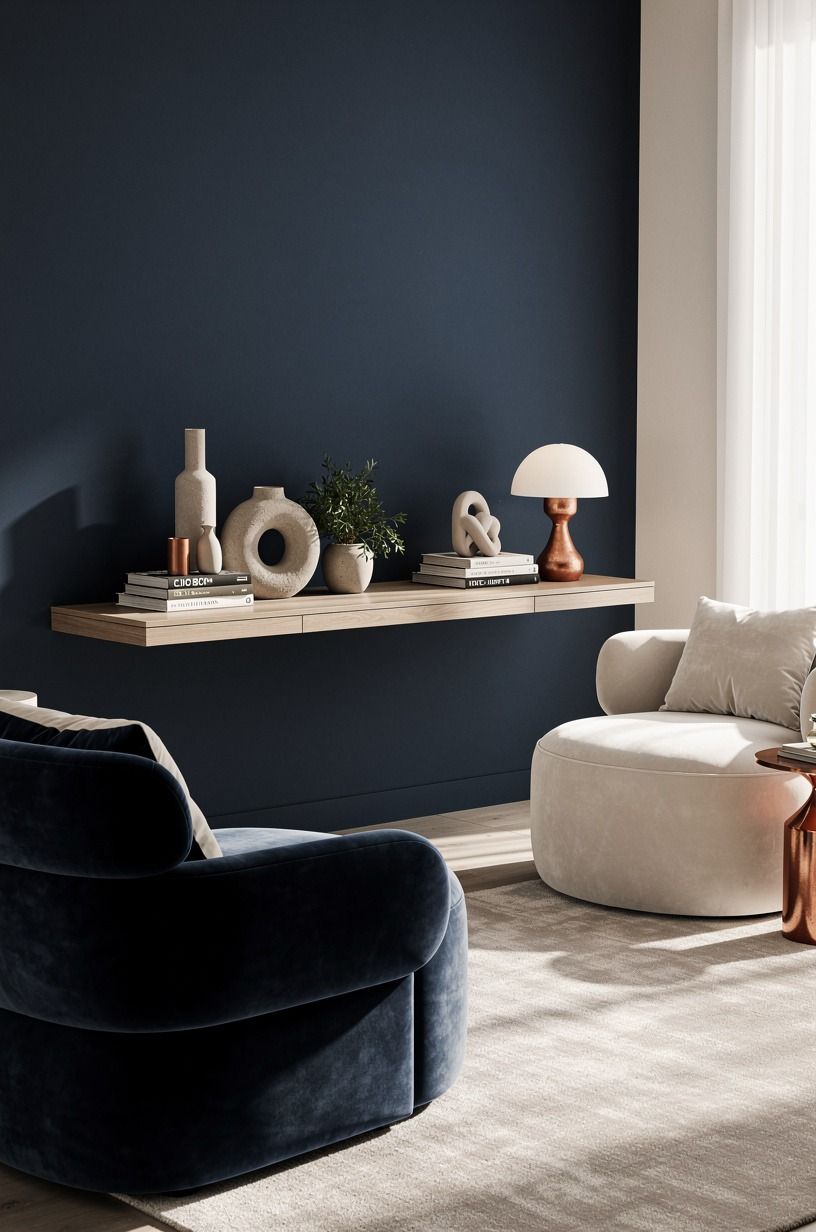
A floating console often works better than a traditional desk in a music studio living room. Mounting a compact console with a deep-pile mohair velvet stool nearby keeps the corner visually light and leaves space beneath for a basket, stool, or amplifier. You’ll gain storage without adding another heavy rectangle.
Choose a cabinet with a closed section for cables and a ventilated section for electronics. Your receiver needs breathing room, and you don’t want heat trapped behind a solid door.
I’d avoid a deep office desk here. It announces “work zone,” while a shallow console keeps the room intimate and relaxed.
If you’re renting, use a freestanding version with adjustable feet. If you own the home, a wall-mounted cabinet can make the floor feel larger.
You can find more ideas in these home music studio room ideas for serious sound, then scale the furniture down for your space. These music studio layout ideas can help you judge the proportions.
5Choose the Two-Wood Rule for Lounge Room Corner Ideas
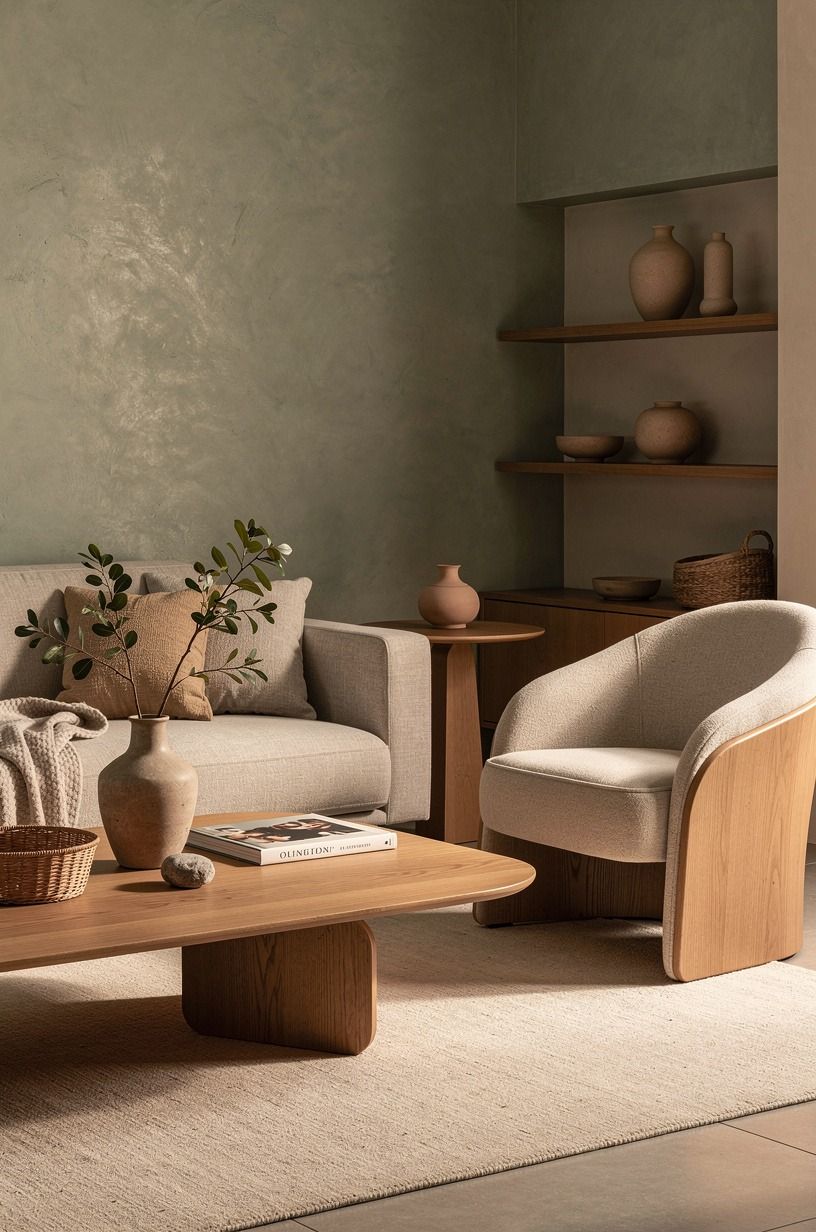
The Two-Wood Rule keeps a music corner collected without making every piece match. Pick one light wood and one dark wood, then repeat each at least twice. A natural-wood record crate can sit against a hand-applied Venetian plaster backdrop, while a darker frame echoes the cabinet and gives the corner some dramatic depth.
You’ll want to watch the undertones. Orange oak beside red walnut can look accidental, while cerused white oak and medium walnut usually feel more balanced.
I’d skip buying a full matching set. Matching furniture can make a small corner look flat, and your records deserve a little visual tension.
Use wood in small doses if your room already has timber floors. A linen-covered frame or speaker stand may be enough. The goal is a warm, organic corner where you can sit down and stay awhile, not a furniture showroom.
A softer palette from these boho living room ideas can keep the wood from feeling too formal.
6Build a Vertical Record Wall for a Music Lounge Room
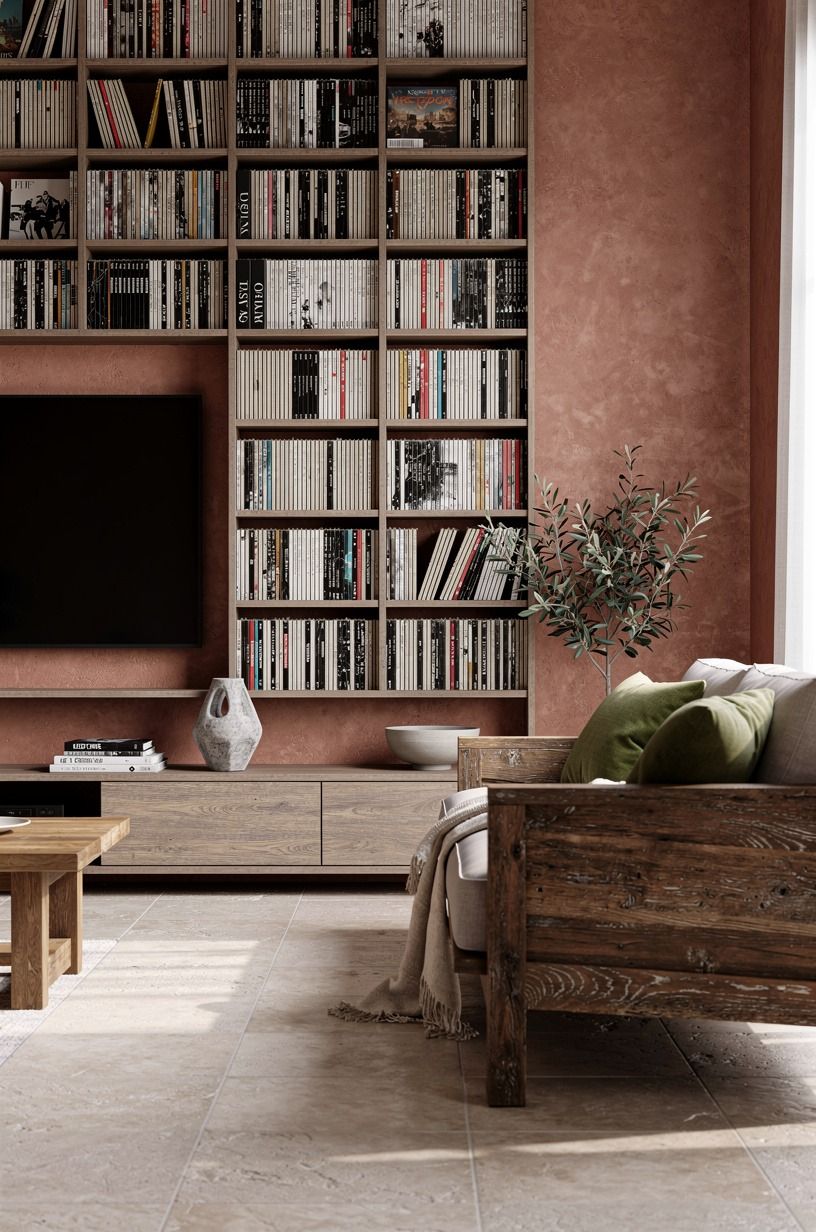
When floor space is limited, build upward. A vertical record wall gives your music lounge room ideas more storage without stealing the walking path. Keep a small group of favorite sleeves at eye level, then store the rest in closed drawers or a low cabinet.
A reclaimed weathered teak record unit can hold records, books, and small baskets, but it needs visual breathing room. Leave some compartments open rather than filling every square.
Your eye needs a pause, especially beside a sofa. A single framed print above the unit can make the arrangement feel refined instead of crowded.
The best display records are the ones you play, not the ones you’re afraid to touch. Rotate the covers seasonally. In fall, earthy brown, cream, and muted green sleeves will make the corner feel soft and comforting.
If your apartment is short on storage everywhere, explore these small-space layout ideas for a studio apartment. You’ll see how vertical storage can protect the floor plan. If the sofa blocks the wall, revisit this advice about oversized sofas and blocked hallways.
7Hang Sound Softness at Ear Level
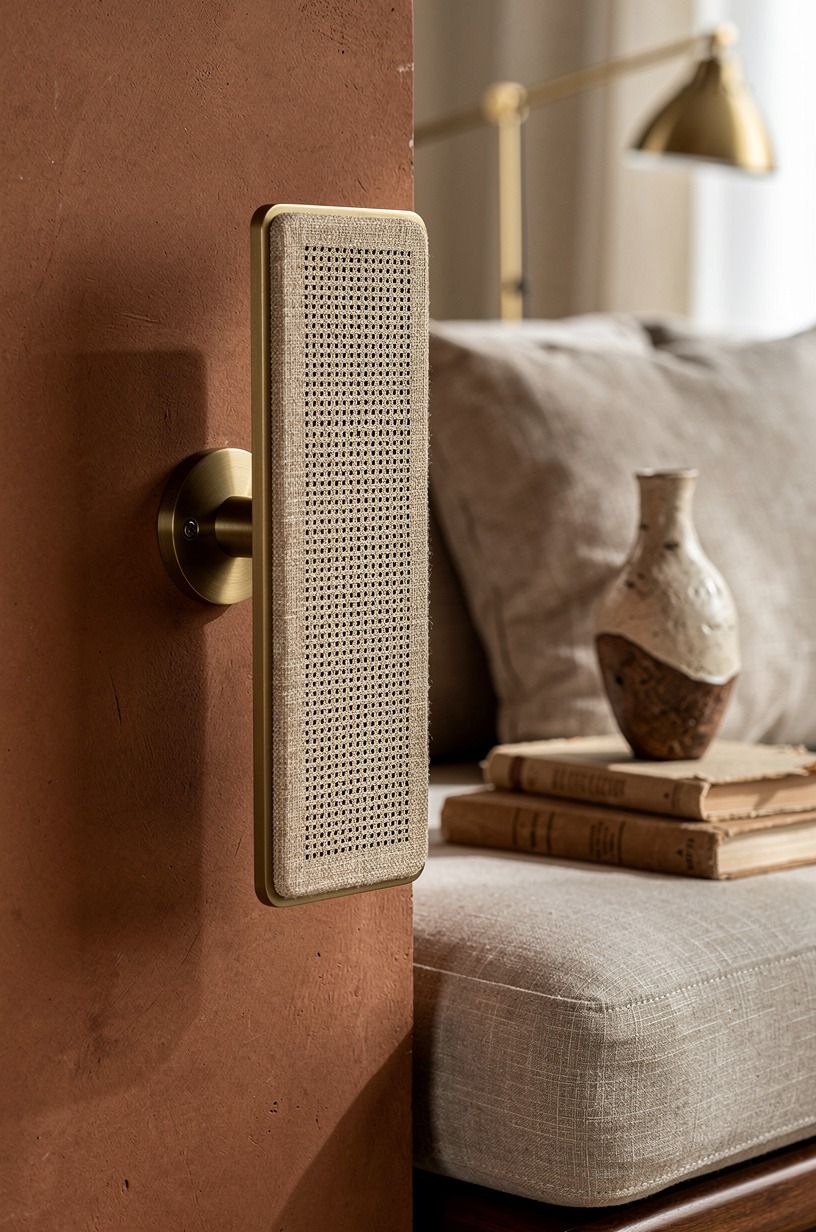
Hard surfaces bounce sound, so add softness where you’ll hear it. A washed Belgian linen panel, framed textile, or thick woven wall hanging behind the speakers can reduce the sharpness without making the room look technical. You’ll get a calmer sound and a more comfortable visual backdrop.
Don’t cover every wall with acoustic foam. That approach can make a living room feel cold and overworked.
One textile, a wool rug, and lined curtains will usually do more for the atmosphere. I’d choose a textured fabric in clay, warm linen, or muted brass rather than black foam squares.
Your music corner should still feel like part of the home. A washed Belgian linen panel can soften the sound while adding a relaxed, organic texture. And if you already own a velvet throw, this article explains why velvet can make a living room feel warmer.
You can also borrow warmer layering ideas from these small living room suggestions.
8Mix the Music Lounge Room Ideas Around One Seat
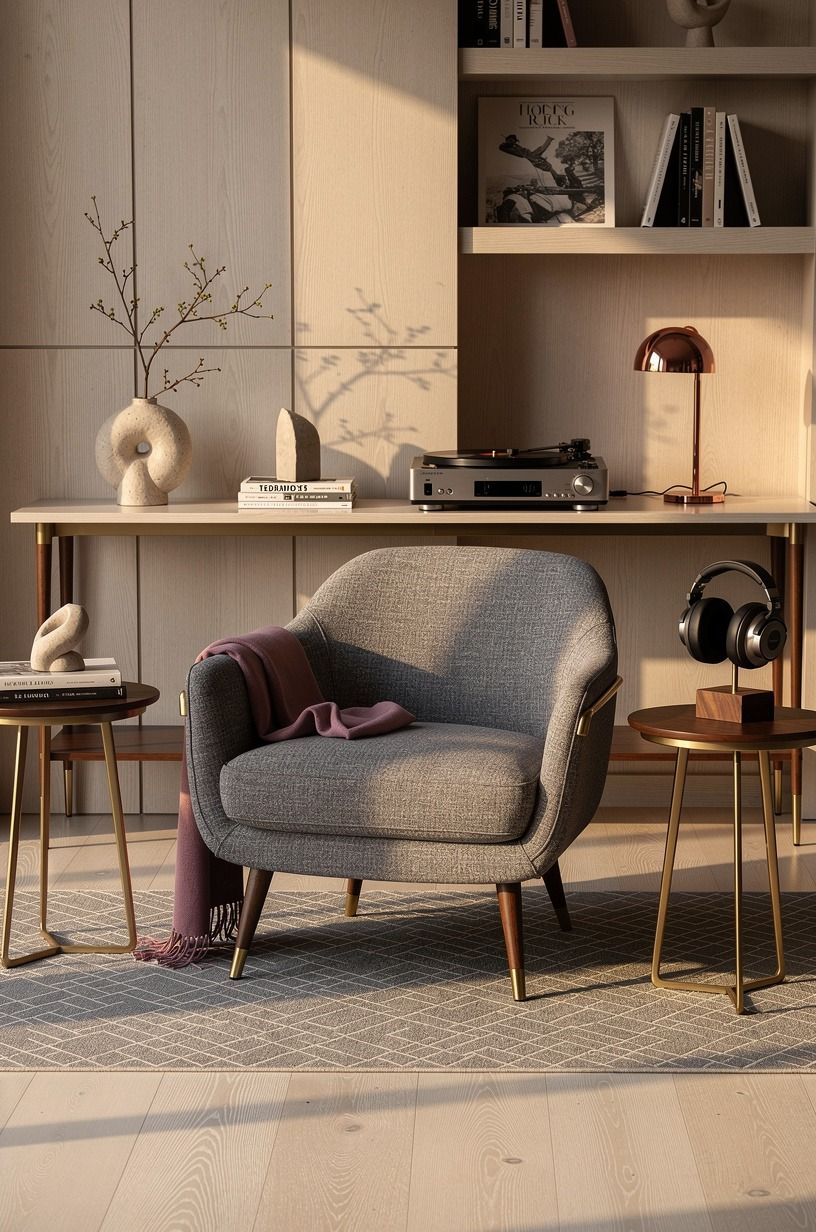
Give the corner one unmistakable listening seat. A low grey lounge chair can face the speakers without competing with the main sofa. You’ll want enough space to pull it out, turn toward the room, and reach a small table without stretching.
One seat is enough. Adding two lounge chairs, a pouf, and a bench can turn a focused corner into a furniture traffic jam.
I’d rather see one excellent chair with a soft throw than four pieces that nobody uses. Your body should understand where to settle the moment you enter!
Try a chair with arms if you listen for long periods. A curved back feels intimate and calming, while a rigid dining chair makes the corner feel temporary. Add a plum mohair velvet cushion and a cerused white oak side table for texture, but keep the palette restrained so the records remain the lively part.
9Paint the Backdrop with Farrow & Ball Hague Blue
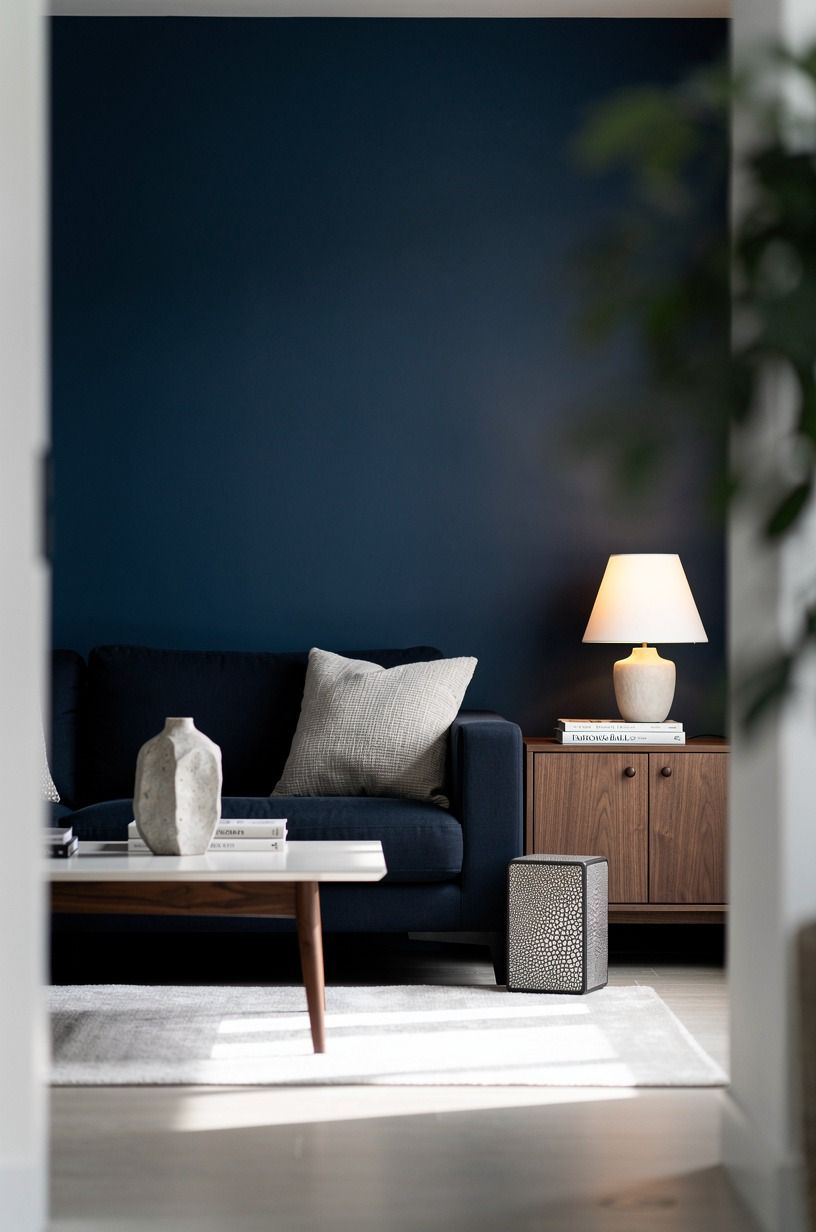
A painted backdrop can make the music studio living room feel intentional without changing the whole room. Farrow & Ball Hague Blue No.30 gives album covers and warm wood a moody, sophisticated setting. Use it on one wall, the inside of a shallow alcove, or the section behind the console.
You’ll want to test the color at night. Blue can become heavy under cool bulbs, so pair it with warm lighting and walnut.
I’d skip painting the entire room dark if your windows are small. Hague Blue is powerful in a focused area, but it can overwhelm a narrow living room when every wall carries the same weight.
For a quieter look, try Benjamin Moore Revere Pewter HC-172 instead. It has enough warmth to support walnut and shagreen accents without making the equipment disappear. Pin a few swatches near the speakers, then watch them through morning, afternoon, and evening light.
10Frame the Before-and-After Cable Route
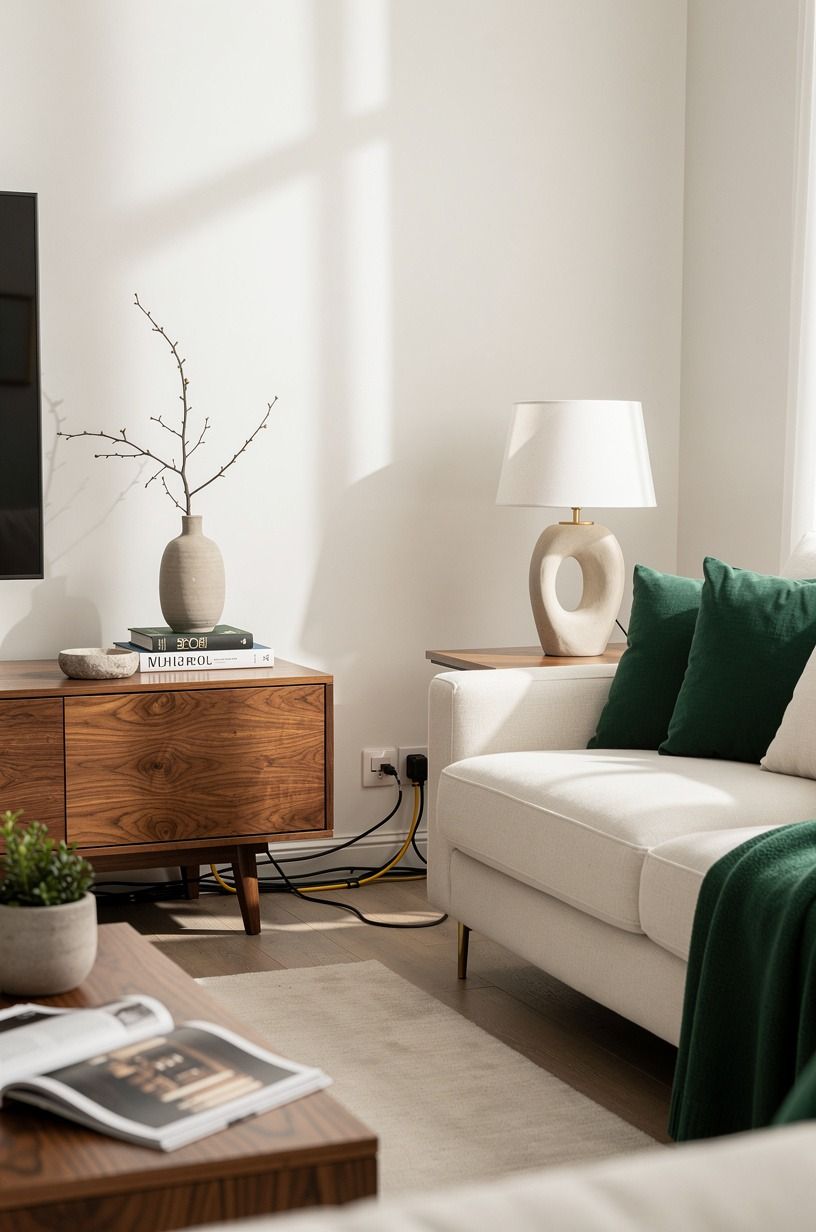
Plan the cable route before you style the shelves. Your power cord should travel along one predictable path, behind furniture or inside a paintable cord cover. A music corner feels peaceful when the eye doesn’t catch a cable crossing the floor.
Use a deep emerald cable sleeve when the wall is dark, or a cream paintable raceway when the wall is pale. Keep the amplifier and turntable close enough that cables don’t stretch across the console. You’ll protect the equipment and avoid the small daily irritation of catching your foot on a wire.
But don’t hide ventilation behind a sealed box. Your receiver needs airflow, and you’ll want access to the plugs without dismantling the whole arrangement. I’d rather see one neat cable channel than a “hidden” wire that creates a dangerous knot behind the cabinet.
For a complete room plan, pair this step with serious home music studio layout ideas. The technical choices should support your living room, not dominate it.
11Hide the Equipment in Closed Storage
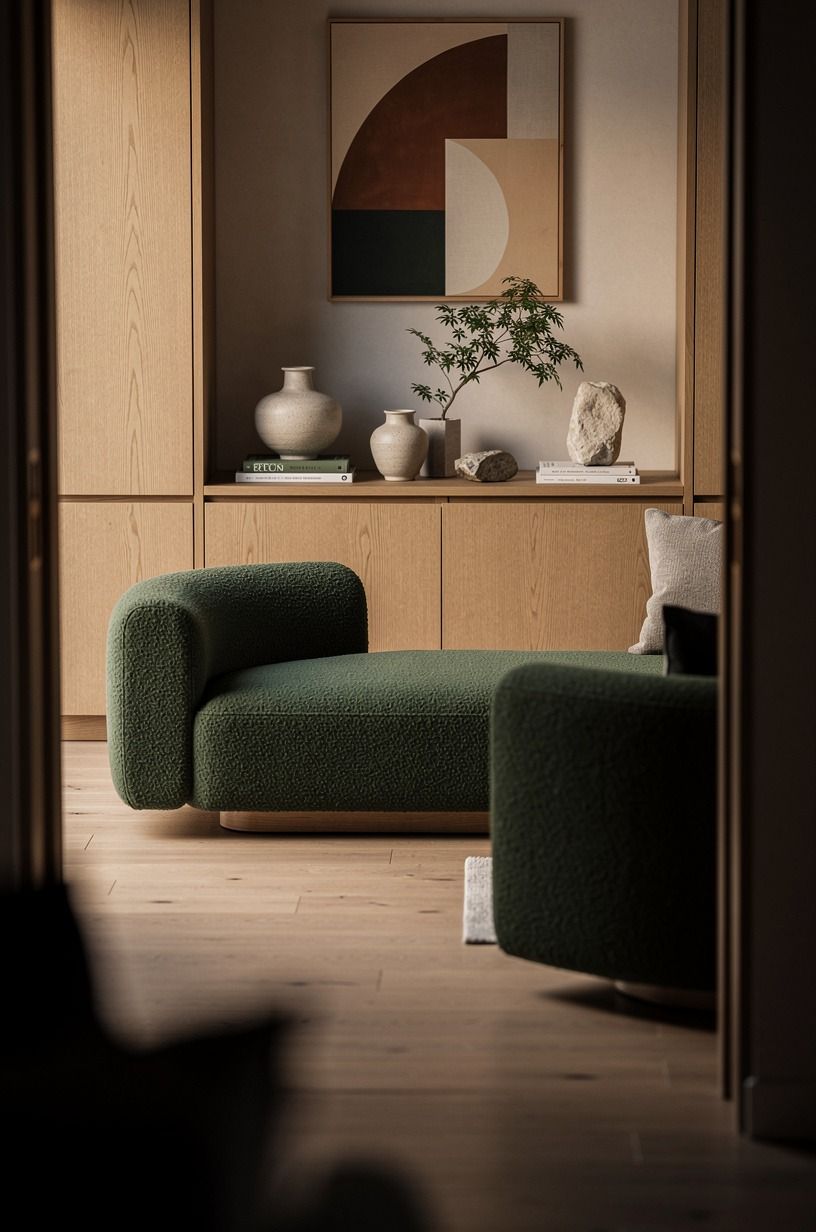
Not every piece of equipment needs to be visible.
12Layer the Rug Under the Listening Zone
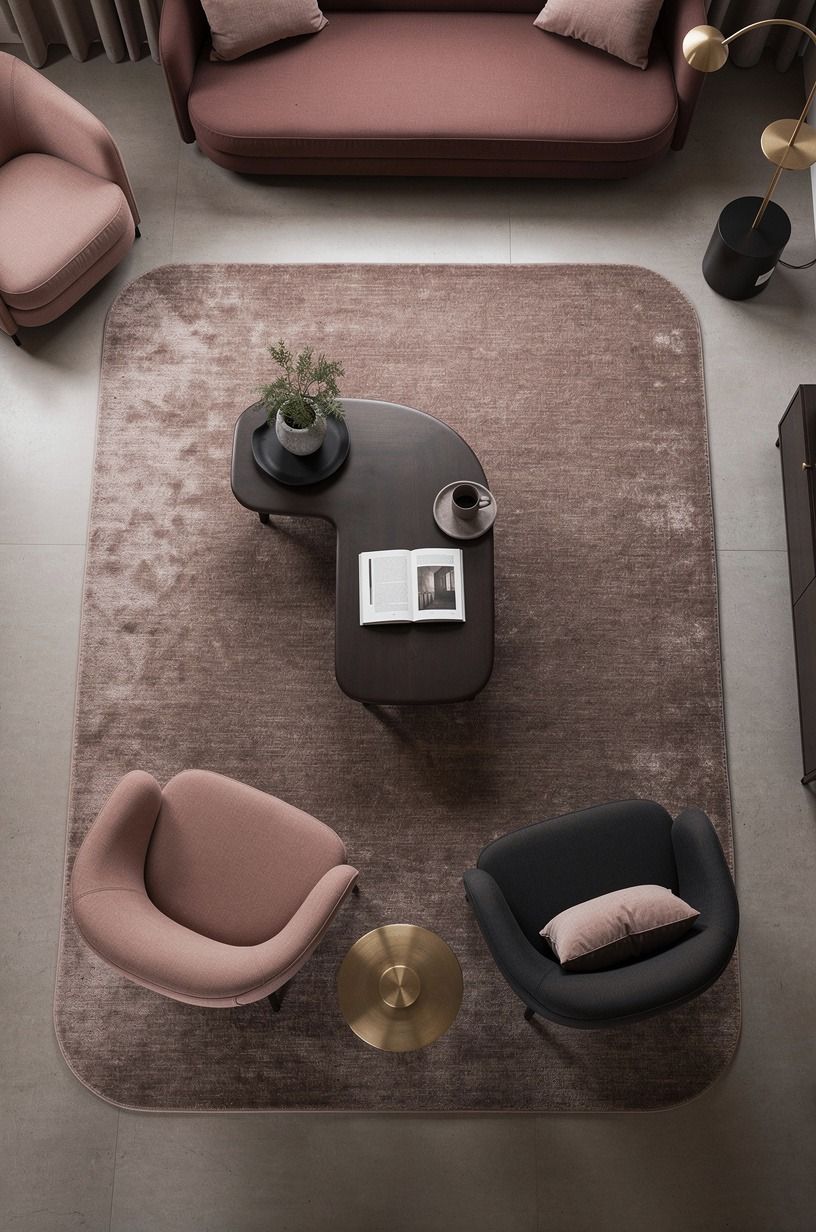
A rug gives your listening corner a clear boundary and helps soften the sound. Choose an 8×10 wool rug if you can, or a 9×12 when the room and budget allow. The front legs of the seating should sit on the rug, so the music area feels connected to the rest of the room.
You’ll want the rug to reach beneath the chair and at least partway beneath the console. A small mat floating under one chair can make the arrangement look accidental.
I’d skip a pale shag rug beside a record player. Dust, sleeves, and chair legs will turn the dreamy texture into a maintenance project.
The table below gives typical US living room costs, so you can decide whether the rug belongs in this month’s budget or next season’s plan. For proportion ideas, compare your arrangement with these music studio room design layouts.
13How Far Should Your TV Sit? Set the Screen Aside
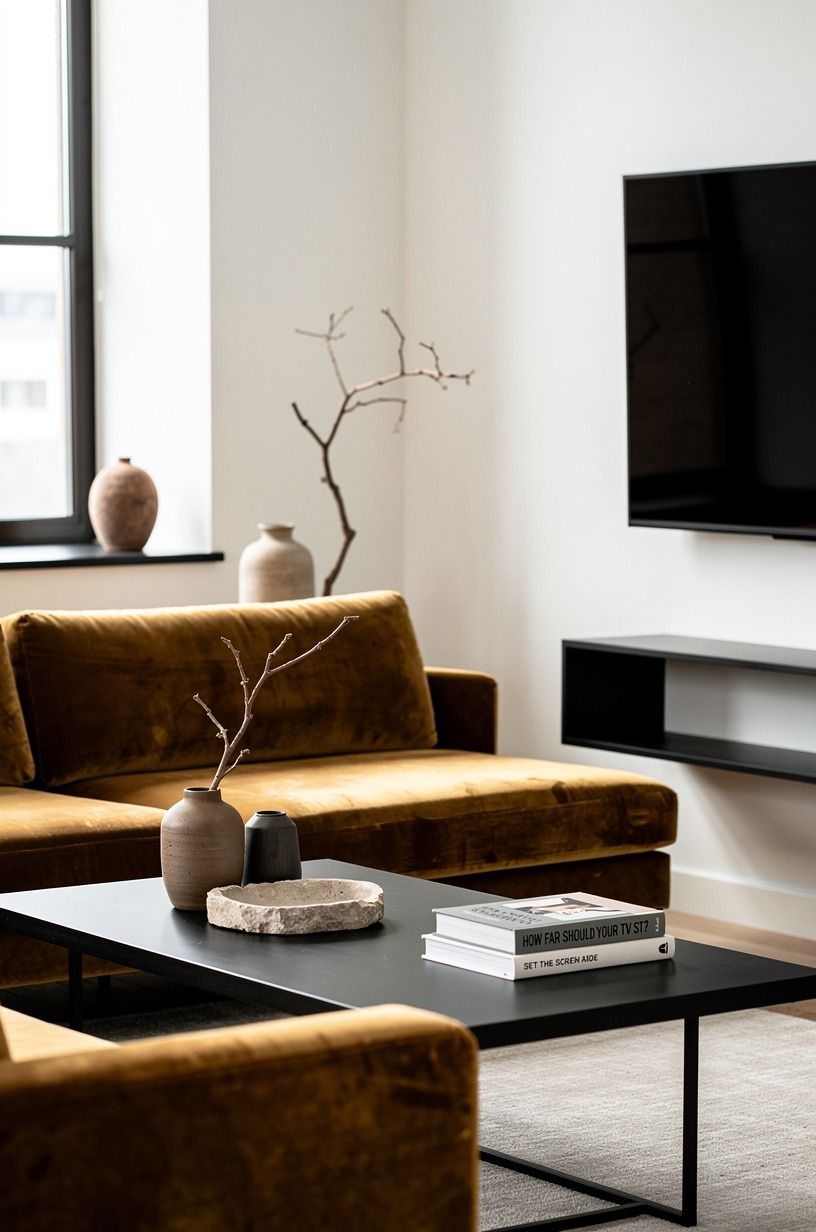
If your living room also holds a television, keep it from becoming the visual boss of the music studio living room.
14Style the Surface with the Five-Object Limit
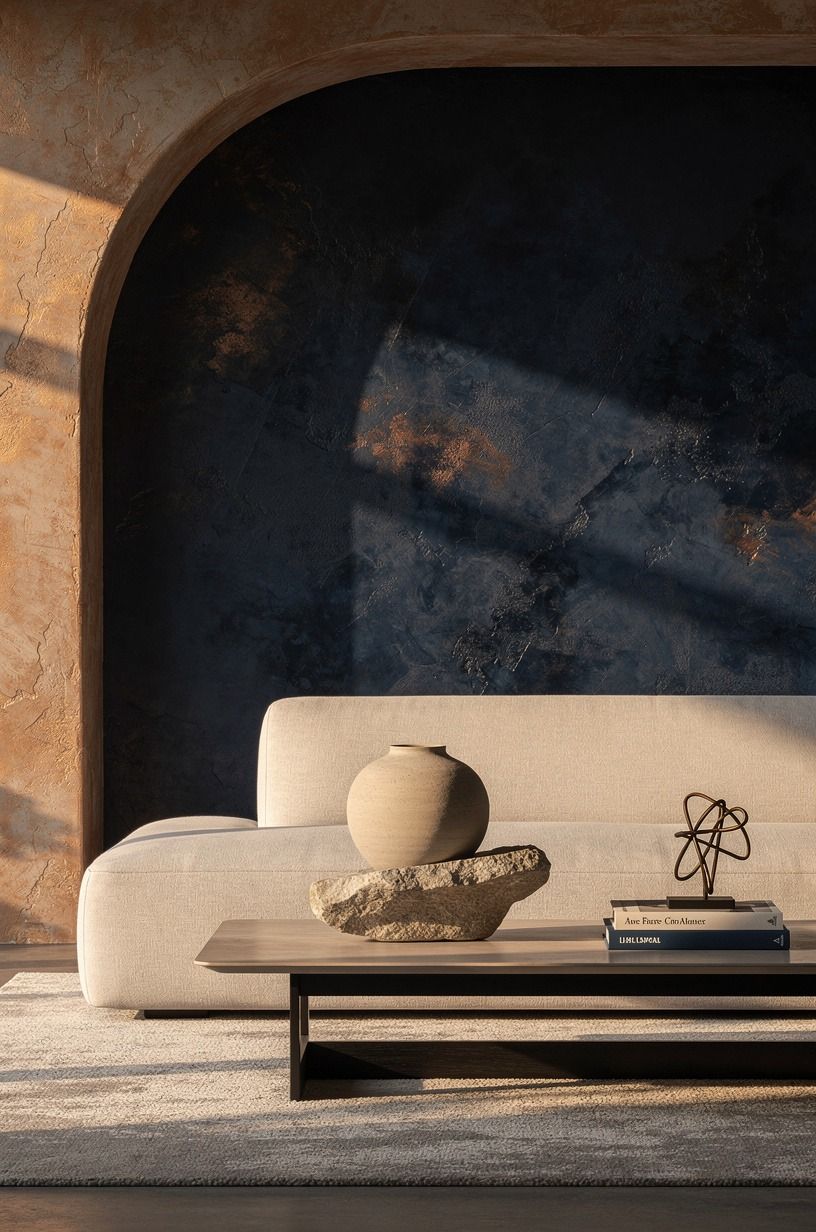
Use the Five-Object Limit on the console. Choose one turntable, one small lamp, one record sleeve, one plant, and one practical tray. You’ll create a charming surface without blocking the equipment or turning the corner into a display of unrelated objects.
The objects should have different heights and textures. A copper tray against a hand-applied Venetian plaster backdrop feels earthy, while a small plant adds a gentle organic note.
I’d skip a row of tiny decorations. They collect dust, compete with the album art, and make the corner feel nervous.
Your styling can change with the season. Try a rust-colored sleeve in fall, a bowl of citrus in winter, or a branch in a simple glass vessel when the room needs a bright lift.
Keep the useful pieces within reach. A pretty tray that catches the remote every night is still doing a job.
15Test the Room at Night Before You Finish
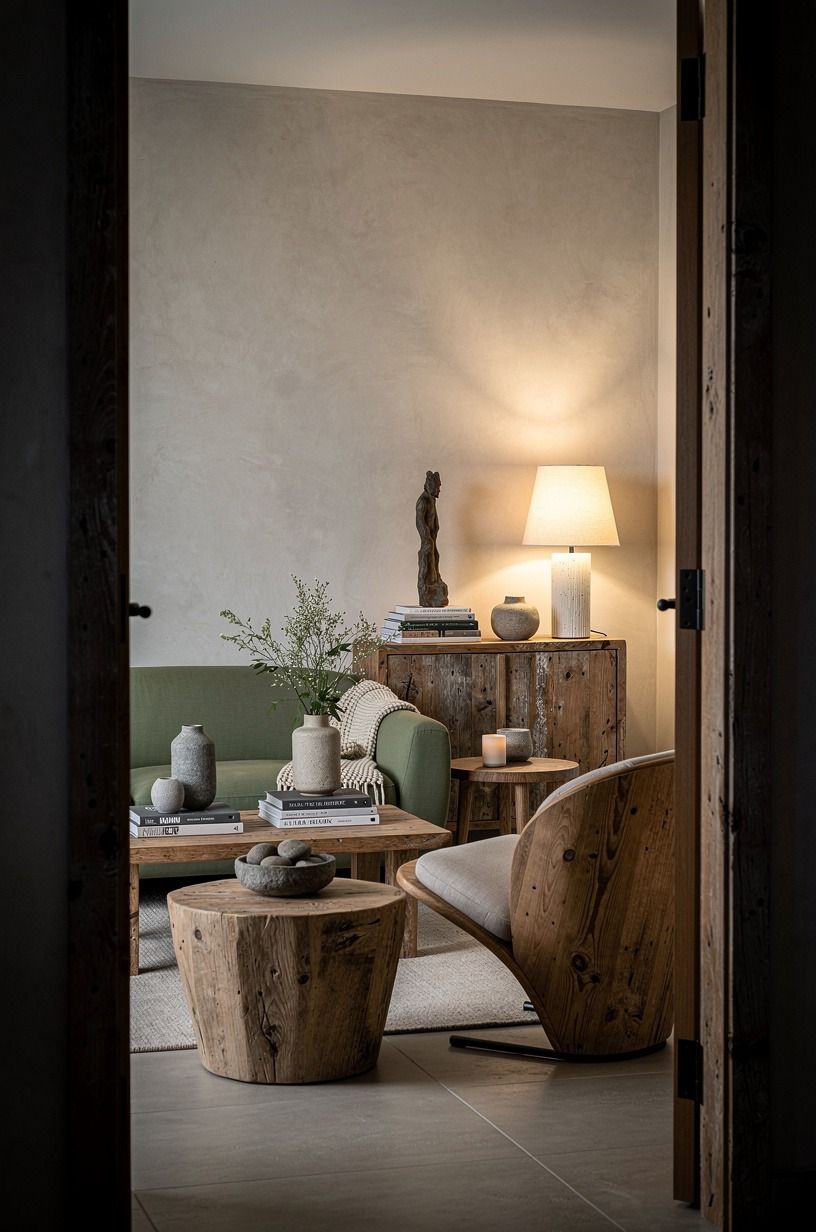
Test the corner after dark, when you’ll use it most. Sit in the chair, lower the lights, play a familiar album, and notice what pulls your attention. You may discover that the lamp is too bright, the speaker is too close to the wall, or the chair needs to shift a few inches.
Listen for harsh reflections from glass, bare floors, and empty shelves. Move one object at a time so you know what changed. I’ve found that a reclaimed weathered teak side table beside the chair can make the corner feel more grounded, both visually and acoustically.
You’ll know the setup works when the room feels inviting before the music starts. If your corner still feels cold, compare it with these ideas for making a small living room feel warmer. The answer may be less equipment and more layered light, fabric, and wood!
Why the Small Corner Works Better Than a Spare Room
I used to think a real music setup needed a dedicated room, a perfect desk, and enough space to keep every cable invisible. That idea kept me from starting.
Once I placed a chair beside the bookcase and gave the speakers a clear direction, the living room became more useful, not less. The music corner didn’t need to pretend it was a professional studio.
The best part is the friction. When your turntable sits near the sofa, you’re more likely to play a record while folding laundry, reading, or waiting for dinner.
A separate room can be impressive, but it can also become a place you rarely enter. I’d choose an intimate corner that gets used every day over a dramatic room that stays untouched.
I also learned that sound and decoration need to share the same priorities. A gorgeous walnut cabinet won’t rescue speakers pushed into a corner, and the best equipment won’t fix a room full of hard, echoing surfaces. You need enough storage to keep the floor clear, enough fabric to soften the sound, and enough light to make the seat feel welcoming.
My strongest opinion is simple: don’t buy more gear until you’ve improved the listening position. Move the chair. Shift the speakers.
Test the rug. Paint one wall if the corner needs weight.
Those changes cost less than replacing equipment, and they’ll tell you what the room is missing. That’s where the calming, lived-in feeling comes from.
The Questions I Get Asked Most
What is the best Music Corner Living Room Ideas setup for a small living room?
A compact console, one listening chair, and bookshelf speakers are the best starting point. An IKEA KALLAX can store records while a slim chair keeps the floor open. You’ll get a focused, cozy corner without sacrificing the main sofa or walkway.
Where can I buy Music Corner Living Room Ideas pieces on a budget?
Look at IKEA, Wayfair, and Target, then check Facebook Marketplace or local thrift shops for cabinets and lamps. Used wood furniture can give your corner a warm, lived-in texture. You don’t need every piece to come from the same collection.
How much does a Music Corner Living Room Ideas makeover cost?
A small makeover usually costs about $100-$300 if you already own the speakers and seating. Free changes include moving furniture, editing decorations, and using existing throws. New storage, a wool rug, or paint will raise the total.
Can I create a Music Corner Living Room Ideas setup on a budget?
Yes, and you can begin with three low-cost changes: reposition the speakers, create a listening seat, and soften the floor with an existing rug. A thrifted lamp and secondhand console can make the corner feel warm without a full renovation.
Is a Music Corner Living Room Ideas setup worth it in a small space?
Yes, because a small room forces you to edit the arrangement. Keep the speakers aligned with one seat, choose furniture with a shallow footprint, and let the corner serve both music and reading. The result can feel more intimate and relaxing than a large room.
Is Music Corner Living Room Ideas a good idea for a rental?
Yes. Use removable hooks, a tension rod for lightweight fabric, and a freestanding console instead of built-ins.
Peel-and-stick wall treatments can define the backdrop, while a rug and lamp add warmth without permanent changes. You’ll still get a polished, personal corner.
Where I’d Start First
If I had to pick one step, I’d start with the listening seat. Your speakers can be modest, but bad positioning makes every record sound flat and crowded. Move the chair, test the angle, and let the rest of the corner follow.
Pin this setup for later, then play something you love tonight.