
The easiest way to make a black powder room feel chic, not cave-like, is to pair dark walls with reflected light, warm metal, and one pale surface. I learned that after painting a tiny room too dark and blaming the color. Your room doesn’t need more brightness everywhere. It needs contrast in the right places.
- Paint the Ceiling Pale for a Black and White Bathroom
- Build the Three-Height Light Stack for a Black Basin Bathroom
- Choose Warm Metal Over Cold Chrome in a Black and Gold Powder Room
- Float a Slim Vanity for Bathrooms With Black Vanity
- Frame the Mirror With a Soft, Reflective Edge
- Paint One Wall in Farrow and Ball Hague Blue
- Use the Two-Texture Rule Instead of Adding More Decor
- Keep the Floor Pale Under Dark Walls
- Hang One Large Artwork Instead of a Gallery Wall
- Scale the Faucet to the Sink, Not the Drama
- Create a Renter-Safe Black Powder Room
- Mix Black Walls With Benjamin Moore Chestertown Buff
- Layer Belgian Flax Linen for a Softer Finish
- Measure the Toilet Clearance Before Styling
- Frame the Sink With a Quiet Black and Gold Moment
- Price the Room Before You Buy Anything
1Paint the Ceiling Pale for a Black and White Bathroom
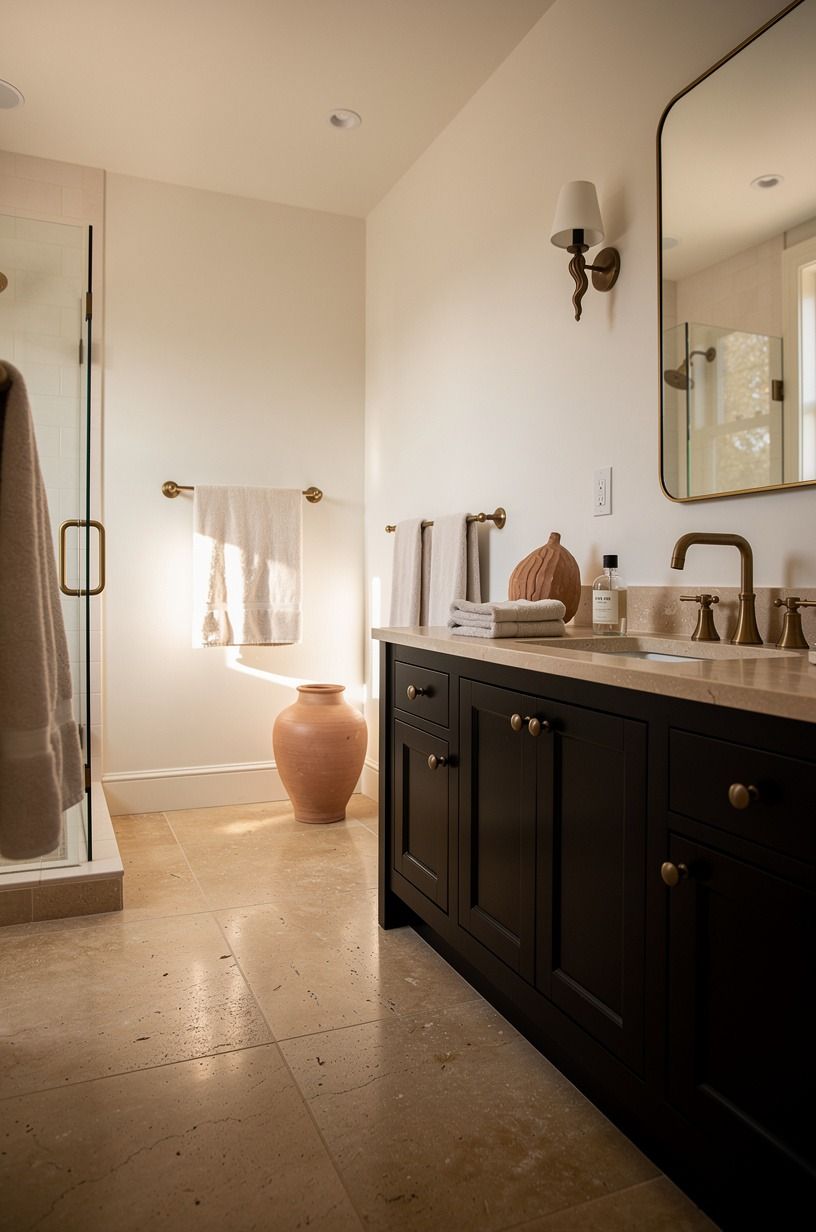
A pale ceiling gives your eye somewhere to go when the walls are dark. Try a soft clay paint above black-painted walls, then repeat that warm clay tone on the trim or a small framed print. You’ll notice the room feels taller because the ceiling catches the vanity light instead of swallowing it.
This is my first move for a black and white bathroom, especially when you’re working with a low ceiling.
Don’t pair black walls with a harsh blue-white bulb. That combination makes your powder room feel like a waiting room.
Choose a warm bulb, a small linen shade, and a warm travertine ledge beneath the mirror. If you’re unsure, stand in the doorway at night and look at the light on your face.
Does it feel gentle or gray? Your answer matters more than a paint chip!
For more ideas about building warmth through layers, browse this five-layer living room formula. You’ll see the same principle at work.
2Build the Three-Height Light Stack for a Black Basin Bathroom
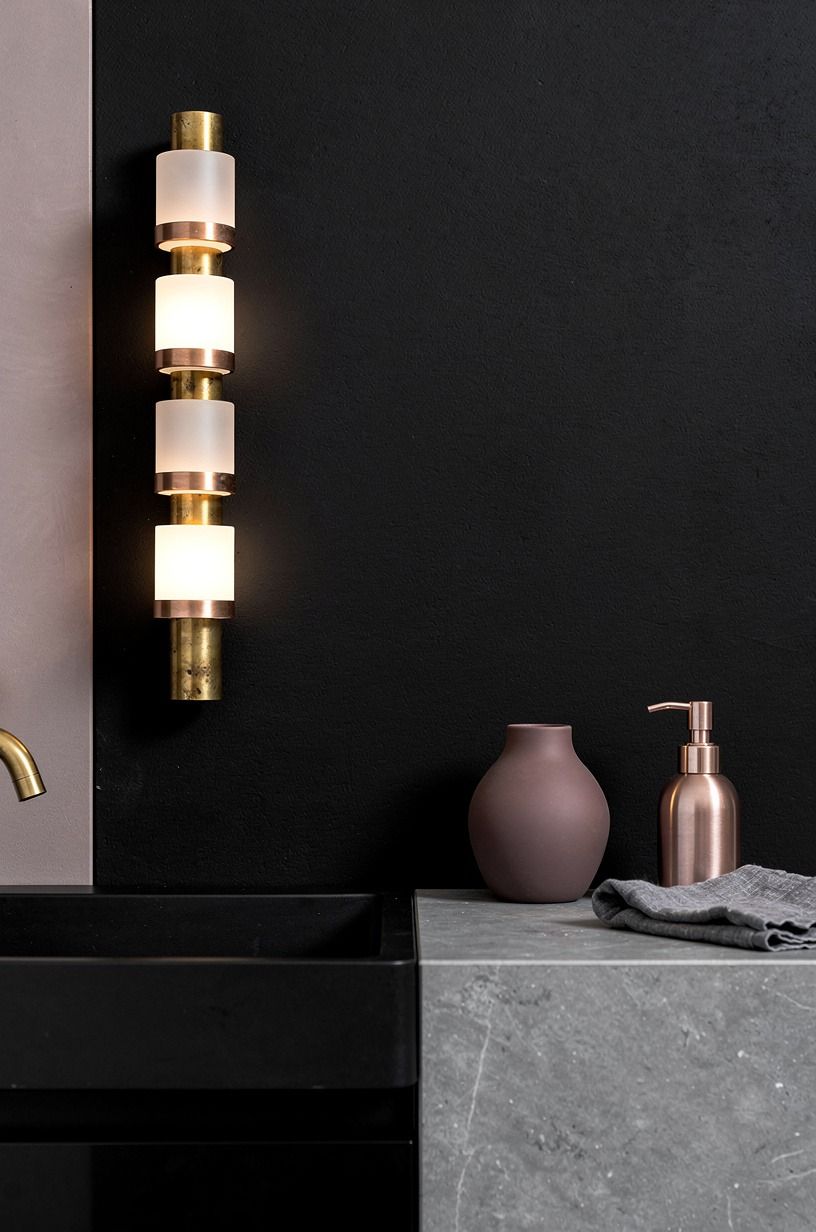
A single ceiling fixture won’t carry a black powder room. Build three light heights instead: one ceiling source, one mirror-level source, and one low glow near the floor or vanity. Your black basin bathroom will feel more inviting because light will move across the room rather than drop straight down onto the sink.
Use a deep plum basin only if your faucet or mirror adds a different finish. I’d skip matching dark hardware everywhere because it flattens the room and leaves no visual pause.
A small opal globe above the mirror, a dimmable ceiling fixture, and a candle-colored night light create enough variation. I tested a room with only one overhead bulb once, and every shadow looked twice as deep.
You don’t need expensive wiring for the low layer. A plug-in unlacquered-brass picture light or a rechargeable lamp can soften the base of your vanity.
If you’re renting, hide the cord inside a slim cord cover and paint it the wall color. And yes, your guests will notice the atmosphere before they notice the fixture.
3Choose Warm Metal Over Cold Chrome in a Black and Gold Powder Room
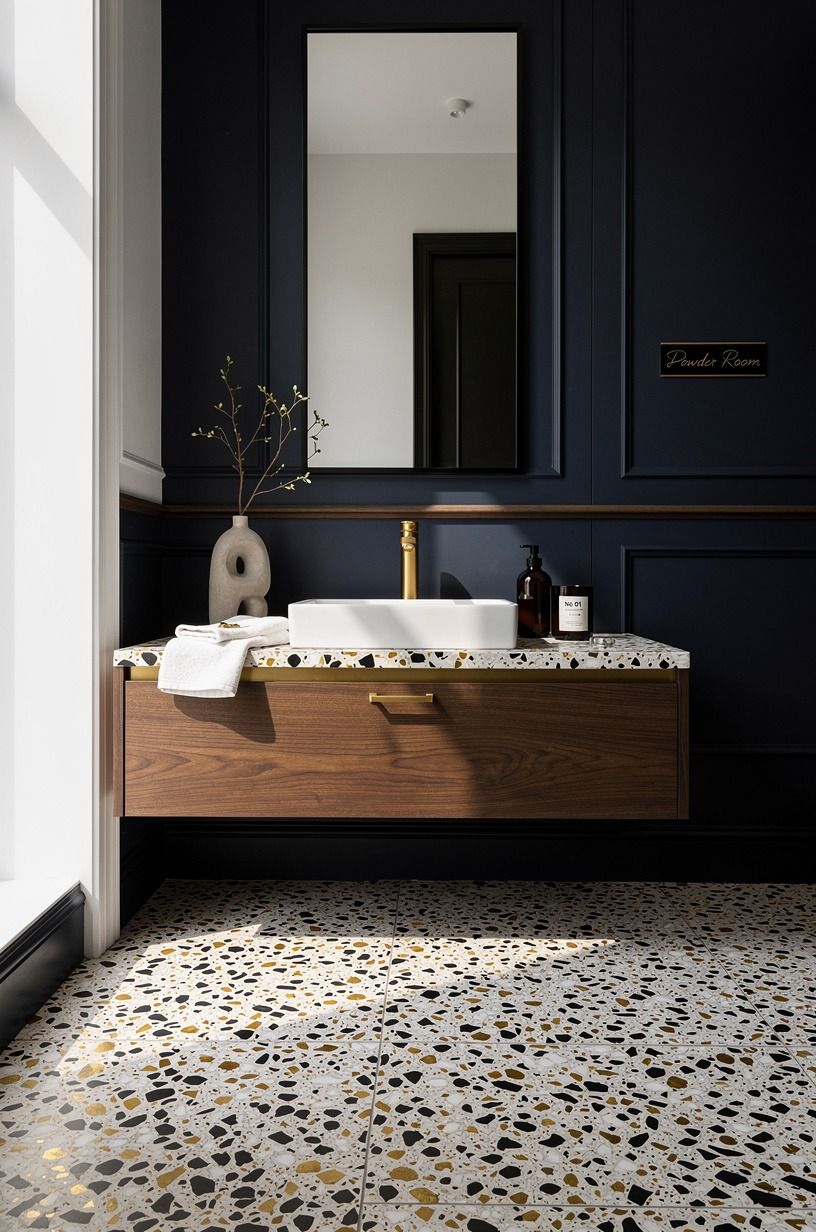
Warm metal is what keeps black paint from feeling severe. In a black and gold powder room, use one dominant finish, such as aged brass, against an oversized-chip terrazzo surface, then let walnut bring in depth. Your faucet, mirror frame, and cabinet pull can share that finish without looking like a showroom set.
I’d choose brass over polished chrome here because chrome bounces a sharp blue-white glint across dark walls. That can look crisp in a modern hotel, but it’s less comfortable in a small home powder room.
Navy, white, and walnut keep the room grounded without making it feel cold. One metal with two quiet supporting finishes is enough.
Try a brushed brass faucet with a low-arc shape, then repeat the tone in a tiny frame or soap dish. You can find similar pieces at Target, Wayfair, or a local salvage shop.
If you’re watching your budget, keep the existing faucet and change the mirror frame first. That swap often gives your room more visual warmth for less money!
4Float a Slim Vanity for Bathrooms With Black Vanity
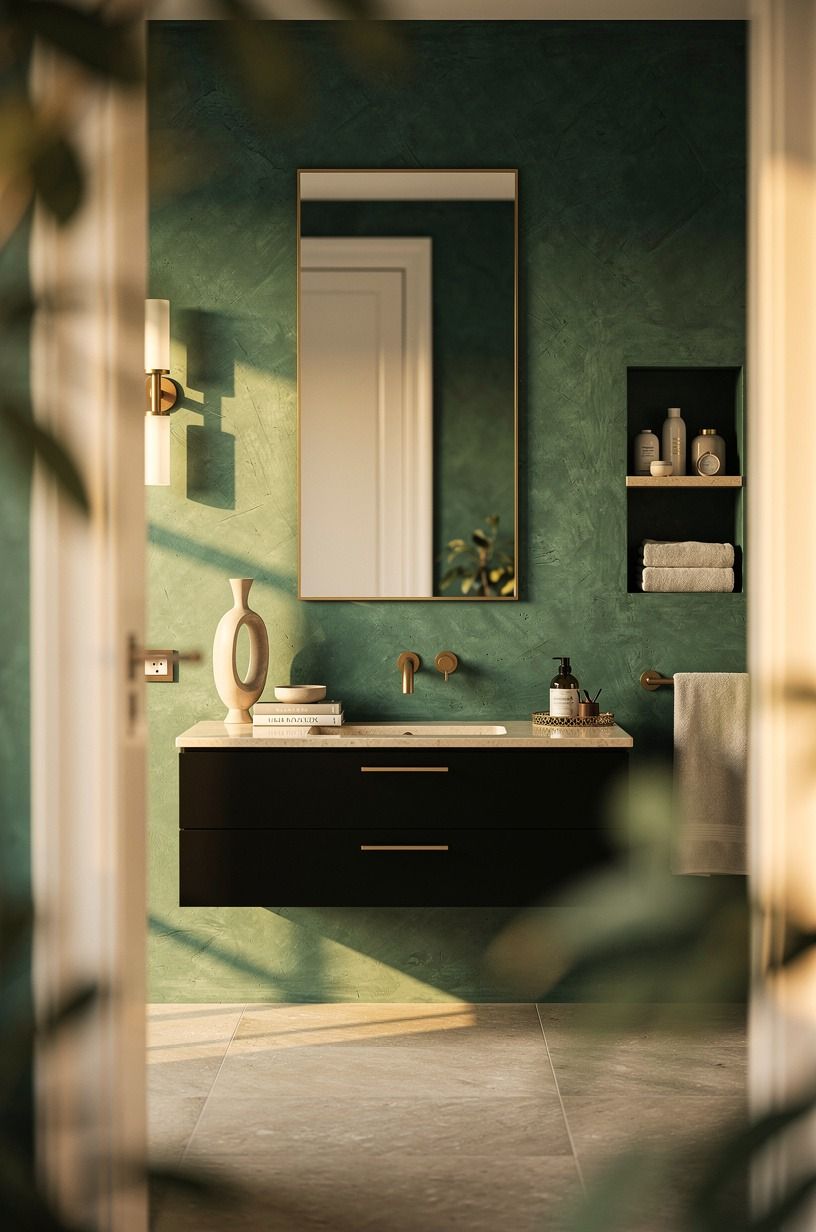
A floating vanity shows more floor, which gives a compact powder room extra breathing space. For bathrooms with black vanity designs, choose a wall-mounted cabinet in a warm cream finish against hand-applied Venetian plaster instead of another black surface. Your eye will read the plaster as texture, and the open floor beneath will keep the room from feeling boxed in.
Keep the vanity height between 32 and 36 inches so your sink feels comfortable without crowding the mirror. You’ll want enough clearance for cleaning, too. A floating cabinet can make dust visible under the toe area, so I’d rather have a clean, simple recess than an elaborate shelf that collects cotton swabs and hair.
A cream-finished vanity costs more than a flat-pack cabinet, but you can get the same warmth with a cream IKEA unit and a replacement pull. I’ve seen people spend heavily on tile and then leave a cold glossy cabinet underneath it. Your vanity is the object you touch every day, so let its texture do some work.
5Frame the Mirror With a Soft, Reflective Edge
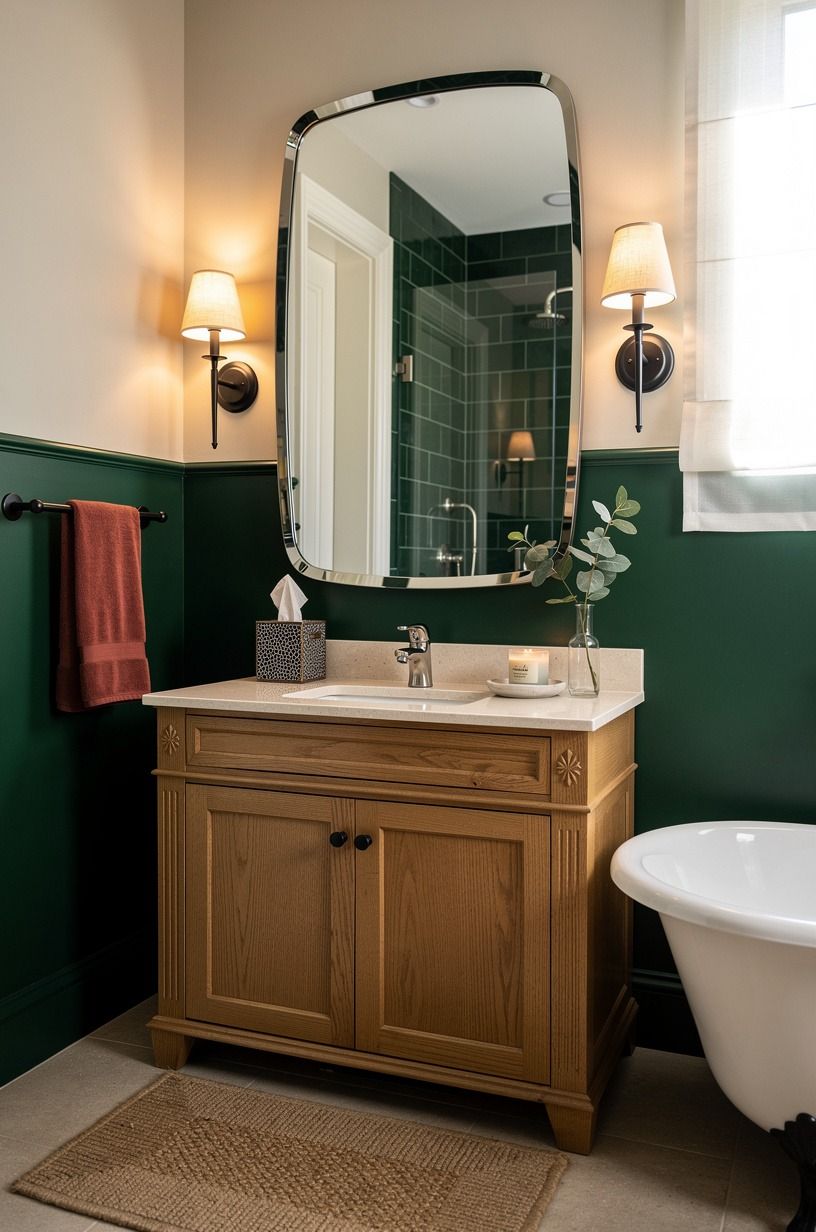
Your mirror is the largest light-moving surface in a powder room, so don’t treat it like an afterthought.
6Paint One Wall in Farrow and Ball Hague Blue
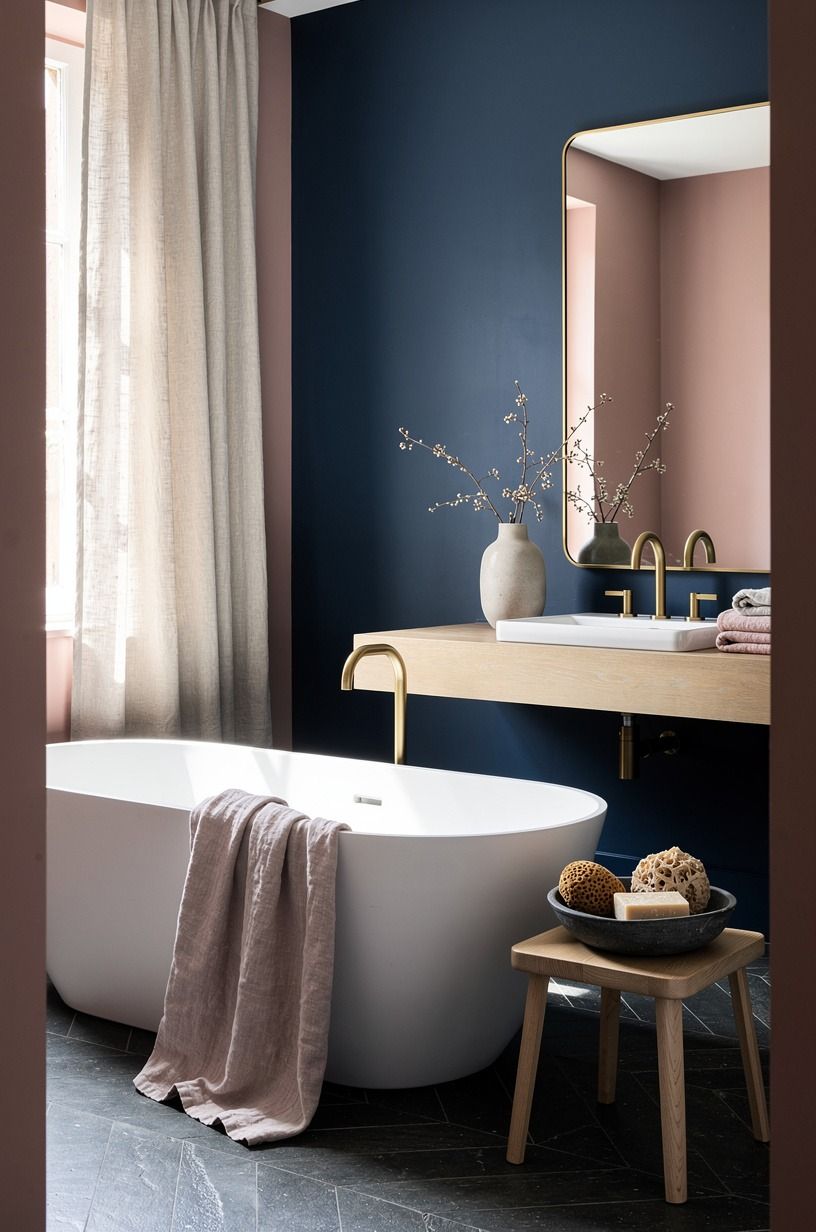
Black doesn’t have to cover every wall. If your powder room feels narrow, paint the vanity wall charcoal and use a dusty rose such as Farrow & Ball Setting Plaster No. 231 on the remaining walls.
The dusty rose has enough depth to sit beside charcoal without turning the room into a high-contrast checkerboard. Your eye will still get drama, but it won’t hit a dark wall from every direction.
This is where I’d avoid flat gray. Gray beside charcoal often looks accidental, particularly under warm bulbs. Dusty rose has a smoky quality that feels moody and refined, while a charcoal vanity keeps the room grounded.
If you’re using wallpaper, put it on the least splash-prone wall and protect it with a washable finish.
You’ll need to sample the color in the morning and at night. A north-facing room can make dusty rose look much darker than you expect. Leave a sample up for 24 hours, then ask yourself whether your room feels calm or cramped.
If you’re hesitating, paint only the upper half and keep the lower wall in a pale washed Belgian linen tone.
7Use the Two-Texture Rule Instead of Adding More Decor
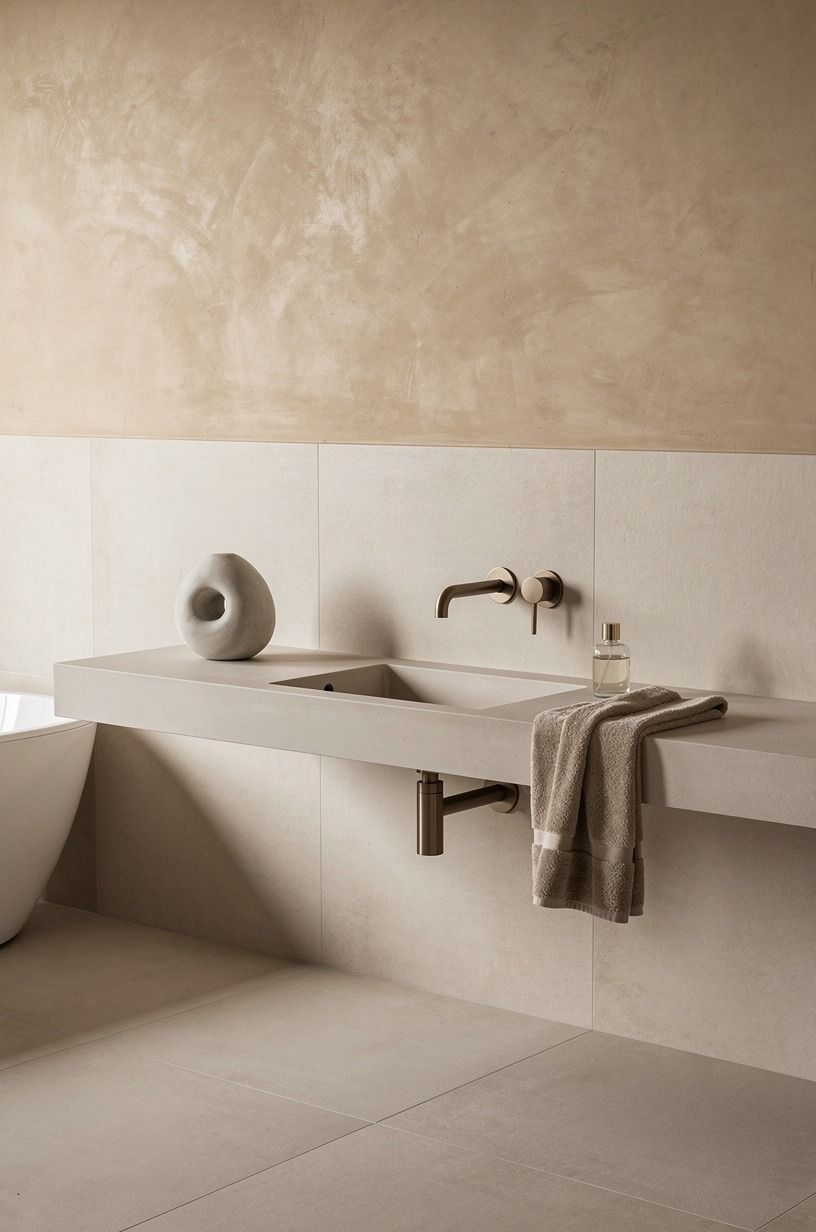
When your powder room is small, texture will make more difference than extra objects. Use two strong textures: perhaps organic bouclé on a small stool and a camel-toned vanity. Your walls can stay simple because the bouclé catches light softly, while the vanity absorbs it and keeps the room grounded.
I’d stop at two dominant textures. Too much rattan, stone, tile, and woven fiber can make your room feel busy rather than layered.
You don’t need a shelf full of accessories to prove that the space has personality. Let one tactile surface carry the room, then use smooth plumbing and a quiet mirror as relief.
For a budget version, use bouclé only on a stool and paint the rest warm white. You’ll get the hand-made variation without paying to texture every wall.
A 600gsm Turkish cotton hand towel can add softness at the vanity, but you don’t need three different towels. Your best powder room will feel edited, not empty.
And if you’re drawn to tactile interiors, this winter magazine living room shows how texture can create depth without crowding a room.
8Keep the Floor Pale Under Dark Walls
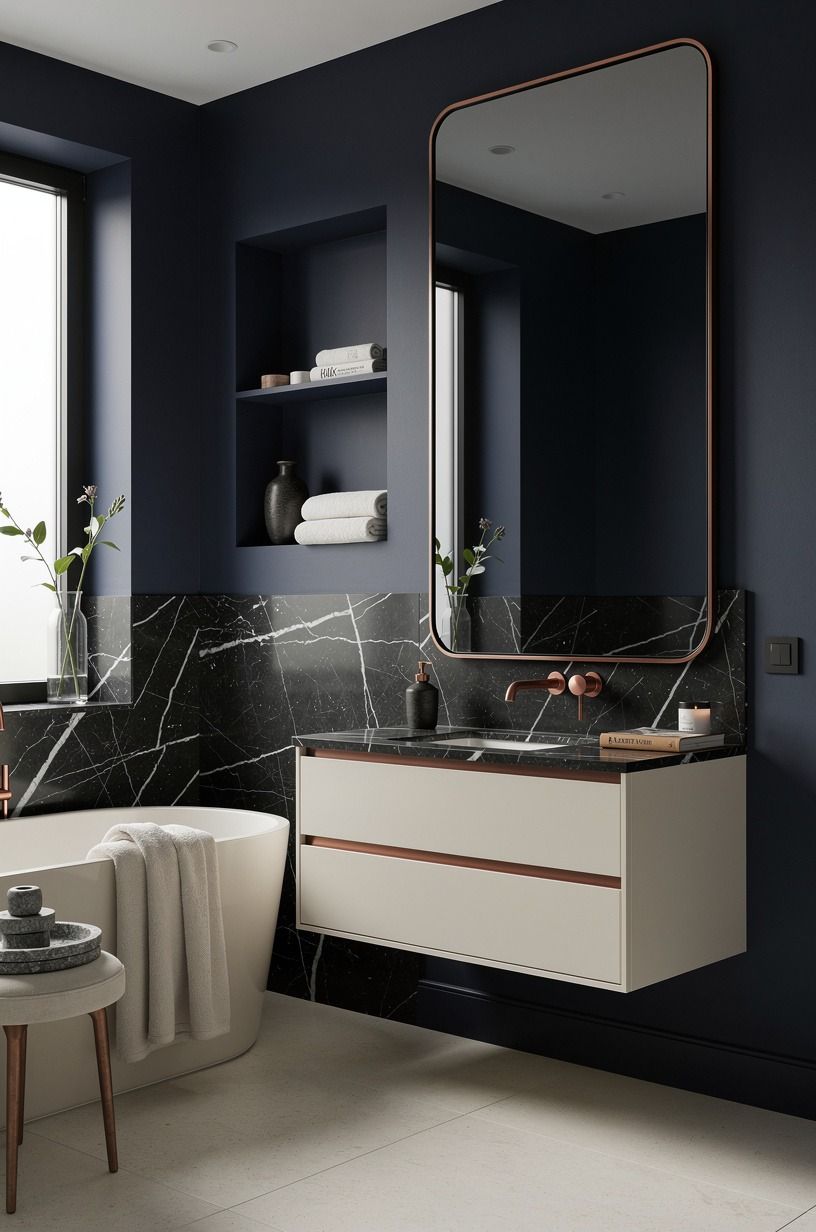
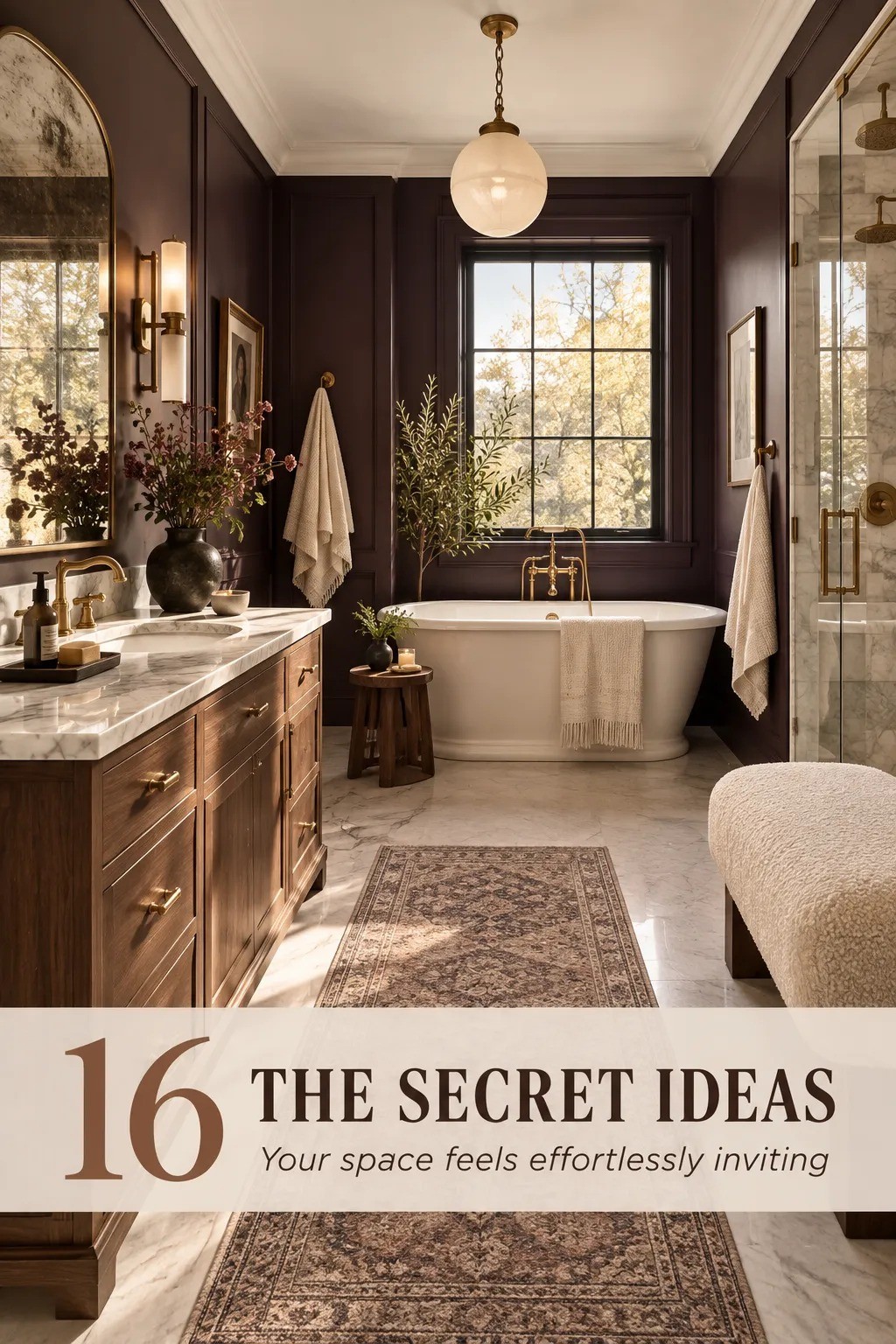
A floor with ivory movement can stop midnight-blue or black walls from closing in around your feet. Choose Nero Marquina black marble with white veins, soft limestone, or a warm ivory porcelain tile. The pale veining and ivory accents will bounce a little light upward, while the natural variation will keep the room from looking flat.
I’d skip a glossy white floor with bright white grout. It can look stark against dark paint and turns every crumb into a headline.
A matte surface with warm grout is easier on your eyes and more forgiving in daily use. If you already have dark flooring, add a pale washable runner, but make sure it doesn’t block the door swing.
You should measure the full floor before buying anything. A small powder room may need less material than you think, yet cutting around the toilet and vanity can create waste.
Subway tile costs about $2 to $10 per square foot, while zellige typically runs $15 to $35 per square foot. Your floor doesn’t need the highest price to look considered.
9Hang One Large Artwork Instead of a Gallery Wall
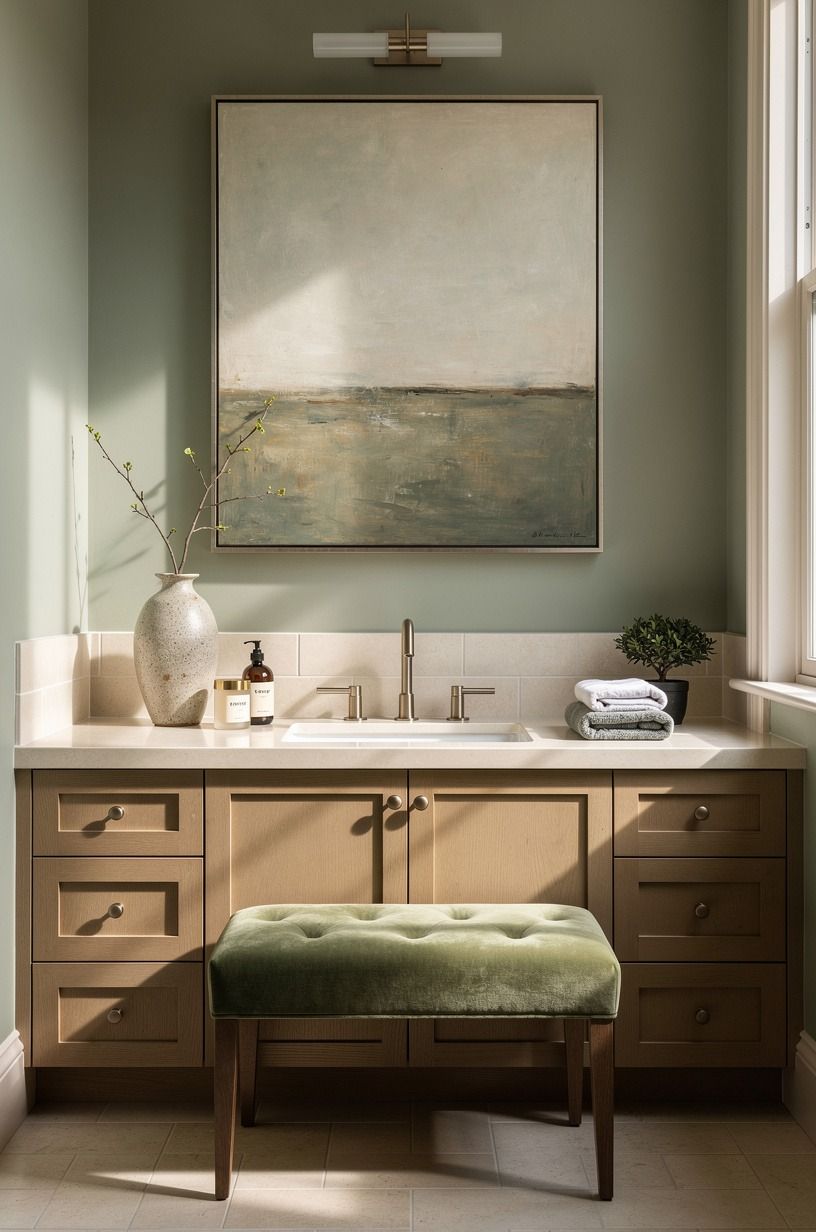
One oversized artwork can make a black powder room feel intentional without stealing the sink wall.
10Scale the Faucet to the Sink, Not the Drama
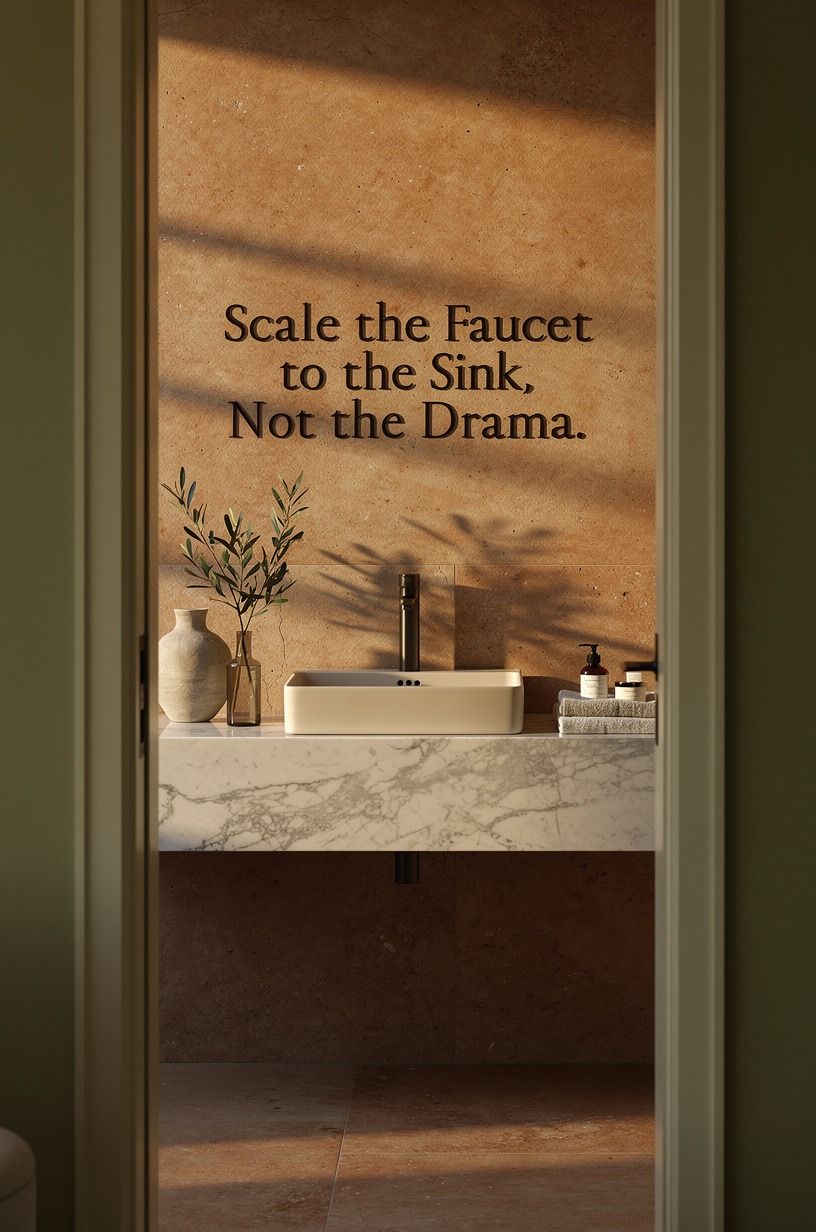
A black powder room can handle drama on the walls, so your faucet doesn’t need to shout. Choose a compact olive-toned faucet with a clean arc if your sink is narrow, or use a muted stone finish when the room needs more warmth. Your faucet should land comfortably over the drain without sending water against the backsplash.
Measure the basin before you shop. A faucet that’s too tall can splash your mirror, while one that’s too short makes handwashing awkward. I’d rather see a plain faucet with the right reach than a sculptural one that leaves water everywhere.
You’re designing a room people use, not a still life.
For a black basin bathroom, pair the sink with a pale countertop such as Carrara marble with subtle gray veining. The cool gray movement will echo the stone palette and soften the black.
If marble isn’t in your budget, a solid-surface top with subtle cream movement can give you the same visual relief. Don’t let a trendy shape override basic comfort.
11Create a Renter-Safe Black Powder Room
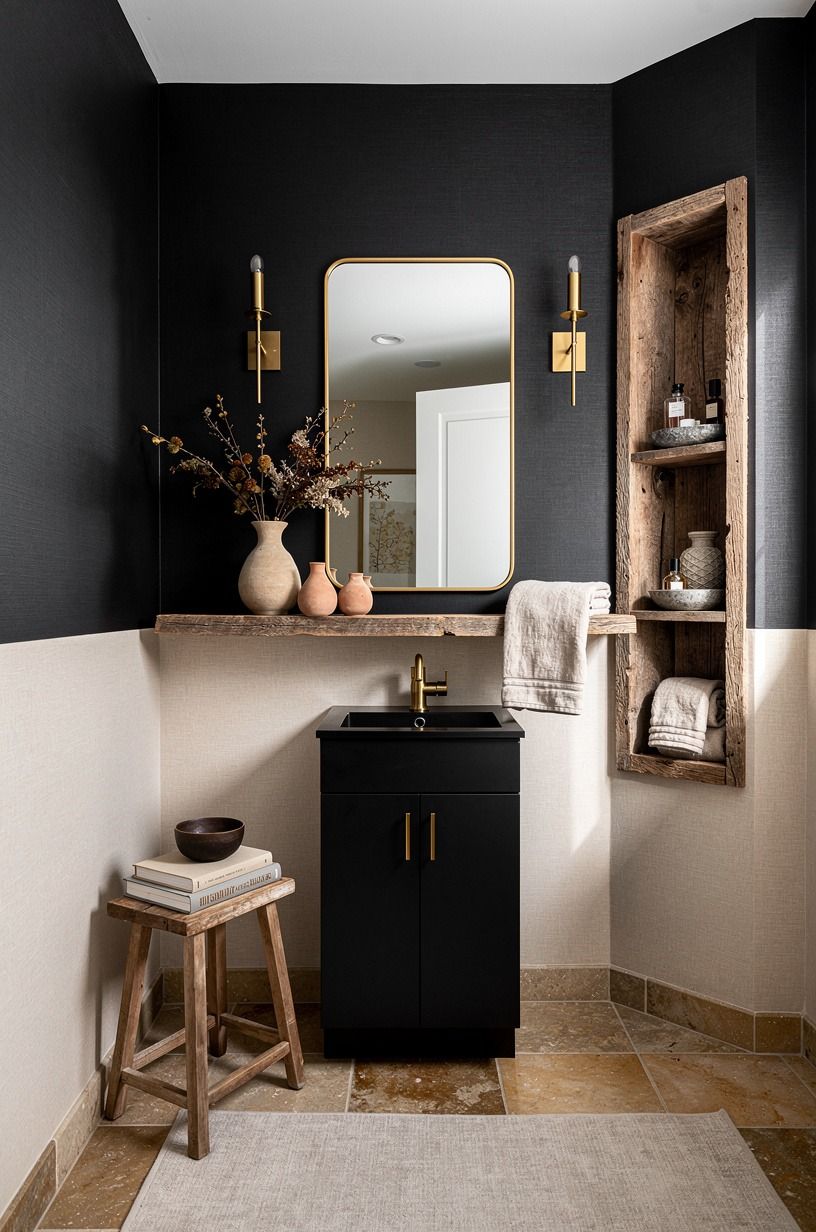
You can create a dark powder room without committing to permanent paint. Use removable wallpaper on one wall, a tension-mounted towel bar, and a mirror that hangs from existing hardware. Your rental can still feel personal if every swap has a clear purpose.
Choose a peel-and-stick wallpaper with a clay ground rather than a pure black background. The pattern will scatter light and disguise minor wall texture.
I’d avoid applying removable paper over fresh paint, since the adhesive can lift the finish. Follow the manufacturer’s cure time, and test a hidden corner before covering the room.
A removable shelf can hold a small soap bottle, but don’t overload it. Your best rental update might be a new towel, a warmer bulb, and a secondhand frame.
If you’re spending money, put it into pieces you can take with you. That’s why I’d choose a freestanding reclaimed weathered teak stool over a permanently installed cabinet.
You can borrow more renter-friendly ideas from this small living room guide, especially the advice about showing more floor.
12Mix Black Walls With Benjamin Moore Chestertown Buff
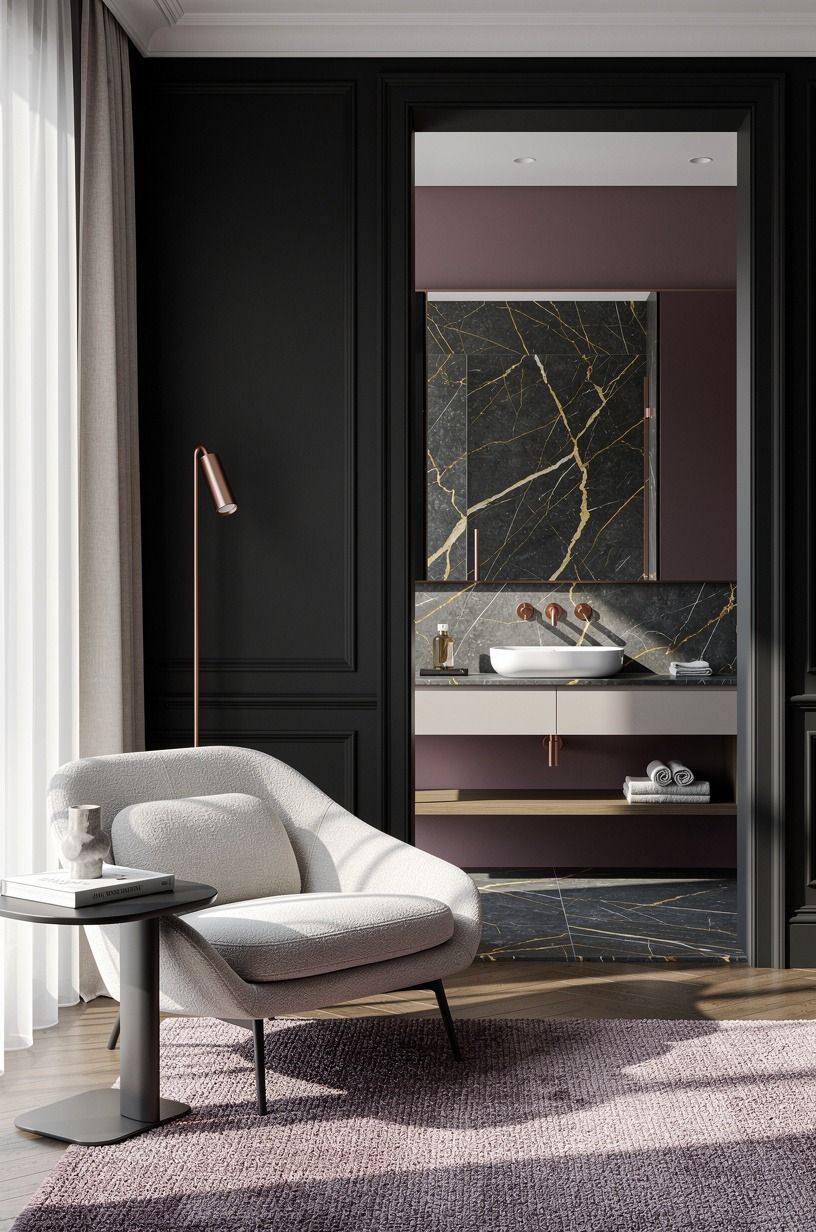
Deep plum, soft gray, and rose gold are a better pair than black and icy white when you want a welcoming room. Try soft gray on the trim, door, or ceiling, then keep the main walls deep plum. Your powder room will feel less graphic and more like a small jewel box with a candle nearby.
Soft gray has enough depth to work with rose gold and warm stone. I’d avoid pairing it with bright silver hardware because the finishes pull in different directions.
If your room has a white toilet, that’s fine. The goal isn’t to remove every cool element, but to surround it with warmer decisions.
You can also use the shade on a small gray wooden stool or frame if painting the trim feels too permanent. I made the mistake of choosing a gray that looked cold beside plum, and it made the entire room feel tired. Test the paint next to your actual tile, mirror, and bulb before you decide.
13Layer Belgian Flax Linen for a Softer Finish
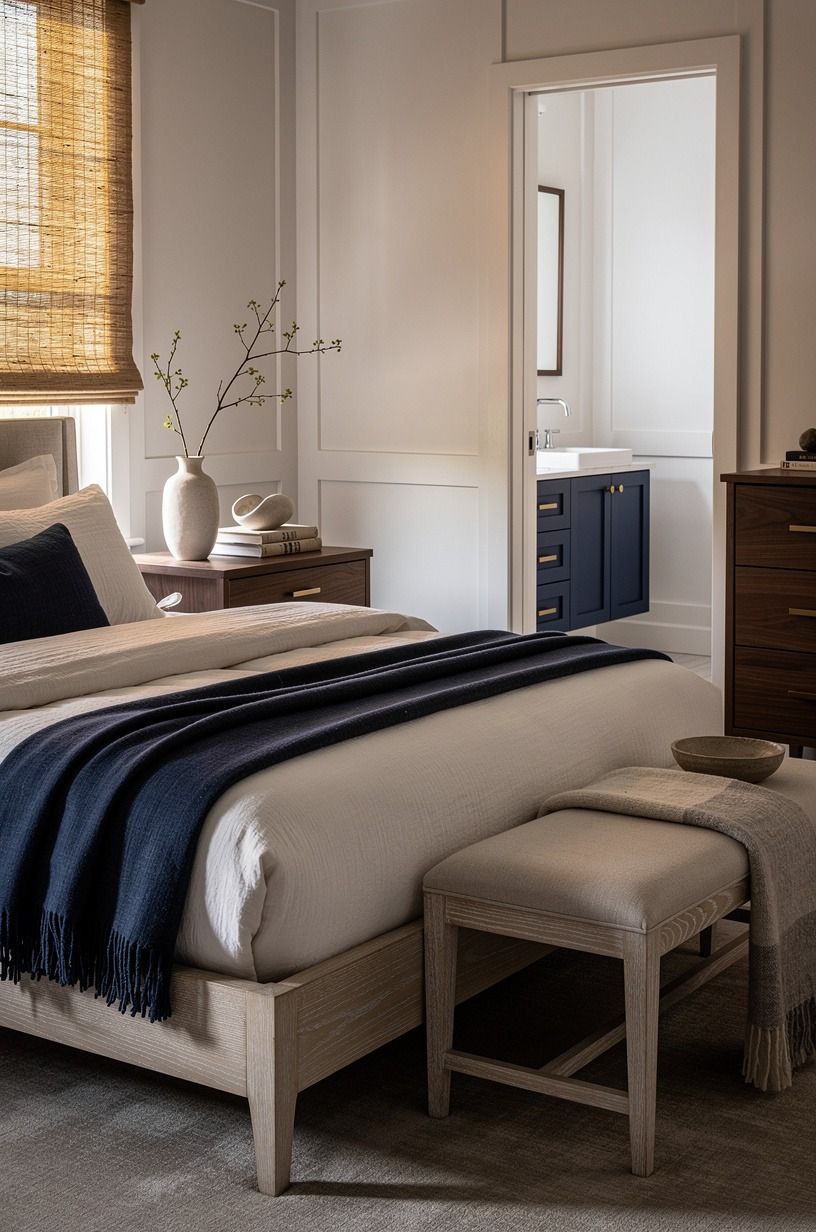
Soft textiles keep dark surfaces from feeling hard. Add a hand towel in navy Belgian flax linen, a small washable mat in ivory, or a narrow curtain if your powder room has a window. Pair those textiles with cerused white oak or walnut so the room has visible grain as well as weave.
I’d use one pale textile and one earthy textile, then stop. A cream towel plus a walnut-colored mat feels gathered and relaxed; five patterned towels feel like a store display.
You don’t need to match every fabric. Your room will feel more natural when the textures relate without becoming identical.
Wash the towels before styling them so they lose that stiff showroom edge. If you’re buying new, look for washed linen or soft cotton for the hand towel, never a heavy upholstery fabric. A cerused white oak stool can work, but avoid placing it near a splash zone if your room stays damp.
Your practical choices still shape the mood.
14Measure the Toilet Clearance Before Styling
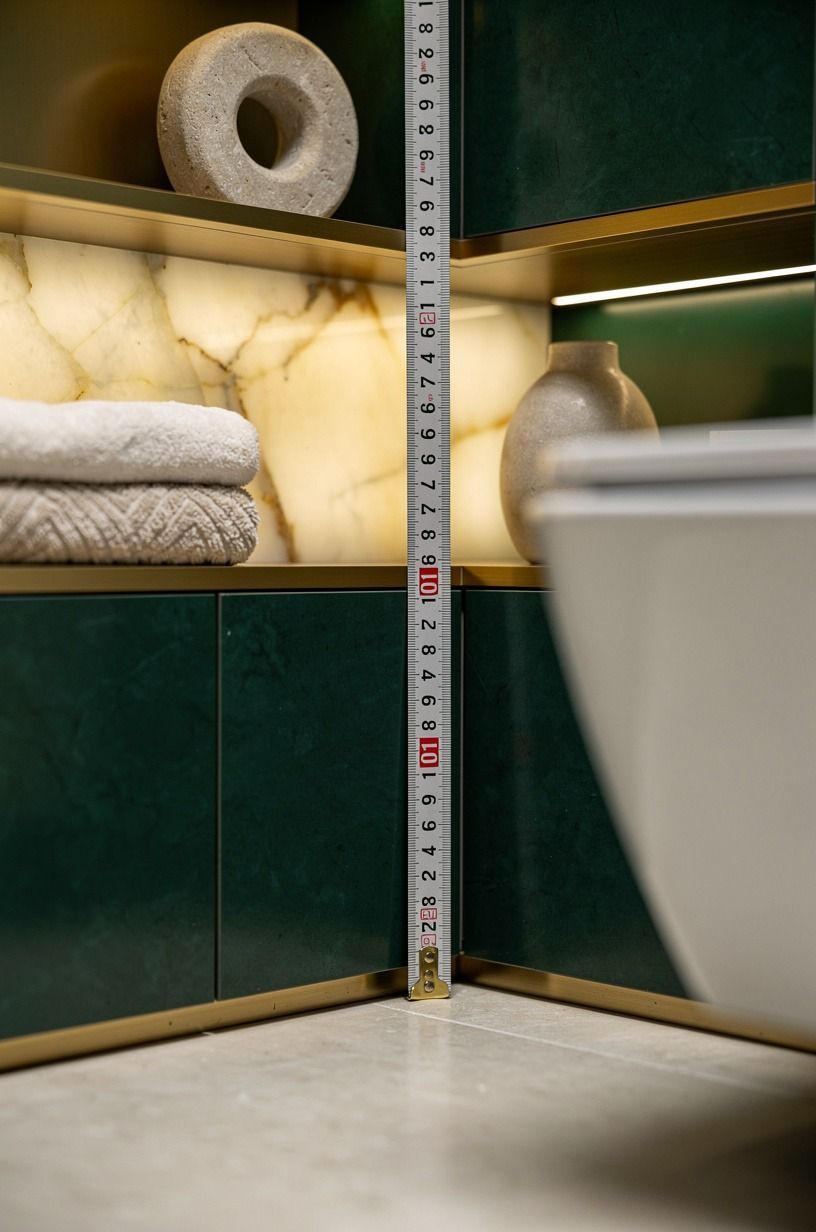
Good design starts with the space your body needs.
15Frame the Sink With a Quiet Black and Gold Moment
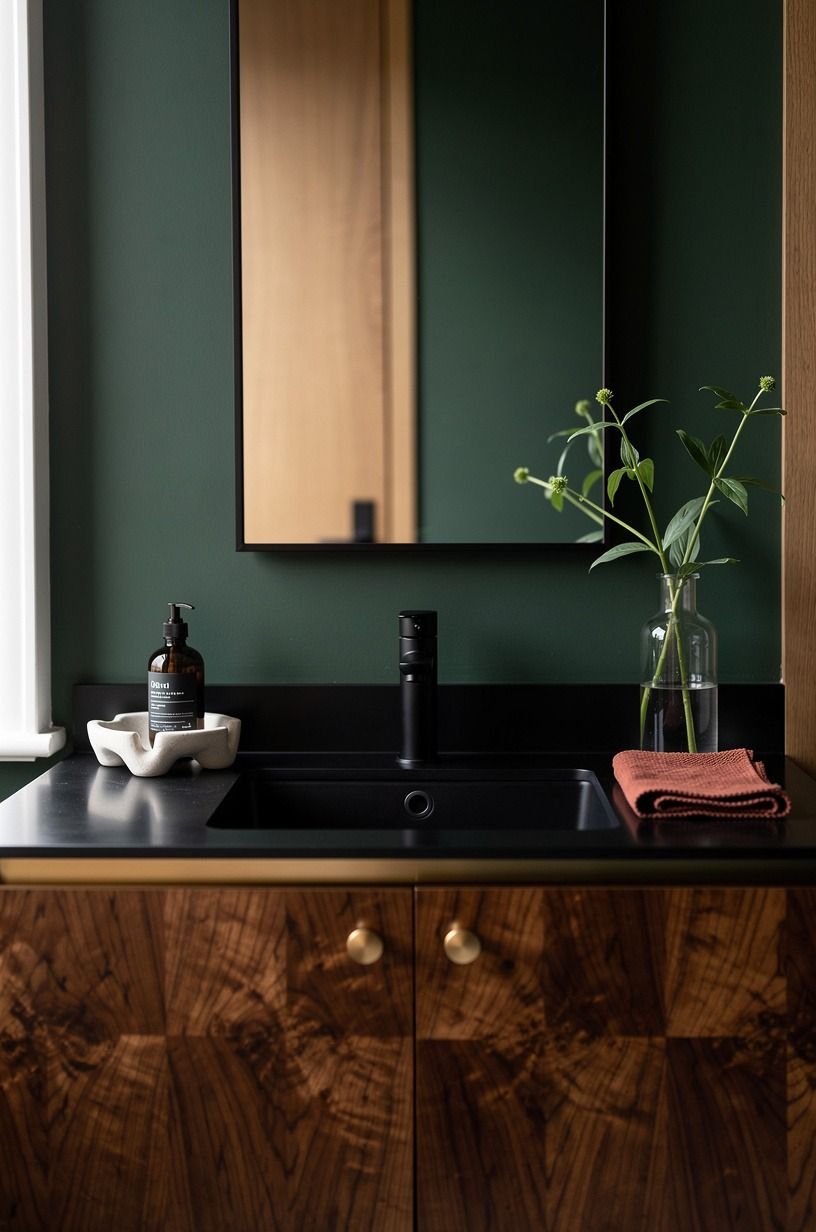
A black and gold powder room doesn’t need gold everywhere. Create one concentrated moment around the sink with a book-matched walnut mirror surround, a forest-green basin, and a small pale stone tray. Your eye will read that cluster as the room’s focal point, while the rest of the walls can stay quiet.
I’d skip shiny gold cabinet pulls if your faucet is brushed brass. The mismatch is small, but it can make the room feel assembled from separate shopping trips.
Use the same warm metal family and let natural oak or walnut provide the contrast. Your goal is glow, not glitter.
Add a tiny vessel with a living branch or one dried rust-colored stem. Nothing large.
A powder room doesn’t need a jungle to feel alive, and real leaves can struggle without daylight. If you’re styling near the toilet, choose an object that won’t fall when the door closes. A simple arrangement can feel more sophisticated than a crowded shelf.
16Price the Room Before You Buy Anything
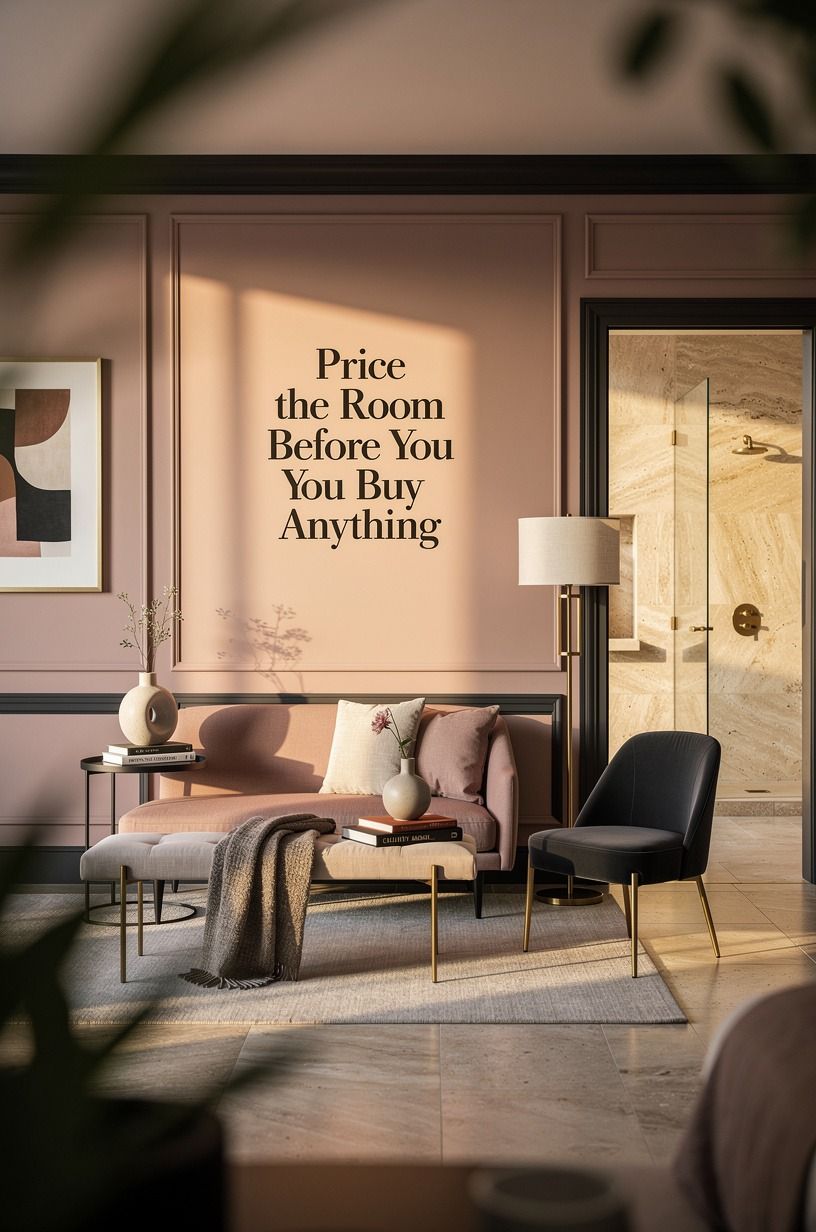
A black powder room refresh can stay modest if you change paint, lighting, the mirror, and textiles before touching plumbing. Your typical cost depends on how much construction you’re doing, so use the ranges below as US planning references. The room can look dramatically different without becoming a full renovation.
A brushed brass faucet commonly runs $120 to $450, while a warm travertine top can run $50 to $100 per square foot. Zellige tile typically costs $15 to $35 per square foot, and subway tile is often $2 to $10 per square foot.
You’ll get the strongest visual return from paint and light first. Save the plumbing work for when the layout truly fails.
The Part of Black Rooms I’d Defend
I used to think a black powder room needed to be softened at every turn. Pale towels, bright trim, light floors, gentle art, maybe a plant in every corner.
Then I lived with one that had too many apologies built into it. The room wasn’t dark in a dramatic way. It was busy, nervous, and unsure of its own color.
Now I’d let the black do more work. Your room doesn’t need to prove that it’s practical by becoming pale everywhere else.
It needs one convincing counterweight, such as warm wood, a reflected ceiling, or brass that catches the lamp after sunset. I’d choose two of those and leave the rest alone.
That restraint is what makes a small space feel intentional.
The most useful decision is usually the least glamorous one. Check the bulb temperature.
Measure the vanity. Look at the paint beside your actual white toilet.
If you’re working with a north-facing room, sample the black in the afternoon, when the walls may look almost blue. If the color still feels rich instead of flat, you’ve found your direction.
I’ve also learned that your powder room can be a little strange. A dark wall, old frame, and one imperfect stone tray may feel more personal than a flawless matched set. Don’t chase a showroom finish.
Let the room show a point of view, then give your guests enough light to appreciate it. That’s the balance I’d keep.
What People Always Want to Know
What is the best black powder room idea for a small bathroom?
The best choice is a black vanity wall paired with a pale ceiling and rounded mirror. Reflected light keeps the room open, while a warm wood vanity adds texture. IKEA and Article both offer compact furniture lines, but you can also keep your existing vanity and change only the mirror and lighting.
Where can I buy black powder room pieces on a budget?
Look at IKEA, Wayfair, Target, Facebook Marketplace, and local thrift shops. Secondhand frames and mirrors often cost less than new versions and add more character. You don’t need affiliate products for this room, and you can reuse your faucet, towel bar, or cabinet pulls if they’re still sound.
How much does a black powder room makeover cost?
A typical refresh costs about $200 to $1,200 for paint, a mirror, a faucet, and textiles. Free improvements include removing clutter, changing bulb direction, and rearranging what you own. Larger vanity, tile, and plumbing projects can reach $3,000 to $30,000 or more.
Can I create a black powder room on a budget?
Yes, and you can start with paint, a warmer bulb, and one thrifted mirror. A $200 refresh can cover paint, a secondhand frame, towels, and a small light. Keep your existing sink and faucet, then spend only where the room has a visible problem.
Is a black powder room worth it in a small space?
Yes, because a small room can carry a bold color without requiring gallons of paint or extensive furniture. Dark walls create intimacy when your mirror and ceiling reflect enough light. Keep at least 21 inches in front of the toilet and avoid blocking the doorway with storage.
Is a black powder room a good idea for a rental?
Yes, if you use removable wallpaper, a tension rod, and a freestanding mirror. No-damage updates can include new towels, plug-in lighting, and a secondhand frame. Test peel-and-stick wallpaper in a hidden spot first, especially if your landlord’s paint is fresh or delicate.
Where I’d Start First
If I had to pick one, I’d start with the pale ceiling and mirror. They return light to the room from above and in front, so black walls feel intentional instead of heavy. Paint those first, then pin this warm, budget-friendly room guide for later.