
Wallpaper in the powder room works because a small room can carry a bolder pattern without overwhelming your house. I used to treat mine like a leftover utility closet. Then I saw how one patterned wall made the sink, mirror, and even the hand towel feel intentional.
- Wrap the room in a pattern you’d never risk elsewhere
- Use the Jewel-Box Rule for a downstairs toilet wallpaper moment
- Anchor your vanity wall before you paper every surface
- Choose dark green over washed-out gray
- Let the mirror interrupt the repeat
- Build the Three-Height Light Stack around the print
- Frame a mural where guests can stand back
- Pair small-scale florals with calm painted trim
- Go bold with stripes, then keep the floor quiet
- Try painted millwork over another decorative border
- Make a rental version with removable paper and real restraint
- Match the scale of your print to your ceiling height
- Spend on the wall, then save on the vanity
- Borrow warmth from wood, not more metallic finishes
- Use one wall if you’re scared, but commit to it
1Wrap the room in a pattern you’d never risk elsewhere
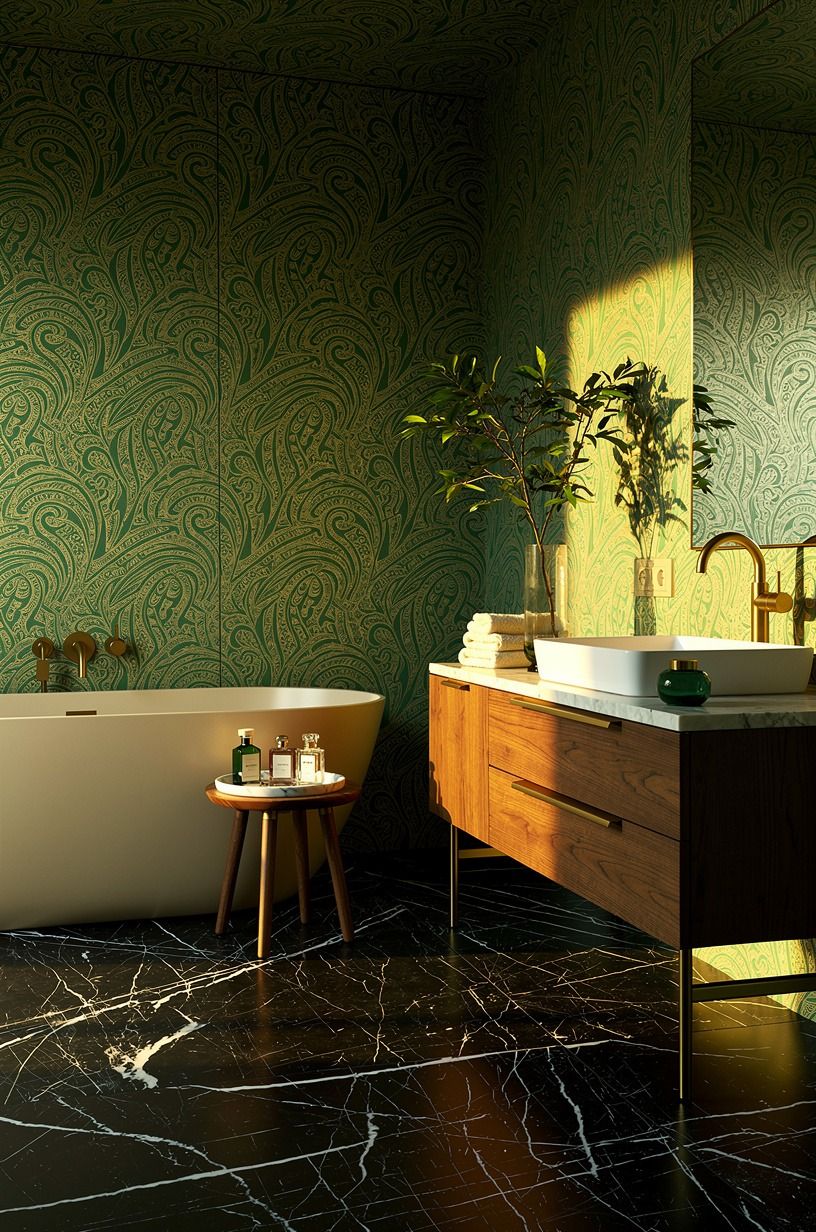
A powder bathroom with wallpaper is the place to choose the print that would feel loud in a primary bedroom. Your guests only spend a few minutes there, so you can give them something memorable: block-print florals, tiny leopards, or a moody botanical with ink-dark leaves.
I’d skip a timid beige stripe if your fixtures are already plain. You need contrast, not another layer of visual whispering.
Farrow & Ball Studio Green on the trim beside an emerald, gold, and cream paper makes the room feel deep, warm, and oddly expensive. And yes, your little room can handle it!
For a focal-wall version, borrow the logic in this floral wallpaper behind a vanity guide. Put the drama where your mirror catches it first.
2Use the Jewel-Box Rule for a downstairs toilet wallpaper moment
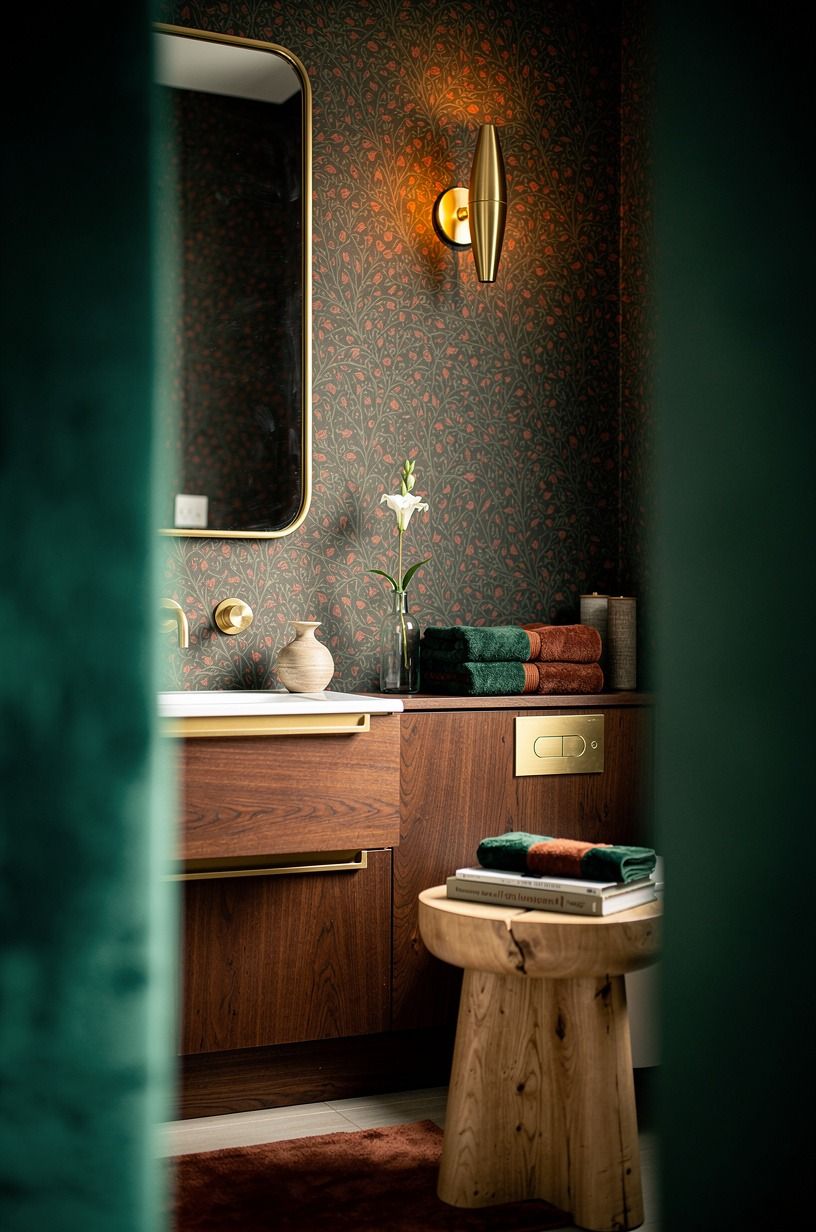
The Jewel-Box Rule is simple: if your room has no view, make the walls the view. You don’t need airy minimalism in a downstairs toilet. You need a forest-green paper with rust-toned movement to make your eye linger while you wash your hands.
Try a deep-pile mohair velvet stool with a slim natural-oak vanity. The wood keeps the richness grounded, while the velvet gives the room a little softness.
I’ve seen people buy glossy gold hardware for this look, and I’d avoid it. It reads flat under overhead light.
Your mirror matters here too. A rounded West Elm Metalwork mirror breaks up a busy print better than a hard-edged rectangle. The little curve gives your room somewhere to breathe.
3Anchor your vanity wall before you paper every surface
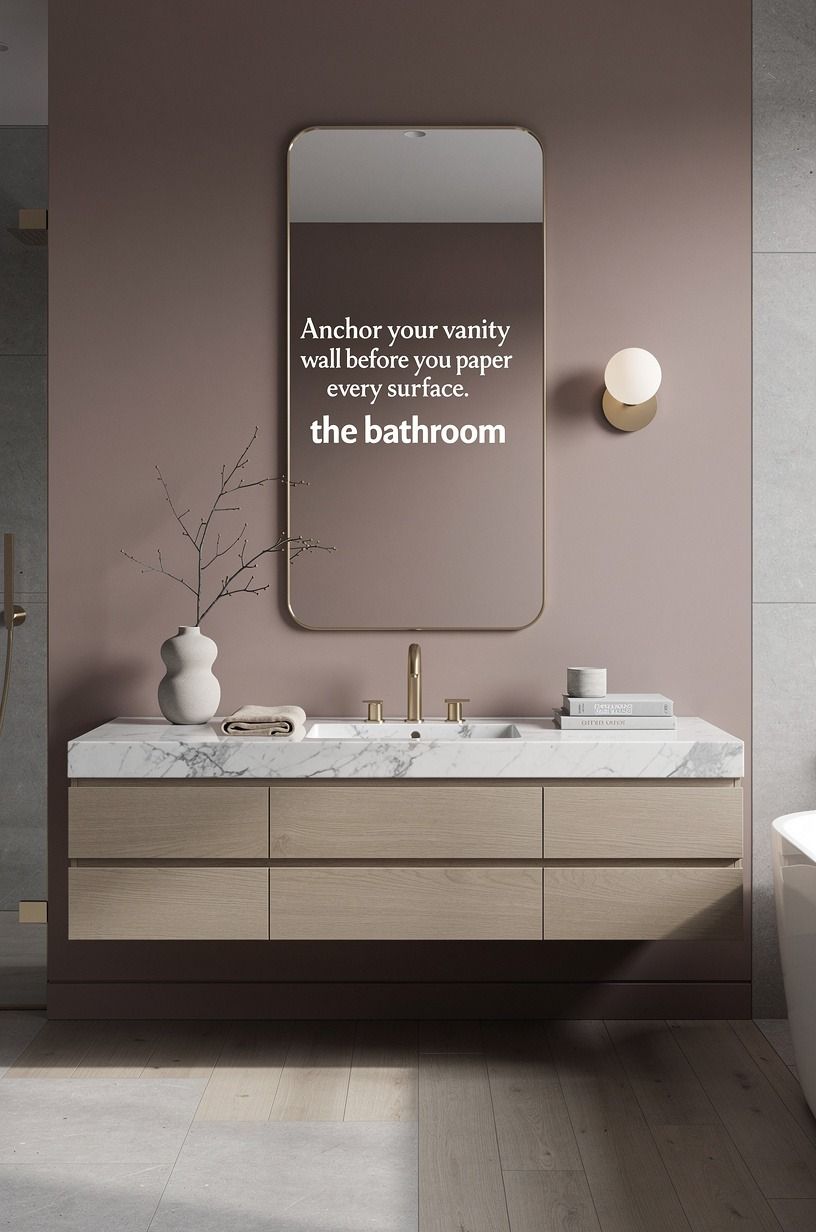
Start with the wall behind the vanity when you’re unsure.
4Choose dark green over washed-out gray
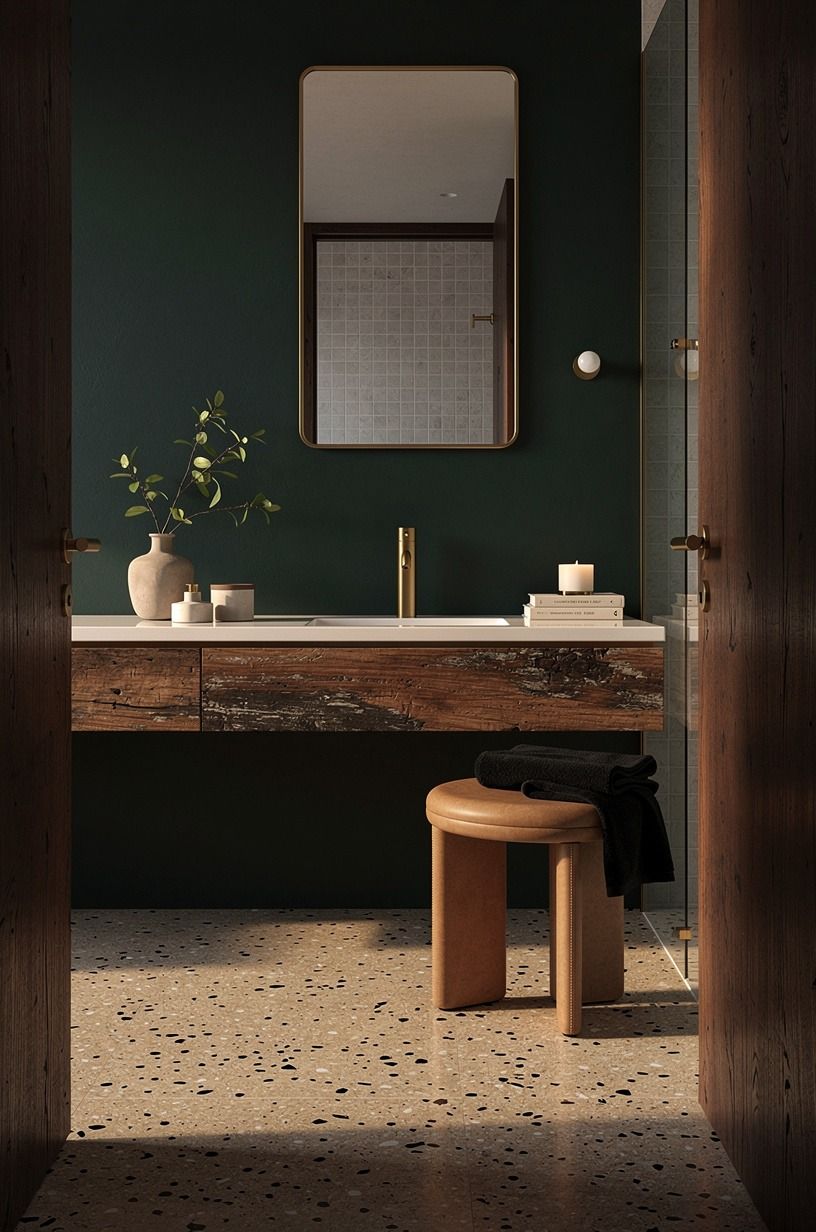
Dark green wallpaper gives a powder room more backbone than pale gray ever will. Gray can look blue under a cool bulb, then your white porcelain starts feeling clinical. No thank you.
A warm-white paper beside reclaimed weathered teak brings a quiet, intimate mood without making the room feel shut down. You’ll notice the camel and black details hold the wood and cream elements together, especially at night.
I’d rather use a warm white paper with camel details than a black-and-white geometric. The geometric version photographs fine, but it can feel chilly when you’re standing there barefoot. For more proof, see why dark green powder rooms look more expensive.
5Let the mirror interrupt the repeat
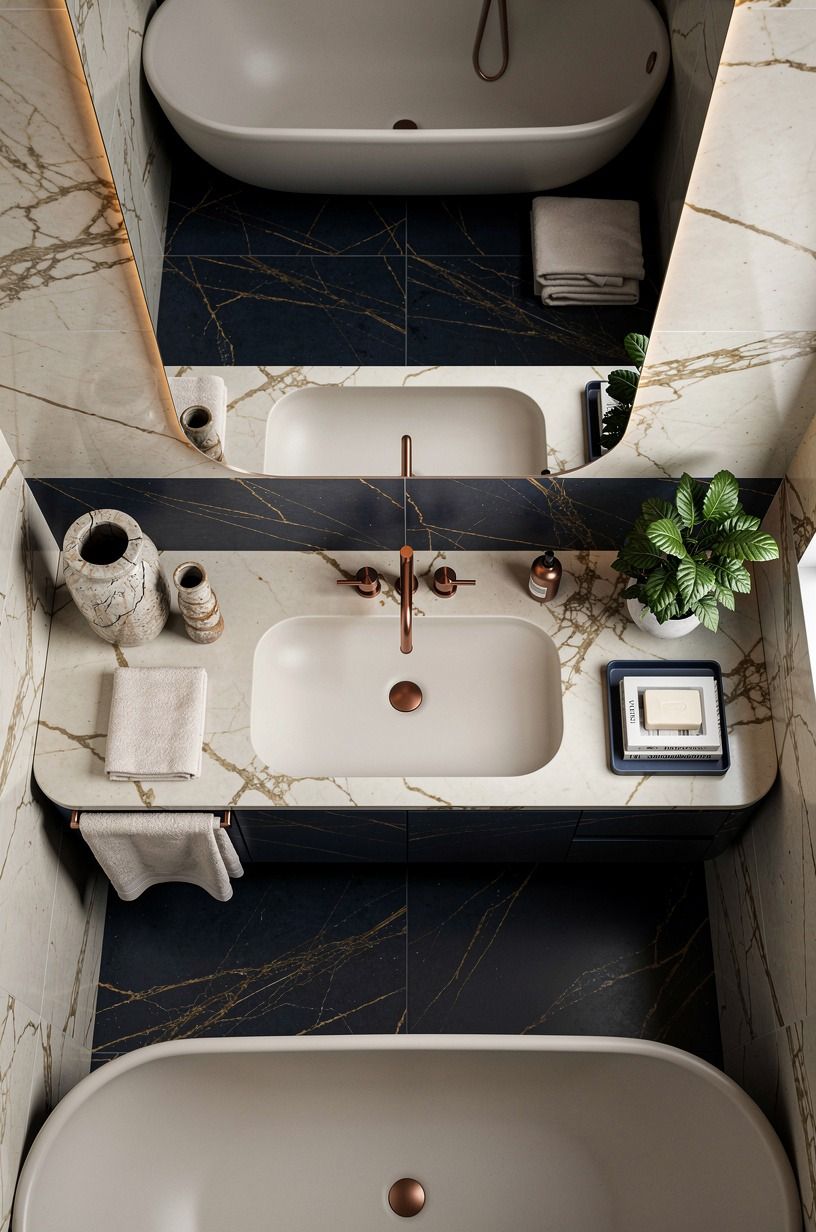
A repeat pattern needs one strong interruption. That’s usually your mirror. Choose a shape that cuts across the wallpaper instead of disappearing into it.
An ivory arched mirror looks especially good over a petite vanity with Calacatta marble because the curved top softens a grid, stripe, or sharp floral. Your eye gets pattern, reflection, then pattern again. Rhythm.
I made the mistake of using a thin frameless mirror once. It didn’t look clean.
It looked unfinished, like the installer had forgotten the last part. If your wallpaper is bold, your mirror should have enough weight to answer it.
6Build the Three-Height Light Stack around the print
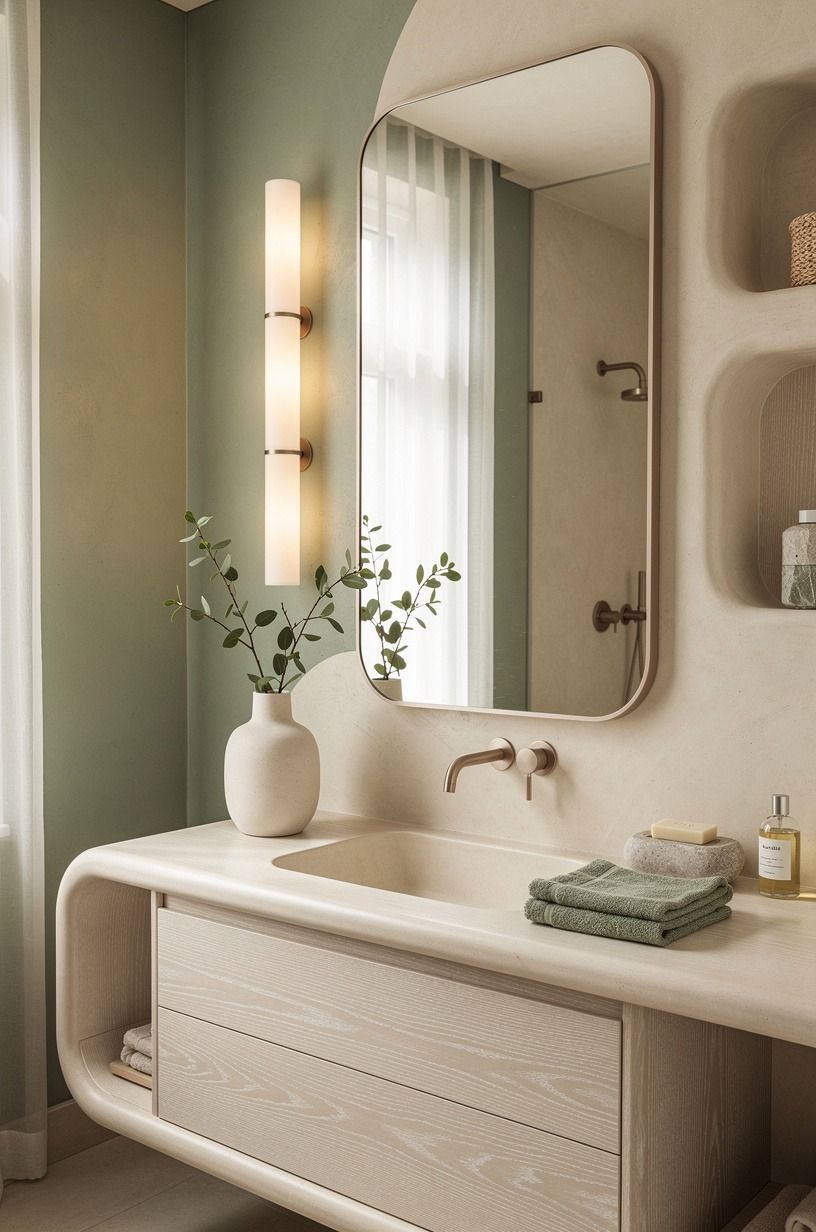
The Three-Height Light Stack keeps your wallpaper from looking like a flat sheet under one harsh ceiling bulb.
7Frame a mural where guests can stand back
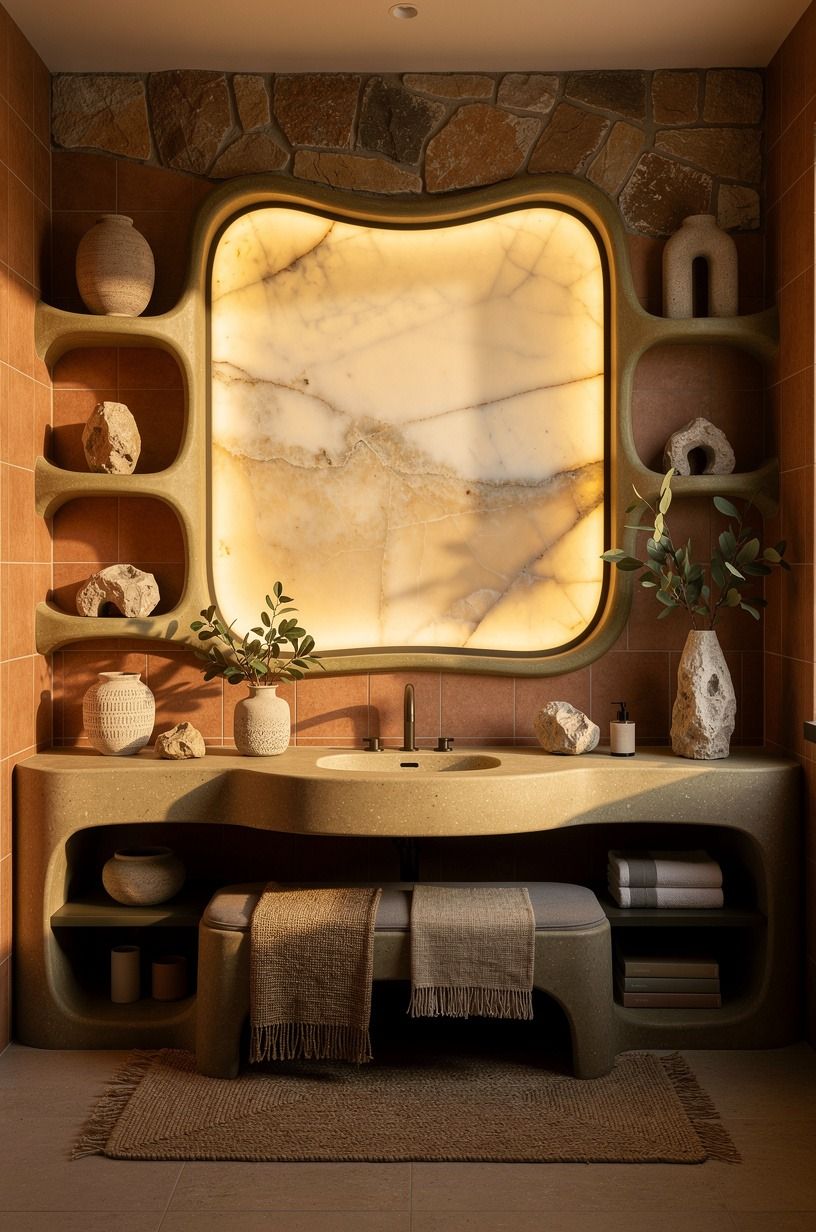
A mural needs distance, so put it on the wall opposite the door or behind the toilet if your layout allows. You want your guest to take in the terracotta, stone, and olive tones at once, not press their nose against one oversized flower.
A botanical mural works best with a simple vanity and one restrained metal finish. The mural is already doing the talking. Don’t add a sculptural vessel, woven shade, and three competing prints too.
If your toilet needs clearance, keep at least 21 in open in front of it. That practical measurement matters more than squeezing in an extra stool.
Pretty is nice. Being able to close the door is nicer.
8Pair small-scale florals with calm painted trim
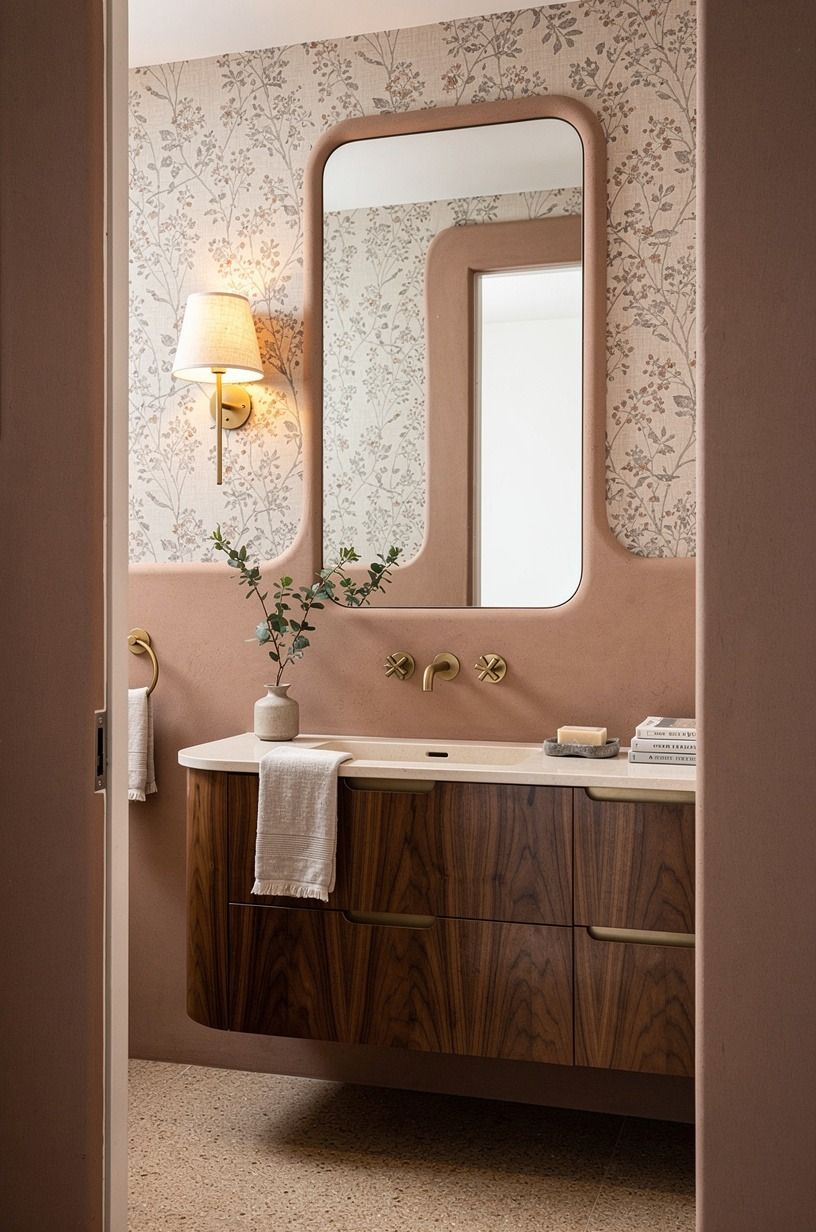
Small florals are charming, but they need a calm frame. Paint the trim, door, and ceiling in one related shade so your powder bath wallpaper ideas don’t stop abruptly at every edge.
A clay-toned trim is a gentle choice with linen, aged-brass, or faded floral notes. It’s more forgiving than bright white, which can make vintage-inspired paper look cut out and pasted on. Your room will feel softer without losing contrast.
I’d choose a linen Roman shade over a printed café curtain here. Two prints at window height can get busy fast. One quiet textile is enough.
9Go bold with stripes, then keep the floor quiet
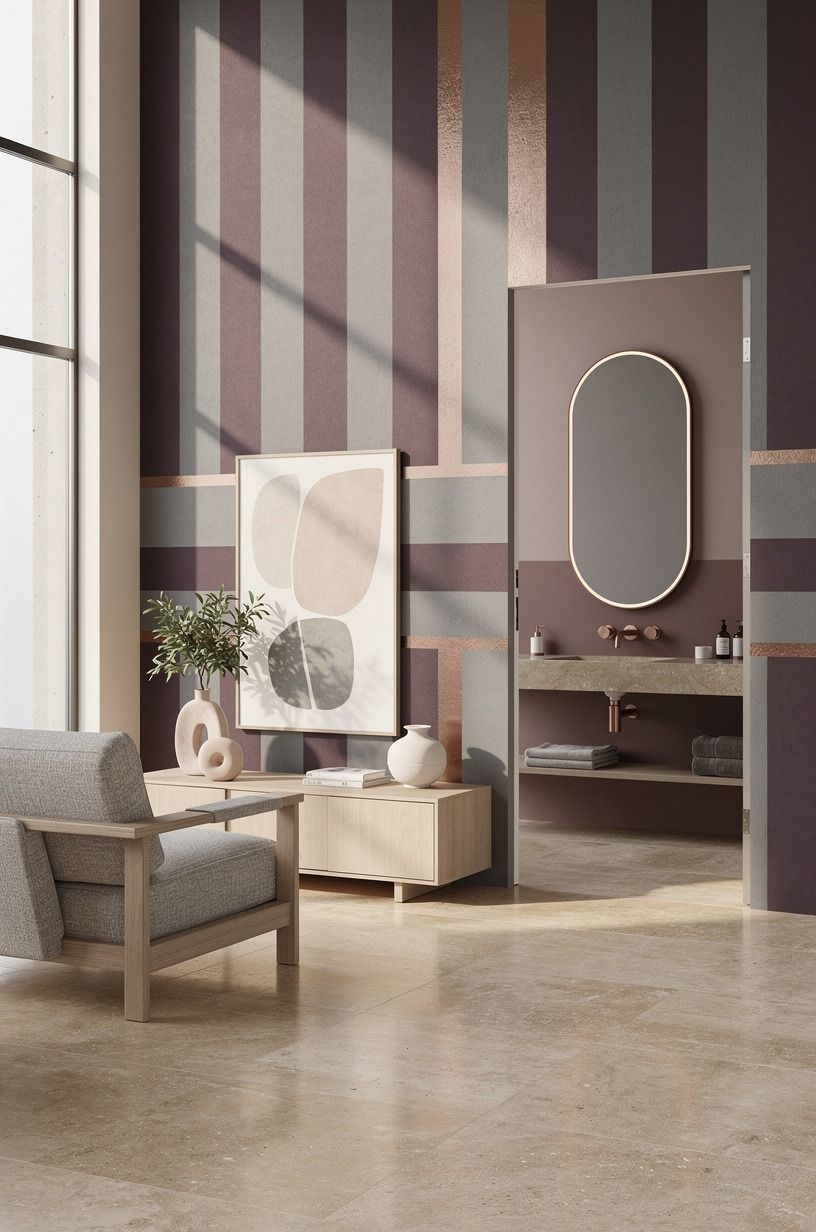
Vertical stripes make a low powder room feel taller, but the floor must stay restrained. A stripe already gives your eye a direction. Add a loud checkerboard tile and suddenly your room starts arguing with itself.
Choose warm travertine under plum, gray, and rose-gold stripes. You’ll get a rich, modern effect without the cold glare of glossy white floor tile. A rose-gold sconce adds a little bite.
And don’t center every stripe perfectly around the vanity. Wallpaper installation has real-world seams. Place the strongest visual center behind the mirror, then let the repeat continue naturally.
10Try painted millwork over another decorative border
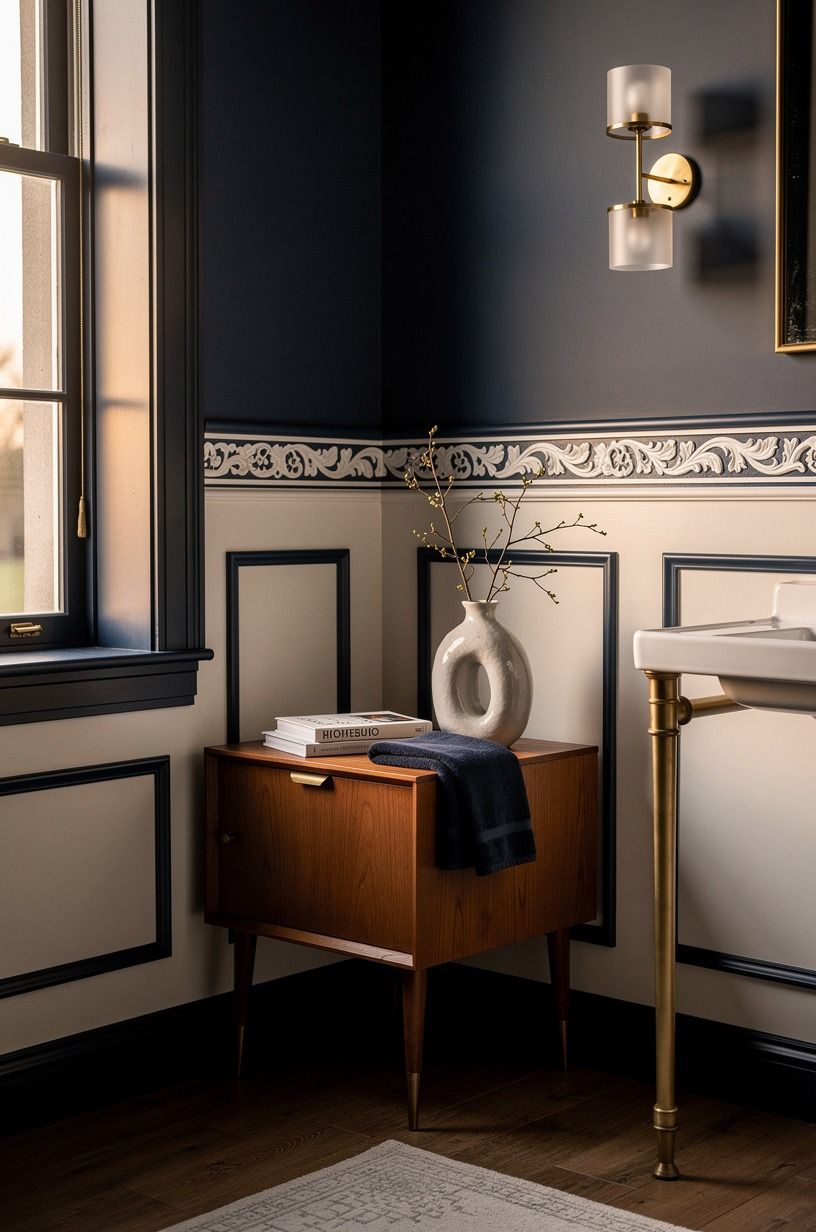
Instead of adding a decorative wallpaper border, paint the lower third of the room and let the paper run above it.
11Make a rental version with removable paper and real restraint
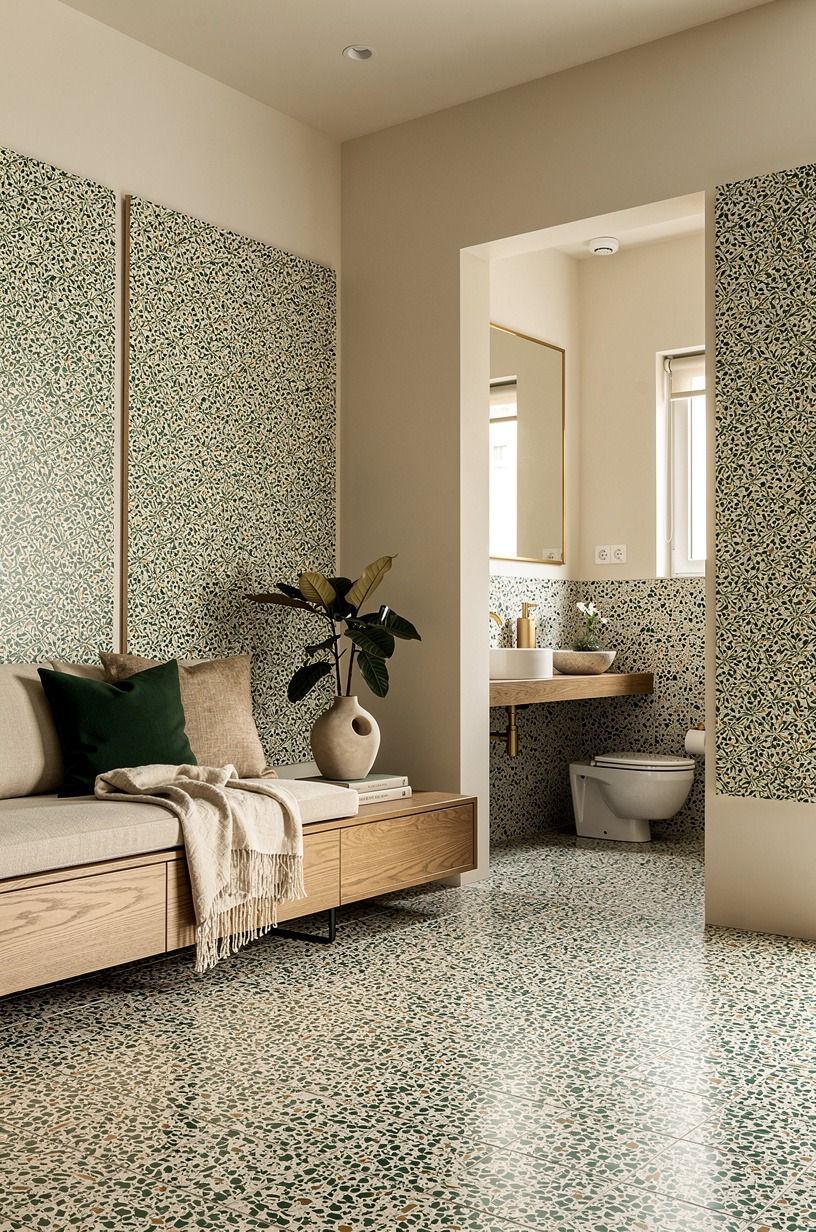
Yes, wallpaper can work in a rental. Use removable paper, keep your original hardware in a labeled bag, and choose a print that doesn’t require you to replace every fixture around it.
A removable emerald, gold, and cream print with a simple mirror makes a rental powder room feel bold without touching the plumbing. Your landlord won’t see a permanent change, but your guests will see a room with a point of view.
Use tension-mounted textiles sparingly. One Turkish cotton hand towel, one removable hook, one small tray.
Too many temporary fixes can make your room feel like a display booth. You’re making a home, not staging a dorm room.
12Match the scale of your print to your ceiling height
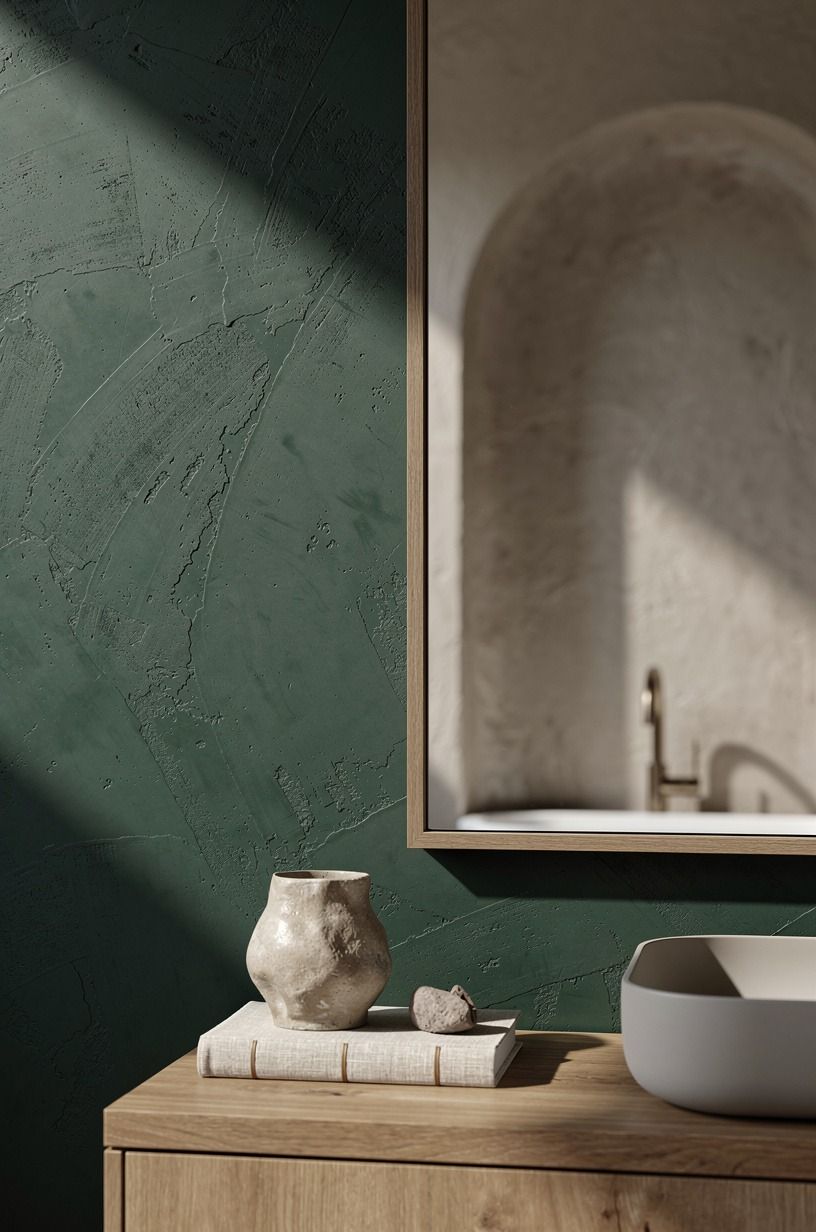
Large prints need a little vertical room. If your ceiling is low, choose a medium repeat with visible breathing space instead of giant blooms cut in half by the crown moulding.
A forest-green leaf print with rust details can look refined in a compact room when its stems run vertically and the background stays warm. Your ceiling feels higher because the paper gives the eye a path upward. A busy all-over print with no pause does the opposite.
For a darker look, carry a warm rust tone onto the ceiling rather than defaulting to white. It sounds risky. In a small room, it can feel enveloping and calm.
13Spend on the wall, then save on the vanity
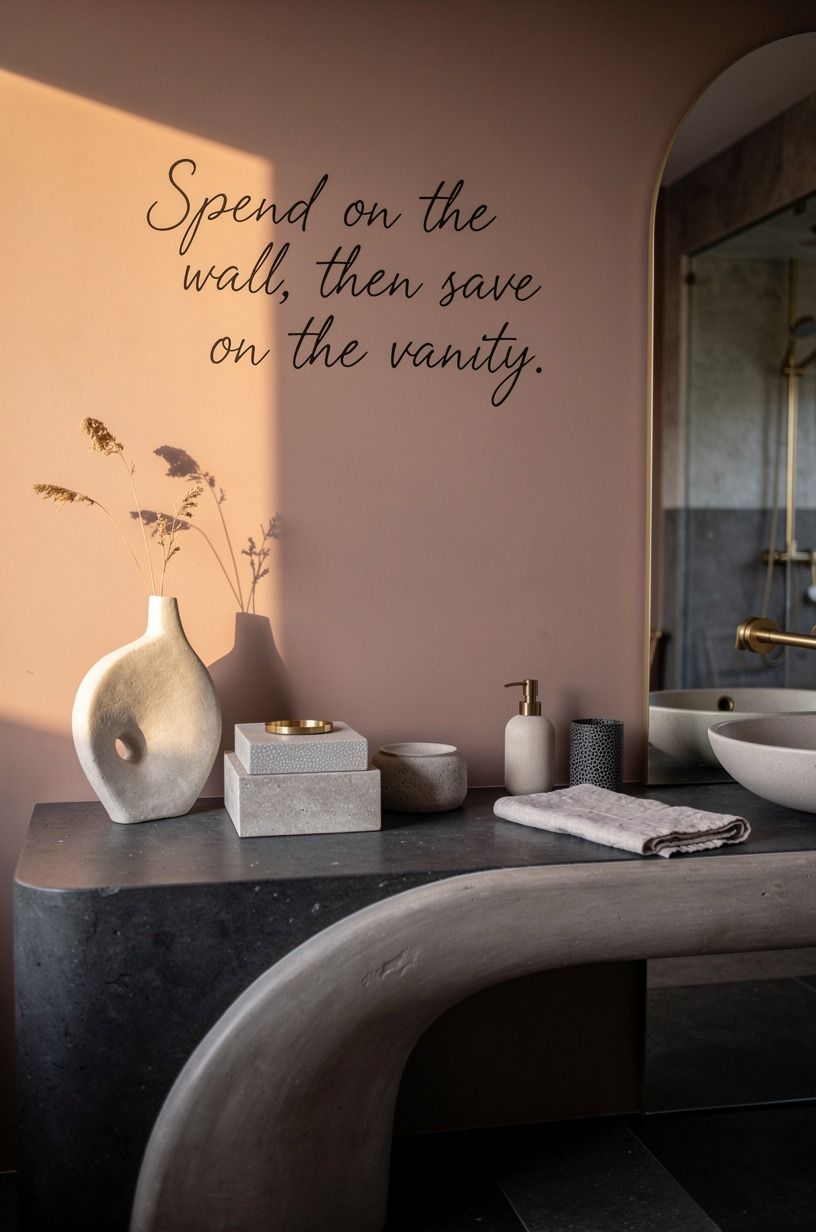
Wallpaper is often the part people remember, so put more of your budget there and choose a plain vanity with good proportions. You don’t need a carved cabinet competing with a detailed print.
Here’s the honest cost range for a broader bathroom update:
For your powder room, a Target Threshold vanity mirror and a good paper can beat a pricey vanity with a forgettable wall. I’d save the larger spend for a faucet that feels solid in your hand and a paper you won’t tire of after one season.
14Borrow warmth from wood, not more metallic finishes
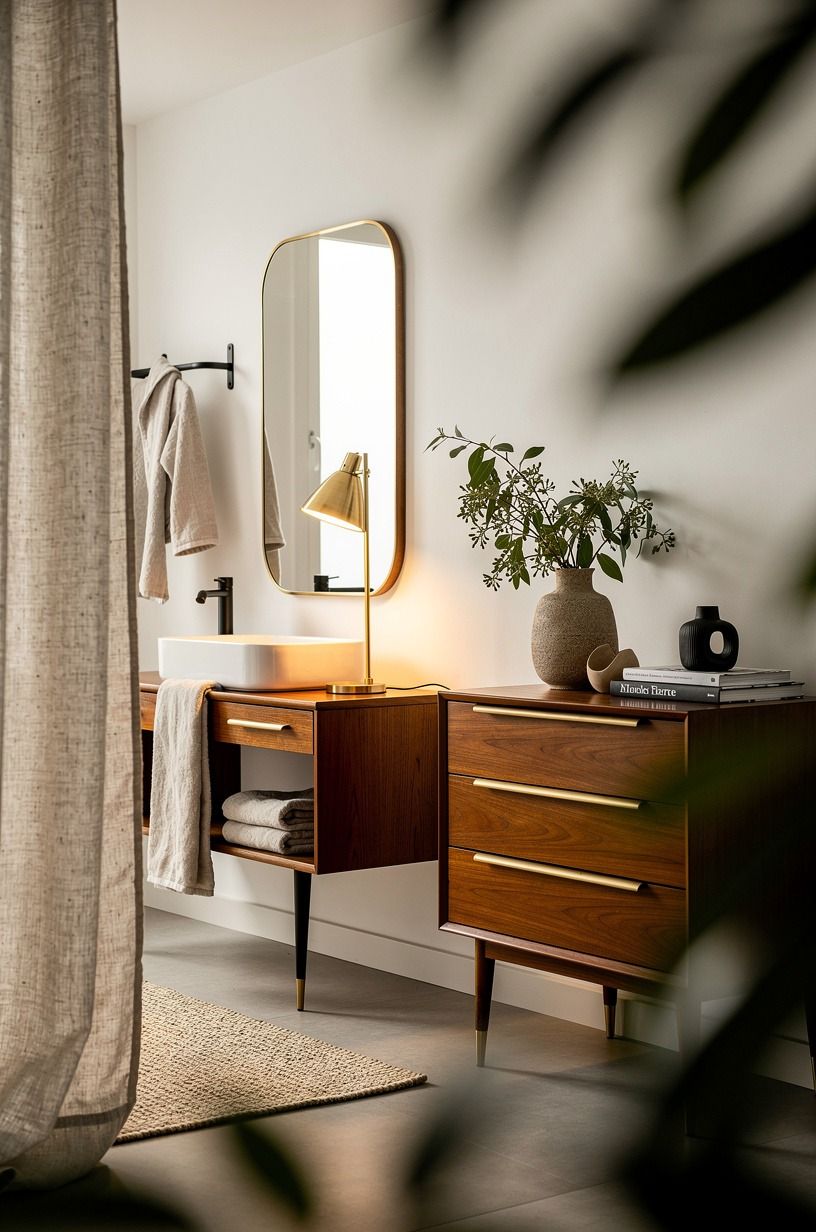
The Two-Wood Rule keeps a patterned powder room from feeling like a jewelry box. Use two wood notes at most: perhaps a reclaimed teak vanity and a pale oak frame, or a painted cabinet with one linen-covered shelf.
A shelf is useful for spare towels, but don’t crowd it. One stoneware dish, a small amber bottle, and folded 600gsm Turkish cotton.
That’s enough. Your wallpaper should still be the main event.
I’d skip matching every metal finish. One black faucet with a warm wood mirror can feel lived-in and collected. Matching brass everywhere can look like you bought the entire aisle at once.
For a warmer whole-house direction, this piece on chocolate brown around oversized furniture makes a surprisingly useful case for letting brown ground a room.
15Use one wall if you’re scared, but commit to it
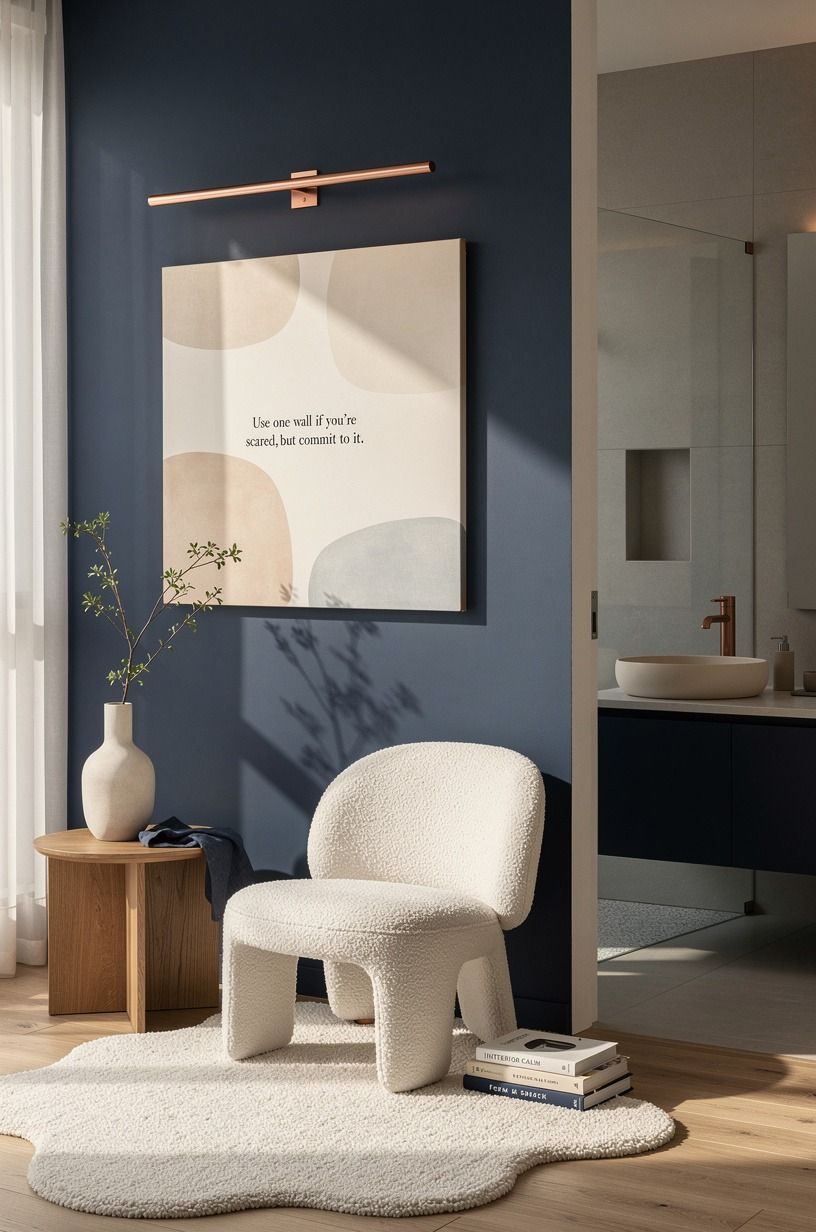
One wallpapered wall can work, especially behind the vanity, but make it deliberate. Run the paper floor to ceiling. Don’t stop it at chair-rail height unless the architecture already gives you a reason.
An organic bouclé detail beside midnight blue, copper, and ivory wallpaper creates texture without making the room feel fussy. Your room stays inviting, and you can keep the practical surfaces near the faucet easy to wipe down. Practical wins.
But if your powder room has four plain walls and no meaningful architecture, I’d paper all four. A half-measure can make the pattern look like an afterthought. Commit, then let the room be a little dramatic!
Why wallpaper belongs in the powder room right now
I think designers reach for wallpaper here because the powder room is one of the last rooms where personality can outrun practicality. Kitchens have budgets, appliance decisions, and a dozen people with opinions. Living rooms have televisions, traffic paths, and sofas that need to work for everyone.
Your powder room has a sink, a toilet, a door, and a few square feet of permission.
I used to think small rooms needed to stay pale so they could feel bigger. That advice isn’t wrong, exactly, but it’s incomplete.
A powder room doesn’t need to impersonate a larger room. It needs to feel intentional when you close the door.
Dark paper can make the edges recede. A floral can make a windowless wall feel less dead. Even a small stripe can give a boxy ceiling some lift.
The real decision is whether you want the room to disappear or make a small impression. I’d choose the impression.
Not because every powder room needs maximalism, but because this is where a home can have a little wit. A print with cranes, pears, faded roses, or crooked vines gives your guests something to look at while they’re alone for two minutes.
That tiny pause matters.
And wallpaper isn’t precious if you choose the right material. Vinyl-coated options handle splashes. Removable versions let renters play.
If you’re worried about resale, keep your fixtures classic and let the paper be the personality. Fixtures cost more to undo.
Paper is the gamble I’m happy to make.
A Few Things Worth Answering
What is the best wallpaper for a small bathroom?
A medium-scale botanical or vertical stripe is usually the best choice because it gives your walls movement without swallowing your fixtures. Choose vinyl-coated wallpaper near the sink, and pair it with a simple IKEA GODMORGON vanity so your pattern stays in charge.
Where can I buy powder room wallpaper on a budget?
You can find budget-friendly options at Target, Wayfair, and IKEA, plus secondhand rolls on Facebook Marketplace or at thrift stores. Look for removable wallpaper with enough extra length for matching seams, then use leftover pieces inside a cabinet or on a tray.
How much does a powder room wallpaper makeover cost?
A powder room wallpaper makeover usually costs about $200 to $1,200 when you’re keeping the layout and using paint, a mirror, faucet, textiles, and paper. Existing trim and hardware are your free starting point, so clean and reuse them before buying replacements.
Can I create this look on a budget?
Yes, and your lowest-cost moves are often the most visible. Use peel-and-stick wallpaper, repaint existing trim, and switch your bulb temperature to warm light. A thrifted mirror, folded towels, and one good soap dispenser can finish the room for very little.
Is wallpaper worth it in a small powder room?
Yes, wallpaper is worth it because a small room needs fewer rolls and gives the print a stronger impact. One focal wall behind your vanity is the safest first step, especially if your room has a low ceiling or a very narrow door swing.
Is wallpaper a good idea for a rental?
Yes, if you use removable paper and test a small hidden area first. Peel-and-stick wallpaper, tension-mounted textiles, and removable hooks let your room feel personal without permanent damage. Keep leftover backing paper and take photos before you begin.
Where I’d Start First
If I had to pick one, I’d start with a dark botanical wallpaper. You can’t layer warmth over blank, gray walls; every brass fixture and folded towel will still feel stranded. Pin that wallpaper direction for later and revisit the dark green powder room case.