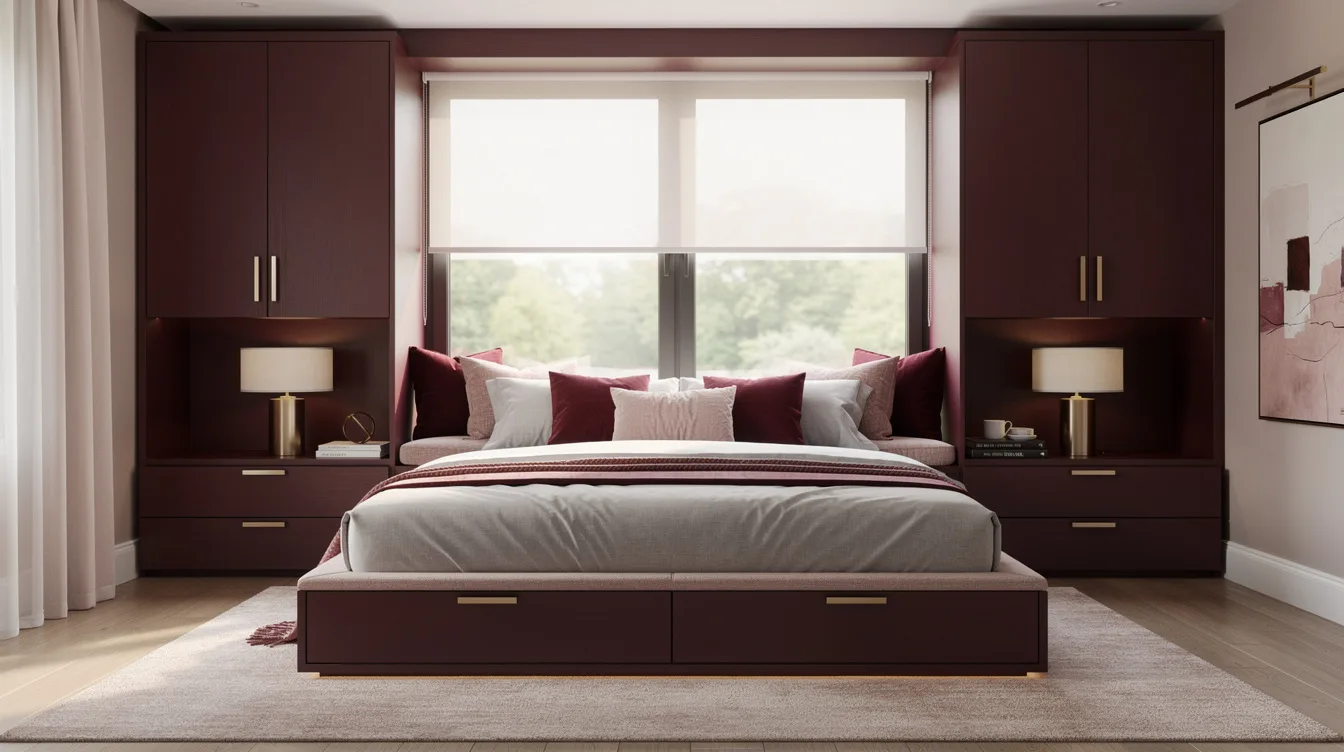
The bedroom clutter usually starts innocently: a spare duvet on the floor, two charging cables on the sill, and a bag waiting for its next trip. A 180 cm-wide window seat can absorb that overflow, but only when its compartments are planned around the objects they need to hide.
The goal is a calm upholstered perch from the outside and a disciplined storage system inside. Closed fronts, divided bays, and labeled containers do the real work.
Build a Closed Seat Around the Mess
The most reliable setup is a closed, zoned window seat with drawers for daily items and lift-up compartments for bulky belongings. Painted plywood creates a sturdy carcass that can match the trim instead of announcing itself as a storage chest.
For an adult bedroom, aim for a finished seat height of 43 to 48 cm and a depth of 46 to 56 cm, including the cushion. A 180 cm-wide unit is a particularly useful sweet spot because it can hold three practical storage zones without feeling oversized.
Split Bulky Bedding Into Lift-Up Bays
Use two or three lift-up lids for duvets, spare pillows, winter clothing, and luggage that rarely needs attention. Hinged birch plywood lids should be divided into bays roughly 60 to 90 cm wide, making them lighter and easier to open than one full-length panel.
Plan for about 45 to 55 cm of internal depth and roughly 30 to 38 cm of clear internal height. That uninterrupted volume beats drawer boxes for bulky bedding, but keep the hinges accessible and avoid packing the compartments so tightly that the lids become difficult to lift.
Add Shallow Drawers for Daily Clutter
Front drawers are the right answer for chargers, books, skincare, paperwork, and the small mess that gathers beside a bed. Full-extension drawer slides let you reach the back without removing the cushion, while shallow drawers around 10 to 15 cm clear inside are easier to keep organized.
Use deeper drawers, roughly 18 to 25 cm internally, for folded pajamas or accessories. A pair of shallow drawers from IKEA can inspire the layout, but custom fronts usually give a built-in window seat a calmer, more intentional finish.
Zone Awkward Items Behind Opaque Bins
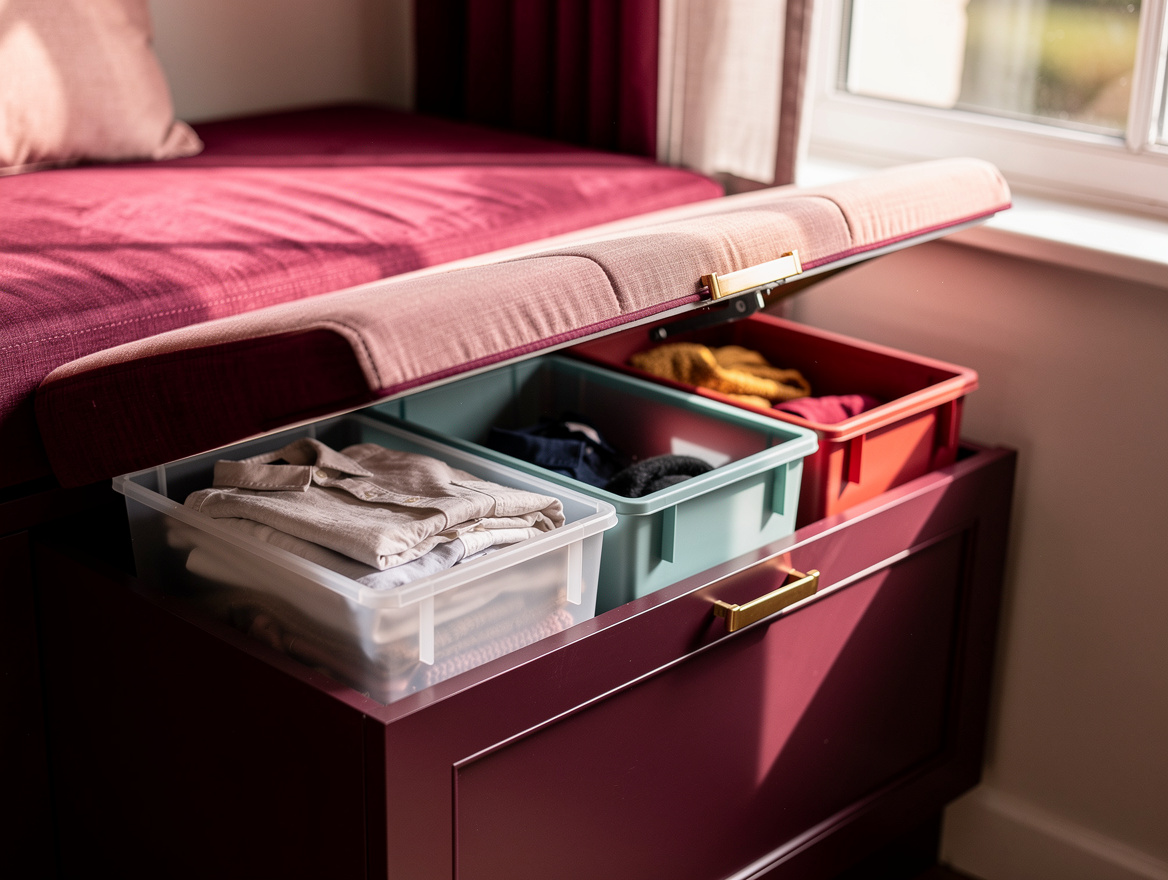
Suitcases, shoes, folded linens, and laundry overflow need categories, or the seat will become a hidden junk drawer. Opaque fabric bins placed inside a lift-top compartment keep the contents visually quiet and create an easy reset when the bedroom gets rushed.
Choose each bin slightly below the internal height so the lid closes without pressure. Labels such as “bedding,” “off-season,” “tech,” and “miscellaneous” are enough, while open cubbies should stay out of the plan unless every item sits inside an identical closed basket.
Set the Cushion for Real Sitting
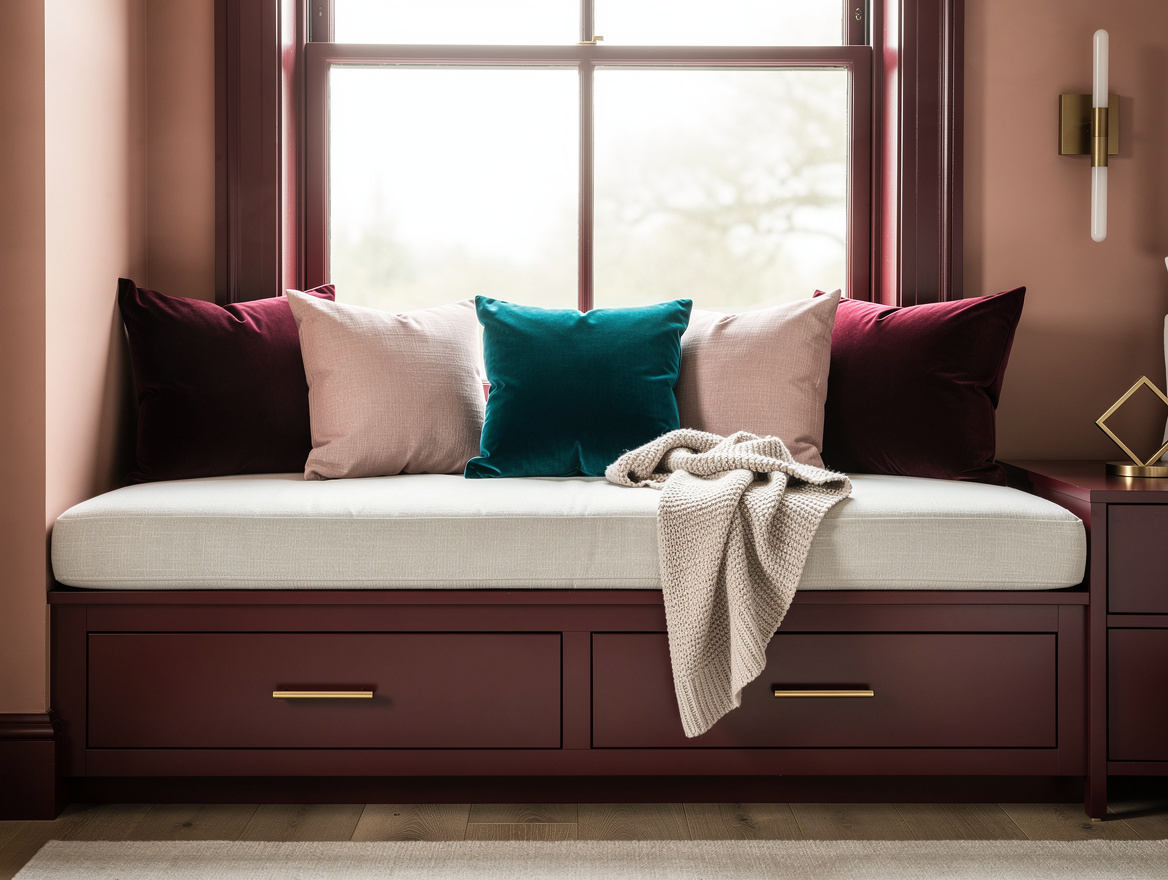
A window seat should feel like furniture, not a low box with a pillow dropped on top. Dense foam with a Dacron wrap, around 5 to 8 cm thick, provides a firmer surface and avoids the flat, cheap look that soft loose filling can create.
For upright sitting, a depth near 46 cm works well; a deeper seat around 51 to 56 cm is more comfortable for reading or curling up. If the recess is genuinely deep enough for lounging, about 61 to 76 cm can work, but that choice takes away valuable floor space and should be deliberate.
Finish a 180-Centimeter Storage Layout
For a 180 cm-wide wall below a window, a strong default is a carcass about 180 W × 52 D × 39 H cm with a removable cushion about 180 W × 52 D × 7 cm. White oak veneer can warm a neutral bedroom, while a painted finish disappears more completely into the wall.
Use two 90 cm lift-up lids instead of one heavy full-width lid, then place four opaque labeled bins inside. Optional center drawers can hold everyday items, but leave enough structure beneath the seat to prevent sagging and enough clearance around the window trim for clean operation.
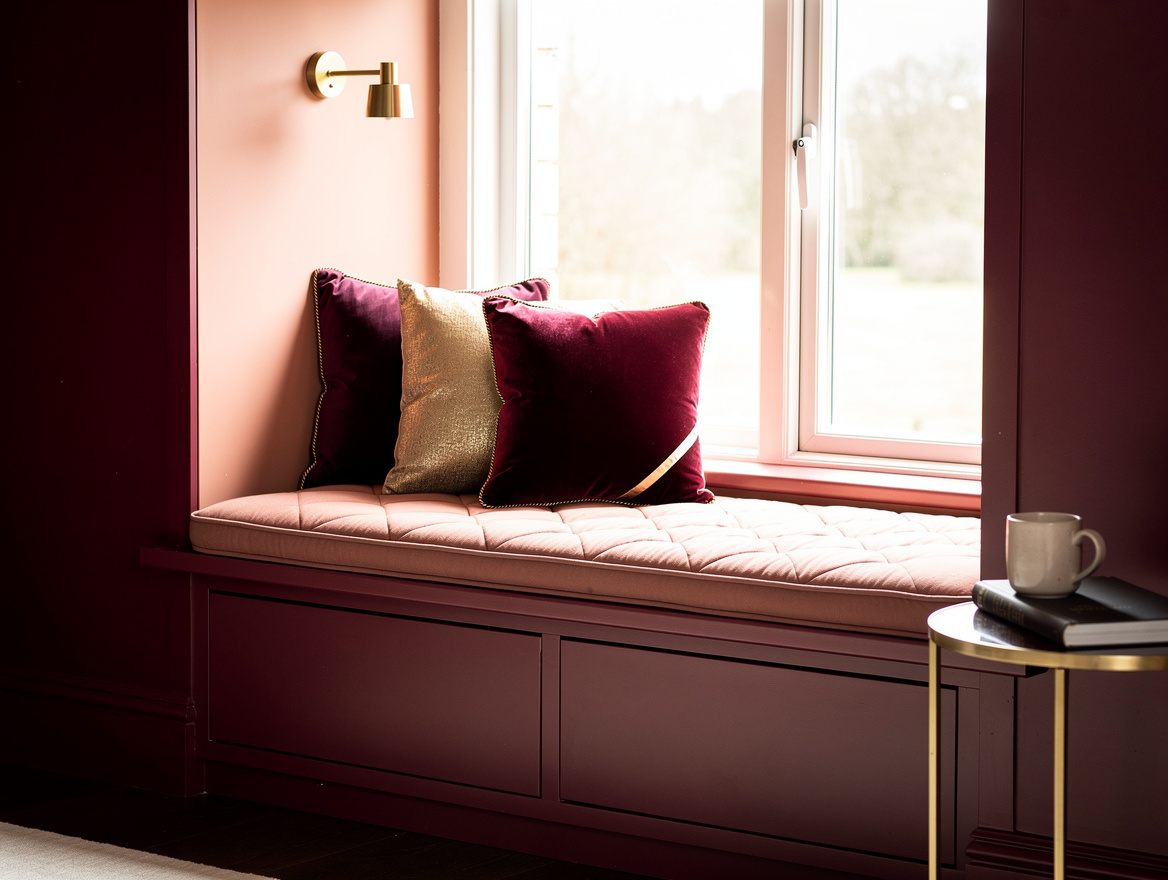
Start by sorting the clutter into daily, bulky, and rarely used categories, then choose drawers or lift-up lids from that list. Once the storage opening matches the mess, the window seat can stay tidy with far less effort.
Mia Carter writes about small-space living and budget home makeovers. She has restyled three rentals and tests most ideas in her own 45 sqm flat.