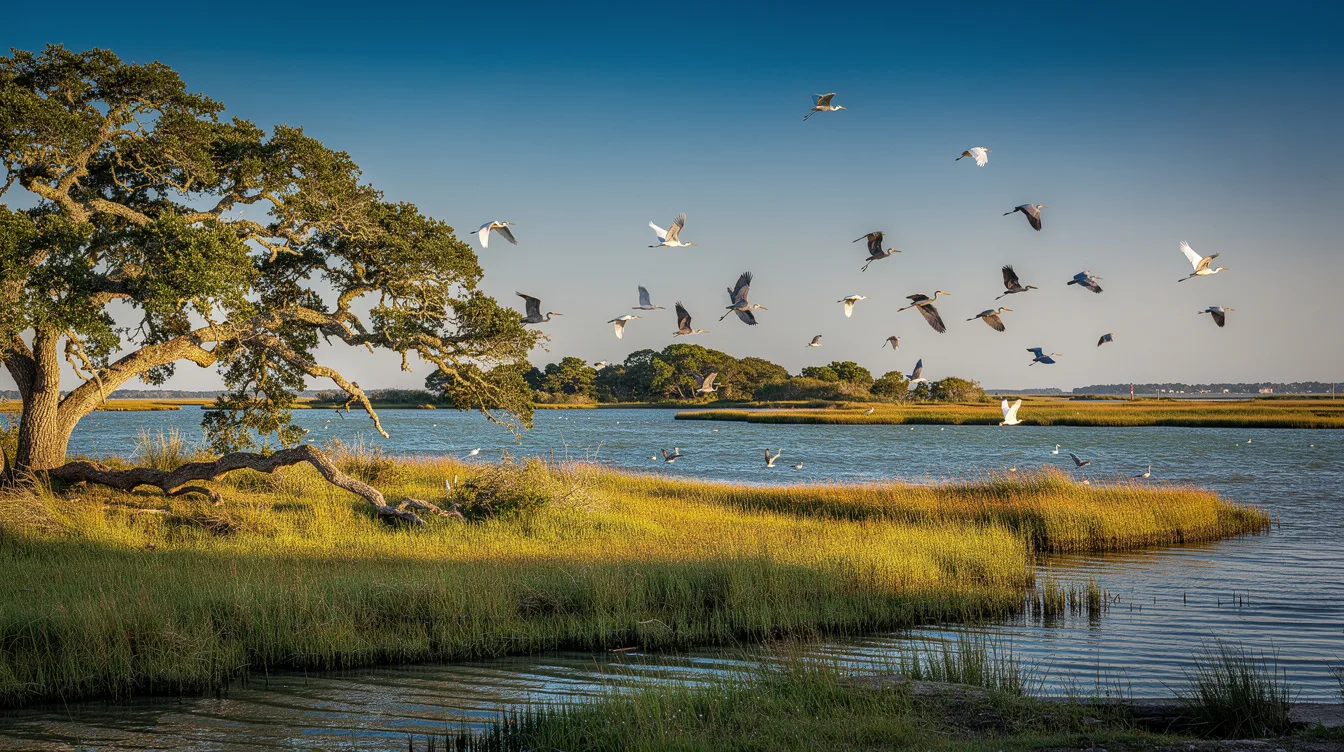
Rockport sits where two major North American flyways cross, giving this Texas coastal town a reason to slow down and look up. The setting is quiet, but the migration traffic isn’t. During spring and fall, birds move through the Coastal Bend while the Gulf breeze slips across Copano Bay and Aransas Bay.
Rockport is on the Live Oak Peninsula, about 31.1 miles northeast of Corpus Christi. That makes it remote enough to feel removed, but easy enough to reach by car from the area’s larger city. If you want a birding base with beaches and a walkable small-town mood, this is one of Texas’s more convincing choices.
Two flyways make spring and fall the main event
And the central fact is simple: two major North American migration routes pass through the area. That overlap is why Rockport has earned a reputation among birdwatchers, especially during March to May and October to November.
But migration doesn’t turn the town into a frantic festival. You can take your time along the shore, pause near the bays, and let the movement reveal itself. Bring binoculars, wear a hat, and give yourself more time than you think you’ll need.
The best part is often the waiting.
Rockport is a practical choice for travelers who want nature without giving up basic comforts. Read more about [Texas coastal escapes](/texas-coast/) before you plan a longer Gulf itinerary.
Rockport Beach keeps the water close
And Rockport Beach puts the Gulf experience directly inside town. It sits on Aransas Bay, where you can swim, walk, or fish without committing to a long drive. The shore gives birders another reason to linger after the day’s main outing.
But this is still a beach town, not a wilderness outpost. Summer brings hot, humid weather and strong sun, while spring and fall feel easier for walking outdoors. You can plan around the heat, though you’ll want water, shade, and a flexible schedule.
The bay also shapes the town’s pace. Boats, kayaks, sails, and fishing trips are part of the local rhythm, so the waterfront feels active without becoming loud. For a closer look at coastal activities, visit this guide to [Texas bay towns](/texas-bay-towns/).
Fulton and Rockport add history to the birding trip
And the area has more texture than a single beach and a pair of binoculars. Nearby Fulton is a separate municipality, though travelers often refer to the two places together as Rockport-Fulton. That distinction matters if you’re planning stops by address.
But the history is easy to follow once you’re there. The Texas Maritime Museum covers navigation, shipbuilding, oil, and piracy along the Texas coast. At the Fulton Mansion State Historic Site, a 19th-century Second Empire house adds a very different view of the region.
You can also spend time at the Rockport Center for the Arts, which presents local and contemporary work beside a sculpture garden. The Bay Education Center explains the area’s bay ecosystems. None of it competes with the birds, and that’s the point.
When should you visit Rockport?
And the best answer is spring or fall, when migration overlaps with more comfortable outdoor weather. From March through May, temperatures are generally more moderate, while October and November bring cooler conditions for walking and time on the water.
But summer has its appeal if swimming is your priority. The heat and humidity can make midday outings tiring, and the Gulf remains exposed to tropical weather from June through November. Check local alerts before you leave, especially during hurricane season.
You’ll find the town most rewarding when you build in unscheduled time. A birding morning can become a beach walk, then a museum visit, then a quiet hour beside the bay. That flexibility is Rockport’s strongest travel advantage.
How do you get to this Texas birding town?
And the simplest route is through Corpus Christi International Airport, followed by the drive northeast to Rockport. The town also has Aransas County Airport, a small local airport, while Texas State Highway 35 runs through Rockport.
But you won’t need a complicated plan once you arrive. The town had 10,070 residents in the 2020 census, so its scale feels manageable rather than metropolitan. Rockport was founded in 1870, yet the visitor experience is focused on the coast, the bays, and the day’s conditions.
Start early if you want the calmest light and the coolest air. By late afternoon, the water turns silver near the shore, and Rockport feels less like a destination than a place waiting for the next flight overhead.