
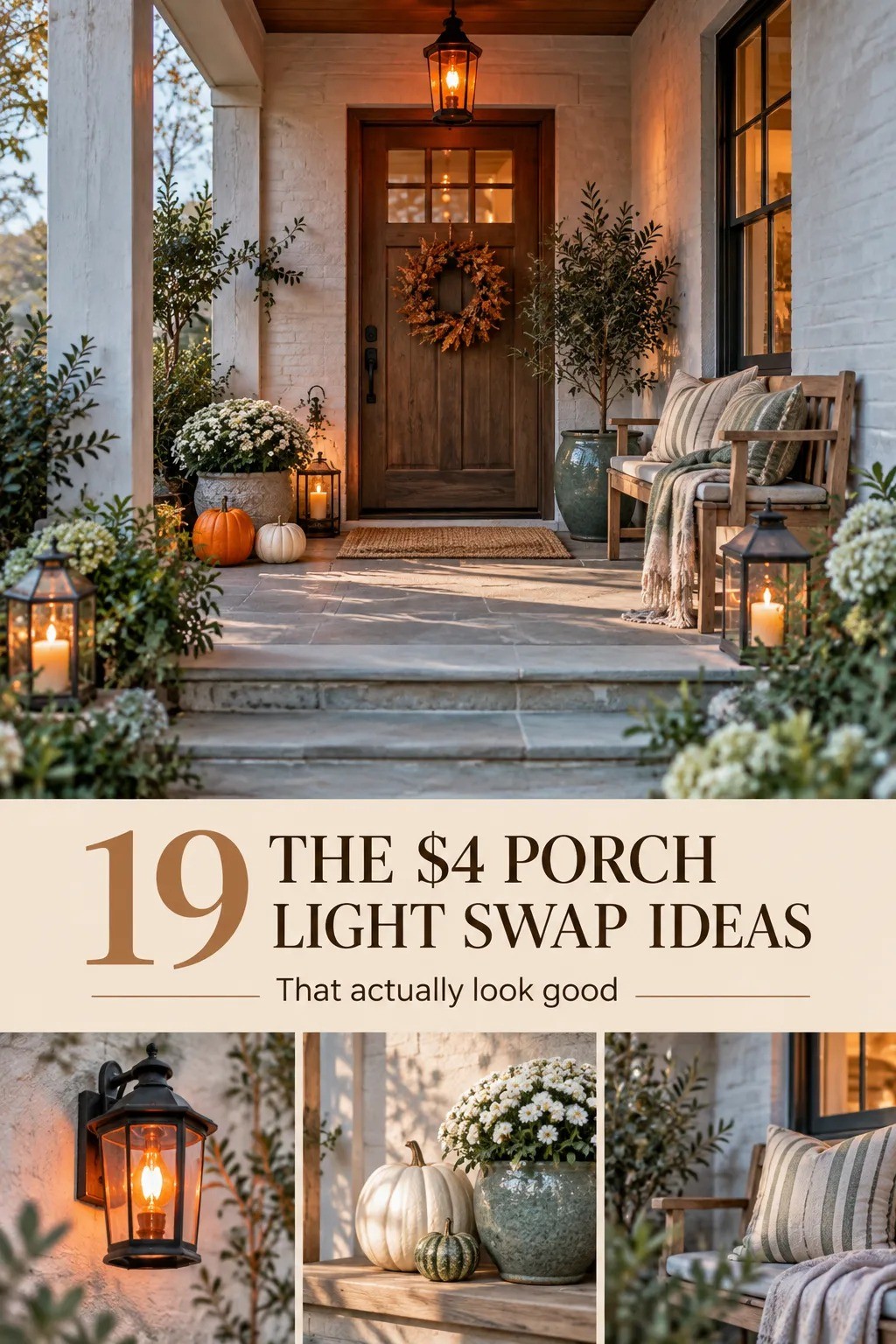
Your porch can look haunted for $4, and the fix takes five minutes: swap a cool white bulb for an orange outdoor bulb. I learned this after buying pillows and plants while ignoring the harsh light above the door. The orange glow works because it changes the shadows first. Start there.
- Swap Cool White for an Orange Light Bulb Halloween Glow
- Layer Purple Halloween Porch Light With Amber
- Anchor the Door With the Three-Height Light Stack
- Frame the Entry With Soft Pumpkin Color
- Hang a Lantern Against the Orange Bulb
- Paint the Fixture With a Deep Green Exterior Finish
- Build the Shadow Garden Around One Light
- Layer the Door Mat Over a Darker Base
- Hang a Branch Wreath Instead of a Bright Sign
- Use the Porch Light Budget Table Before You Buy More
- Float String Lights Above the Porch Seating
- Mix Orange Light With White Porch Trim
- Frame the Steps With Low Amber Markers
- Swap the Fixture Glass for Ribbed Texture
- Contrast Orange Light With Aged Bronze
- Hang a Velvet Ribbon Below the Bulb
- Paint a Small Door Number Panel
- Use the Two-Wood Rule Near the Door
- Skip the Bright Sign and Let the Shadows Work
1Swap Cool White for an Orange Light Bulb Halloween Glow
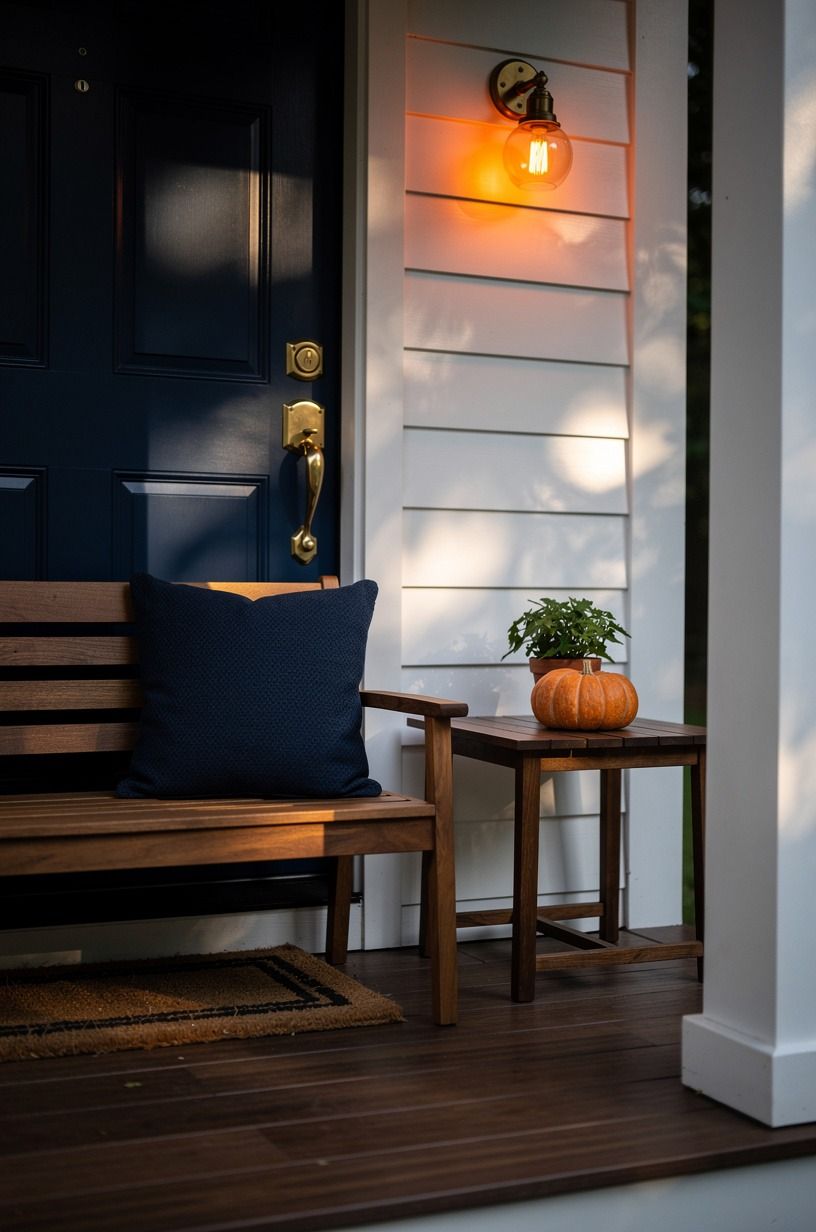
A cool white bulb makes your porch look like a parking lot. An orange bulb gives the steps a moody, dramatic wash, especially when the siding is pale or the front door is black.
You’ll want an outdoor-rated bulb, and you don’t need a new fixture. Turn off the switch, let the old bulb cool, and make the five-minute change.
The best result comes from a warm orange LED bulb with a soft finish. I’d skip a bright red bulb because it reads like an emergency signal, not fall atmosphere. If you’re styling the rest of the entry, pair the light with a small unglazed ceramic vase arrangement near the door.
Keep the bulb modest. Your porch should feel inviting from the sidewalk, while the corners stay shadowy enough to look enchanting. And if your fixture is unlacquered brass, its developing patina will deepen the old-house mood as the orange color spreads farther than you’d expect.
Typical cost by tier (US averages):
2Layer Purple Halloween Porch Light With Amber
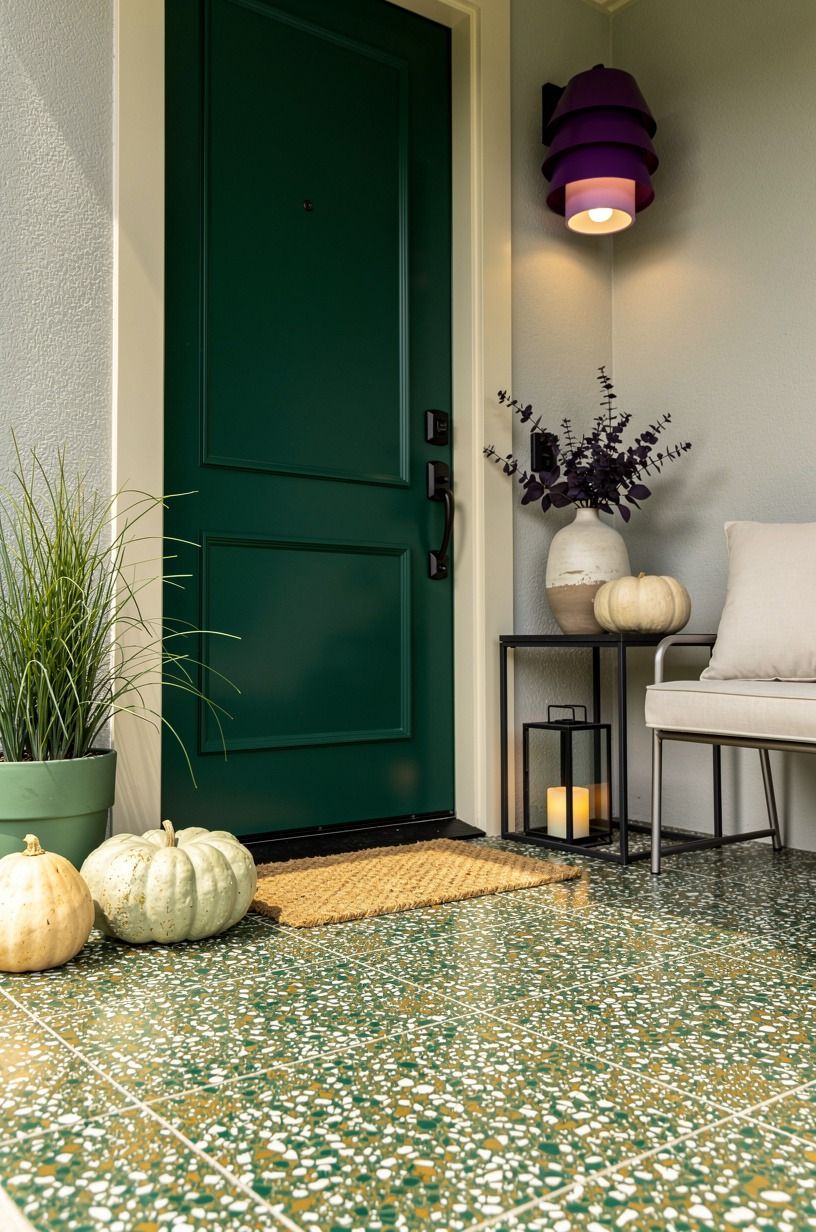
Purple light can look charming, but a porch washed entirely in purple often feels flat and theatrical. Layer it with amber instead. Keep the purple bulb near the door, then use a small amber LED lantern lower on the step or beside an oversized-chip terrazzo planter.
Your eye gets contrast, and the entry feels more mysterious.
I’ve tried purple alone, and it made our emerald exterior look bruised. Amber softened the effect without losing the spooky edge.
You’ll want the two bulbs to differ in height, because matching them across one line makes the porch feel staged rather than lived-in. A related navy color comparison can help if your exterior already has cool undertones.
Choose a deep violet rather than neon magenta. Your porch will look calmer, warmer, and more sophisticated, with just enough Halloween drama to make visitors pause.
3Anchor the Door With the Three-Height Light Stack
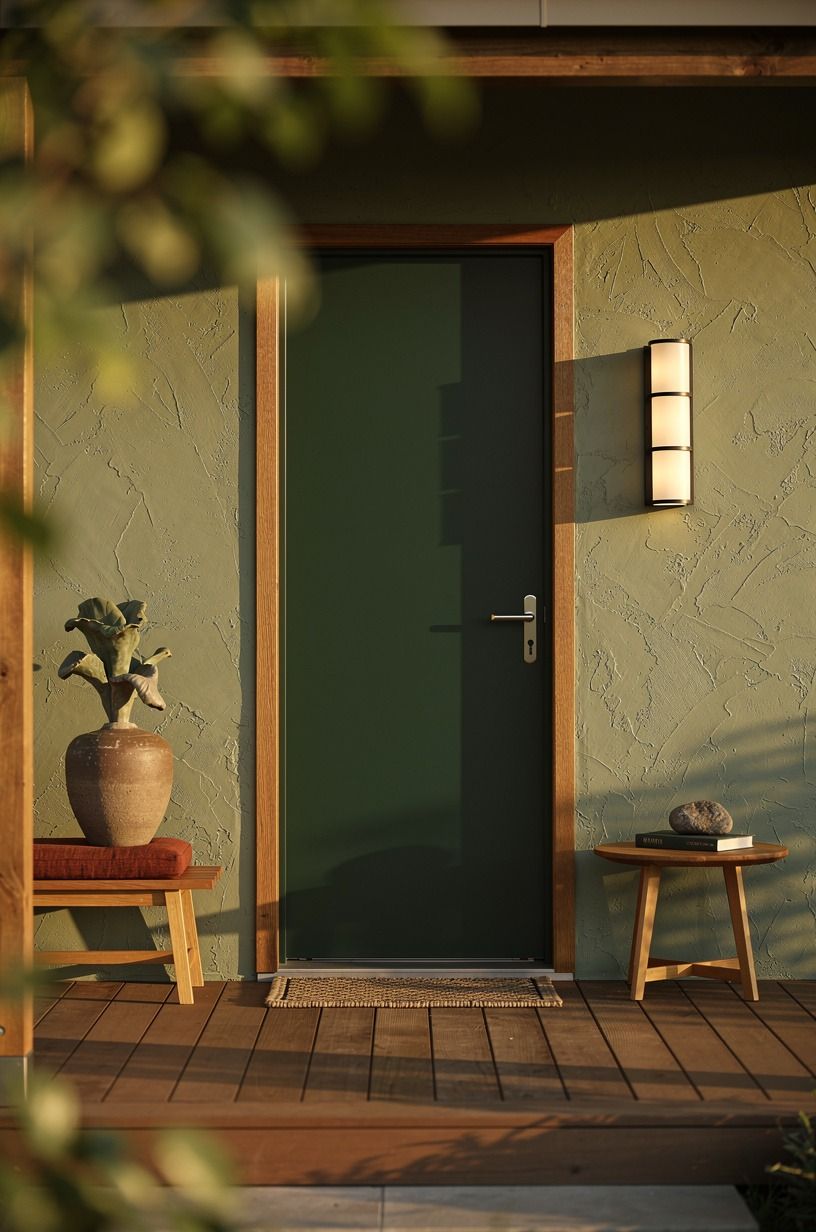
The Three-Height Light Stack uses the doorway, a waist-high object, and a low glow near the ground.
4Frame the Entry With Soft Pumpkin Color
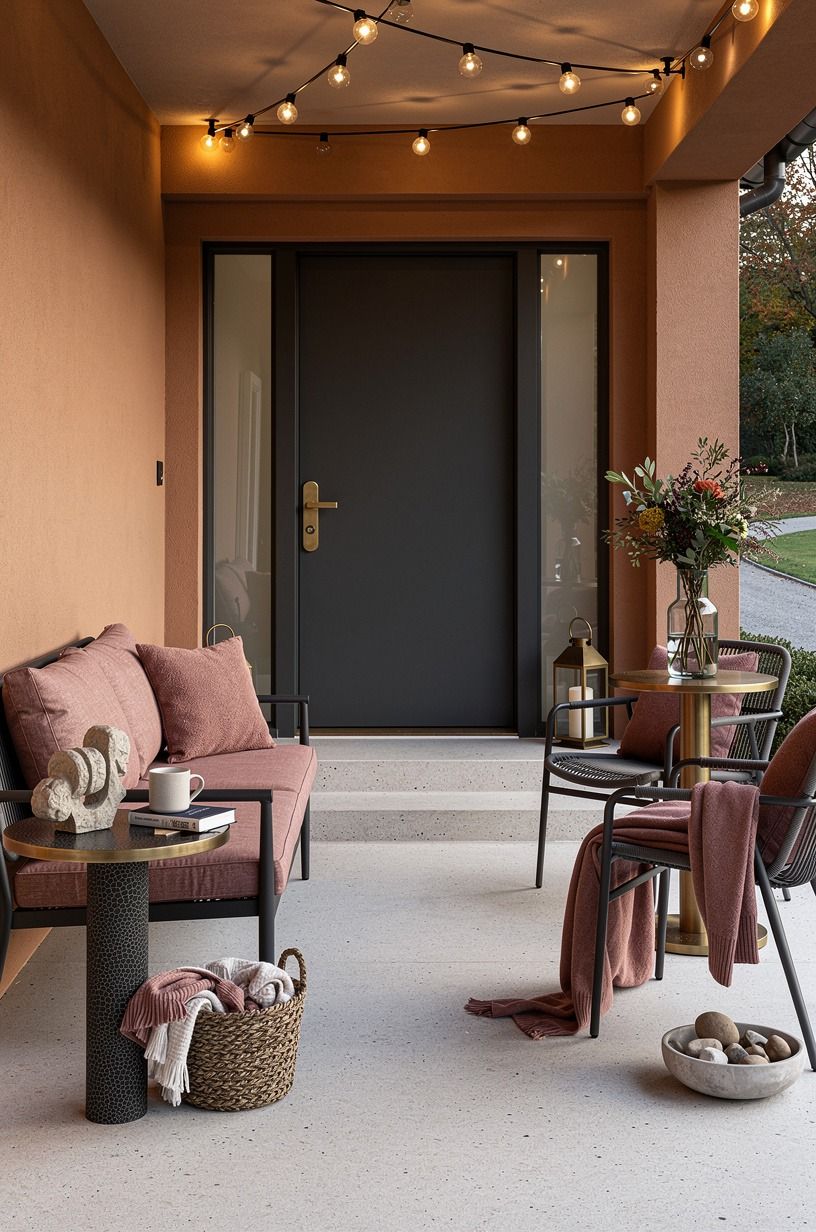
Pumpkin color works best when it frames the door instead of covering every surface. Place two small pumpkins at different heights, then let the orange bulb echo their color overhead. Your porch will feel warm and autumnal before you add anything spooky.
I’d skip glossy plastic pumpkins. Their shine catches the light in a distracting way, especially beside a shagreen accent. Choose ribbed ceramic pumpkins or real pumpkins with dusty skin, and leave enough floor visible around them for a calmer arrangement.
If you’re using a rug, keep its front edge clear.
The strongest combination is orange light, dusty rose, and one charcoal accent. You’ll get a picturesque entry without turning the porch into a theme park. And if your door is already colorful, use fewer pumpkins so the light remains the lead.
5Hang a Lantern Against the Orange Bulb
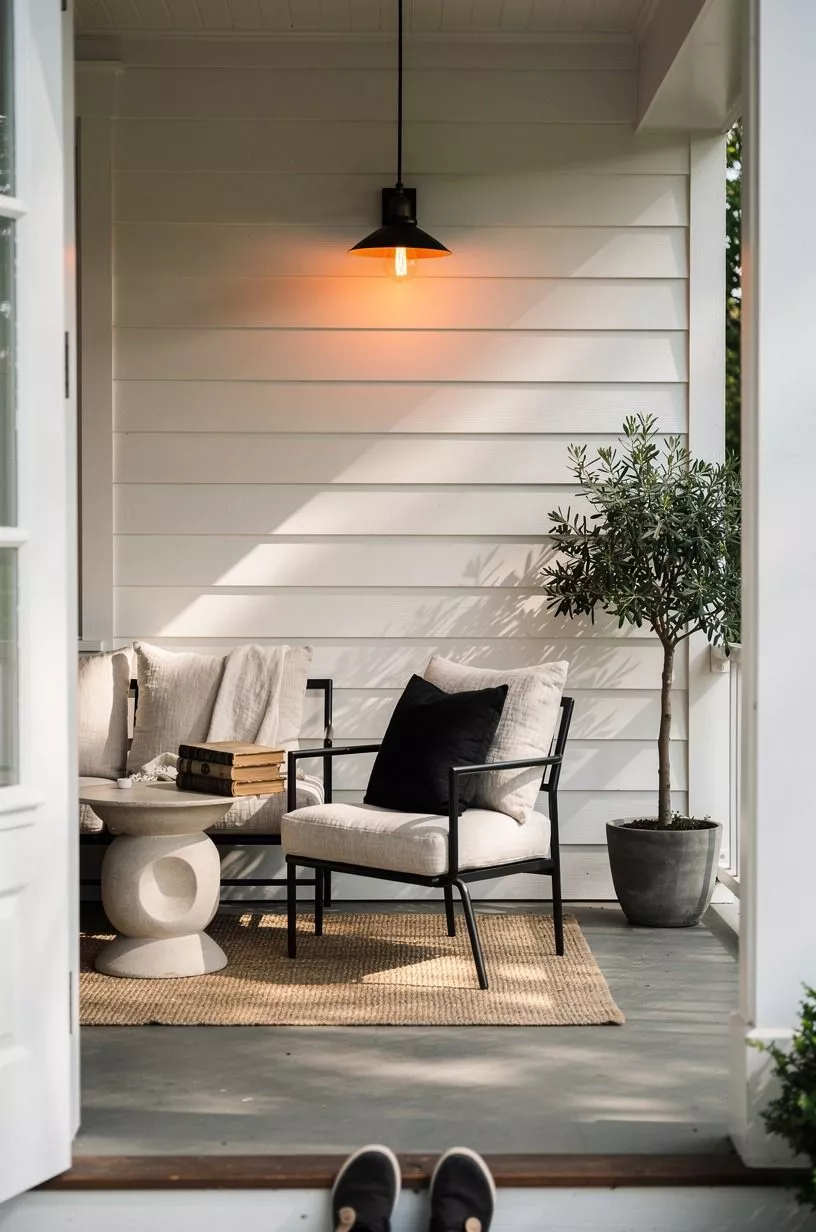
A lantern gives your porch a second shell for the light. Hang a clear glass lantern beside the door, but keep its bulb dimmer than the overhead fixture. The overlapping glow creates soft layers across the wall, and your washed Belgian linen will show more texture after sunset.
You’ll want the lantern to sit slightly below eye level, where it can brighten faces without shining directly into them. I’d skip a polished brass version if your porch already has shiny hardware. Black will look more settled and rustic against orange light.
And don’t fill the lantern with extra decorations. One small candle or a single warm LED is enough.
Your entry will feel intimate because the shadows remain visible, not because every surface is illuminated. For another small-scale styling reference, look at this soft hat placement guide.
6Paint the Fixture With a Deep Green Exterior Finish
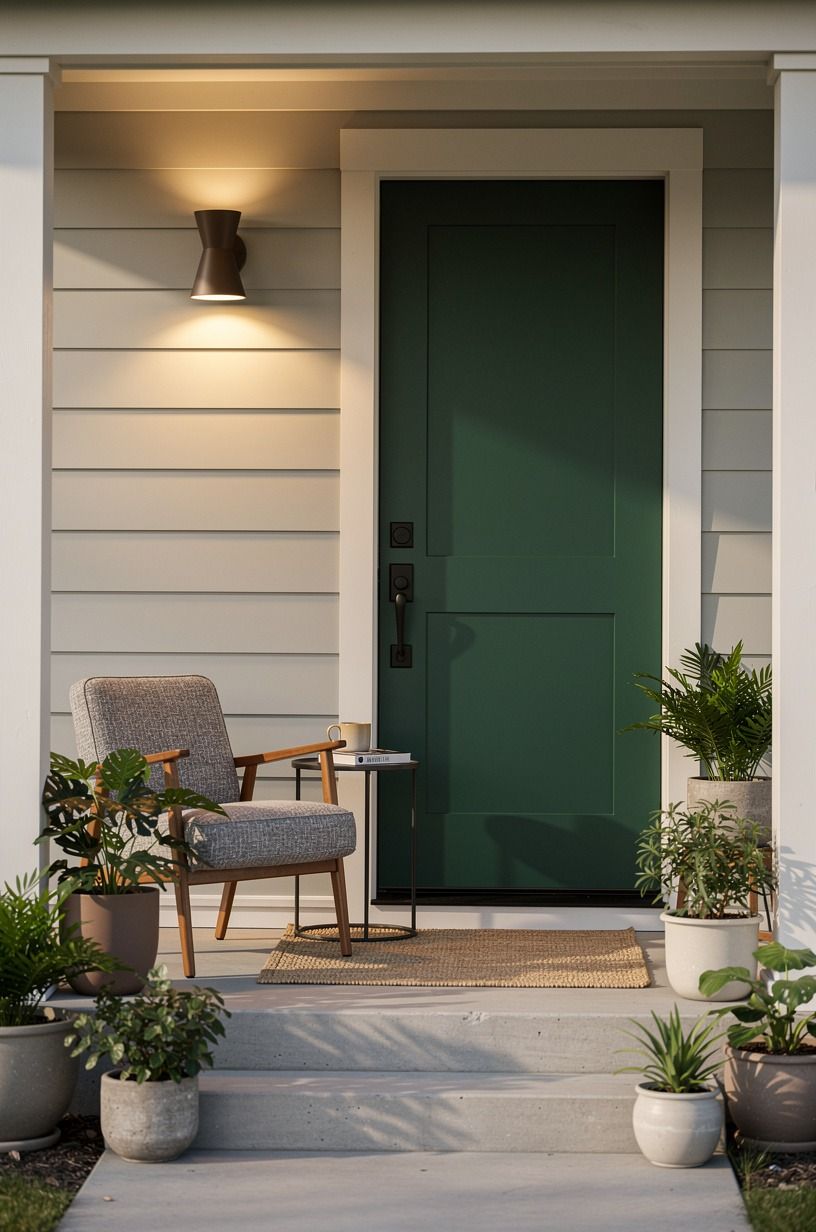
A dated porch fixture can make even a warm bulb look cheap. Paint the metal housing in a midnight blue exterior finish if you want a deep color that settles against ivory trim. Use an exterior-rated finish, remove the glass, and let every coat dry before reinstalling the bulb.
I’d avoid painting over the socket, wiring, or ventilation openings. Your fixture still needs to shed heat safely, and a rushed coat can peel around the hottest areas. I made this mistake on a small lantern once, and the paint softened after one humid evening.
Choose Benjamin Moore Aura Exterior when you’re refreshing a larger metal surround, or use Farrow & Ball Exterior Eggshell for a softer, more traditional look. If you’re weighing midnight blue against another palette, this muted green color discussion offers useful contrast.
7Build the Shadow Garden Around One Light
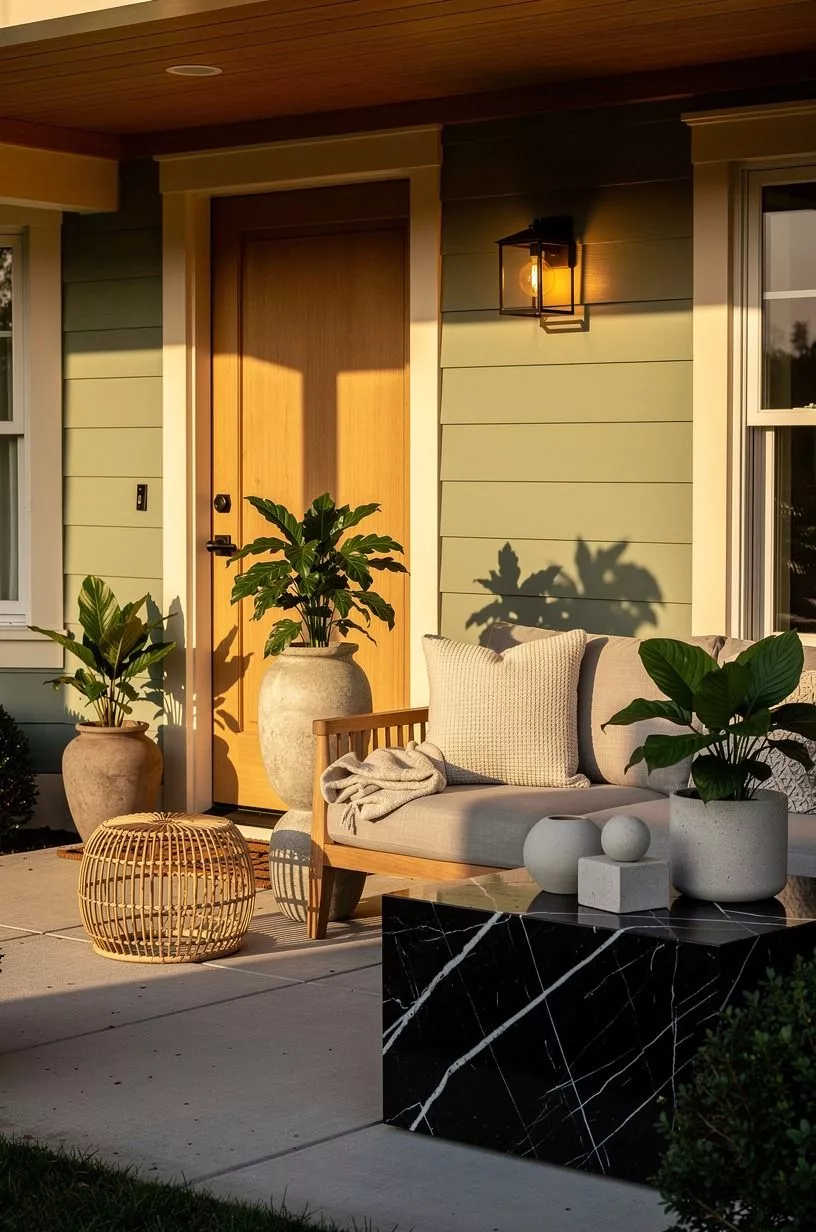
A Shadow Garden uses plants to interrupt the bulb’s glow. Set a Nero Marquina black marble planter slightly off to one side, then choose a fern, ornamental grass, or branch with open spaces between the leaves. Your wall will catch irregular shadows, which makes the porch feel moody without extra decorations.
You’ll want the plant close enough to the fixture to cast a shape, but not so close that leaves touch hot glass. I’d skip dense artificial shrubs because their silhouettes look repetitive. A real plant has gaps, bends, and small imperfections that make the effect more believable.
Use a narrow planter if your walkway is tight. Keep the required 36 in of walkway clearance, and your entry will stay practical as well as enchanting. For a softer color reference, browse this wavy crop with short fringe, which has the same gentle movement I like in porch foliage.
8Layer the Door Mat Over a Darker Base
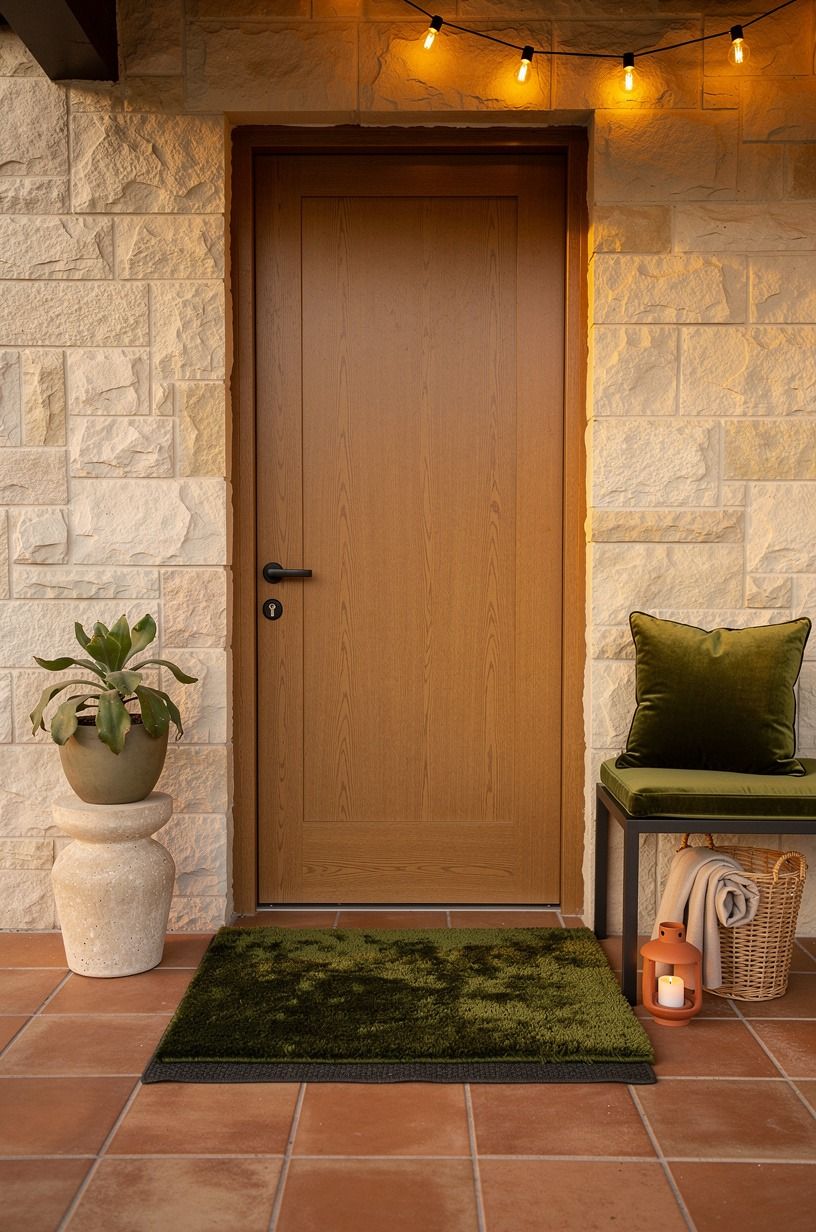
A layered mat gives the porch a grounded look, especially when the orange light creates a pool of color at the threshold. Put a deep-pile mohair velvet mat over a larger stone-colored mat, leaving a visible border on all sides. Your doorway will look finished without needing a wreath.
I’d choose a simple stripe or narrow check rather than a large Halloween message. The lettering can compete with the bulb, while a quiet pattern keeps the glow in charge. And because deep-pile mohair velvet holds onto loose fibers, you’ll want the lower mat to catch them before they spread across the porch.
Use terracotta, stone, or faded olive. Your entry will feel earthy and welcoming, not overly polished. If your door hardware is bright, repeat that color only once in a small accent so the layered mat doesn’t become visually noisy.
9Hang a Branch Wreath Instead of a Bright Sign
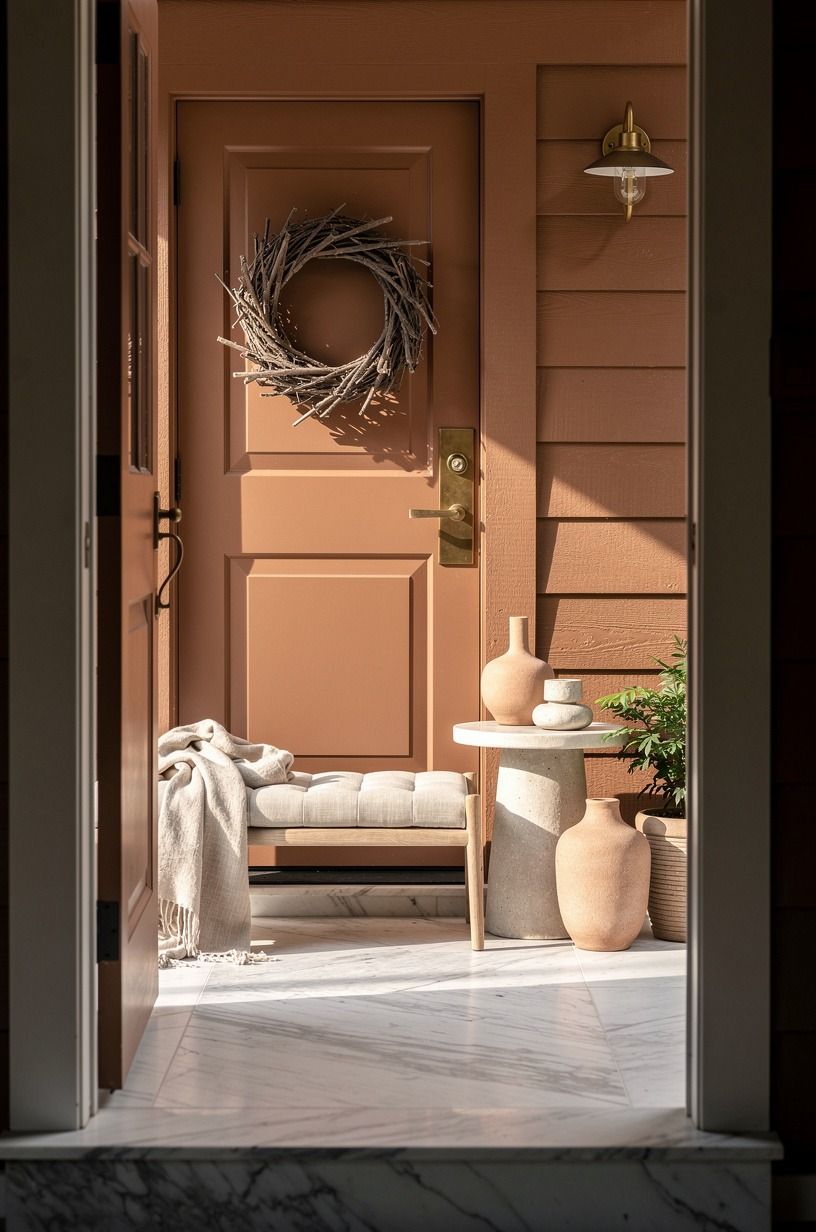
A branch wreath lets the orange bulb create the decoration. Choose a dried grapevine wreath with an open center, then hang it from a linen ribbon so the door color remains visible behind it. Your porch will look more refined than it would with a bright printed sign.
I’d skip a fully covered wreath in this arrangement. Dense faux leaves block the light and create one heavy circle, while open branches produce shifting shadows.
You can add a single linen ribbon, but keep the knot small. The bulb should still be the first thing your guests notice.
And if your door faces a sheltered porch, dried materials can last through the season. Your budget stays low, and the wreath can move indoors later. A similar restrained approach appears in this wrinkle-hiding hairstyle example, where one clear shape does more than a crowded arrangement.
10Use the Porch Light Budget Table Before You Buy More
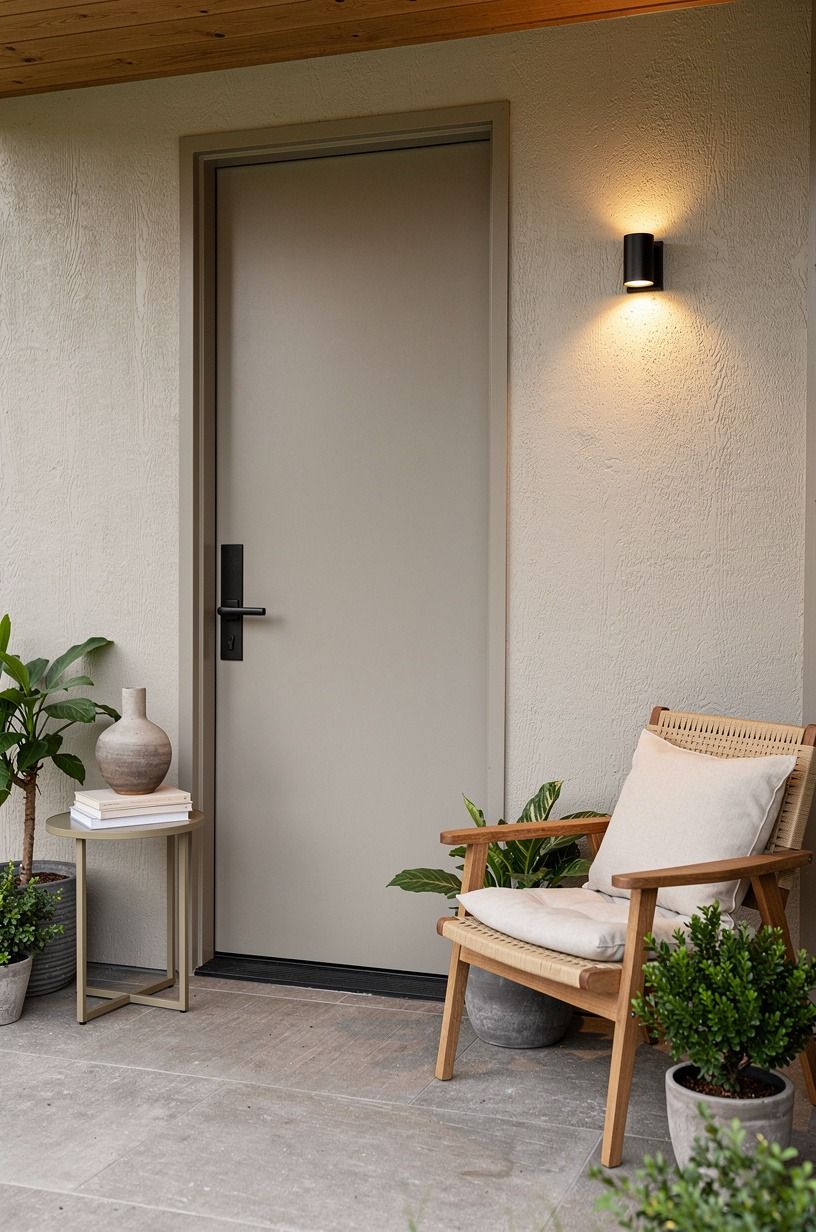
The $4 bulb is a smart starting point, but your full outdoor area may need a different budget.
11Float String Lights Above the Porch Seating
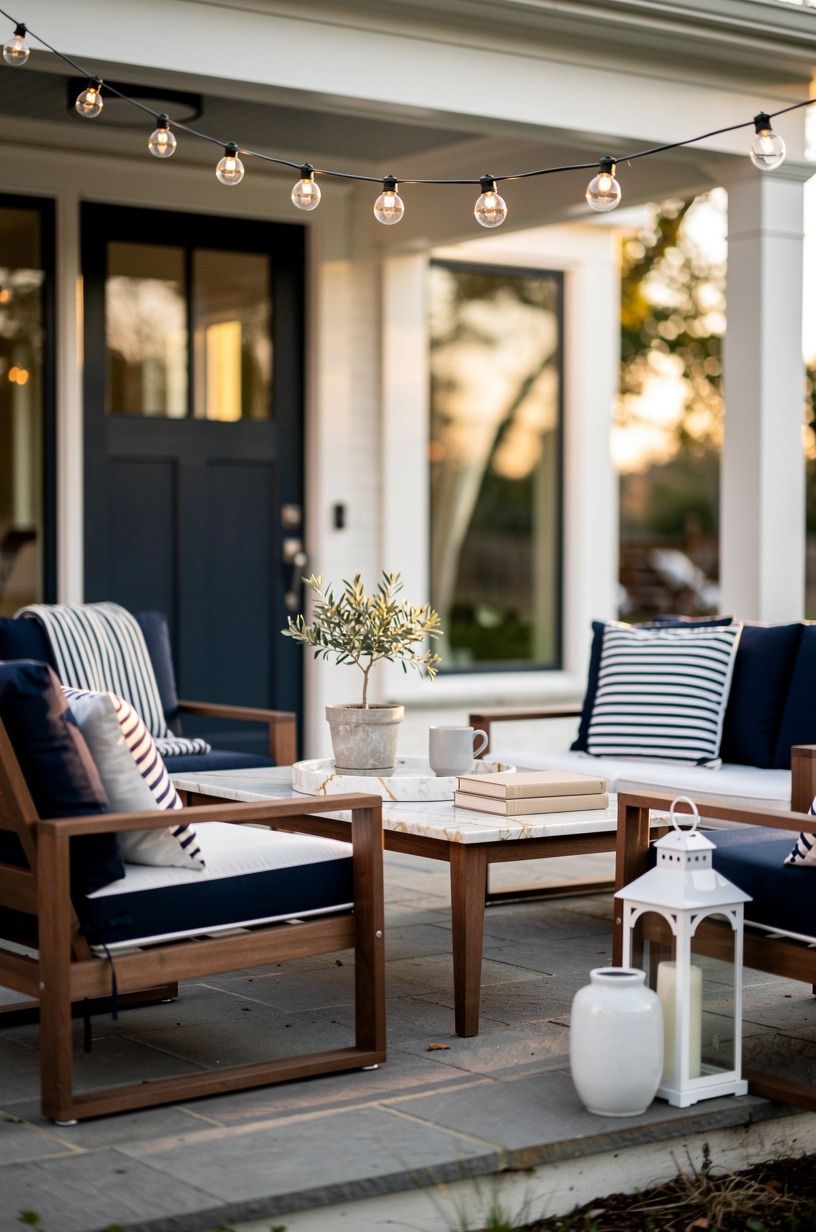
String lights work when they create a second ceiling, not when they droop across every railing. Hang warm LED string lights along the outer edge of the porch, then leave the center open above your seating. Your orange bulb can remain the entry focal point.
You’ll want a clean line with gentle tension, and you should keep the walkway clear below. I’d skip blue-white LEDs because they fight the orange bulb and make the shadows look gray. Choose a soft amber tone so the two light sources feel related.
If you have an outdoor table, remember that a standard patio table sits 28-30 in high. Your lighting should sit above seated eye level, while the bulb near the door stays higher. For a little visual lift elsewhere, this mattress loft guide shows how one height change can alter a whole composition.
12Mix Orange Light With White Porch Trim
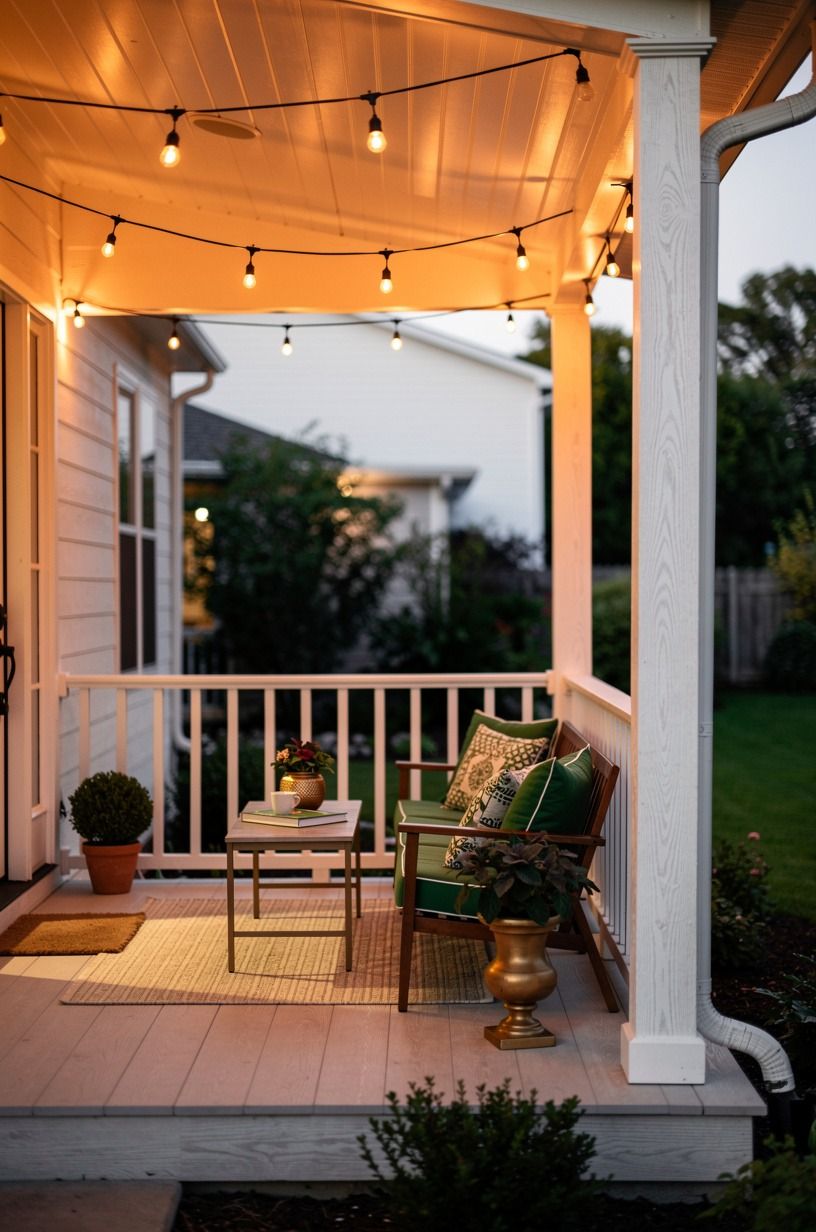
Orange light looks richer against the right trim color. If your porch has Benjamin Moore White Dove OC-17, the glow will read warm and creamy. If the trim is stark white, the same bulb can look more theatrical, so add a natural mat or cerused white oak planter to soften the contrast.
I’d avoid repainting the whole exterior for a seasonal effect. Your porch can shift with a bulb, a wreath, and one textile. Use Sherwin-Williams Emerald Exterior only when the fixture surround or trim genuinely needs a durable refresh.
And if you’re considering a darker door, sample it beside the bulb after sunset. Your color can look completely different under orange light than it does at noon. This navy blue comparison is a useful reminder that cool shades change dramatically beside warm illumination.
13Frame the Steps With Low Amber Markers
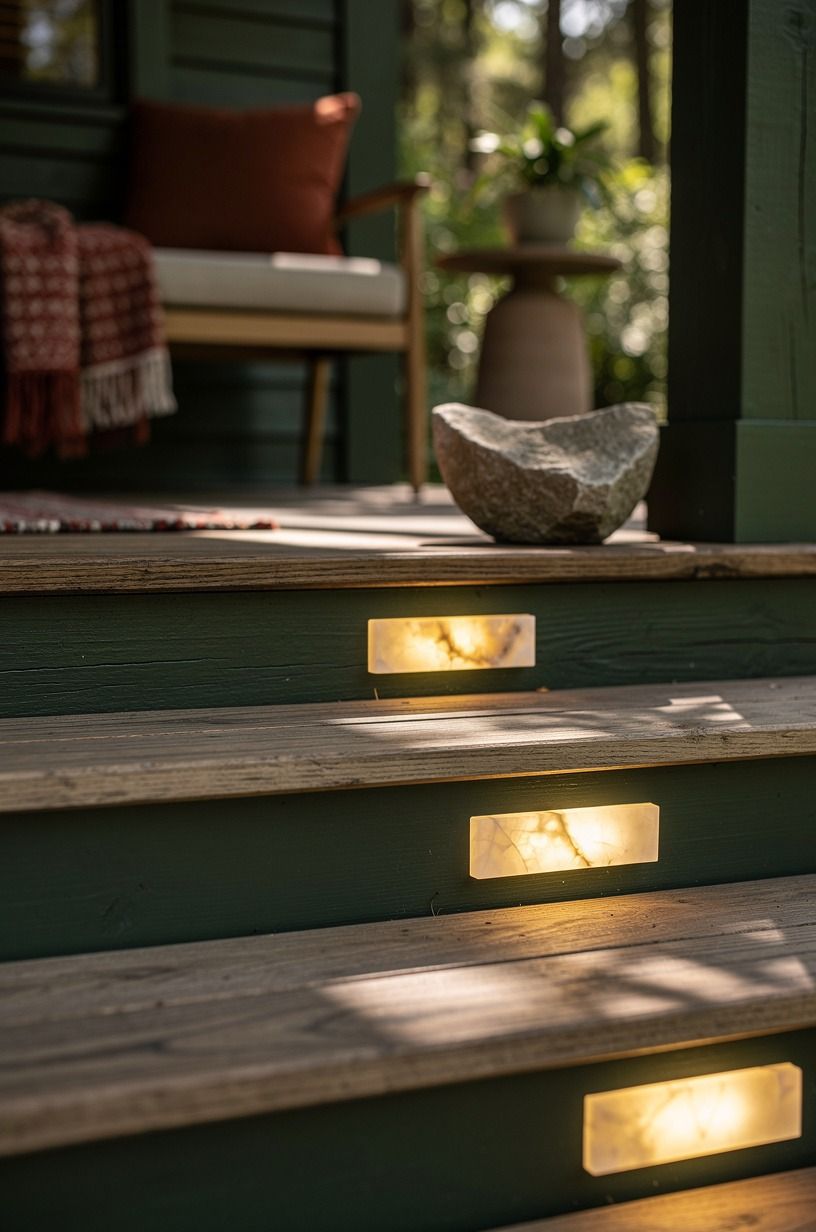
Low markers make the approach feel intentional, especially when your overhead fixture leaves the lower steps dark. Use amber solar path lights along the edge, keeping them outside the walking line. Your guests can see the change in level, while the porch still keeps its dramatic pockets of shadow.
I’d choose simple translucent onyx markers rather than novelty shapes. Your Halloween mood should come from the color and placement, not from plastic ghosts competing with the door. Place the lights irregularly enough to feel natural, but keep the path readable.
Maintain at least 36 in of walkway clearance where people pass. You’ll want the markers to guide movement without forcing anyone around them. If your steps are narrow, use fewer lights and let the main bulb carry more of the atmosphere.
14Swap the Fixture Glass for Ribbed Texture
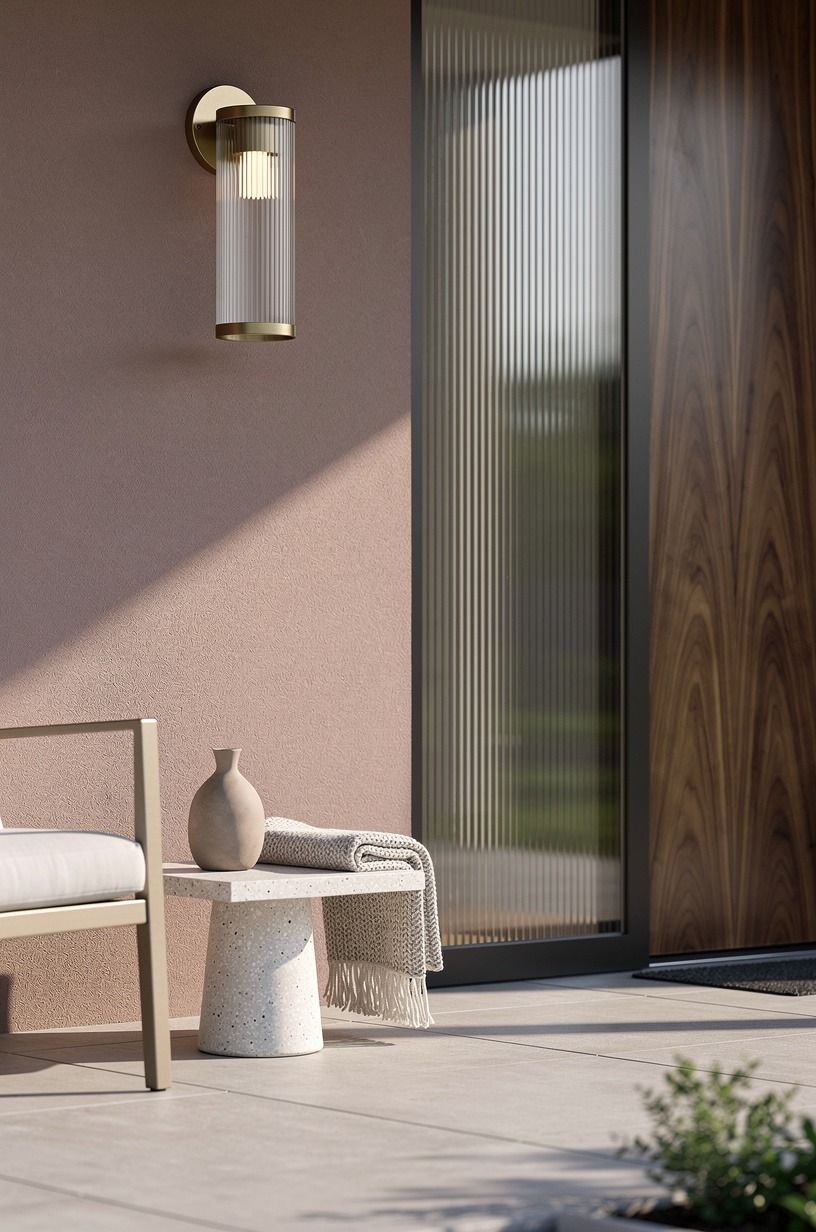
If your fixture allows replacement glass, ribbed glass can soften the bulb without changing the wiring.
15Contrast Orange Light With Aged Bronze
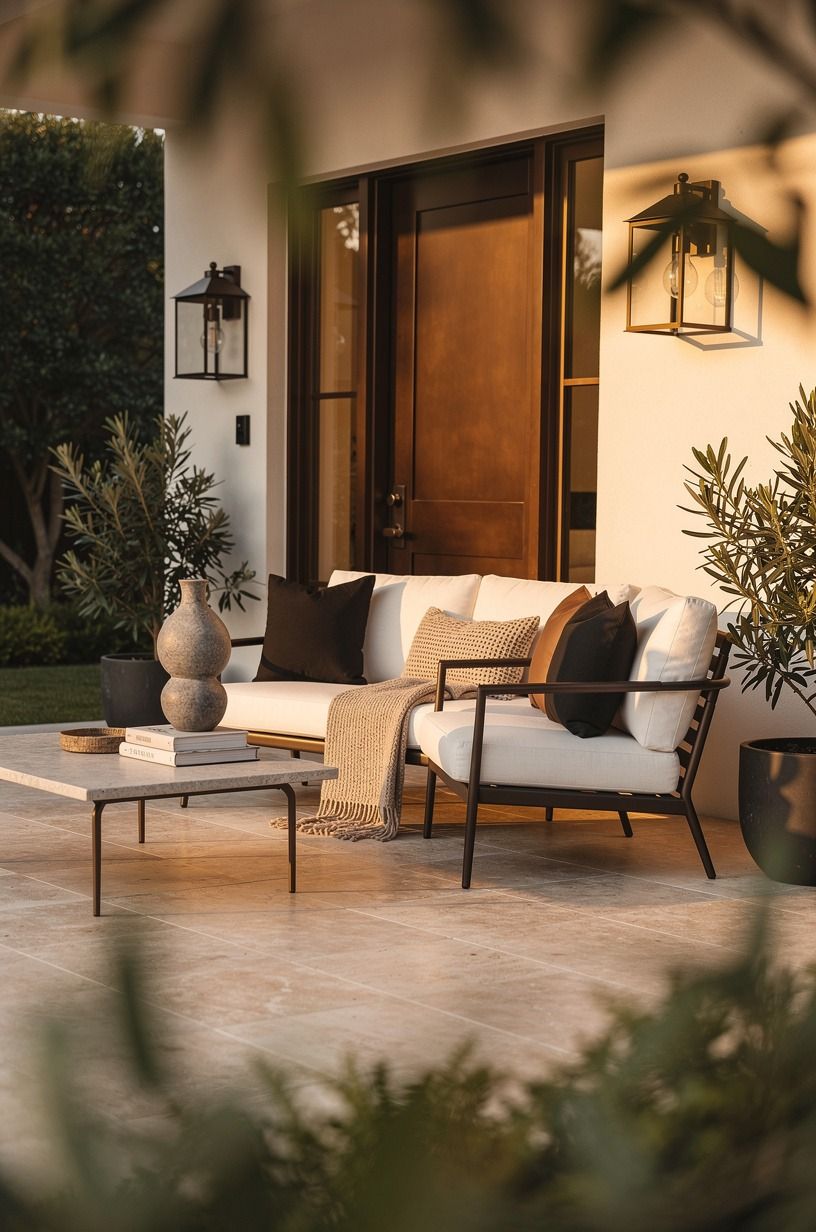
Warm travertine gives orange illumination something substantial to rest against. Add a warm travertine planter or small stone ledge, then keep the rest of the hardware quiet. Your porch will feel rustic and refined rather than brightly decorated.
I’d skip mixing bronze, chrome, and shiny brass in one small entry. The porch doesn’t have enough visual space for three competing finishes, and your light will exaggerate every reflection. Pick one dark metal and let it repeat twice.
If your existing hardware is silver, don’t replace it for one season. Use a travertine planter or lantern instead, and your budget stays sensible. For another example of how a single texture can carry a look, see this ceramic styling reference.
16Hang a Velvet Ribbon Below the Bulb
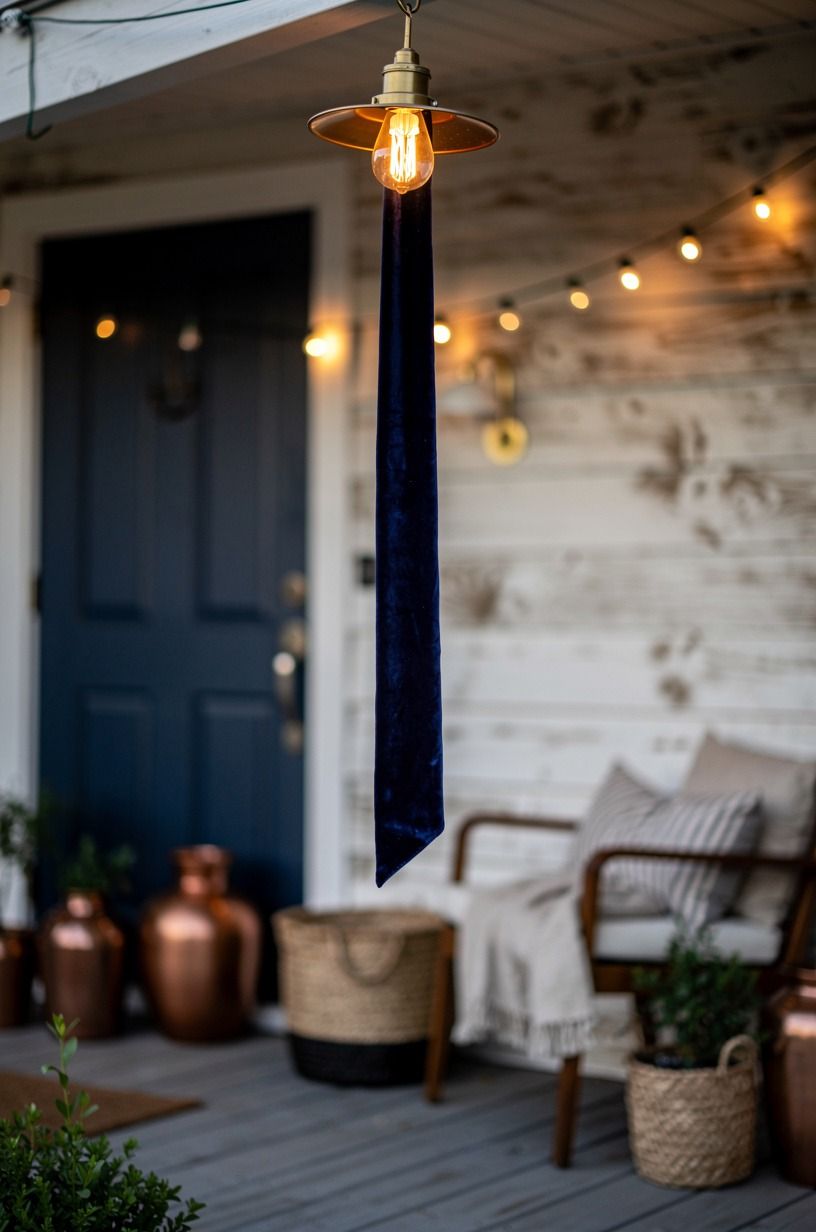
A ribbon adds softness to a porch filled with unlacquered brass, glass, and hard siding. Tie a copper-toned velvet ribbon around a wreath or railing, keeping it below the main bulb so the orange light catches its surface. Your entry will feel warm and quietly dramatic.
I’d avoid a glossy synthetic ribbon because it reflects the bulb in sharp streaks. Velvet absorbs and releases light unevenly, which makes the color feel richer. Use one generous loop instead of several small bows, and let the tail move slightly in the breeze.
You’ll want outdoor exposure in mind. Put the ribbon in a sheltered location, and bring it in during heavy rain.
If you’re unsure about the color, test copper beside your door after sunset. This soft color comparison shows why muted tones often sit more comfortably near the face and entry.
17Paint a Small Door Number Panel
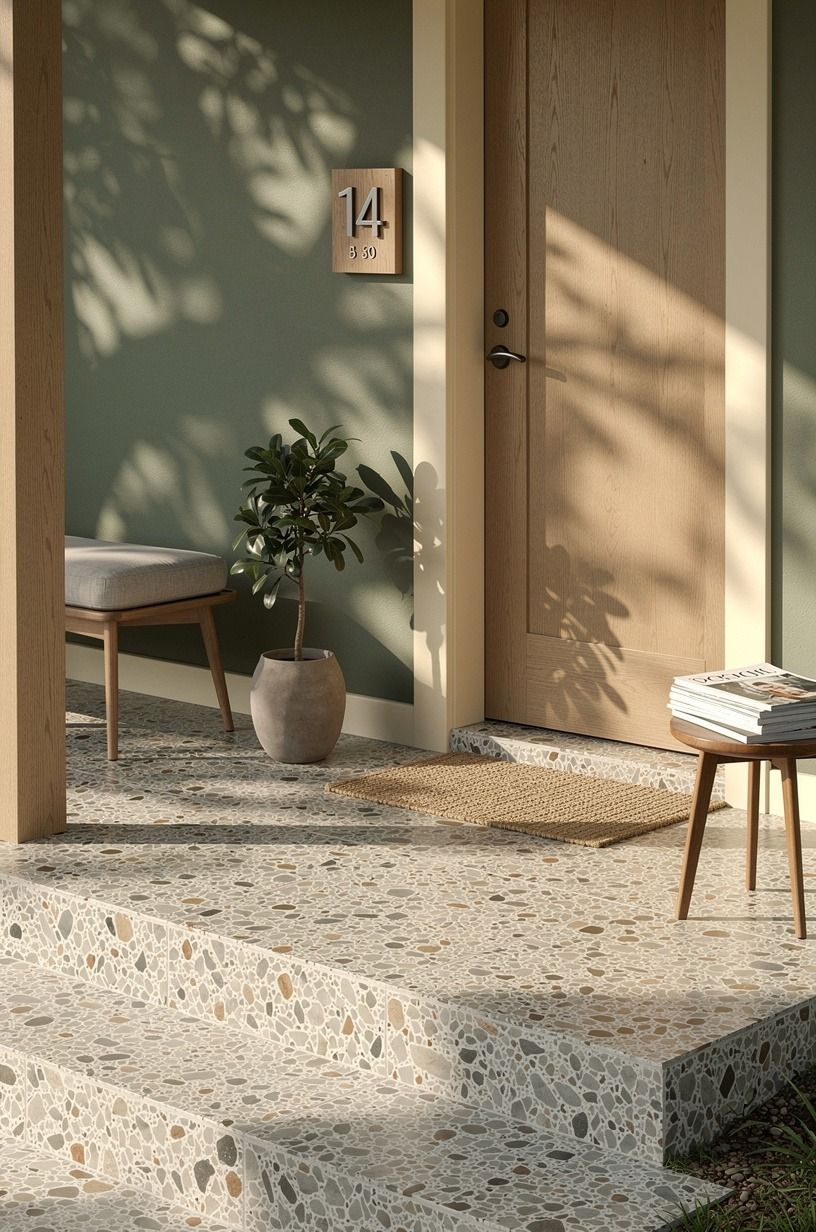
A small number panel gives your porch a crisp focal point under an orange bulb.
18Use the Two-Wood Rule Near the Door
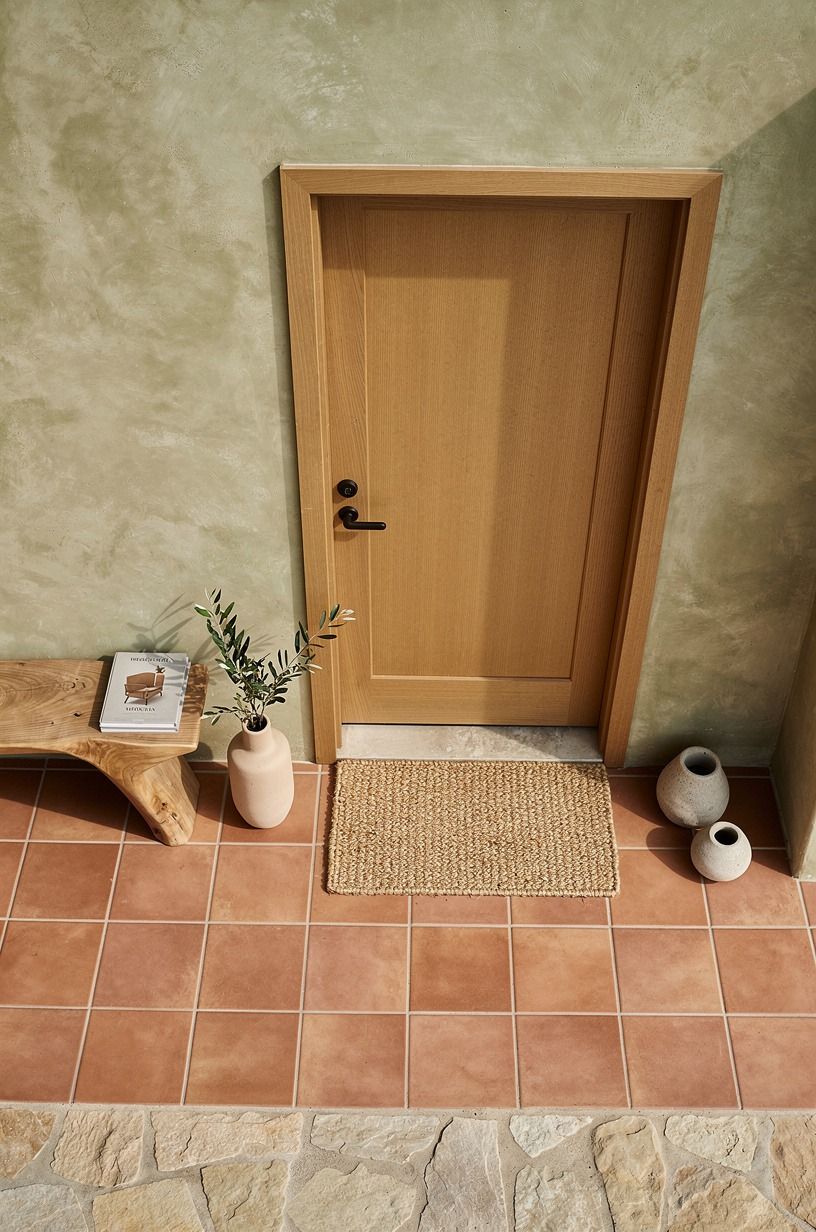
The Two-Wood Rule keeps a spooky porch from becoming visually cold. Pair one terracotta-toned wood with one olive-toned wood, then let hand-applied Venetian plaster keep the background soft. Your orange light will pick up the earthy tones and make the entry feel gathered.
I’d skip several nearly identical earthy finishes. They blur together at night, while two clear tones create shape.
A small stool, a wood planter, or a narrow tray is enough. You don’t need a full furniture arrangement to make the rule work.
If your porch is exposed, choose sealed exterior wood and check it after rain. A weathered surface can look earthy, but peeling finish will make your entry feel neglected. This wavy texture reference captures the kind of movement I like here, soft variation without clutter.
19Skip the Bright Sign and Let the Shadows Work
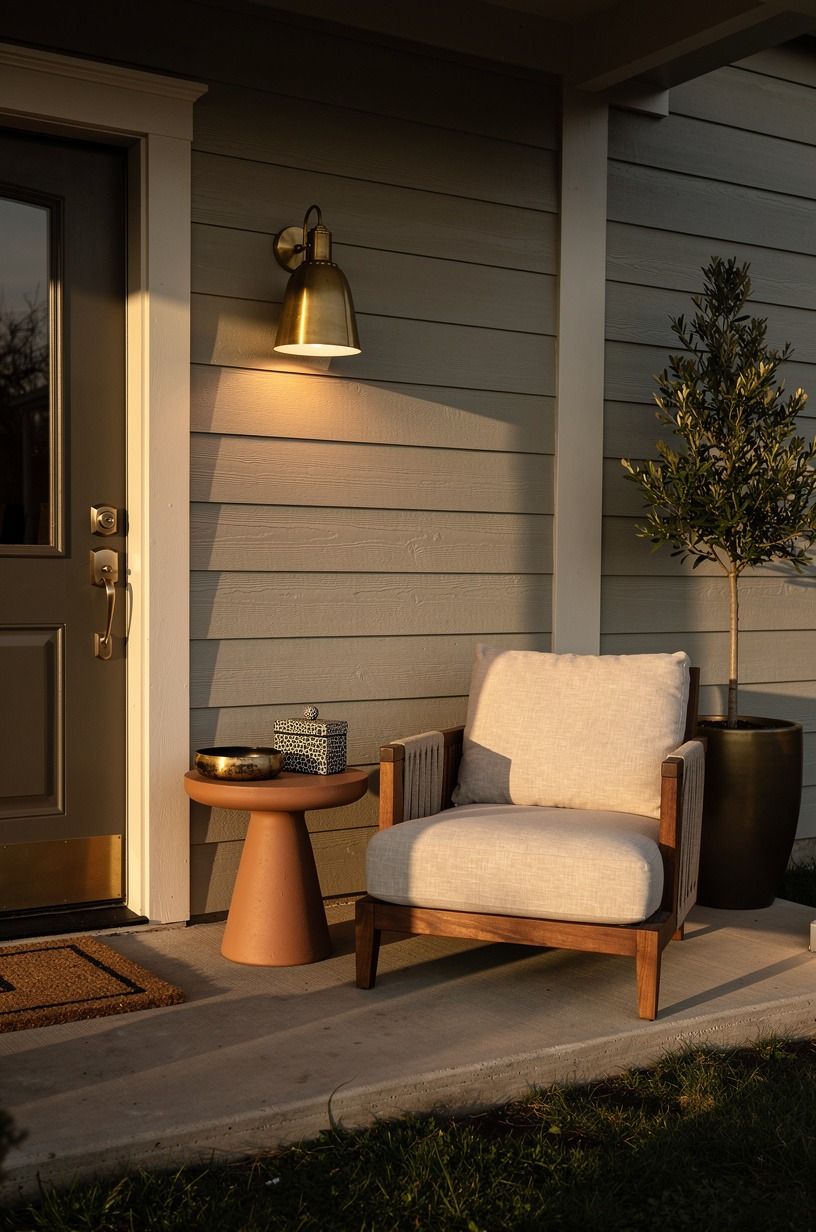
A porch light swap works best when you stop adding things.
Why I Keep the Porch Light Warm
I used to treat the porch as a place to pass through. The front door got a wreath, the steps got swept, and the light stayed whatever the builder installed. That cool bulb made every autumn detail look dull.
I bought a mat, two planters, and a pair of pillows before admitting the fixture was the problem.
The change felt almost silly. I twisted in a $4 orange bulb, stepped onto the sidewalk, and saw the siding shift from flat beige to a soft, earthy tan. The shadows around the door became deeper.
The dried branches looked intentional. Even the old hardware looked less tired.
That was the useful lesson: light changes the evidence your eye uses to judge everything else.
I’d still choose a warm amber bulb for most homes, but I wouldn’t force orange everywhere. Purple can work near a dark door, and a low amber marker can keep steps practical.
The decision depends on what your exterior already gives you. If your trim is creamy, orange will feel inviting.
If your siding is blue-gray, use less of it and add bronze or wood to keep the contrast from turning harsh.
My other lesson is restraint. A porch doesn’t need a dozen signs, a crowded wreath, and lights on every railing.
You’ll get more atmosphere from one clear bulb, one shadow-casting plant, and a surface with texture. That combination looks warm from the street and still feels like your home when you open the door.
The Questions Worth Answering First
What is the best porch light swap for a small front porch?
An orange outdoor LED bulb is the best first move because it changes the whole entry without taking floor space. Pair it with one black planter and an open wreath for a warm, uncluttered glow. You’ll get atmosphere without blocking the walkway.
Where can I buy porch light pieces on a budget?
Look at IKEA, Wayfair, and Target for basic lanterns, planters, and outdoor bulbs. Facebook Marketplace and thrift stores can be better for aged metal pieces. You don’t need matching items, and you shouldn’t buy anything that competes with the main light.
How much does a porch light makeover cost?
A bulb-only update costs about $4, while a larger outdoor refresh can range from $200 to $900 for textiles, lights, plants, and paint. Your existing planter, wreath, and mat may cost nothing. Start with the fixture before buying new decor.
Can I create this porch look on a budget?
Yes, and you can begin with three low-cost moves: swap the bulb, gather branches from your yard, and move one existing planter beside the door. Add a rust ribbon only if the entry still feels bare. You’ll spend less by editing first.
Is this worth it in a small space?
Yes. A small porch benefits because one light source affects nearly every visible surface. Keep the front legs of any seating on the outdoor rug, preserve 36 in of walkway clearance, and choose one vertical planter instead of several low containers.
Is this a good idea for a rental?
Yes, especially with removable pieces. Use a plug-in lantern, a tension-mounted wreath hook, and a removable address plaque.
Keep the original bulb and fixture glass in a labeled box. Your landlord won’t have to undo permanent changes when you move.
Where I’d Start First
If I had to pick one, I’d start with the $4 orange outdoor bulb. It changes the shadows before you spend on decor, so every planter, mat, and wreath gets a warmer backdrop. Pin the bulb swap for later and save this porch texture reference when you’re ready to style the rest.