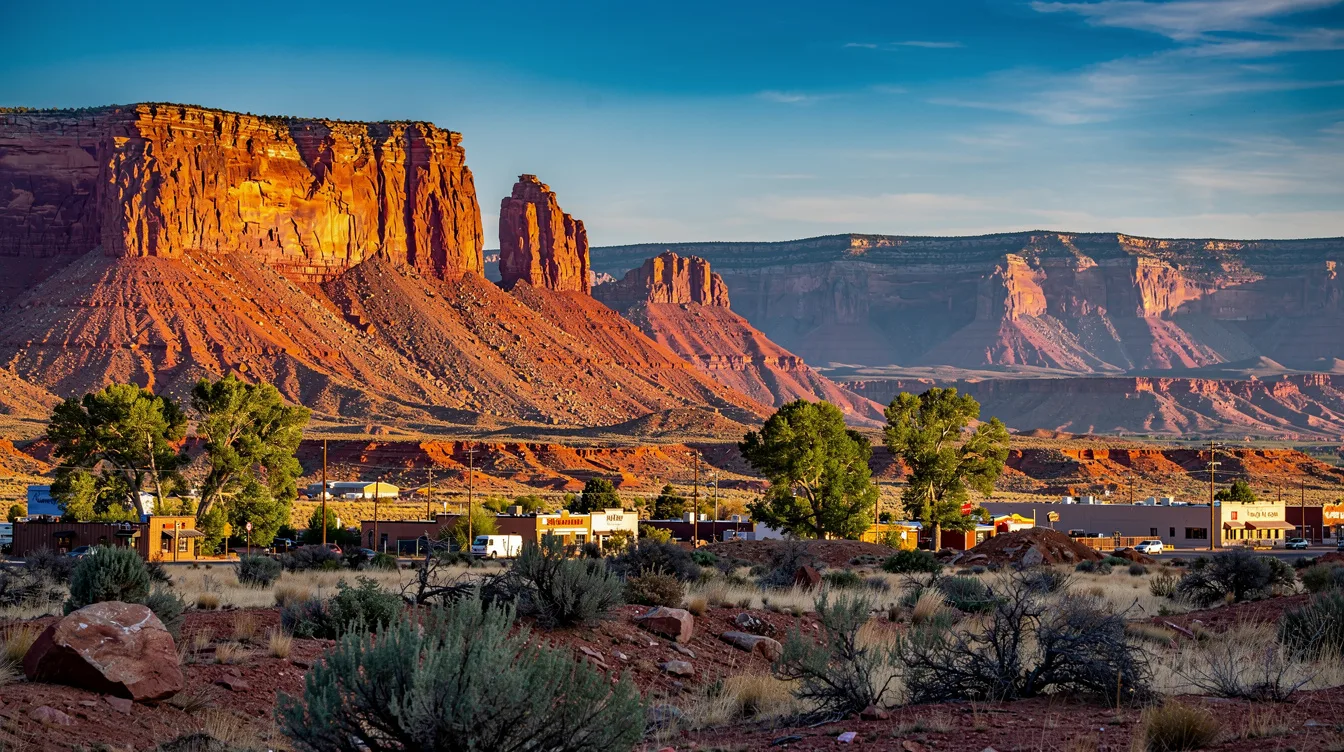
And Kanab has been called “Little Hollywood” since westerns began using this southern Utah town in the 1930s. Red cliffs and open desert gave filmmakers the setting they needed, while the town stayed small enough to feel practical rather than staged.
But Kanab is more than a movie backdrop. With 4,683 residents in the 2020 census, it makes a calm base for Zion, Bryce Canyon, the Grand Canyon North Rim, Lake Powell, and the wider red-rock country.
Why Kanab became Little Hollywood
And the movie history is easy to see without planning your entire trip around it. Frontier Movie Town preserves part of that western connection, and the town’s setting still supplies the same visual ingredients: red cliffs, desert plateaus, canyons, and ranch country.
But the appeal is quieter than a Hollywood attraction. You can walk through town, study the old-fashioned storefronts, and imagine film crews working nearby while traffic rolls along US 89.
The name fits because productions have used Kanab for many years, especially western films and television series. My opinion is simple: the story works best when you treat it as local character, not a museum exhibit.
One town, several major day trips
And Kanab’s real strength is its position. US 89 and US 89A meet in town, placing you roughly 1 hour 15 minutes to 1 hour 30 minutes from Page and Lake Powell.
But the roads can make a short map distance feel longer. Zion’s east entrance takes about 45-60 minutes, Bryce Canyon takes roughly 1 hour 30 minutes to 2 hours, and the Grand Canyon North Rim takes about the same when access is open.
From there, you can plan a day toward Coyote Buttes and The Wave, where permits are required, or drive toward Coral Pink Sand Dunes State Park. Kanab is remote, but it isn’t difficult to reach by car.
Can you use Kanab without changing hotels?
Yes, and that’s one of the town’s strongest advantages. A stay of 3-5 nights gives you time for Zion, Bryce Canyon, a permit-based desert outing, and either Page or the North Rim.
But don’t confuse convenience with ease. Backcountry areas such as White Pocket, Buckskin Gulch, and Paria Canyon can require permits, a suitable vehicle, and serious preparation.
What to do between the big parks
And you don’t have to spend every hour on a long scenic drive. Best Friends Animal Sanctuary is about 15 minutes away near Angel Canyon, giving you a slower option when your legs need a break.
But the surrounding country rewards preparation. You can arrange a four-wheel-drive outing toward Coyote Buttes or Paria Canyon, or spend time among the orange dunes at Coral Pink Sand Dunes State Park.
The air feels dry, the roads stretch wide, and red stone keeps appearing beyond the windshield. I’d keep one flexible day in your schedule because permits and weather can decide the trip for you.
When to go, and what to watch
And the most comfortable seasons are April-May and September-October. Temperatures are generally easier for hiking then, and scenic roads remain broadly accessible.
But summer can be very hot, while narrow canyons carry a real flash-flood risk during storms. Rain falling far away can still send water into the canyon where you’re walking.
You’ll find more manageable conditions in spring and fall, though the town can still fill with travelers using it as a base. The trade-off is worth it: Kanab feels busier than a quiet desert outpost, but far calmer than staying beside a major park entrance.
By evening, the red cliffs lose their heat and the road noise thins out. Kanab’s movie-town story remains on the signs, while the last light settles over Kanab Creek.