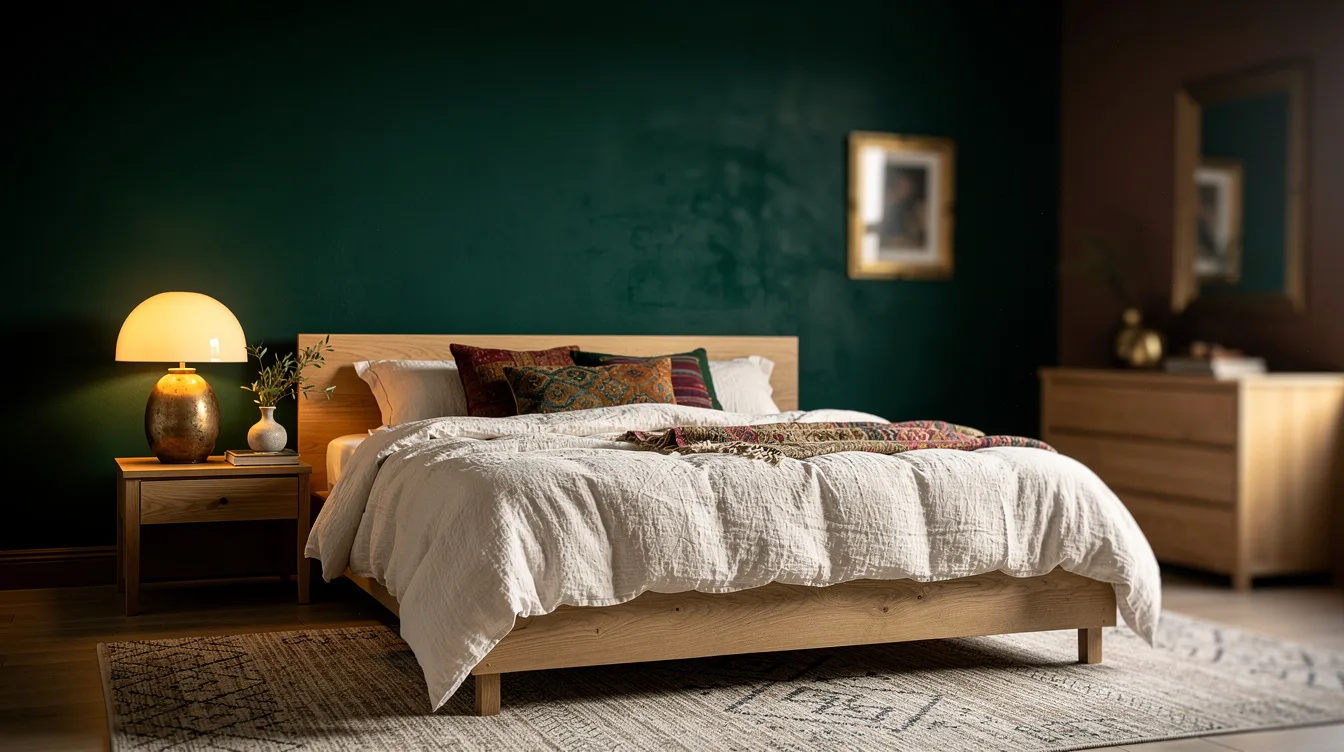
A north-facing bedroom can handle serious color, but the wrong dark shade quickly turns blue, flat, or lifeless. In a room with a bed around 160 by 200 cm, I would build the palette around cocoa, olive, tobacco, or oxblood before reaching for charcoal.
Cool daylight amplifies blue and gray undertones, while brown, red, yellow, and pink undertones feel richer. The goal is a room that embraces its lower light instead of pretending it has a sunny southern exposure.
Warm the Dark Base With Earthy Brown
North-facing light is cool and diffuse, so it can make blue-grey, bright white, and flat charcoal feel harder than expected. Start with tobacco brown, cocoa, or warm mushroom to give the room a grounded backdrop.
A matte cocoa paint from Home Depot works especially well with ecru linen, walnut furniture, and aged brass. Brown absorbs the cool cast instead of competing with it, which makes this the safest direction for a permanently shadowed bedroom.
Keep the bedding lighter in biscuit, stone, or pale camel. That contrast gives a small room breathing space without weakening the moody effect.
Wrap the Room in One Color
Dark paint looks most intentional when the walls, trim, doors, and possibly the ceiling stay within the same color family. A warm mushroom shade from Lowe’s can make a compact bedroom feel enveloping rather than visually chopped into separate sections.
Test a large patch beside the window and behind the bed before committing. North light changes throughout the day, and a color that feels brown at noon may read plum, gray, or green by evening.
Use a warm ivory ceiling only when you want more separation. Optic white usually creates a sharp break that makes the surrounding walls look colder.
Balance Olive With Camel and Plaster Pink
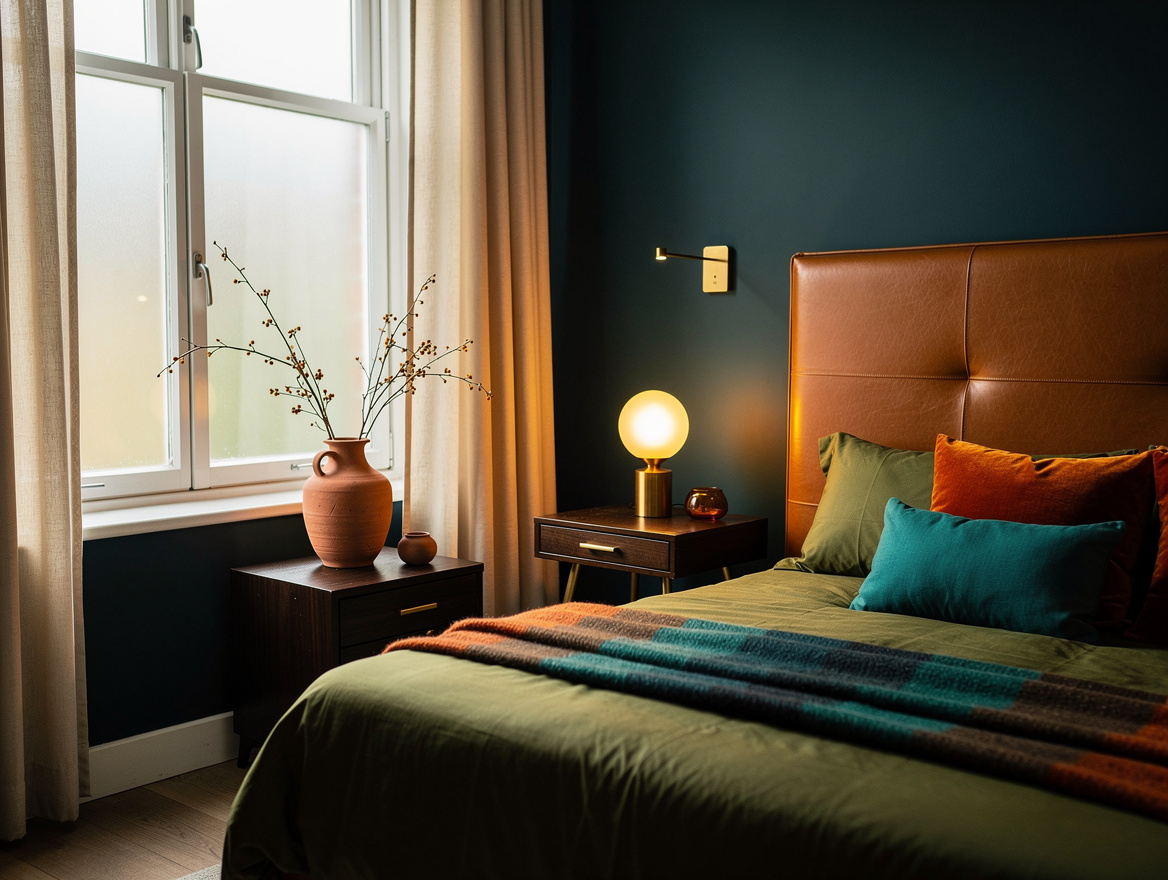
Warm olive is the most flexible choice for a north-facing bedroom because it carries enough earthiness to handle cool daylight. Pair olive green walls with camel linen, dark timber, and a muted clay or plaster-pink accent.
A camel headboard from Wayfair softens the palette without turning it sugary. Add terracotta ceramics or a small blackened-bronze lamp for contrast, then keep the curtains cream so the window does not disappear.
This scheme can lean vintage or contemporary with very little effort. It is my preferred option when the room needs personality but still has to work with existing furniture.
Anchor Smoky Blue-Green With Oak
Smoky navy and blue-green can work in northern light, but they need warm materials underneath them. Use smoky navy behind the bed, especially on a headboard wall around 2.6 to 3.2 meters wide, or carry it around a larger bedroom with strong bedside lamps.
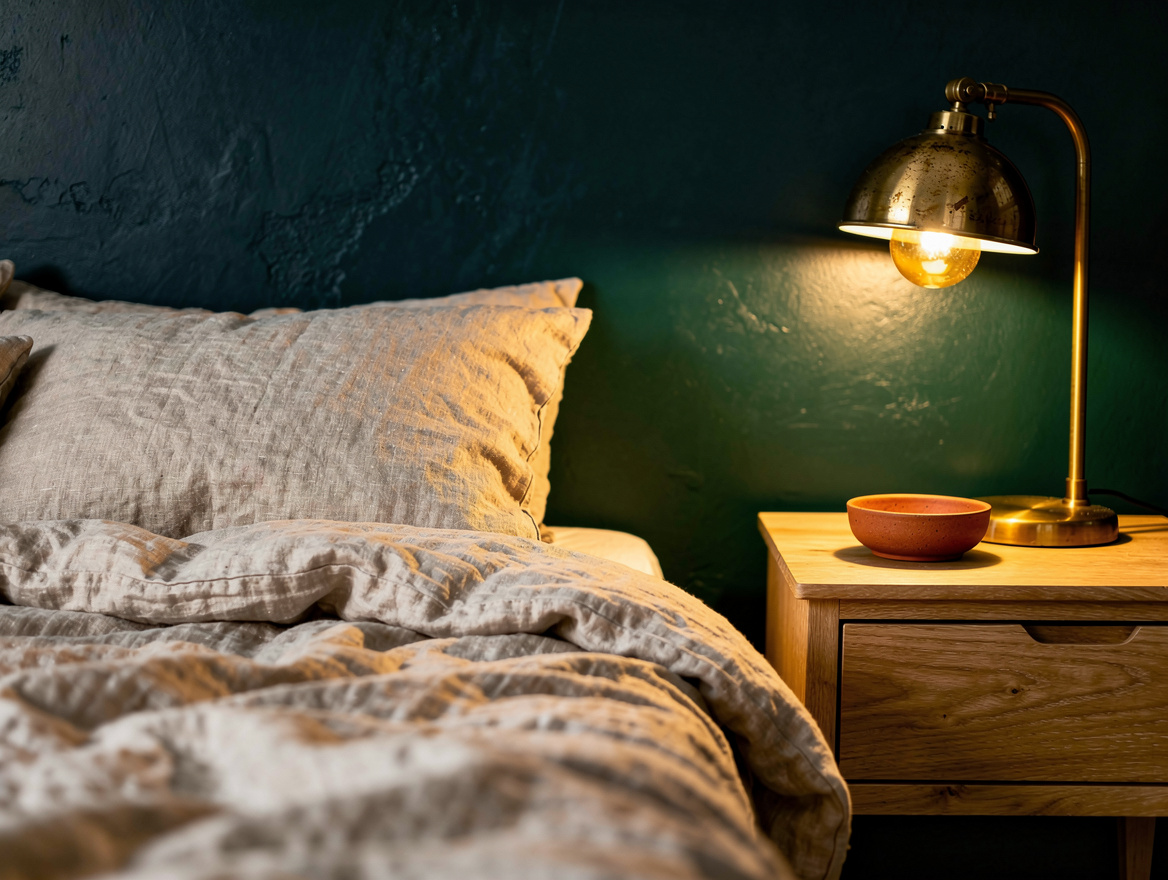
Bring in rust, cinnamon, cognac, and honey oak rather than more blue. A simple IKEA oak nightstand can keep the scheme from feeling formal, while a rust velvet cushion adds the heat the wall color lacks.
Choose oatmeal linen for the duvet and antique-brass hardware for a softer finish. Blue-green without those warmer notes is a risky choice here because northern light can push it toward slate.
Contain Oxblood in Smaller Bedrooms
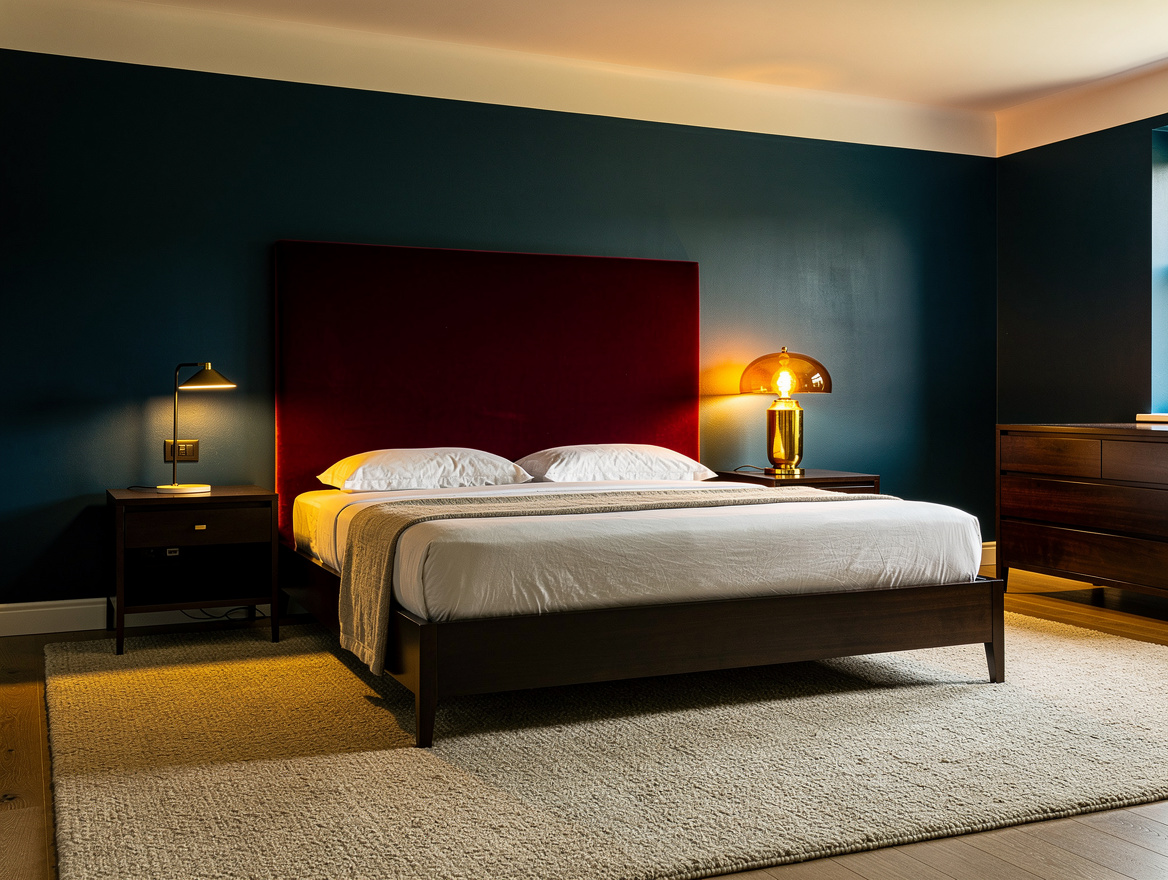
Oxblood is the dramatic option, and it deserves a controlled placement. Paint the bed wall in oxblood and use mushroom, pink-beige, or warm off-white on the remaining walls when the room measures below about 12 square meters.
In a larger bedroom, a full cocoon effect can be rewarding. Combine an espresso-stained wood bed with a beige wool rug and a Target burgundy or mauve velvet accent for depth.
Skip icy white sheets, which make the red look harsher. Soft beige and dusty rose let the color feel rich instead of theatrical.
Use Warm Light to Finish the Palette
Paint cannot solve a cold lighting plan. Choose bedside bulbs around 2,200 to 2,700 K and use shaded lamps to create pools of warmth across the walls after sunset.
A brass lamp from Amazon can reinforce cocoa, olive, and oxblood, while natural linen shades keep the glow gentle. Place one lamp on each side of the bed when possible so the dark wall feels balanced.
Finish with washed linen, jute, wool, and natural oak rather than glossy synthetic surfaces. A typical 160 by 200 cm bed needs only a few deliberate layers to feel complete: pale bedding, one textured throw, and a rug large enough to extend beyond the frame.
Begin with one large paint sample behind the bed, then check it in morning, afternoon, and lamplight. Once the color holds its warmth, repeat it through the trim or textiles and let oak, ivory linen, and brass carry the room the rest of the way.
Mia Carter writes about small-space living and budget home makeovers. She has restyled three rentals and tests most ideas in her own 45 sqm flat.