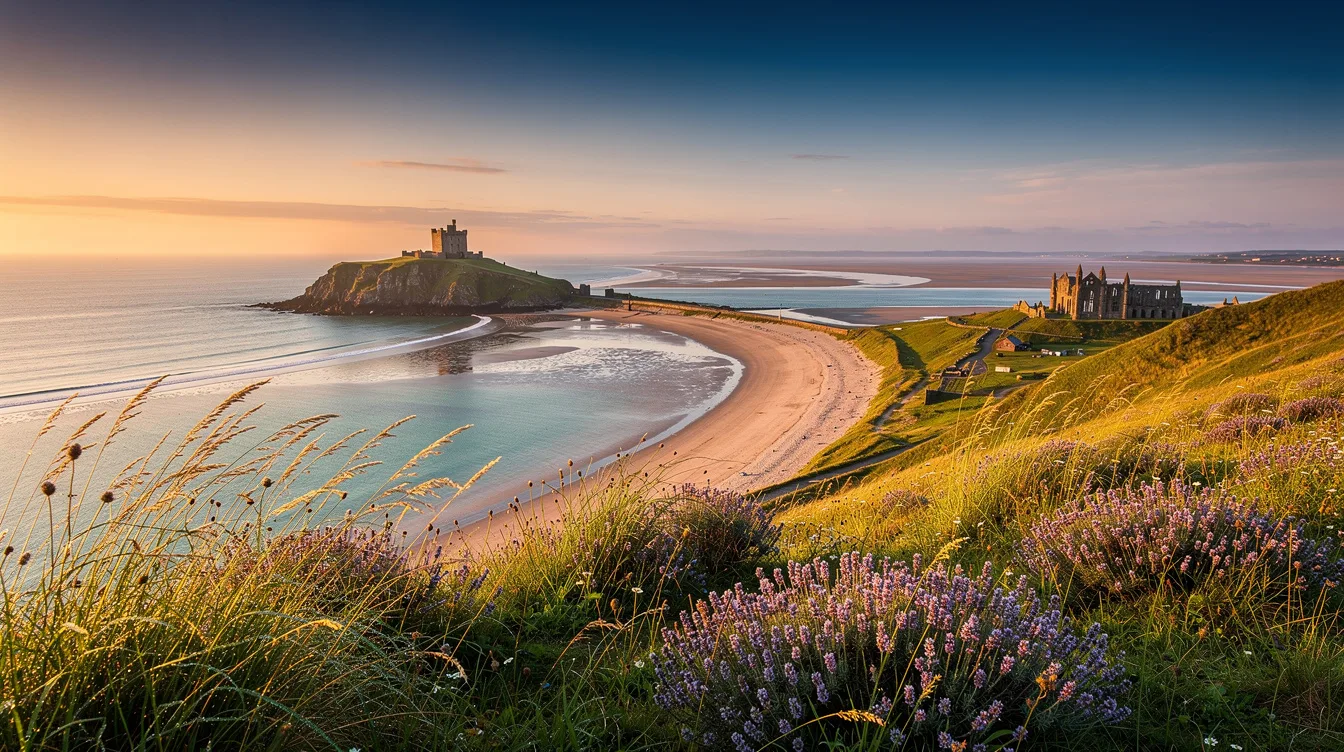
But Holy Island in Northumberland isn’t connected to England by an ordinary road. Its causeway disappears beneath the sea twice daily, leaving roughly a five-hour access window around low tide.
And that’s the island’s first lesson: you don’t set the timetable here. The water does, and every visit feels better once you accept that.
Known locally as Lindisfarne, the island sits about 1.9 miles from the mainland near Beal. The crossing is remote, but not difficult, provided you plan around the official tide schedule.
The five-hour crossing window changes everything
But don’t treat the causeway like a scenic shortcut. The sea covers it twice a day, and vehicles are regularly caught by the incoming tide when visitors ignore the published safe period.
And the refuge towers along the road won’t rescue a badly planned afternoon. They’re emergency shelters, not places to pause for photographs while the water rises.
Check the Northumberland coast guide before leaving Beal, then allow plenty of margin. You should have time to cross, park, and leave again without watching the clock nervously.
Can you cross Holy Island on foot?
Yes, but the Pilgrim’s Way is only safe under suitable tide conditions. Poles mark the route across the sands, yet you shouldn’t attempt it casually or use it as a shortcut.
And if you want to drive, follow the official crossing timetable for your exact date. The access window changes daily, so a generic estimate isn’t enough.
Lindisfarne made 793 matter
But this small island carries history far beyond its size. A monastery founded here in 635 became an important center for converting Northumbria to Christianity.
And the raid of 793 is commonly regarded as the symbolic beginning of the Viking era in Britain. Viking activity developed over many years, but this attack fixed Lindisfarne in the wider European story.
The Lindisfarne Gospels were produced here during the seventh and eighth centuries. You can feel that older religious presence most clearly around the ruins, where wind moves through the empty stone openings.
For a deeper route through the island’s past, follow this guide to Lindisfarne history. My view is simple: come for the tide, then stay long enough to understand the place.
The priory and castle reward a slow afternoon
And Lindisfarne Priory gives the island its strongest visual anchor. Its medieval ruins include the distinctive Rainbow Arch, which looks especially stark against the open sky.
But the ruins aren’t the only reason to linger. Lindisfarne Castle rises from a volcanic rock outcrop, giving the coast a harder, more fortified character.
The compact village gathers around the harbor, with cafés, pubs, small shops, and galleries. You can walk between them easily, though opening times may depend on the tide and the day’s visitor flow.
See more ideas for English castle trips before you go. If you prefer hurried sightseeing, the island may frustrate you. If you like one landmark leading naturally to another, it works beautifully.
Birds and mudflats change the mood
But Holy Island becomes quieter beyond the village. Tidal flats, dunes, and shore habitats attract resident and migratory birds, while the changing water constantly redraws the view.
And occasional seal sightings add a little suspense to the coastal walks. You won’t need a packed itinerary here, because the tide supplies the movement.
Take a walk through the coastal routes of England with realistic expectations. The island is excellent for fresh air and photography, but exposed weather can make the shoreline feel raw.
You should leave space for silence. The harbor, mudflats, and distant calls create a gentler experience than the island’s Viking reputation suggests.
How to visit Holy Island without getting stranded
But reaching the island by car means approaching through the A1 toward Beal, then crossing only during the safe period. By train, Berwick-upon-Tweed is the nearest major station, though onward transport needs planning.
And a basic visit takes several hours once you include the round trip. You should build the day around the tide rather than trying to fit the island between unrelated stops.
The island had about 151 residents in the 2021 census. That small population explains the compact feel, but it also means services aren’t arranged for careless, last-minute travel.
Read practical England travel advice before setting out, then watch the water on your return. By evening, the causeway is quiet, and the last light settles across the mudflats.