A bedroom-adjacent media room has to settle the house at night while still accommodating a roughly 65-inch picture-frame TV. In an alcove, dressing-room lounge, or compact night room, the wrong placement can make the space feel like a waiting area with a bed nearby, while the right one lets the television recede into the architecture and leaves room to read, dress, or pause.
The strongest fixes are simple in principle: put an art-style screen on a wall, lift it from a cabinet at the foot of the bed, or hide it behind a sliding-panel media wall. For projects priced in France, a discreet ready-made solution typically costs about €2,000 to €5,000, while integrated millwork with concealed lighting and AV ventilation can run roughly €8,000 to €25,000 or more, depending on carpentry, electrical work, motorization, delivery, and finishes. Treat those figures as planning ranges, not universal quotes.
Make the Screen Read as Art
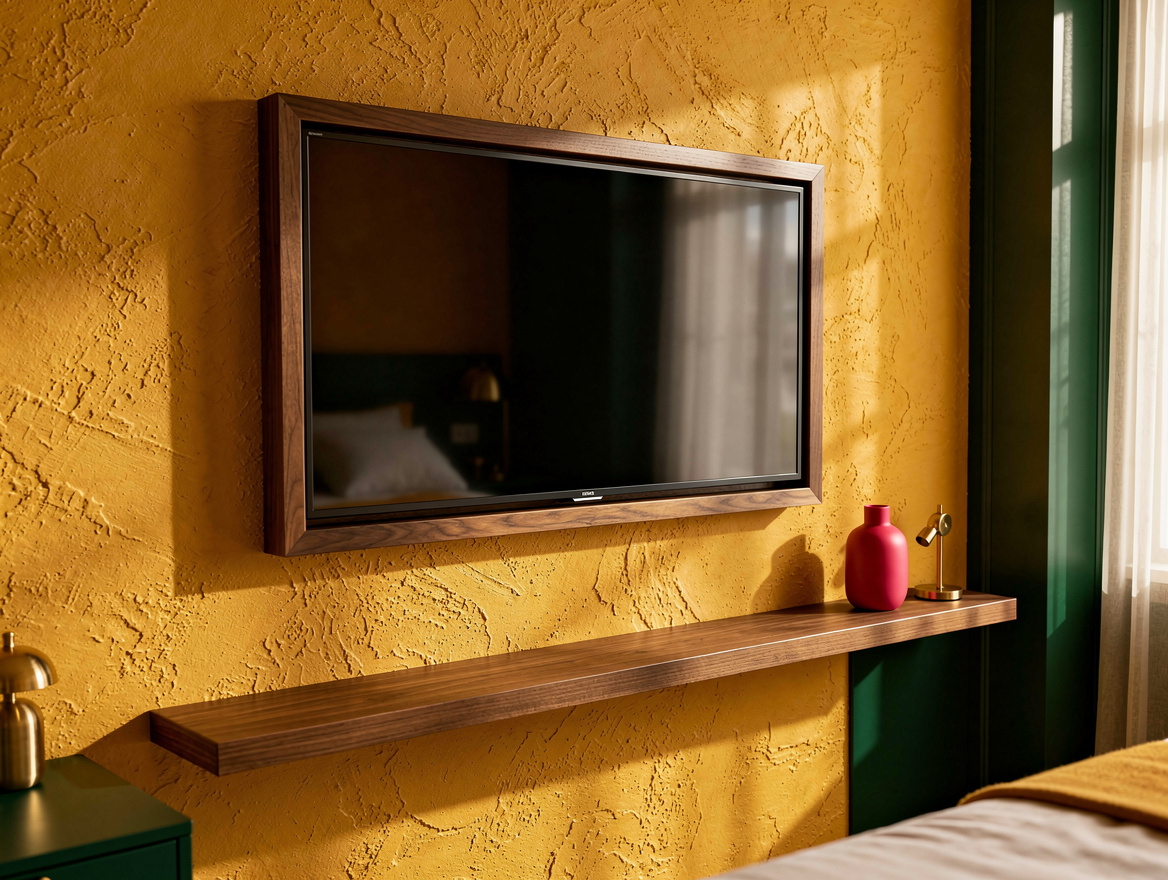
The first mistake is treating the room like a miniature theater, with every surface organized around a glowing rectangle. A shallow limewash wall with an art-mode display gives a sofa alcove or dressing-room lounge a quieter identity, especially when the screen shows a restrained image while off; keep the composition intentionally asymmetrical, with the display beside a framed print or slim ledge instead of a crowded gallery.
For a common 65-inch format, allow roughly 1.7 to 2.2 m of wall width and about 2.4 to 3.3 m between screen and seating. A ready-made install typically lands around €1,800 to €4,500, and I would spend on a genuine walnut frame plus a low bench or two lounge chairs before adding extra decor, because a thin black bezel rarely feels intentional beside soft bedding.
Slide Panels Across the Display
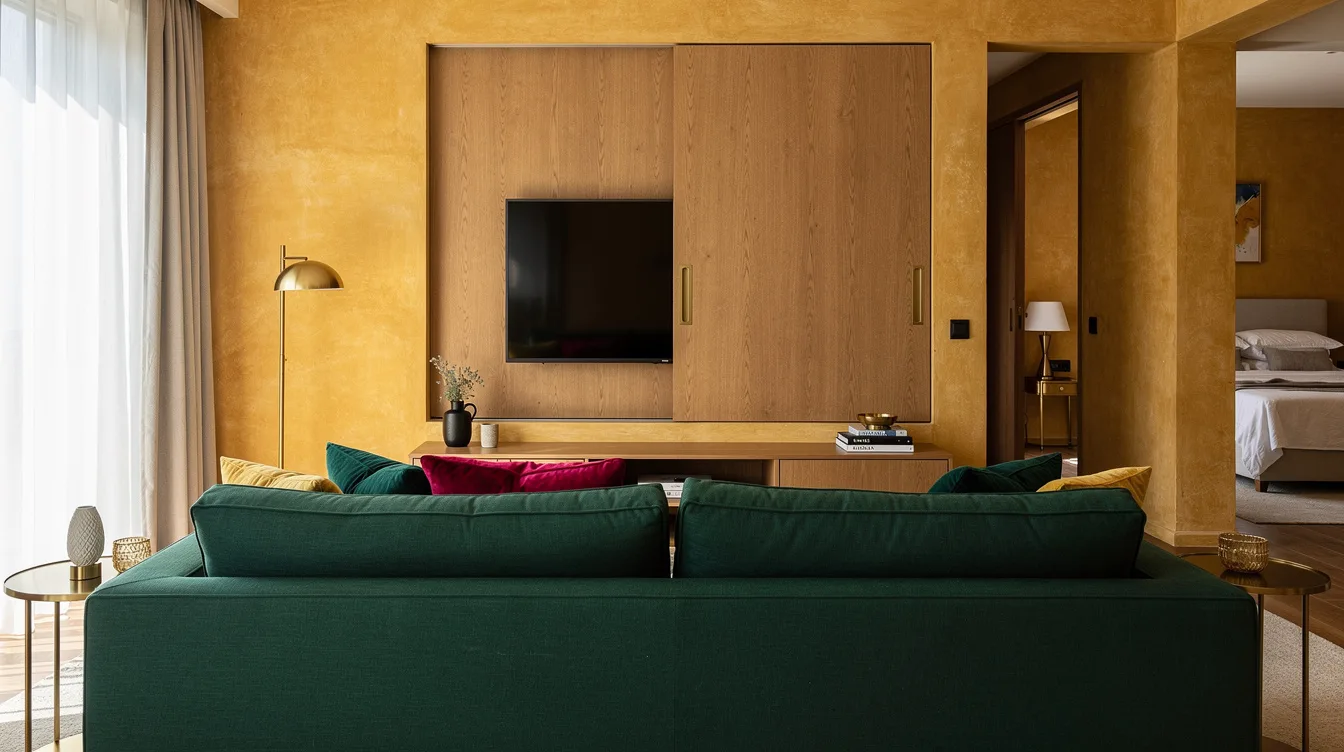
The second mistake is using fixed doors that leave a black corner visible whenever the screen is off. A sliding-panel media wall lets the room read as furniture, especially with fluted oak panels that cross the display and align with an adjacent wardrobe or bookcase, so the television disappears without demanding a theatrical reveal and the panel can park fully clear when viewing begins.
Plan roughly 2.4 to 3.6 m of wall and roughly 25 to 45 cm of total depth, depending on the track and equipment. Current planning budgets typically sit around €6,000 to €18,000, and my firm preference is a matte mineral finish, since glossy doors reflect bedside lamps, hall lighting, and every person moving past the room, while cane or fabric can soften the wall further.
Build Ventilation Into the Millwork
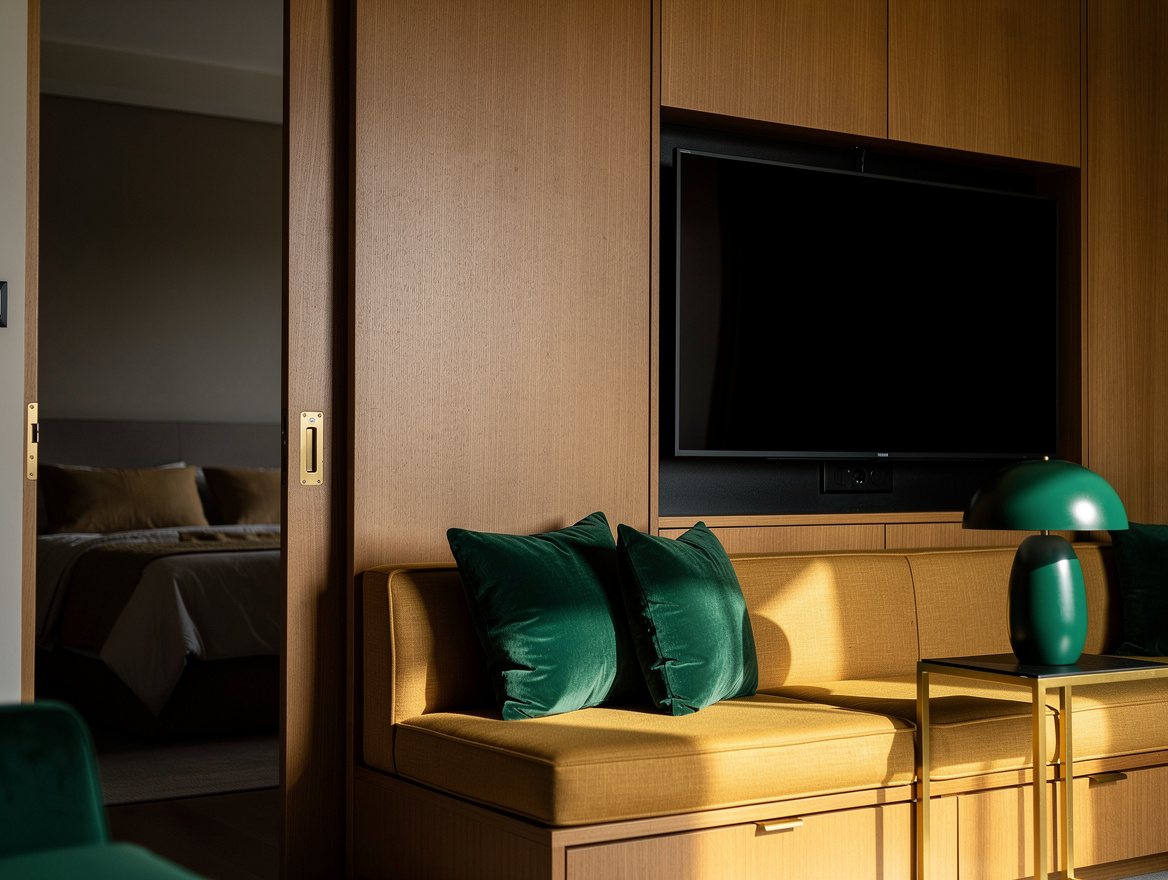
A full built-in library wall earns its footprint only when the adjacent room has enough width to behave like a true media lounge or dressing-room extension. Recess the display behind pocket or bi-fold doors in walnut millwork, then let surrounding shelves hold books and folded linens, so the wall has a purpose when movie time is over and the technology does not dominate the first view from the bedroom.
Allow roughly 3 to 4.5 m of wall width and roughly 35 to 60 cm of depth, with planning budgets around €10,000 to €30,000 or more. Put the power, media hub, and heat path in an accessible ventilated service cabinet, keep the doors easy to open when a connection needs attention, and leave the AV equipment out of sealed cubbies.
Lift the Screen at the Bed’s Foot
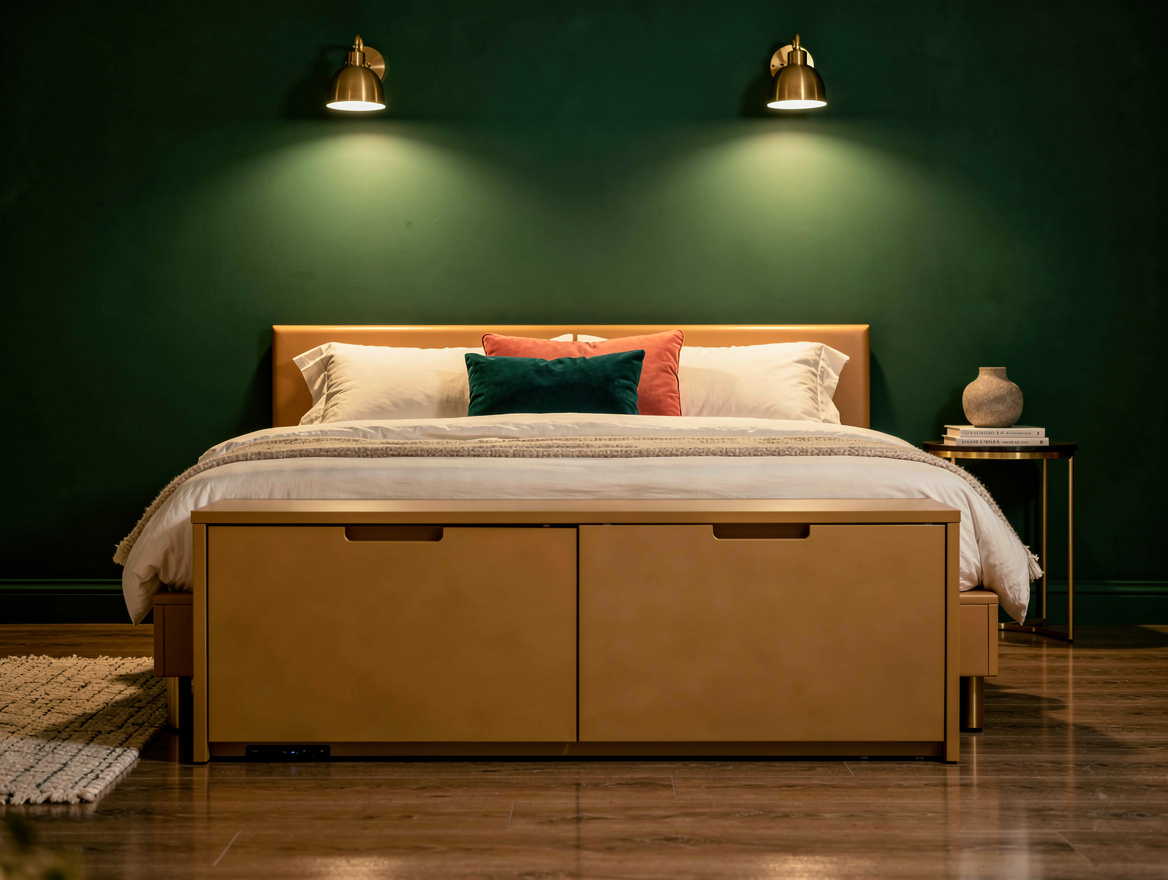
A television aimed at the bed does not need to occupy the wall all day. A motorized lift cabinet at the foot can keep the screen out of sight, provided the painted birch cabinet is proportioned like a dresser rather than an equipment box, with a top deep enough for a lamp or book and edges that will not catch bedding.
For a typical 55-to-65-inch display, allow roughly 1.5 to 1.9 m of width, 50 to 65 cm of depth, and 80 to 105 cm of height; installed planning budgets typically run around €3,000 to €10,000 or more. Choose a quiet lift, leave access to the mechanism, and match the finish to the oak bedside table or dresser so the cabinet belongs to the bedroom instead of announcing its motor.
Keep the Floor Clear Under the Bed
Under-bed lift and swivel systems suit a room that needs a television only occasionally and wants almost no visible technology. They require an engineered oak platform bed with roughly 1.8 m of structural length and about 25 to 32 cm of clearance, so this is a construction decision, not a late furniture purchase; the bed frame, power route, and moving screen all need to be planned together.
Installed planning ranges usually fall around €10,000 to €25,000 or more, a serious premium for a screen that may sit unused for days. I prefer a low-profile swivel mount only when the bed is custom-built and the movement path has been tested with bedding, drawers, and walking space in place, including the screen’s final viewing angle.
Reserve the Ceiling for the Hard Cases
When every wall is spoken for, a ceiling drop-down can keep the room composed until movie time. It needs a ceiling void, structural fixing, and roughly 20 to 35 cm of service space, with planning budgets around €8,000 to €20,000 or more, so a motorized ceiling screen makes sense only when a wall or cabinet genuinely fails and the ceiling structure can carry the mechanism safely.
The off-state still needs a composition. Two dimmable sconces and a narrow ledge can give the wall a finished shape, while audio hidden behind acoustic fabric panels keeps the technology quiet; use one simple control system, conceal cables in a chase, and choose dark matte paint rather than shiny lacquer, which catches bedside and corridor light.
Start with the viewing position, then choose the concealment method that fits the architecture: wall art for a shallow alcove, sliding panels for millwork, or a lift for bed viewing. Spend first on quiet hardware and ventilation, because visual concealment only works when the mechanism stays quiet and cool, keeping the room restful on ordinary nights and useful when you want a film.
Mia Carter writes about small-space living and budget home makeovers. She has restyled three rentals and tests most ideas in her own 45 sqm flat.