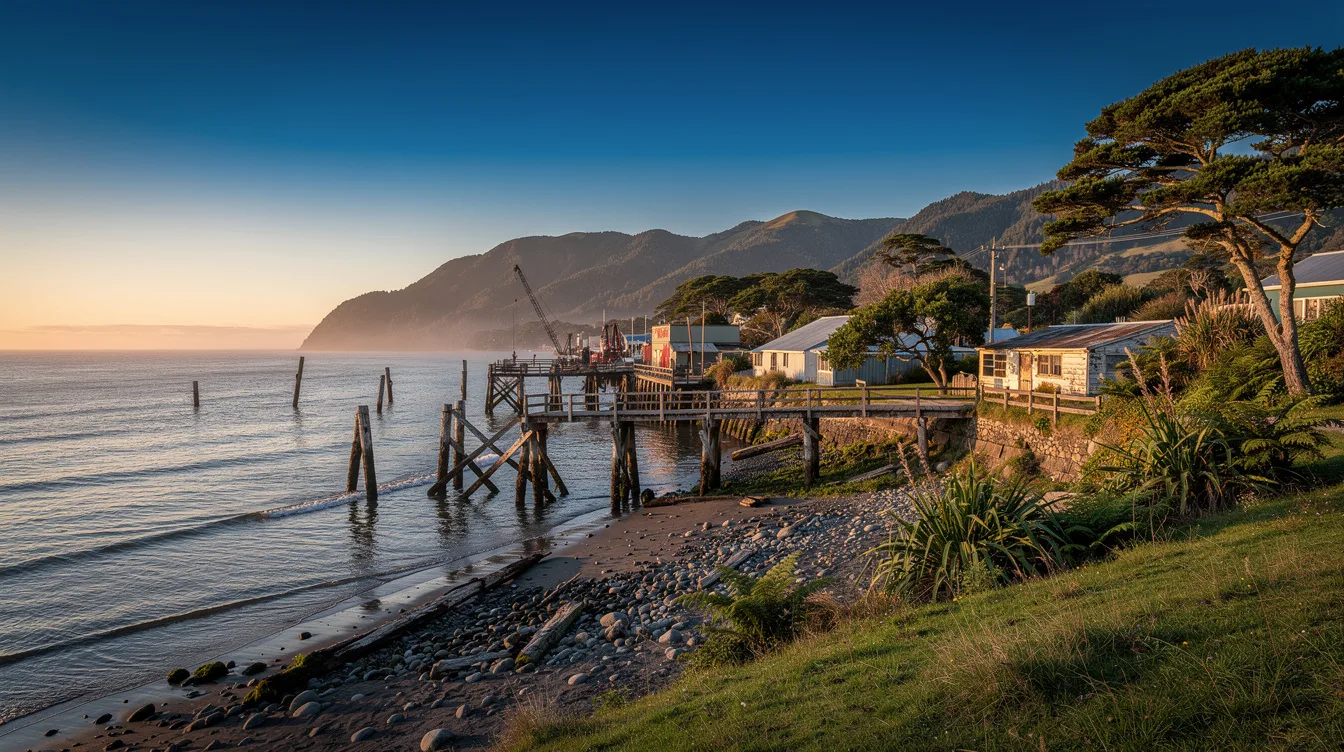
On September 16, 1867, Hokitika packed 41 vessels alongside its wharf, some three or four deep. Yet from 1865 to 1867, the port recorded 108 strandings and 32 ships lost.
In 1867, Hokitika ranked first in New Zealand for vessels entering port and total export value, mainly gold. That contradiction is the reason I’d come: the coast draws you in, while the port history keeps the town from feeling like a quick stop.
How 41 ships turned Hokitika into a boomtown
Founded on gold mining in 1864, Hokitika grew fast. In 1865, supplies and gold moved through a town near the Hokitika River mouth.
And by late 1866, Hokitika ranked among New Zealand’s most populous centers, with estimates putting its population as high as 50,000. If you like travel with danger in its backstory, this is where Hokitika earns my attention.
But the harbor’s success depended on a dangerous approach. The port declined as the gold rush faded. That is the port’s hard lesson: prosperity arrived by water, and danger arrived with it.
The beach puts the town back in the present
Hokitika Beach is where I’d go after arrival. The shore faces the Tasman Sea, and driftwood sculptures plus wooden HOKITIKA letters give it a handmade signature. I’d take that rough welcome over a manicured waterfront.
And near sunset, the beach becomes a natural pause instead of another stop to check off. You can spend 30 minutes or two hours here, studying the sculptures or listening to the water.
But don’t mistake easy access for a resort shore. The coast is beaten by the Tasman, so a walk can feel raw and unscripted. Every January, the Driftwood and Sand Festival turns beach debris into public sculptures, a tradition running annually since 2003.
Hokitika Gorge is the half-day detour worth taking
About 20.5 miles east of town and around 30 minutes by road, Hokitika Gorge is the strongest inland detour. Its turquoise river runs beneath pale cliffs and dense forest, with a suspension bridge above.
And the return walk covers about 1.5 miles and takes around 1 hour 30 minutes. You don’t need a full day, but you do need shoes that tolerate damp ground.
But don’t treat it as a quick highway photograph. I’d protect half a day for the drive and walk, because the river’s color deserves a slower look before you turn back toward town.
Lake Kaniere makes room for a slower afternoon
For a quieter change of pace, take the road to Lake Kaniere. Forest and mountains surround the water, giving you a calmer counterpoint to the exposed beach and the gorge.
And in summer, you can swim or kayak here. The scenic road is part of the slower rhythm, with room to stop when the weather clears before the afternoon slips away.
But West Coast weather changes the calculation. The region gets more than 110 inches of rain each year, and that wetness keeps the forest around the lake full and green.
Gold-rush streets still shape a town of 3,420
Back in town, start around Revell Street and the historic center. Broad gold-era streets lead toward galleries, cafes, jade shops and the old Customhouse, giving Hokitika a creative side rooted in its working past.
And the Hokitika Museum, housed in a Carnegie library building, fills in the port’s history and mining past. I’d choose it when rain settles over town, because the context makes the waterfront easier to read.
But today’s town is small, with an estimated 3,420 residents in 2025. You can browse greenstone work, then step outside into rain on the pavement, but choose an established artisan because pounamu carries particular Māori cultural importance.
Reachable from Christchurch, but built for a two-night pause
From Greymouth, Hokitika is about 24.9 miles south on State Highway 6. Christchurch is around three hours by car via Arthur’s Pass.
Can you fly from Christchurch?
Yes. Air New Zealand provides flights to Hokitika Airport, just northeast of town in Seaview. And that option matters if you want the West Coast without the full drive from Christchurch.
Is one night enough?
Yes, one night is the minimum useful stay. But I’d choose two if you want the gorge without rushing and still have an evening walk by the water.
And pack a waterproof layer and shoes that handle moisture. Hokitika is remote in feel but is easy to reach, so I’d stop here between Arthur’s Pass and the glaciers. By dusk, the driftwood letters face the Tasman Sea, and the old wharf story lingers in the salt air.