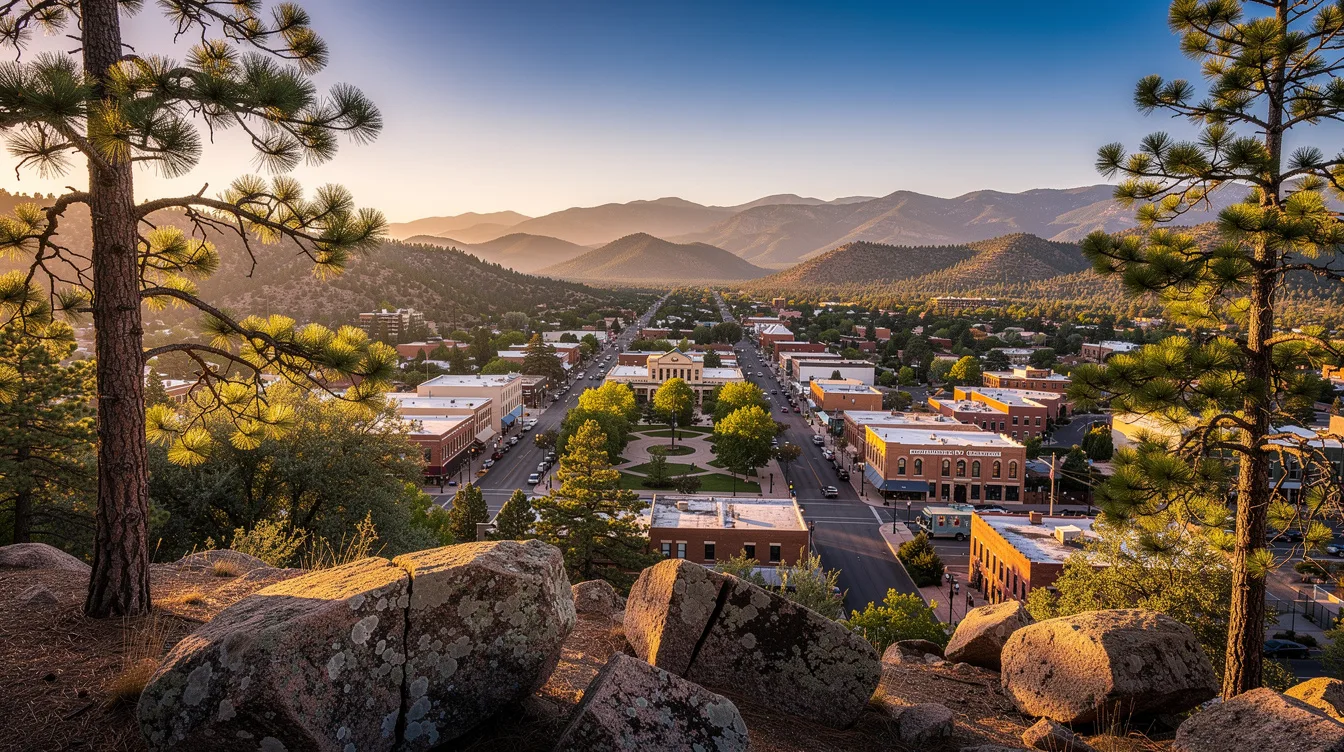
Prescott was the Arizona Territory’s capital until Phoenix took over in 1889. At about 100 miles north of Phoenix, it sits at 5,200-5,400 feet, where pine-dotted hills soften Arizona’s usual desert story.
You can still read that change downtown, where the courthouse plaza and Whiskey Row hold the old-town focus. Prescott is Yavapai County’s seat, so the center feels civic and lived-in. But the appeal is the contrast between territorial history and cooler outdoor days beyond it.
The title moved to Phoenix, but Prescott kept the mood
Prescott was founded in 1864 and served as the territorial capital for much of that era. And when Phoenix took the title in 1889, mining, ranching, Fort Whipple, and old commercial buildings kept its character visible. The high-desert, mountain setting makes the capital story feel less like Phoenix.
If you like history you can locate, start with this territorial history of Arizona. But don’t expect a museum-only experience; the story runs along streets lined with shops and restaurants. The buildings keep it close to everyday errands.
And I think that is Prescott’s best trick: the past never takes over the day. You can follow coffee’s smell or conversation’s low hum toward the plaza. That feels more useful than rushing through a checklist.
At 5,200-5,400 feet, summer changes the deal
At 5,200-5,400 feet, Prescott is cooler and more seasonal than Sonoran Desert cities. And summer is generally milder than Phoenix, which matters when lower-desert heat wears you down. You notice the difference in the pace of an outdoor day.
Winter can bring snow, so pack for a real change rather than one endless Arizona forecast. But the trade-off works: you get sunshine without the lower-desert heat. That makes summer a smart first season if heat is a deal-breaker.
Can you reach Prescott easily from Phoenix?
Yes, Phoenix is about 100 miles south, and the drive takes roughly one hour and 45 minutes. You can make it a day trip, but an overnight gives the cooler air more time to work.
And if you fly, Phoenix Sky Harbor is the main gateway, followed by a drive north. Prescott also has Prescott Regional Airport, but you’ll want to check current service before planning around it.
Downtown keeps the former capital walkable
Yavapai County Courthouse Plaza is the right first walk. Independent shops and galleries ring the central space, so you can wander without a plan. The civic setting makes downtown feel lived-in.
But you don’t need a schedule here; move slowly and look up at the buildings. And let the compact center set your pace, especially if Phoenix’s scale has left you tired. The smaller rhythm is the point.
Whiskey Row runs along Montezuma Street, with historic saloons and commercial buildings. Read more about Prescott’s downtown, then leave room for an unplanned turn. And the Western atmosphere works because this is a living downtown, not a stage set.
Watson Lake trades saloons for granite
Watson Lake is where Prescott’s surroundings become the main event. The Granite Dells add rounded boulders, while the lake supports kayaking. You can see why I prefer it early or near sunset.
Go early or near sunset, when the rocks and water give the day a different tempo. But bring patience; the appeal is close observation, not a packed itinerary. You can bring a camera, or simply sit beside the water.
Beyond the lake, Prescott National Forest gives you hiking and mountain biking. And Willow, Lynx, Goldwater, and Granite Basin lakes offer easier outdoor days, while Arizona’s outdoor escapes remain close at hand. But you can choose how much effort the day deserves.
Prescott works best as a measured road-trip stop
For central Arizona road trips, Prescott is a hub for longer outings toward Sedona, Jerome, Flagstaff, or the Grand Canyon South Rim. But those destinations need longer day trips or overnights, so don’t cram them into one afternoon.
The World’s Oldest Rodeo is one of the city’s best-known traditions. And it adds a Western thread to a place already tied to ranching and territorial history. It keeps the city’s older identity present.
You can come for that tradition, or spend the day downtown in cooler summer air. That flexibility is Prescott’s point, especially for travelers who want a smaller base. You can keep the pace unhurried.
If you want Phoenix’s broad energy, this isn’t the substitute. But if you want a calmer base, Prescott makes sense when lower-desert heat takes over. That is the honest trade-off for staying smaller.
And by evening, when the plaza quiets, pine-scented air settles over the granite hills. The air turns cool before dinner, and the former capital seems comfortable with the title it lost.