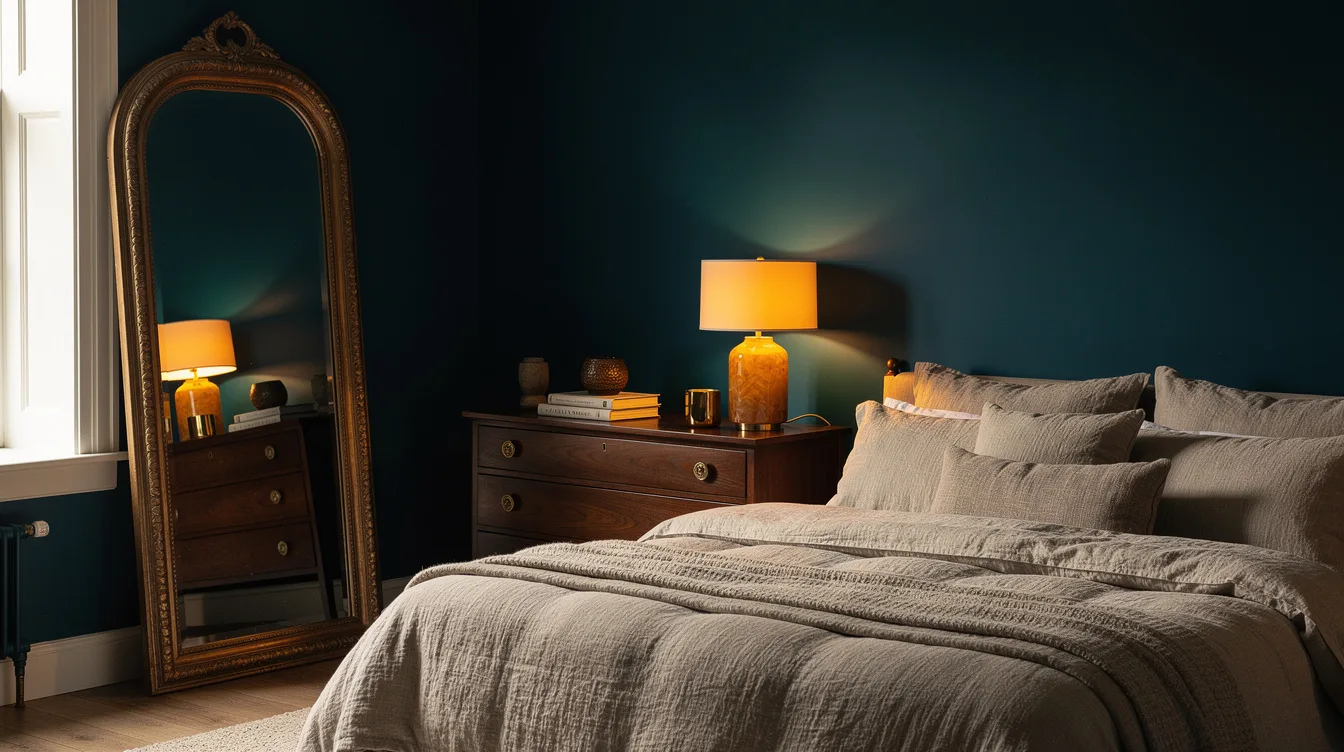
A bedroom can feel unfinished even when the bed, rug, and lamps are all respectable, and a floor mirror roughly 72 to 84 inches tall can supply the vertical weight that smaller decor pieces never create while reflecting the room’s best light.
The strongest move in 2026 is to treat the mirror like furniture, placing an ornate piece opposite daylight or centering it above a low dresser so the room gains one clear focal point and the upgrade reads as architecture instead of a shopping spree.
The restraint matters because a dramatic frame needs quiet bedding and calm surfaces around it, giving the mirror enough breathing space to hold attention.
Choose a Frame With Furniture-Scale Weight
Start with a mirror that has enough mass to read as furniture from across the room. A tall arched form with a carved, antiqued gilt frame, roughly 72 to 84 inches high and 30 to 42 inches wide, gives an empty wall the presence of a headboard and makes a narrow bedroom feel vertically finished; the top arch draws the eye upward, so even an average ceiling gains a stronger visual center.
If the mirror will sit above a dresser, choose a wider profile, roughly 40 to 55 inches high and 34 to 50 inches wide, with a shape that echoes the furniture’s lines. A genuine antique may cost several thousand dollars, while a well-made Wayfair reproduction can deliver the same furniture-scale composition at a more manageable starting point, provided the finish has variation, the wood shows grain, and the lower edge clears nearby drawer pulls.
Size the Mirror to the Dresser
Use the dresser as your measuring tool, then let the mirror occupy the wall with confidence. For a dresser around 72 inches wide, a wide mirror about 44 to 54 inches across usually lands in the right two-thirds to three-quarters zone, leaves enough wall on each side to keep the composition breathable, and makes the two pieces read as one unit from the doorway, which is the test I trust most.
Leave roughly 6 to 10 inches between the furniture top and the mirror’s lower edge, then center the glass over the dresser. This small gap keeps a plain walnut dresser connected to the wall, while one ceramic bowl or a single book gives the surface a finished endpoint and keeps ornate curves clear of handles and styling.
Aim the Reflection Toward Daylight
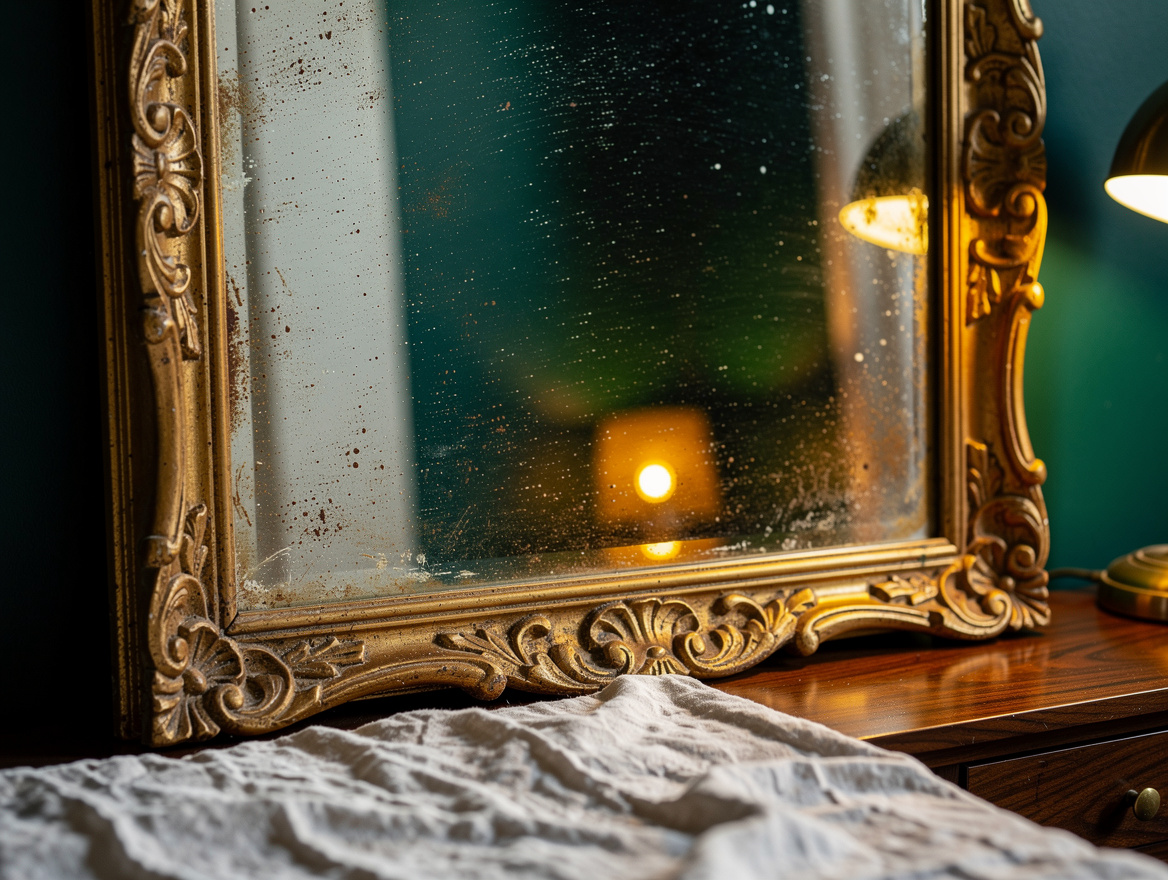
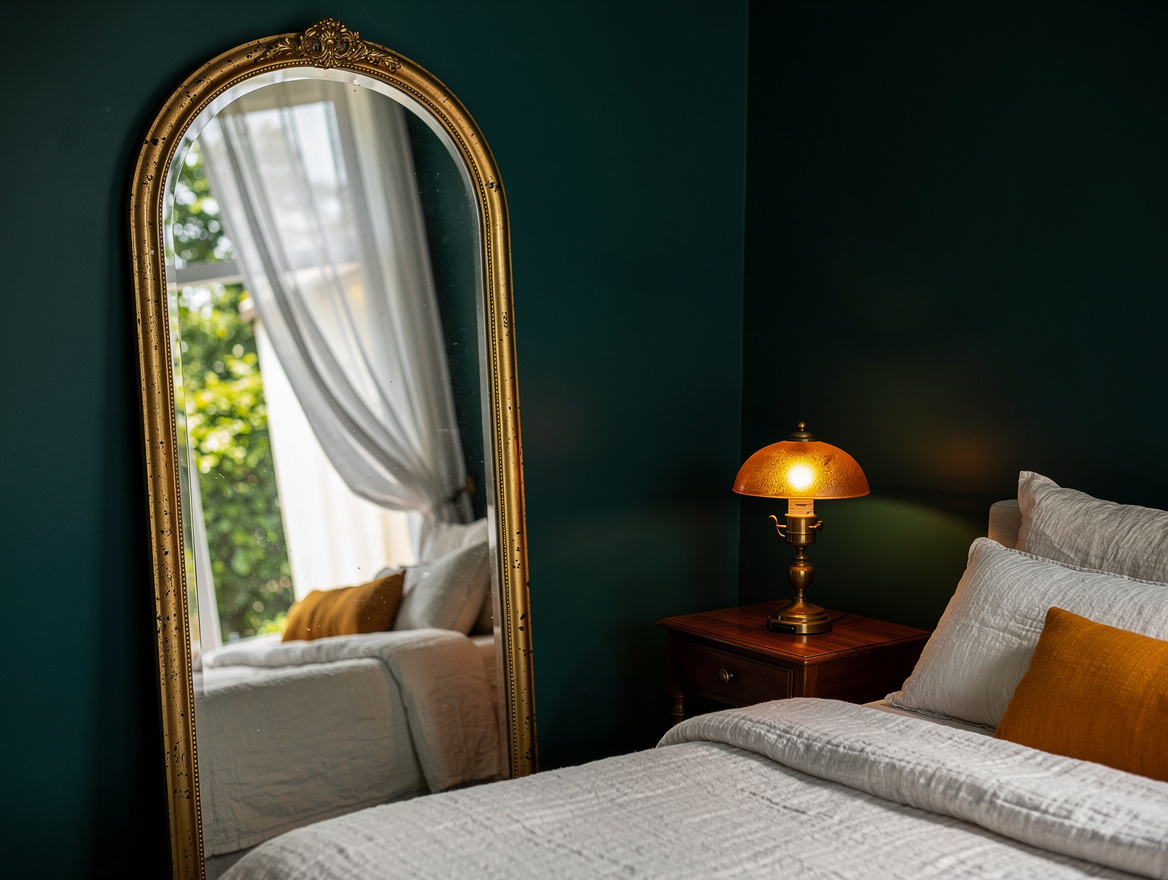
A tall mirror earns its keep when it catches daylight, so place it beside a window, at the end of the bed, or on an open wall near the wardrobe. An antiqued oak frame feels especially grounded there because the wood links the reflection to the floor, nightstands, and other large furniture; this is my favorite placement for a narrow room because it adds depth without demanding another major piece.
Angle it about 30 to 45 degrees toward a window if the room allows, aiming the reflection at a curtain panel, trees, or a textured wall. Check the view from the doorway and bed before securing it, so the glass adds light and depth while keeping clutter, a television, and an open door out of the main sightline.
Soften the Frame With Quiet Textiles
Let the bedding support the frame with texture and quiet color. White, flax, oatmeal, mushroom, faded stone, or warm ivory linen bedding gives a gilt mirror room to look collected, while a crisp cotton sheet keeps the bed fresh beneath a weathered finish and still holds its shape under evening light, which is exactly the contrast the frame needs.
Add one contrasting layer, such as a tobacco wool throw or faded blue quilt, and keep the bedside pieces simple. One sculptural aged brass lamp with an alabaster base, ceramic body, or pleated shade is more persuasive than a cluster of decorative objects, because matte fabric and natural wood let the frame stay loud; shiny velvet fights aged glass, while washed linen and brushed cotton make the arrangement feel settled.
Set Dark Wood Against a Deep Palette
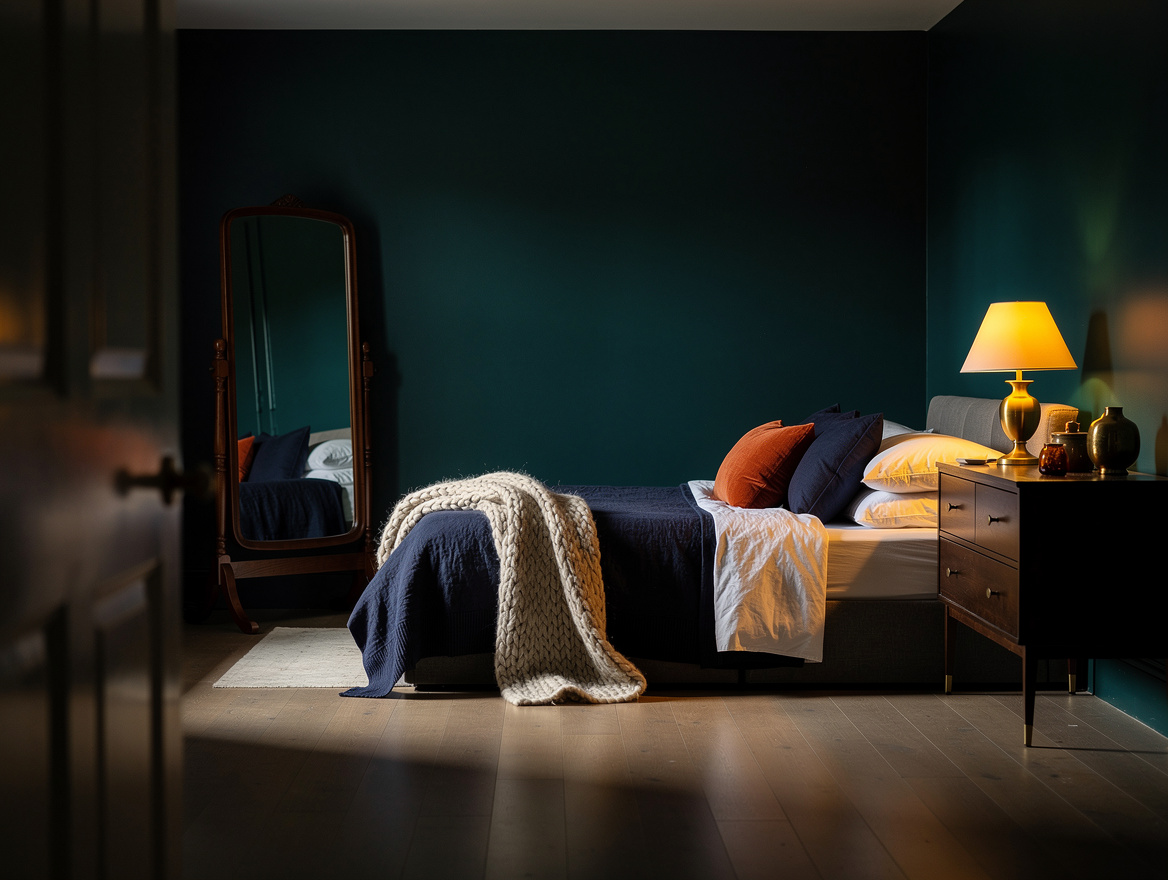
For a moodier bedroom, trade bright gold for an arched dark oak mirror, ebonized wood, walnut, or aged bronze. A typical piece roughly 65 to 78 inches high and 26 to 36 inches wide creates an old-estate atmosphere with quiet authority, especially against plaster or a dark painted wall; it is the right direction when you want historic character with a calmer, more tailored edge.
Build around moss, tobacco, deep navy, mushroom, charcoal, oxblood, or warm ivory, then use a wool blanket or quilt in place of shiny velvet. At night, a picture light or table lamp at roughly 2200 to 2700K brings out the wood grain and small marks that make an antique-style surface convincing, and the low amber tone keeps charcoal and navy from turning flat after sunset.
Use Aged Glass to Add Architecture
Lighter rooms can take an aged-glass focal point, especially when the frame is slim and the wall has breathing room. An antiqued foxed-glass mirror, roughly 36 to 52 inches high and 28 to 42 inches wide, brings shimmer and age without the weight of thick carved wood; its subtle surface variation catches a soft glow and gives a plain wall something to study from the bed.
Against plaster, limewash, or a dark painted wall, a pointed or softly arched iron, bronze, or distressed-wood mirror can supply the architecture a newer bedroom lacks. I like a bronze arch with a small muted wool rug below and mostly bare walls; the outline stays crisp and the reflection has room to work, which makes this the strongest option for a newer, boxier room.
Begin with the wall that receives the best daylight, then choose the mirror size from the furniture beneath it. That order gives the best-lit wall its focal point before you spend on smaller accents, and it lets one mirror carry the room.
Mia Carter writes about small-space living and budget home makeovers. She has restyled three rentals and tests most ideas in her own 45 sqm flat.