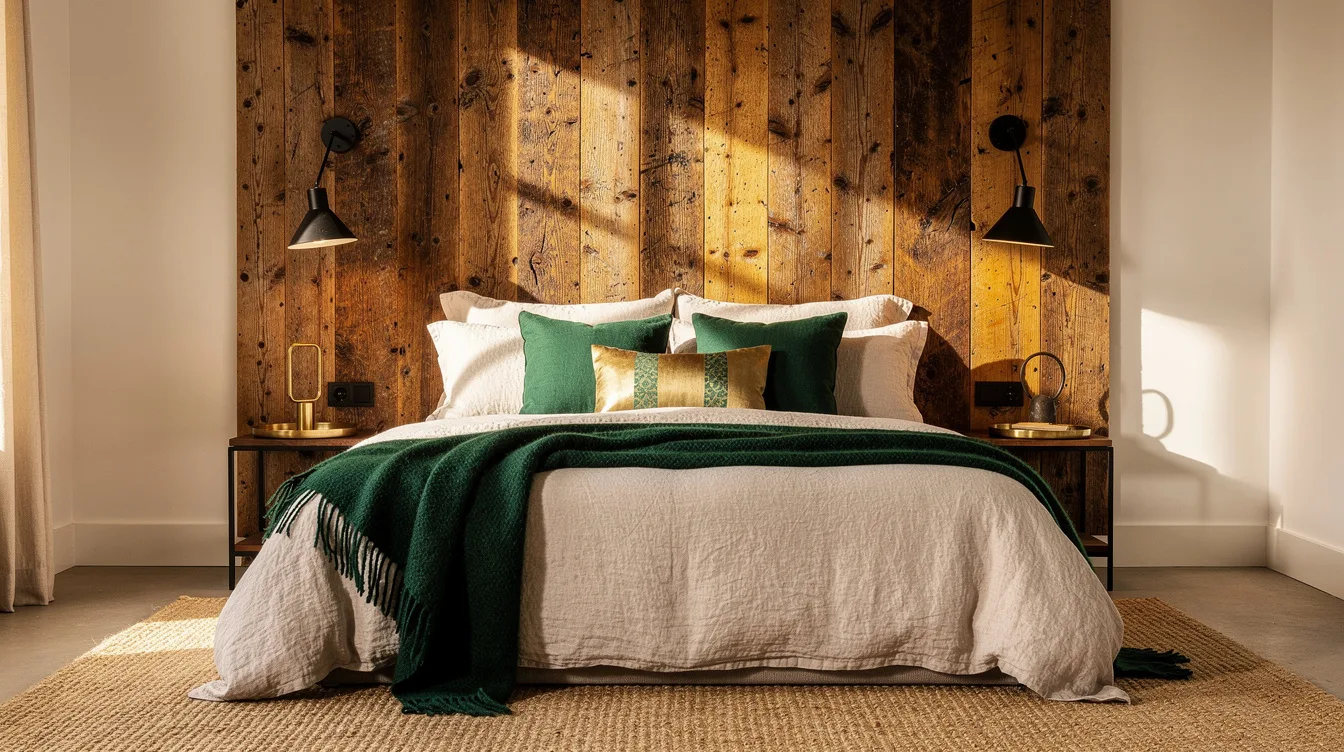
The bed wall should carry the rustic story, not every piece of furniture in the room. A queen bed is roughly 60 inches wide, so a convincing backdrop often stretches about 9 to 11 feet once the nightstand zones are included. That single decision gives the room texture while warm off-whites, linen, wool, blackened metal, and restrained lighting keep it from reading like a hunting lodge.
Stretch the Wood Across the Bed Wall
Use reclaimed-look pine planks across the full wall behind the bed when the room can take it, because a broad field of grain feels intentional and gives the eye one clear destination instead of scattering rustic accents across every surface, anchoring the bed even when the rest of the furniture is light and modern.
Horizontal spruce boards make a narrow room feel broader, while vertical boards draw the eye upward in a room with a ceiling around 8 feet high, giving a low ceiling a taller read without adding another bulky piece.
For a queen bed, plan on a backdrop about 9 to 11 feet wide, leaving roughly 18 to 24 inches per side for compact nightstands or 24 to 30 inches for generous ones; keep the lower edge level so the wall reads as architecture rather than a floating backdrop.
Retail examples for wood-look peel-and-stick panels land around $10 to $12.50 per square foot, so a wall of about 80 square feet can approach $800 to $1,000 before about 10 to 15 percent waste, adhesive, and tools; a 20-square-foot box may run around $200, making Home Depot and Lowe’s useful comparison stops.
Build the Headboard as the Focal Element
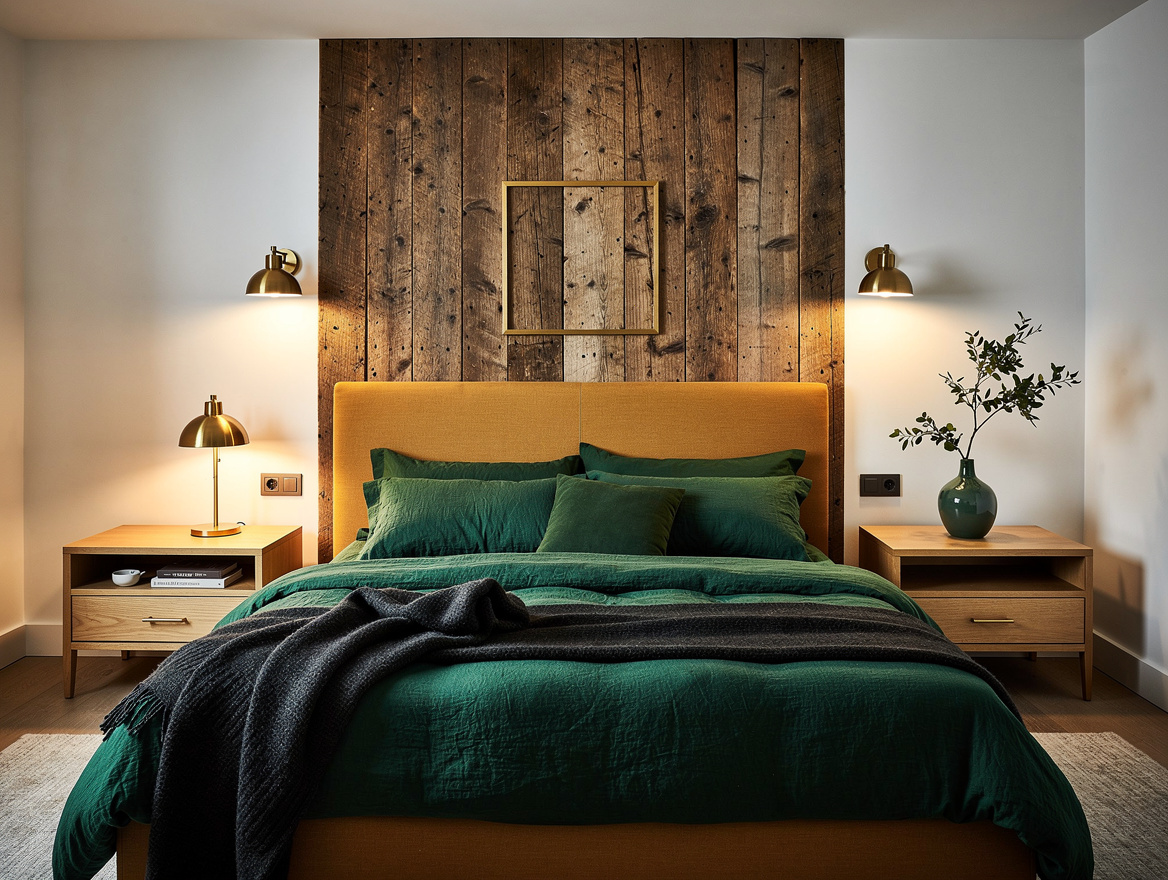
When wall cladding is impractical, make a weathered oak headboard the single rustic anchor, roughly 2 to 4 inches deep and broad enough to relate to the nightstands, so the bed carries the weight without adding wood to every wall.
A solid wood panel should rise about 48 to 60 inches above the finished floor, not stop just above the mattress, and its width should finish near the nightstand zones so the composition feels deliberate. A materials budget around $250 to $2,000 or more is typical, depending on whether you buy a simple wood bed through IKEA, shop a larger panel on Wayfair, or build from boards; custom labor and delivery belong at the high end.
Set it against warm white paint and keep the edges square, because creamy contrast lets the grain speak while a carved, overworked silhouette turns the room into a themed cabin with too much costume.
Soften the Grain With Relaxed Layers
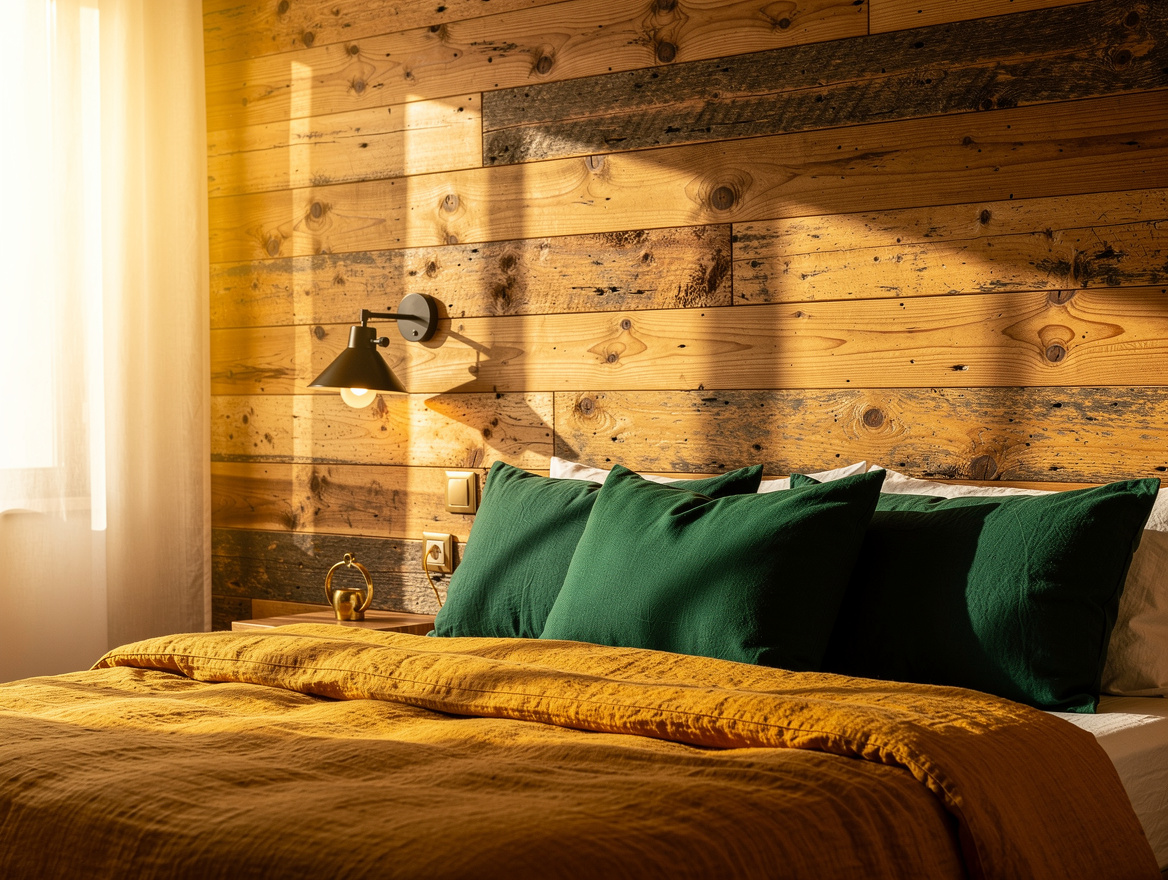
Balance rough boards with washed flax linen bedding in oatmeal or ivory, choosing a relaxed drape and a breathable sheet so the bed feels lived-in rather than overly tailored; gentle creasing is part of the charm.
For a colder palette, add a charcoal wool throw across the lower third of the bed and keep the rest of the textiles quiet, letting the roughness of the wall show through. In a brighter room, cream linen with a faded blue-gray accent brings softness without competing with the wall, and a slouchy pillow shape feels more current than a row of stiff shams.
Target and Wayfair are good places to compare linen-look duvet covers, but check fiber content, wash instructions, and return terms, since glossy microfiber can make even authentic wood feel staged and overly smooth.
Ground the Bed With a Quiet Rug
Give the bed a soft landing with a natural jute rug that extends beyond the mattress and nightstands instead of disappearing under the frame; the visible border should make the bed feel placed, not parked.
Choose low-pile wool when warmth underfoot matters, or use jute for a drier color and more visible fiber. I would skip an ornate pattern here, because the reclaimed-look wall already supplies the room’s strongest visual rhythm and doesn’t need another focal point.
Amazon, Wayfair, and IKEA can help you compare weaves, while a typical plank-wall scheme stays around $250 to $1,200 in materials before the mattress, labor, or major electrical work, leaving room in the budget for a wool-and-jute rug with enough size to frame the bed rather than vanish beneath it.
Add Metal and Light in Small Doses
Use blackened steel sconces beside the bed to sharpen the organic wood, choosing a slim profile so the fixture supports the wall instead of competing with it; that restraint matters most in a narrow bedroom where every projection steals visual space.
One aged-brass reading lamp can warm gray boards, but polished gold will push the room toward glam. Pair the metal with a linen shade or frosted glass, use soft bulbs for a calmer evening finish, and let the light pool near the bed rather than wash the entire wall.
At Lowe’s, Home Depot, or Amazon, compare plug-in wall lights by projection as well as appearance, especially in a narrow room, and skip the oversized wagon-wheel chandelier unless the ceiling and floor plan genuinely support it.
Keep Supporting Pieces Deliberately Plain
Let simple solid-wood nightstands echo the focal wall without matching it board for board, with enough surface for a lamp, a book, and little else; the open space is part of the rustic calm.
Repeat the lighting with matte black hardware on a dresser or closet door, then leave clear floor space around the bed. A warm off-white wall and one vintage-looking object do more for rustic character than a full set of distressed furniture, which can make the room feel staged before you’ve even added the bedding.
Walmart and IKEA can fill supporting pieces, while a softer scheme built around light reclaimed pine, flax linen, cream walls, and antique brass runs around $450 to $2,000 in typical materials; modern-rustic rooms often land around $500 to $2,500, and authentic salvaged boards or a reclaimed-wood bed can push a large project to about $1,500 to $6,000 or more.
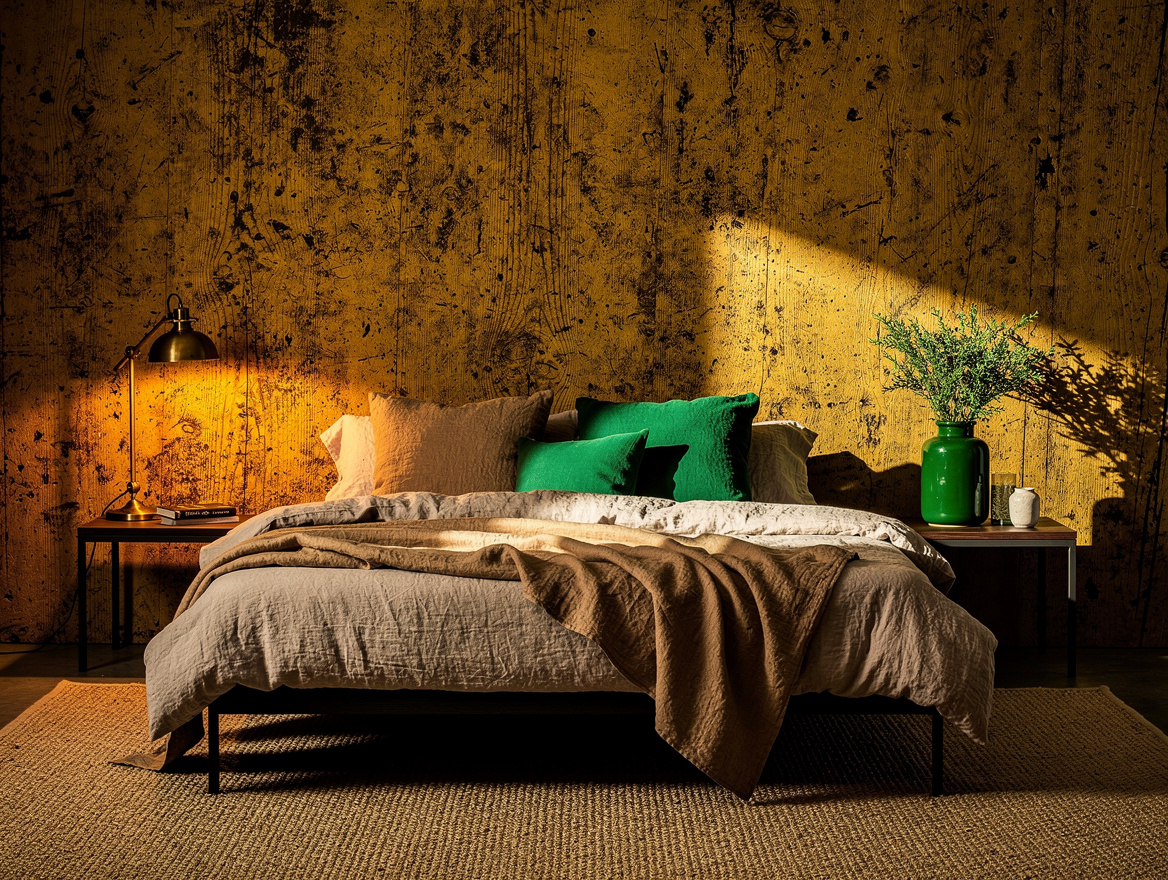
Start by taping a rectangle about 9 to 11 feet wide behind the bed, price the planks with a 10 to 15 percent waste allowance, and choose every other finish from the softer side of the color scheme. That quick mock-up will show whether the room needs more texture or simply less furniture.
Mia Carter writes about small-space living and budget home makeovers. She has restyled three rentals and tests most ideas in her own 45 sqm flat.