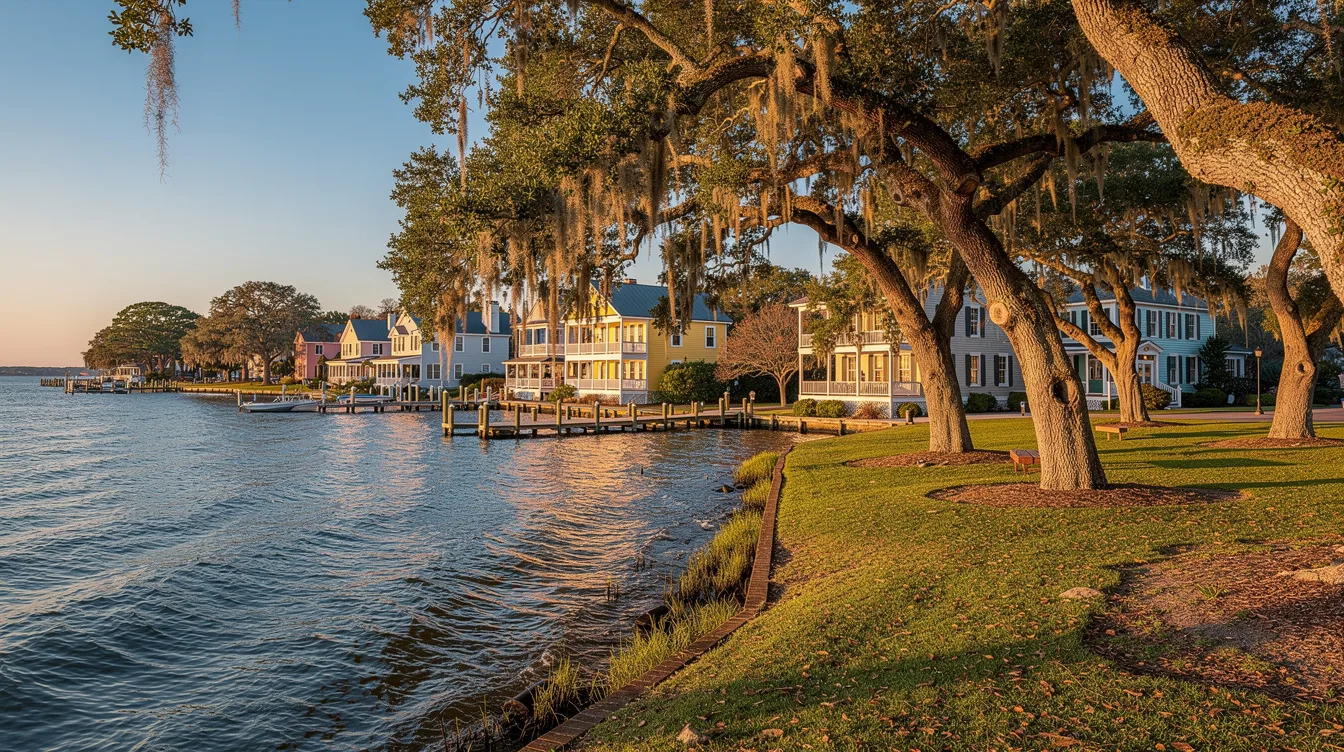
Beaufort reaches back to 1711, making it South Carolina’s second-oldest city after Charleston. That gives you a historic alternative to Charleston, but the town feels smaller and more residential from the first waterfront walk.
And because it’s on Port Royal Island between Charleston and Savannah, you can add it to a road trip without treating it like a remote detour. But you shouldn’t come expecting a nightlife weekend. The city moves at a residential pace, which is exactly why it works as a Charleston alternative.
Why 1711 still matters on Bay Street
The city had 13,607 residents in the 2020 Census. That helps explain why Bay Street and Craven Street feel layered, with preserved 18th- and 19th-century architecture beside cafés and galleries. You can wander without chasing a single landmark.
And the whole downtown is recognized as a historic district, so you can keep walking as porches and live oaks appear around you. Spanish moss softens the streets, but the history never feels staged.
But if you’re comparing Beaufort with Charleston, expect less city energy and more residential quiet. I prefer that trade-off, because you can stop for a café or gallery without turning the morning into a checklist.
The waterfront gives Beaufort its easy rhythm
Start at the waterfront park, where docks and swings face the Beaufort River. Frequent community events give the center a social pulse, yet the view remains open enough for a slow pause. You can come at sunset and let the town introduce itself.
And the historic district continues inland through Bay Street and Craven Street, where galleries and cafés sit beside churches and porches. The scene is polished, but not formal, and I think that makes Beaufort easier to enjoy than a larger destination.
But walkable doesn’t mean all-purpose. Beaufort isn’t a nightlife hub, and a beach holiday requires driving. For a broader Lowcountry day trip, keep the car and schedule flexible.
Parris Island changes the story beyond the old homes
Parris Island sits roughly 5 miles south of town, and its Marine Corps Recruit Depot shapes Beaufort’s identity and local economy. That presence keeps the city from feeling like a preserved set. You can notice the difference even if military history isn’t your main interest.
And Beaufort’s past reaches beyond architecture. Beaufort National Cemetery is a Civil War-era cemetery, while nearby St. Helena Island is important for understanding living Gullah Geechee culture.
If you care about history, give both stories room.
But don’t rush through the region after one downtown loop. Visit St. Helena Island for cultural context, then return for Lowcountry seafood or shrimp and grits.
My strongest opinion here is simple: the town becomes more meaningful when you connect its streets with the communities around them.
Hunting Island is the right day trip from town
Hunting Island State Park shifts the mood from shaded streets to beach, maritime forest, wildlife, and a historic lighthouse. It’s more wild Atlantic coast than Beaufort itself, so you should go when you want room to breathe. The change of texture is the point.
And the contrast is honest: Beaufort is scenic and quiet, but it isn’t a beach resort. You can make the park a coastal day trip, though you’ll need to drive and plan around the road. I would choose this pairing over trying to force a beach holiday from downtown.
But spring and autumn are my picks, because those are the most comfortable periods. Summer brings heat and humidity, with storm risk, which can make a walking town less pleasant. If you want an easy first visit, take the shoulder seasons seriously.
Can you visit Beaufort without a car?
You can walk the historic center, but a rental car is the practical choice. Beaufort is about 70 miles south of Charleston and 45 miles north of Savannah, with Savannah/Hilton Head International and Charleston International as the nearest major airports. And driving gives you flexibility beyond downtown.
But don’t pack every hour. Arrive for a waterfront walk, then explore the historic district the next morning. Save a separate day for Hunting Island or St.
Helena Island, because the best version of Beaufort has room for detours.
Beaufort works best as a slower road-trip stop
And the city makes sense for travelers who want architecture and nature without a resort timetable. You can use it as a slower road-trip stop in South Carolina, then give the wider area the driving time it needs. That’s a practical compromise, not a flaw.
But the town’s quiet is its strongest argument. By the time the waterfront darkens and the docks go still, the old streets feel less like an alternative to Charleston and more like Beaufort itself. The last light catches the moss above the sidewalks.