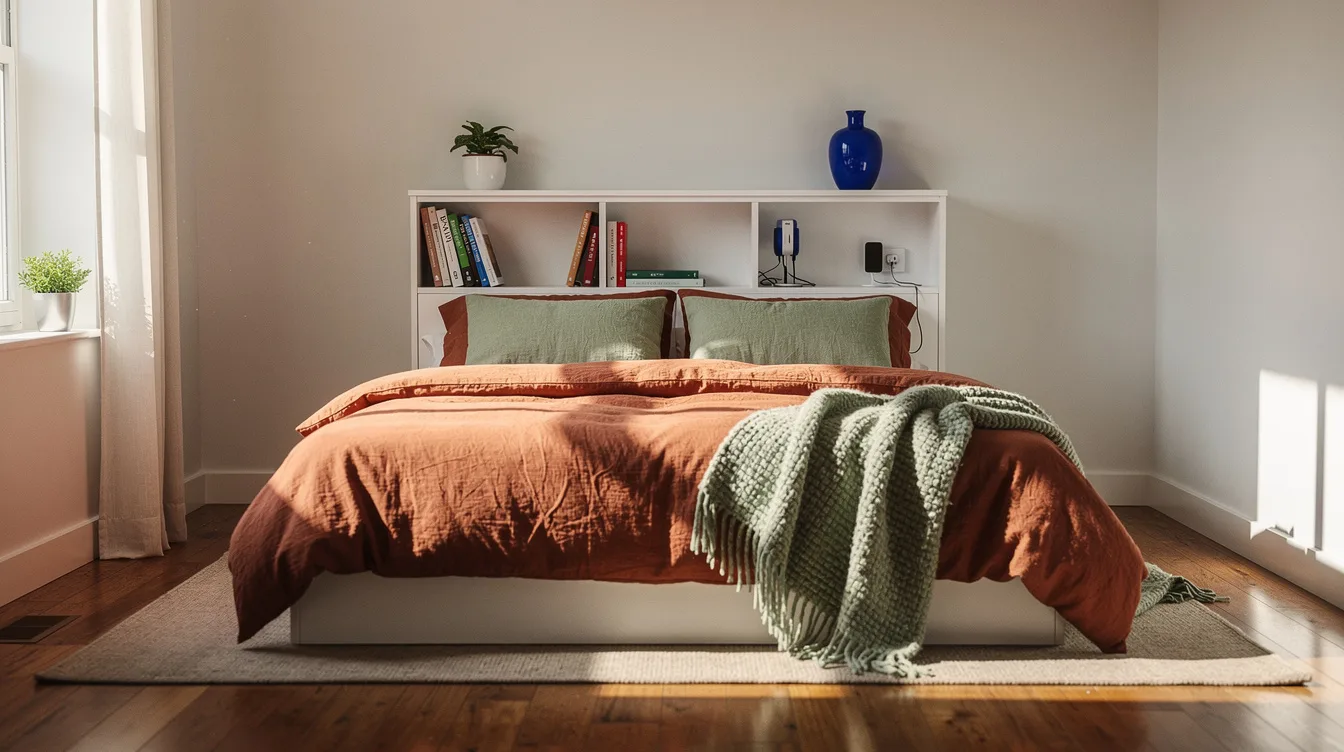
A queen bed can take up roughly 60 inches of a small bedroom wall, then two nightstands claim even more floor before you have stored a single charger. That is why a storage headboard earns its keep when it replaces those tables with a shallow, reachable zone.
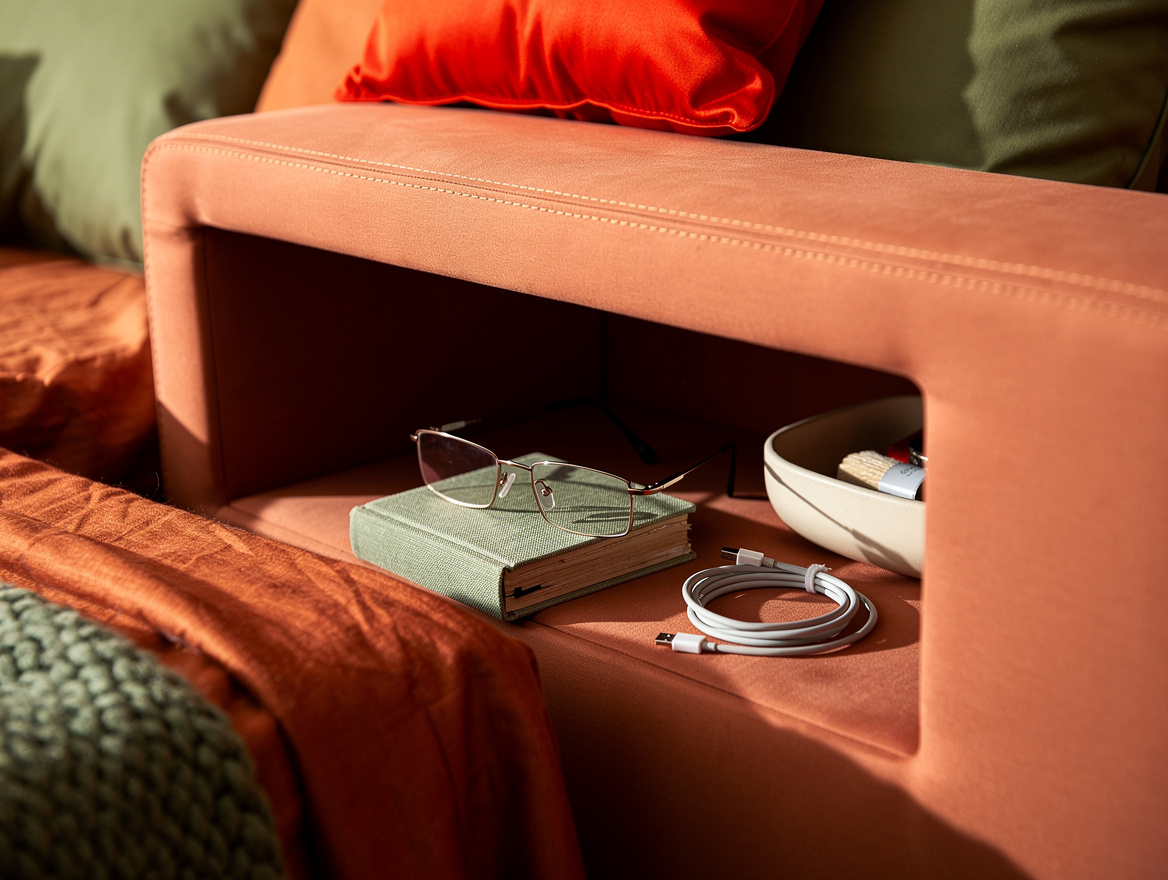
The smart version holds what you reach for at 11 p.m., not winter blankets you will never want to excavate from bed. Books, glasses, medication, a journal, remotes, and spare cables all belong here.
Choose Shallow Storage That Stays Useful
A headboard around 8 to 12 inches deep can hold everyday essentials without making a narrow room feel like the bed is marching into it. I would rather gain one slim shelf than buy a giant unit that turns pillow space into an awkward ledge.
IKEA BRIMNES gets this proportion right: its queen headboard is about 11 inches deep, enough for books, a clock, cables, and a small basket. That shallow footprint can let a queen bed work without either bedside table.
Keep bulky bedding, luggage, and seasonal clothes elsewhere. A headboard shelf should open with one hand while you are half asleep, which means high-frequency objects only.
For a concealed bookcase headboard, a typical 2026 price runs about $250 to $700. Spend more on solid construction and quiet hardware, not extra depth you cannot comfortably use.
Hide the Visual Clutter Behind Doors
Open cubbies look charming in a catalog, then quickly become a parade of charging bricks, receipts, and mismatched paperbacks. Sliding doors make the headboard read as furniture instead of a miniature supply closet.
Use wood veneer or a matte painted panel for the face, then keep a charging cable and glasses inside each compartment. The room will look calmer even when the storage is working hard.
A lift-up compartment is also useful for documents, journals, and a remote, especially when the mattress blocks a lower shelf. Typical lift-up headboards cost around $200 to $600, depending on size and finish.
Skip flimsy lids that need two hands or slam shut. Bedtime storage should feel quieter than a kitchen cabinet.
Give Every Side a Bedside Job
One of the biggest small-bedroom mistakes is treating the headboard as shared storage with no boundaries. When both sleepers need a phone, water, reading material, and glasses, one long shelf becomes a daily negotiation.
Divide the space into left and right zones with two lidded canvas bins or matching trays. A center section can hold the alarm clock or a tiny lamp, while each person keeps their own essentials close.
For a solo bed, reserve one end for charging and the other for reading. This simple assignment prevents the shelf from becoming a drop zone for every item that enters the room.
A recessed cubby works especially well because the mattress partly hides the contents. Typical open-cubby headboards cost about $150 to $400, but only buy one if you are willing to edit what stays visible.
Use Cable Routing Before Adding Decor
A storage headboard with no cable plan creates the exact mess it was meant to solve. The cord from a phone charger should disappear through a rear opening, not hang across the pillow like a loose extension cord.
IKEA BRIMNES includes cable-routing holes, a practical detail that matters more than decorative trim in a compact room. Place a surge protector behind the bed only where it remains accessible and follow its safety instructions.
Choose a short charging cable and keep one spare inside the shelf. A small battery-powered reading light can also reduce the need for another cord and another crowded tabletop.
Do not stuff power strips into a sealed compartment with papers or fabric. Electricity needs breathing room, and a neat bedroom is never worth a risky setup.
Match the Headboard to the Mattress
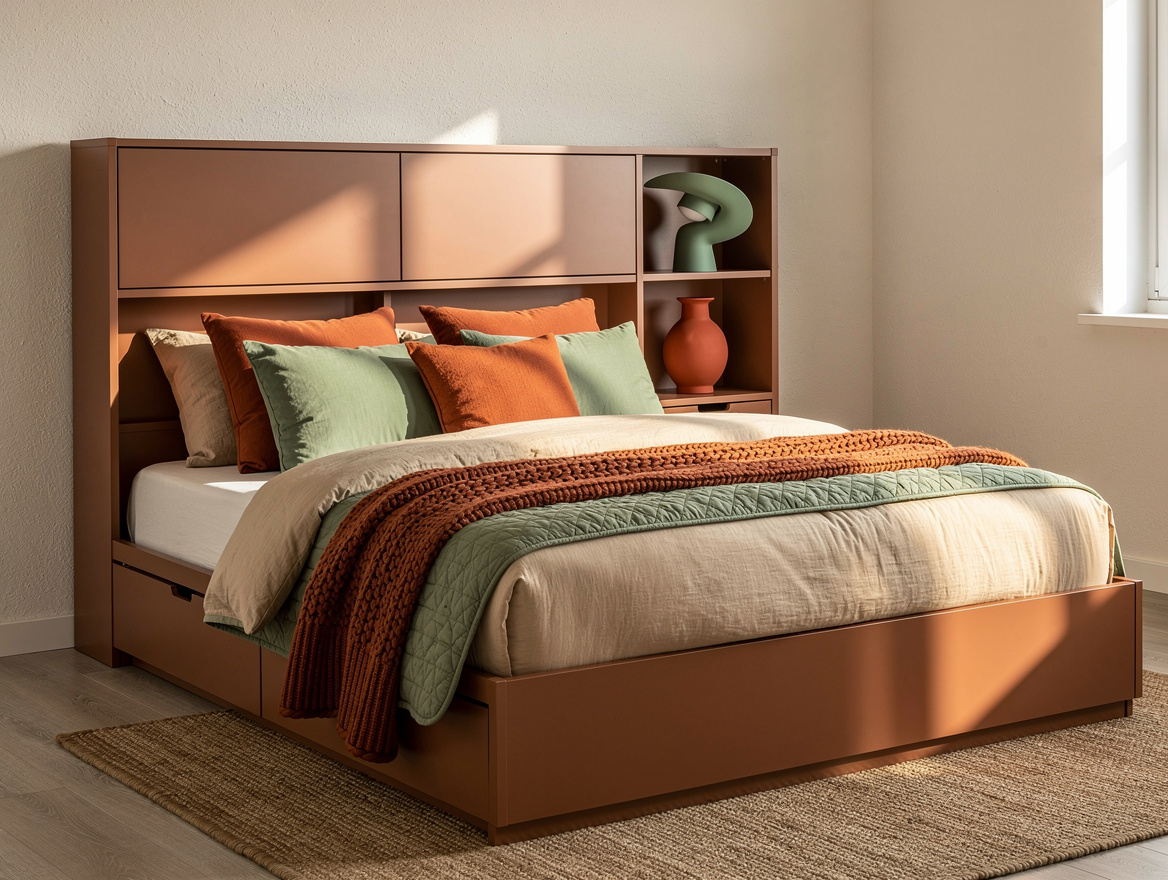
A headboard that is too narrow looks accidental, while one that overwhelms the mattress makes the whole wall feel heavy. Confirm the mattress width first, especially with full, queen, and king sizing that can vary by retailer and market.
The Coaster Westpark queen bookcase headboard measures about 59.75 inches wide and 11.5 inches deep, which suits a standard queen footprint. Its three open cubbies are practical, but I would style them with restraint.
A few paperbacks. One small ceramic tray. A charging dock.
The rest should stay behind the bed or inside a closed compartment.
If you need maximum capacity, a storage-bed system combines headboard boxes with under-bed drawers. Typical systems cost around $500 to $1,500 or more, and they can replace several separate pieces in one very small room.
Finish It Like Furniture, Not Shelving
Particleboard can be perfectly reasonable for a budget headboard, but exposed raw edges make a bedroom look temporary. Look for a finished surface, clean edge banding, and hardware that feels aligned when the doors close.
The AFI Denver design is worth studying because it pairs open shelves with two closed compartments behind raised-panel doors. That mix gives you quick access without forcing every personal item into view.
For a softer room, an upholstered pocket headboard can hold a book or tablet while staying under roughly 6 inches deep. Typical upholstered storage panels run about $150 to $700, and they are a strong renter-friendly choice when floor space is the real problem.
Choose one finish that connects to the bed frame, whether that is warm oak, white paint, or matte black metal nearby. Matching every surface is dull, but unrelated finishes make a tiny bedroom feel busy fast.
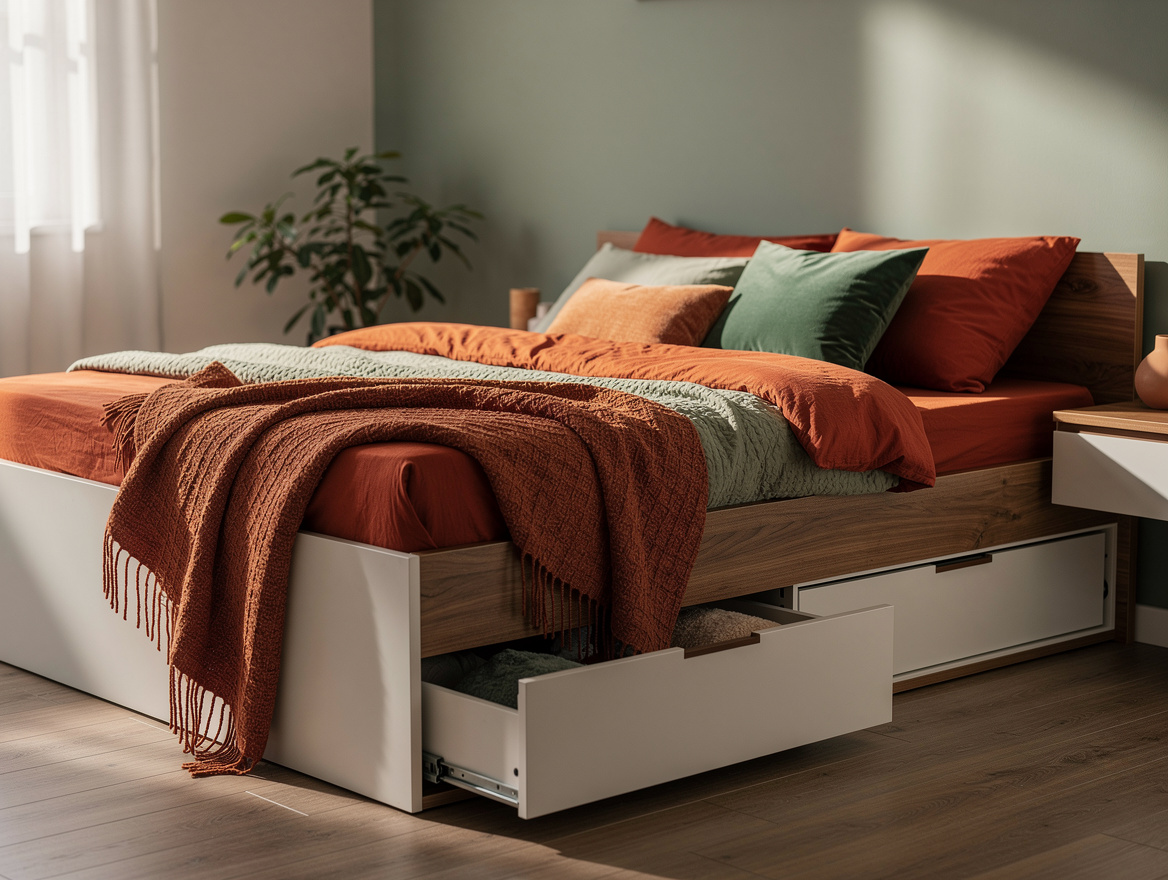
Start by clearing the two items you reach for every night, then measure the depth from the wall to your pillow edge. A shallow headboard that eliminates even one nightstand will give a small bedroom more usable space than another decorative basket ever could.
Mia Carter writes about small-space living and budget home makeovers. She has restyled three rentals and tests most ideas in her own 45 sqm flat.