
I made thirteen witchy wreaths with dried flowers and moon phases because I wanted Halloween decor that didn’t leave a bin of plastic behind. My front door looked flat, I had one rainy weekend, and the first wreath changed the whole entry. Warm, strange, and far more welcoming than I expected.
Here’s what it looked like before
Before this project, my door had the full “I bought one orange thing in October” look: a thin store-bought wreath, faded ribbon, and a plastic spider that kept slipping sideways. You could see the brass door knocker through the center, which made everything feel undersized.
I took it down and started with a bare grapevine base. The raw brown twigs, the dry scrape of stems, and one good willow wreath form gave me more to work with than the old decoration ever did. You don’t need a crowded door.
You need one piece with enough presence to hold your eye.
- Start with the Bare-Branch Rule
- Layer a Dried Flower Wreath Halloween Palette
- Hang a Moon Phase Wreath in a Crescent
- Build the Three-Texture Spell
- Frame Herbs for a Witchy Decor DIY
- Skip Black Plastic for a Natural Halloween Wreath
- Use the Two-Wood Rule for a Cottagecore Halloween Wreath
- Paint One Moon, Not the Whole Wreath
- Can a Small Witchy Wreath Feel Big Enough?
- Anchor a Full-Moon Cluster with Seed Pods
- Float Tiny Bells Through a Herb Wreath Witchy Design
- Mix Moon Phases Along a Split Ring
- Let a Foraged Wreath Stay Imperfect
1Start with the Bare-Branch Rule
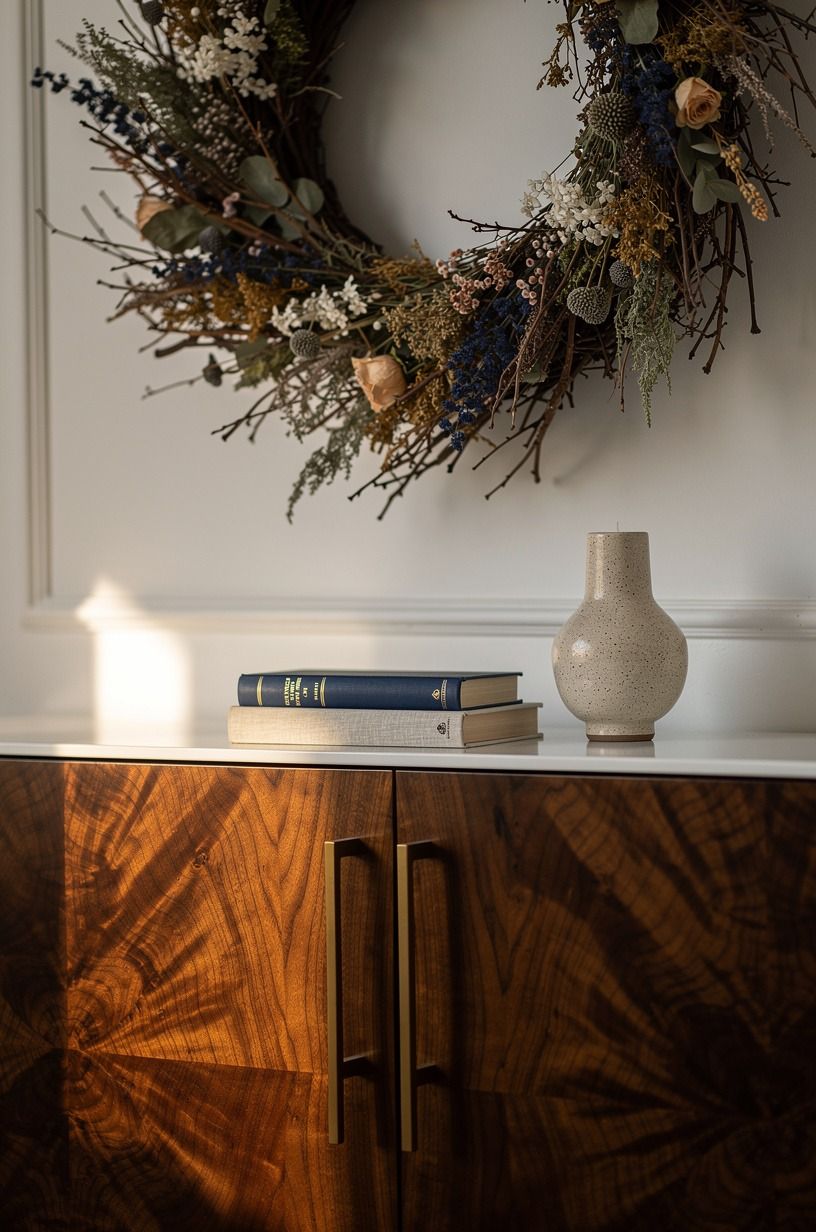
I kept the first witchy wreath almost bare, and it’s still my favorite. You can see your front door through the branches, which lets the wreath feel airy instead of like a craft-store explosion.
I used a 14-inch grapevine ring and tucked in dried twigs from the yard. You’ll want the ends pointing in one direction, like wind caught them there. I’d skip perfectly trimmed branches because they look fussy, and fussy isn’t spooky.
A thin circle. Dark twigs.
One dried seed pod near the bottom. Let book-matched walnut details nearby bring a warm, tailored contrast to the dry branches.
You can borrow the same low-waste mindset from this zero-waste hair-care journey if you’re trying to make your seasonal habits less disposable.
2Layer a Dried Flower Wreath Halloween Palette
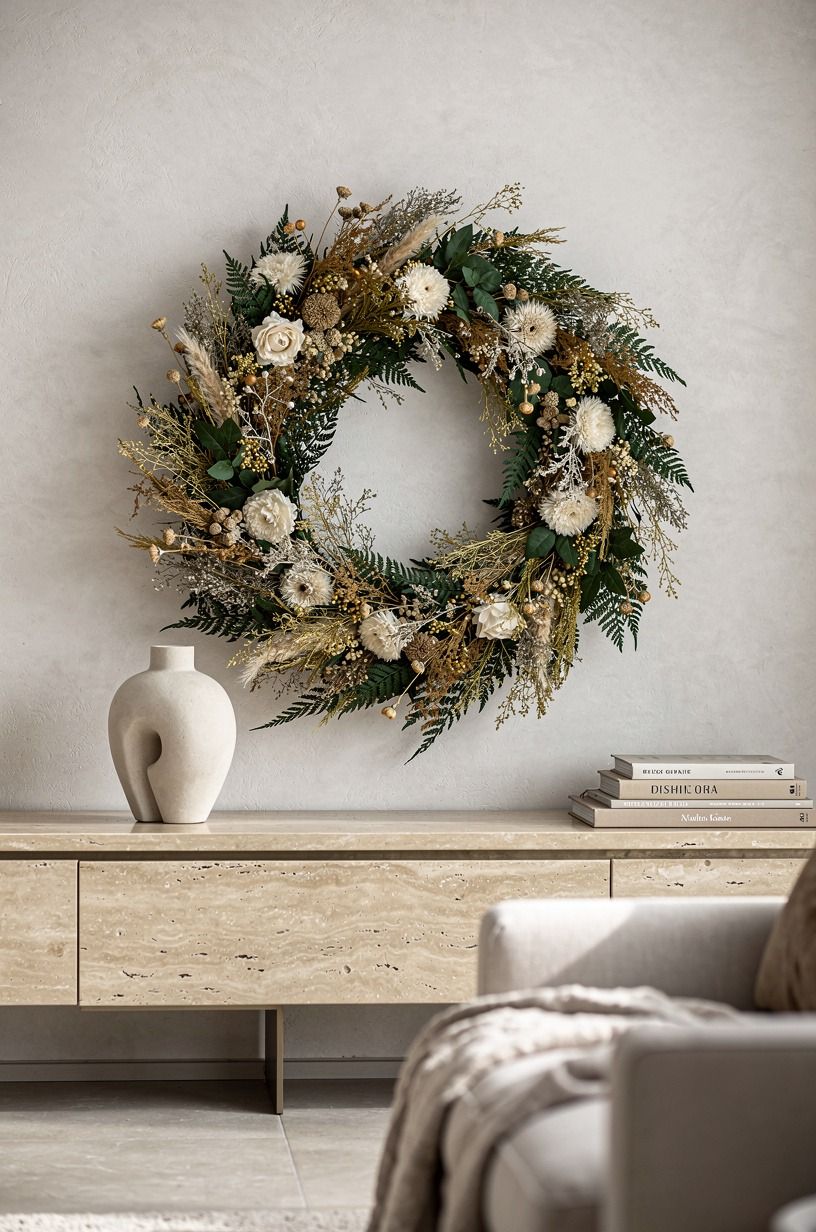
For the second wreath, I used faded color instead of bright orange. Dried strawflowers in emerald, cream, and old gold gave it a moody, earthy edge that looked much better against my black door.
I tied each little bunch with jute, then tucked the ends into the grapevine. You don’t need hot glue for this part, and your hands will thank you. A nearby warm travertine surface makes those faded tones feel grounded instead of overly sweet.
But don’t cover every inch. I made that mistake once, and the wreath looked like a florist had lost an argument with a scarecrow. Leave quiet space between bunches so your eye can find the shape.
3Hang a Moon Phase Wreath in a Crescent
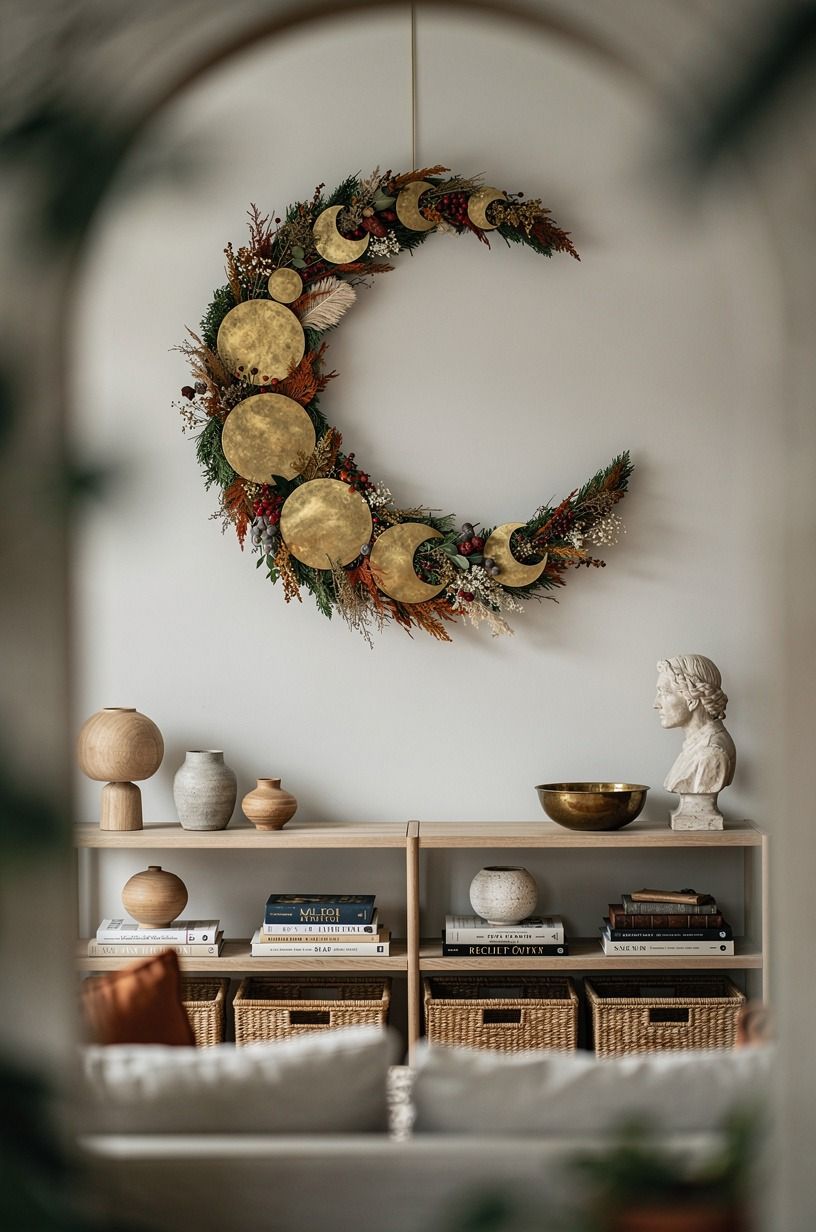
A full circle is fine, but a crescent moon shape feels more intentional. Use forest green, rust, and natural oak around the curve, then add a little unlacquered brass that can gather its own soft patina over time.
4Build the Three-Texture Spell
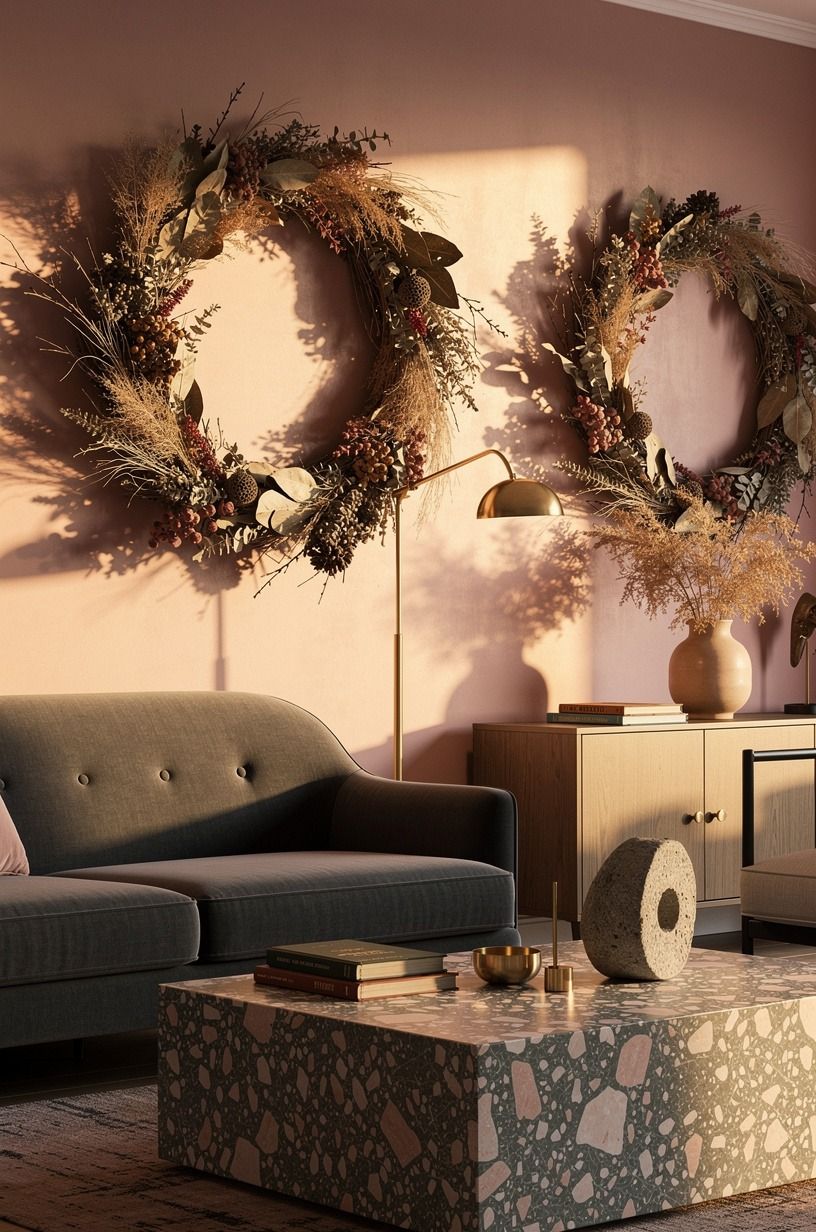
My third wreath taught me that one material never carries the whole story. I combined bleached ruscus, rough broom bloom, and dried eucalyptus, then added a narrow strip of torn linen.
You can feel the difference when you touch it: papery leaves, scratchy stems, soft fabric. Your wreath should have that kind of contrast, especially if you’re hanging it against a painted door. I painted mine in Farrow & Ball Pigeon No. 25, a gray-green that makes dried flowers look less brittle.
Dusty rose, charcoal, and brass work especially well with an oversized-chip terrazzo ledge or entry table nearby. I’ve tried fake eucalyptus beside the real dried kind. The plastic version is easier, sure, but it reflects porch light in the wrong way.
Real stems go matte and quiet, which is the whole point.
5Frame Herbs for a Witchy Decor DIY
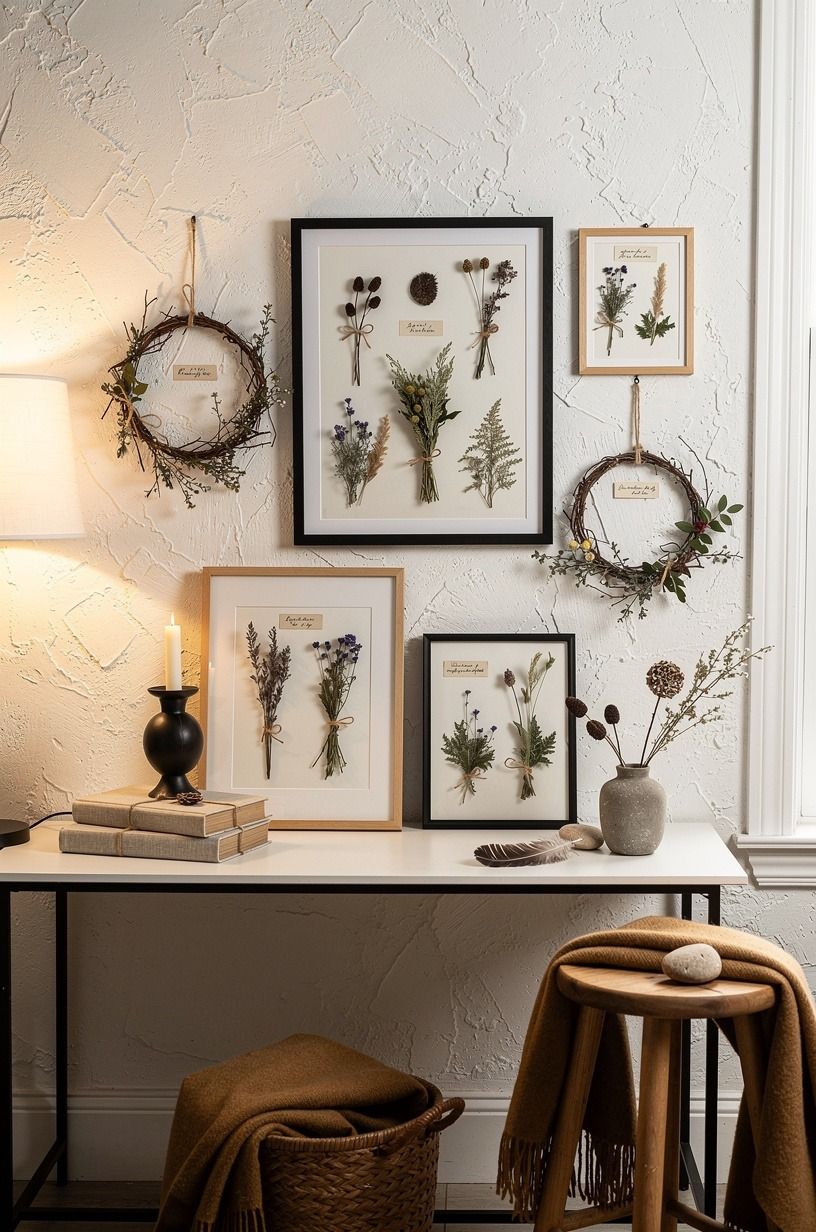
This herb wreath started because I had rosemary that had gone woody on the windowsill. I paired the herbs with warm white, camel, and black accents, then let a hand-applied Venetian plaster wall keep the arrangement from feeling too busy.
6Skip Black Plastic for a Natural Halloween Wreath
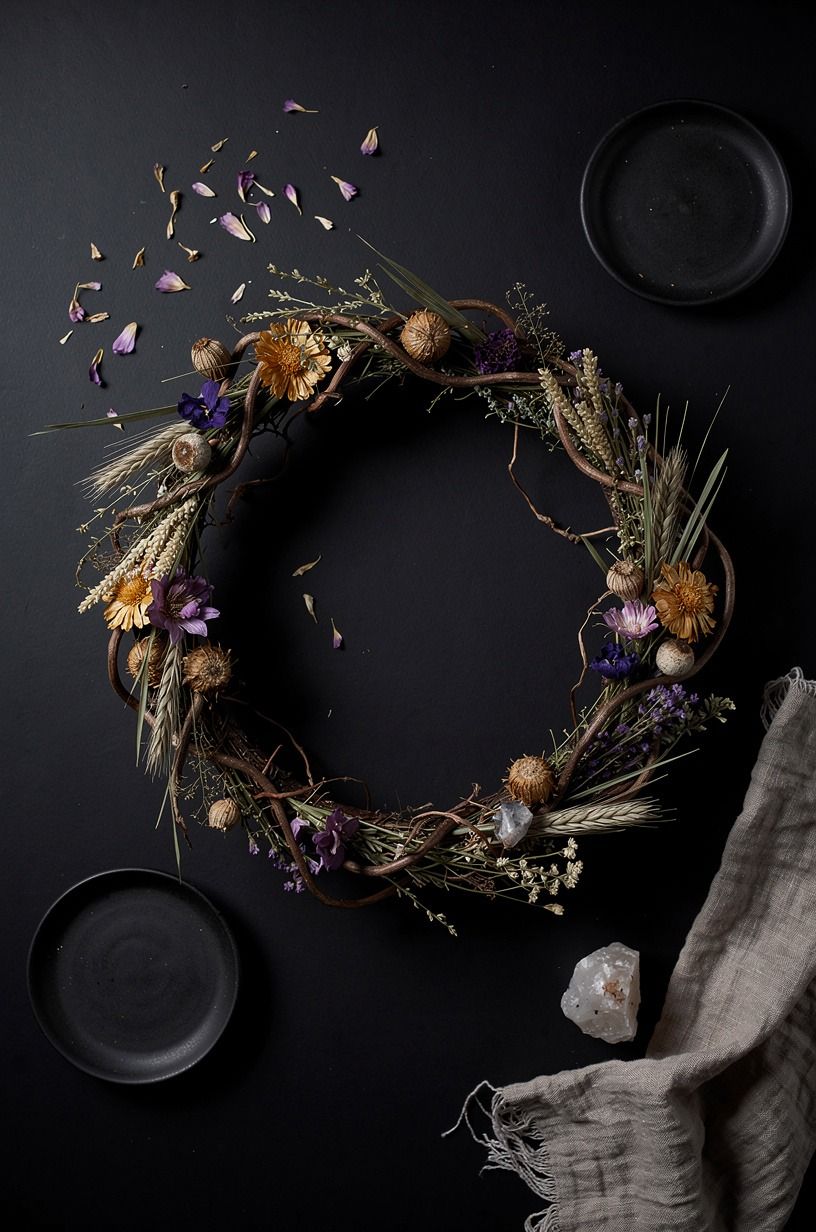
I wanted one wreath that read as Halloween without relying on black foam bats or synthetic cobwebs. So I used blackened oak leaves, dried naturally until they curled at the edges, with dark plum feathers I found on a walk.
You’ll want to keep the feathers sparse. Too many and it starts looking theatrical; three or five is plenty. I wired a small cluster of copper-toned beads into the lower left side for weight and a little dark shine.
Midnight blue, copper, and ivory make the leaves feel richer, especially beside small shagreen accents. But the best part was free: a handful of curled leaves from the sidewalk. They made the wreath feel rustic and a little wild, not mass-produced.
7Use the Two-Wood Rule for a Cottagecore Halloween Wreath
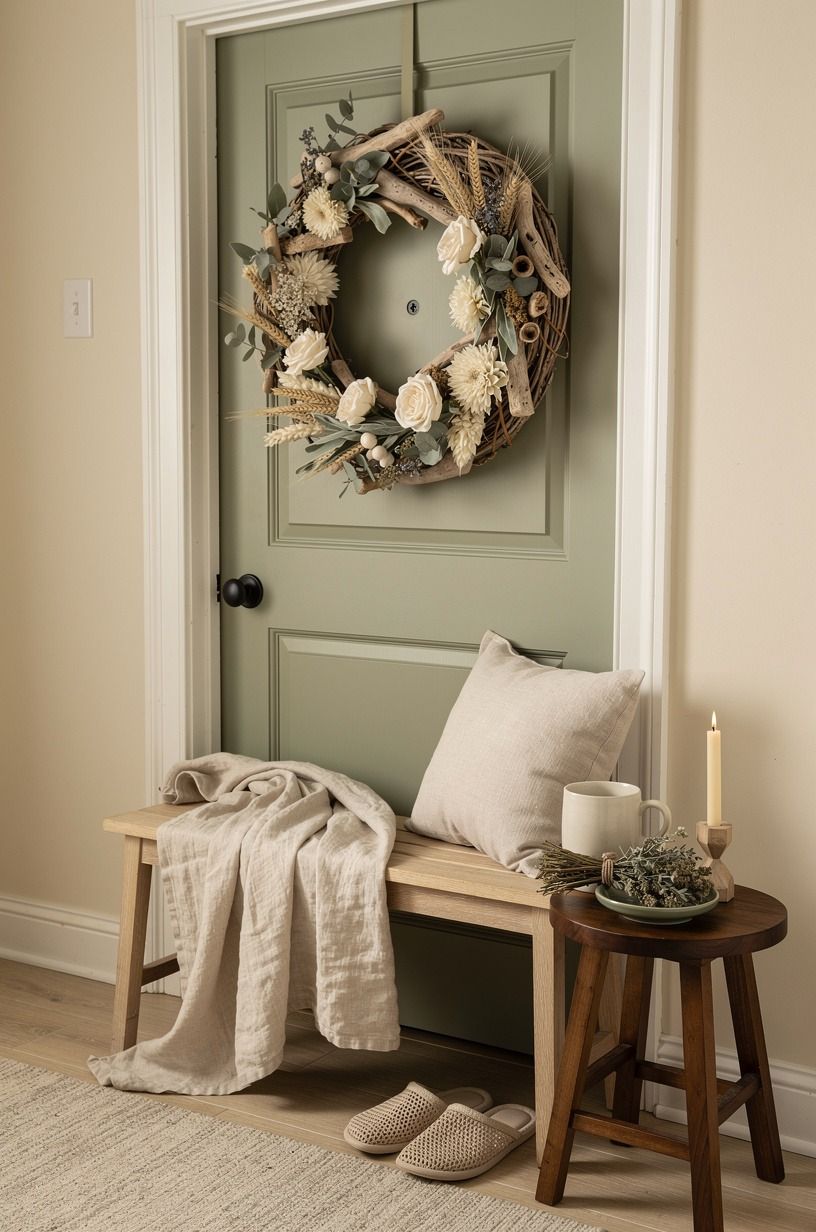
This one came together when I mixed a pale birch slice with darker grapevine. Sage green, warm cream, and natural wood keep the pairing soft, while washed Belgian linen gives the finished wreath an easy cottage feeling.
8Paint One Moon, Not the Whole Wreath
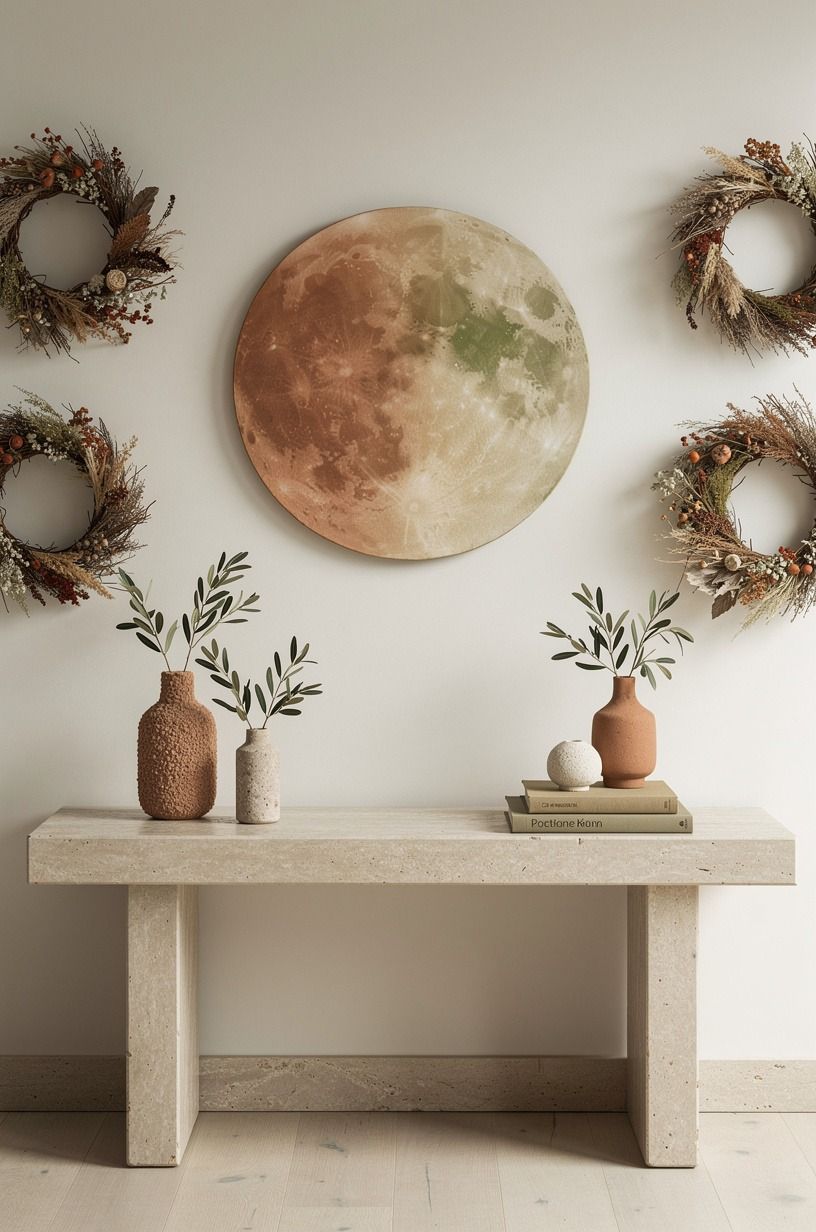
For a softer version, I painted one small crescent moon in Benjamin Moore White Dove OC-17 on a thin wood slice. It sits off-center inside the wreath, surrounded by tan bunny tails and faded hydrangea petals.
You’ll want the moon to be small enough that it feels discovered, not announced. Mine was about 3 inches across, and that scale kept it subtle. I hung it with a strand of unbleached cotton twine, which disappears into the dried stems.
Terracotta, stone, and olive make the pale moon feel less precious, especially with a little organic bouclé nearby. And if your door is light-colored, use the opposite approach: a dark wood moon, no paint. A white moon on a white door just vanishes.
Been there.
9Can a Small Witchy Wreath Feel Big Enough?
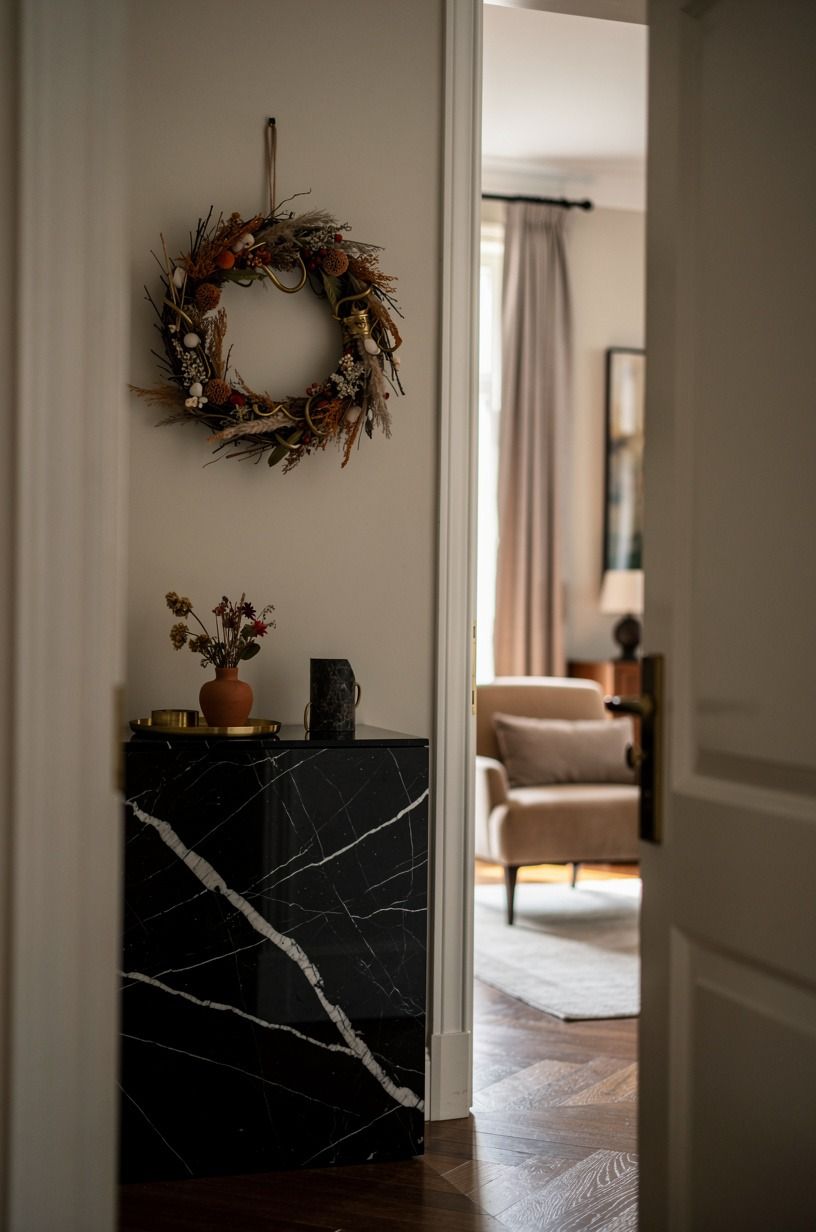
Yes, if you give it a long tail. Clay, linen, and aged brass make a small wreath feel substantial, particularly when it sits near Nero Marquina black marble with white veins.
10Anchor a Full-Moon Cluster with Seed Pods
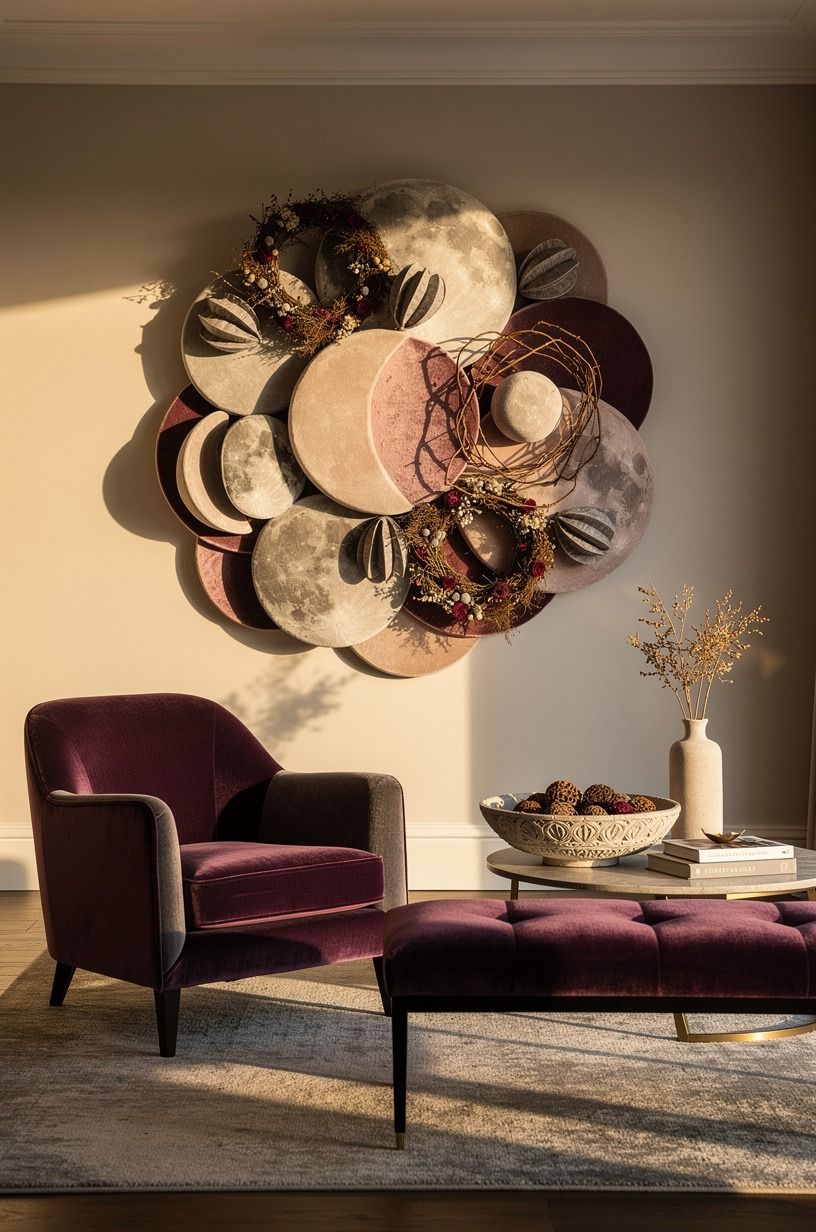
The full-moon wreath was my bold one. I made a pale circle from dried hydrangea heads, then anchored the lower edge with lotus pods and curled vine.
You’ll need to balance pale petals with something dark, or the wreath starts to look like wedding decor. I added two stems of dried blackberry vine, and suddenly it felt witchy again. The petals were soft and papery, while the pods looked almost carved.
Plum, grey, and rose gold deepen the arrangement, and deep-pile mohair velvet nearby keeps the look lush without adding another novelty decoration. I went back and forth on adding a faux raven. I’m glad I didn’t.
The plant shapes already had enough drama, and your natural materials will age better than novelty pieces.
11Float Tiny Bells Through a Herb Wreath Witchy Design
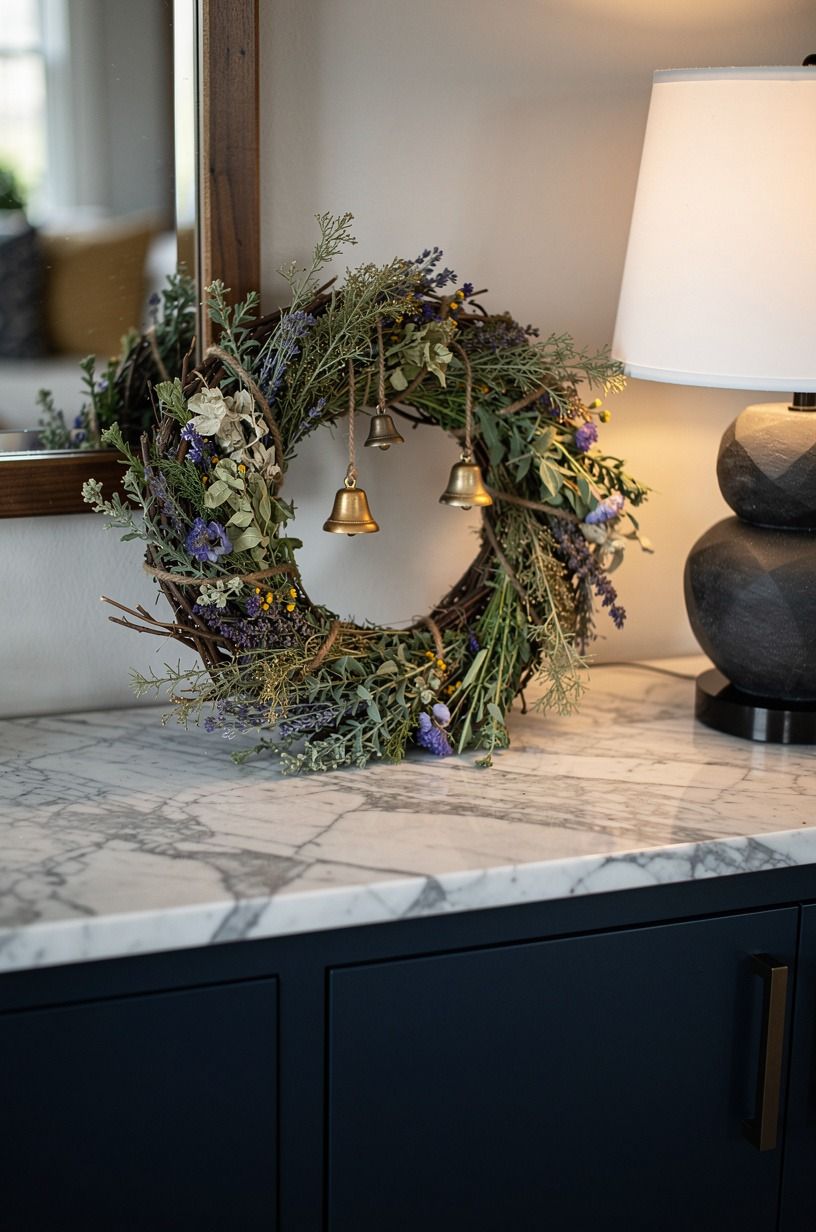
This wreath is the only one with sound. I tied three small aged brass bells into a circle of dried sage, mugwort, and olive branches.
You’ll want bells that are quiet, not the bright jingle-bell kind. Mine make a low clink when the door opens, and it feels intimate rather than festive. I spaced them unevenly because perfect spacing looked too polished.
Navy, white, and walnut keep the herbs from looking too rustic, while Carrara marble with subtle grey veining adds a clean counterpoint. But keep the herb bundles dry.
If you hang this under an exposed porch and it gets soaked, the leaves go limp fast. Mine stays on an inner door, where it’s protected and still catches the amber hall light.
12Mix Moon Phases Along a Split Ring
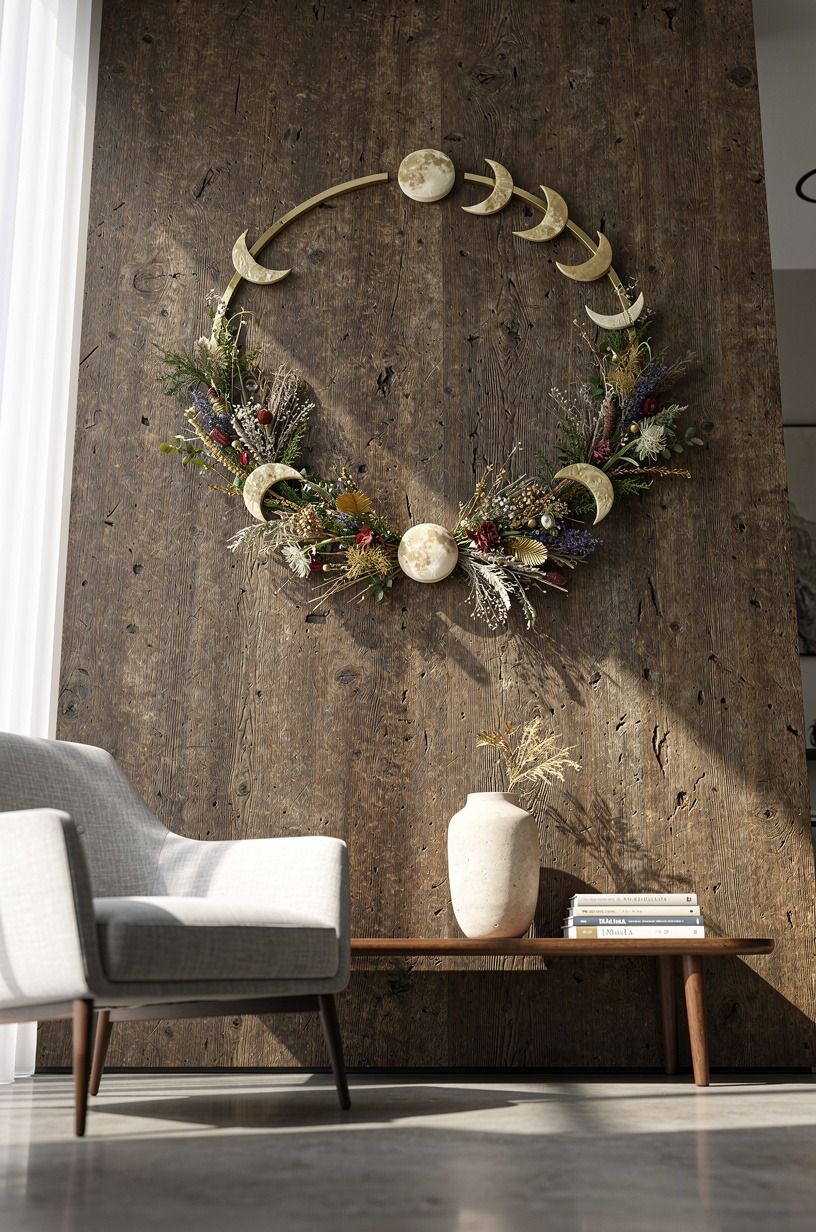
For wreath number twelve, I split the ring in half. The top stayed bare grapevine; the bottom carried five tiny wood moons, from crescent to full and back again.
I used reclaimed weathered teak circles and rubbed them with a little dark wax. You can buy precut wood discs at a craft shop, but I preferred the uneven edge of the ones I cut myself. Each moon was tied on with black thread, no plastic zip ties in sight.
Your moon phases don’t need to be perfect. Mine aren’t. The slight wobble makes the piece feel handmade, and that’s why people stop to look.
13Let a Foraged Wreath Stay Imperfect
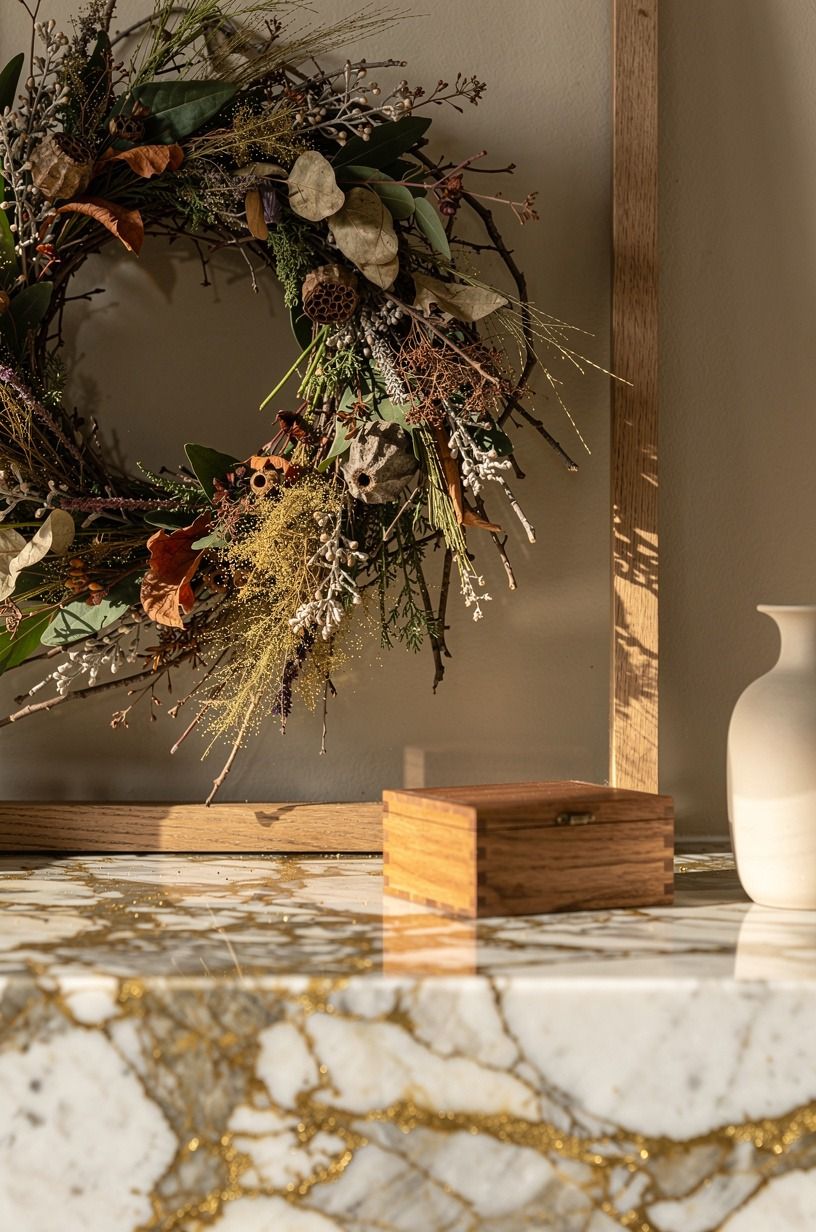
The last wreath was made from whatever I had left: dried Queen Anne’s lace, brown grasses, one faded rose, and a loop of vine. It’s the most organic of the thirteen, and it took less than an hour.
You’ll notice the stems aren’t symmetrical. Good. I left one side heavier because it looked like it had grown there.
A bit of natural raffia at the bottom kept the loose ends in place without turning into a bow.
Forest green, rust, and natural oak let the mix feel settled, and a nearby Calacatta marble with gold veining brings out the faded warmth in the rose. I’d skip trying to “fix” every stem.
The imperfect side catches light differently, and the whole thing feels more peaceful because it isn’t trying so hard. It reminds me of slow afternoons in this medieval village beside France’s Cèze, where weathered details do more than polished ones.
How much it cost
My thirteen wreaths cost less than a full room makeover because I reused hoops, foraged branches, and saved dried flowers from grocery-store bouquets. The exact amount shifted by wreath, but the materials taught me where spending matters: good bases and natural stems, not plastic extras.
For a small wreath project, your free materials can do the heavy lifting. A wool rug may run $400-$1,500 in a room, while these wreaths only ask for a few saved stems and a reusable base. I spent on dried flower bundles when the color mattered, then used garden clippings for texture.
If you’re making a whole seasonal corner around the wreath, use three sources of light: overhead, task, and ambient. That three-source rule makes the dried textures look warm after dark.
Why I Think Natural Wreaths Are Having a Moment
I think people are tired of decorations that look new for one week and tired by November. A dried wreath has a different kind of life. The leaves curl, the flowers fade, and your piece becomes more earthy instead of less useful.
I’ve made plenty of glossy seasonal decor, and it rarely lasted. These wreaths feel more honest because they let weather and time show up. That’s not damage.
It’s the design.
What I Learned After Making All Thirteen
I didn’t plan to make thirteen wreaths. I planned to fix one front door, then I kept finding different stems, different moon shapes, and different reasons to try again.
The first lesson was simple: you can’t force dried flowers into the same neat shape as fresh ones. I tried.
The petals broke, the wire showed, and I spent an entire evening trying to make a loose thing behave like a store display.
The second lesson was about scale. A wreath can be small, but it can’t be timid.
My 10-inch version worked because its linen tail was long and because the dark stems had enough contrast against the door. A small wreath with tiny details at the center disappears.
Your eye needs one thing it can read from across the porch: a pale moon, a thick herb bundle, a dark pod cluster.
And then there’s the plastic question. I’m not precious about every purchased item in my house, but I’ve become picky about seasonal clutter. The cheap plastic version often asks you to buy it again next year, then gives you nothing interesting in return.
A grapevine form, cotton thread, and real plant material can be reused or composted. That feels like a better bargain.
The part I loved most was the mess of it. Dusty petals on the table.
Twine under my fingernails. A few stems that refused to point where I wanted. Your home doesn’t have to look untouched to look refined.
Sometimes it needs evidence that you made something for it.
A Few Things Worth Answering
What is the best witchy wreath for a small entry?
A crescent moon wreath is the best choice because its open shape keeps a narrow door from feeling crowded. A long linen tail adds height without adding bulk. Try a 10-inch grapevine ring, pale dried stems, and one off-center wood moon.
Where can I buy witchy wreath pieces on a budget?
Start with IKEA, Target, and Wayfair for hoops, baskets, and basic storage, then look for stems at thrift shops or Facebook Marketplace. Secondhand vessels and baskets save money. Your best free source is a yard, roadside verge, or saved bouquet.
How much does a witchy wreath makeover cost?
A simple natural wreath can cost about $20 to $80, depending on whether you buy dried flowers. Foraged branches cost nothing. Spend on a sturdy grapevine base, then reuse it through fall, winter, and next Halloween.
Can I create witchy wreaths on a budget?
Yes, and your cheapest wreath may be the most memorable. Twigs, fallen leaves, and saved ribbon are enough. Dried herb bundles.
Old hoops. A torn strip of linen.
You don’t need a cart full of seasonal supplies.
Is a witchy wreath worth it in a small space?
Yes, because a door-mounted wreath adds character without using floor space. Vertical decor keeps a small entry open. Hang the center around 57 to 60 inches from the floor, then let a ribbon or herb tail draw the eye downward.
Is a witchy wreath a good idea for a rental?
Yes, especially when you use an over-door hook or removable outdoor strip. No-drill hanging keeps your deposit safe. A lightweight grapevine wreath works better than heavy wood, and you can move it with you when you leave.
Where I’d Start First
If I had to pick one, I’d start with the bare grapevine wreath. You can’t fake the crooked, dry texture of real branches, and plastic decorations always look louder than your door. Pin the grapevine version for later and let your first one stay a little imperfect.