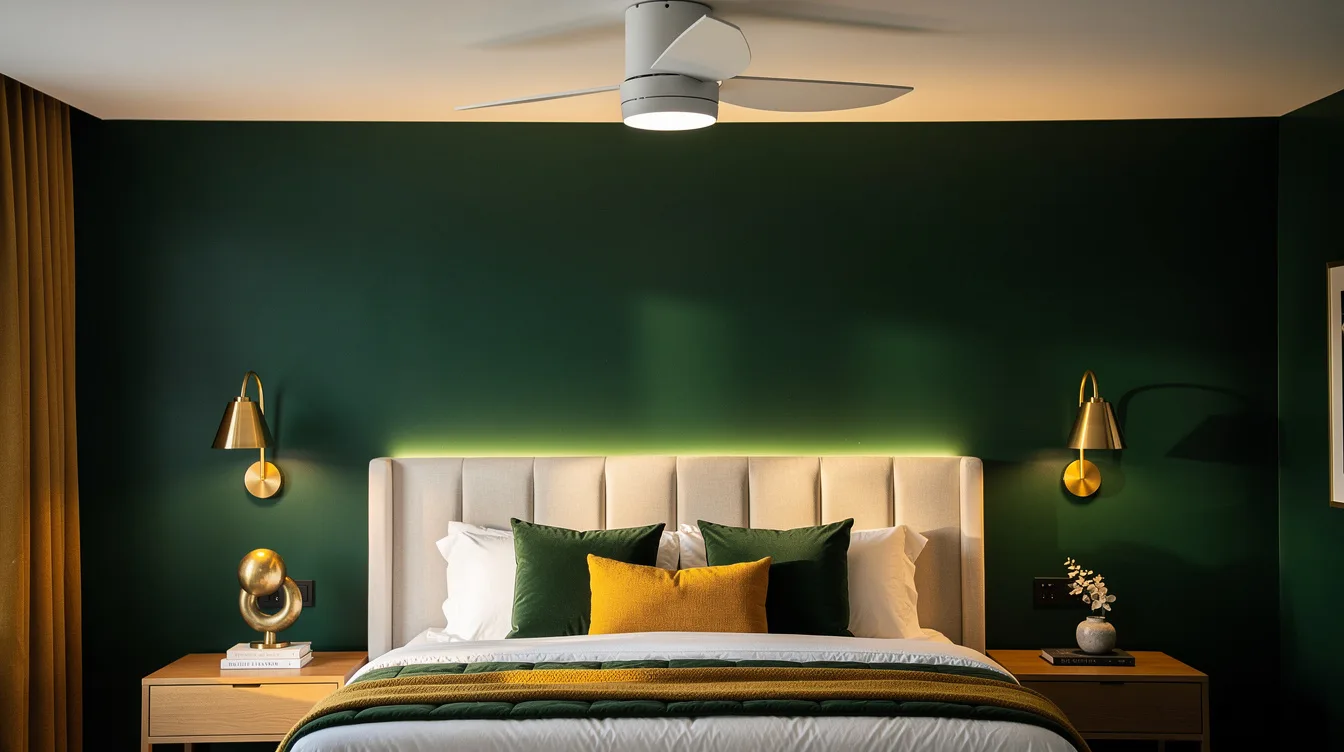
A ceiling fan can ruin a calm bedroom in one click when its bright center light becomes the only source after dark. In a room with an 8- or 9-foot ceiling, the answer is not a bigger fixture, it is giving the fan a quieter role.
Designers coordinate bedroom lighting with ceiling fans by treating the fan as ambient light, then building reading light and a low evening layer around it. That separation makes a made bed look intentional instead of harshly spotlit.
Specify a Quiet Integrated Light
Choose a fan with a flat integrated LED disc or a removable light cap, not a traditional multi-bulb bowl kit. A slim Hunter Dempsey Low Profile keeps the ceiling line clean and is typically priced around $190 to $270, depending on size and finish.
For most bedrooms, a 44- to 52-inch fan suits an 8- or 9-foot ceiling without looking undersized over the bed. The fan should read as one calm ceiling object, not as a chandelier with blades attached.
Set the Fan Light for Ambient Work
Use the fan’s dimmable LED for entering the room, getting dressed, cleaning, and making the bed. Set its color temperature around 2700K to 3000K, then save a lower remote scene for nighttime.
Full brightness has a place, but it is a utility setting. A warm opal diffuser at roughly 20 percent creates a softer ceiling glow and keeps the bed from becoming the brightest thing in the room.
Install Reading Light at Pillow Height
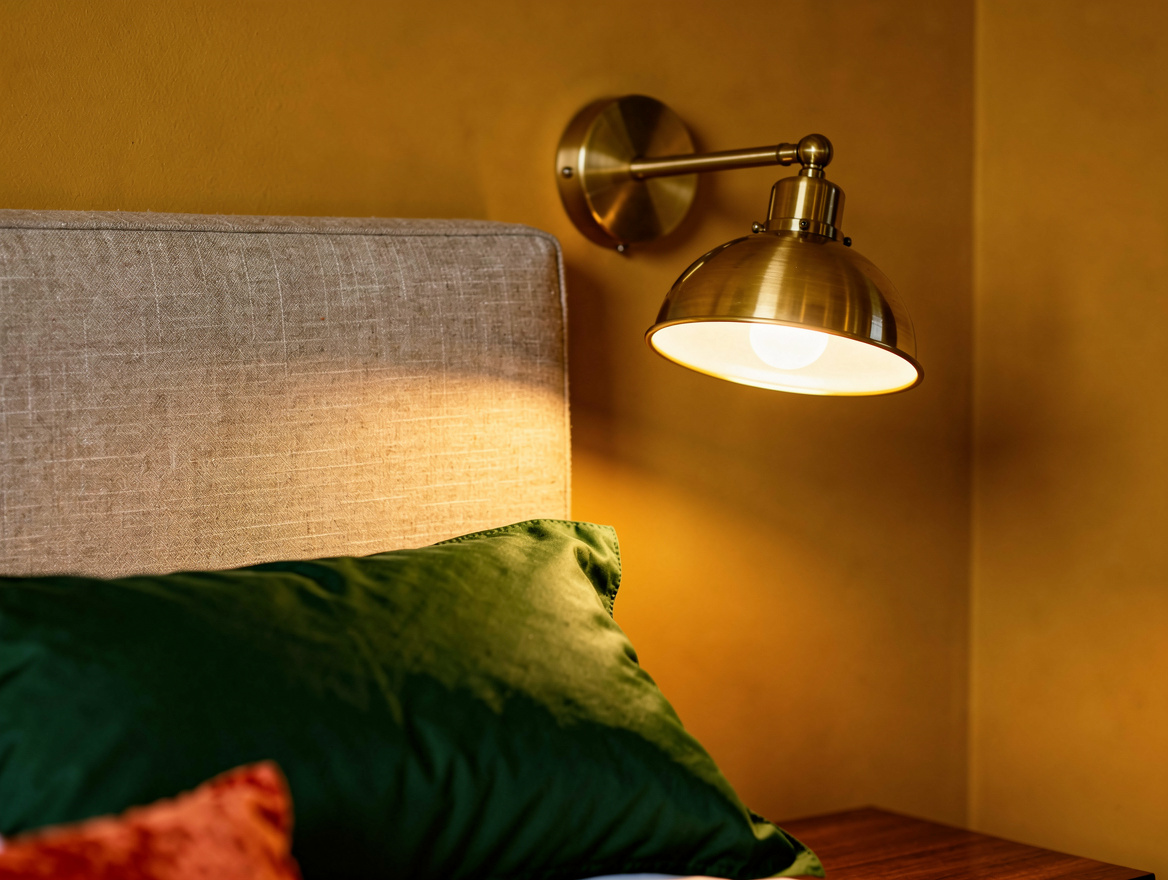
Give each sleeper a dedicated task light, preferably a hardwired sconce with a swivel head and its own switch. A shaded brass sconce brings light down to the book, phone, or skincare routine instead of blasting it from above.
Table lamps also work, especially in a rental, but they need enough height to clear the mattress and a warm 2700K bulb. The fan light should not be asked to do bedtime reading, because top-down light creates shadows exactly where you need clarity.
Add One Low Accent Layer
A bedroom needs a third control for winding down: a concealed strip behind the headboard, a small lamp on a dresser, or a wall wash beside the curtains. Keep this layer around 2200K to 2700K and very low output.
Try a hidden warm LED strip under a floating bedside shelf if you want the room to feel hotel-like without adding another visible fixture. One soft pool of light gives the fan’s ambient setting somewhere gentle to land.
Repeat Form Instead of Matching Finishes
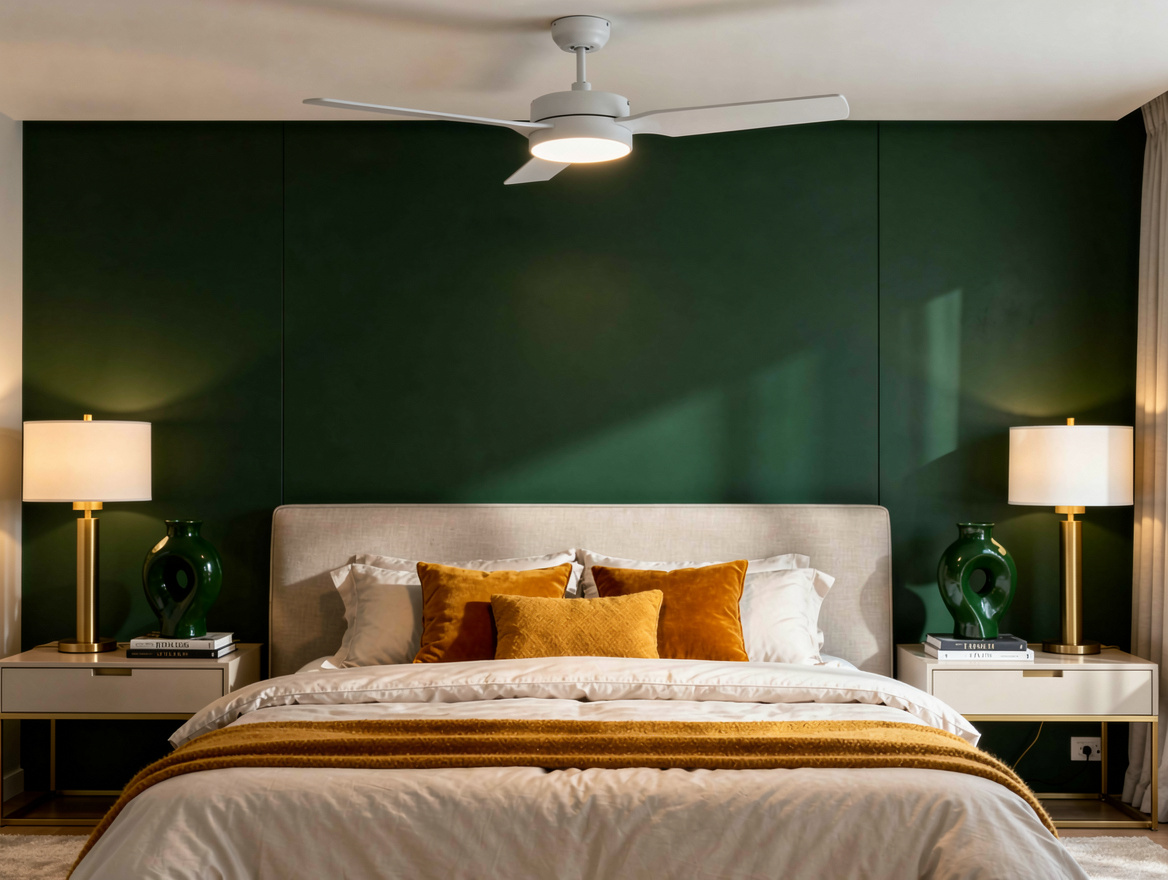
A white fan on a white ceiling can disappear beautifully while bedside fixtures add aged brass, black, or dark bronze at eye level. Matching every metal finish makes the room feel purchased in one afternoon, and it is rarely the designer move.
Repeat a restrained shape instead: a rounded diffuser, slim arms, or clean cylindrical shades. The Minka-Aire Light Wave, typically around $300 to $400, works with contemporary lamps because its sculptural blades stay visually light.
Separate Every Lighting Control
Put the fan, bedside lights, and accent layer on separate controls, whether that means wall switches, plug-in dimmers, or a remote scene. One switch for everything guarantees that someone will use the overhead light when they only wanted to read.
The Modern Forms Lotus offers app and remote control, selectable 2700K, 3000K, or 3500K light, and a removable luminaire cap; it is typically listed around $520 to $575. That flexibility is worth considering when the fan must handle circulation but should not dominate the room’s mood.
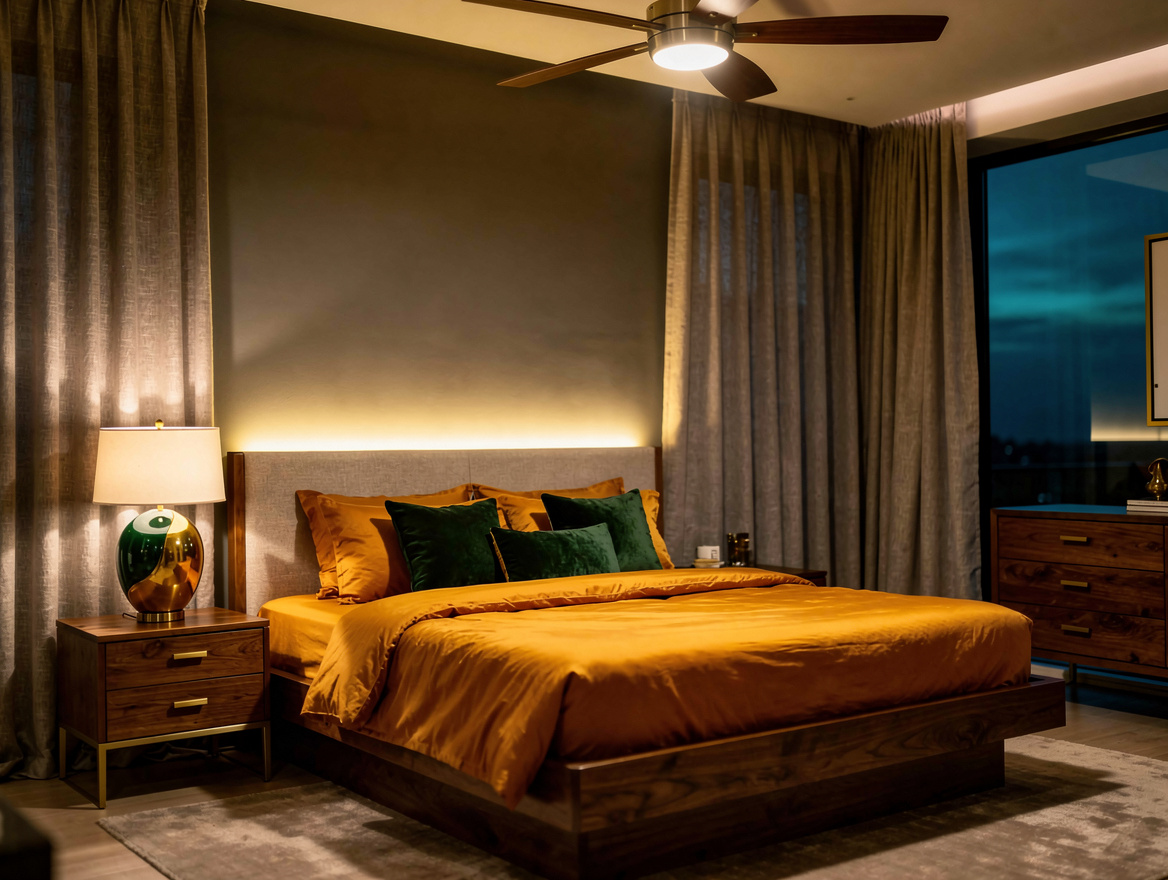
Start by dimming the fan light before buying anything else, then add a dedicated light at each side of the bed. Once reading happens at pillow height, the ceiling fan can finally do its quieter job.
Mia Carter writes about small-space living and budget home makeovers. She has restyled three rentals and tests most ideas in her own 45 sqm flat.