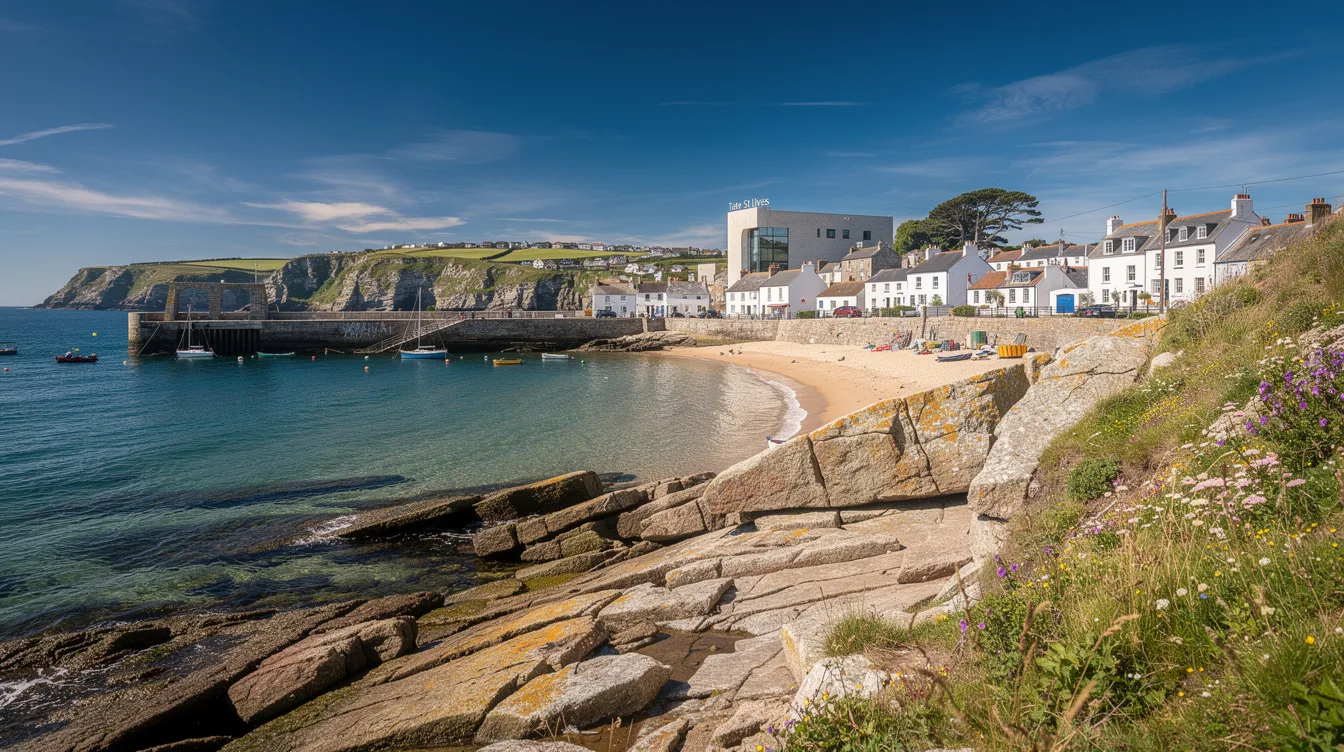
St Ives is a former fishing port on Cornwall’s far southwest coast, and its best trick is how easily beach time turns into an art day. You can walk from the harbor to Tate St Ives, then into the garden museum devoted to Barbara Hepworth, without needing a car.
That pairing gives the town more pull than a standard seaside stop. The old core is steep and tight, with cobbled lanes, whitewashed cottages, galleries, and the smell of salt near the quay.
Tate St Ives meets the Atlantic
Tate St Ives sits beside Porthmeor Beach, the town’s main surf-facing stretch. The gallery’s coastal setting matters because you leave its contemporary art and step straight into the sound of Atlantic swell.
And that’s the pleasure of this place: you don’t have to choose between a museum afternoon and a beach walk. Porthmeor works for an early stroll, bodyboarding, or simply watching the water before the streets fill.
But swimming and surfing need a little common sense. Check local conditions and lifeguard coverage before going in, since Porthmeor’s patrol is seasonal and runs from Easter into early November during stated daytime hours.
The garden that makes the art feel close
The Barbara Hepworth Museum & Sculpture Garden is the other essential stop, with the artist’s studio and sculptures outdoors. It makes St Ives’ art history feel physical rather than academic, especially when you’ve just arrived from the beach.
St Ives became a major British artists’ colony in the early 20th century. That history explains why art doesn’t feel tucked away here, it’s part of a town where small galleries interrupt an ordinary walk downhill.
And you should give the garden time. This isn’t the stop to rush between lunch and a train, because its quiet corners change the pace after the harbor’s clatter.
Six beaches, each with a different mood
Visit Cornwall lists six town beaches, which is unusually generous for somewhere so walkable. Porthmeor gets the surf energy, while Porthgwidden is more sheltered and Porthminster has a broader sweep near the railway station.
Harbour Beach is the most immediate choice if you’re wandering the old quay. Fishing boats, cafés, and the town’s busiest lanes sit right behind it, so it’s convenient, but not exactly an escape from people.
But Porthminster is the better bet when you want a slower beach day. Its east-facing position and closeness to the station make it easy to reach before or after the branch-line ride.
Can you do St Ives without a car?
Yes, and you’ll probably enjoy it more that way in summer. Take the train to St Erth, then continue on the scenic branch line to St Ives station, where the beach-and-art circuit starts on foot.
Driving is possible via the A30 and A3074, but narrow lanes, limited central parking, and day-trippers can make the town feel clogged. If you arrive by car, parking outside the core and walking or using the local rail link is the calmer move.
Start at Porthminster, finish by Porthmeor
A one-day route is simple: begin at Porthminster Beach, then walk through the harbor and old town toward Fore Street. Stop for lunch there, then carry on to Tate St Ives and Porthmeor.
And don’t overplan the middle. The tiny lanes invite detours through independent shops and galleries, while the harbor can make you pause longer than expected when boats are coming and going.
From there, walk toward the headlands or continue in the direction of Carbis Bay for sea views and swimming coves. The route feels open after the compressed old town, with wind replacing the chatter of Fore Street.
Late spring and September are the sweet spot
Late April through June, then September, offer the better balance of lighter crowds, walking weather, and beach time. You’ll still find a lively town, but it’s less of a squeeze on the narrow streets.
July and August bring warmer beach-day potential, higher prices, and the heaviest crowds. That trade-off is real, particularly if you’re driving or hoping for an unhurried look around Tate St Ives.
Winter is quieter and moodier, which suits coastal walks and galleries. But weather varies, and some seasonal businesses close, so you’ll want a looser plan.
A harbor town with two good reasons to linger
St Ives works because its art institutions aren’t detached from its shoreline. You can spend the morning around the old fishing harbor, see modern art in the afternoon, and still reach the beach before the light softens.
By the time you walk above the bay at sunset, the galleries are behind you and the surf is still audible below. That’s when the town’s old port and its art life finally feel like the same place.