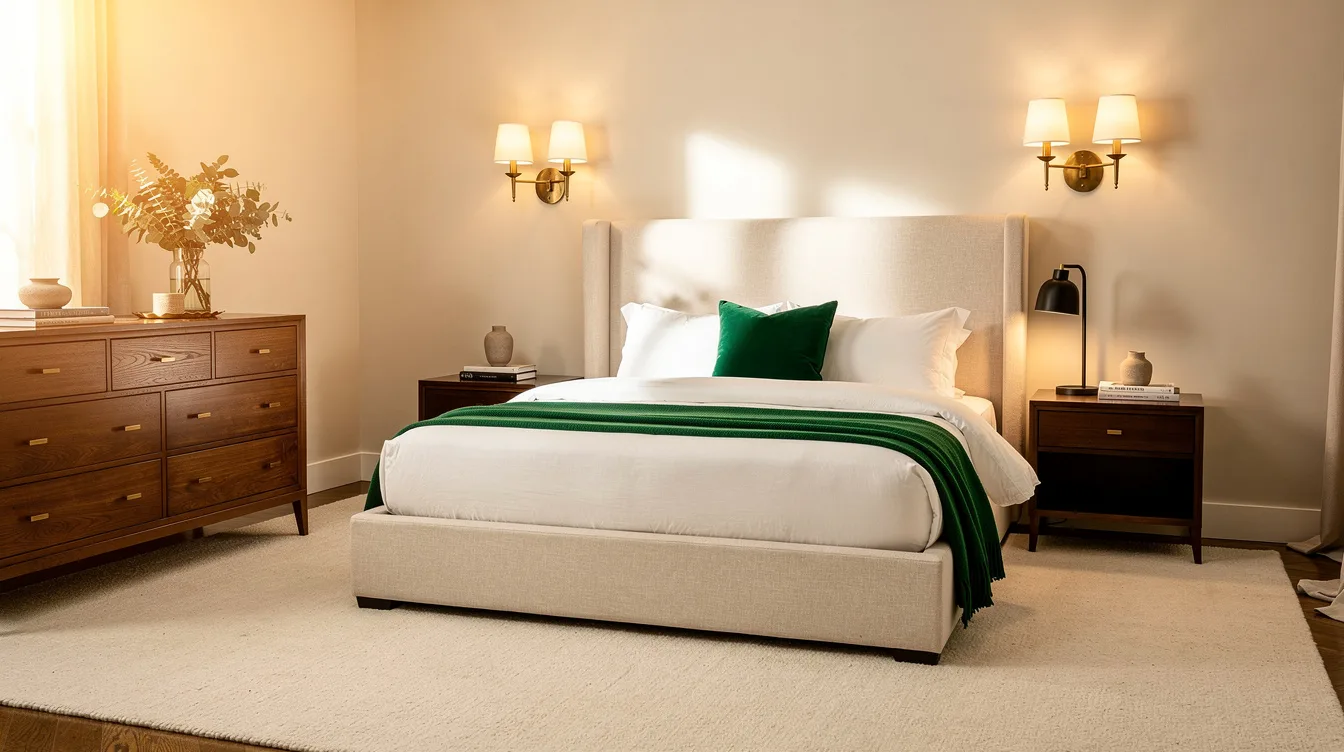
A 54-inch-wide queen bed can make a room feel instantly settled, yet the wrong pair of nightstands can send it straight into showroom-suite territory. Transitional bedrooms work when the old and new pieces disagree a little, then share enough finish and color to look intentional.
The tension is subtle: a framed bed, a cleaner lamp, warm wood, and one dark note. Start there, and the room feels collected instead of purchased in a single afternoon.
Anchor the Room With One Traditional Silhouette
Choose one substantial classic form, preferably a framed upholstered bed, paneled wood bed, or dresser with modest drawer molding. A queen upholstered bed is usually the easiest starting point because its soft profile keeps a traditional room from feeling stiff.
Keep the upholstery in ivory linen, mushroom, flax, or taupe rather than stark white. Bright white bouclé pushes the room contemporary fast, while a warmer neutral gives wood pieces room to breathe.
Break Up the Matching Bedroom Suite
Designers rarely want a bed, dresser, and nightstands from the same collection, even when the finish is handsome. Pair a tailored bed with two simple walnut nightstands, then bring in a more detailed six-drawer dresser across the room.
A typical six-drawer wood dresser costs about $500 to $1,200 at Wayfair, depending on construction and finish. Look for tapered legs or a beveled top, then skip ornate appliqués and heavily distressed paint.
Repeat Warm Woods Before Adding More Contrast
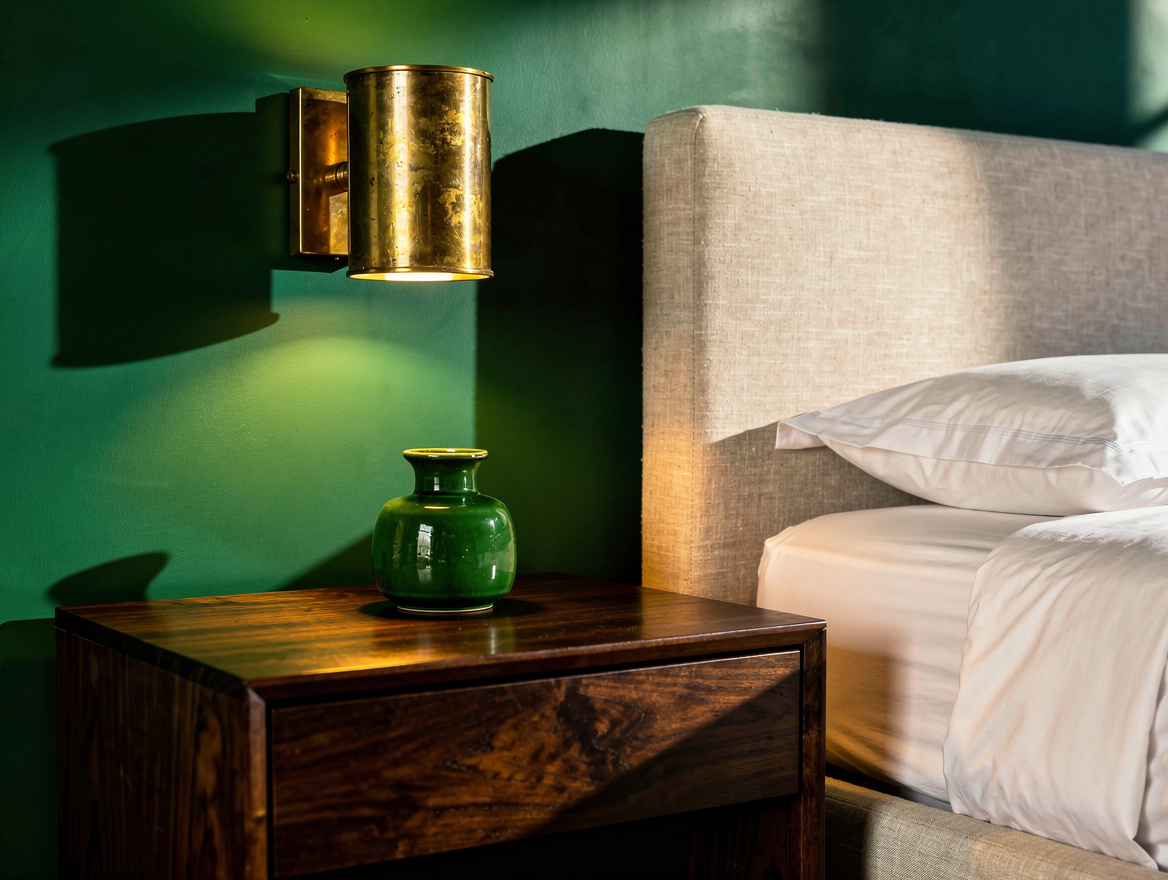
Mixing oak and walnut is welcome, but every wood tone needs a job. Let a medium oak dresser carry the traditional warmth, while darker bedside tables make the bed wall feel more grounded.
Repeat that warmth in one or two places, such as a wood frame and a tobacco leather bench. Pale gray ash, espresso stain, and red-toned cherry in one small room create noise, not collected character.
Trade Fussy Lighting for Cleaner Shapes
Classic furniture needs lighting with restraint. Use aged brass sconces with simple cylinders, a ceramic lamp with a linen drum shade, or a globe fixture that has a soft outline.
Home Depot and Lowe’s both make accessible places to compare plug-in sconces when rewiring is not on the table. A typical plug-in pair runs around $80 to $180, and it gives a traditional dresser or upholstered headboard a welcome modern edge.
Limit the Decorative History Lesson
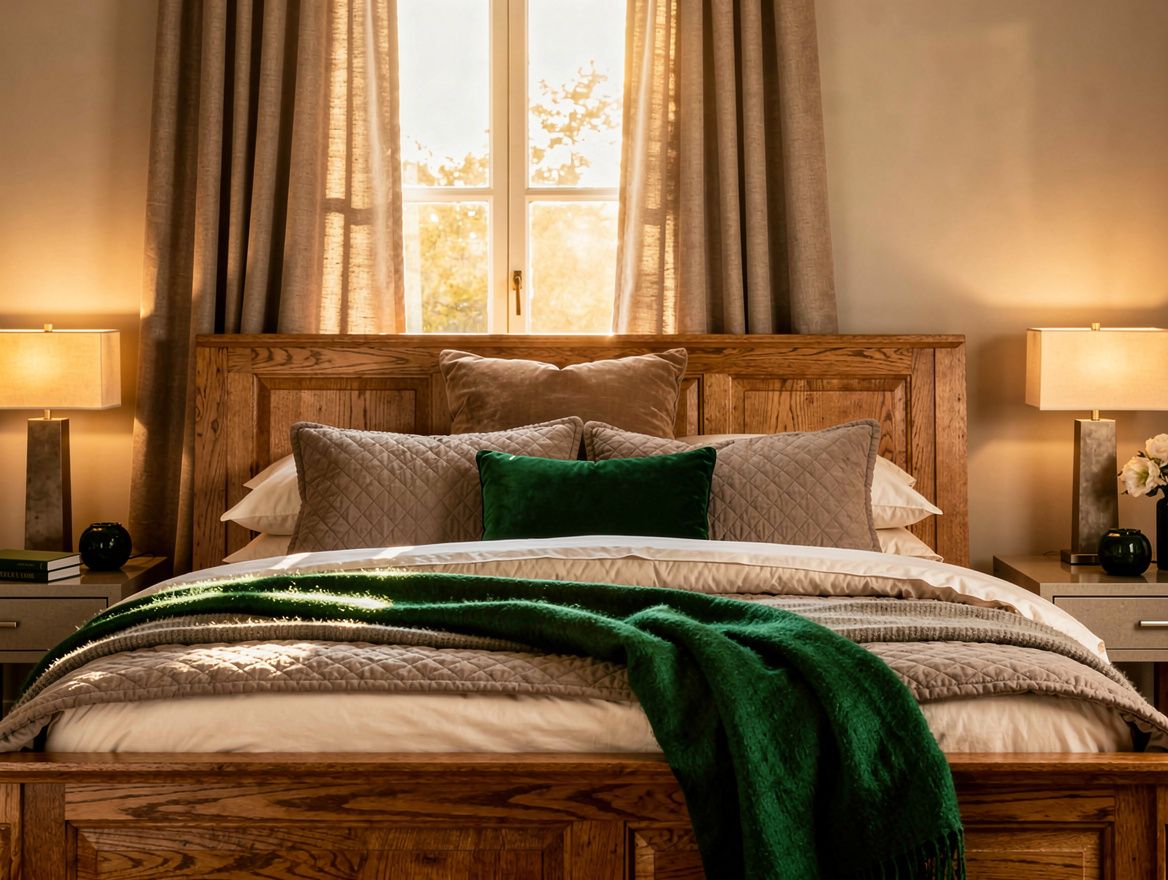
Tufting, nailheads, carved mirrors, heavy drapes, and distressed furniture do not all belong in the same bedroom. Pick one or two heritage details, such as a subtly tufted headboard and an arched mirror, then let the remaining surfaces stay quiet.
A single oversized abstract print above the dresser is usually stronger than a gallery wall of ornate frames. The room should suggest years of gathering, not a themed hotel lobby.
Finish With One Deliberate Dark Accent
Warm oak, oatmeal upholstery, and aged brass can get overly gentle without an interruption. Add one matte black reading lamp, dark-bronze curtain rod, or charcoal lumbar pillow, then stop.
That dark accent sharpens the outline of a soft bedroom without turning it industrial. A Target blackout curtain panel in a warm ivory can handle the softness, especially when hung close to the ceiling for a more tailored line.
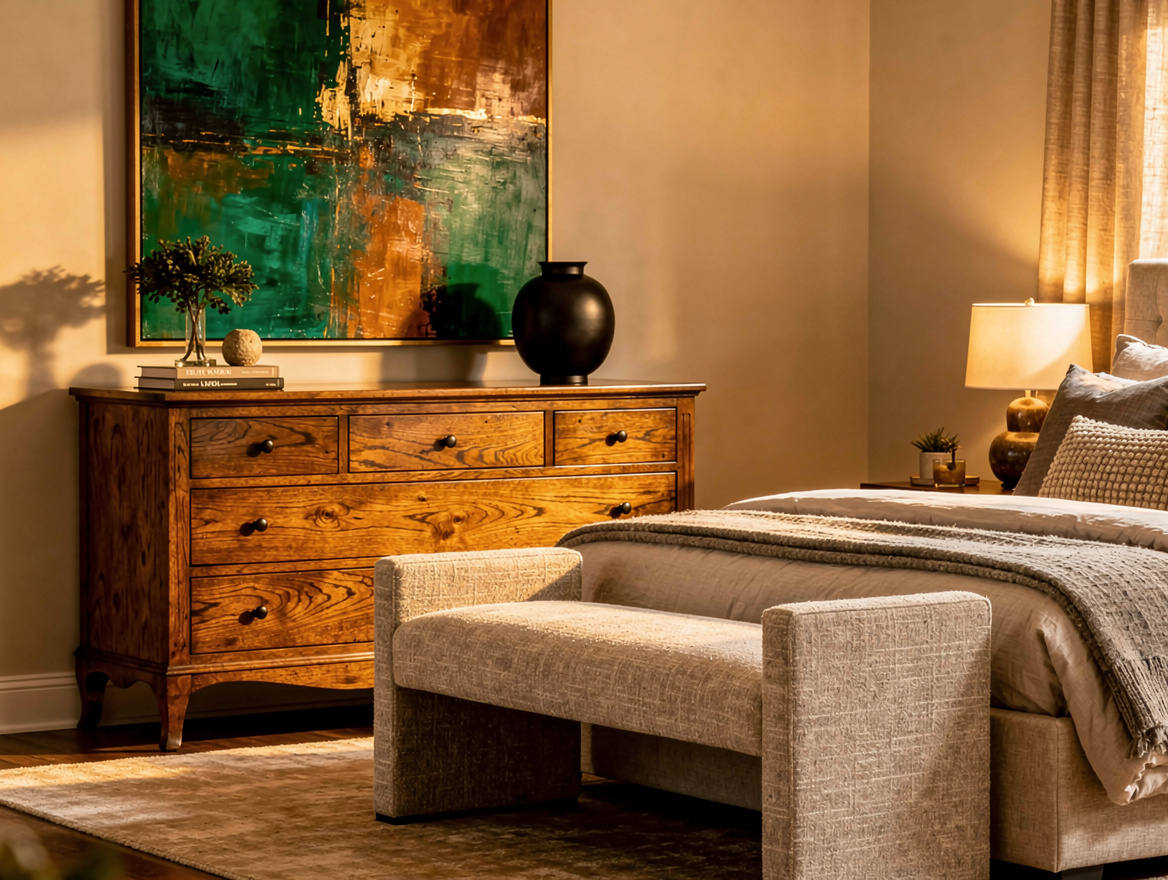
Buy the bed or dresser first, then choose its opposite from a simpler era. The strongest transitional bedrooms leave one piece slightly unexpected, while the repeated warm wood and restrained metal keep the whole room calm.
Mia Carter writes about small-space living and budget home makeovers. She has restyled three rentals and tests most ideas in her own 45 sqm flat.