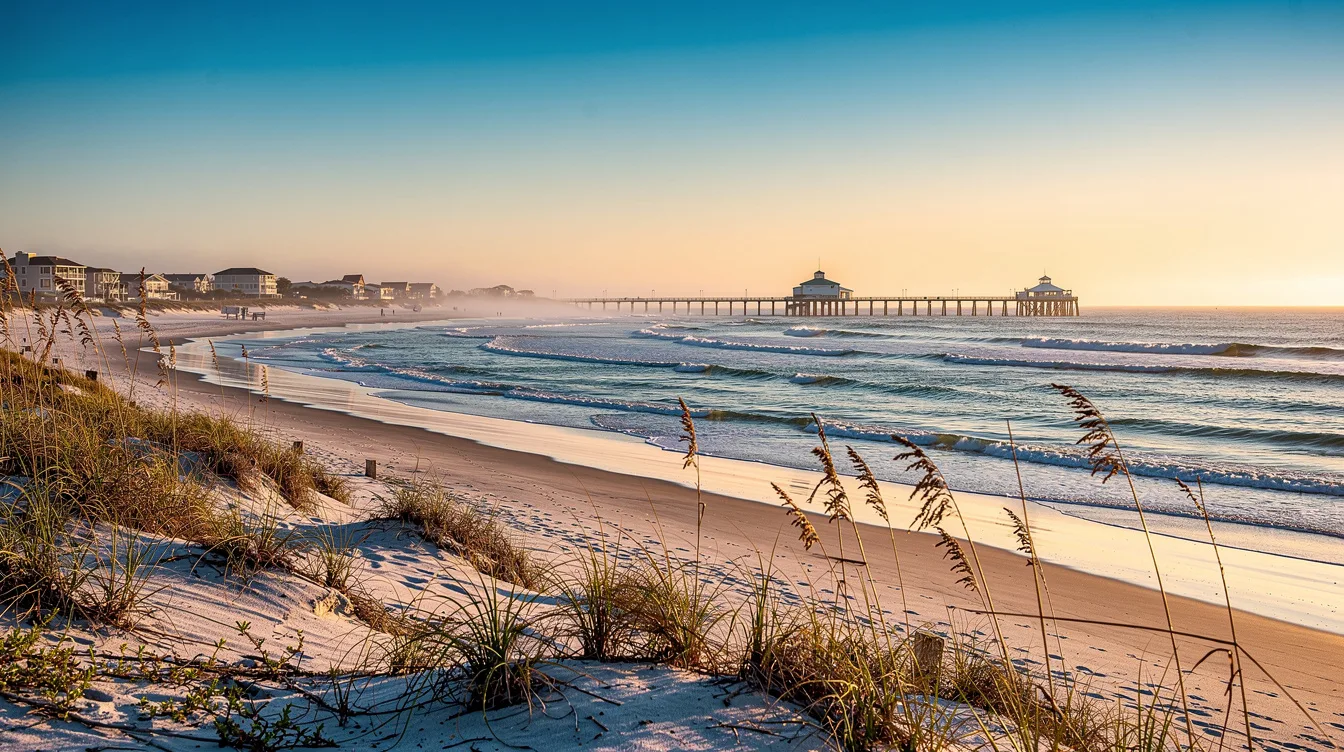
Folly Beach sits 11 miles south of downtown Charleston, where the road ends at the Atlantic and the mood loosens fast. Locals call it the “Edge of America,” because Folly Island feels like a final strip of sand before open water takes over.
You can reach it in roughly 20-30 minutes by car from central Charleston, traffic willing. But that short drive changes the temperature of a trip, from historic streets and restaurant reservations to salt air, sandy feet, and surfboards leaning outside shops.
Why Folly earned its Edge of America name
The nickname fits because Folly Beach is a barrier-island town facing the Atlantic, not a manicured resort built to keep the ocean at arm’s length. The beach is wide, the horizon is bare, and the wind can make an ordinary walk feel wonderfully bracing.
And this is a real town, not a resort zone. Just 2,078 residents were counted here in 2020, so the small-scale feel remains even when visitors fill the beach. Summer is lively, but it can also bring tight parking and higher lodging costs.
Folly was founded in 1938, though its appeal now is less about history than atmosphere. Center Street is the main gateway, with surf shops, casual restaurants, gift shops, offices, and bars gathered close enough that you can park once, then walk.
Surf is the reason the town feels different
Folly is known as one of the more popular surf spots on the East Coast, and that reputation gives the place its slightly scruffy, relaxed energy. You’ll see the effect in wet boards on car roofs and in conversations that pause when the swell changes.
But the water isn’t always gentle. The Washout is Folly’s best-known surf area, and conditions can turn energetic when surf is up. It’s a better choice for capable swimmers and surfers then, even if the beach looks calm from dry sand.
The Folly Beach Pier and 10th Street are also popular surf spots. That matters because surfing here isn’t a side attraction staged for tourists. It shapes the town’s rhythm, from early checks of the ocean to the easygoing feel that lasts after sunset.
The pier gives you the easiest first look
The rebuilt Folly Beach Fishing Pier is the visual center of town, and it’s where I’d start if you have only an afternoon. Walk out over the water for sea views, fishing lines, birds, and the chance of spotting dolphins offshore.
And you don’t need a packed itinerary here. The sound of waves below the pier and gulls above it does plenty. The town is casual rather than polished, which is exactly why a Charleston visit can usefully spill into a night or two on Folly.
For a quieter beach day, head west to Folly Beach County Park. It has facilities, picnic areas, beach-rental options, and seasonal lifeguards. That convenience is valuable if you’re traveling with grandchildren or simply want less guesswork than a street-side beach access point.
Morris Island is a view, not a quick stop
The red-and-white Morris Island Lighthouse sits offshore and is visible from Folly’s northern and eastern side. It’s the kind of landmark that improves a beach walk without demanding a whole excursion, because you can’t simply drive up to it.
Beyond the oceanfront, Folly Island lies between the Atlantic and the Folly River. You can kayak, paddleboard, fish, or take an eco-tour through marshy water. The setting offers two versions of the coast, one open and restless, the other slower and more sheltered.
Can you swim at Folly Beach?
Yes, but treat Atlantic conditions seriously. Currents, changing surf, lightning, and hurricane-related weather can all alter a day at the water. Swim near lifeguards when they’re operating, check daily conditions, and don’t confuse a calm-looking surface with a risk-free one.
Late spring and fall make the best case
Late spring or fall is the strongest time to pair Folly with Charleston. You’ll get beach weather with less heat and congestion than summer, while fall can bring warm ocean water and a more relaxed pace.
But fall still carries hurricane-season weather risk, so leave room in your plans. Summer works if swimming and a busier town are the point. Winter is quieter and often cheaper, though most visitors won’t treat it as a swimming holiday.
Stay near Center Street and the pier if you want food and evening activity close by. West and east Folly feel more residential. By the time the light goes low behind the cottages, the pier is a dark line over the water, and the Atlantic has the last word.