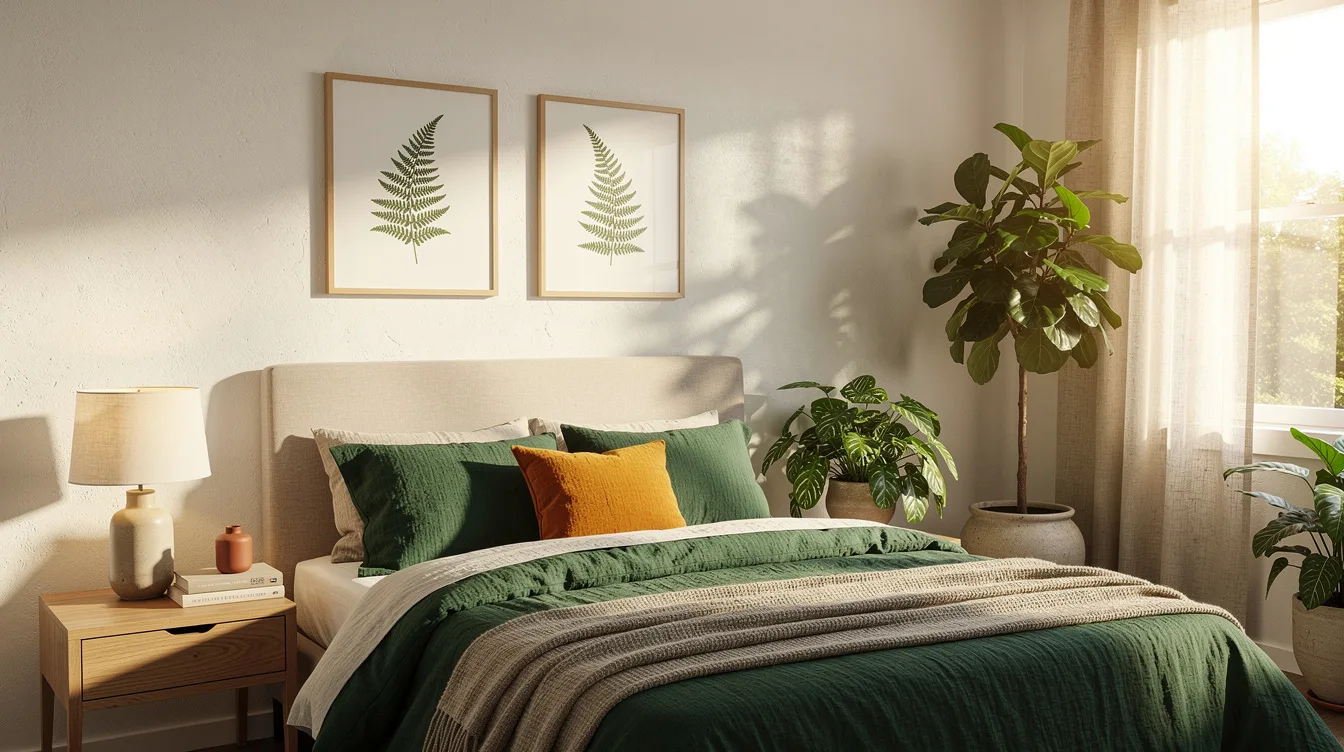
My last rental bedroom was about 12 by 11 feet, and I somehow put four different leaf patterns in it: wallpaper, a fern-print duvet, curtains, and a rug.
It read like a discount plant catalog. Fixing it cost me roughly $60 and one Saturday, and most of that Saturday went to taking things out.
Designers run into the same seven problems in almost every garden-inspired bedroom. All of them are reversible before Monday.
Pick One Botanical Hero and Let It Win
The ratio that saves these rooms is roughly 60% quiet base, 30% green, 10% actual pattern. Most people flip the last two.
Quiet base means warm white, oatmeal, or a soft mushroom on the walls, natural linen at the window, and wood you can see the grain in.
Then choose one surface to carry the botanical print and let the rest go plain. IKEA’s SORGMANTEL leaf-print duvet set, typically around $25 to $35 depending on size, works precisely because the pattern stops at the bed.
If the wallpaper and the bedding both have leaves, one of them is losing. Usually it’s the whole room.
A wall mural behind the bed is the most forgiving hero, because you never look at it while you’re lying down.
Trade Acid Green for Sage and Olive
Bright tropical and acid green photograph beautifully and sleep terribly. They keep your eye moving when the job of a bedroom is to make it stop.
Go desaturated instead: sage, olive, eucalyptus, fern. Behr mixes all of those at Home Depot for roughly $35 to $50 a gallon, and one accent wall behind a queen bed rarely takes a full can.
Use two or three greens, not one. A sage wall, an olive throw, and a deeper forest cushion read like a garden; one flat green reads like a landlord repaint.
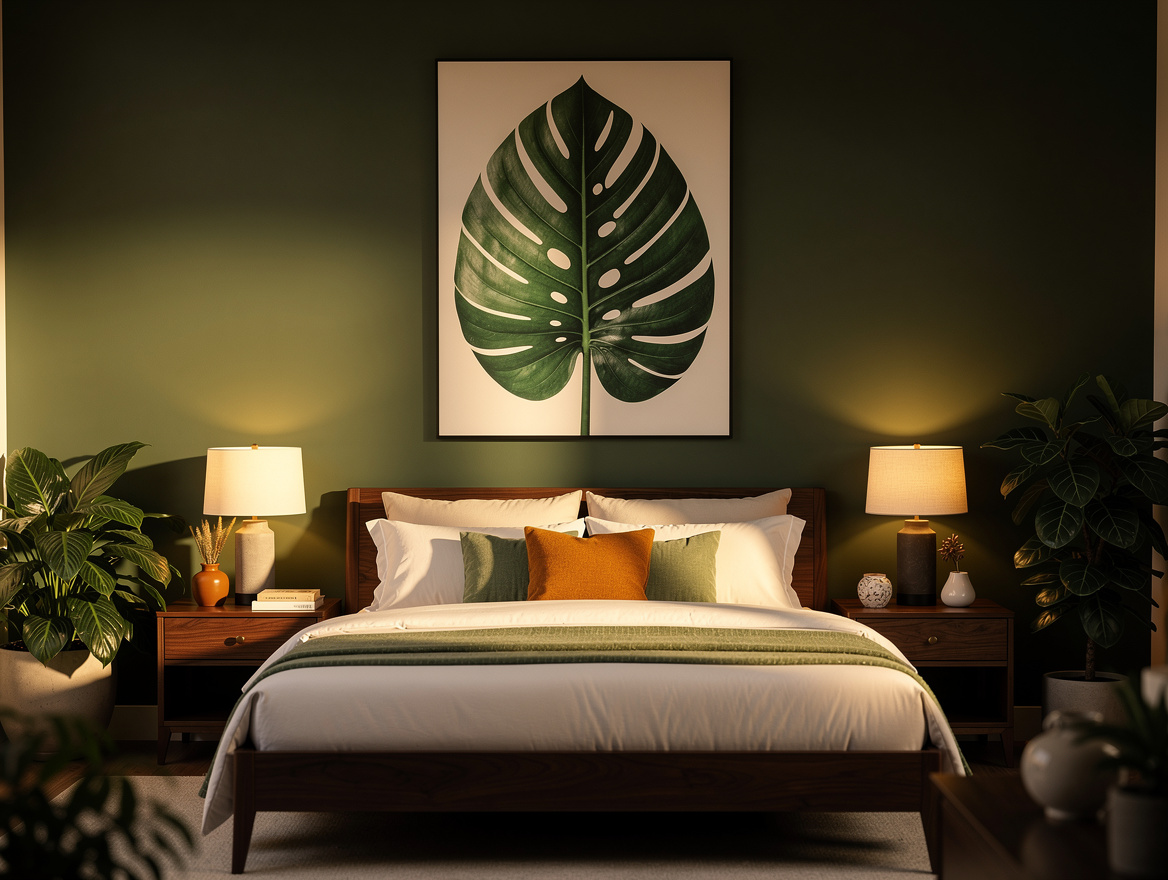
My pick for a room with strong afternoon light is deep olive. It goes nearly black after dark, which is exactly what you want at 10 p.m.
Hang Botanical Art Lower Than Feels Right
Art above a headboard ends up too high and too small almost every time. Both mistakes come from hanging by eye while standing up.
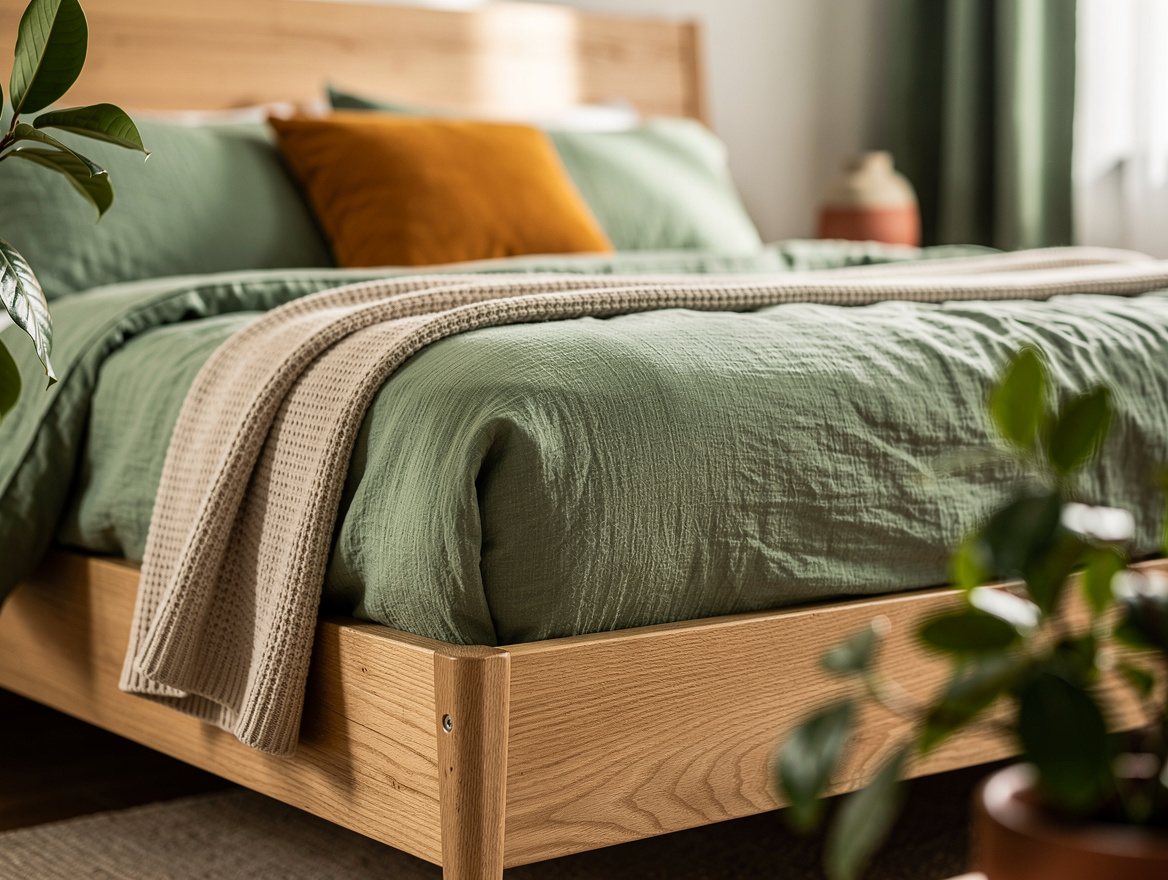
The rule pros use: the grouping should span about two-thirds the width of the bed, with its bottom edge roughly 6 to 10 inches above the headboard.
Two large fern or eucalyptus studies beat six small ones. IKEA RIBBA frames run about $15 to $25 in the larger sizes, and unframed vintage plant prints on Amazon are typically under $20 for a set.
Matte black frames for a modern room. Aged brass or light oak when you want the softer, older look.
Skip the gallery wall of nine tiny botanicals. It turns into visual static from three feet away.
Anchor Every Green With Warm Wood and Linen
Green sitting next to glossy white furniture turns cold and faintly clinical. Green next to light oak turns warm.
That single swap is most of the difference between a bedroom that feels like a conservatory and one that feels like a waiting room.
Bring in ash, oak, or rattan nightstands, typically $100 to $200 each at Wayfair or Target, and a washed linen cushion cover in flax or oatmeal.
A 20-inch square cushion plus one lumbar in striped ticking is enough. More cushions is not more garden.
Texture is what you add when you want more interest. Pattern is what you add when you want more noise.
Cluster Real Plants at Two Heights
A row of same-size pots along a windowsill looks like store inventory. Gardens don’t grow in straight lines.
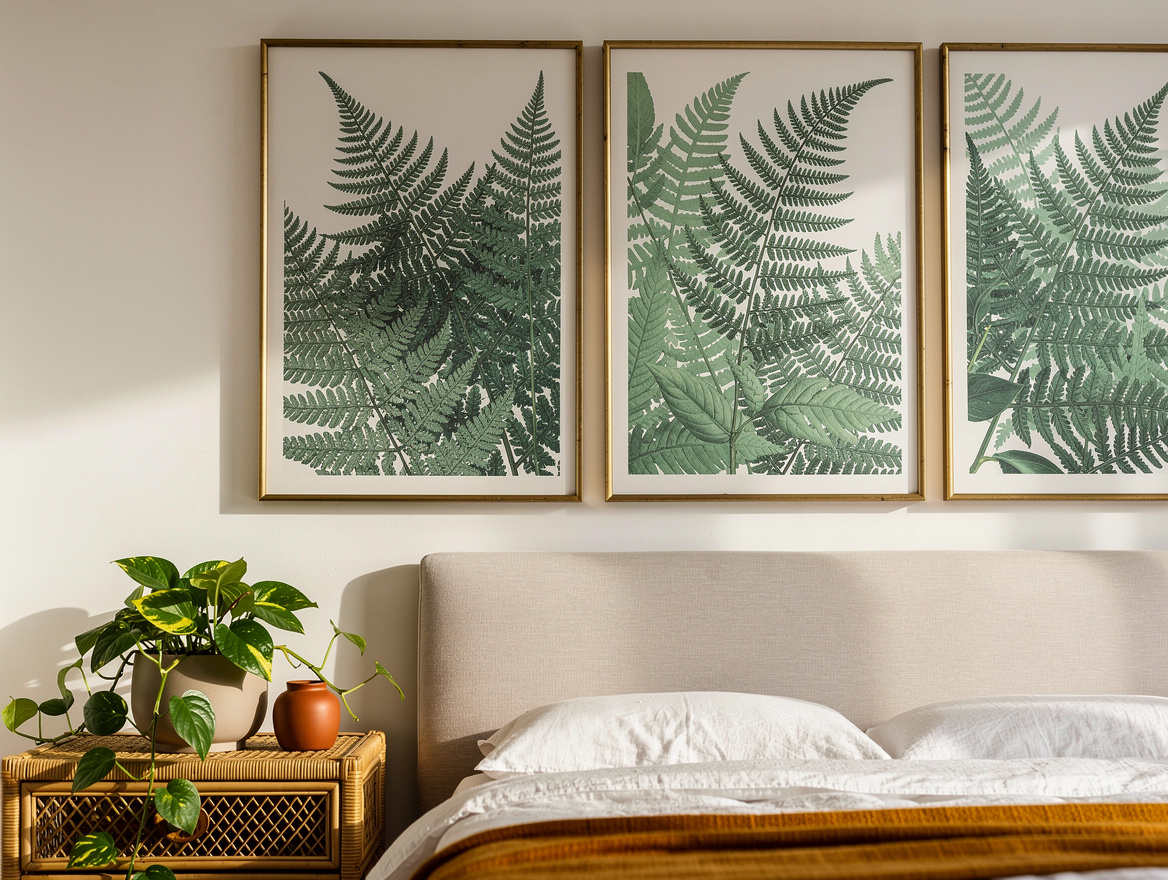
Cluster them: one tall floor plant in the corner, two smaller pots at different heights on a dresser or nightstand.
A pothos in a 6-inch pot runs about $15 to $20 at Lowe’s or Home Depot and will survive a bedroom with one north-facing window. A fiddle leaf fig will not, whatever the care tag promises.
Put everything in matte ceramic. A shiny plastic grower pot undoes a good plant faster than bad light does.
Two real plants beat eight fake ones. Faux stems catch dust and read as plastic under warm lamplight.
Hang Curtains That Let the Garden Light In
Heavy blackout drapes cancel the entire premise. Plants want light, and so does a pale green palette.
Use washed linen or a linen-blend panel in flax or off white, typically $30 to $40 a panel at Target, layered over a plain blackout roller if you need real darkness.
Hang the rod high and wide: roughly 4 to 6 inches above the frame, extending about 8 inches past each side. The window looks bigger and the light spreads.
Green curtains are usually a mistake. You already have green in the room, and fabric at that scale flattens everything to one note.
Fix the Light Before You Blame the Paint
Sage goes gray, muddy, or slightly blue under cool bulbs. Plenty of people repaint when they should have changed a light bulb.
Put 2700K soft white bulbs in both bedside lamps, typically around $10 for a four-pack at Ace Hardware or Walmart.
Run them at roughly half brightness after dark using a dimmer or a smart plug. Greens deepen, oak warms, and the room finally reads like evening instead of like a showroom.
The overhead fixture stays off. That’s the one rule in here I never bend.
Check your paint chip at night before you commit, not at noon. Most people only ever see the color at noon.
Start with subtraction: pull out every leaf pattern but one, then live with the room for a week before you buy a thing.
A full sage and oak reset, bedding and one gallon of paint and new bulbs included, usually lands somewhere between $200 and $400.
Mia Carter writes about small-space living and budget home makeovers. She has restyled three rentals and tests most ideas in her own 45 sqm flat.