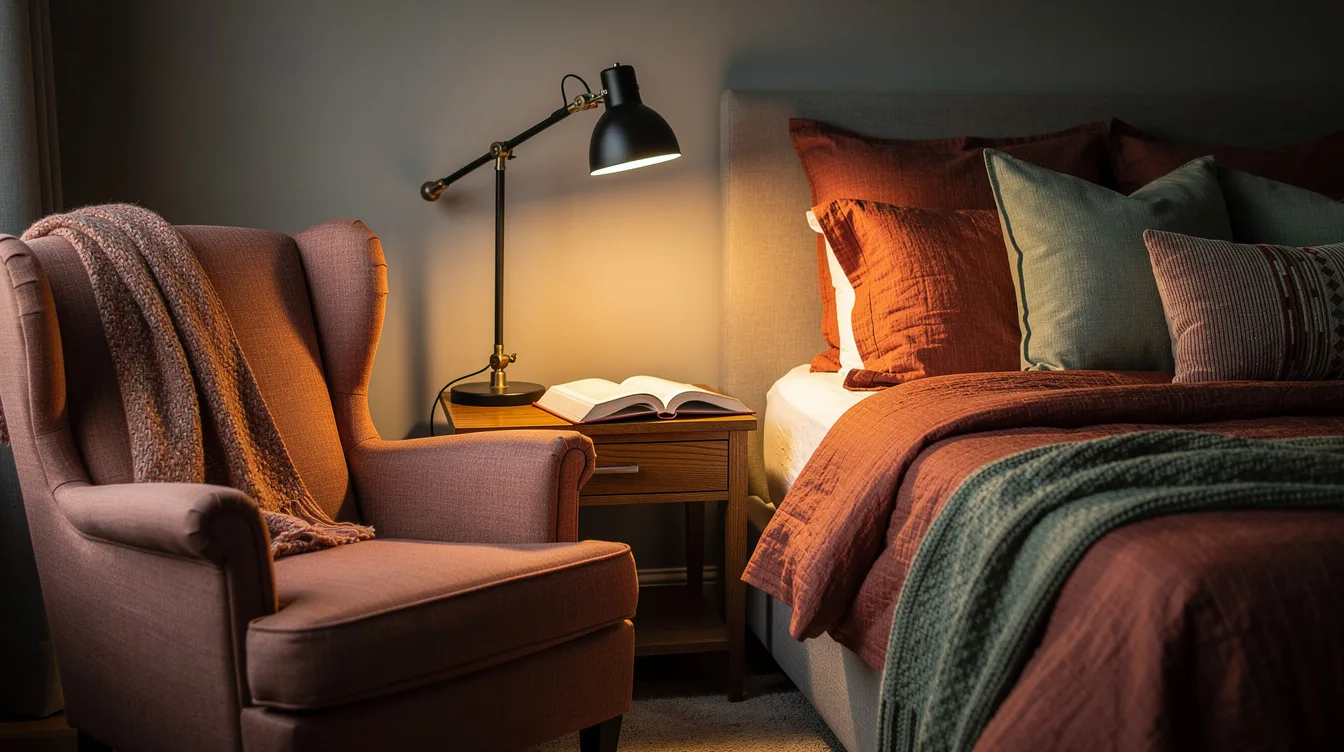
In my third rental, my reading chair had roughly 30 inches between the bed frame and the window, so every lamp choice showed. I learned quickly that brighter did not mean better when the bulb reflected in my glasses and the page still had a shadow.
The answer was a dimmable task light aimed at the book, supported by gentler light elsewhere in the room. A good bedroom nook should make the next chapter easy to read and the last chapter easy to leave behind.
Build the Light in Layers
I stopped treating my reading chair as a spot that needed one brighter bulb. The corner settled down once I gave it soft room light, a targeted reading lamp for the pages, and one modest accent source for the hour after the book closes.
A ceiling fixture on a dimmer can handle the room layer, while a low-glow table lamp on the dresser keeps the chair from floating in darkness. That small ambient light matters because a sharp pool of task light against a black bedroom feels clinical fast.
Aim the Beam Over Your Shoulder
The biggest improvement came from moving the bulb above and slightly behind my shoulder, where I could not see it from the chair. A directional swing-arm sconce sends light across an open book without putting glare in your eyes or throwing your head shadow over the page.
For a right-handed reader, I place the task light on the left whenever the room allows it; left-handed readers should reverse that setup. The beam then clears the writing hand, and the pages get the useful part of the light instead of the chair back.
Choose Warm High-Color Bulbs
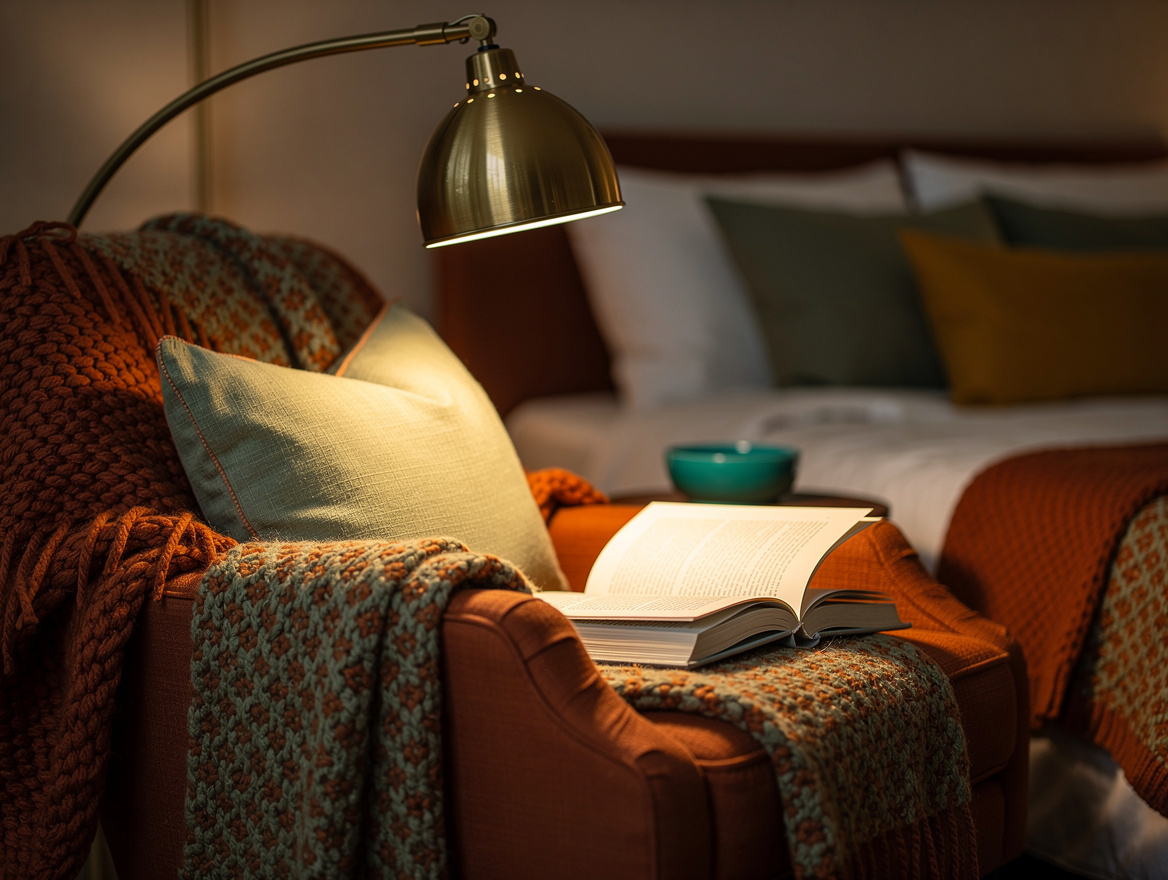
I use a dimmable 2700K bulb when the goal is a sleepy, incandescent-like bedroom mood. A 3000K LED bulb is my pick for readers who want whiter-looking pages while keeping the room comfortably warm, especially with cream bedding or medium wood furniture.
Look for roughly 450 to 800 lumens, a standard E26 base if your fixture takes one, and CRI 90 or higher. An opaque metal shade usually benefits from the brighter end of that range, while an open fixture can feel plenty strong with roughly 450 to 600 lumens.
Set the Lamp at Reading Height
A side table should land within roughly 2 inches of the chair arm height, which is often about 18 to 24 inches from the floor. That puts the switch, glasses, water, and a paperback within easy reach, and a solid oak side table about 12 to 18 inches wide can do the job without swallowing a bedroom corner.
With a floor lamp, I leave about 10 to 14 inches between the base and the chair edge so there is still a clean way out. The reading head generally works around 37 to 49 inches from the floor, adjusted for the seat height and the angle of your book.
Use the Wall When the Floor Is Tight
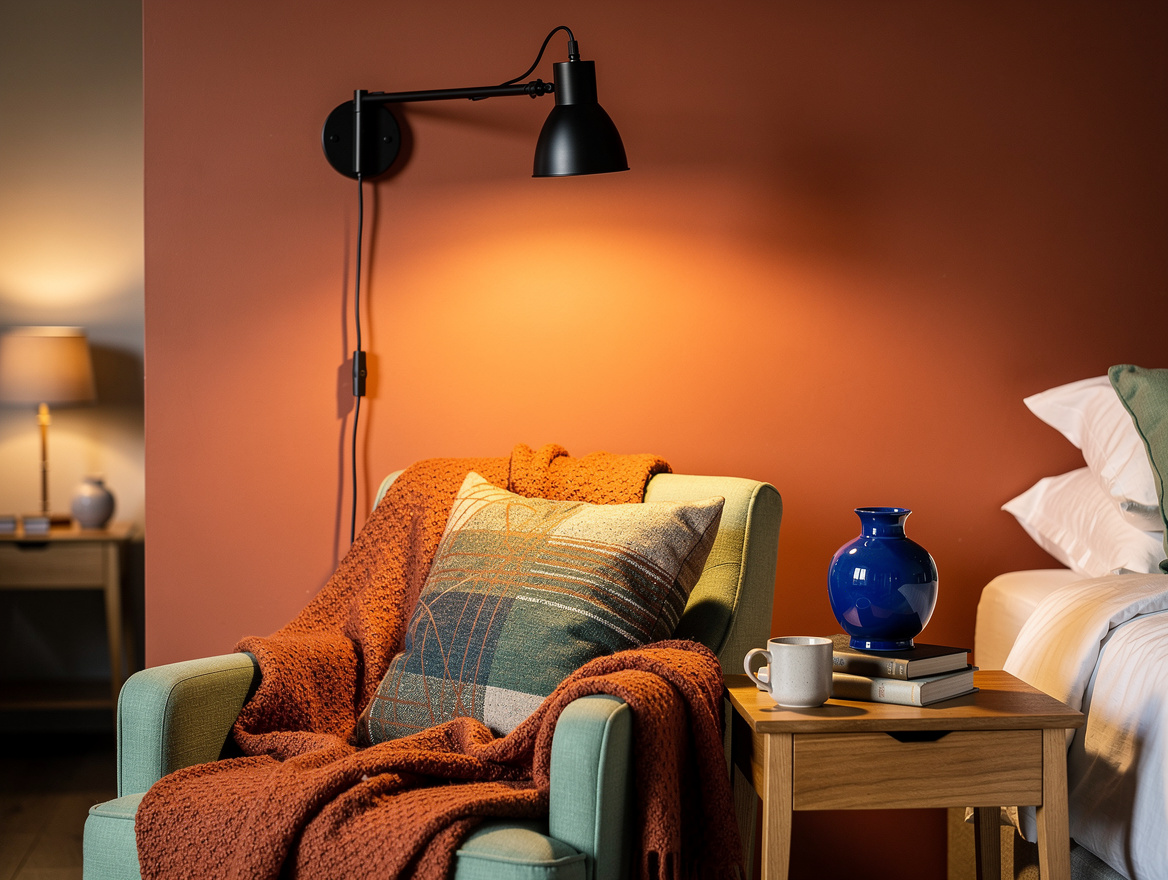
My favorite small-bedroom move is a plug-in black wall sconce beside the chair, particularly when the nook sits near the bed. A rotating head is worth more than a decorative oversized shade because it lets you steer the light precisely onto the pages.
Mount a sconce roughly 59 to 65 inches from the finished floor, or about 24 to 28 inches above a compressed seat, then offset it roughly 8 to 14 inches from chair center. Run the cord straight down the wall with a cord cover; a loose diagonal cable makes an otherwise thoughtful corner look temporary.
Protect the Bedroom’s Wind-Down Mood
I keep full output for the chapter that has me genuinely awake, then lower the dimmer before I put the book down. A 2700K smart bulb makes that shift easy, but a simple rotary dimmer feels better than a phone app when you are already tucked under a throw.
Avoid 5000K daylight bulbs in a nighttime nook unless the chair doubles as a daytime work station. They can make white pages look crisp, yet their cool cast fights the soft textiles, wood, and low-key rhythm most bedrooms need after dark.
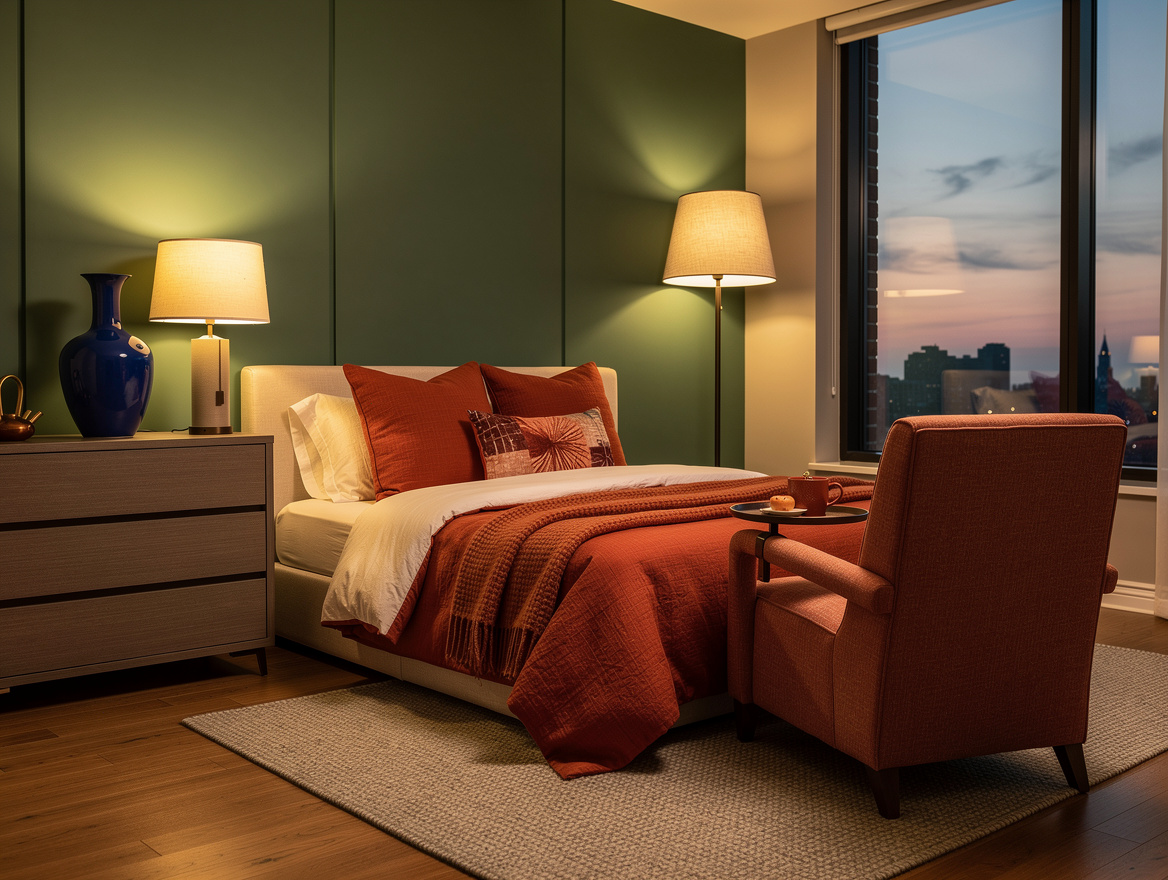
Start by repositioning the lamp you already own so its bulb sits above and behind your shoulder, then read one page at full brightness. If the print is clear at roughly 300 to 500 lux and the bulb stays out of sight, the corner is finally doing its job.
Mia Carter writes about small-space living and budget home makeovers. She has restyled three rentals and tests most ideas in her own 45 sqm flat.