
White marble open shower ideas that feel five-star start with a clear layout, not expensive accessories. I learned that after trying to rescue a cramped bath with fancy bottles and a too-small rug. Your shower needs room to breathe, warmth to soften the stone, and lighting that doesn’t make you look haunted!
- Start With a White Marble Walk-In Shower Layout
- Anchor the Room With the Quiet-Grout Rule
- Float the Vanity Using the Open-Floor Effect
- Build the Three-Height Light Stack
- Frame a Marble Shower With a Window
- Choose Brushed Brass Over Mirror-Chrome
- Layer the Two-Texture Towel Method
- Mix a Soft Wall Color Into the Dry Zone
Before You Start, Measure the Wet Zone
Before you choose Calacatta Gold marble with amber veining, measure where your body, door, and towels will move. You need at least a 36×36 in shower for a comfortable open layout, and you should keep 21 in clear in front of the toilet. Your room will feel more airy when circulation is planned first.
Put painter’s tape on your floor and walk the route barefoot. I do this every time because drawings lie a little, while your elbow finds a too-close wall immediately. For more planning ideas, see wet room layouts taking over bathrooms.
– Tape measure – Blue painter’s tape – 36 in shower minimum – 21 in toilet clearance
- Start With a White Marble Walk-In Shower Layout
- Anchor the Room With the Quiet-Grout Rule
- Float the Vanity Using the Open-Floor Effect
- Build the Three-Height Light Stack
- Frame a Marble Shower With a Window
- Choose Brushed Brass Over Mirror-Chrome
- Layer the Two-Texture Towel Method
- Mix a Soft Wall Color Into the Dry Zone
- Spend in the Right Order With the Five-Star Budget Map
- Skip the Busy Niche and Build One Calm Shelf
- Finish With the Bare-Foot Landing Zone
1Start With a White Marble Walk-In Shower Layout
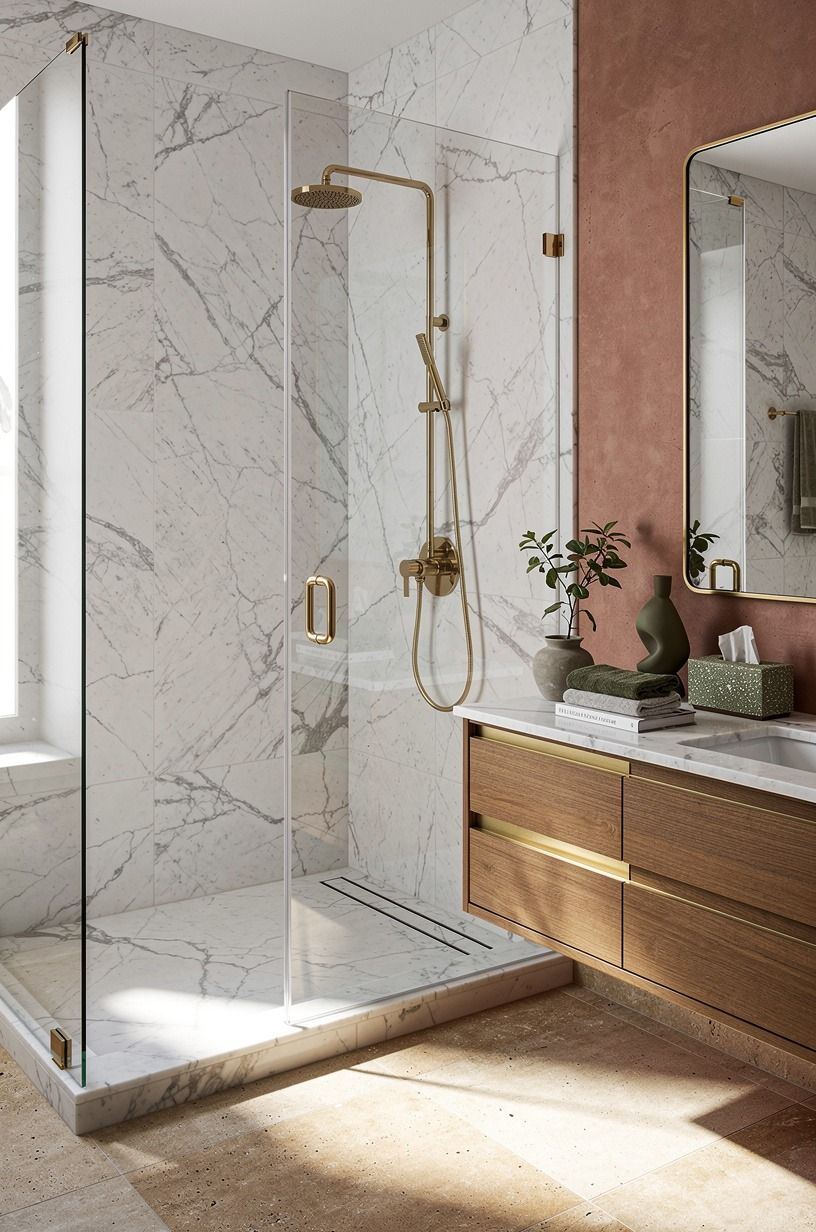
Start your white marble walk in shower with one uninterrupted sightline from the doorway to the far wall. You want your eye to land on stone, glass, or a quiet plaster wall, not a toilet brush or a crowded vanity. A fixed low-iron glass panel works better than a swinging glass door here because it keeps your view open.
Choose one large-format marble look for the shower floor and wall, then let the grout lines disappear. 12×24 porcelain marble tile is my practical favorite for most homes because real marble can mark up fast around hard water. But don’t choose shiny polished tile for every surface; your wet floor needs grip, and a honed finish feels calmer under bare feet.
Bring in terracotta and olive through a small storage vessel or towel edge, then pair them with stone-toned finishes and a restrained shagreen accent. That warmth keeps the white marble from feeling too severe without turning the shower into a color project.
Your shower will look more refined if the drain sits on the back wall or under a removable linear cover. That small decision keeps the center of your floor quiet. And you won’t be staring at a metal square every morning.
2Anchor the Room With the Quiet-Grout Rule
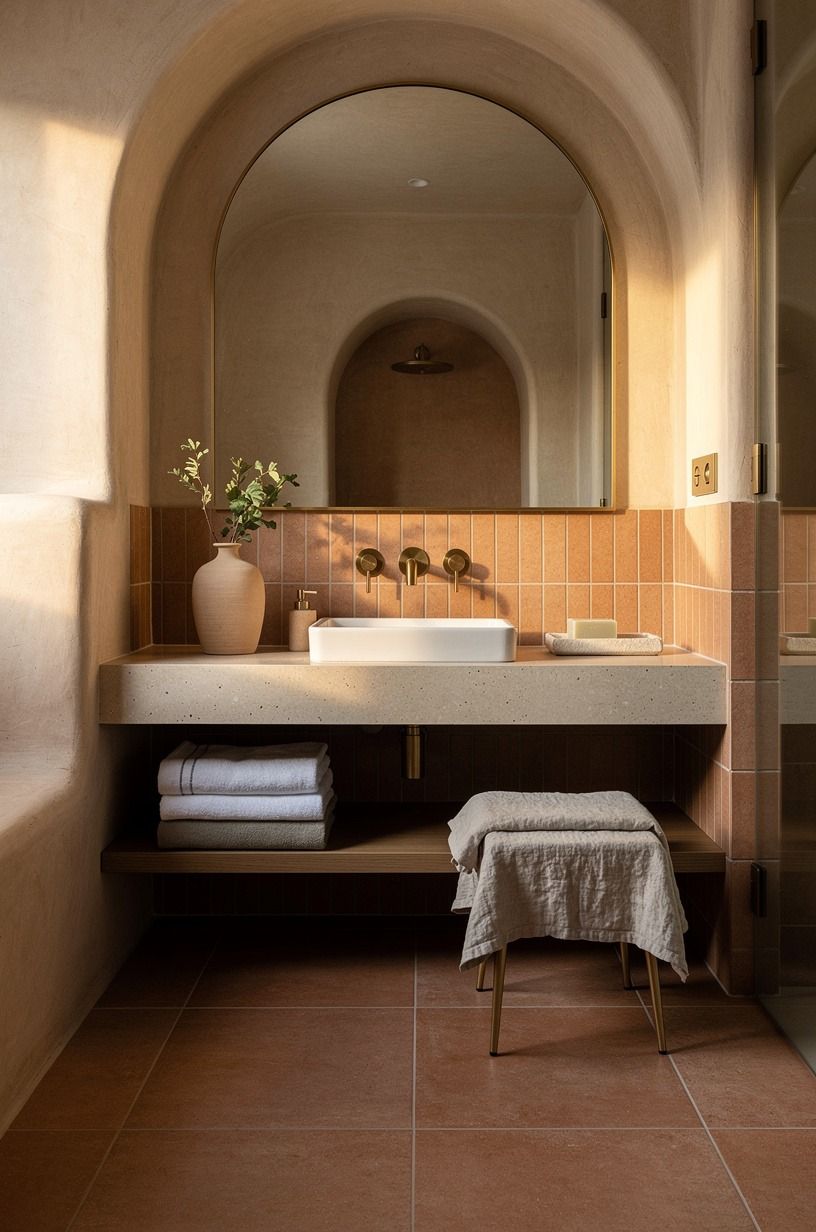
Anchor all that pale stone with grout that nearly vanishes. Your grout shouldn’t outline every tile like graph paper, especially in a small bath where busy lines make the room feel chopped up. I’d choose warm white grout over cool gray every time, since gray makes white marble read blue and a little clinical.
Try a sample board beside your wall before you commit. A white tile can look soft next to Benjamin Moore Chestertown Buff HC-9, then suddenly turn stark beside a cool vanity. Your best call is usually a grout one shade warmer than the tile background, not darker.
Clay, linen, and aged brass make a useful companion palette here. A washed Belgian linen hand towel can soften the stone while the metal keeps the room from drifting into blandness.
But keep your grout practical. A pure white shower floor asks you to notice every stray hair and every speck of makeup. Use a softly veined porcelain mosaic on the floor, then reserve the clean slab look for your walls.
It’s the more welcoming choice.
For a color lesson that works beyond bathrooms, read the warm neutral rule for making 180 square feet feel larger.
3Float the Vanity Using the Open-Floor Effect
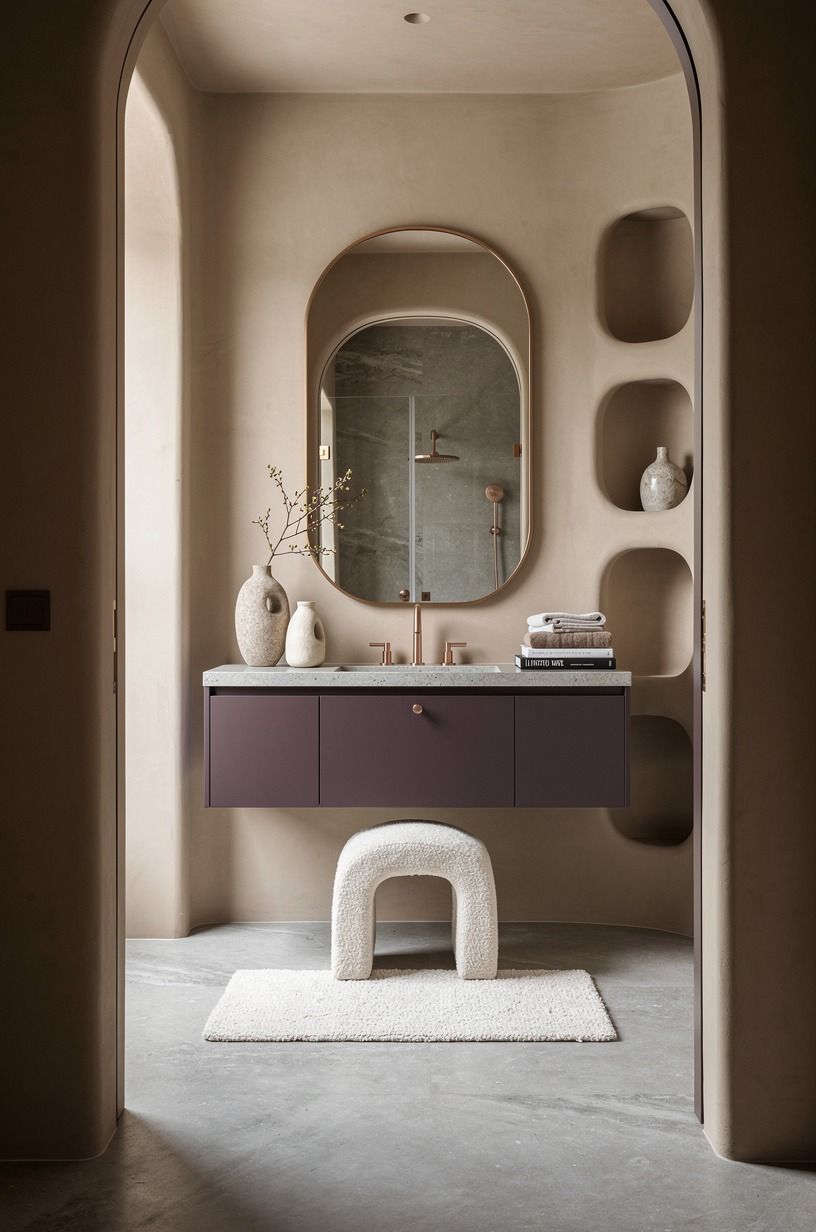
Float your vanity so you can see more floor beneath it. Your bathroom doesn’t need a giant cabinet to feel luxurious; it needs a clear horizontal plane that lets the room exhale. A wall-mounted white oak vanity at 32-36 in high gives you storage without that heavy furniture-block feeling.
I’ve installed vanities that sat directly on the tile, and they always made the shower wall work harder. A floating unit lets your floor tile run unbroken into the room, which makes your open shower feel intentional rather than unfinished. Add a recessed toe-kick light if you want a gentle glow at night.
A plum, gray, and rose-gold scheme gives this idea more character than another all-white cabinet. An organic bouclé stool tucked nearby adds softness without blocking that open floor line.
Choose drawers over deep cabinet doors. You’ll find your skincare, hair tools, and extra toothpaste without crouching into a dark cave. IKEA GODMORGON drawers aren’t glamorous, but their straightforward interiors beat pretty cabinets with useless storage every single time!
If you’re balancing white surfaces elsewhere, white trim in a small room can change the perceived scale in a useful way.
4Build the Three-Height Light Stack
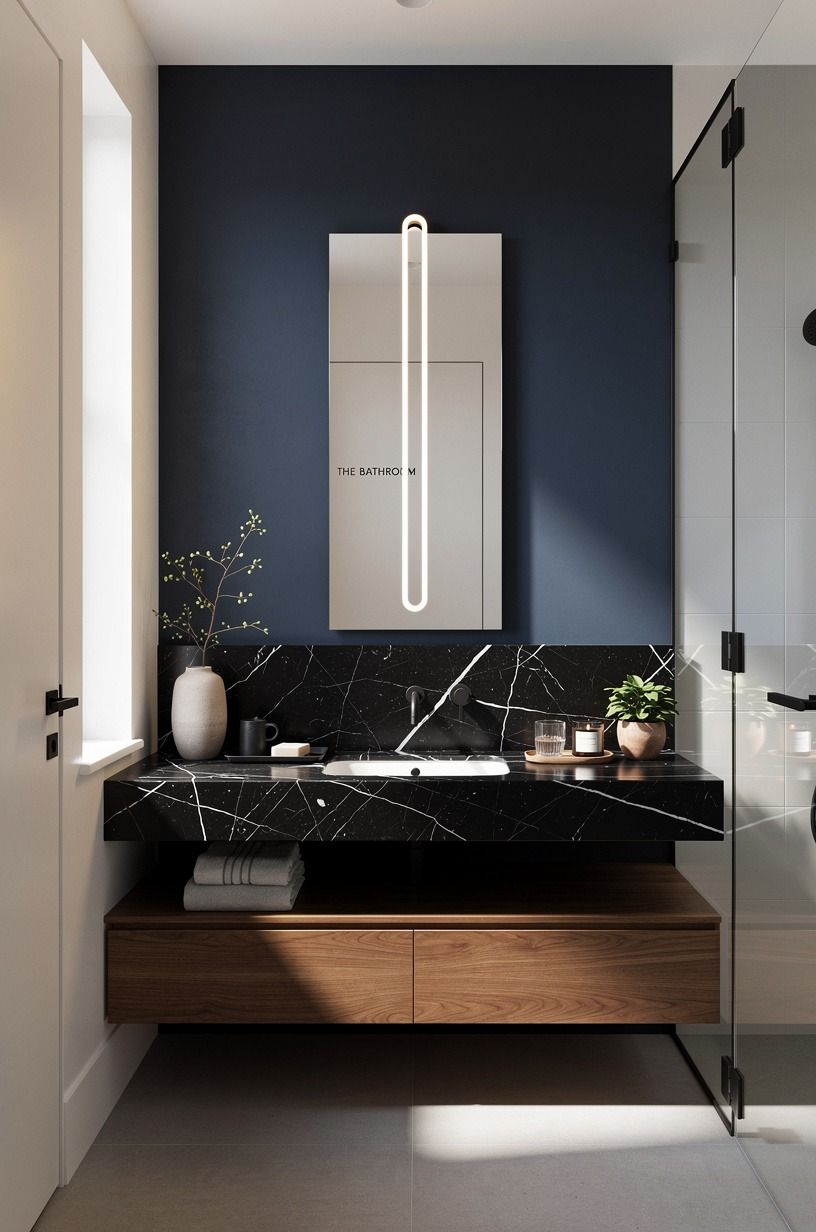
Build light at three levels so your marble has depth after sunset. You need overhead light for cleaning, mirror light for faces, and a lower pool of illumination that makes a late shower feel peaceful. One ceiling fixture alone is the losing option because it throws shadows exactly where you need clarity.
Start with a dimmable ceiling fixture, then flank the mirror with aged bronze sconces mounted near eye level. Your face gets even light, and the metal gives all that white stone a needed bit of weight. I’d skip bulbs that read crisp blue; they make even expensive marble feel like a locker room.
Navy, white, and walnut work especially well with Nero Marquina black marble with white veins. The dark stone gives your lighting plan an anchor, while walnut keeps the contrast warm instead of stark.
Then add a small light near the vanity or under a floating shelf. 2700K warm-white bulbs keep the result soft without making your room yellow. Your marble veining will look more elegant, and you’ll stop reaching for the harsh overhead switch at midnight.
For fixture placement and mood, use these open shower lighting ideas for a glowing spa-like feel. It’s a small planning step with a big payoff.
5Frame a Marble Shower With a Window
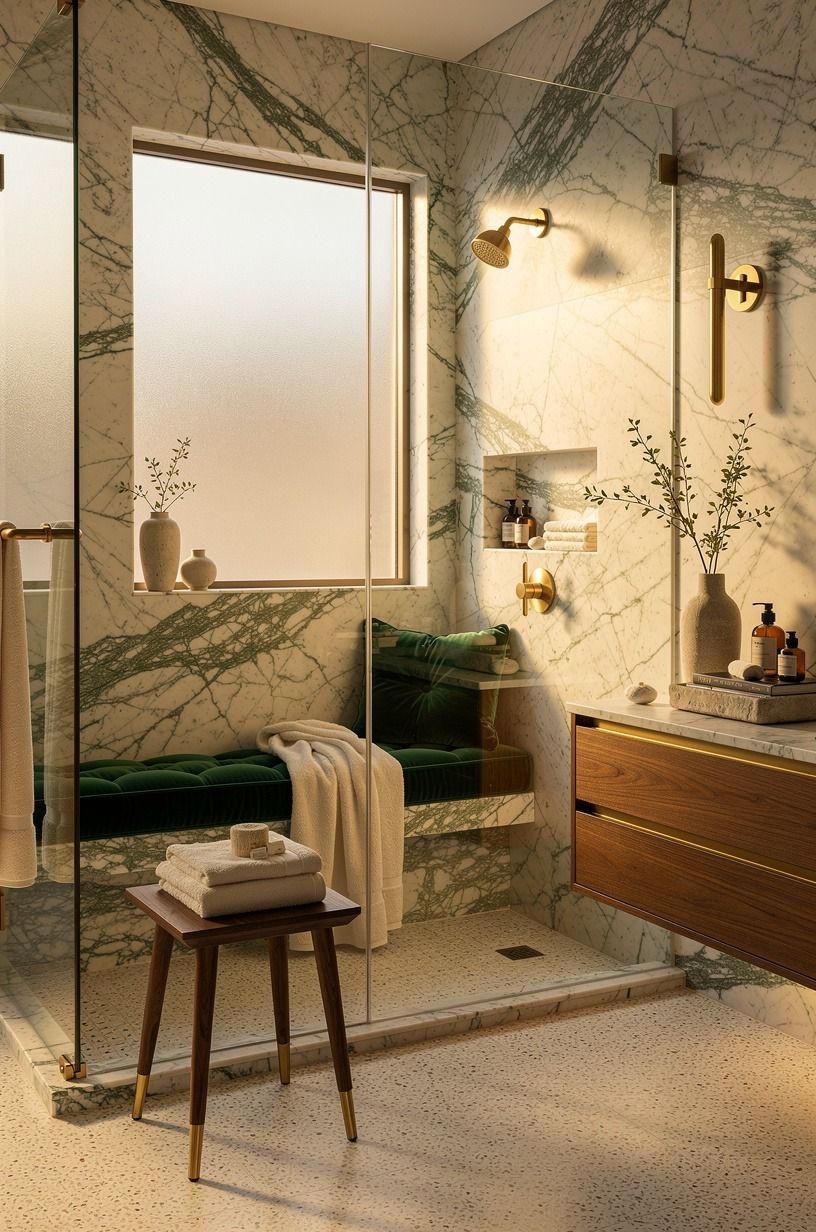
Frame your marble shower with window trim that can take moisture without turning fussy. Emerald, gold, and cream bring a richer direction to white stone, especially when you use deep-pile mohair velvet for a dry-zone curtain or upholstered stool outside the splash area.
6Choose Brushed Brass Over Mirror-Chrome
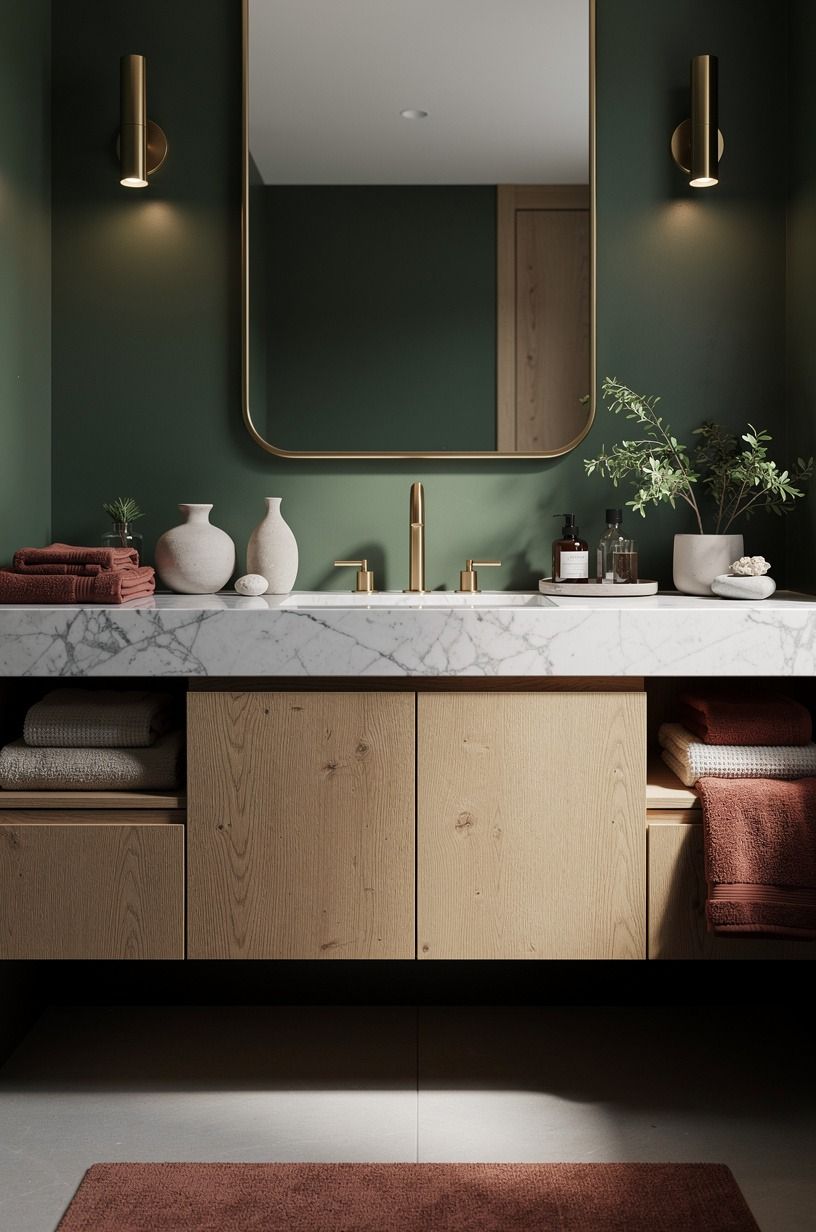
Choose brushed brass over mirror-chrome if you want your open shower to feel lived-in rather than showroom slick. Your fixtures don’t need to match every metal in the room, but they should share the same warmth. Brushed brass shower trim gives pale marble a golden counterpoint without the flash of polished chrome.
Forest green, rust, and natural oak make the brass feel grounded. Carrara marble with subtle grey veining is a calmer fit than bright white tile when you want that layered, collected feeling.
A typical brushed brass faucet costs $120-$450, so this is one place where your budget can flex. You can spend less on the towel hook and robe ring, then put more into the faucet you touch every day. Your hand notices a thin, rattly handle long before it notices a designer label.
I went back and forth on black fixtures once. They looked dramatic in the sample box, then collected water spots like little white freckles. Brass is more forgiving, especially if you choose a brushed finish instead of lacquered shine.
Use a matching unlacquered brass towel bar outside the splash zone if you enjoy patina. Your room will gain a little age over time, which is exactly what white marble sometimes lacks.
7Layer the Two-Texture Towel Method
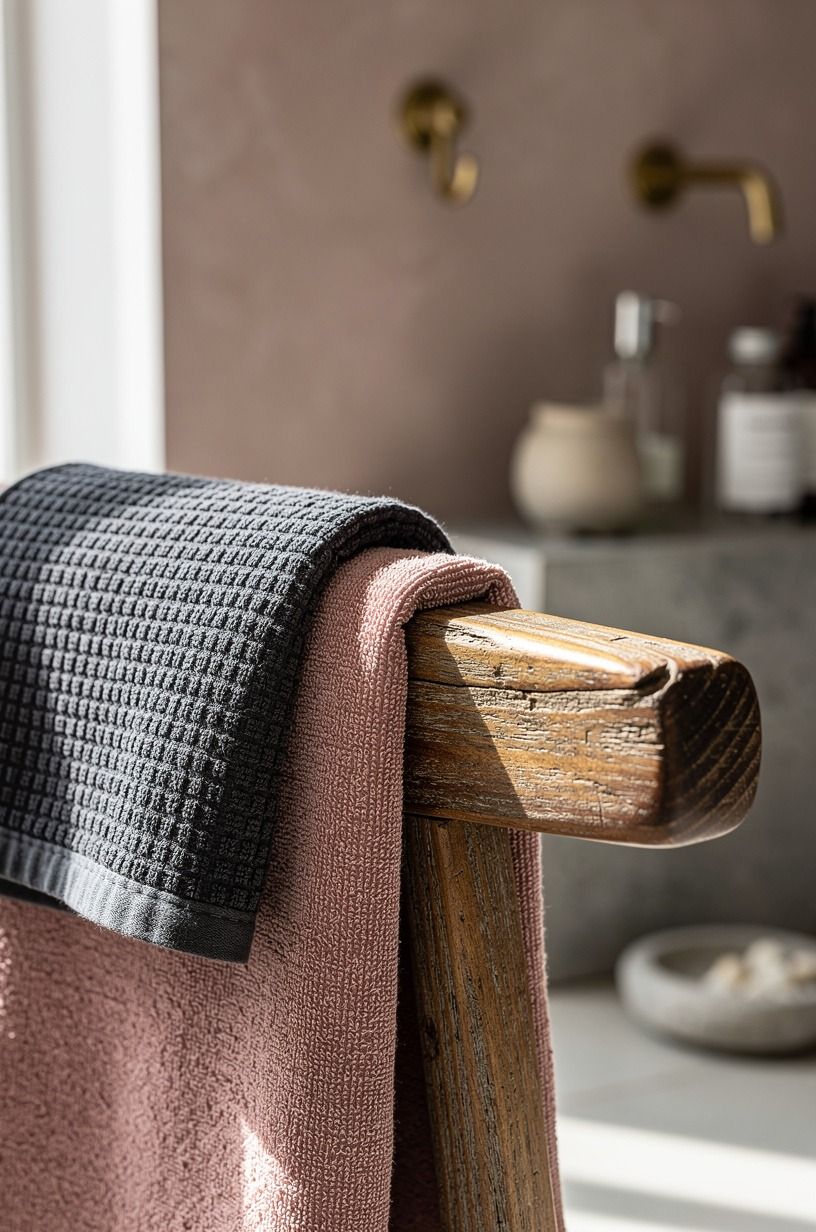
Layer two towel textures so your shower doesn’t feel like a white-box hotel lobby. You want one hardworking bath towel and one visual layer that softens the hard surfaces. 600gsm Turkish cotton towels are absorbent enough for daily use, while a weathered teak stool adds a relaxed, organic note near the sink.
Keep the palette narrow. Dusty rose, charcoal, and brass will look more harmonious than five competing colors. I’d skip bright white towels against bright white walls because the room starts to feel flat, and your lovely stone loses its shadow.
Try this small stack:
– Turkish cotton bath sheet – Charcoal hand towel – Reclaimed weathered teak stool – Woven cotton bath mat
Your stool is useful, too. It holds a towel, gives you a place to shave, and breaks up the hard geometry of a white marble shower with glass door. For a softer layered-room approach, the two-rug bedroom layout designers use offers a surprisingly relevant lesson in texture.
8Mix a Soft Wall Color Into the Dry Zone
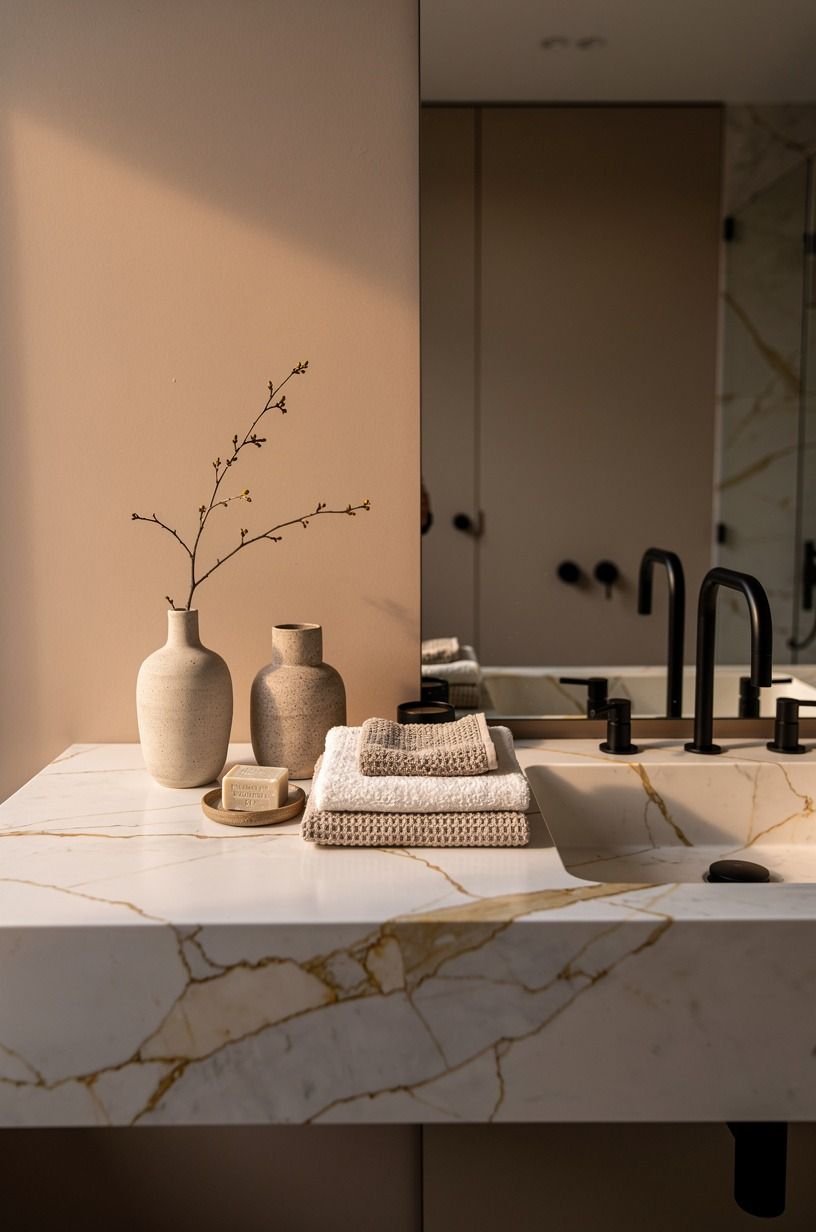
Mix color into your dry zone instead of forcing white marble across every visible surface. Your shower can stay bright while the vanity wall becomes the warmer, more intimate backdrop. Sherwin-Williams Sea Salt SW 6204 is a good choice when you want a pale green-gray that doesn’t fight the veining.
Paint only the wall behind your mirror, or carry the color onto the ceiling in a bath with strong daylight. You’ll create a gentle frame around the marble without making the room feel closed in. But don’t use an icy blue-gray just because it sounds spa-like; it can turn your skin tone and your stone cold.
A creamy paint works if you prefer warmth. Benjamin Moore Chestertown Buff HC-9 beside Calacatta marble with gold veining reads collected and a little unexpected, especially with black accents. Your bath will feel less like a catalog set and more like a place you want to linger.
Why use color at all? Because your marble needs a foil. And a single painted plane is far cheaper than trying to buy character through more tile.
9Spend in the Right Order With the Five-Star Budget Map
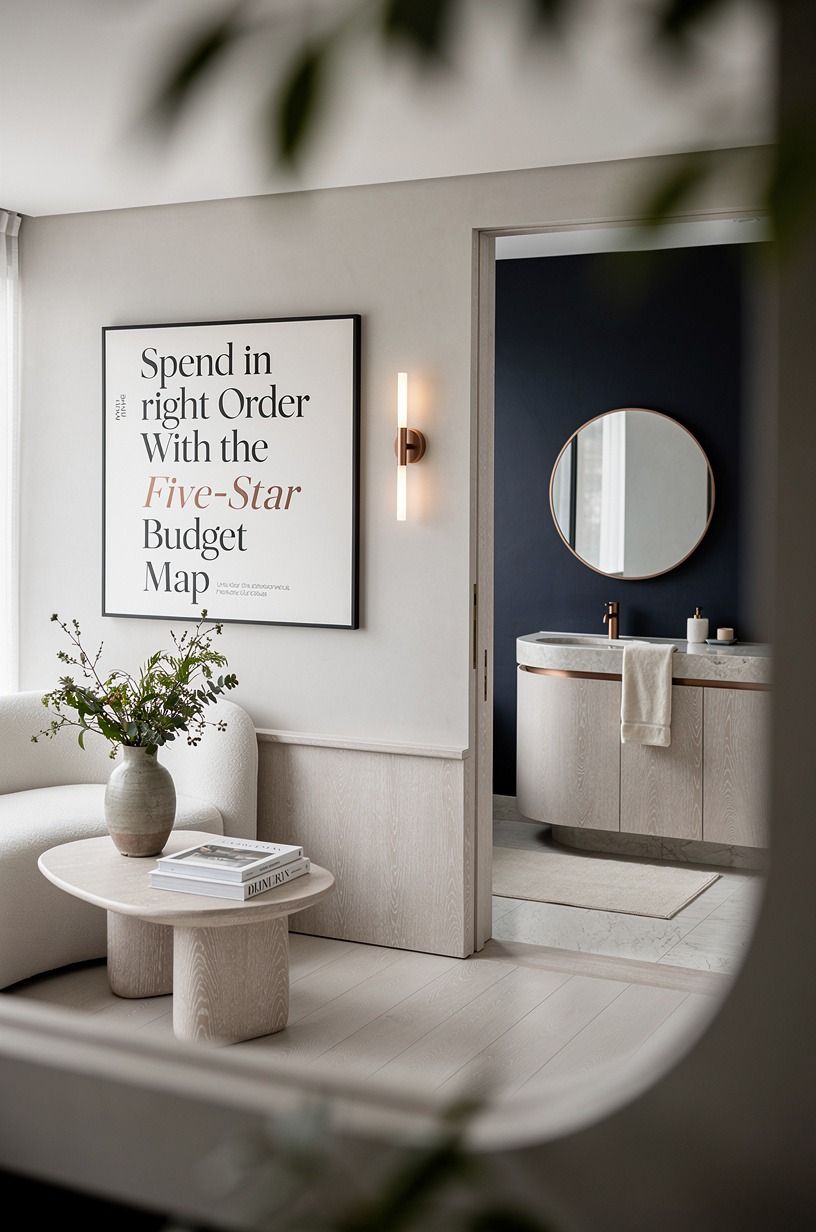
Spend first on waterproofing, tile installation, and fixtures you touch, then save on mirrors, textiles, and styling. Your room can survive a modest vanity; it can’t forgive a leaky shower pan. I’ve seen people choose expensive marble before confirming their drain slope, and that’s money headed straight toward a miserable repair.
Your best budget move is using marble-look porcelain in the wet zone and saving real stone for a vanity top or sill. Marble tops typically run $50-$100 per sq ft, while zellige tile typically runs $15-$35 per sq ft. Cerused white oak adds lightness to a midnight blue, copper, and ivory palette without pushing the spend into every surface.
But don’t cheap out on the glass measurement. A badly sized panel makes an open shower spray where you least expect it (ask me how I know). Your dry floor matters more than a fancy niche.
For more layouts that keep the splurge focused, browse open shower ideas that make a master bath feel like a retreat.
10Skip the Busy Niche and Build One Calm Shelf
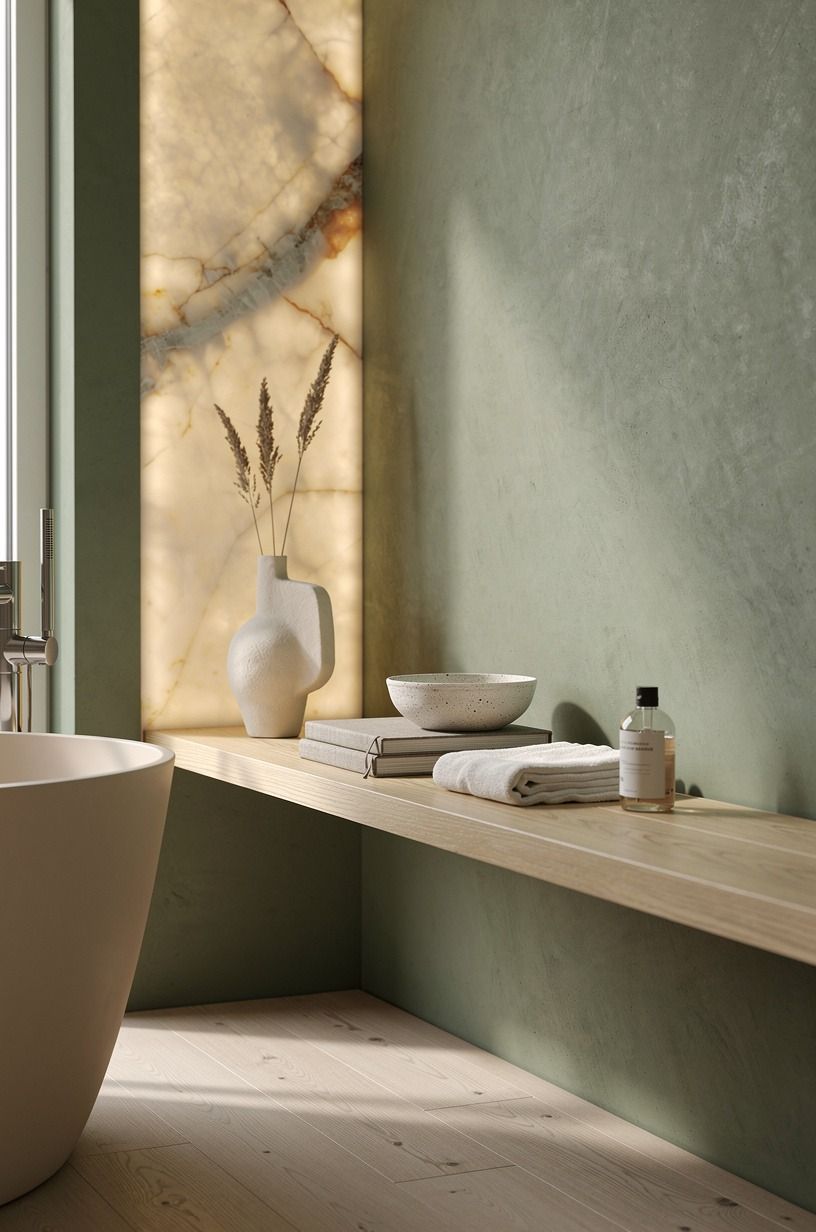
Skip a tiny tiled niche stuffed with mismatched bottles and build one calm shelf instead. Sage green, warm cream, and natural wood give a bathroom a quieter finish, and a backlit translucent onyx shelf lets you keep daily essentials edited without adding visual clutter.
11Finish With the Bare-Foot Landing Zone
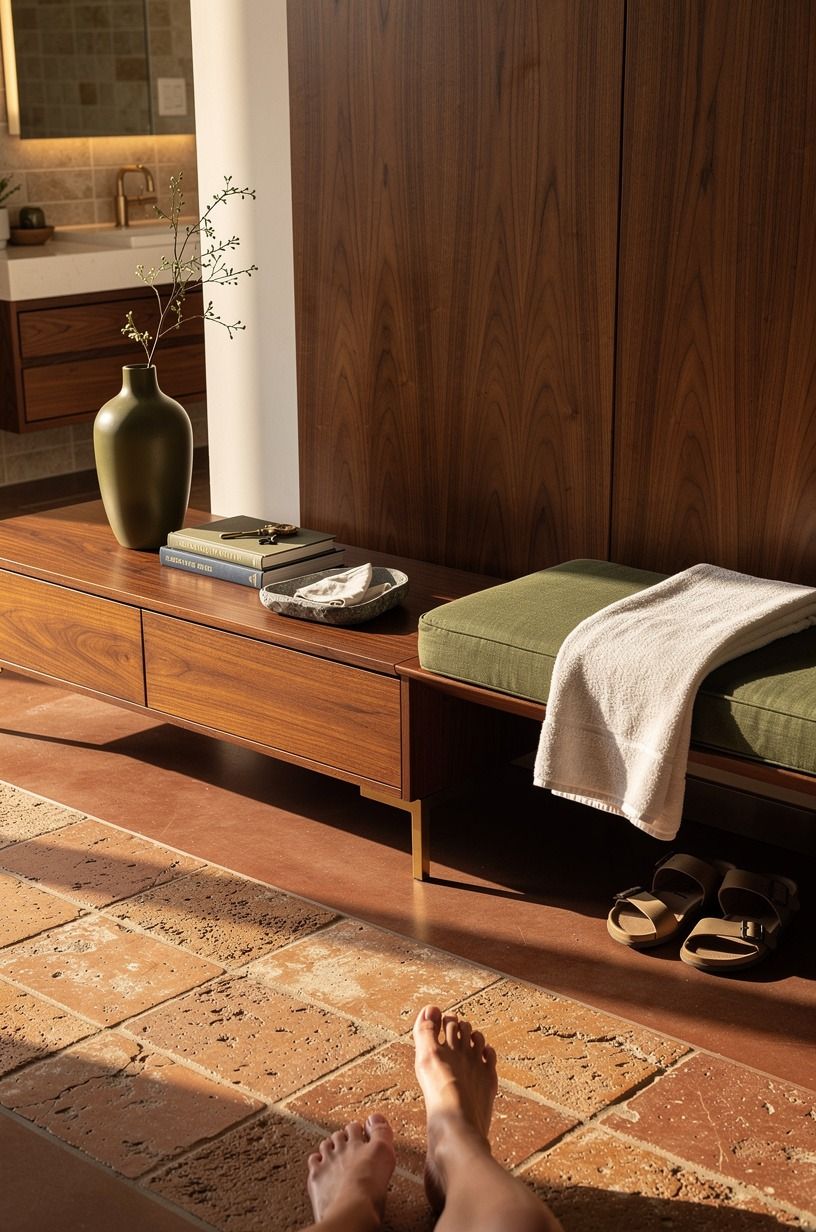
Finish your open shower with a landing zone that feels good under bare feet. Your bath mat belongs where you naturally step out, not centered by habit. A low-pile cotton runner is usually better than a plush rectangle because it dries faster and lets a floating vanity still show its floor.
Terracotta, stone, and olive make a welcoming palette underfoot, while book-matched walnut brings enough depth to keep the white marble from feeling chilly.
Place a narrow teak bath mat nearest the shower opening if you need a harder-wearing option. Your feet get a warm surface, while the slats allow water to escape instead of sitting in a soggy pile. This is the part people ignore, then wonder why their five-star shower feels unfinished.
Add one modest object at the vanity: a $68 ceramic bowl for jewelry, contacts, or hair clips. You don’t need a tray full of perfume bottles. A little restraint makes your stone, brass, and towels feel more intentional.
For a useful styling reminder, this ceramic bowl lesson on making a room feel calmer applies beautifully to a bathroom, too. Your landing zone should be comforting, dry, and easy to reset.
Why I Don’t Think White Marble Needs More Stuff
I’ve had to unlearn the urge to decorate every available bathroom surface. White marble arrives with its own movement, its own little gray rivers, and its own tendency to look colder than expected under the wrong bulb.
My first instinct used to be adding more: another tray, more jars, a patterned shower curtain, a dramatic mirror, whatever seemed likely to make the room feel finished. Instead, I made the room noisier.
The better question for your shower is not “what else can fit?” It’s “what deserves to interrupt the stone?” Your answer might be a warm metal faucet, a teak stool, or a wall color that lets the white read less sharp. That’s enough. Your eye needs quiet places just as much as it needs detail.
I also think real life should be visible. Your toothbrush charger may live on the counter. Your kid may leave a wet towel in the wrong place.
Fine. A polished bathroom that can’t handle a normal Tuesday is not luxurious, it’s fragile. You’ll enjoy the room more if its good materials can take a little life around them.
The money matters, too. Spend on the water management, the tile setting, and the light you’ll use every morning.
Save your appetite for expensive objects until those foundations are right. A $30,000 shower with harsh ceiling light still feels weird. A thoughtful $3,000-$9,000 update with warm lighting, disciplined storage, and a dry floor can feel serene for years.
That’s the version I’d choose.
The Questions I Get Asked Most
What is the best white marble open shower idea for a small bathroom?
A fixed glass panel with pale porcelain marble tile is your best small-bath choice. Low-iron glass keeps your view open, while a 36×36 in shower gives your body enough room to move without crowding the vanity.
– Pale veined porcelain – Wall-mounted vanity – One fixed panel
Where can I buy white marble open shower pieces on a budget?
You can find budget pieces at IKEA, Target Threshold, and Wayfair. Your best secondhand score is often a solid wood stool from Facebook Marketplace, which you can seal for bathroom use and place outside the direct splash zone.
– IKEA mirror – Target cotton towels – Secondhand teak stool
How much does a white marble open shower makeover cost?
A cosmetic refresh typically costs about $200-$1,200, while a new vanity, partial tile, and lighting usually land around $3,000-$9,000. Paint and edited styling are your lowest-cost changes, and both can make your marble read warmer.
Can I create a white marble open shower on a budget?
Yes, and you should start with light, towels, and grout before replacing tile. Marble-look subway tile typically costs $2-$10 per sq ft, so your budget can go toward a better faucet and a clear glass panel.
– Warm bulbs – Fresh white grout – Cotton runner
Is a white marble open shower worth it in a small space?
Yes, it’s worth it if you keep your sightlines simple and your floor dry. A floating vanity helps your small bathroom feel less packed because you can see tile beneath it, which makes your room read wider.
Is a white marble open shower a good idea for a rental?
Yes, if you make reversible changes around the existing shower. Removable privacy film, peel-and-stick lighting, and a tension-mounted towel rail can soften your bathroom without drilling into tile or changing plumbing.
Where I’d Start First
If I had to pick one step, I’d start with the lighting stack. Your marble can’t look warm under harsh blue overhead bulbs, no matter what you spend on tile. Pin the lighting plan for later and let your shower glow before you buy another accessory.