
Dark wet room ideas work best when you commit to deep color, proper drainage, and lighting that makes the room feel intentional instead of cave-like. I used to think dark tile would shrink every bathroom. It doesn’t. A wet room is already a dramatic little stage!
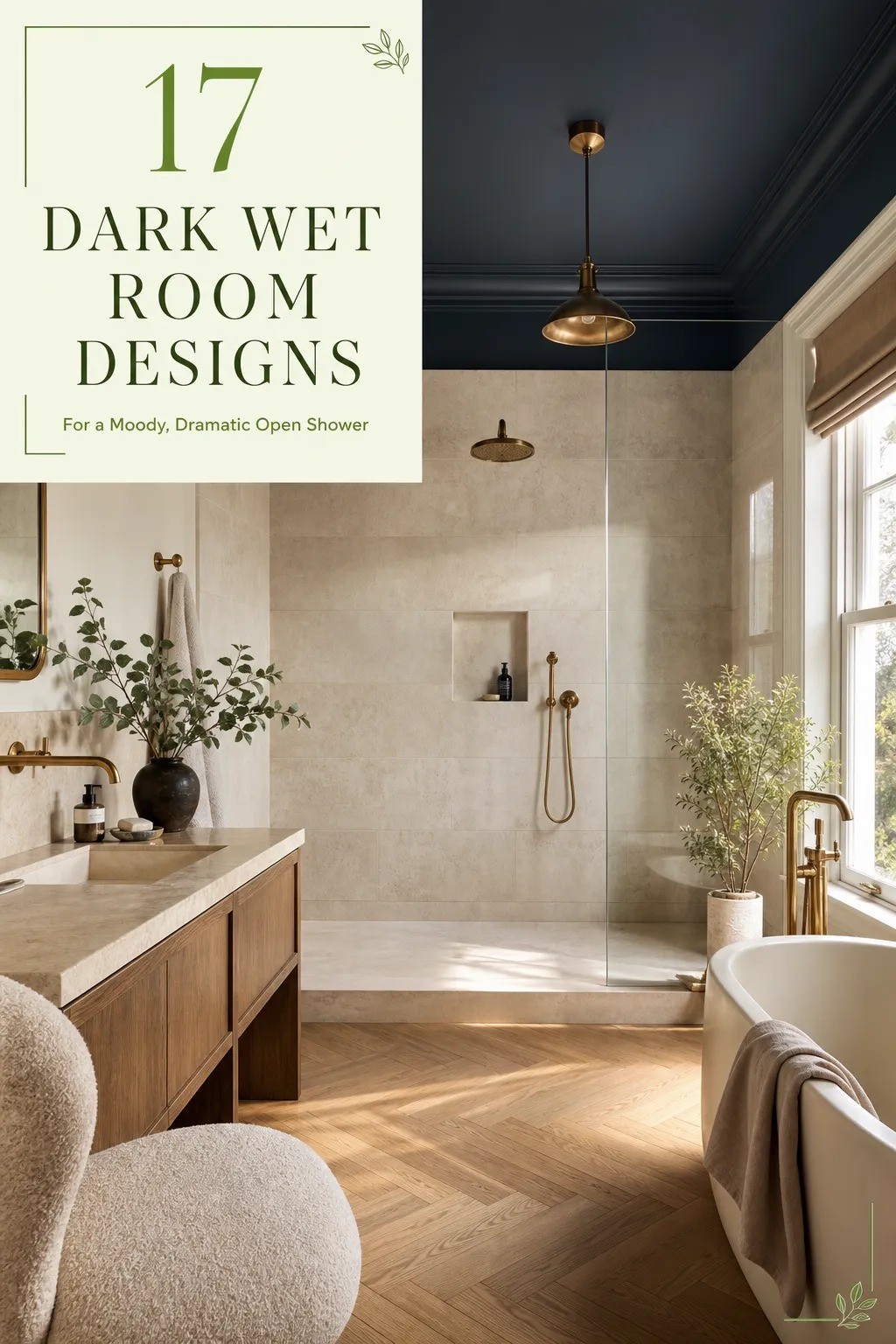
- Paint the Ceiling in Farrow & Ball Hague Blue
- Float a Glass Screen Instead of Building a Wall
- Use The Low-Contrast Grout Rule
- Could a Dark Shower Bathroom Use Warm Metal?
- Build The Three-Height Light Stack
- Anchor the Room With a 32-36 In Vanity
- Choose Calacatta Gold Over Cold White Quartz
- Let The Shadow-Line Strategy Replace Busy Decor
- Hang a Soft Curtain Beyond the Splash Zone
- Frame the Mirror With Aged Bronze
- Mix Deep Tile With Sherwin-Williams Sea Salt
- Skip the Matching Set and Add Real Wood
- Can a Half Wall Make an Open Shower Feel Bigger?
- Add The Towel-Ladder Pause
- Make the Drain Disappear Into the Floor
- Budget Your Dark Wet Room Before You Buy Tile
- Make the Room Feel Like Evening, Even at Noon
1Paint the Ceiling in Farrow & Ball Hague Blue
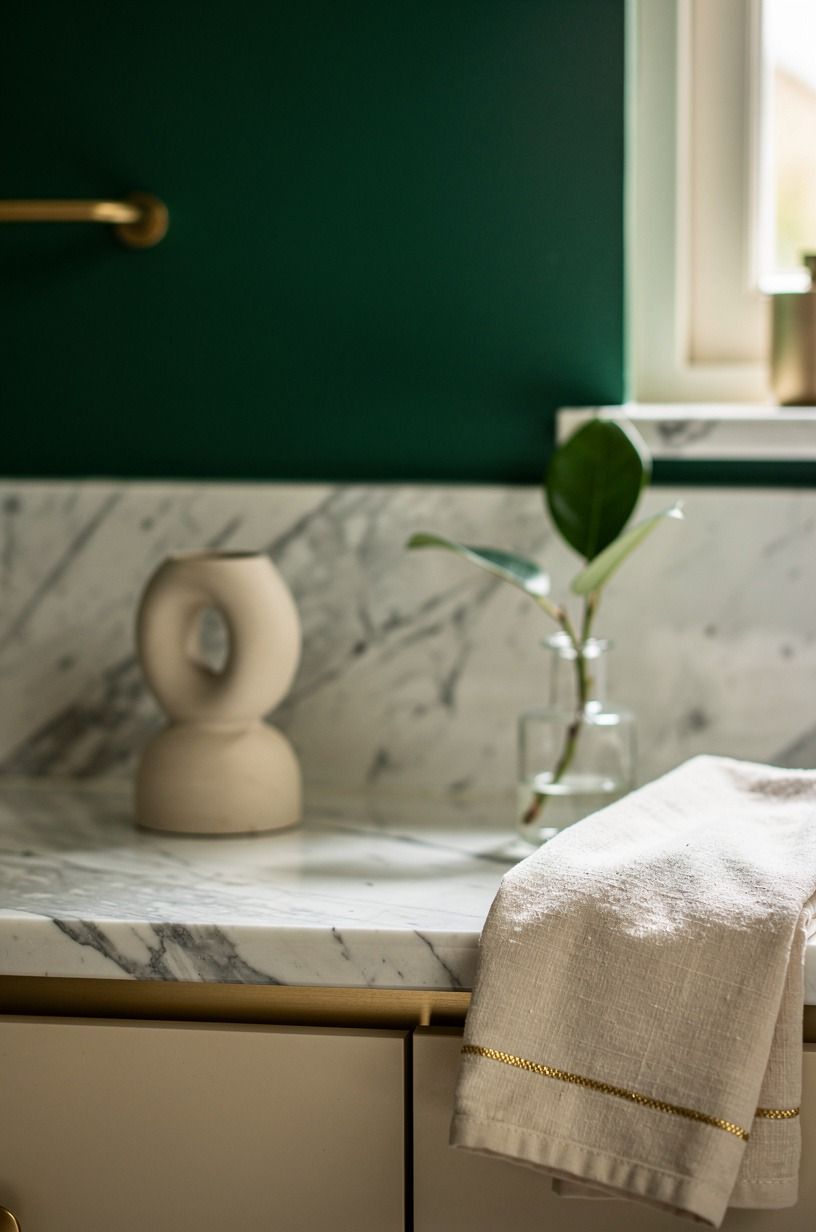
Take Farrow & Ball Hague Blue No. 30 onto the ceiling if your dark shower room has decent artificial light. You’ll get a wrapped, intimate feeling instead of the usual bright-box bathroom, and your eye won’t stop abruptly at a white ceiling.
Pair it with emerald, gold, and cream accents around Carrara marble with subtle gray veining, then keep your grout close in color. I’d skip a crisp white ceiling here, because it chops the room into thirds and makes the dark walls look accidental. Open shower layout ideas can help you plan where that darker visual weight belongs.
Typical cost by tier (US averages):
2Float a Glass Screen Instead of Building a Wall
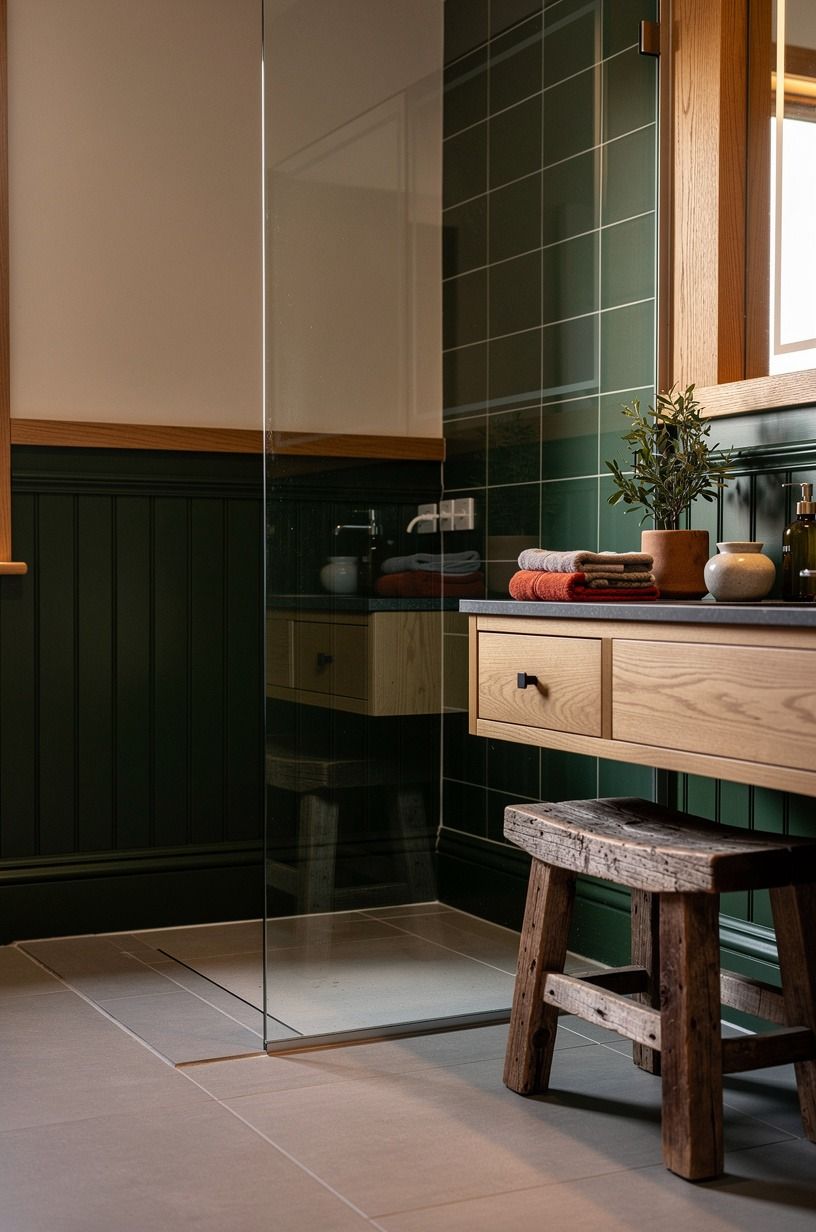
A single frameless clear-glass panel keeps your dark walk in shower ideas from feeling boxed in. For a comfortable shower, give yourself at least 36×36 in of clear floor area, then let reclaimed weathered teak run uninterrupted behind the glass.
You don’t need a full enclosure to stop splash if the showerhead faces away from the opening. I’ve lived with both setups, and the heavy framed cubicle loses every time. It’s fussy to clean, and your beautiful forest green, rust, and natural oak palette disappears behind metal.
3Use The Low-Contrast Grout Rule
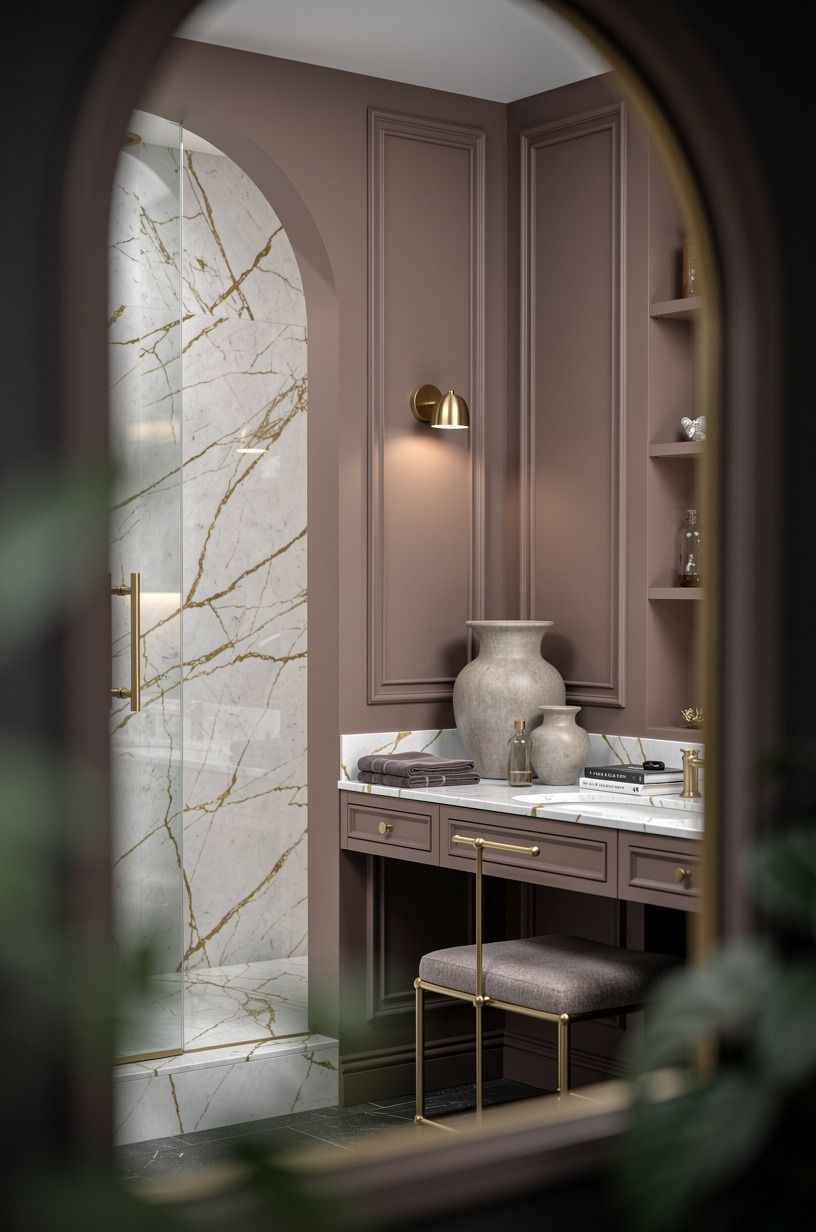
Choose charcoal grout with dusty rose tile and Calacatta marble with gold veining, not bright white grout lines.
4Could a Dark Shower Bathroom Use Warm Metal?
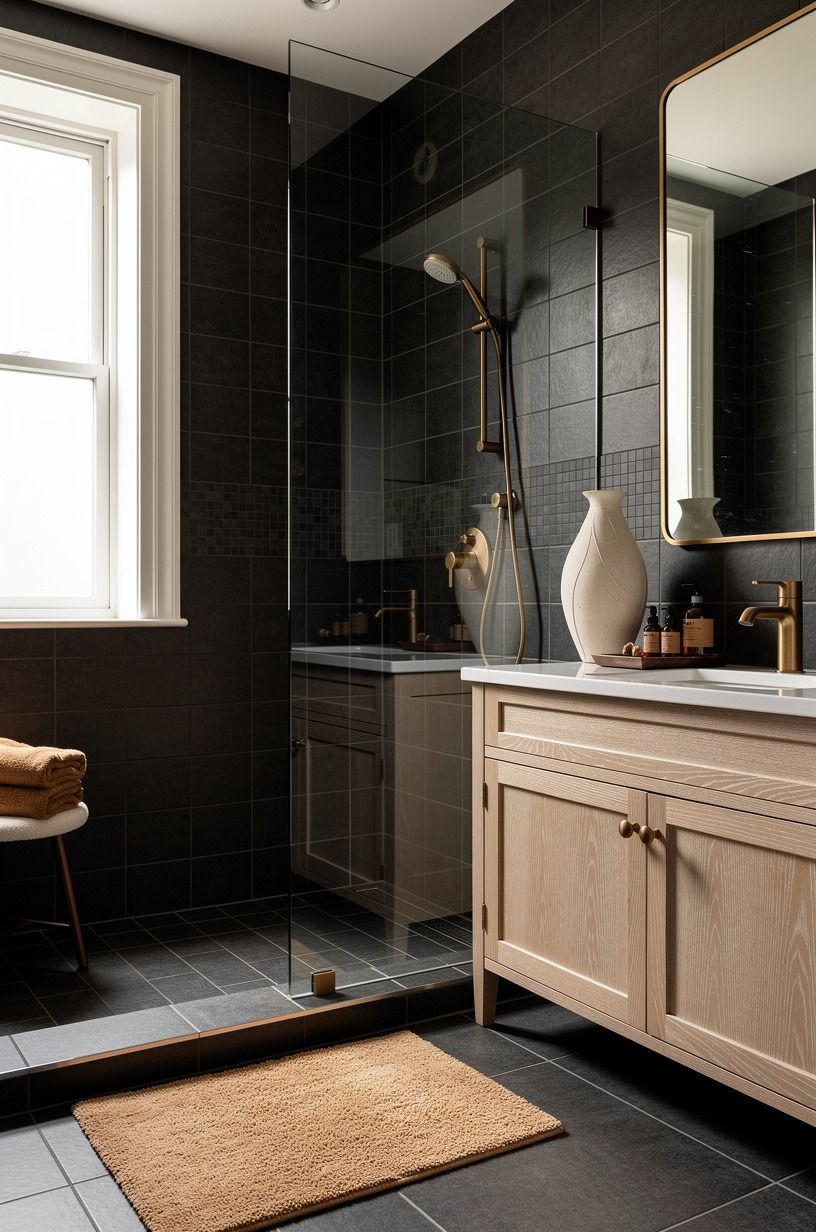
Yes, it should. Warm black hardware gives a dark wet room a little definition without turning it into a hotel lobby, especially against warm white, camel, and black accents with Benjamin Moore Chestertown Buff HC-9 walls.
A typical warm-metal faucet runs $120-$450, so this is one place where your budget can go visibly far. I’d avoid polished chrome beside cerused white oak, because it looks blue under bathroom lighting. A warmer finish softens the whole composition.
5Build The Three-Height Light Stack
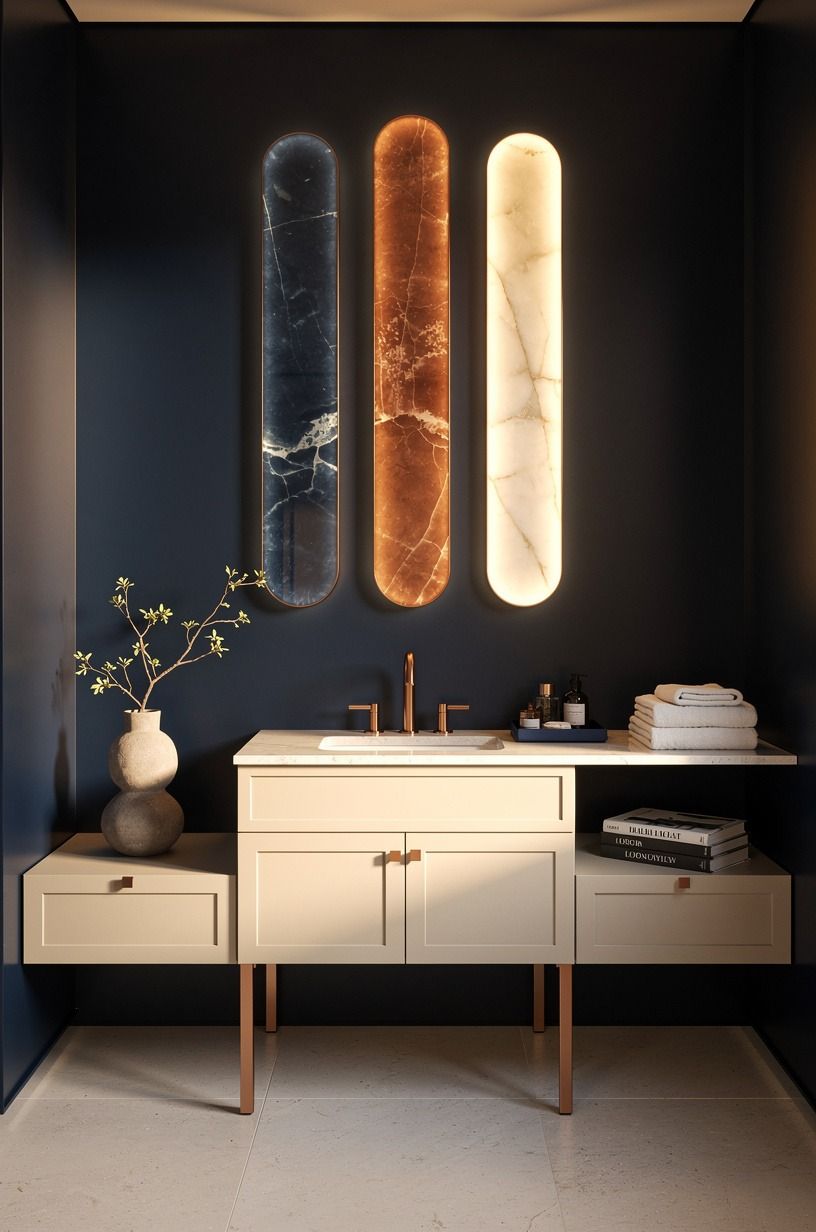
Layer three heights of light: a ceiling fixture, eye-level sconces, and a low glow near the vanity, using midnight blue, copper, and ivory around backlit translucent onyx.
6Anchor the Room With a 32-36 In Vanity
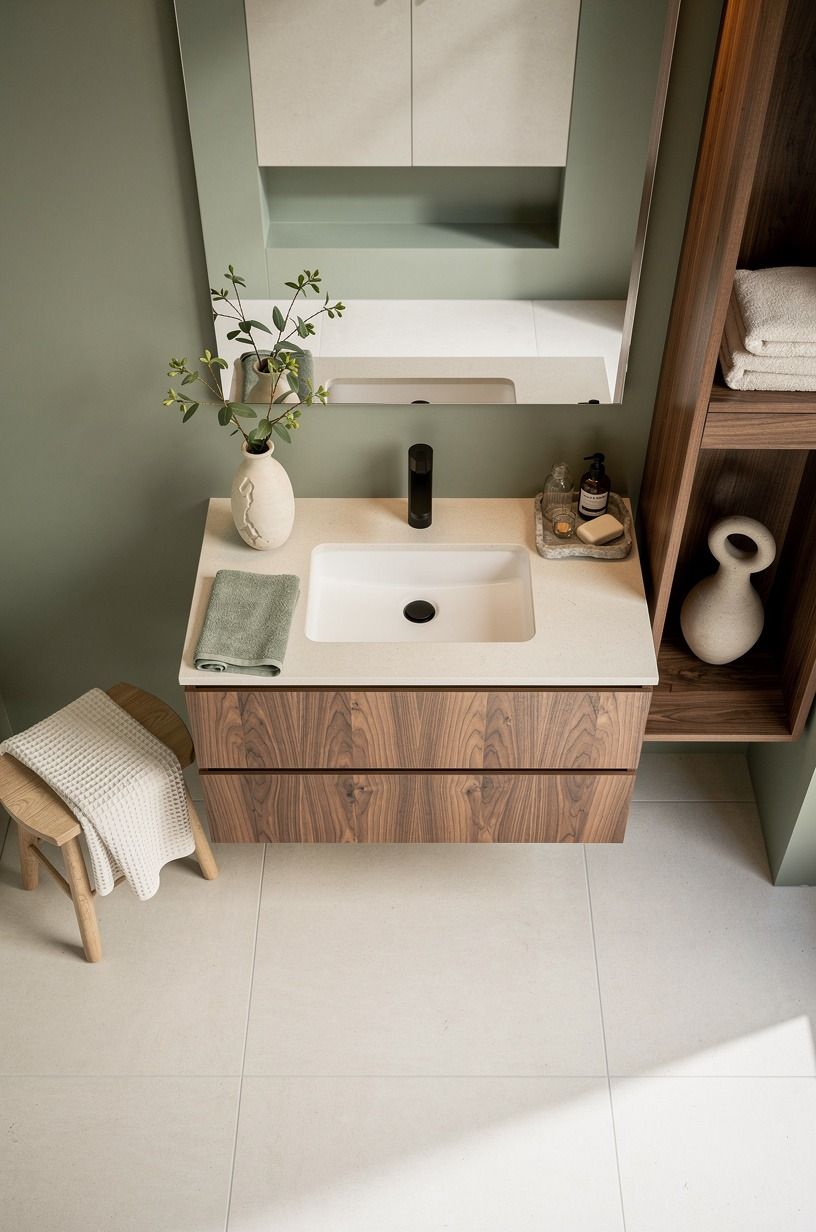
Your vanity should land between 32-36 in high, which gives you a practical counter without making a compact bathroom feel bulky. A floating IKEA GODMORGON walnut vanity can leave enough floor visible that your room still feels airy.
Go wall-mounted if you’re working with a narrow room. But don’t buy a shallow vanity just because it looks neat online. You’ll resent a sink that splashes onto your sleeves every single morning!
7Choose Calacatta Gold Over Cold White Quartz
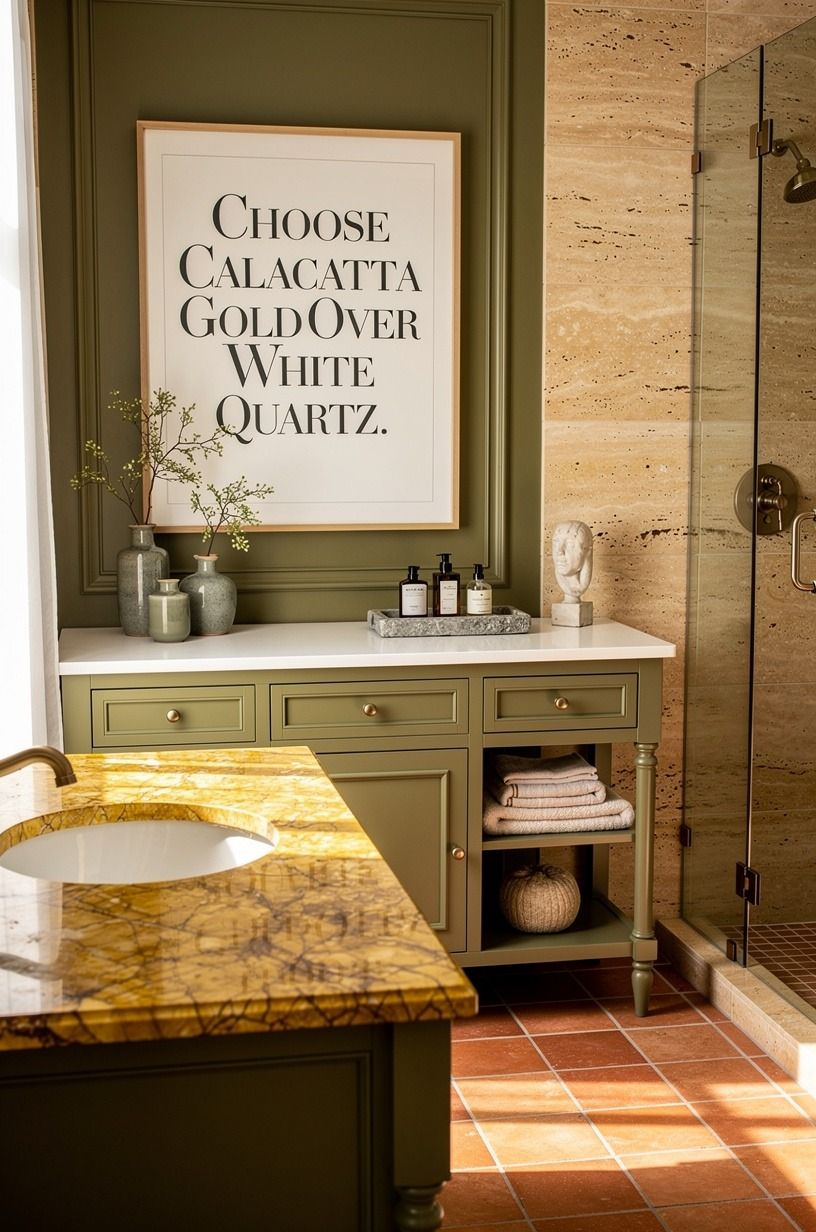
A warm travertine top with terracotta, stone, and olive around it adds warmth that plain white quartz can’t fake.
8Let The Shadow-Line Strategy Replace Busy Decor
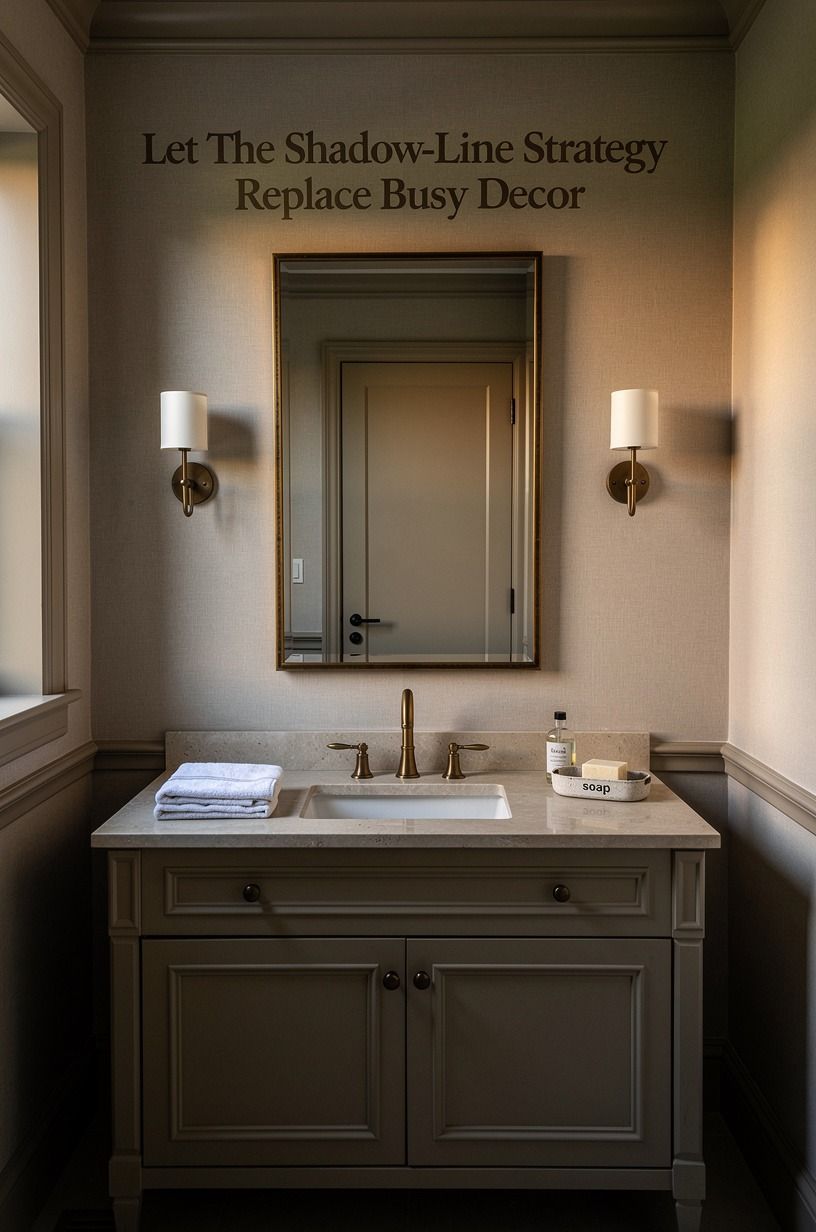
Run clay-toned surfaces with linen and aged brass through the shower wall and floor, then use a recessed niche and a slim shadow gap around the vanity. Your bathroom gets drama through depth, not through twelve little objects on every ledge.
A niche set into the shower wall is more useful than a wire caddy, full stop. Keep bottles grouped in unlacquered brass containers that will develop patina, and your everyday mess won’t visually interrupt the tile. A half-wall open shower is another smart way to create a shadow line without closing off the room.
9Hang a Soft Curtain Beyond the Splash Zone
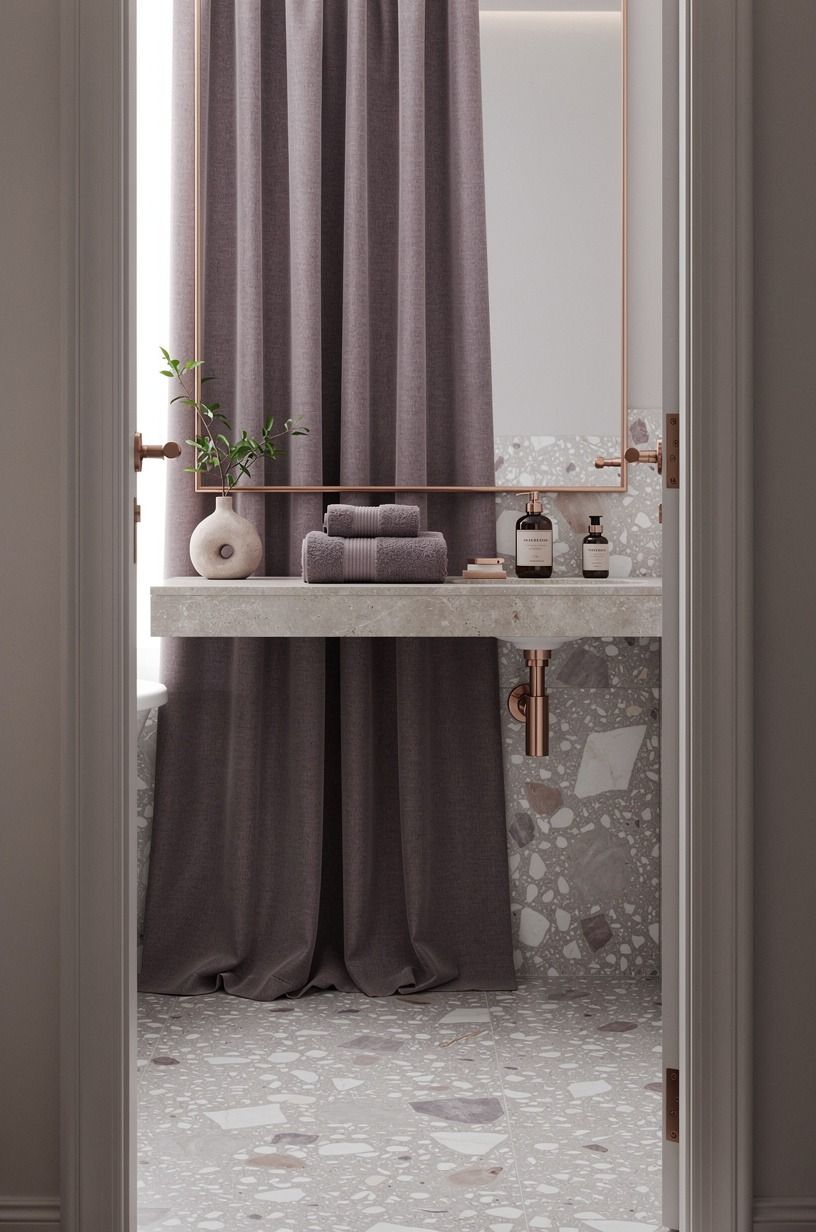
A full-length curtain in plum, gray, and rose gold outside the wet area can make an open shower feel gentle and lived-in. It isn’t for blocking water. It’s there to soften oversized-chip terrazzo, hide towels, or create a changing corner.
Keep it well beyond the spray and choose a washable lining if your ventilation is weak. I made the mistake of hanging linen too close to the shower once.
Damp hems. Never again.
Your curtain should move in the warm air, not hold moisture.
10Frame the Mirror With Aged Bronze
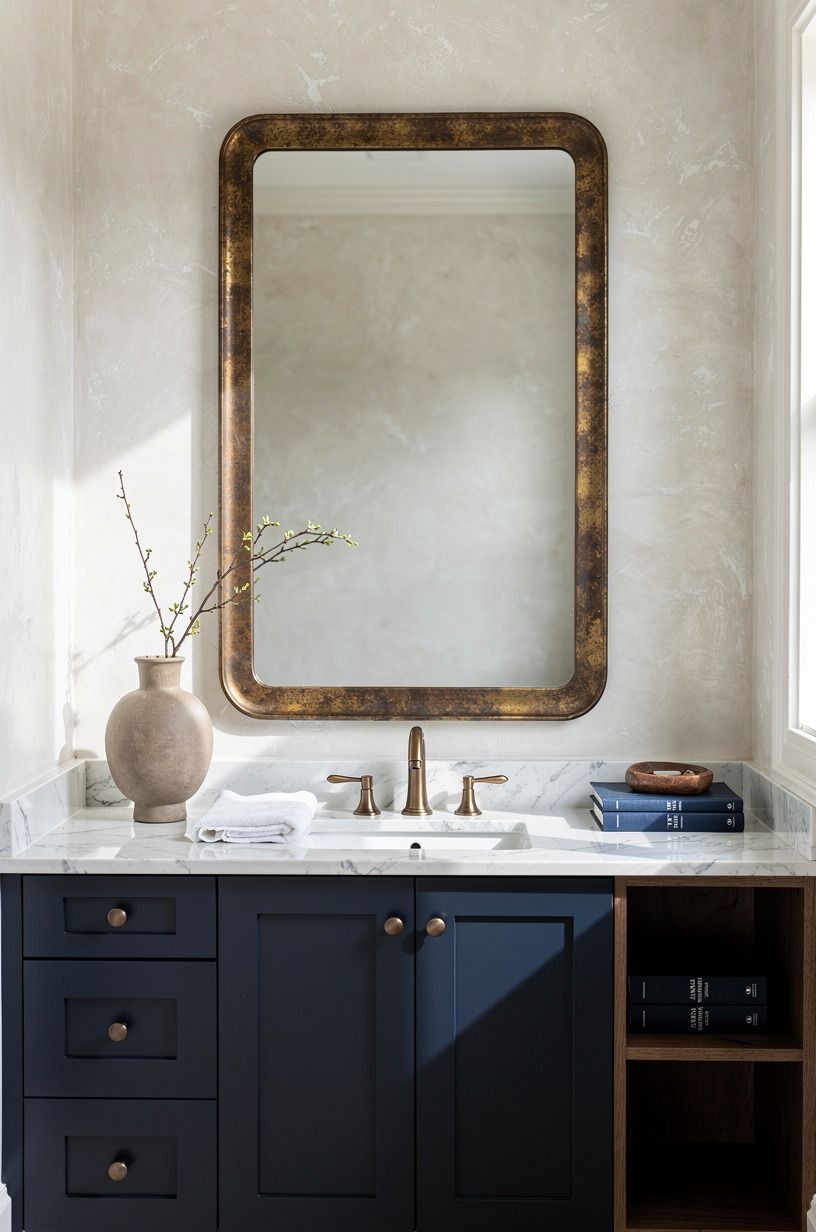
Use an aged bronze framed mirror that’s wider than your sink, rather than a tiny round mirror floating in empty wall space. You’ll make the vanity feel grounded, and the bronze picks up a soft brown edge against navy, white, walnut, and hand-applied Venetian plaster.
For a rental-friendly version, a large leaning mirror can work if you secure it properly. But don’t lean one near a wet traffic path if you have children or a narrow doorway.
Drama is good. A falling mirror is not.
11Mix Deep Tile With Sherwin-Williams Sea Salt
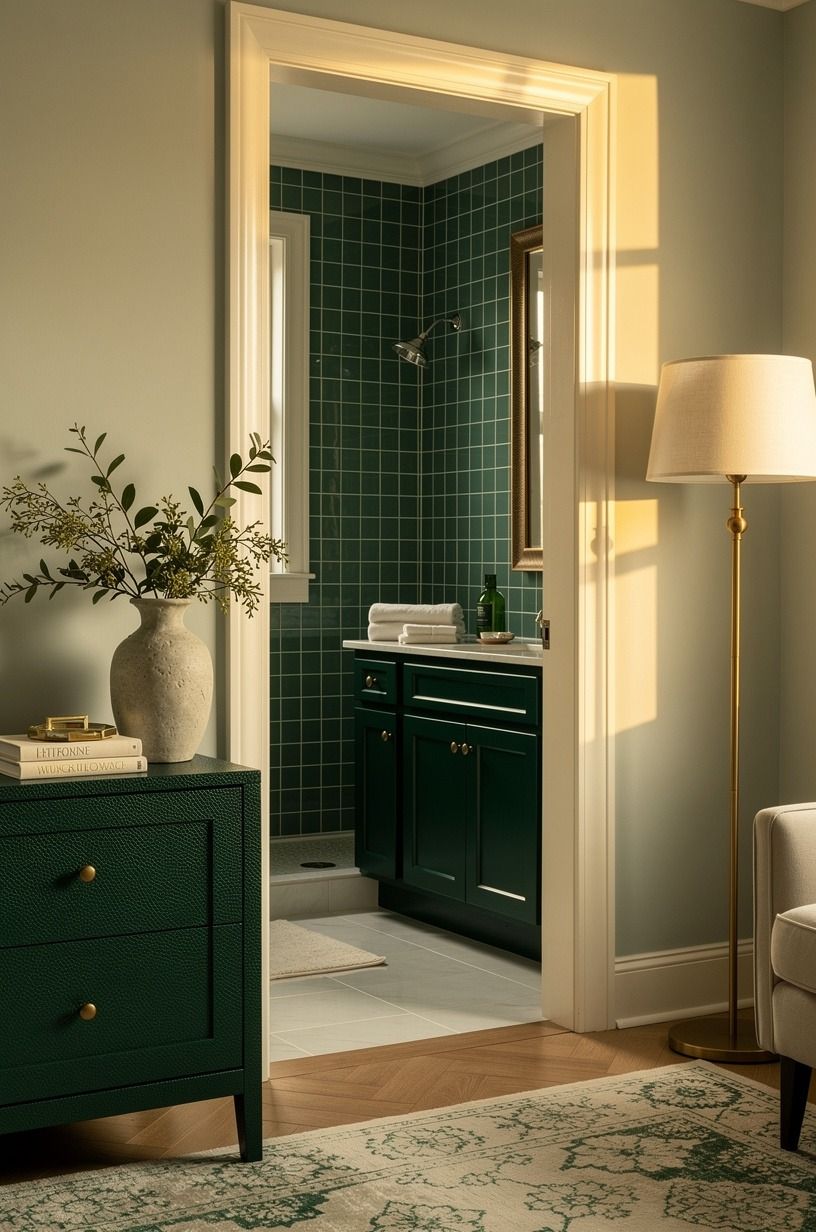
Paint the dry-side walls in Sherwin-Williams Sea Salt SW 6204 when your shower tile is deep emerald. The gray-green reads calm beside gold and cream, and shagreen accents keep the room from becoming one uninterrupted dark hole.
I’d choose Sea Salt over stark bright white for a bathroom with little daylight. White can go clinical against black fixtures, while this shade gives your eye a place to rest. These open shower and tub layouts are useful if you’re balancing tile with a painted zone.
12Skip the Matching Set and Add Real Wood
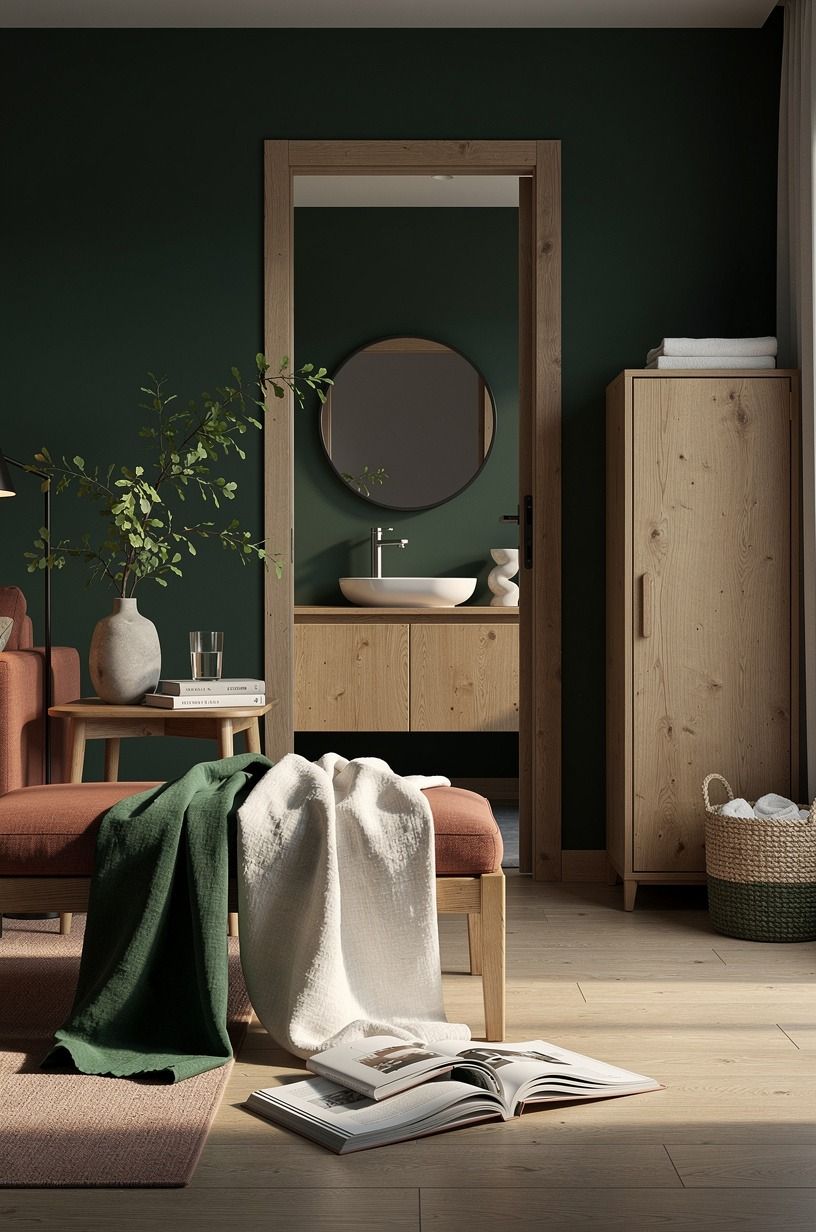
Bring in one piece of reclaimed wood with washed Belgian linen nearby: a stool, a slim bath bench, or a sealed floating shelf.
13Can a Half Wall Make an Open Shower Feel Bigger?
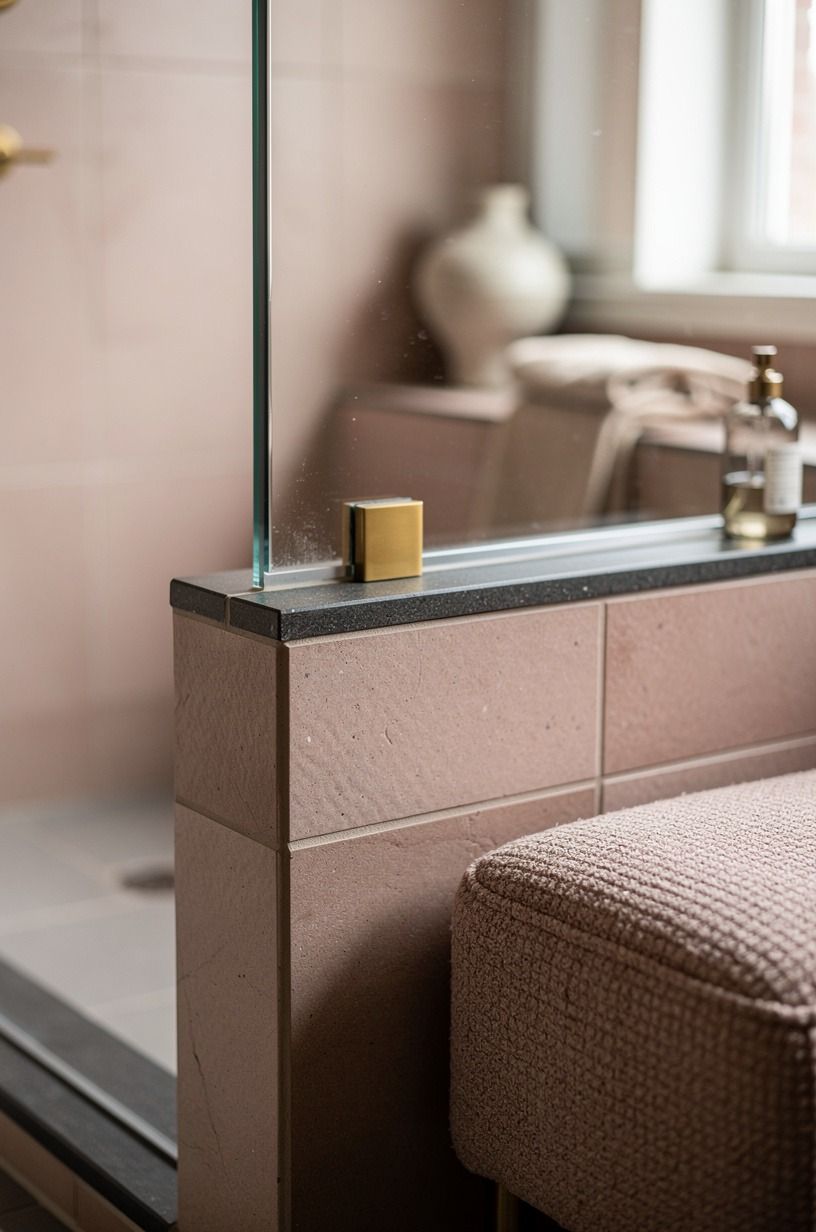
Yes, especially when it hides the shower plumbing while leaving the upper half open. A tiled half wall gives you privacy from the toilet zone without blocking the long sightline across your bathroom.
Keep the top broad enough for a dusty rose, charcoal, and brass finish with one organic bouclé touch, but don’t turn it into a clutter shelf. One small plant, maybe. Your room needs open air more than another place for half-empty bottles.
14Add The Towel-Ladder Pause
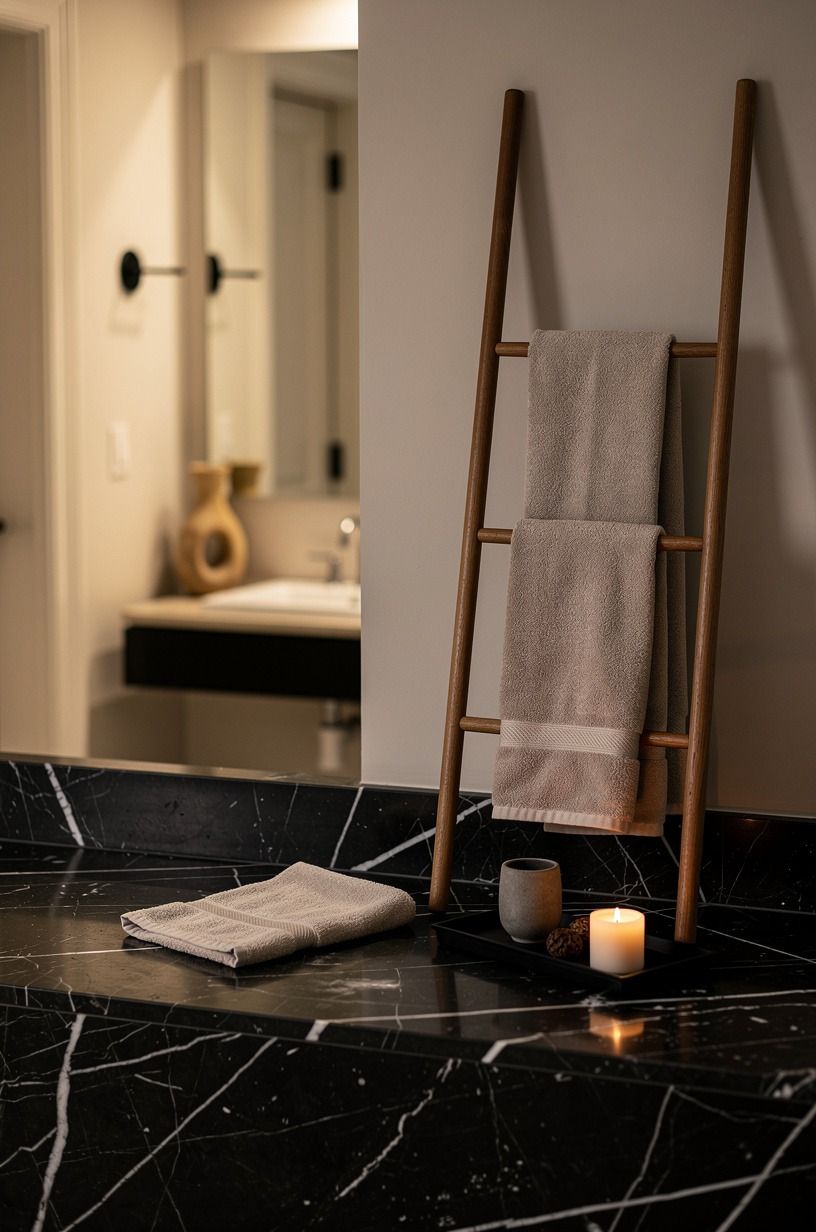
Place a matte black steel towel ladder near the shower entrance, where you can reach it without crossing the wet floor. You’ll create a practical landing point for a thick towel and add a vertical line that makes low ceilings feel taller.
Use 600gsm Turkish cotton towels in warm white, camel, or black beside Nero Marquina black marble with white veins instead of bright white. White towels aren’t wrong, but they can look like an afterthought against a dramatic room. This is where you let your textiles carry some warmth.
15Make the Drain Disappear Into the Floor
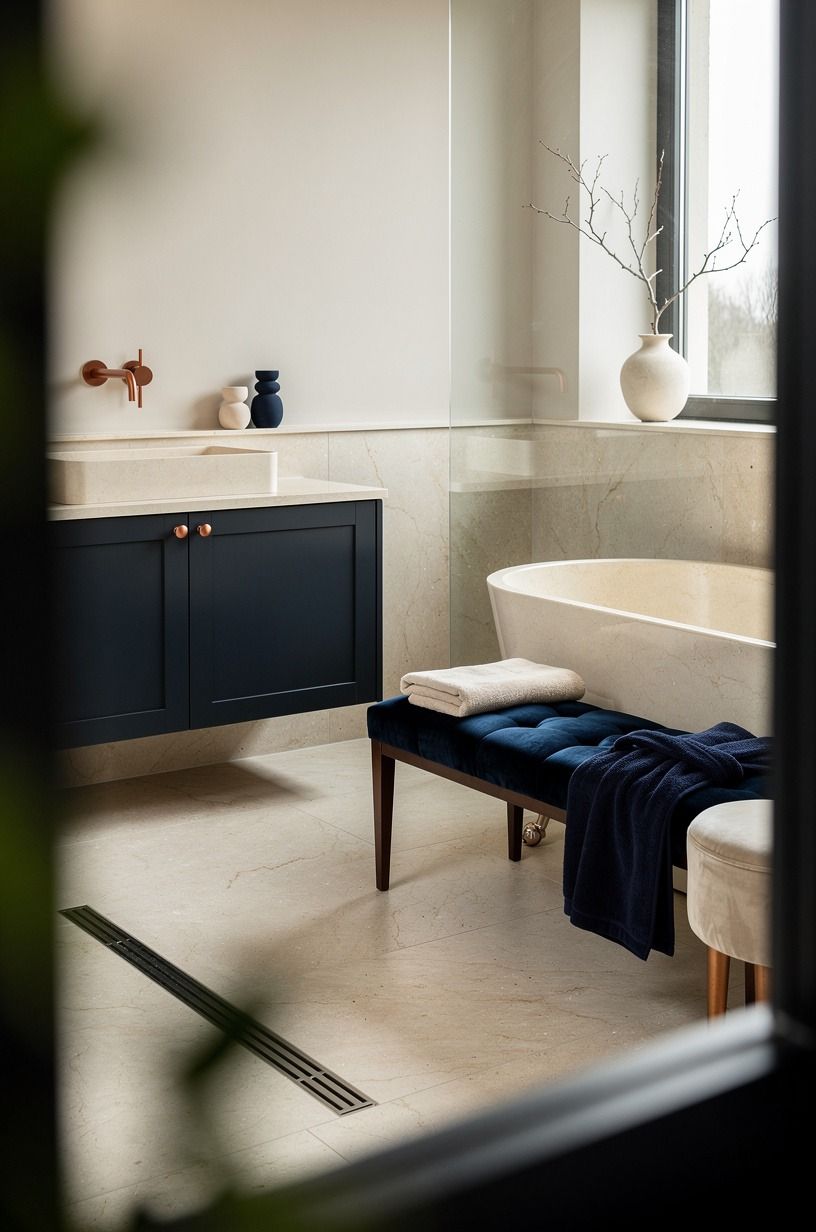
Choose a linear tile-in drain if you’re redoing the floor. It keeps the shower plane clean, lets midnight blue, copper, and ivory floor finishes continue toward the wall, and supports the open, modern wet-room effect you wanted in the first place.
The floor still needs professional slope, so don’t treat this as a weekend cosmetic project. But your visual return is huge. Dark academia rooms offer a surprisingly useful lesson here: one uninterrupted surface always feels more intentional than lots of competing outlines.
16Budget Your Dark Wet Room Before You Buy Tile
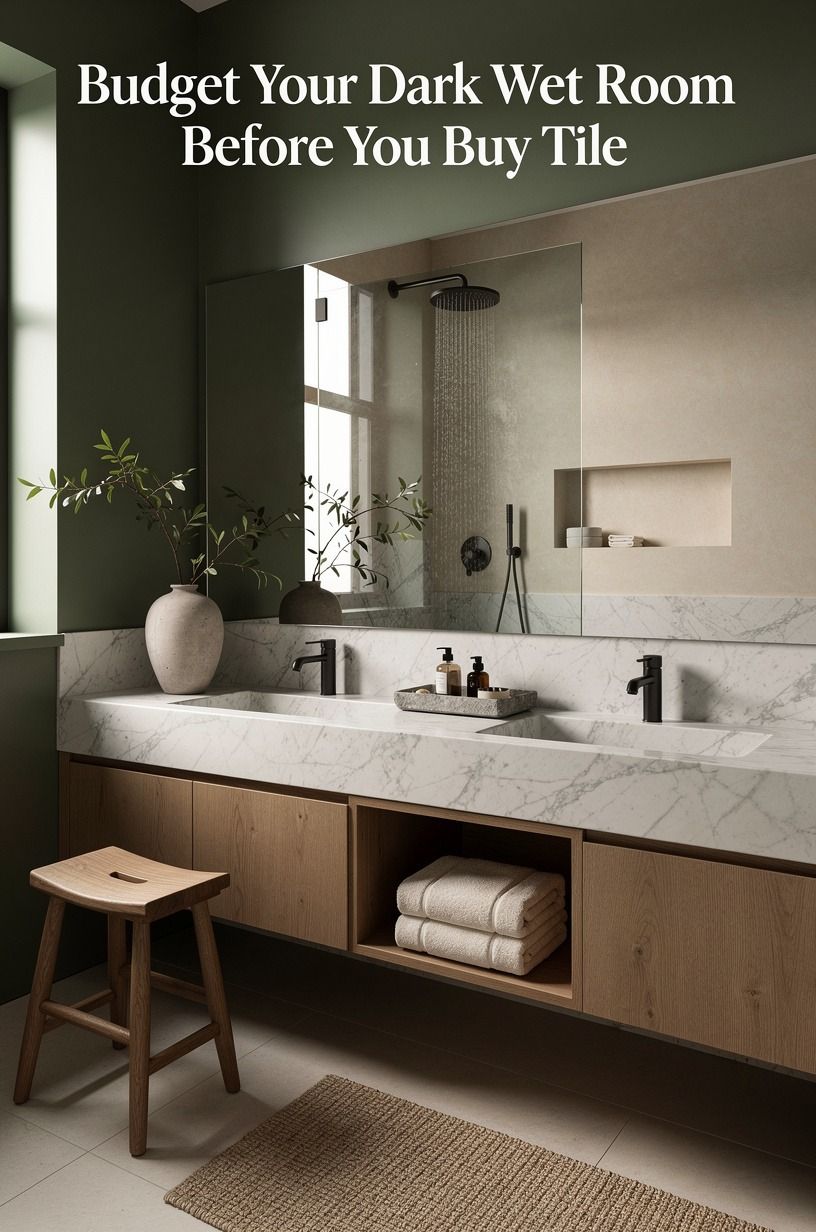
Start with the part you’ll touch every day: faucet, mirror, lighting, and textiles. Sage green, warm cream, natural wood, and Carrara marble with subtle gray veining can guide those smaller decisions before you commit to tile.
17Make the Room Feel Like Evening, Even at Noon
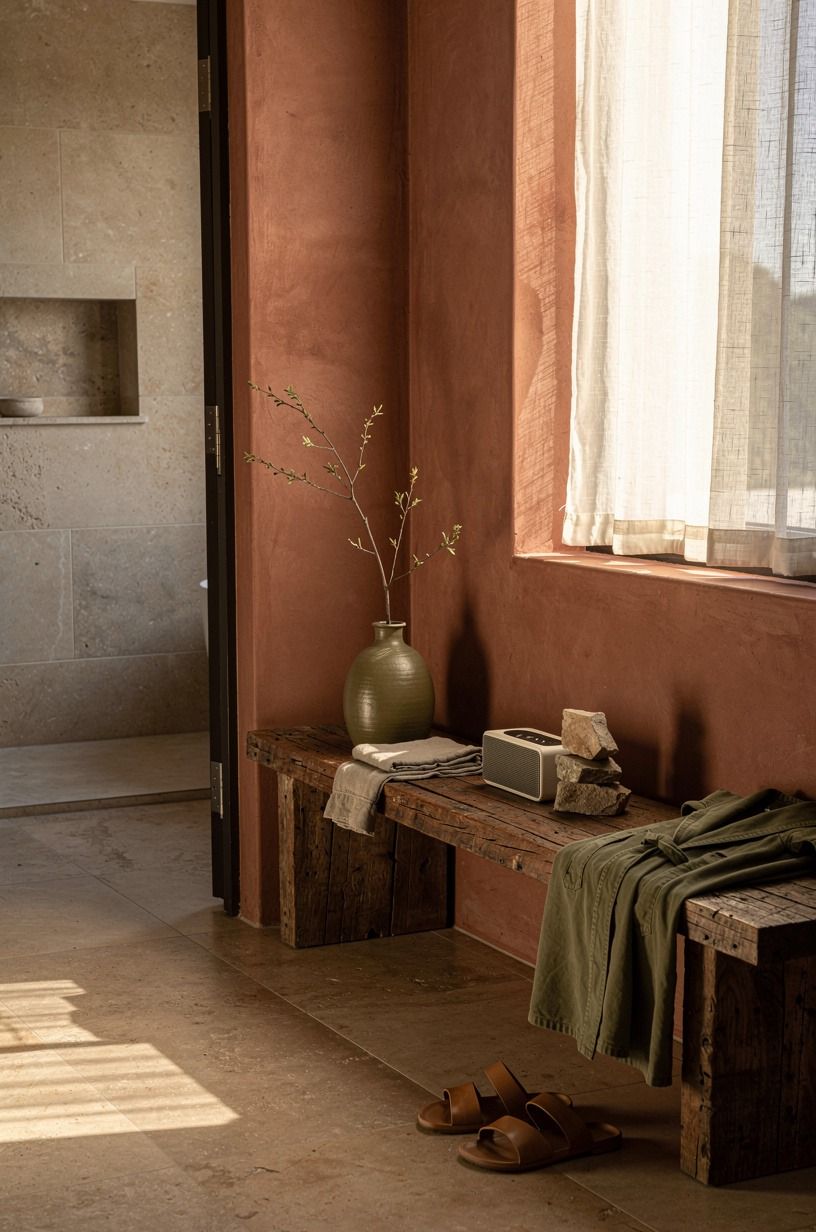
Install dimmers, use warm bulbs, and let one surface stay a little reflective. Terracotta, stone, and olive work especially well with reclaimed weathered teak, giving the room a small flicker of warmth without making your bathroom shiny everywhere.
And don’t be afraid of a darker paint sample. Your room’s mirror, wet tile, and brass will all bounce more light than a paper swatch suggests.
The result should feel peaceful, not gloomy. That distinction matters!
Why I Think Dark Wet Rooms Are Worth Doing Properly
I went back and forth on dark bathrooms for years because I’d seen too many that felt like someone had painted a small room black and called it a mood. You know the ones: one ceiling light, white grout, a black vanity, and nowhere for your eye to land.
They photograph well for five seconds. Then you have to live in them.
The dark wet rooms I keep coming back to are more deliberate. They don’t depend on darkness alone.
They use dark surfaces to make the warm surfaces count more. Brass looks richer. Oak looks less orange.
A cream towel looks like it belongs there instead of looking like it came from a motel supply closet. Your room gets quieter visually, which is a relief when the rest of your day is loud.
I also think people spend too much time worrying that a small bathroom needs to be pale. A small bathroom is one of the few places where you can make a bold decision without committing an entire open-plan house to it.
You close the door. You take a shower. You get a few minutes of a more intimate world.
Why make that room timid?
But there’s a line. If you’re investing in a wet room, spend money where water lives first: slope, membrane, drain, grout, ventilation.
I’d rather see budget tile installed over excellent waterproofing than expensive zellige covering a bad substrate. The tile is the outfit.
The water management is the body underneath it. Your bathroom can survive a changing taste in color. It can’t negotiate with water.
What People Always Want to Know
What is the best dark wet room idea for a small bathroom?
A clear glass panel with continuous dark floor tile is the strongest choice for a small bathroom because it preserves your sightline. Frameless glass keeps the shower open, while a floating IKEA GODMORGON vanity leaves more floor visible.
Where can I buy dark wet room pieces on a budget?
You can find affordable dark wet room pieces at IKEA, Target, and Wayfair. Look for black mirrors, towel ladders, and warm textiles first. Facebook Marketplace can be great for solid wood stools that only need sanding and sealant.
How much does a dark wet room makeover cost?
A cosmetic dark wet room refresh typically costs about $200-$1,200, while a true wet-room rebuild can reach $12,000-$30,000+. Paint and textiles are the lower-cost changes. Waterproofing, plumbing, and tile labor are where your money goes.
Can I create a dark wet room on a budget?
Yes, and you don’t need to tear out tile to make it feel dramatic. Deep paint, a black-framed mirror, and warm towels can shift the room fast. Start with dry walls, removable storage, and better bulbs before you touch plumbing.
Is a dark wet room worth it in a small space?
Yes, a dark wet room is worth it in a small space if you keep the layout open. Continuous surfaces make the room feel intentional, while a 21 in minimum clearance in front of the toilet keeps your daily movement comfortable.
Is a dark wet room a good idea for a rental?
Yes, if you focus on removable layers rather than permanent tile. Peel-and-stick floor covers, tension-rod curtains, and removable hooks can add depth without risking your deposit. Keep the landlord’s fixtures intact and bring in warmth through textiles.
Where I’d Start First
If I had to pick one, I’d start with the lighting. Dark tile isn’t the problem, bad overhead light is. Pin this for later and browse these moody modern spaces when you’re ready to deepen the mood.