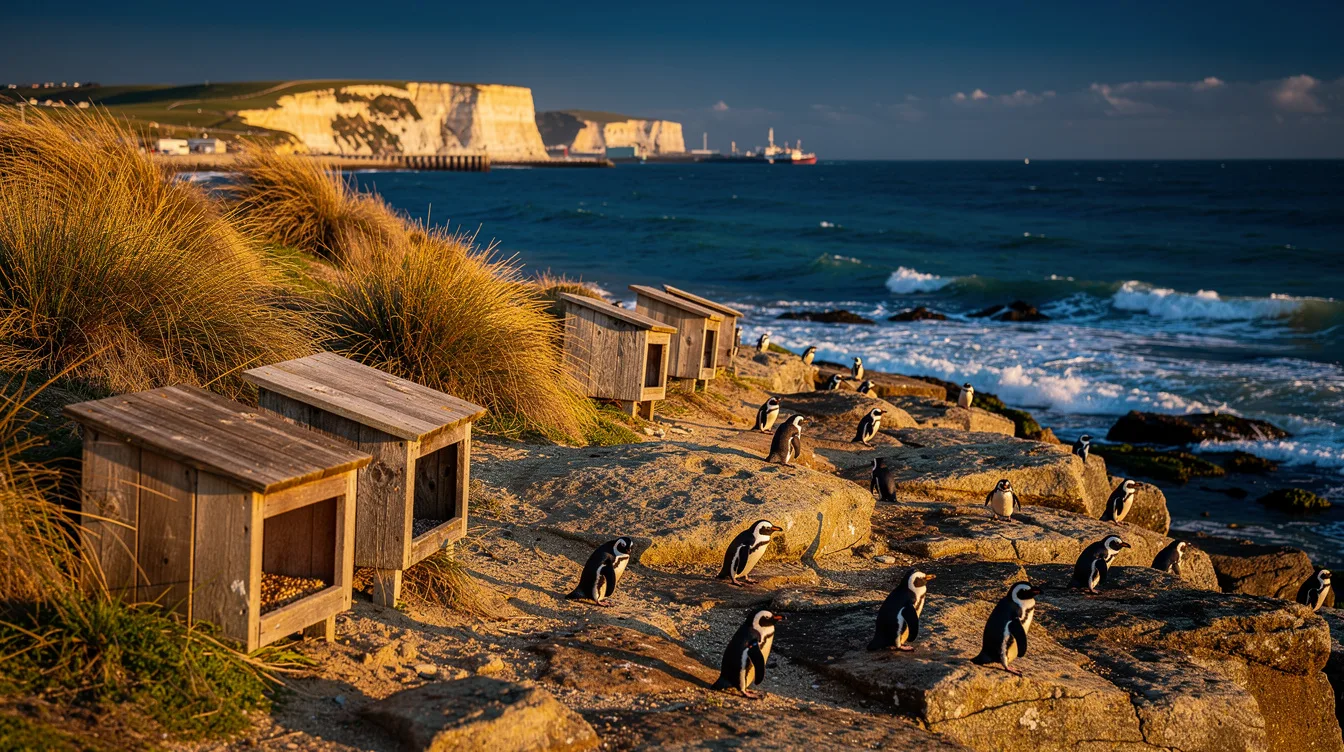
Ōamaru becomes a nightly homecoming when the smallest penguins in the world leave the Pacific and return to their nests at dusk. The sight is the town’s main event, but it doesn’t feel like a theme-park finale. It feels quieter, stranger, and far more affecting than that.
You’ll find this North Otago town on New Zealand’s South Island coast, 74.6 miles north of Dunedin. Its pale stone buildings and working-port edge make a sharp first impression. But stay until evening, because that’s when the sea takes over the schedule.
The dusk return is why you should stay overnight
At the Ōamaru Blue Penguin Colony, little blue penguins come ashore from the sea and head toward their nests after dark. They are the world’s smallest penguins, and the timing matters. Book an evening session, then let the daylight drain from the harbor instead of treating Ōamaru as a quick roadside stop.
You don’t come for a guaranteed wildlife performance. The return depends on the animals coming in from the water, and seating in the viewing area can fill during busy periods. That uncertainty is part of the appeal, though.
The cold air, the hush of people waiting, and the darkening Pacific make the eventual movement ashore feel earned.
And yes, this is the reason the town becomes a nightly homecoming. The penguins have been out at sea, then dusk pulls them back toward land. You’re watching a real routine, not an attraction built around one.
Reserve ahead in high season, especially if the colony is the nonnegotiable part of your trip. A late arrival is a poor gamble here. You’ll enjoy Ōamaru more if your evening is already accounted for and the rest of the day can unfold slowly.
White stone gives the town its own kind of drama
Before the penguins return, walk through the Victorian Precinct around Harbour Street and the nearby port streets. Local limestone, often called Oamaru stone or whitestone, gives the commercial buildings a chalky, almost luminous look. It’s formal architecture, but the salt air keeps it from feeling precious.
The precinct is among New Zealand’s best-preserved Victorian commercial areas. You can wander without needing a checklist, which is exactly the point. Look at the carved facades, pause for a coffee or a local drink, then follow the harbor edge while there’s still light.
But Ōamaru isn’t trying to be a polished museum town. Steampunk HQ occupies the old harbor area with mechanical sculptures, installations, and retro-futurist energy. It may not suit every traveler, especially those who prefer their history straight-faced.
That oddness is also what keeps the town from becoming merely pretty.
You’ll notice the contrast quickly: Victorian stone on one block, industrial fantasy on the next. Lively, but never loud. The town has roughly 14,300 residents, so it feels like a place with a daily rhythm rather than a destination built only for visitors.
One night works, two nights makes room to breathe
Arrive in the afternoon, walk the historic center, spend time near the harbor, and keep the evening for the penguins. That is the strongest version of an Ōamaru visit. A rushed stop can deliver the buildings, but it misses the hour when the town’s best-known residents come back from sea.
The next day, you can head to Bushy Beach, which is known for yellow-eyed penguins, also called hoiho. This is a more natural and less guaranteed encounter than the blue-penguin colony. If you go, bring patience rather than expectations.
And a car gives you more freedom for Bushy Beach, the Waitaki Valley, and the coast south toward the Moeraki Boulders. The road trip options are real, but don’t overpack them. Ōamaru rewards an unhurried afternoon more than a frantic collection of stops.
It is less overtly dramatic than Queenstown or Aoraki/Mount Cook. That’s not a shortcoming. Because the pace is lower, you can notice the small things: gulls over the harbor, pale facades in late light, and the way an ordinary waterfront waits for nightfall.
The old water route explains the town’s stubborn streak
Ōamaru’s historical water network carried water for nearly 31.1 miles from Kurow to Ardgowan. The open channel crossed hilly farmland after the water race was completed in 1880, replacing an inadequate local supply and providing power for industrial machinery.
It was decommissioned in 1983, but much of its former infrastructure remains traceable. That’s a useful lens for understanding the town. Ōamaru has long had to make practical use of what its location offered, from limestone to harbor access to water brought across the countryside.
But don’t turn that history into homework. Let it add texture to a town that has reinvented itself around heritage, offbeat art, cycling, food, and wildlife. The Alps 2 Ocean Cycle Trail ends here, linking the Southern Alps with the ocean, so cyclists arrive with a particularly satisfying finish line.
March and April are the smart compromise
Ōamaru works year-round, with an oceanic climate, moderate summers, and cool weather that can turn windy. March and April offer a useful balance between weather and crowds. January and February are the warmest period, but they can feel busier.
You can reach town from Dunedin by car or intercity coach, and State Highway 1 connects it with both Dunedin and Timaru. It’s an easy stop between Christchurch and Dunedin. Still, one overnight changes the experience completely.
By the time the penguins begin their walk from the dark water, the white stone has lost its glare. The harbor is quieter again, and you’ll understand why leaving after lunch would have been a mistake.