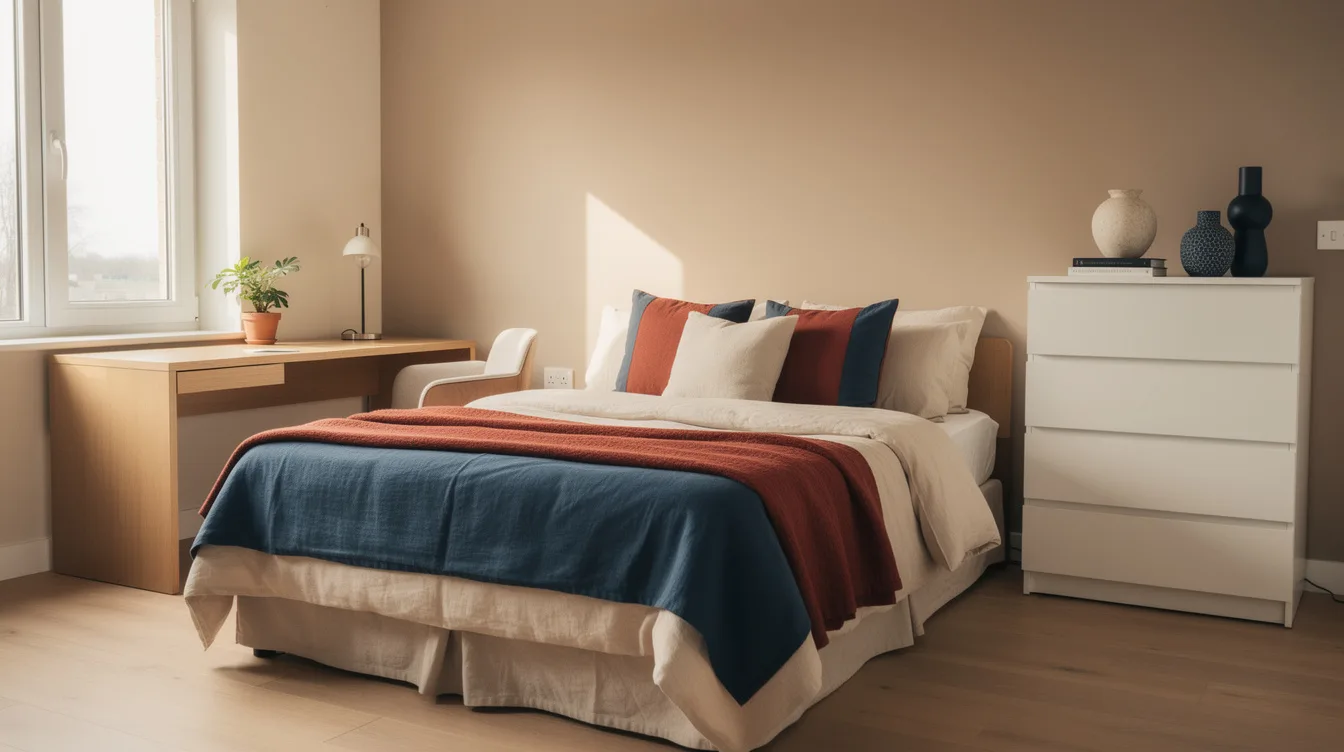
My first attempt involved a full-size bed, a desk chair that would not tuck in, and a dresser drawer that hit the bedspread every morning. The room was only 8 by 10 feet, so I stopped treating the desk and dresser as separate furniture problems.
The answer was a single storage-and-work zone, built with a shallow desk and vertical clothing storage. Once I protected the walking path, the bedroom finally felt like somewhere to sleep instead of a furniture puzzle.
Tape the Furniture Before You Buy It
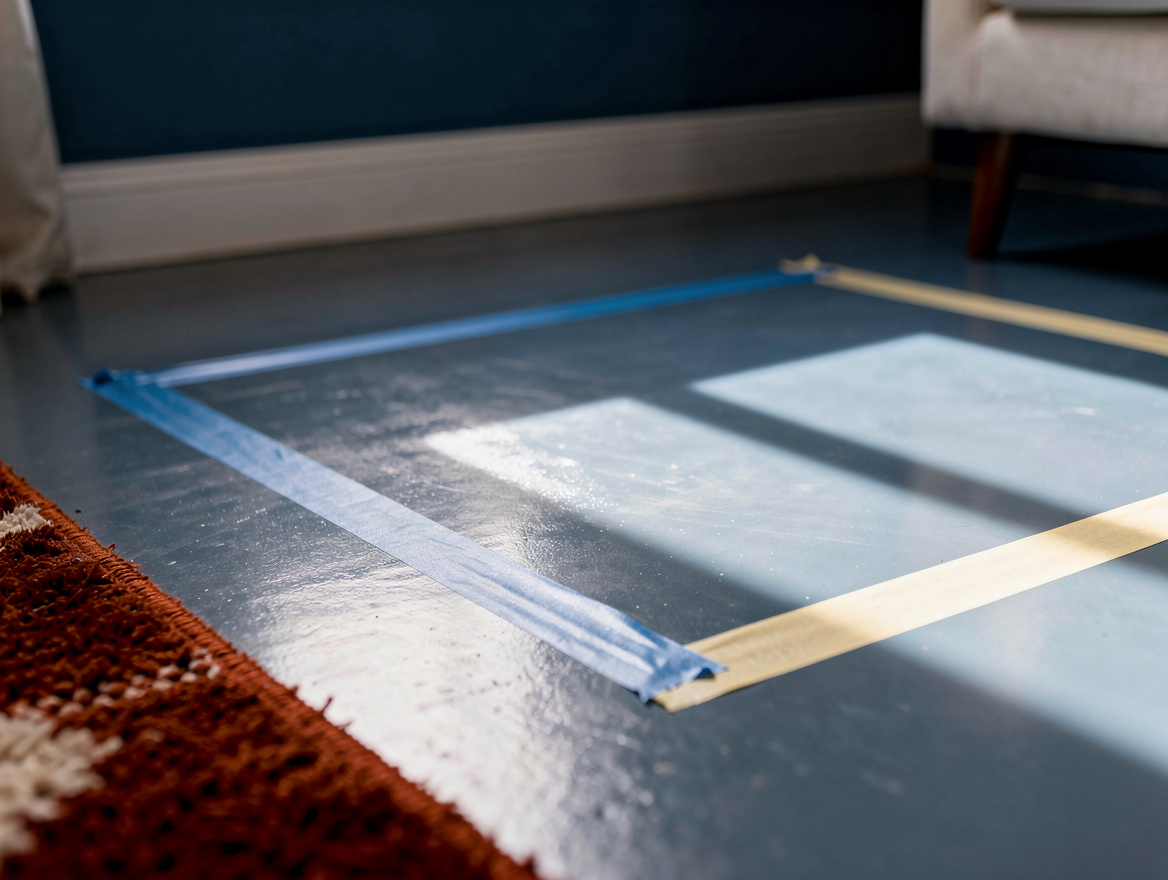
I learned this in an 8-by-10-foot rental: a dresser can look compact online and still block the only route from bed to closet. I taped the bed, desk, chair, and drawer fronts directly onto the floor before ordering anything.
A main path of around 24 inches is tight but workable, while roughly 30 to 36 inches feels far less punishing every morning. Measure the door swing, closet doors, outlets, radiator, and window before choosing a wall.
The overlooked measurement is the open drawer, not the dresser itself. A typical dresser needs around 30 inches in front for drawers, so a piece that technically fits can still make the room unusable.
Keep the bed footprint honest, including bedding that hangs over the sides. I would rather lose a few inches of desk width than squeeze past a dresser every day.
Build One Dedicated Storage and Work Wall
Put the desk and clothing storage on the same uninterrupted wall whenever possible. This turns two bulky needs into one purposeful zone and keeps the opposite side open for the bed and a walking path.
A shallow oak-veneer desk around 20 to 24 inches deep is enough for a laptop, lamp, and notebook without swallowing the room. Deep executive desks belong in larger rooms.
Start with a desk around 36 to 48 inches wide, then fit a narrow vertical chest beside it. Place the taller unit toward the corner so it does not loom beside the bed.
Make the top of the chest earn its place with a charging tray, printer, or small monitor riser. A continuous work-and-storage wall looks intentional, especially when both pieces share black hardware or a warm wood finish.
Choose Vertical Drawers Over a Wide Dresser
A wide six-drawer dresser is usually the piece that ruins this plan. A compact chest around 30 to 40 inches wide and roughly 16 to 18 inches deep gives you storage without taking over the entire wall.
I favor a matte white vertical chest with simple pulls because it recedes visually and leaves room for a real desk. Tall storage is the smart compromise when the bedroom has a short wall.
A chest around 40 to 56 inches high can hold folded clothes, socks, and sleepwear, while the closet handles hanging pieces. Use drawer dividers so each shallow drawer works harder.
Skip oversized decorative objects on top. One framed print and a small lamp are enough, because a crowded dresser top makes the whole room feel like unfinished laundry.
Let the Desk Carry Some Dresser Duty
In my smallest bedroom, the desk became the drop zone that a dresser top usually handles. A drawer pedestal beneath it held undergarments, chargers, and paperwork, leaving the surface calm enough for actual work.
The IKEA MICKE desk, measuring about 41 3/8 by 19 5/8 inches, is listed around $99.99 and has the shallow profile this layout needs. Pair it with an IKEA ALEX drawer unit only if the chair can still slide in comfortably.
Choose an armless chair or stool that disappears fully under the desk. A bulky office chair may be comfortable, but it permanently steals the aisle in a tight bedroom.
Use two or four shallow shelves above the work surface for books and a small basket. Keep them slim, because heavy upper storage can make a sleep space feel top-heavy.
Protect the Foot-of-Bed Clearance
A dresser at the bed foot can work, but only in a room roughly 10 by 11 feet or larger with a full bed. This layout fails fast when the dresser drawers open toward the mattress.
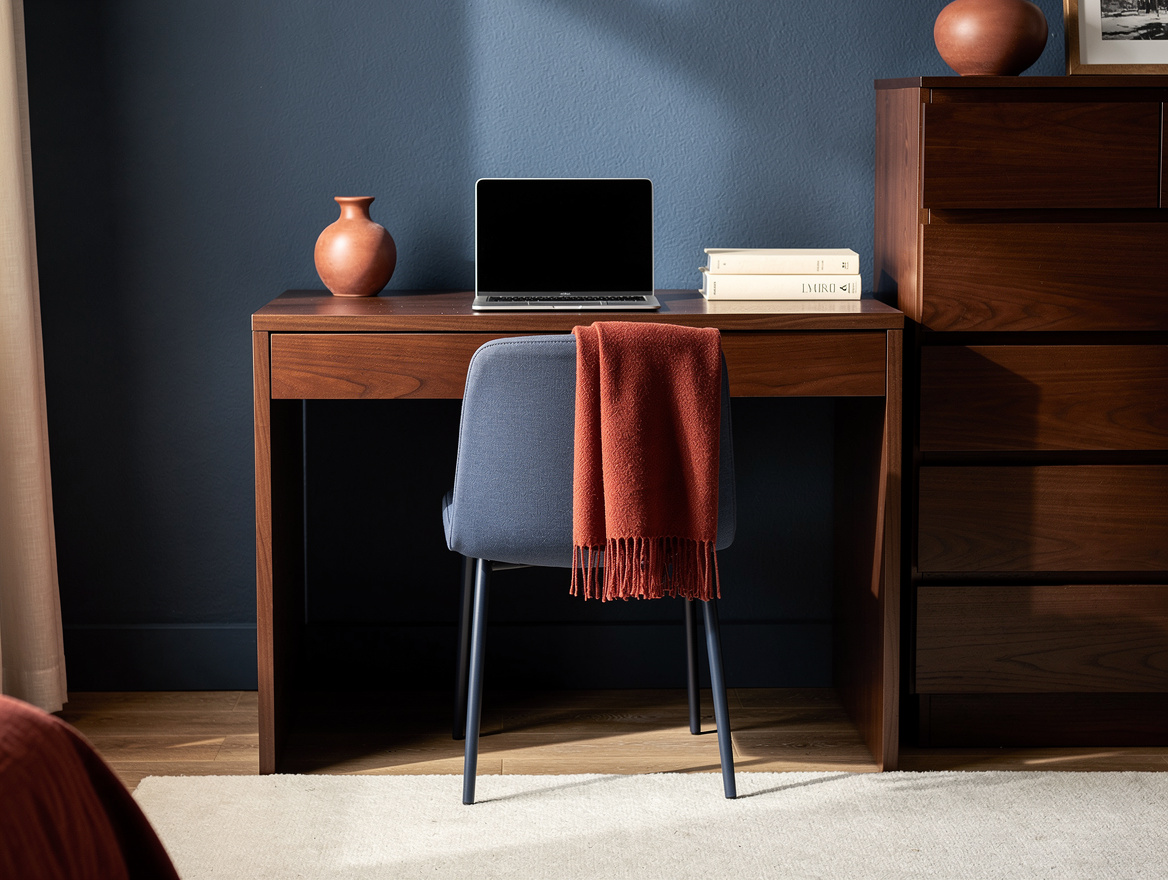
Use a shallow walnut dresser no deeper than about 16 to 18 inches, and keep roughly 24 inches between it and the bed as a strict minimum. Around 30 to 36 inches is the target that lets you open drawers without climbing onto the bed.
Put the desk on a side wall or beneath a window, where its shallow depth reads lighter. The desk should not face the dresser across a narrow aisle, since both zones need standing room.
If the tape outline leaves less than the minimum clearance, abandon this arrangement. A tall chest beside the desk is more useful than a pretty dresser that makes dressing annoying.
Use Wall Space When the Chair Is the Problem
When floor space is tightest near the bed, a wall-mounted desk can solve the chair-path problem. A shelf-style surface around 30 to 40 inches wide gives a laptop a home while keeping the floor visually open.
Choose a sturdy solid wood wall shelf and mount it into studs with hardware rated for the expected load. This is one place where flimsy brackets are a bad bargain.
Place a narrow drawer tower or tall chest nearby instead of under the desk. The open floor under the work surface makes a small room feel calmer, and a lightweight stool can tuck away after use.
Hide cables in a paintable cord cover, then add one small wall lamp or plug-in sconce. A desk with visible cords and a crowded tabletop looks temporary, even when the furniture is good.
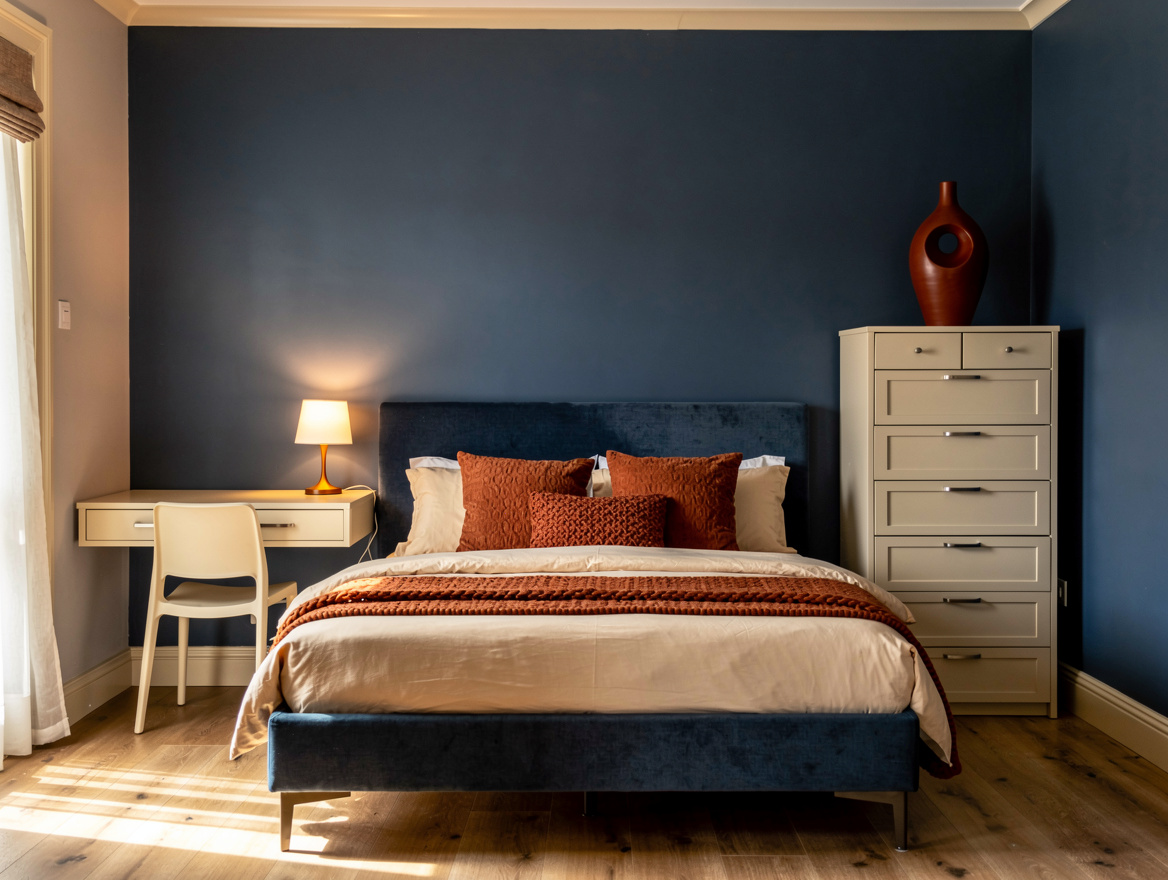
Begin with painter’s tape and protect the route from your bed to the door first. Once that path measures around 24 inches or more, choose the narrowest dresser solution that still holds the clothes you actually wear.
Mia Carter writes about small-space living and budget home makeovers. She has restyled three rentals and tests most ideas in her own 45 sqm flat.