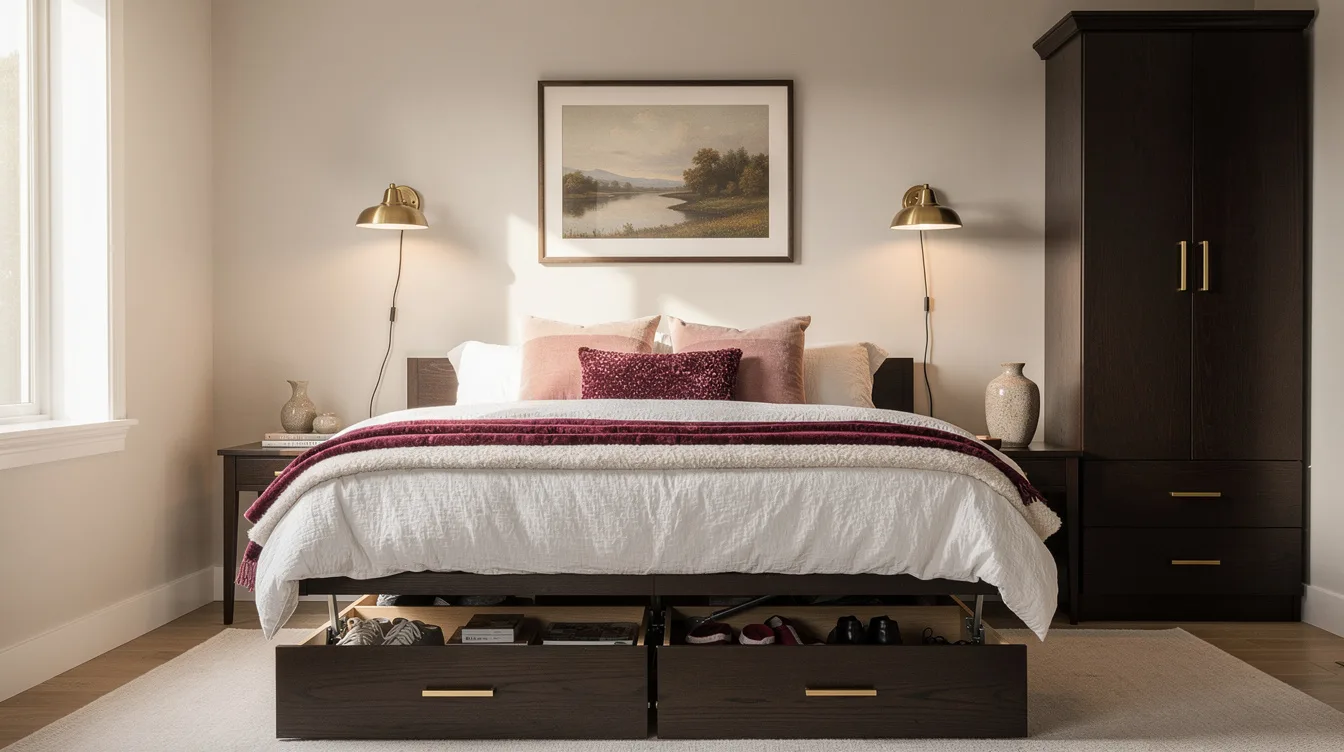
No closet changes the job description of a bed frame. In a bedroom built around a typical 60-inch-wide queen mattress, the wrong frame can consume the last usable wall while leaving sweaters, luggage, and laundry without a home.
The smartest choices replace a dresser, create vertical storage, or give the room its floor back during the day. For a dark wood, brass-friendly look, I’d start with a lift bed and keep the rest of the storage lean.
Lift the Mattress for Hidden Bulk Storage
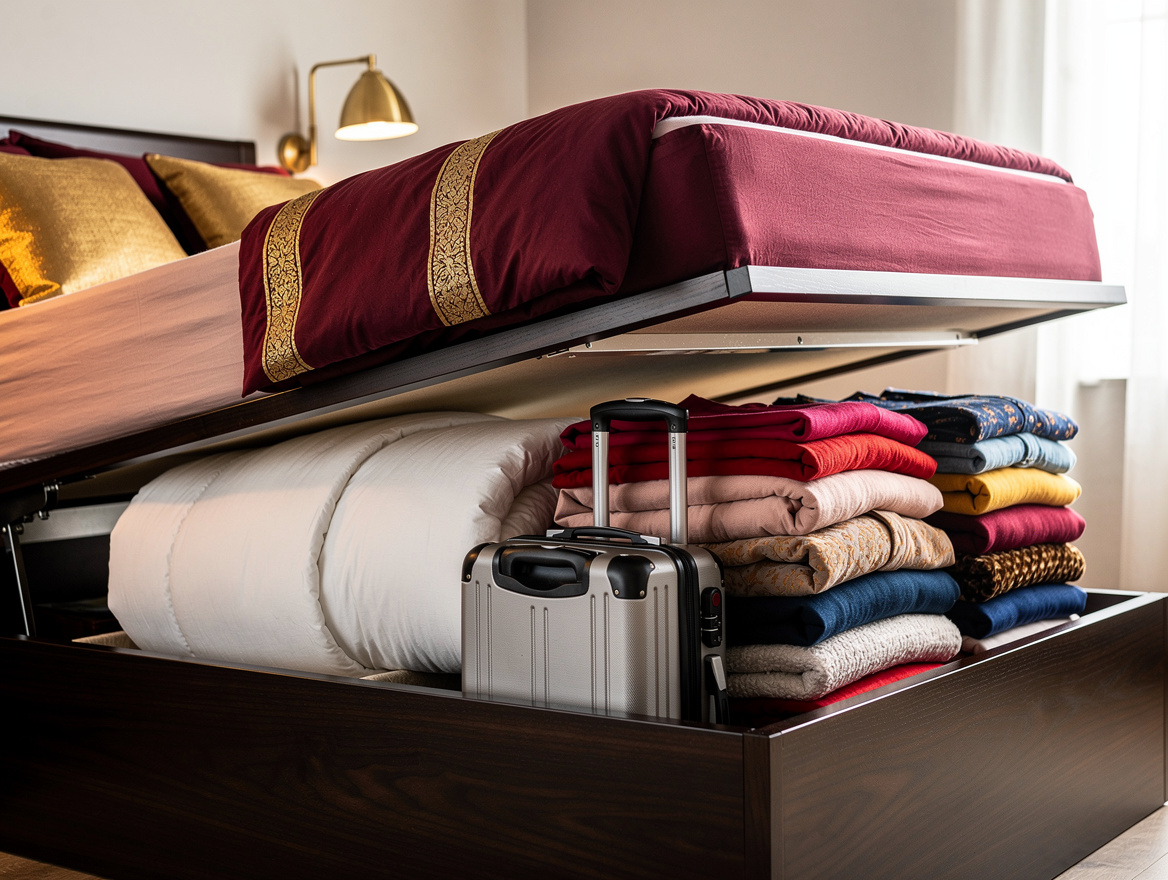
A hydraulic lift bed is my first choice for a daily bedroom with no closet. The whole mattress platform rises to reveal one dust-protected compartment, which holds suitcases, winter coats, spare pillows, and bulky bedding far better than a shallow dresser drawer.
Typical 2026 pricing runs about $500 to $1,800, depending on the mechanism and finish. An Allewie hydraulic-lift bed is commonly around $539 in a queen-size format, making this style a sensible middle ground for renters and first apartments.
Choose dark oak veneer, walnut-toned wood, or tobacco performance fabric for a grounded look that works with brass. Skip an oversized footboard in a tight room, because the clear walking path matters every morning.
Use Side Drawers Only Where They Can Open
A drawer storage platform earns its keep when you have roughly 20 to 30 inches of open space beside the bed. It puts folded T-shirts, jeans, pajamas, and socks within easy reach, so a separate dresser can shrink or disappear.
Typical pricing is about $400 to $2,500 or more. A low walnut storage platform looks calmer than a bed surrounded by visible bins, especially paired with simple white bedding and one brass reading lamp.
Measure drawer clearance before ordering. A bed against a wall can turn those handsome drawers into expensive dead weight.
Build Up With a Captain’s Headboard
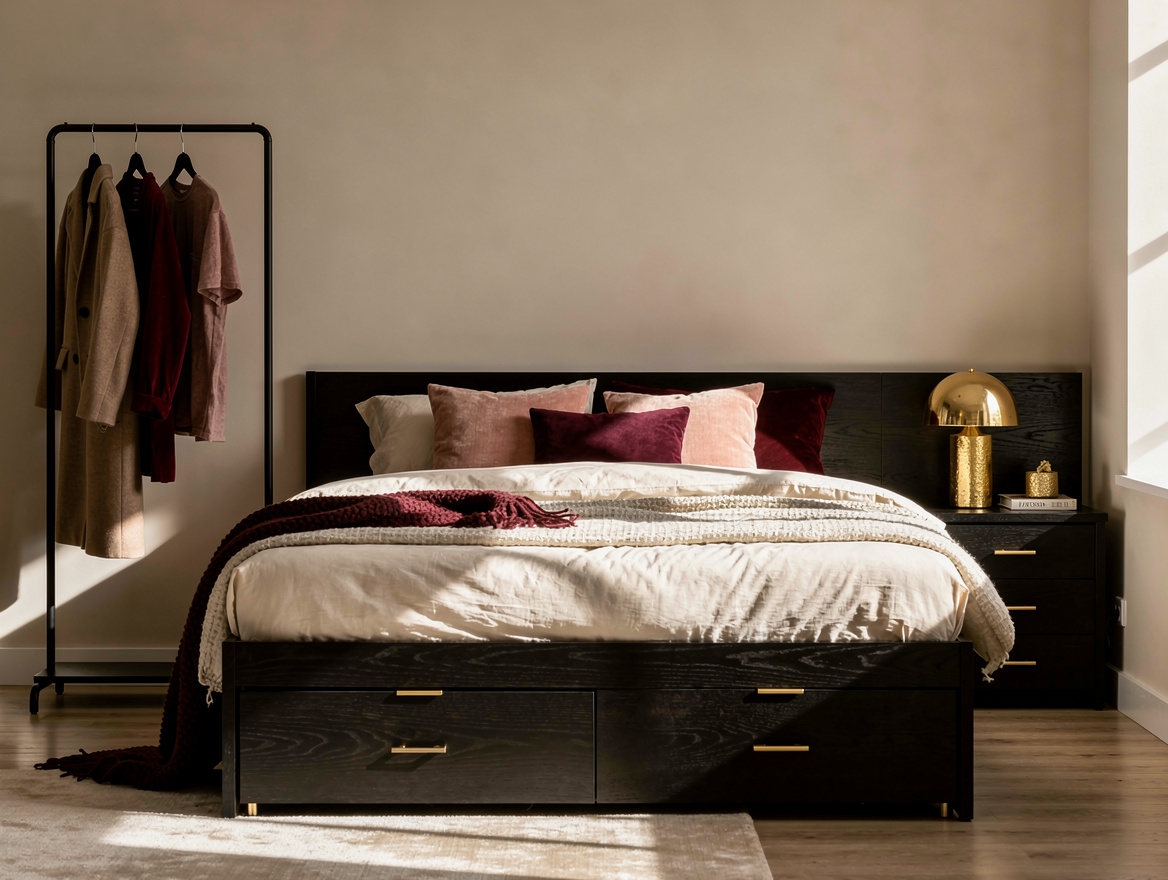
A captain’s bed combines base drawers with shelves or cubbies in the headboard, making it especially useful in a compact room that needs a conventional bedroom feel. It can hold folded clothing below and books, chargers, or a small basket above.
Expect a typical 2026 range of about $500 to $2,000 or more. I like a dark-brown engineered-wood version from Wayfair or Walmart when the room needs furniture with some visual weight.
Keep the headboard shelves edited. A small lamp, a framed photo, and a lidded box are enough, because packed cubbies make this already substantial frame feel heavier.
Turn One Wall Into a Murphy Bed System
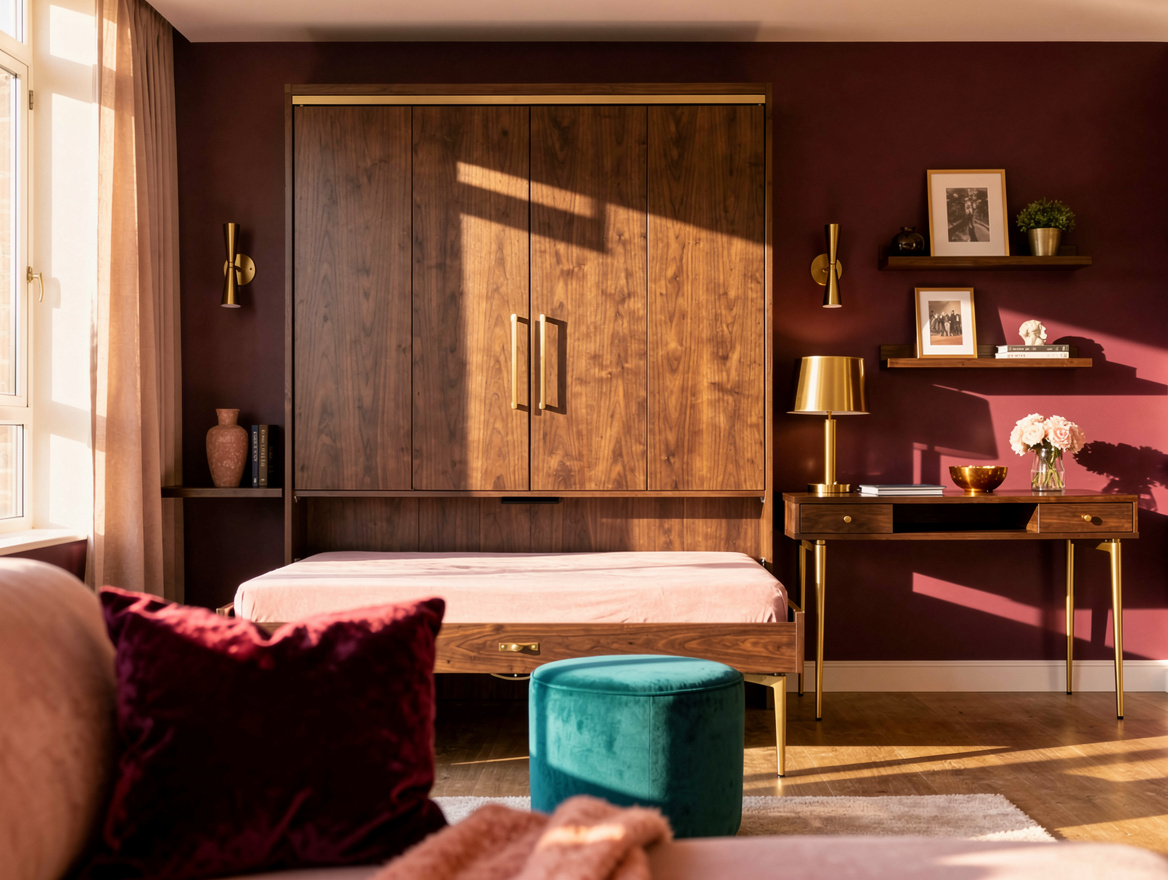
A Murphy wall bed with side cabinetry is the strongest whole-room answer when the bedroom also works as an office or living area. During the day, the mattress folds away and the cabinets can handle hanging clothes, linens, and a vacuum.
Typical systems cost about $1,000 to $3,000 or more before any installation needs. Look for a Murphy bed cabinet system with a warm wood finish from Home Depot or Wayfair, then confirm wall structure and open-floor clearance before committing.
This is statement furniture, so let it lead. Dark wood doors, quiet hardware, and antique-brass sconces deliver more polish than adding a second bulky wardrobe.
Choose a Cabinet Murphy Bed for Flexible Rooms
A cabinet Murphy bed is a lighter version of the wall-bed idea: it looks like a substantial cabinet by day and opens for overnight guests. It’s especially good in a compact room that needs to feel useful between visits.
Typical pricing lands around $500 to $2,500. A cabinet Murphy bed from Costco or Amazon frees up floor area, though it provides less clothing storage than a full built-in wall system.
Add a narrow black metal garment rail beside it for a small capsule wardrobe. Matching hangers and a floor-length curtain will make that open storage feel intentional.
Use a Daybed When One Person Sleeps There
A daybed with drawers or a trundle works well in a narrow one-person room, particularly when it must read as a sitting area during the day. The long, sofa-like shape leaves more visual breathing room than a traditional bed centered on every wall.
Typical 2026 prices run about $399 to $1,500. A wood daybed with drawers from IKEA or Target can hold linens and off-season clothing while a slim wardrobe cabinet handles daily pieces.
Use firm back pillows and a tailored coverlet, not a pile of decorative cushions. The room should look like a bedroom with purpose, not a spare corner waiting for guests.
Start by measuring the clearance at both sides and the foot of your bed, then choose the storage style that can actually open in that footprint. A dark-oak lift frame plus one narrow wardrobe cabinet will usually look more composed than a room crowded with exposed drawers.
Mia Carter writes about small-space living and budget home makeovers. She has restyled three rentals and tests most ideas in her own 45 sqm flat.