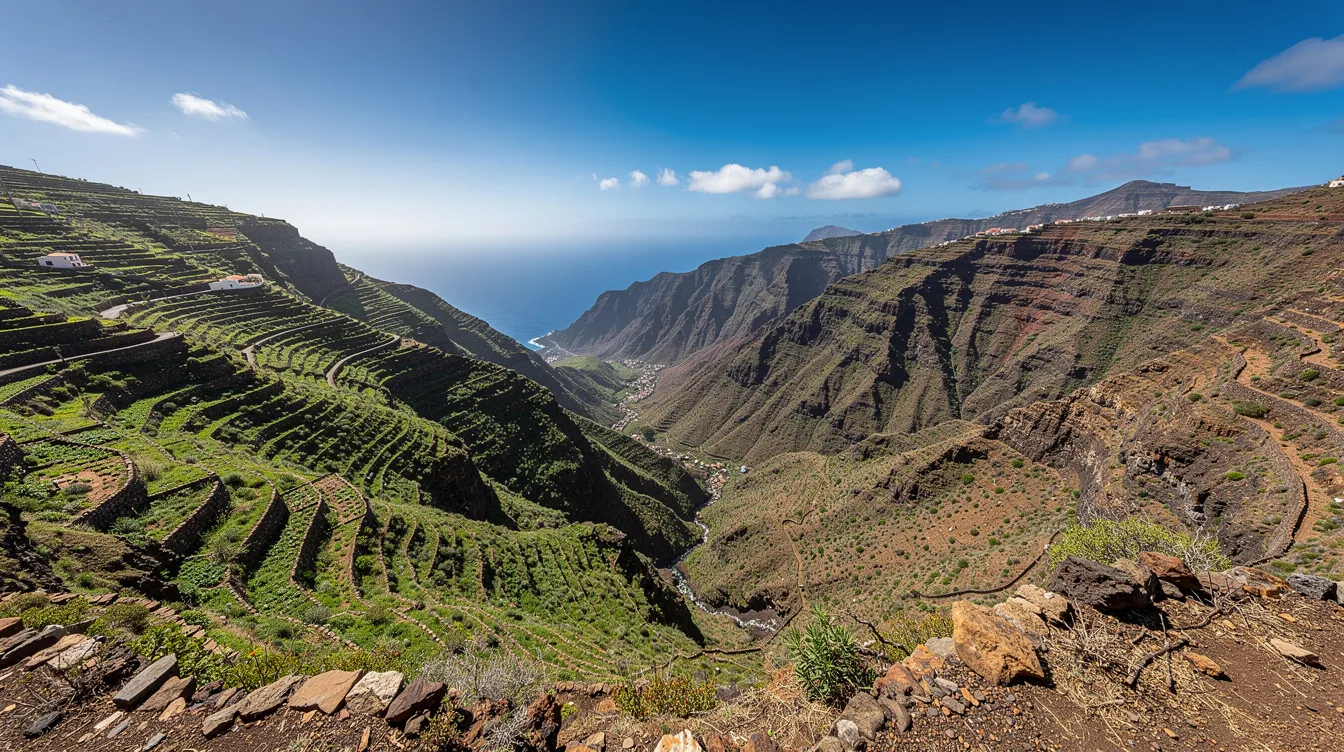
Santo Antão is about one hour by ferry from Mindelo, yet it feels farther away once Porto Novo’s dry volcanic slopes rise from the harbor. This is Cape Verde for walkers, not resort hunters. You come for the abrupt shift between green northern valleys and a much harsher south.
That contrast is the island’s real hook. The north and northeast hold deep folds of cultivated land, while the south around Porto Novo looks brown, open, and volcanic. And because elevation creates sharp microclimates, you can leave heat at the coast and find mist in the highlands.
Porto Novo is dry, and the north changes the mood
The ferry lands at Porto Novo, where the air can feel hot and dusty and the terrain looks stripped back. But don’t mistake the arrival for the whole island. Santo Antão changes quickly once you travel toward the northern valleys.
The island’s high point, Tope de Coroa, rises above a terrain made for dramatic transitions. You’ll see why this island rewards patience: a road or trail can move from exposed volcanic ground into damp slopes and thick agricultural terraces within the same day.
For a northern base, Ribeira Grande has the useful liveliness of a small town near major valleys. It’s practical without feeling built around visitors. And if you prefer a coastal rhythm, Ponta do Sol has fishing-town atmosphere and walks along the Atlantic.
Paul Valley is where the green side makes its case most forcefully. Sugarcane, palms, and steep terraces fill the valley, with grogue distilleries woven into the agricultural setting. It is scenic, but it’s also working ground, which gives the place more weight than a viewpoint stop.
The walks are excellent, but you need to start prepared
Can you hike Santo Antão independently?
Yes, especially if you prepare well, but the island doesn’t reward casual assumptions. Use offline maps, begin early, carry ample water and sun protection, and consider a local guide on isolated or poorly marked routes. Trail access and road conditions can change after rain.
The classic Ponta do Sol to Fontainhas to Cruzinha route follows steep slopes above the Atlantic. The views are the point, but the exposure is real. You’ll pass mountain villages set into sharp terrain, and the sea stays beside you like a second horizon.
Cova to Paul Valley gives you a different version of the island. It descends from a volcanic crater into one of Santo Antão’s lushest agricultural areas, so the visual change is immediate. But downhill walking still demands steady footing, especially when cloud settles over higher ground.
Ribeira da Torre suits walkers who want cultivated terraces beneath sharply rising mountains. The Xôxô and Ribeira Grande area offers quieter interior routes through ravines and rural hamlets. I’d choose these walks over trying to rush every famous spot into one day.
Alto Mira proves this isn’t one green island
Head toward Alto Mira and the greener north starts to feel like another country. The scenery becomes remote, arid, and volcanic, with a spare, lunar quality. And that difference is why Santo Antão works so well for travelers who get restless with one-note destinations.
For an even quieter edge, Tarrafal de Monte Trigo has a black-sand beach and a more remote coastal feel. It’s not the place to expect beach-resort convenience. You go because the coast feels pared down, with dark sand underfoot and fewer distractions.
There is no operating commercial airport on Santo Antão, so the ferry connection shapes the trip. You fly to São Vicente, stay or pass through Mindelo, then cross to Porto Novo. Several crossings generally run daily, but weather and season can affect schedules.
Pick your season according to what you want to see
The cooler, drier months are the more comfortable choice for hiking. You’ll get a better chance to walk exposed routes without the extra weight of humidity. But dry conditions also make the southern side feel even more severe, which some travelers will love and others won’t.
Late summer into autumn can turn the north visibly greener. The trade-off is cloud, humidity, and occasional travel disruption. If your priority is the strongest contrast between valleys and volcanic dryness, that seasonal gamble may be worth making.
Mindelo to Porto Novo is only a ferry crossing, but Santo Antão asks you to slow down after it. By late afternoon, when cloud catches on a high ridge and the coast below stays hot and dry, the island’s split personality is impossible to miss.