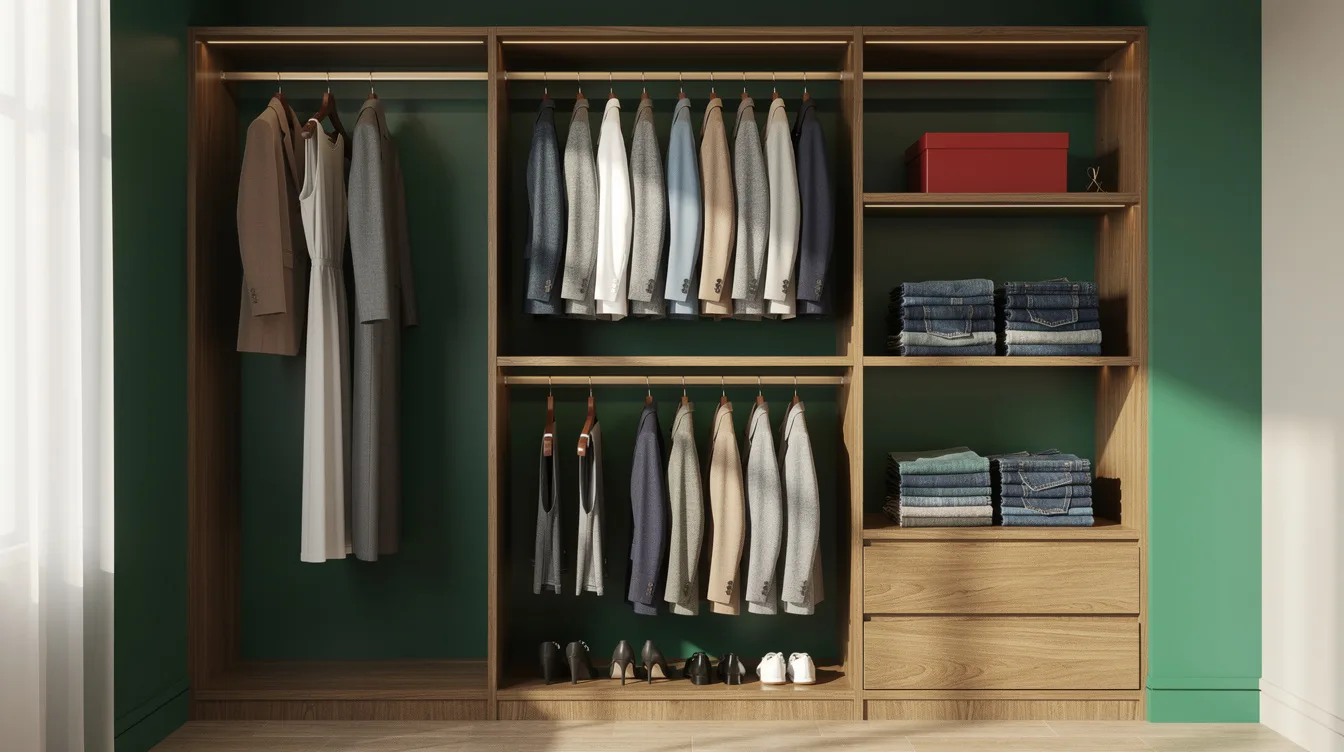
My reach-in closet looked neat only when the doors were closed. In a roughly 6-foot-wide closet, I had folded denim beside scarves, coats swallowing shirt space, and shoes hiding under a 54-inch dress.
I fixed it by sorting clothing by how it needs to live, not by color. The turning point was treating the closet as four zones: hanging, folded storage, shoes and accessories, plus a high seasonal shelf.
Measure the Usable Interior First
I started with the space that actually holds clothing, not the trim around it. My closet is a typical 24-inch-deep reach-in, which gives roughly 17-to-19-inch hangers enough breathing room without scraping the doors.
I measured wall to wall, floor to ceiling, and to the inside face of the door track. That last number matters: sliding doors reveal only part of the closet, so my everyday shirts now live in the center-accessible area.
A 22-inch-deep closet needs slimmer hangers and careful door testing before you buy a system. Most reach-ins run roughly 3 to 8 feet wide and about 84 to 96 inches high, but your real opening decides the layout.
Give Short Clothes the Largest Hanging Zone
Color used to run my closet, and it looked orderly while wasting space. I now organize by clothing category, starting with a double-hang zone for shirts, polos, blouses, jackets, trousers, skirts, and short dresses.
I set the lower rod around 40 to 42 inches from the floor and the upper rod roughly 80 to 84 inches high. That arrangement works especially well in a casual wardrobe, where short garments make up most of the hanging inventory.
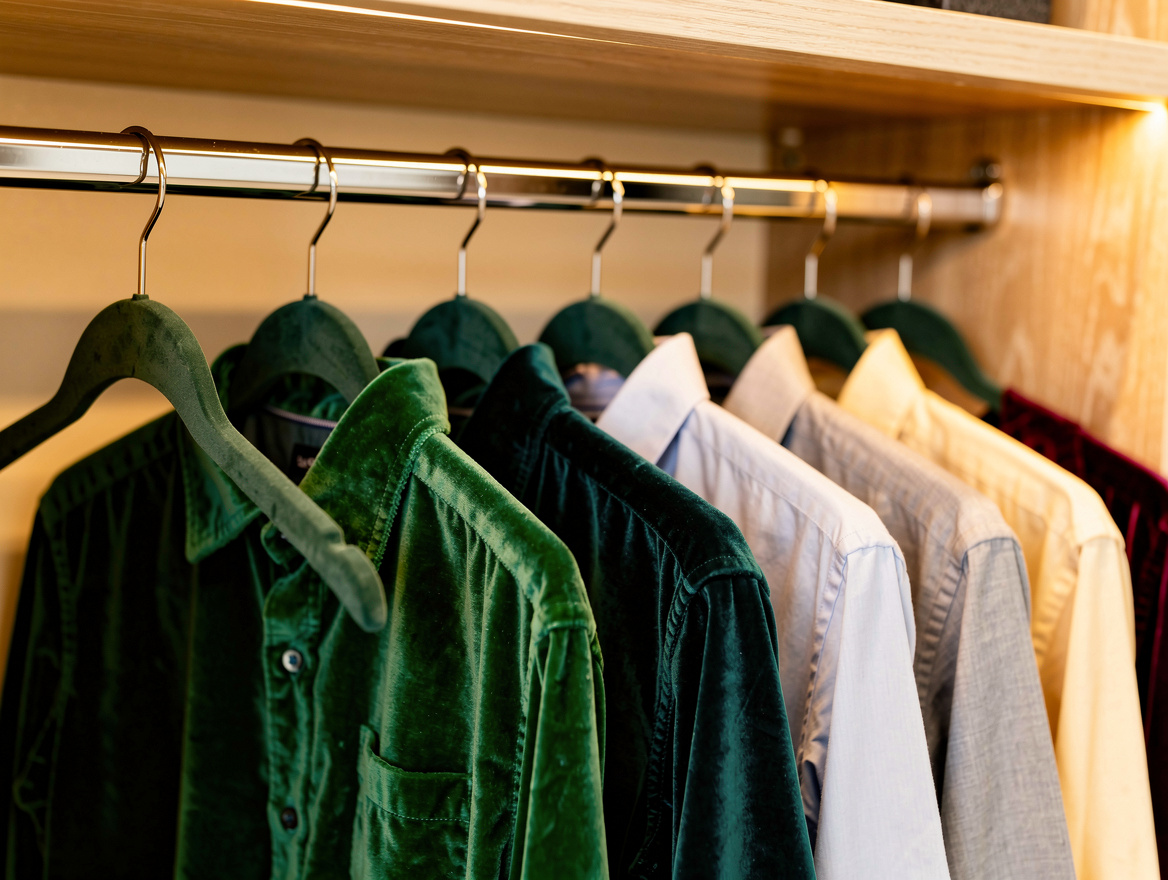
My Amazon Basics velvet hangers helped because their slim shape stopped a crowded rod from feeling permanently jammed. I keep tops together by sleeve length, then group pants beside them, which makes getting dressed much faster than chasing a color family.
Roughly 70 to 80% of rod space can usually go to short-hang clothing. That ratio is practical, not precious, and it changes if your wardrobe leans heavily toward folded tees and denim.
Protect One Narrow Bay for Long Pieces
I made one hard choice: long dresses and coats no longer get permission to take over the whole closet. A dedicated long-hang bay about 18 to 24 inches wide keeps those pieces smooth while preserving double-hang capacity everywhere else.
I placed its rod around 66 to 72 inches high and added a white melamine shelf above it. Coats, suits, long dresses, and special-occasion clothing belong here, with no random button-downs sneaking into the gap.
This is where many reach-ins lose their logic. One long skirt needs vertical room, but it does not need a 6-foot-wide kingdom.
My opinion is firm: reserve the bay even if it feels small at first. A compact long-hang section forces honest editing, and the rest of the closet becomes far more useful.
Fold Dense Categories Into Visible Rows
T-shirts, knitwear, denim, shorts, and workout gear moved off hangers in my closet. They now live on 12-inch-deep shelves and in shallow bins, where every item is visible from the front.
I fold them file-style rather than stacking them into tall towers. A charcoal tee. Light-wash jeans.
A thick sweatshirt. Pulling one out no longer starts a tiny fabric landslide.
For folded apparel, shelf gaps of roughly 10 to 12 inches keep piles manageable. I would only choose 16-inch-deep shelving for bulky bins or bedding, because extra depth quickly turns into a dark back row I forget exists.
My socks, underwear, and gym gear each have their own compartment in a shallow Target Brightroom bin. Loose piles are not a storage method, especially before an early morning workout.
Bring Shoes and Accessories Down to Reach
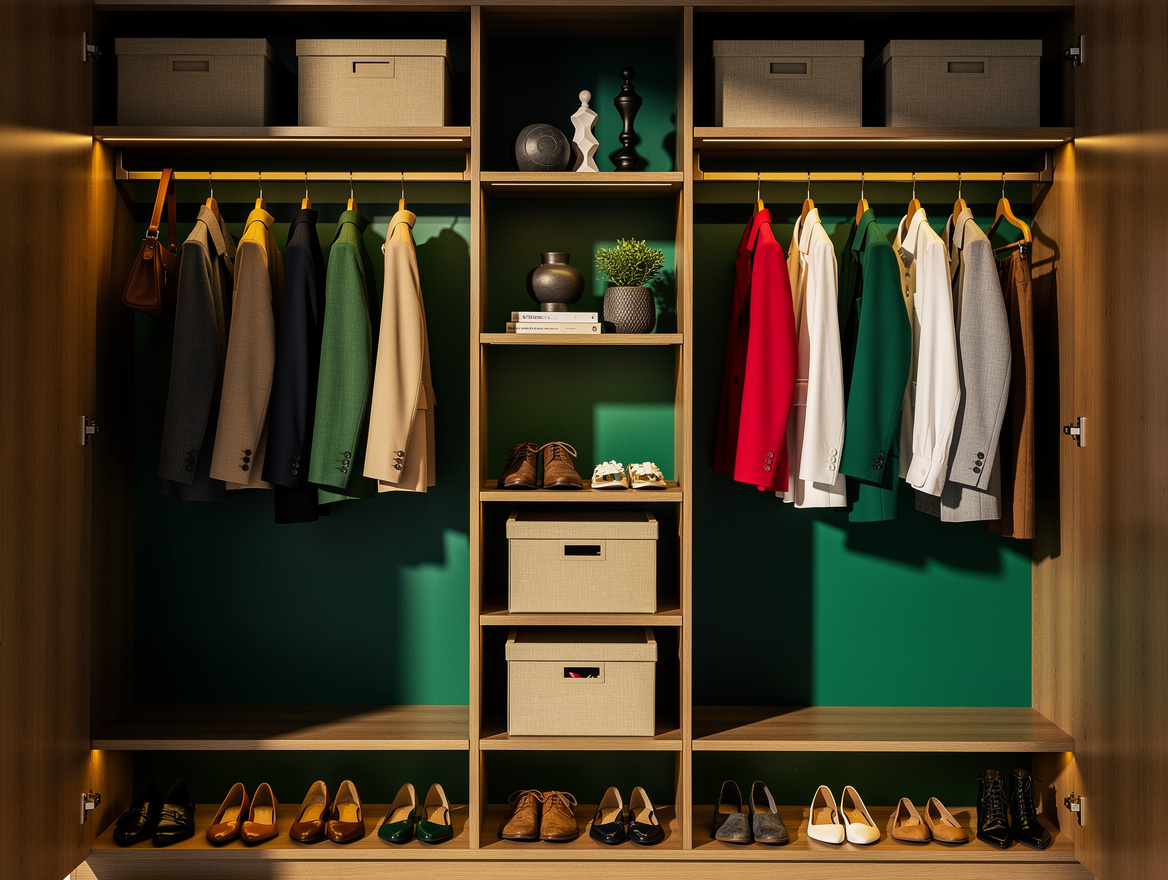
I stopped storing daily shoes on the floor in a loose line. Flats and sandals need roughly 7 to 8 inches of vertical room, while sneakers and ankle boots often need about 9 to 12 inches.
A low 12-inch-deep shoe shelf keeps my most-worn pairs between ankle and knee height. That placement sounds minor, but it makes the closet feel like a working dressing area instead of a spot where shoes disappear behind hems.
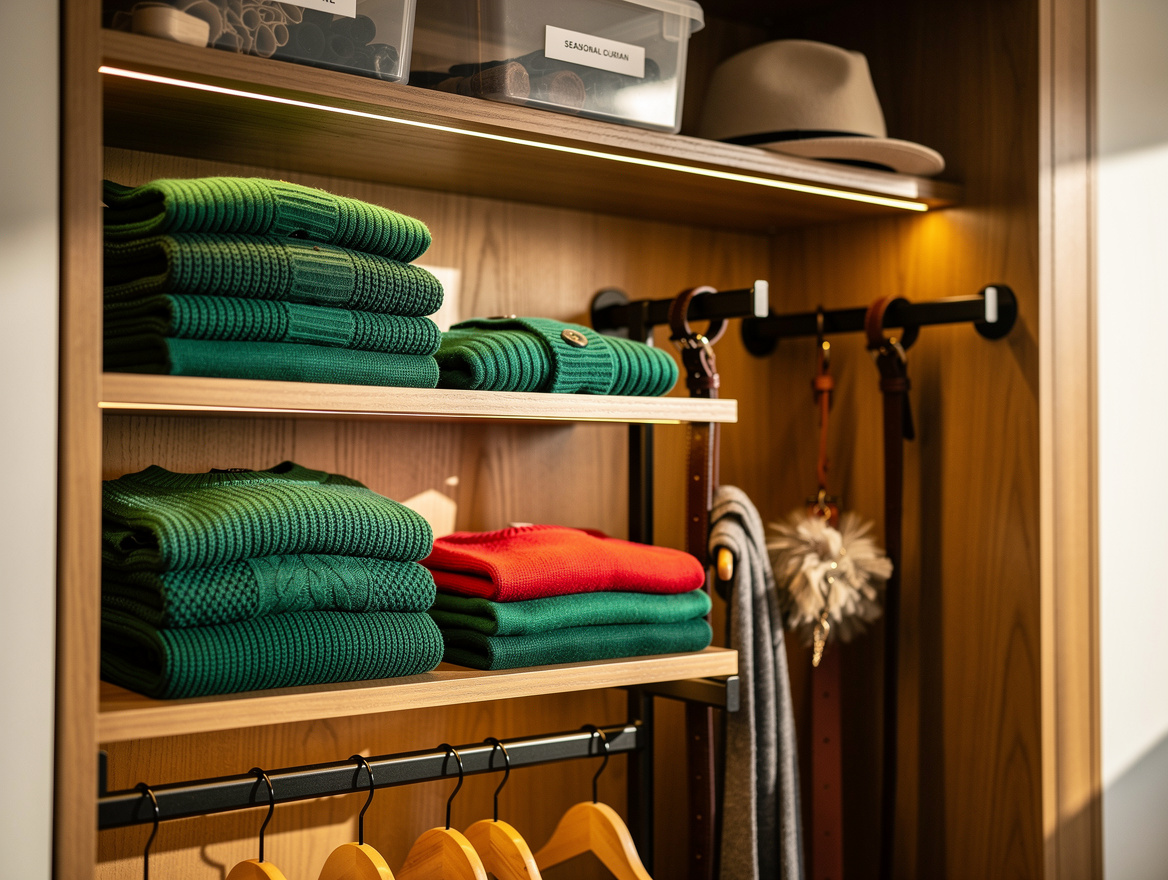
Bags, belts, scarves, and hats need a defined address too. I mounted matte black hooks around 65 to 70 inches high and used narrow bins for smaller accessories.
I skip decorative open storage for loose belts and sunglasses. Containment looks cleaner, and I can tell in seconds whether a category is full before buying another organizer.
Send Seasonal Bulk to the High Shelf
The top shelf is not a second everyday closet. I use it for luggage, spare bedding, and off-season clothing in labeled clear plastic bins, keeping the front edge neat enough that nothing drops when I reach upward.
A top shelf around 80 to 84 inches or higher is usually best for low-frequency items. I limit bin depth to roughly 12 to 16 inches so I can reach the back without dragging down every container.
My labels name a category, never a vague season: swimwear, heavy sweaters, guest linens. This is the one part of the closet where a small inventory list on my phone saves real frustration.
I also leave a little empty shelf space. A reach-in closet needs a landing zone for laundry day, otherwise clean clothes migrate onto the bed and stay there.
Start by measuring the interior depth and marking one section for short-hang clothes before buying a single organizer. That first boundary will tell you whether you need another rod, more shelves, or simply fewer things competing for the same space.
Mia Carter writes about small-space living and budget home makeovers. She has restyled three rentals and tests most ideas in her own 45 sqm flat.