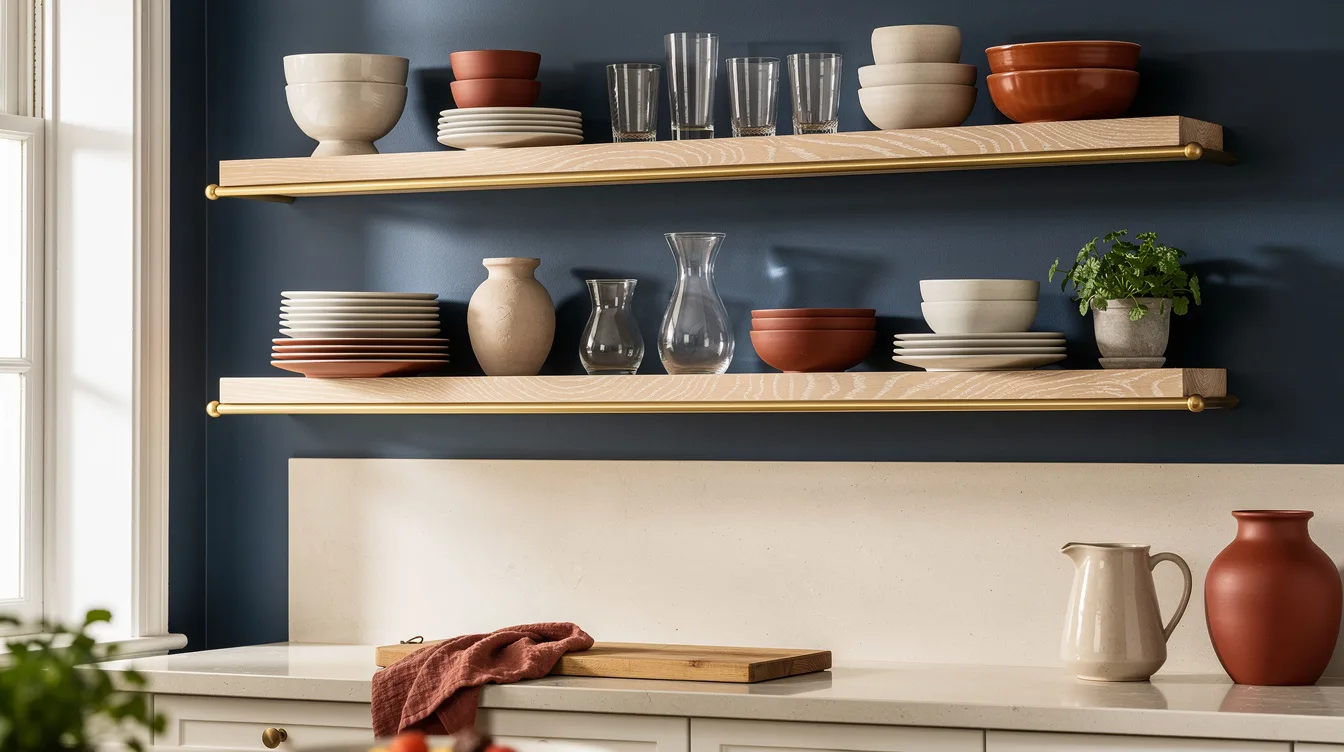
It seems simple: install wood shelves, add brass, then fill them with dishes. But a 12-inch-deep shelf crowded above a working counter can make even a generous kitchen feel tighter by breakfast.
Designers tend to use brass as a precise finishing detail, not as a flashy theme. The strongest current version is warm wood with a low rail, slim brackets, or one polished bar wall.
Choose a Shelf Depth That Holds Real Life
A shelf around 10 to 12 inches deep is the practical sweet spot for daily plates, bowls, and glasses. Anything shallower than about 8 inches turns a useful wall into a display ledge.
Use white oak or walnut at roughly 1.5 to 2 inches thick for a shelf that looks intentional beside cabinetry. Thin painted boards paired with brass usually read as a rushed add-on.
Add a Brass Gallery Rail With a Purpose
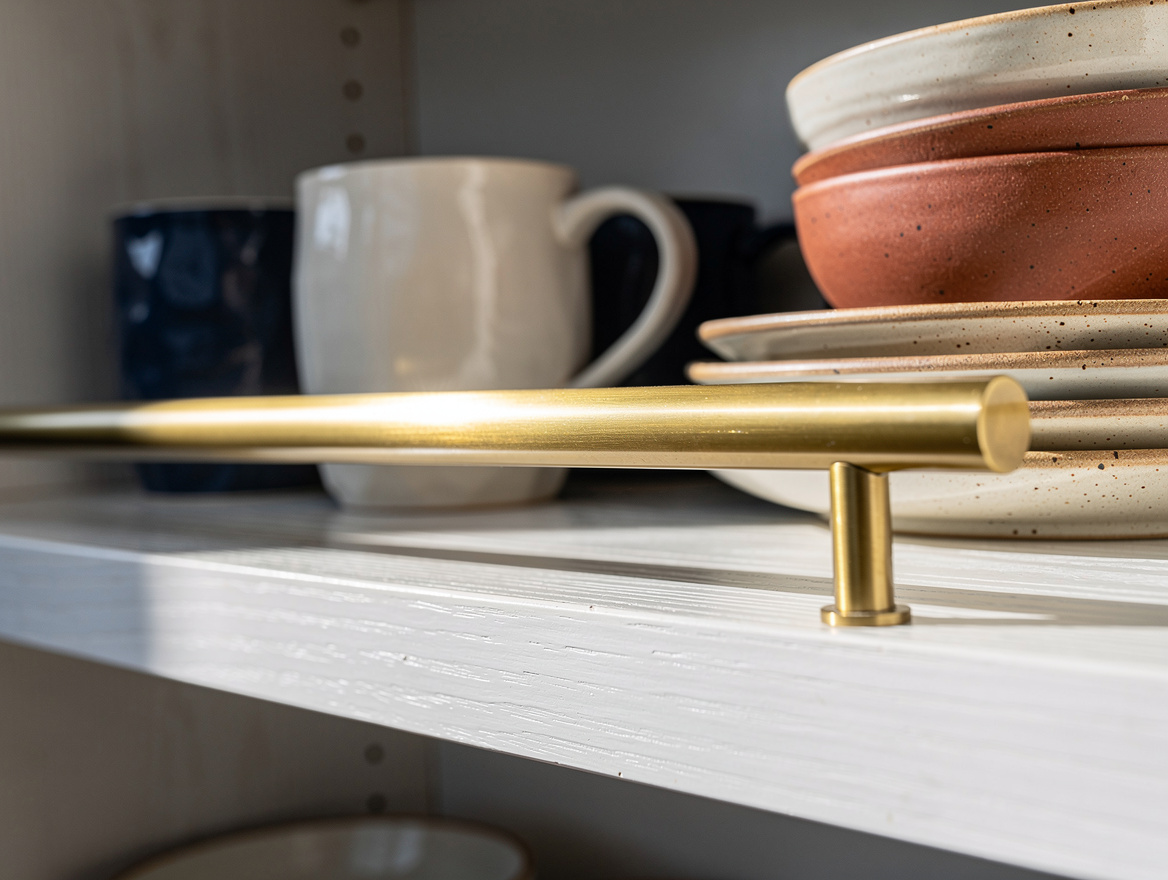
A low brass gallery rail gives open shelving its best furniture-like finish, and it helps lighter mugs and small plates stay put. Keep it on the front edge, where it earns its place.
Crafen Interiors unlacquered brass rail kits start at about $100, making this the clearest upgrade for a wood shelf. Expect the brass to patina, which is part of its appeal rather than a flaw.
Match the Brass Finish to the Kitchen Hardware
Mixing polished brass pulls, matte gold faucets, and yellow-toned shelf brackets makes the wall look accidental. Pick one family, such as satin brass or aged brass, then repeat it across the visible metal.
A small coffee zone can carry more shine than a full run of shelves. One rail, a brass spoon rest, and a warm-toned faucet detail are often enough.
Use Visible Brackets When the Span Demands Them
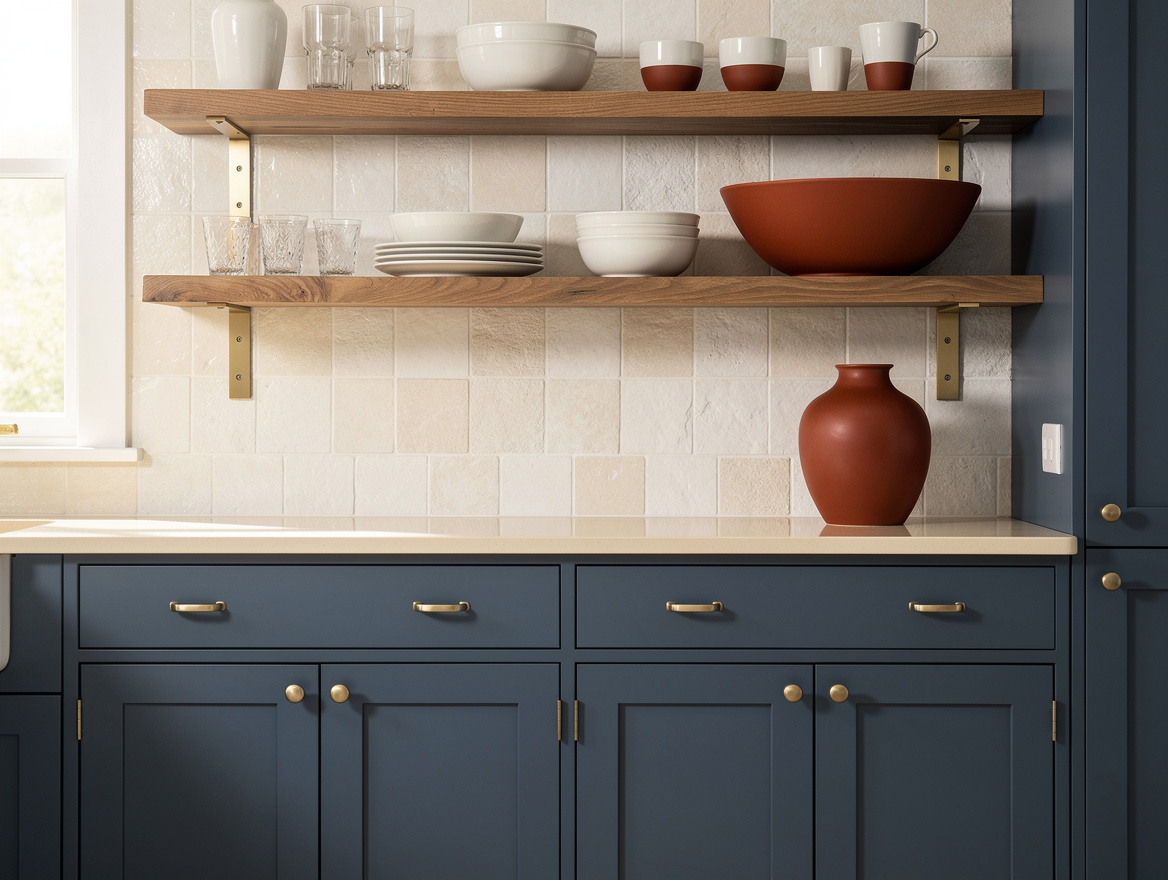
Shelves roughly 24 to 48 inches long are the easiest range to keep stable and useful. Once a shelf runs beyond about 48 inches, add real support instead of hoping a concealed floating system will carry stacks of stoneware.
Rejuvenation Brass Strap Shelf Brackets with the shelf included list around $408 to $512. They suit an architectural kitchen wall, especially when the bracket is treated as a deliberate line in the composition.
Reserve Glass-and-Brass Shelving for a Lighter Load
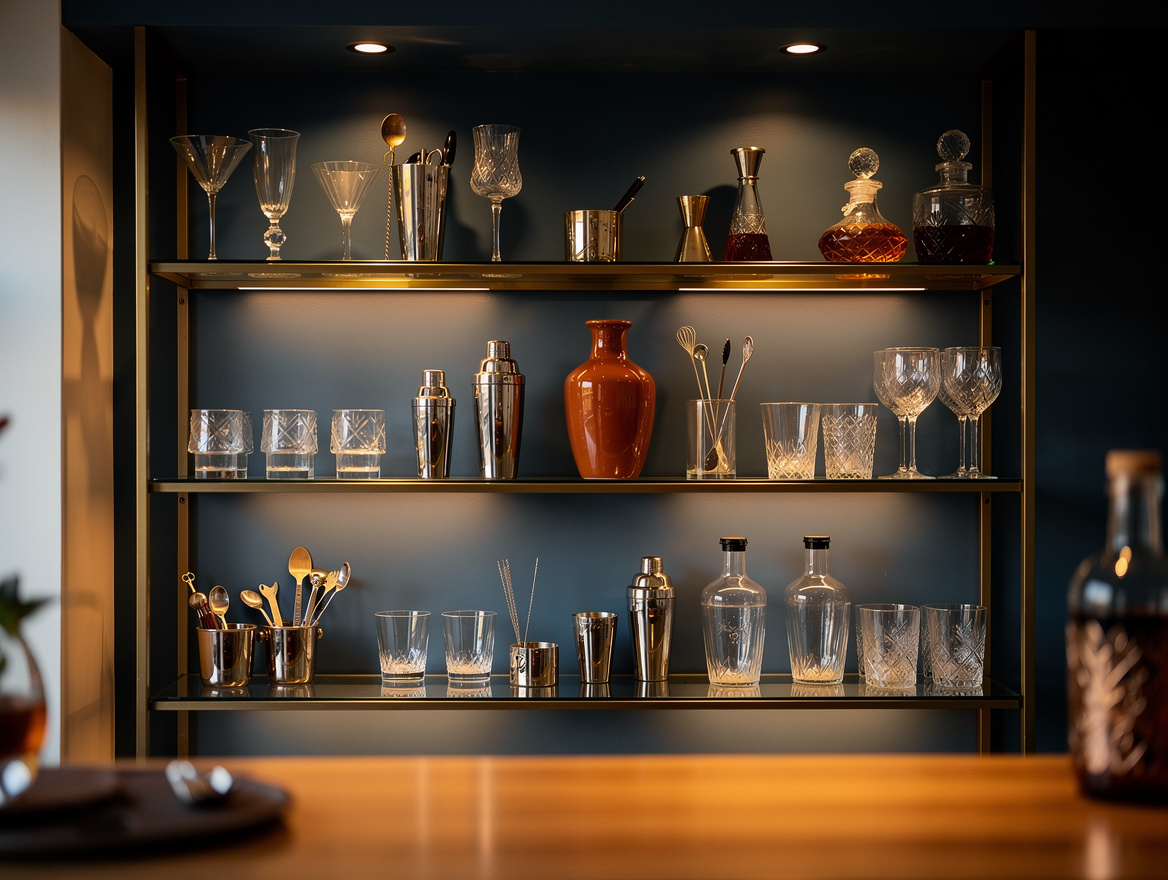
Tempered glass in a brass frame has real bistro charm, but it needs disciplined styling. Use it for glassware, cocktail tools, tea tins, and a few ceramics, not dense everyday dinnerware.
Amuneal Collector’s Series brass-and-glass shelving starts at about $3,090 before installation, freight, and tax. That price buys a statement architectural piece, not a budget workaround.
Keep the Display Edited and the Counter Working
Open shelves expose every duplicate mug and mismatched plastic container. Give each shelf a job: everyday bowls, drinkware, pantry jars, or a compact espresso station.
Leave some air around a stoneware stack and keep the counter beneath it mostly clear. Brass looks richer when it frames useful objects instead of visual clutter.
Start with the shelf nearest your coffee maker: fit a warm wood board around 10 to 12 inches deep, then add one restrained brass rail. Get that small zone right before extending the look across the kitchen.
Mia Carter writes about small-space living and budget home makeovers. She has restyled three rentals and tests most ideas in her own 45 sqm flat.