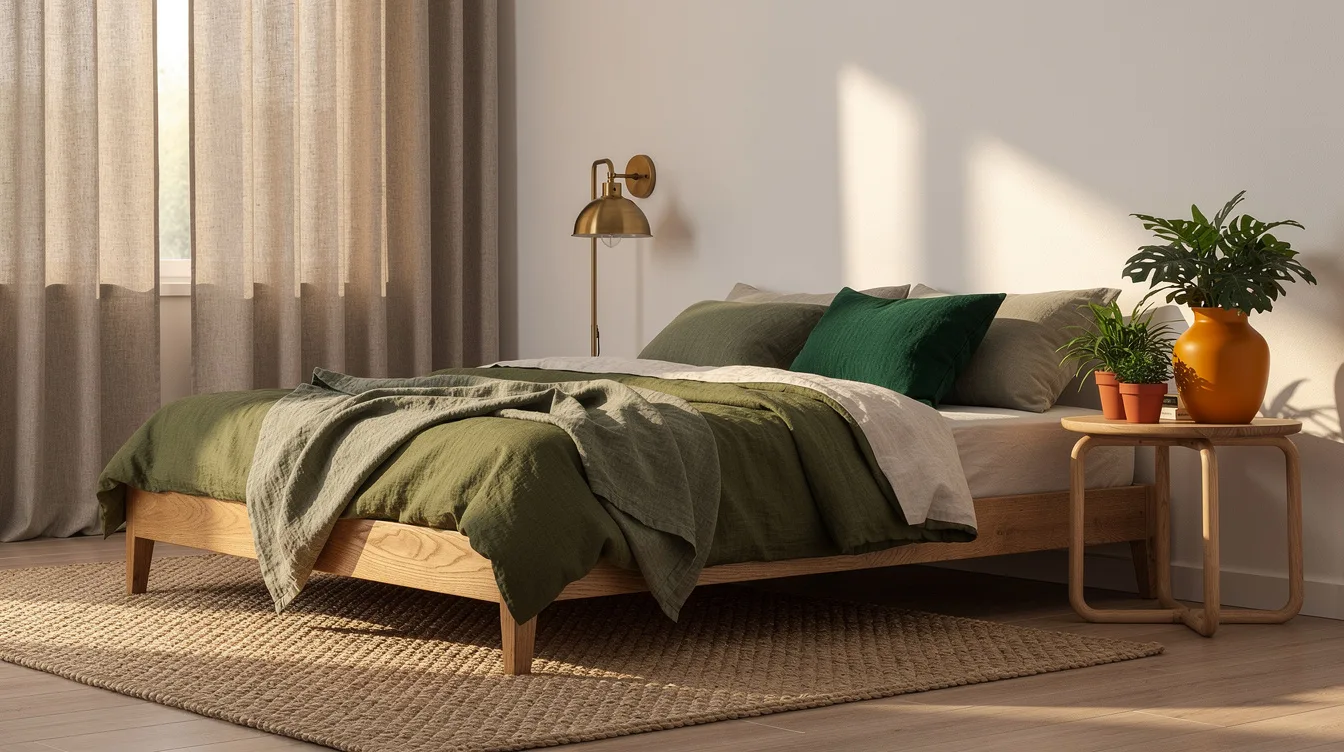
An olive duvet can turn oddly severe when every surrounding surface is cool gray. On a roughly 63-by-79-inch bed, I’d let washed linen carry the color and keep the larger visual field warm.
This 2026 direction feels restful because it pairs olive with natural oak, oat, ecru, clay, and aged brass. The room should feel lived-in, not like a dark hotel suite.
Anchor the Bed With Washed Olive Linen
Choose a washed olive linen duvet cover as the room’s main color commitment, then stop there. Linen around 160 to 170 gsm typically has enough body to look substantial while still gaining softness after laundering.
Use ecru or warm-ivory sheets underneath. An all-olive bed reads heavy, while a pale fitted sheet creates the relaxed contrast that makes rumpled linen look intentional.
Build a 60-30-10 Color Balance
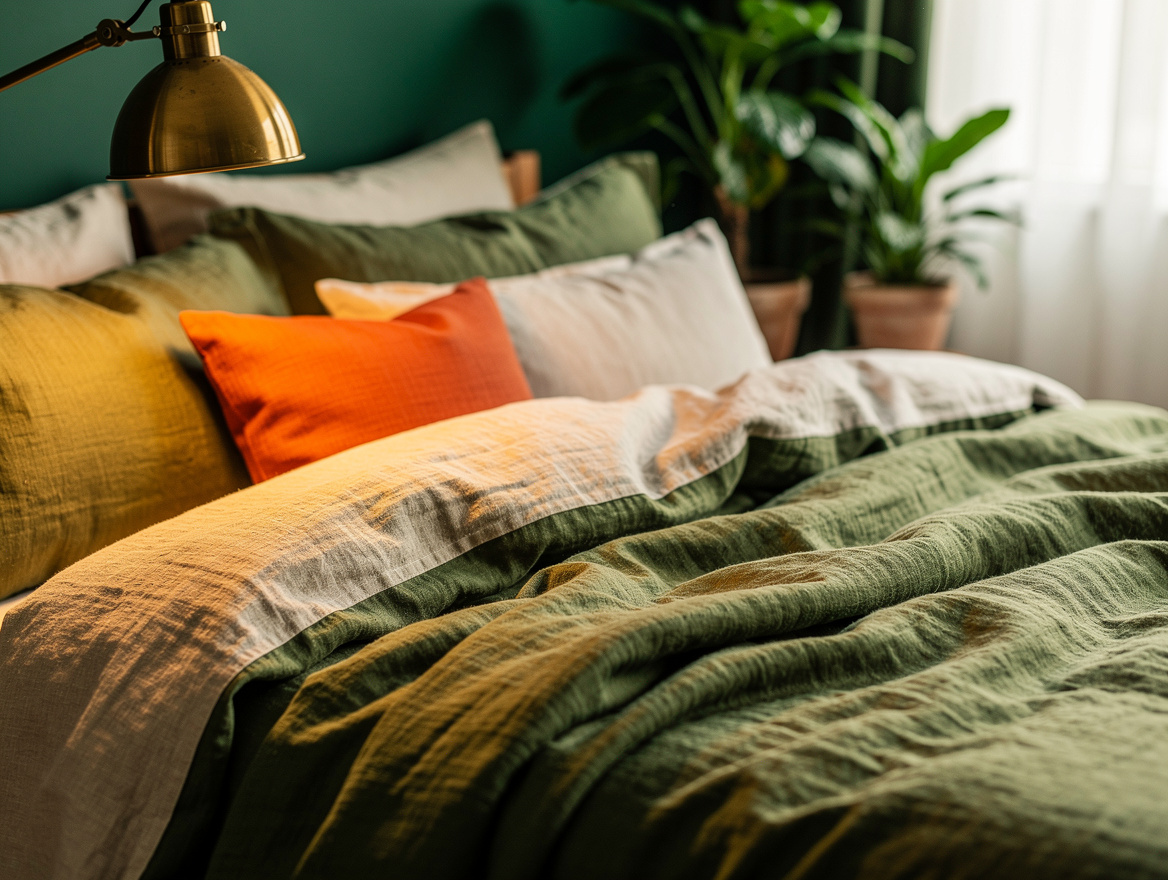
Give warm neutrals roughly 60 percent of the room, olive about 30 percent, and an accent material or color the remaining 10 percent. Warm white paint, oatmeal curtains, and a natural rug make olive feel grounded.
Reserve clay, faded rust, or tobacco for one small moment, such as a lumbar pillow or a ceramic vase. Cool gray and chrome pull the palette toward a colder, less inviting result.
Let Oak Break Up the Green
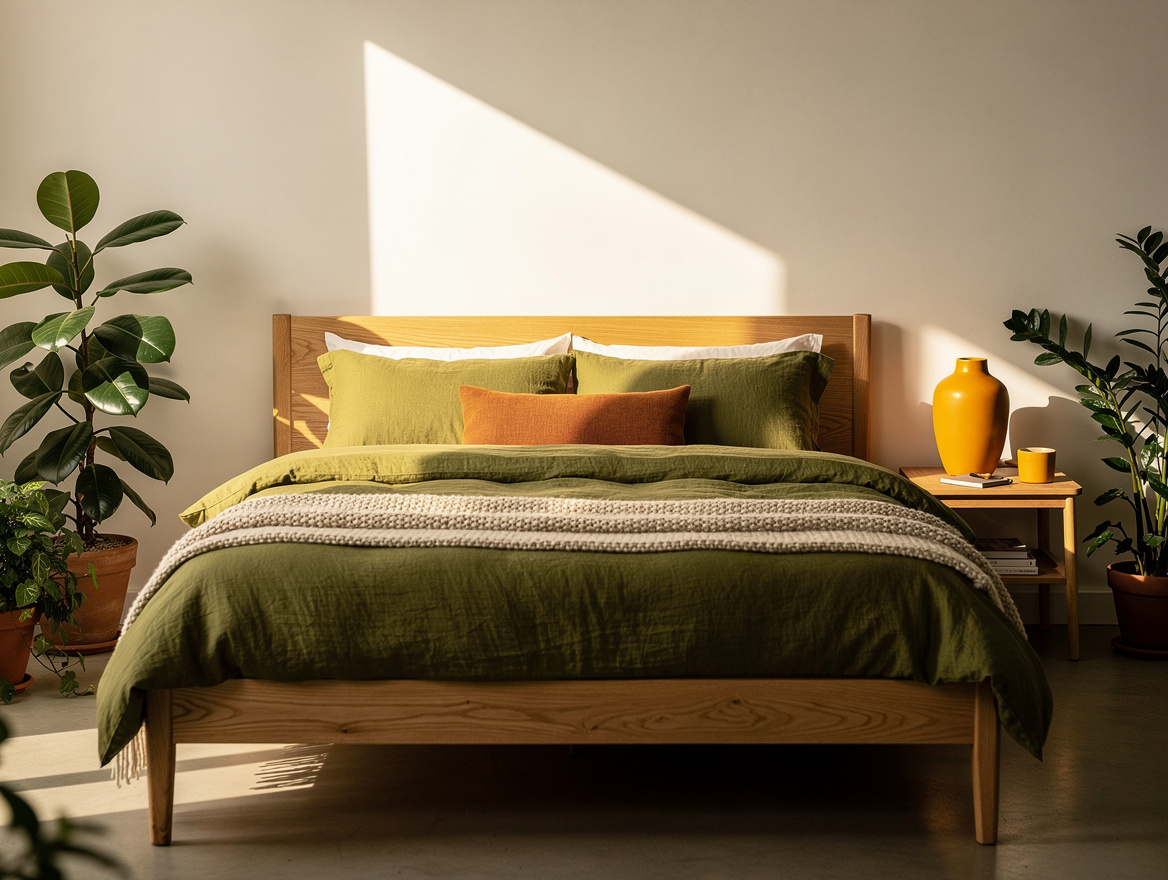
A natural oak bed frame is the safest companion for olive linen because its honeyed grain adds warmth without demanding attention. IKEA and Wayfair both offer straightforward oak-toned frames and nightstands that can establish this look without ornate detailing.
Keep the wood finish consistent enough to read as a family, but don’t chase an exact match. A pale oak bed with one slightly deeper wood nightstand has more ease than a tightly matched bedroom set.
Layer Texture Instead of More Green
Olive needs material contrast: a matte wall, rumpled linen, woven fiber, wood, and ceramic. A jute rug from Target or Walmart gives the floor a dry, natural texture that keeps the bedding from looking flat.
Add one wool bouclé or cotton waffle throw at the foot of the bed. Oatmeal is my first choice, since another saturated green layer can make the palette feel themed.
Scale the Bedding for a Generous Drop
For a roughly 63-by-79-inch mattress, a duvet cover around 94 by 87 inches gives a neat contemporary drop; a roughly 102-by-94-inch option feels fuller. Match the linen duvet insert to the cover size so corners stay crisp.
A fitted sheet should match the mattress footprint and have a pocket around 12 inches deep for a typical thicker mattress. Two square pillows plus two rectangular sleeping pillows create enough layering without burying the headboard.
Warm the Edges With Brass and Soft Curtains
Mount a curtain rod roughly 4 to 6 inches above the window, then use panels about one-and-a-half to twice the window width for believable fullness. Oat linen curtains soften daylight far better here than sharp white synthetic sheers.
Finish with an aged-brass reading light from Home Depot, Lowe’s, or Ace Hardware and a handmade-looking ceramic lamp. Brass gives olive a quiet glow; polished chrome makes the room feel abruptly colder.
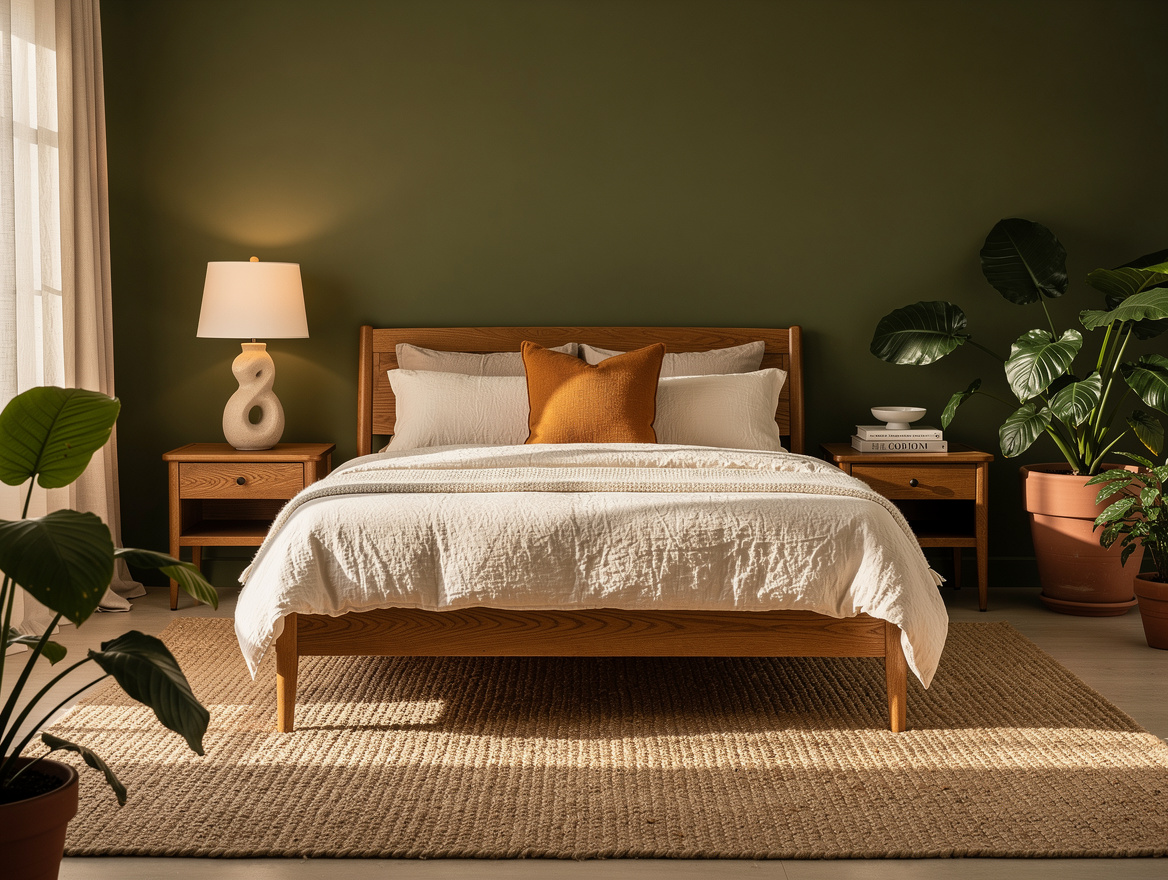
Start with the olive duvet and an ecru fitted sheet, then live with that pairing before adding accents. The right first layer makes it obvious whether the room needs oak, a rug, or simply less stuff.
Mia Carter writes about small-space living and budget home makeovers. She has restyled three rentals and tests most ideas in her own 45 sqm flat.