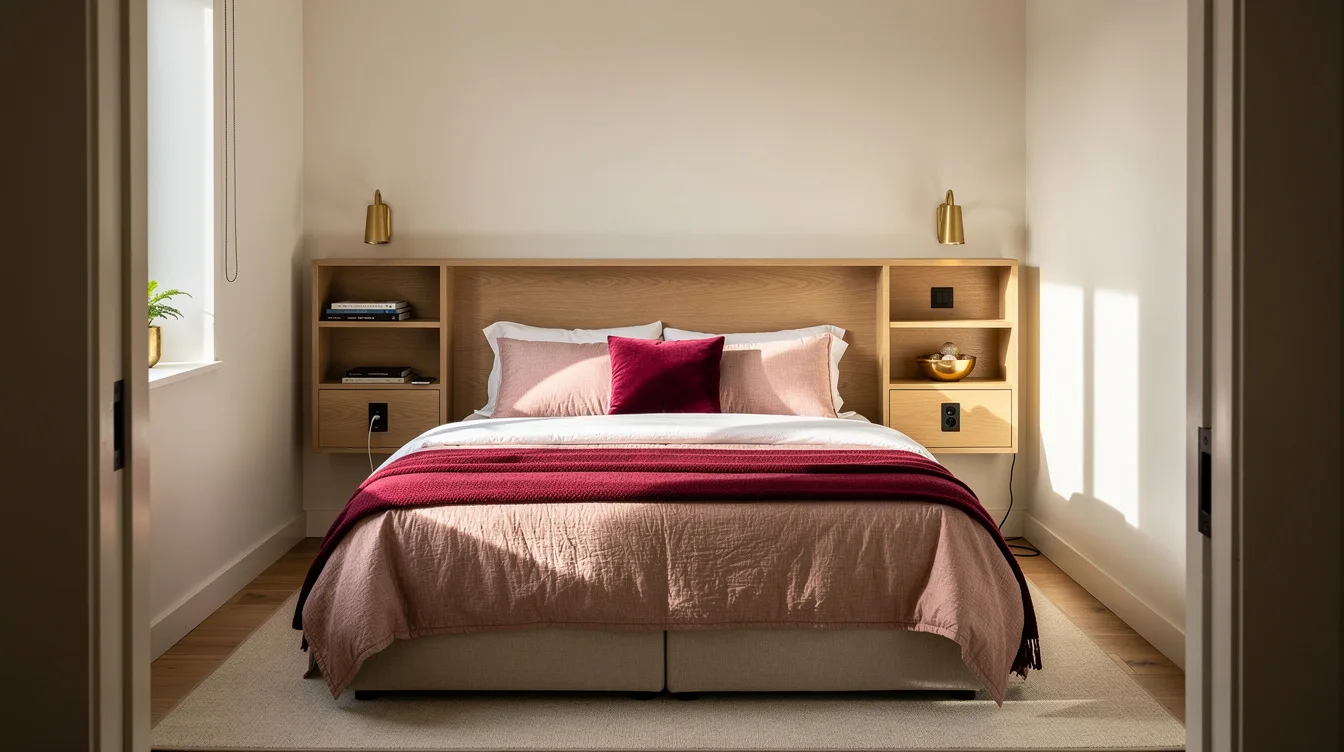
In a 9-by-10-foot bedroom, a deep storage headboard can turn getting into bed into a sideways shuffle. The smarter answer is usually wall-mounted storage no deeper than about 8 to 11 inches, with enough function to replace one or both nightstands.
Designers tend to favor shallow shelves, hidden compartments, and cable access because a bed wall should feel calm at night, even when it works hard all day.
Keep the Depth Under 11 Inches
A tiny bedroom can’t absorb a headboard that projects like a bookcase. Keep birch plywood or oak veneer shelves roughly 6 to 8 inches deep, enough for a phone, glasses, a paperback, and a charger.
At around 11 or 12 inches deep, the bed wall starts feeling furniture-heavy. A slim ledge protects the precious side-access lane beside the mattress.
Replace Nightstands With Shallow Wings
When a queen bed leaves no room for tables, extend a storage panel about 10 to 16 inches beyond each side instead. The wall-mounted IKEA MANDAL is made for this job, with six adjustable shelves spread across its broad profile.
Its roughly 94.5-by-11-inch footprint fits mattresses about 55 to 63 inches wide and typically costs around $200. Choose it when every bedside surface needs to earn its keep.
Hide the Mess You Actually Live With
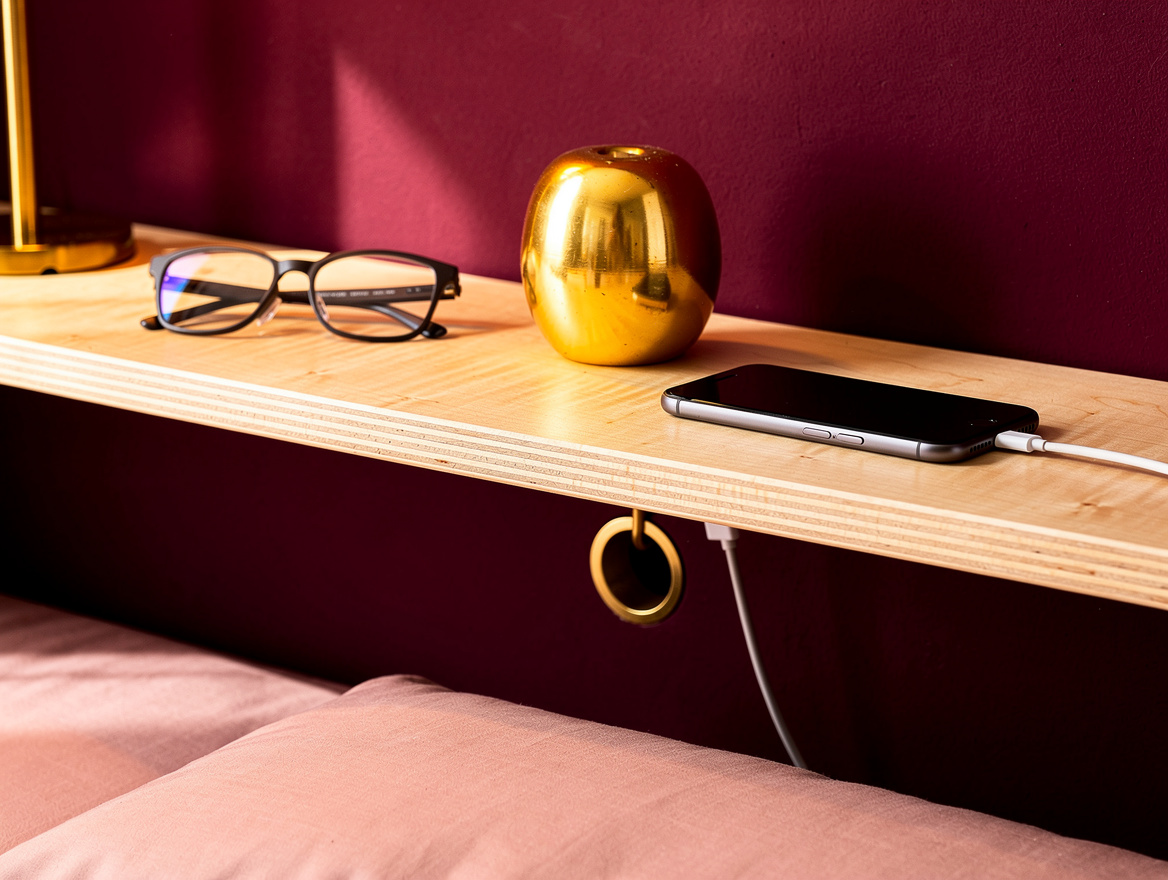
Open cubbies look tidy for one afternoon, then collect charging cords, receipts, lip balm, and half-read books. Concealed compartments give a small room a calmer read.
The IKEA BRIMNES storage headboard uses side-facing shelves to keep daily clutter out of the sightline. A full size typically runs about $100 on sale or $130 regularly, making it a practical choice over an oversized decorative frame.
Mount Storage Like It Belongs on the Wall
Free-standing storage headboards can crowd the bed zone before you’ve stored a single thing. A wall-mounted unit keeps the floor visually open and lets the mattress sit closer to the wall.
Use proper anchors for the wall type, especially with solid birch, and reserve floating shelves for light daily items. Heavy stacks of books and bulky baskets do not belong directly over where you sleep.
Build Cable Access Into the First Plan
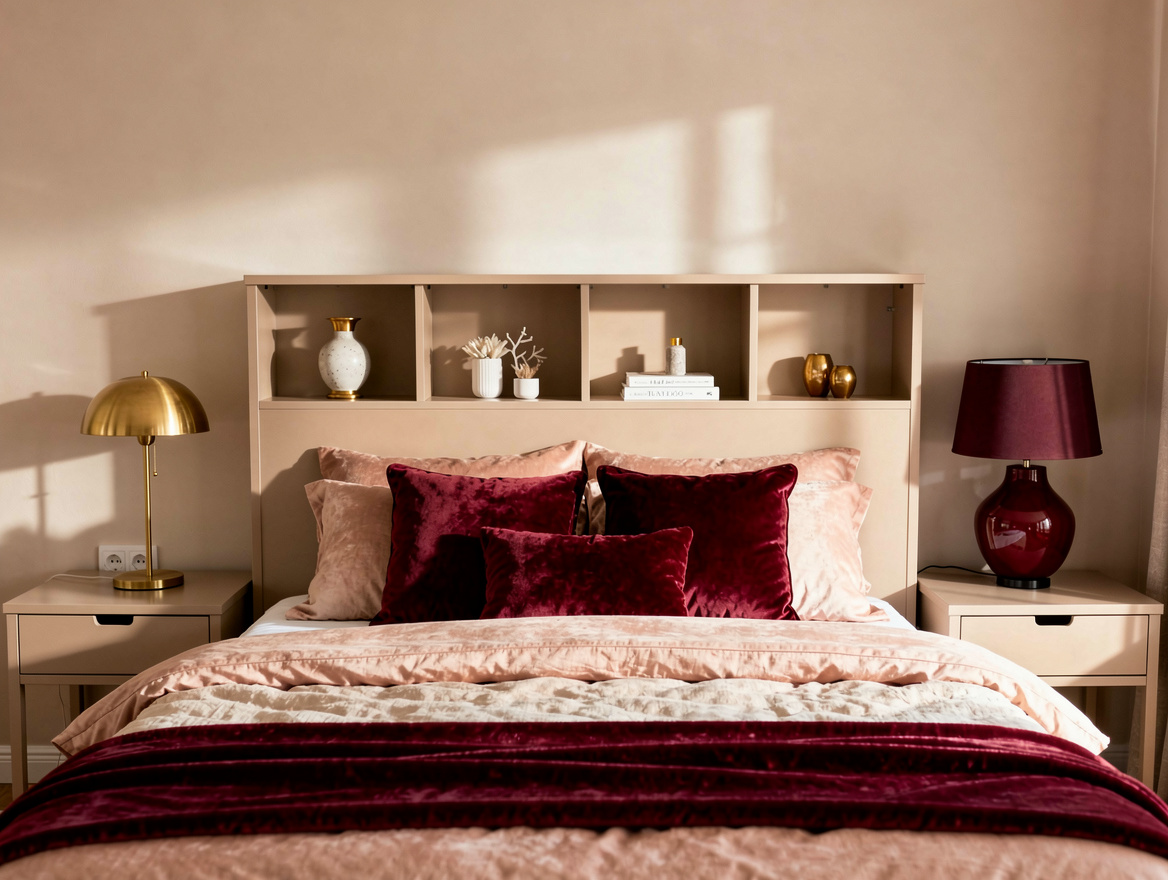
A charger draped across the pillow is the quickest way to make a thoughtful headboard look improvised. Add cable pass-throughs and plan for a recessed power strip before the MDF panel or shelf goes up.
The Article Kouva shows why this detail matters, pairing open storage with cable cutouts in a profile only about 7 inches deep. Its queen version is typically listed around $899, so it makes sense for a room where the headboard must also act as the main bedside station.
Use Height for Storage You Don’t Need at Bedtime
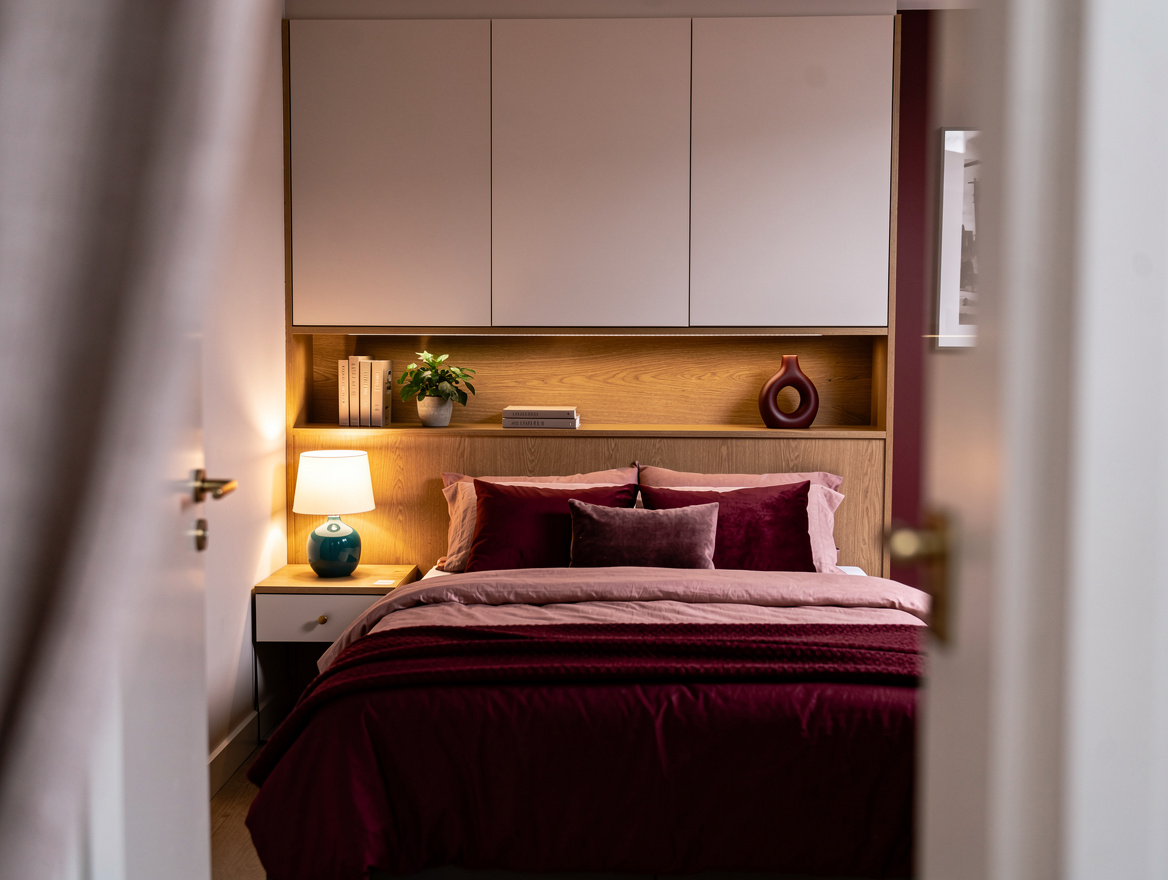
Put spare linens, seasonal clothes, and paperwork in a shallow cabinet above or beyond the pillow zone, not in a giant cubby wall at eye level. Modular plywood or laminate cabinets typically cost about $150 to $700 before custom work.
A headboard usually feels comfortable around 24 to 36 inches above the mattress top. Go taller only when the ceiling and walkway leave the room enough visual breathing space.
Start by measuring the side lane beside your mattress, then cap the headboard depth before choosing finishes or hardware. A 6-to-8-inch shelf with hidden cord routing will do more for a tiny bedroom than a towering wall of cubbies.
Mia Carter writes about small-space living and budget home makeovers. She has restyled three rentals and tests most ideas in her own 45 sqm flat.