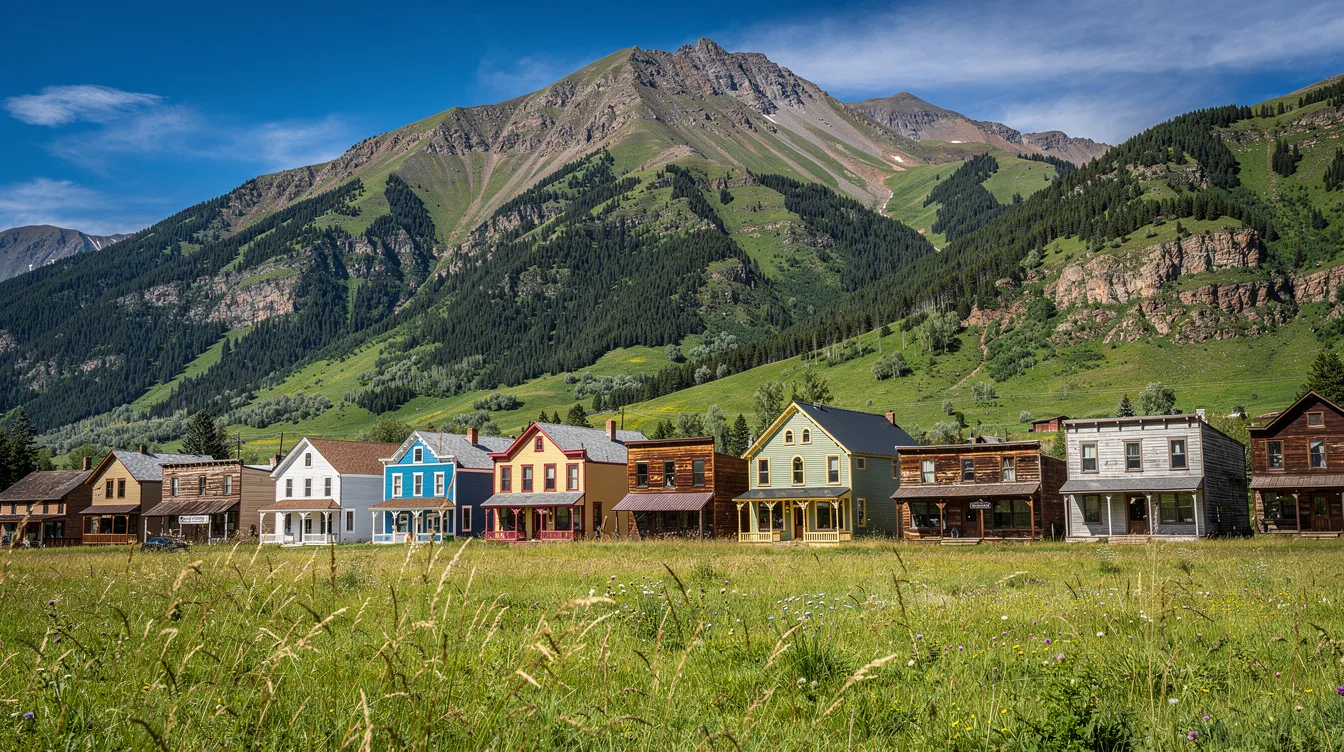
Crested Butte sits below a 12,168-foot mountain, and its north side holds Crested Butte Mountain Resort. The peak is only 2.1 miles northeast by east of town, so the title’s geography isn’t marketing language. It shapes the entire stay.
You can see the mountain from the compact historic downtown, where late-19th-century mining-era buildings still set the tone. Crested Butte is a former coal-mining town listed on the National Register of Historic Places, but it doesn’t feel preserved under glass.
The north side is where the resort lives
Crested Butte Mountain Resort occupies the mountain’s north side, with ski lifts and runs rising above town. That placement matters because the mountain remains a constant visual reference, even when you’re nowhere near a lift line.
But this isn’t a resort town that asks you to ignore its old center. You can ski or snowboard challenging expert terrain, then return to streets built during the mining era. The contrast is direct and appealing: hard-charging mountain access, then a town with real weight under it.
The summit stands in Gunnison National Forest in the Elk Mountains. And at 12,168 feet, it has the kind of scale that makes a short drive feel like a change of altitude and mood.
At 8,885 feet, summer still needs a jacket
The town sits at about 8,885 feet, which is why summer nights can turn cold even after a sunny afternoon. Pack a warm layer if you’re walking after dinner. The air has that dry, sharp edge that makes your hands notice the temperature first.
July is the prime period for wildflowers and summer activity. You can hike, bike, fly-fish, raft, or kayak, though the town’s elevation means the mountain setting never entirely softens into easygoing lowland summer.
And that’s part of the deal. Crested Butte has serious summer appeal, but it asks you to respect the weather and pace yourself. If you arrive expecting warm evenings without a layer, you’ll learn quickly.
Mining history gives downtown its point of view
The historic downtown preserves buildings from the late 19th-century mining period. Coal was mined extensively around Crested Butte in the late 19th and early 20th centuries, after geological processes altered local bituminous coal into higher-quality coal, including anthracite.
The historic district keeps the town from becoming a generic base camp. You’re not just sleeping near a mountain. You’re staying in a place whose streets and structures came from an earlier economy, one tied to the coal beneath the surrounding ground.
But don’t confuse historic with sleepy. Summer brings mountain biking, hiking, water sports, and wildflower seekers. Winter brings skiing and snowboarding.
The town has activity, yet its remoteness keeps the atmosphere less urbanized than many Colorado resort destinations.
Getting there is part of the filter
Gunnison lies about 28 miles south of Crested Butte, and Colorado Highway 135 connects the two. The nearest commercial airport is Gunnison-Crested Butte Regional Airport, which makes the route straightforward once you’re on the ground.
Still, the distance from Gunnison is part of why the town feels separate. You don’t drift through by accident. And in winter, serious driving conditions can change the tone of that route, so give the road the respect it deserves.
If you’re planning around skiing, the north-side resort is the obvious draw. If you’re coming in July, the flower season gives the same mountain a different job. Either way, the peak stays close enough to organize the day.
A mountain town with a real edge
The 2.1-mile gap between town and summit is the useful fact to remember. It means you can spend time among historic buildings, look up, and understand exactly where the resort terrain begins. Few places make their mountain connection so plain.
And Crested Butte doesn’t need to pretend access is effortless or conditions are mild. Its altitude brings cold nights. Its winter can bring difficult roads.
Those limits are also why the air feels clean and the town still has breathing room.
By evening, the mountain’s north side darkens above the old downtown, and the cold arrives before you expect it.