
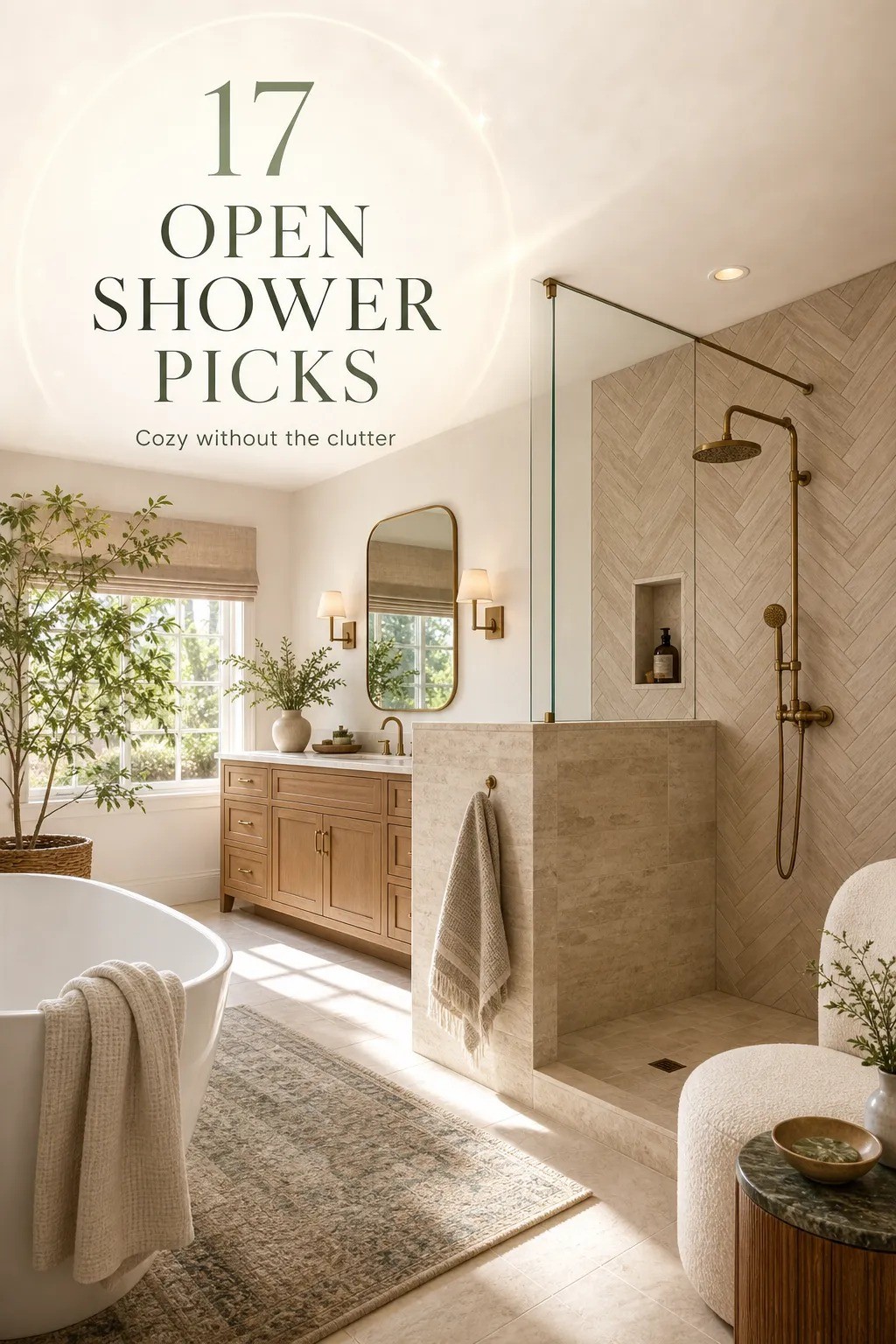
Open shower with a half wall layouts work because they keep your sightline open while giving you a real splash barrier. I once tiled a full-height divider in a tiny bath, and it made the room feel like a hallway. A half wall fixes that mistake.
- Build the Sightline Shield (a bathroom half wall that stays airy)
- Float Glass Above the Pony Wall
- Run Tile Only Where Water Lands
- Use the Two-Wood Rule for Warmth
- Paint the Dry Side in Hague Blue
- Cap the Wall With a Useful Ledge
- Choose Brushed Brass Over Shiny Chrome
- Can Your Half Wall Hide the Toilet?
- Frame the Shower With a Vertical Tile Stripe
- Pick a 36-by-36-Inch Shower First
- Let IKEA Storage Work Behind the Wall
- Try Pony Wall Tile Over Full Marble
- Use the Three-Height Light Stack
- Place a Bench Where Your Towel Can Reach
- Contrast Soft Plaster Against Glossy Tile
- Make the Half Wall Pull Double Duty
- Use a Budget Plan Before You Pick Tile
1Build the Sightline Shield (a bathroom half wall that stays airy)
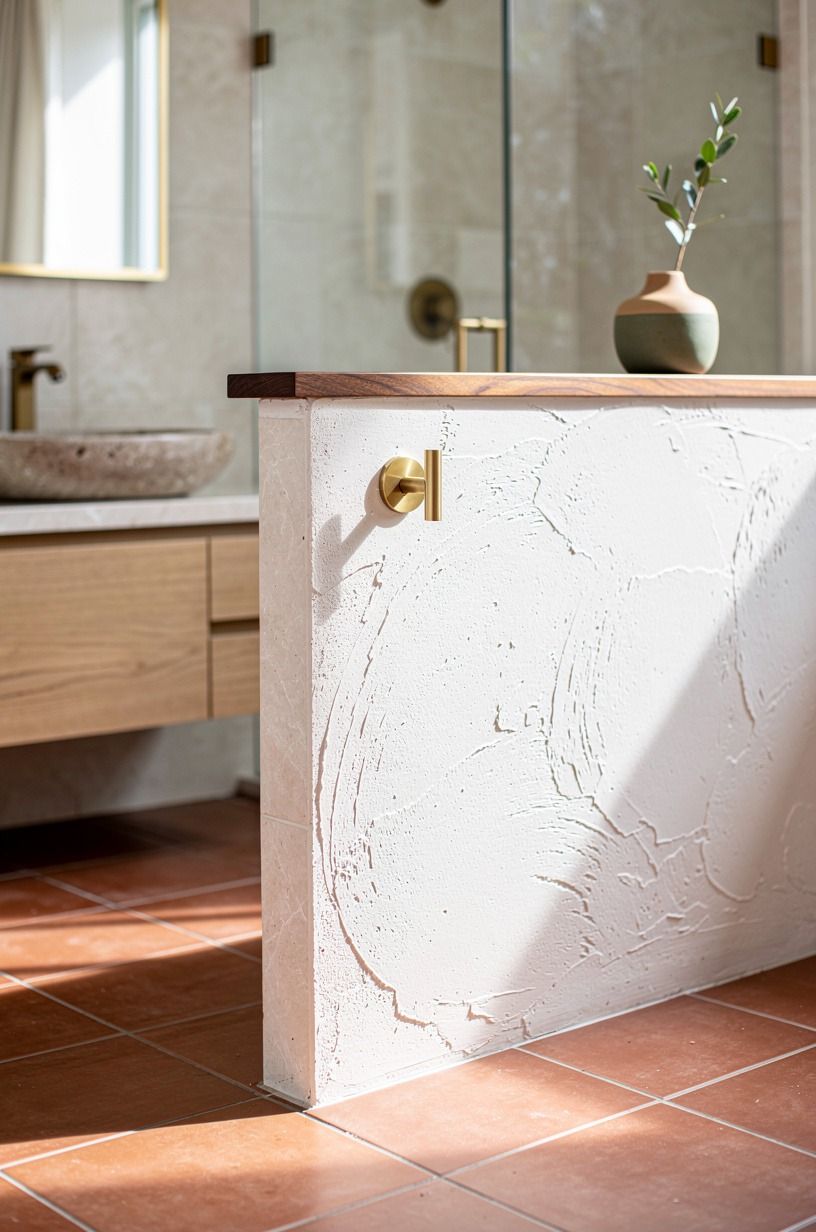
Keep your pony wall below eye level from the vanity so you can still see daylight, tile, and the far wall. You’ll get privacy where you need it, but your bathroom won’t feel chopped into little boxes.
I’d use hand-applied Venetian plaster on the dry side and let its terracotta, stone, and olive tones warm the shower zone. It catches light unevenly, which is far more forgiving than flat white tile after a rushed Tuesday-morning clean.
For inspiration, look at these open shower layouts with expensive-looking finishes. You’ll notice that the best ones let the wall frame the shower instead of hiding it.
2Float Glass Above the Pony Wall
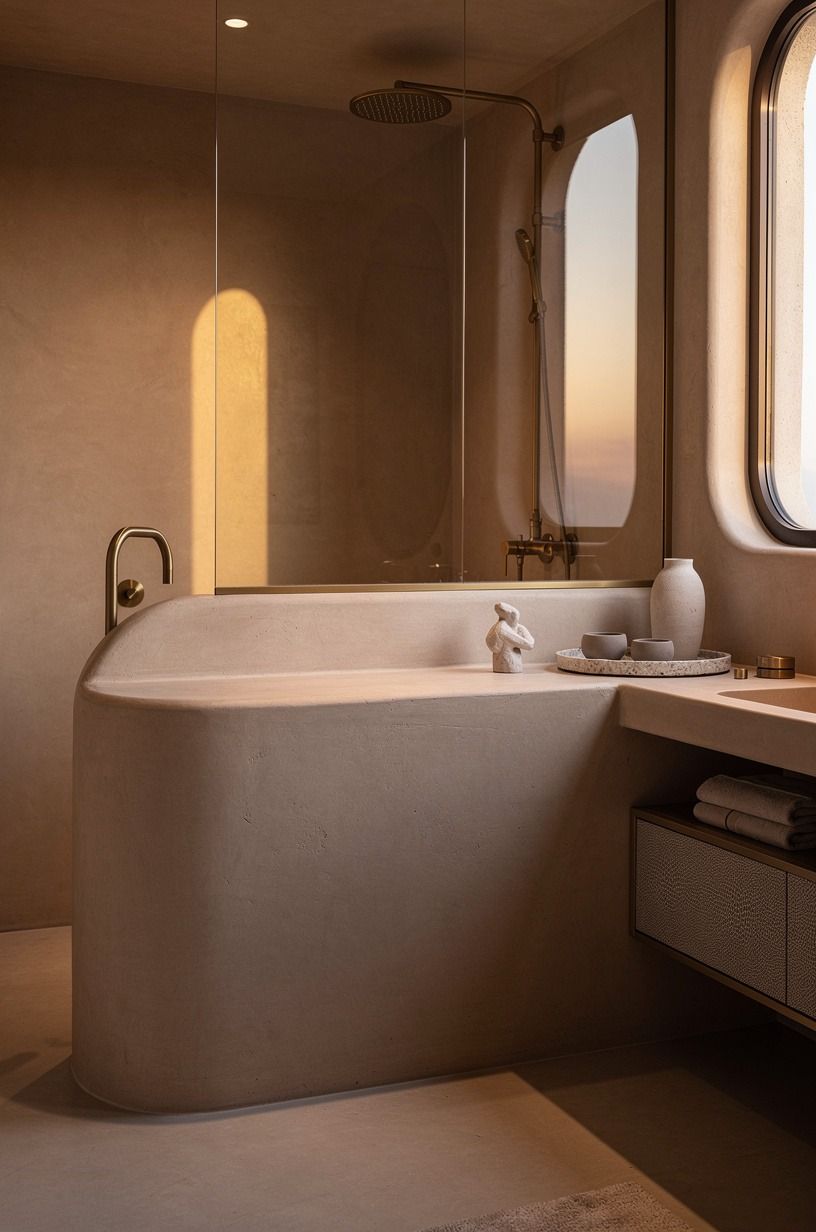
A fixed glass panel on top of your half wall stops spray without closing off the room. You’ll still hear the water, see the tile, and keep that open-plan shower feeling.
Choose clear tempered glass with minimal hardware. I’d skip frosted glass here, because it turns a clean architectural line into something that feels oddly office-like.
Your wall can handle the visual weight if you keep the rest of your finishes quiet. Clay-toned walls, linen textiles, aged brass, and a small shagreen accent give the room softness without making it feel yellow.
3Run Tile Only Where Water Lands
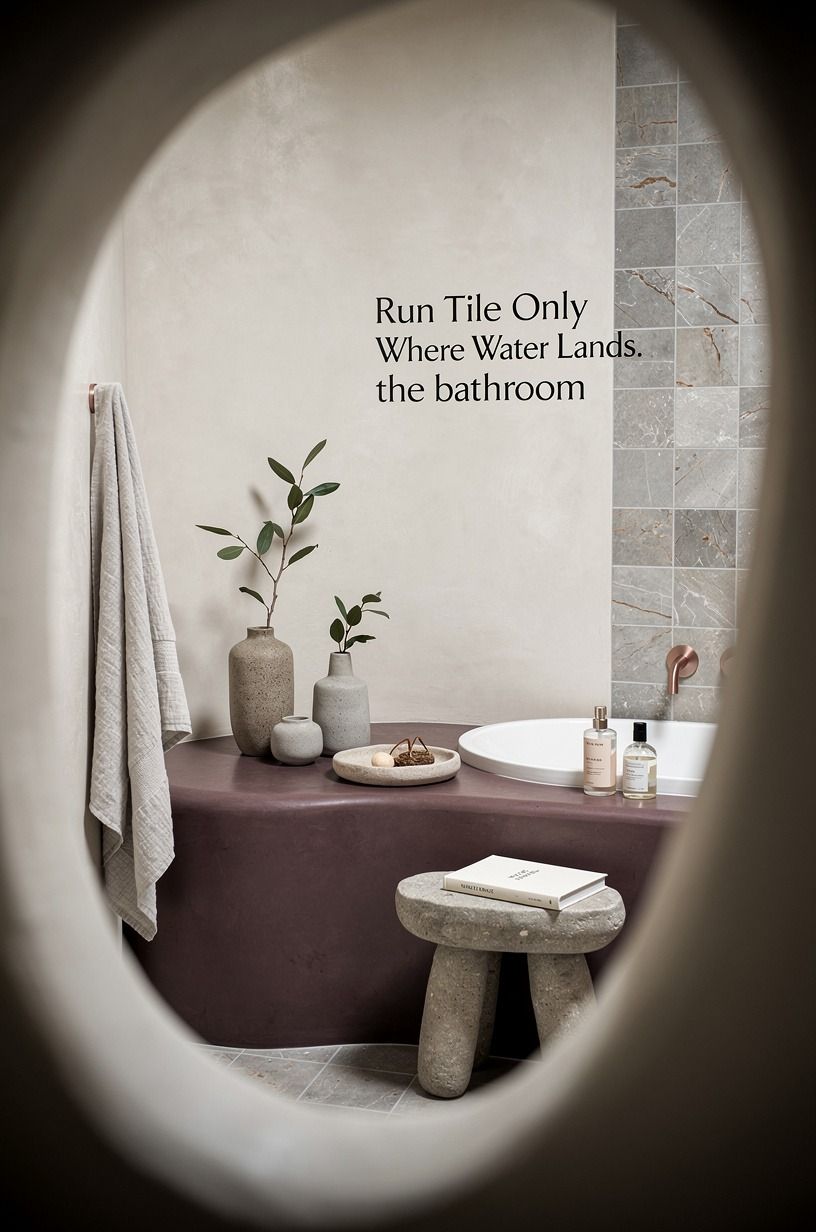
You don’t need tile on every bathroom surface.
4Use the Two-Wood Rule for Warmth
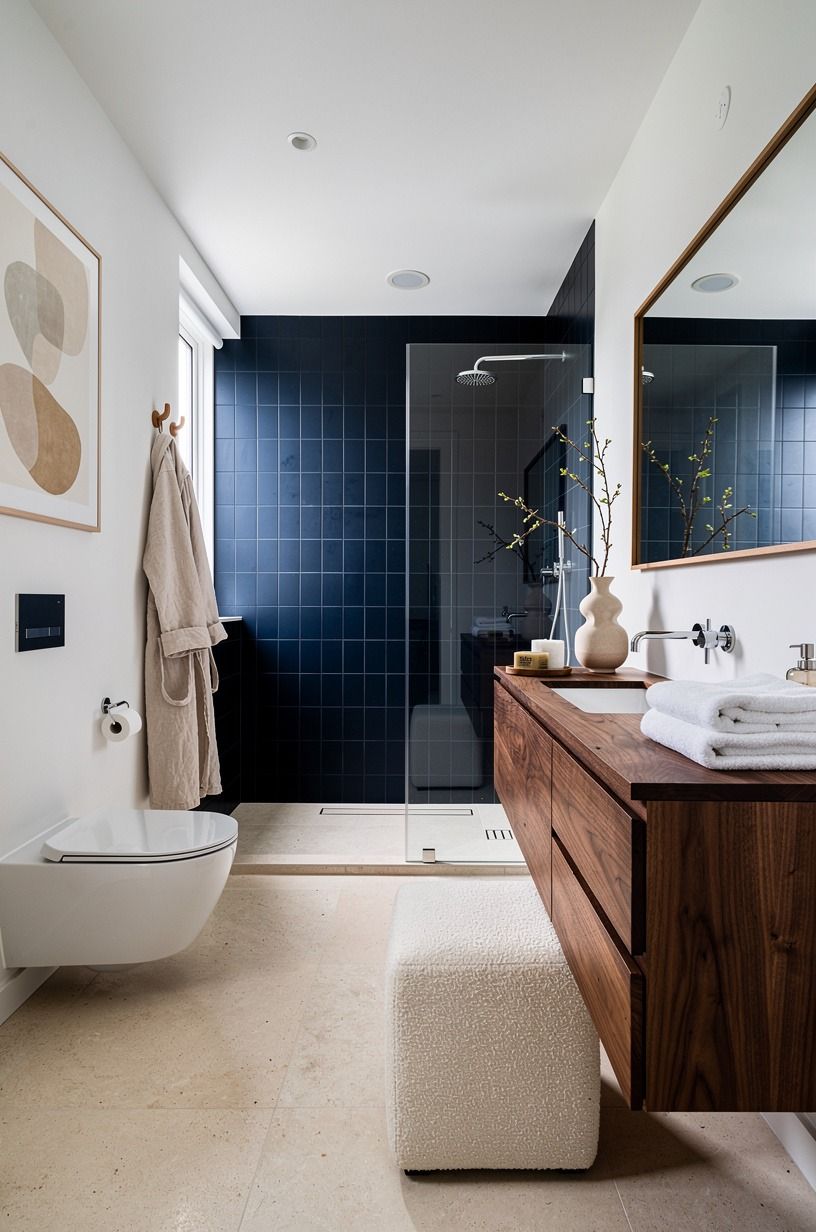
An open shower needs warmth somewhere, or it can read more spa locker room than home. My rule: you only need two wood moments, and they should speak to each other.
Try a walnut vanity shelf with a matching walnut stool outside the shower. You’ll get that sun-warmed grain without stuffing the room with rustic props.
I made the mistake of adding a teak bench, oak vanity, walnut mirror, and bamboo ladder once. Too many woods. Your eye starts counting instead of relaxing.
5Paint the Dry Side in Hague Blue
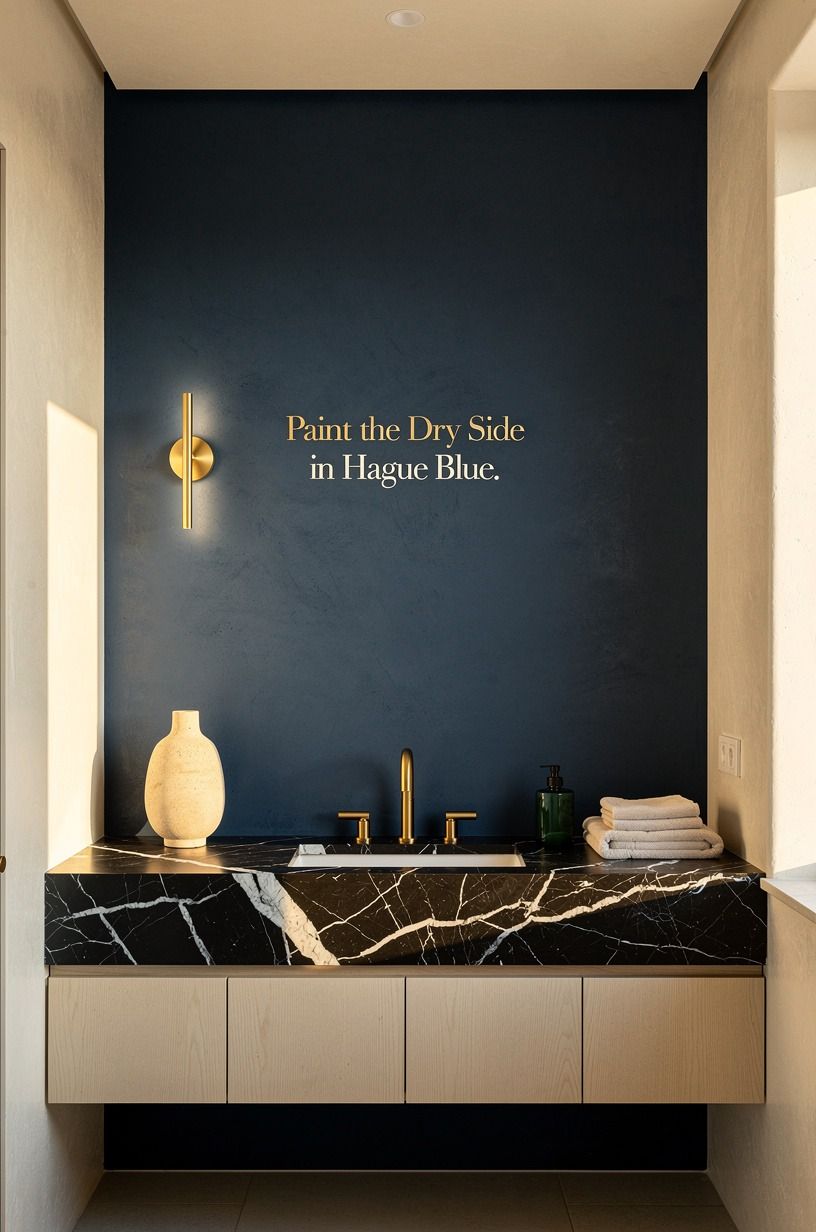
A dark wall behind a pale shower can make an open bathroom feel intentional, not exposed.
6Cap the Wall With a Useful Ledge
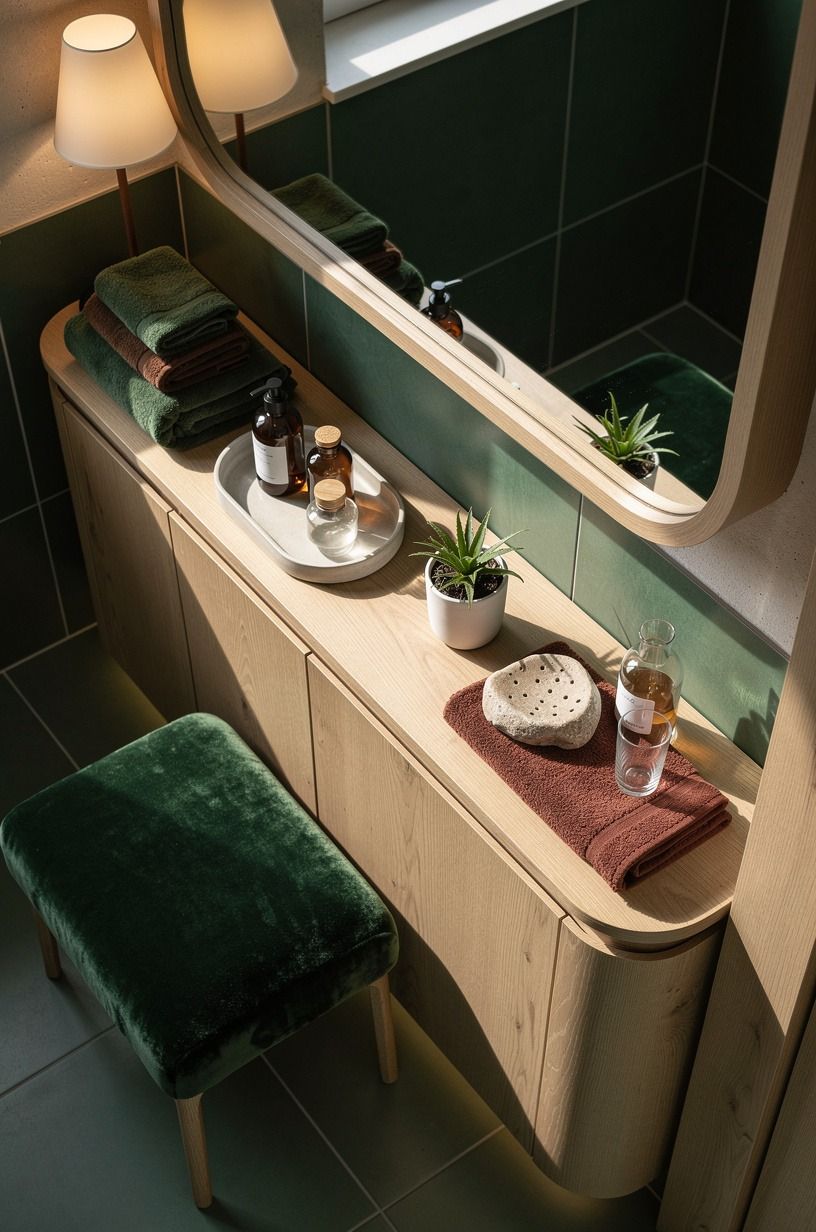
A half wall should earn its footprint. Make the cap wide enough for a candle, a folded towel, or the bottle you reach for every day.
A natural oak ledge feels richer than a narrow bullnose tile cap. You’ll also have a surface that looks good with water spots instead of broadcasting every one.
Keep the styling spare. A small amber vessel, one rust-toned mohair velvet accent, and nothing that needs dusting. That’s enough!
7Choose Brushed Brass Over Shiny Chrome
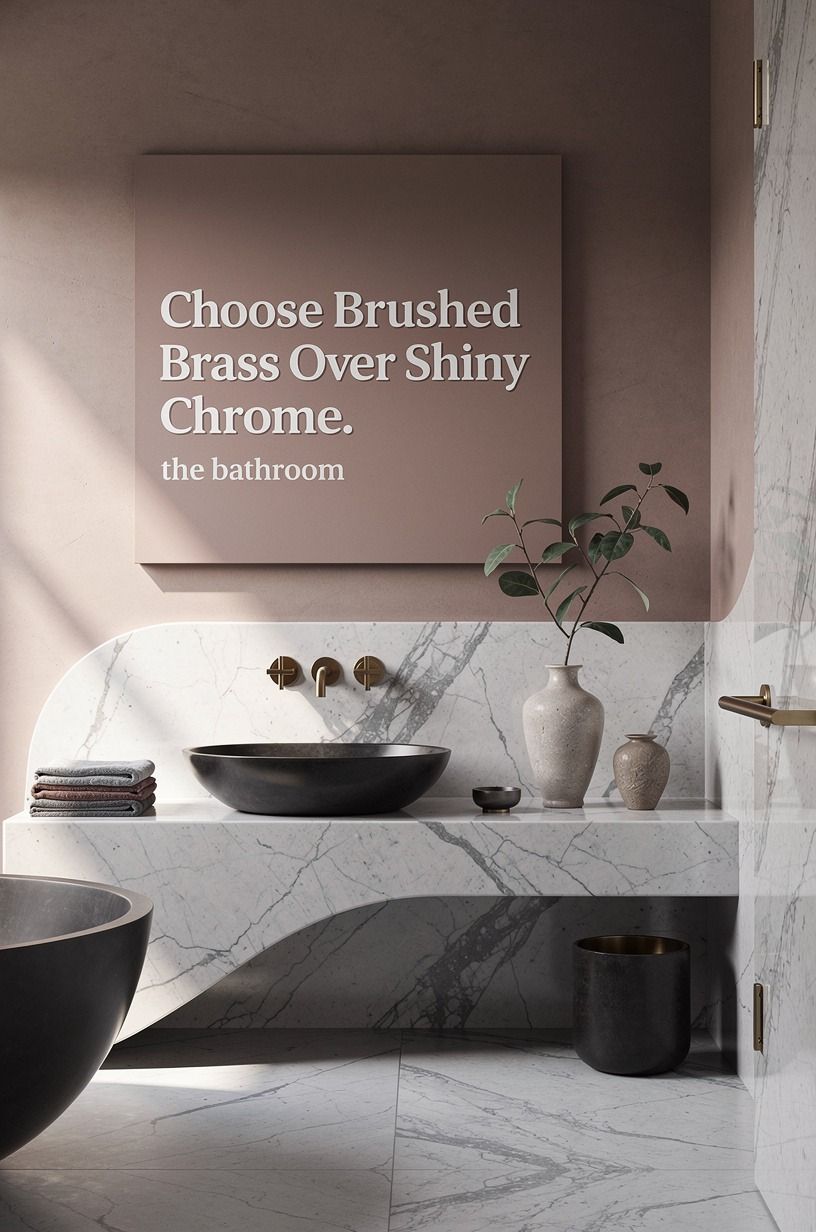
For this layout, I’d choose brushed brass faucet hardware over mirror-bright chrome. Chrome can look sharp, but it doubles every reflection in an open shower and gets clinical fast.
A typical brushed brass faucet runs about $120 to $450, so you can decide whether it belongs in your splurge column. You’ll see it from nearly every angle, which makes it a better spend than a decorative tray.
For more shower visual references, save these open shower ideas with polished details. Your hardware should feel quiet, not like jewelry screaming across the room.
8Can Your Half Wall Hide the Toilet?
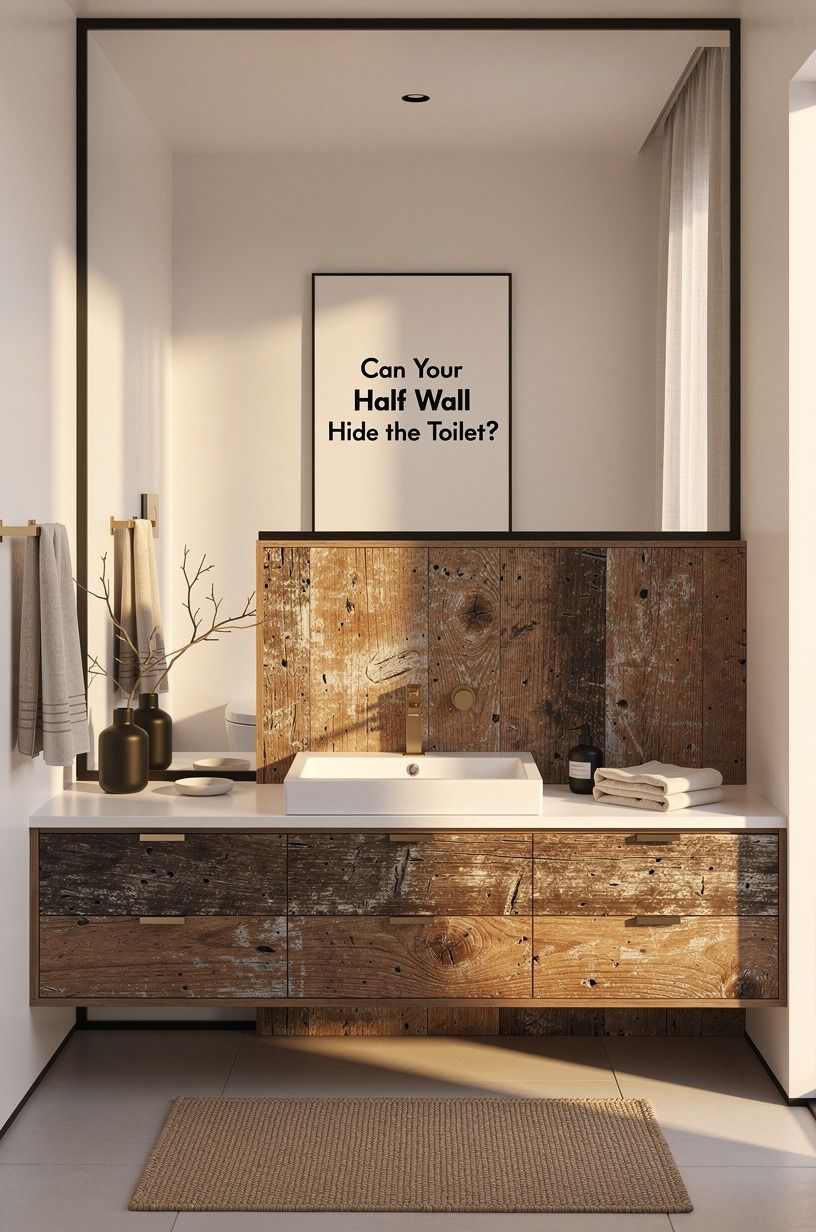
Yes, and it’s one of the smartest uses for bathroom half walls. Position the wall so it blocks the toilet from the doorway while leaving the shower open toward the better view.
You still need at least 21 inches of clearance in front of the toilet. Measure before you fall in love with a layout sketch, because a beautiful plan that pinches your knees is useless.
Use a warm white on the toilet-side wall, then bring in camel textiles and restrained black accents. It softens the necessary view without turning the whole bath into mint candy.
9Frame the Shower With a Vertical Tile Stripe
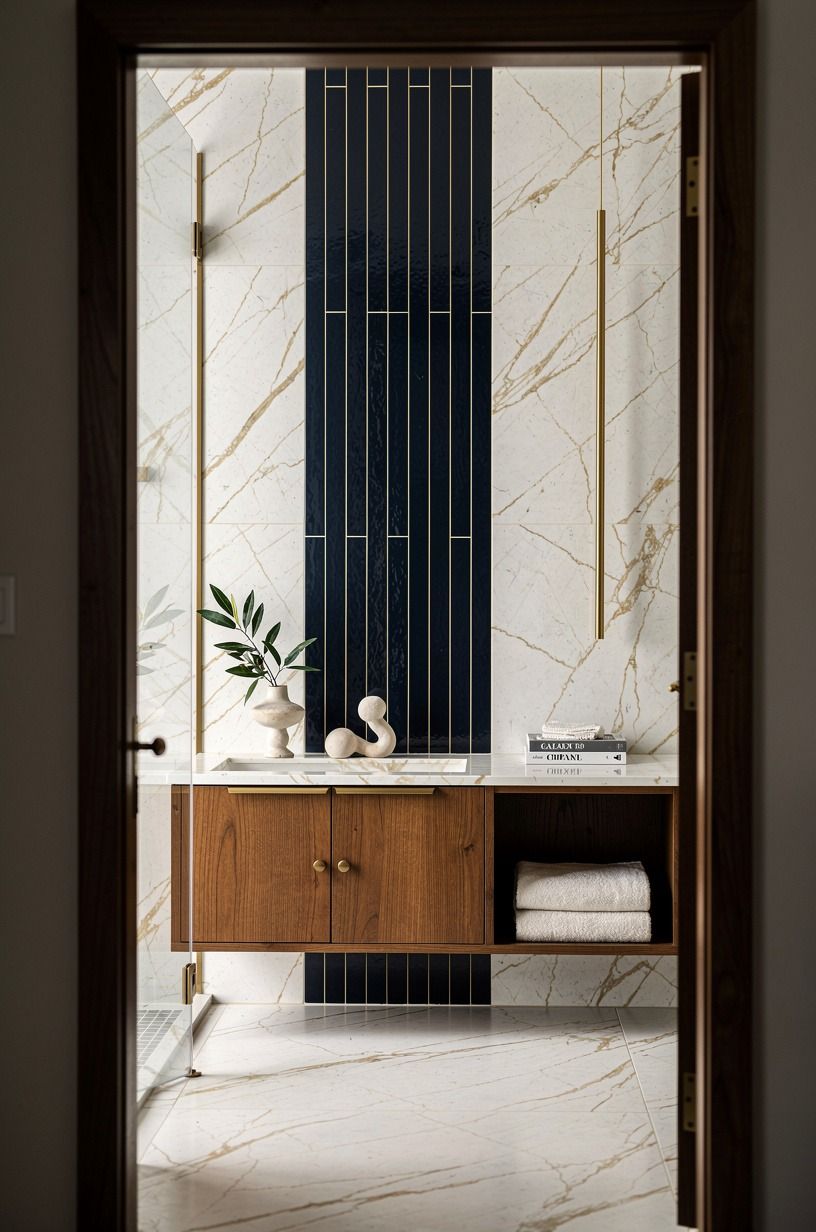
A narrow vertical stripe can make your shower feel taller without adding another full wall.
10Pick a 36-by-36-Inch Shower First
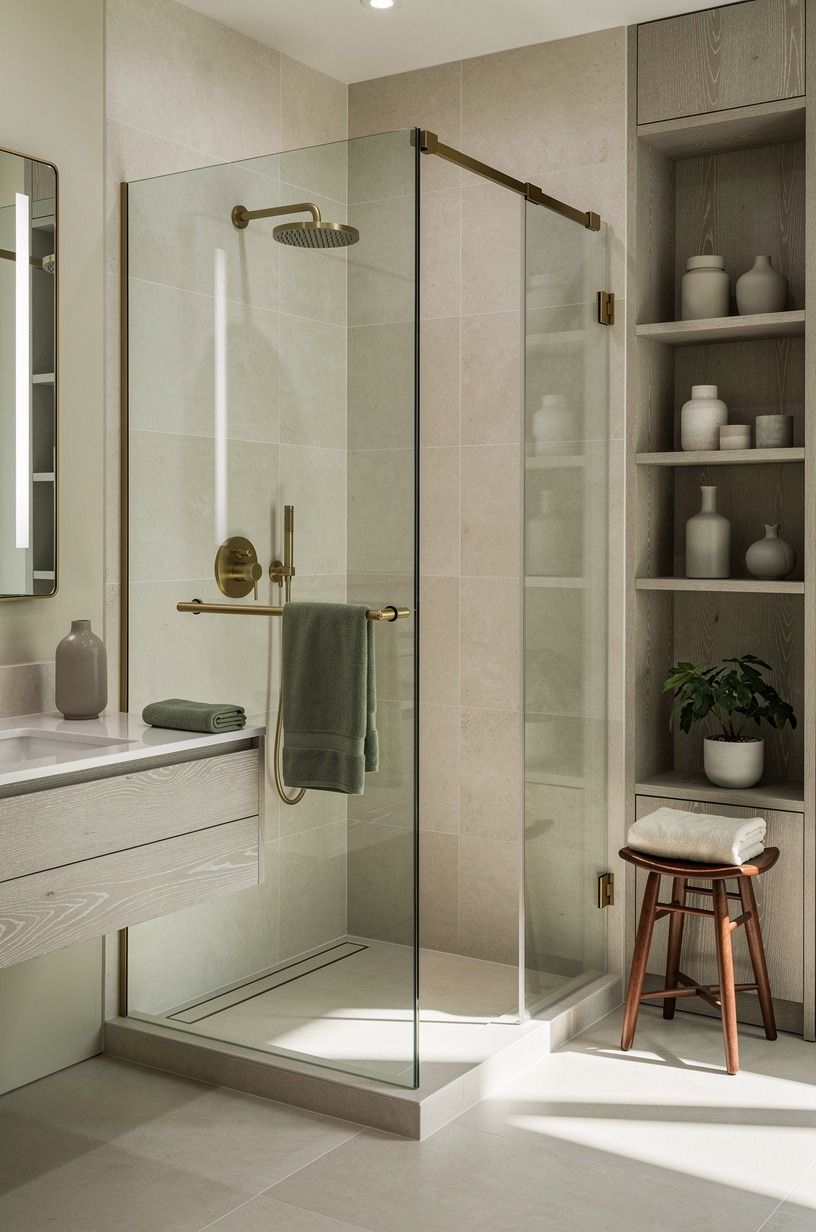
A comfortable shower is at least 36 by 36 inches, and that dimension should drive your half-wall plan. You can’t decorate your way out of a shower that makes you elbow the glass every morning.
If your footprint is tight, use a linear drain in brushed stainless steel along the back wall. You’ll avoid a bulky curb and keep the floor pattern moving straight through the room.
But don’t chase a huge shower at the expense of the vanity. A 32 to 36 inch vanity height is comfortable for daily use, and your countertop gets used far more often than your shower floor.
11Let IKEA Storage Work Behind the Wall
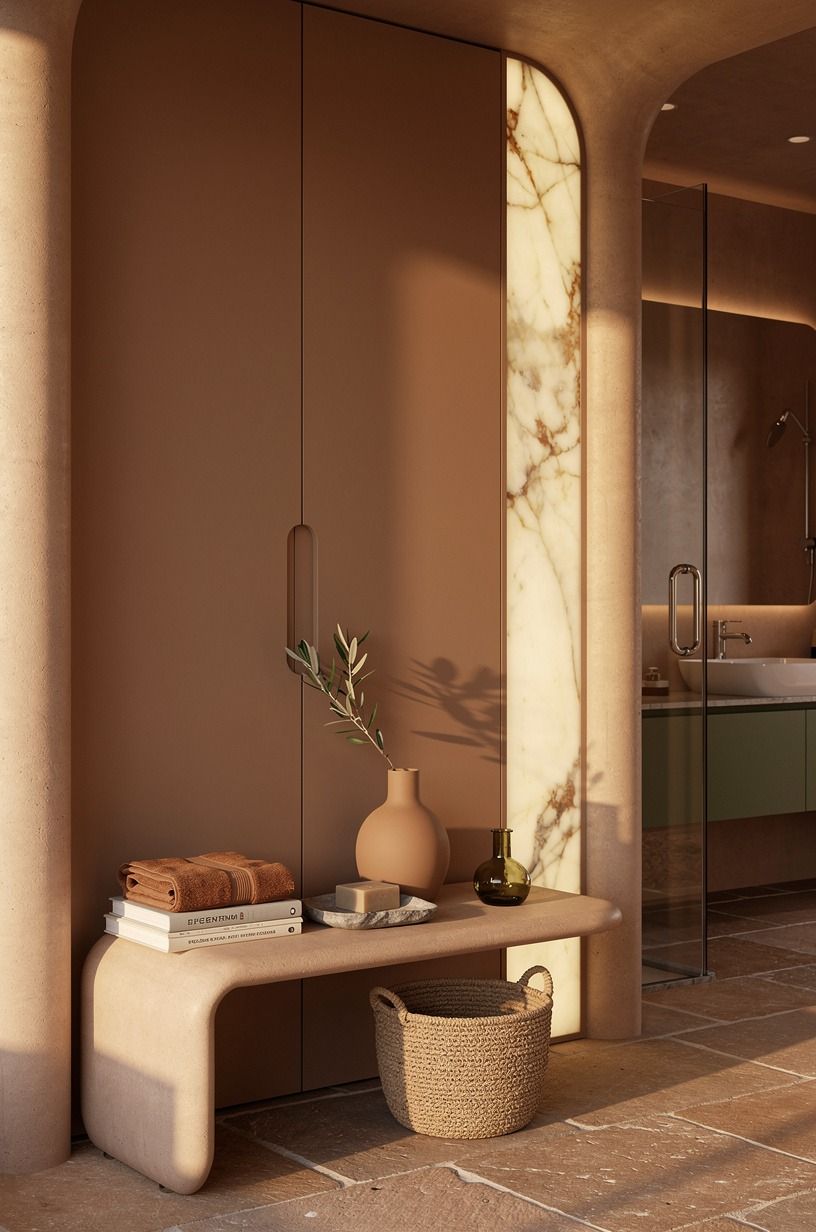
A half wall can hide the practical clutter that ruins an open layout.
12Try Pony Wall Tile Over Full Marble
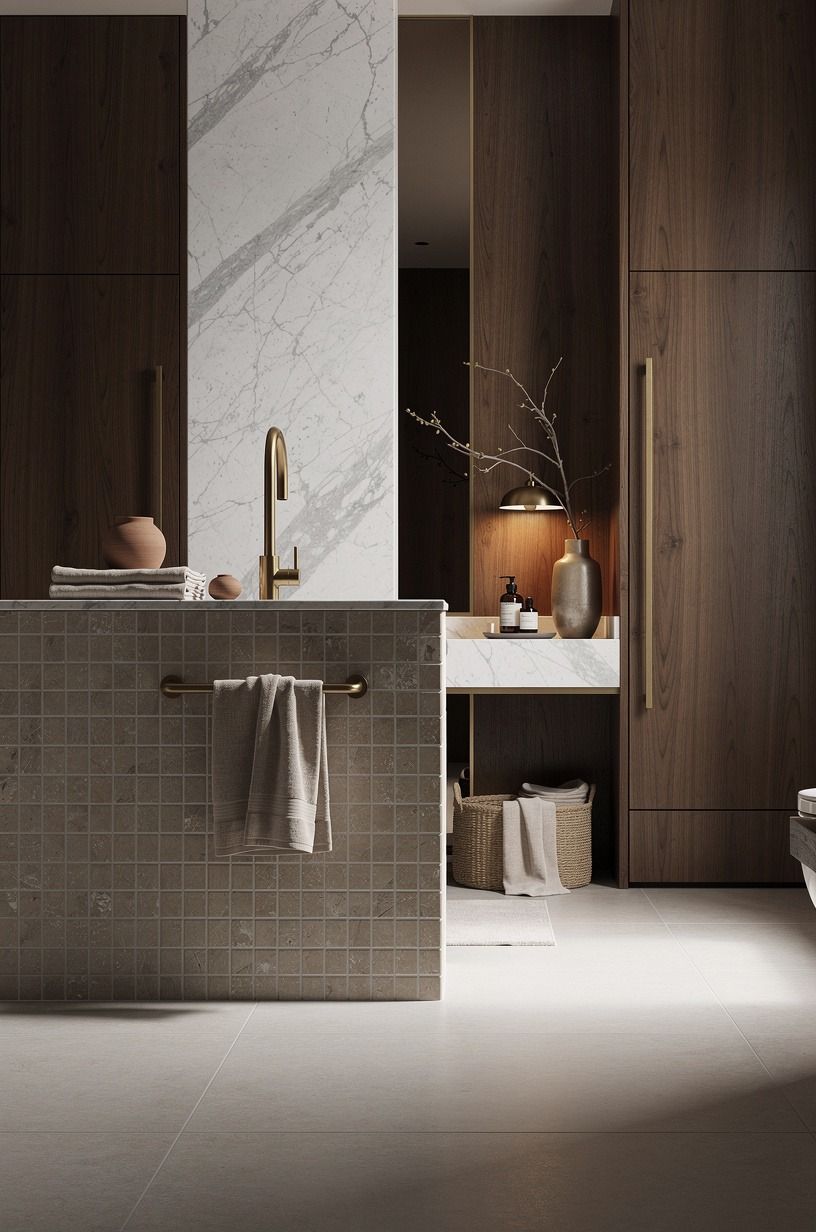
I’d choose pony wall tile over a full marble surround in most normal bathrooms. Full marble is impressive, but it’s also expensive, high-maintenance, and often too formal for the house around it.
Zellige tile typically costs $15 to $35 per square foot, while subway tile runs about $2 to $10 per square foot. You can spend where your hand touches, like a book-matched walnut cap, and save on the field tile.
That contrast is the point. You’ll get the expensive moment without forcing every surface to perform.
13Use the Three-Height Light Stack
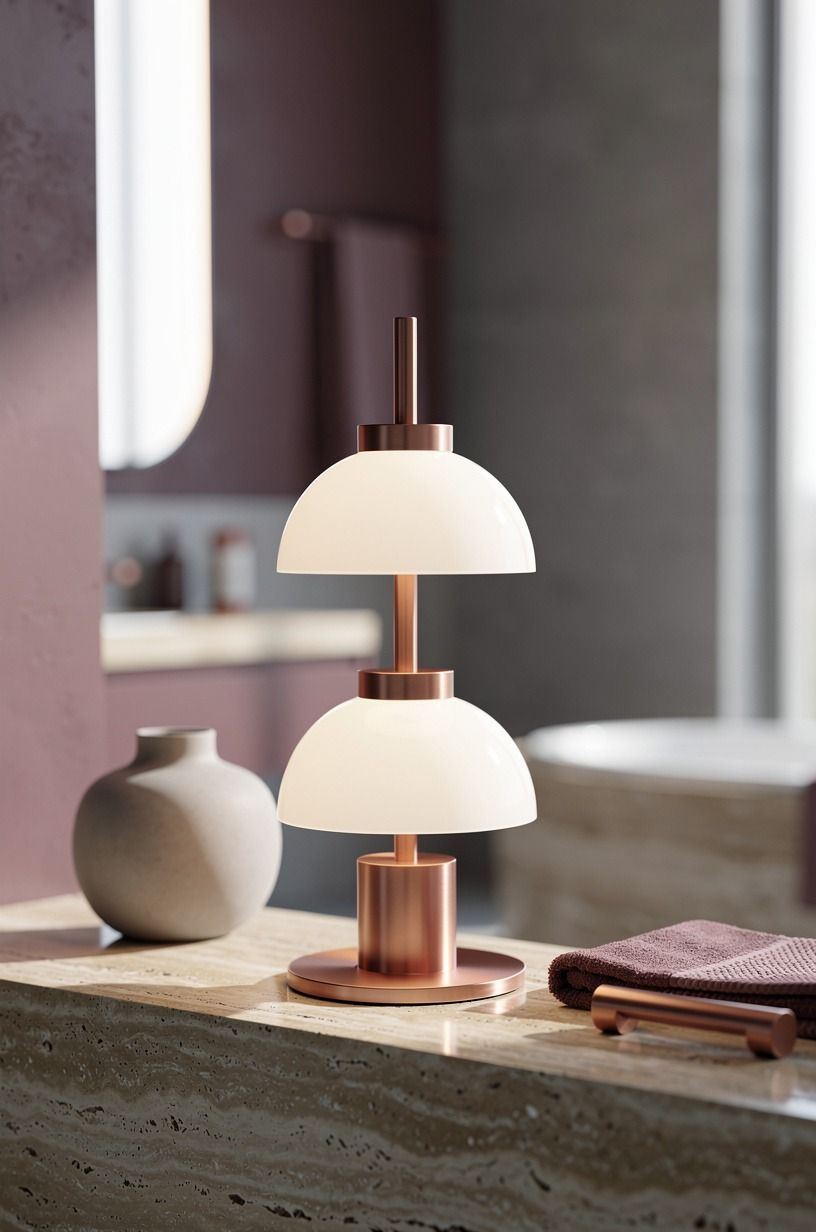
One ceiling fixture is never enough in an open shower bath. You need light at three heights: ceiling, face level, and low glow near the floor or vanity.
Start with rose-gold sconces beside the mirror, then add a dimmable ceiling fixture and a small toe-kick light under the vanity. A warm travertine detail keeps the plum and grey palette from feeling too cool.
And if you’re choosing bulbs, warm dimmable light wins every time. Nobody wants blue-white light bouncing off wet tile at 6 a.m.
14Place a Bench Where Your Towel Can Reach
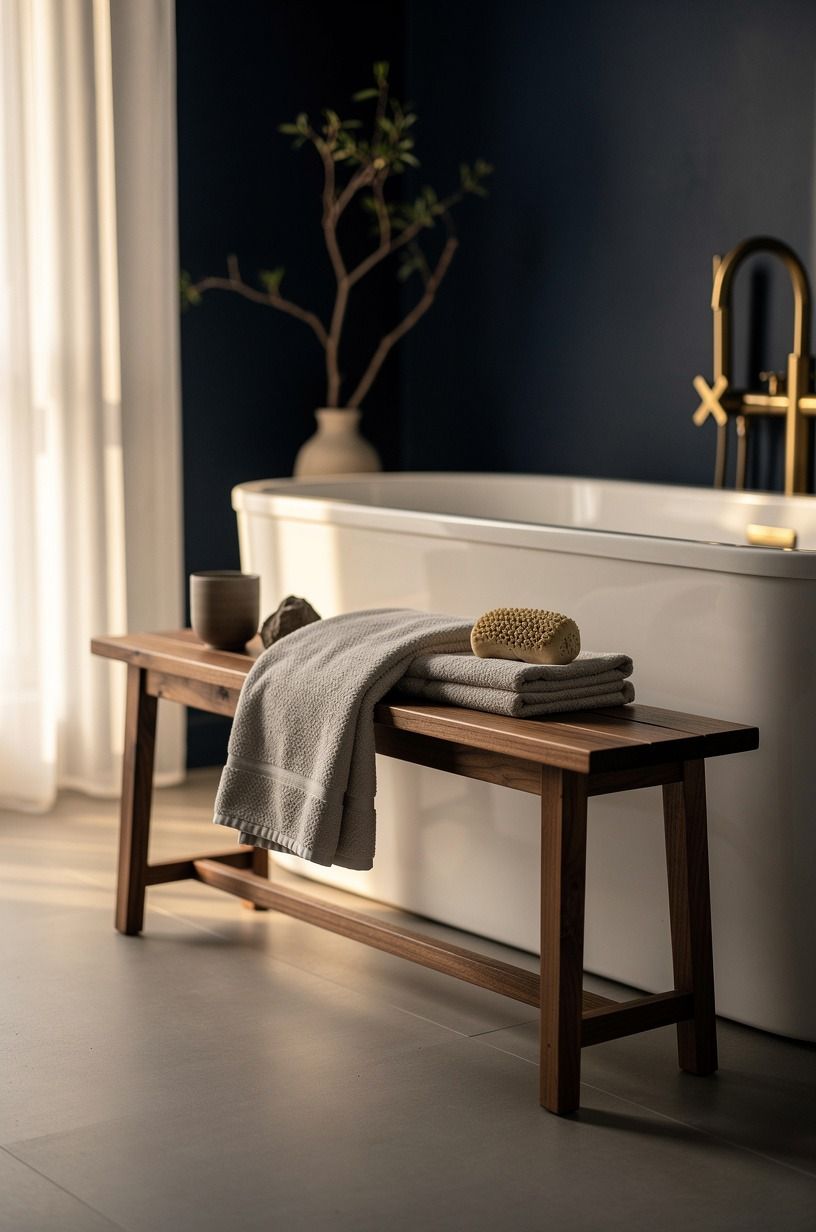
A bench belongs on the dry side of the half wall, not inside every shower by default.
15Contrast Soft Plaster Against Glossy Tile
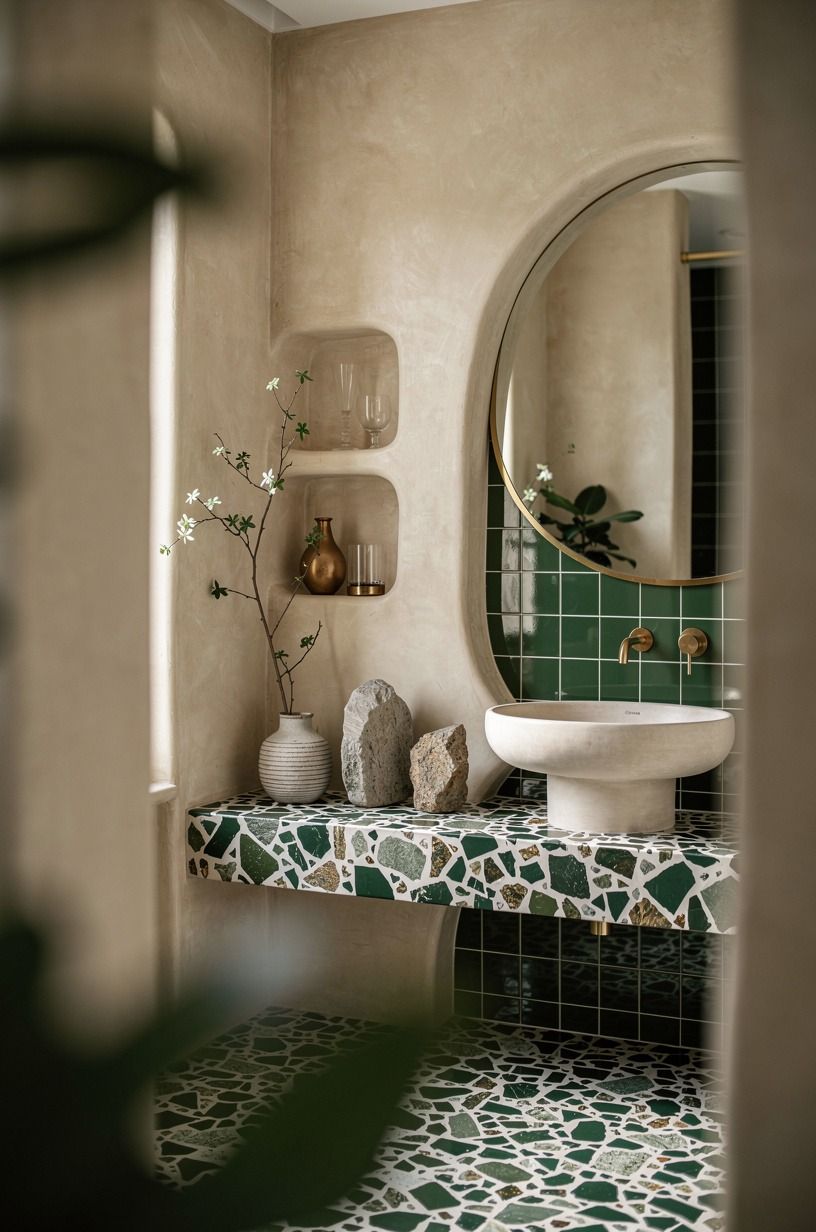
Glossy tile needs something matte beside it. Oversized-chip terrazzo gives the shower tile a grounded counterpoint without making every surface glare.
Try Benjamin Moore Chestertown Buff HC-9 in a soft matte finish on the dry wall. You’ll get a warm, mineral look that makes white fixtures feel less builder-grade.
I went back and forth on creamy beige in my own bath. The warmer ochre tone won because it still looked good after sunset, not just in a bright photo.
16Make the Half Wall Pull Double Duty
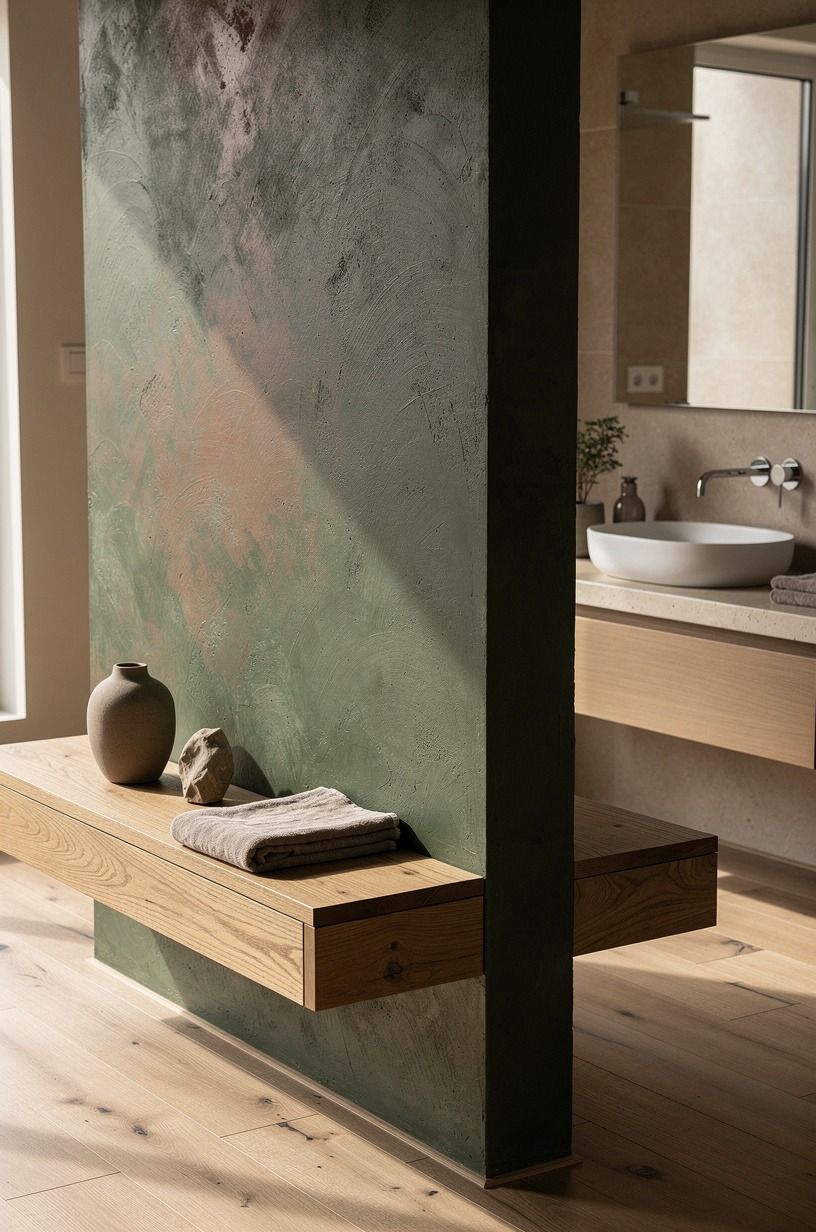
Your pony wall can hold a recessed niche on the shower side and a towel bar on the outside. Why waste the depth when you’ve already paid for the framing?
Keep the niche simple, then use hand-applied Venetian plaster on the dry outer face of the wall. You’ll want the opening low enough to reach but high enough to avoid the splashiest corner.
For a few more practical versions, browse these open shower ideas that use the wall well. The best layouts treat storage as part of the design.
17Use a Budget Plan Before You Pick Tile
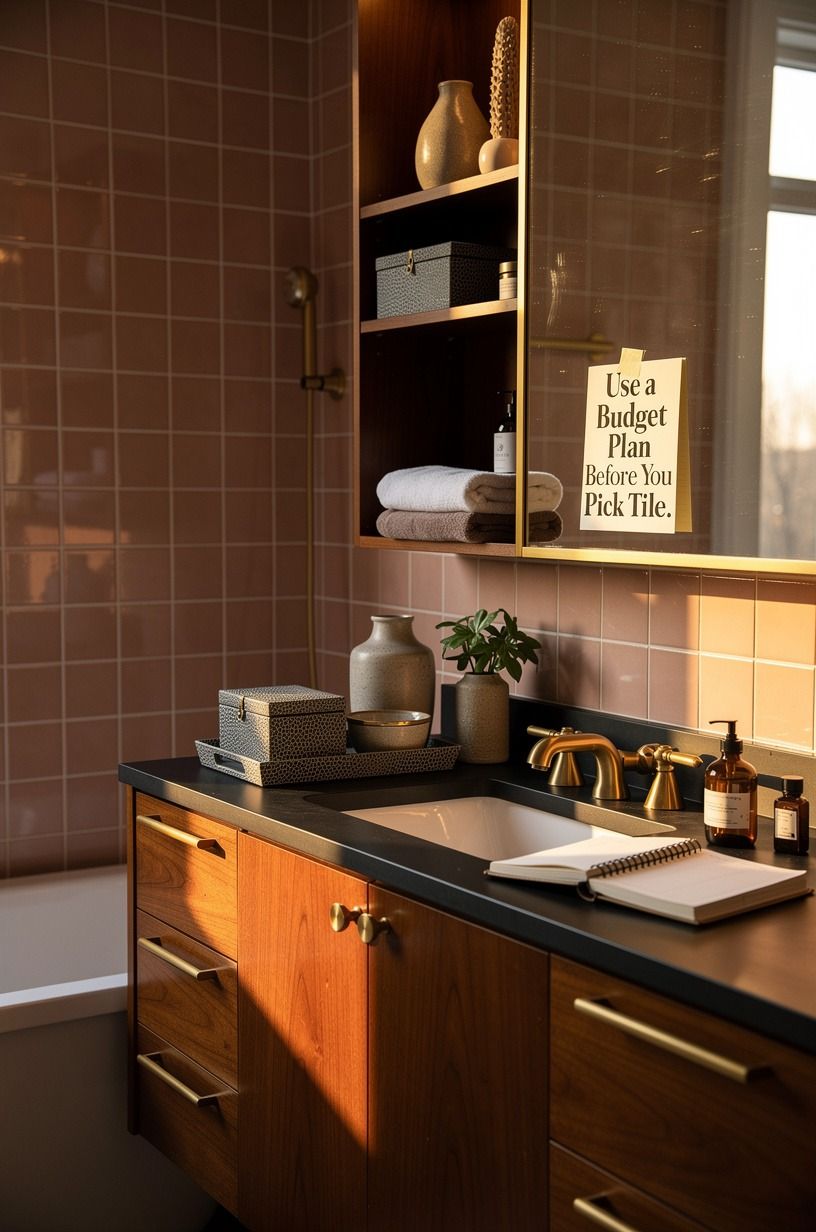
Here’s the boring part that saves you later: decide your tier before you choose a tile sample. Your half wall can look thoughtful at several price points, but your choices need to agree with one another.
At the budget level, paint and a Target Threshold mirror can do more than you’d expect. At mid-range, spend on tile placement and lighting. High-end plumbing is worth it only if you’re already opening the walls.
Why I Keep Coming Back to the Half Wall
I think open showers got popular because people were tired of bathrooms that felt sealed off and overbuilt. For years, the default renovation logic was more enclosure, more tile, more glass, more everything.
Then those rooms started to feel like miniature hotel boxes, expensive but oddly impersonal. A half wall brings back a little restraint.
You can see the room. You can feel the light move through it.
And you still don’t have to wave at your partner from the toilet.
I’ve learned that privacy isn’t always about hiding every inch of your body or every bathroom task. It’s about choosing what the room reveals from the doorway.
A half wall gives you that control. It blocks the awkward sightline, catches the shower spray, and creates one solid place for a ledge, a niche, or a towel bar.
That’s a lot of work from a small piece of framing.
The part I care about most is proportion. If your wall is too high, you’ve rebuilt the problem you were trying to escape.
If it’s too low, it looks apologetic and doesn’t protect anything. I’d rather make the wall confidently useful, then let the glass, light, and tile do the softer work around it.
Your bathroom doesn’t need to prove it’s luxurious. It needs to work on an ordinary wet morning, with a towel slipping off the hook and somebody knocking at the door.
That’s the real test.
A Few Things Worth Answering
What is the best open shower with a half wall for a small bathroom?
A 36-by-36-inch shower with a glass panel above a tile-capped pony wall is usually the strongest small-bath layout. You’ll keep the room open while hiding the shower floor and toilet sightline.
– Clear glass panel – IKEA HEMNES storage – One warm paint color
Where can I buy open shower with a half wall pieces on a budget?
Start with IKEA, Target, Wayfair, and Facebook Marketplace for the pieces around the build. You’ll get the best value by buying a simple Target Threshold mirror new and searching secondhand for stools or lighting.
– Marketplace teak stool – Wayfair vanity light – Removable towel hooks
How much does an open shower with a half wall makeover cost?
A light cosmetic update can cost about $200 to $1,200, while new tile and lighting push a project toward $3,000 to $9,000. You can paint, declutter, and rearrange your existing bath textiles for free.
Can I create an open shower with a half wall on a budget?
Yes, and your smartest cheap moves are paint, a better mirror, and one hardware finish. You don’t need a full renovation to make a subway tile pony wall feel intentional.
– Fresh wall paint – Matching towel hooks – One glass panel
Is an open shower with a half wall worth it in a small space?
Yes, it’s often more worth it in a small bathroom because you preserve visual depth. You’ll want the wall to block the toilet view, not cut across the middle of your best sightline.
Is an open shower with a half wall a good idea for a rental?
Yes, if you focus on removable changes around the existing structure. You can use peel-and-stick tile, a tension rod, and damage-free hooks, then bring your linen shower curtain and mirror with you later.
Where I’d Start First
If I had to pick one, I’d start with the tile-capped half wall. It blocks the awkward view without stealing daylight, and every other choice can stay simpler. Pin a practical open shower layout for later and measure your sightline before buying tile.